

I’m in favour of keeping the network as open as possible.




At a glance
- The digital transformation has found its way into all areas of life and is present in all policy areas. It is one of the most important drivers of innovation.
- Data is a central component of digitalisation. Better access to data and the opportunity to develop data-based solutions to problems affords enormous economic potential.
- Artificial intelligence (AI) is increasingly being used to analyse data. Among other things, it is able to recognise patterns in large amounts of data or adapt processes to specific situations.
- Results and models generated by AI-assisted data analyses can support processes or decisions with important information and thus contribute to optimisation.
- The Konrad Adenauer Foundation sees digitalisation as a cross-cutting issue and is primarily pursuing the goal of strengthening the competitiveness of Germany and Europe.
Content
1. Data policy and ensuring fair global competition
2. Artificial intelligence on the rise
3. Strengthening Germany's competitiveness with the help of digitalisation
4. We also think of digitalisation as a cross-cutting issue
5. Our offers and projects on the topic
6. Publications, events and media contributions on the topic
Digitalisation is present in all areas of life and thus in all policy fields. It changes the way we communicate with each other, how we glean information and how we work. As one of the most important present-day transformational forces, it has an impact on the economy, society and politics alike.
Data policy and ensuring fair global competition
Data is a central building block of digitalisation. Ensuring better access to data for data-driven solutions is not just a challenge faced by the business world. Similarly, it is important that administration optimises the use of data for greater citizen proximity, efficiency and synergies. The Konrad-Adenauer-Stiftung has been focusing on the topic of open data for several years. While our work portfolio also includes topics such as data trustees, data platforms and data protection.
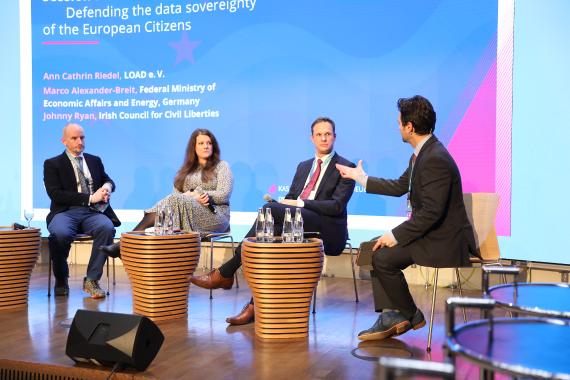
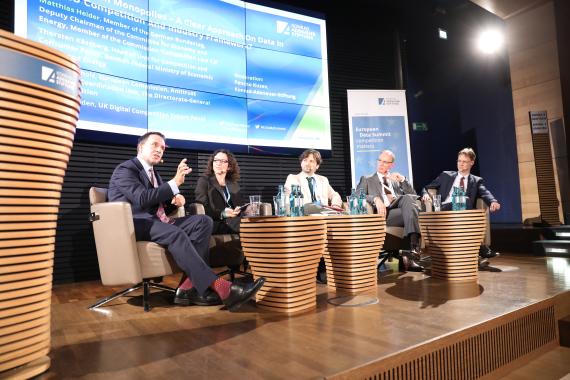
With a view to the global players, ensuring fair competition is of special importance here. At the “European Data Summit”, each year we discuss these issues with international participants from a European perspective.
Artificial intelligence on the rise
Applications of artificial intelligence are increasingly being used to extract added value from existing data. These complex systems can identify patterns in large amounts of data, adjust processes according to the situation or enter into dialogue. This way, they can support processes or decisions with important information. How this is done, depends on the available data, the algorithms in use, and of course, the objectives set by humans in the context of the respective application.
The Konrad-Adenauer-Stiftung closely monitors the rapid development of these technologies, explains fundamental interrelationships, provides analyses from an international perspective, and illustrates both political and ethical implications.
Strengthening Germany's competitiveness with the help of digitalisation
The Konrad-Adenauer-Stiftung pursues the goal of strengthening competitiveness in Germany through digitalisation. It examines the economic and socio-political effects, draws up action recommendations for policy and plays an empowering role with educational opportunities for participation. The focus will be on the European Digital Single Market, data economy, artificial intelligence (AI) and the relationship between regulatory policy and digitalisation.
We think of digitalisation as a cross-cutting issue
Digitalisation is neither a purely technical nor economic issue. It is a cross-cutting issue. That is why the Konrad-Adenauer-Stiftung is also devoted to questions of digital education, the impact on democracy and opinion formation or international politics. Here, we harness our international networks, connect areas of work in the Stiftung and bring together expertise from science, business, society and politics.
European Data Summit
With the European Data Summit, the Konrad-Adenauer-Stiftung organises its annual international conference on data and competition. At the forefront is the relevance of the topic to regulatory projects implemented by the European Union.
Selected publication projects
The Konrad-Adenauer-Stiftung has already developed and carried out several projects on the topic of digitalisation, a selection of which we would like to present to you. This includes a publication series on data policy issues, quantum computer technology or or larger studies on blockchain and Web3.
Web3 and Blockchain

Digitalisation is progressing continuously: from Web1 to Web2 to Web3. Web1 represented the static internet, while Web2 introduced social networks and interactivity. Web3 has the potential to offer more security, privacy and user autonomy. Web3 is based on blockchain technology, which has enabled innovations such as smart contracts, tokens, cryptocurrencies and digital currencies through decentralised structures. It could also contribute to improved data protection in the development of artificial intelligence and strengthen digital sovereignty. Below you will find basic studies and insights into specific areas of application.
Quantum Computers and their Importance for Society

Quantum computing is a salient future technology that harbours enormous economic and social potential. Against this background, our publications on the topic explain basics, possible applications, social implications and provide recommendations for action.
Artificial Intelligence and Human Rights

Our three-part series of articles shows how artificial intelligence (AI) not only increases the work output of an economy, but also affords individuals the opportunity to claim their rights. In two interviews with experts and an interactive web publication, we address the legal issues as well as the design aspect in interactions between humans and machines. We use illustrative examples to show how AI promotes human rights at its current stage of development.
Data Protection Law and Data Trust

With the General Data Protection Regulation (GDPR), Europe not only demonstrated confidence on the path towards a common digital policy, but also established clear and, above all, uniform rules for handling the data of data subjects. Nevertheless, data protection exhibits a mixed picture with plenty of impulses for debate.
The articles of our publication series, in which we also address the topic of data trust, look in detail at various perspectives and inform you about controversial debates and the current state of developments.
Learn more about the publications on data protection law and data trust
Open Data und Open Government
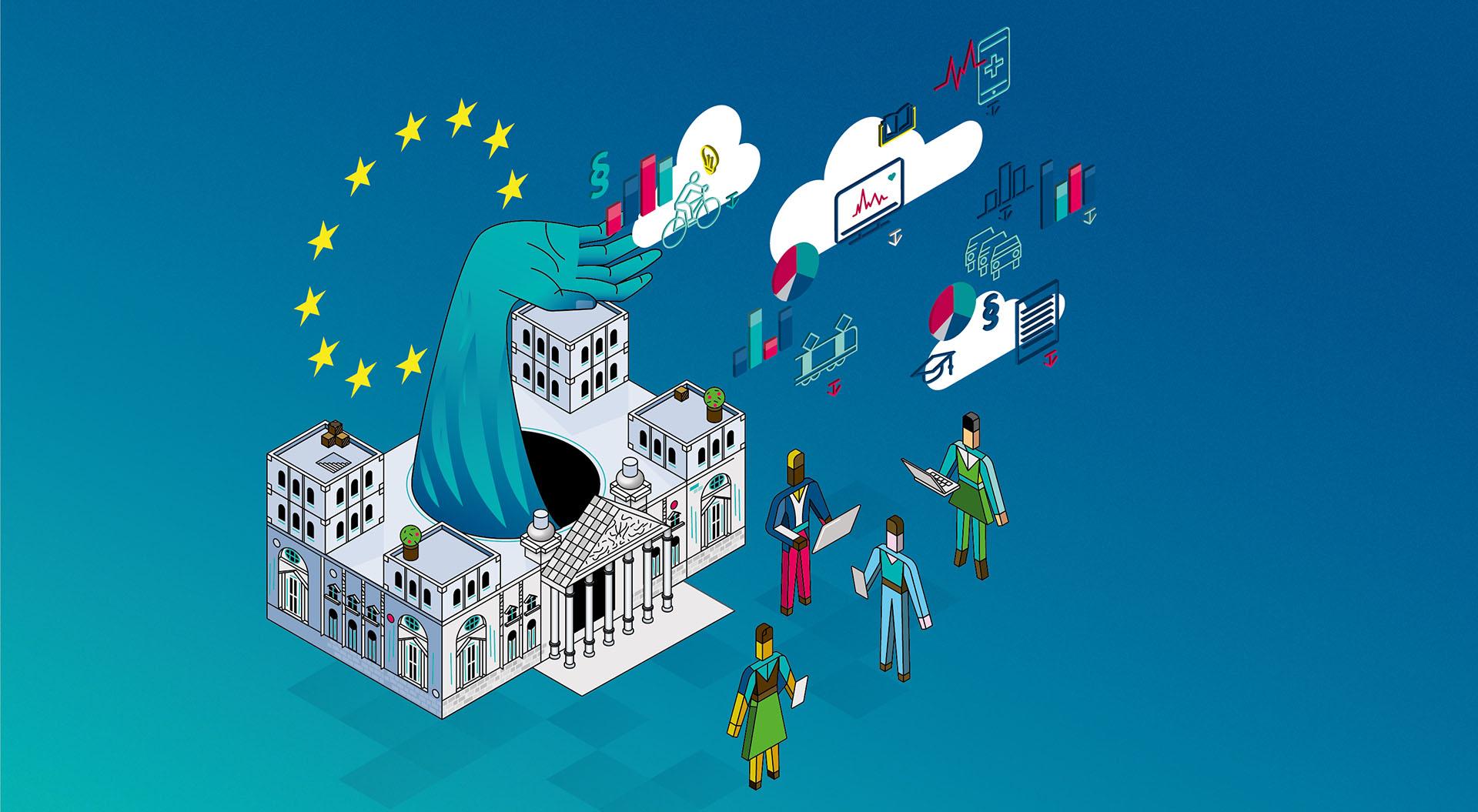
Data is considered to be an inexhaustible and renewable resource. If data could be used collectively on a large scale, experts deem its economic value as being extremely high. A concept that proposes precisely this kind of data usage is called “open data”. Here it is mainly a matter of opening up electronic information for use by everyone, so that it can be re-used and disseminated. This would not only affect politics, science, administration and business, but also the citizens themselves.
Therefore, “open data” represents a multi-faceted topic, which we approach from different perspectives with our publication contributions on “open data” and “open government”.
Competition Policy in the Digital World

Digital platform companies are deemed as the big so-called “gatekeepers” on the digital markets. Above all, Asian and American companies are successful here. The seven most valuable companies worldwide either come from the USA or China. To ensure that Europe does not lose its momentum, it is necessary to look at competition policy issues related to themes such as the data economy or Industry 4.0. After all, safeguarding our social and economic prosperity over the long-term will also largely depend on whether Europe will be able to create the framework conditions that enable it to remain competitive on the international stage.
With our publication project on competition policy in the digital world, we would like to contribute our expertise to this highly topical discussion, and highlight corresponding recommendations for action.
Learn more about the publications on digital competition policy



Publications on this topic
 KALUZA+SCHMID Studio
The Encyclical Magnifica Humanitas and the Renewal of the Social Market Economy in the Digital Age
A Discussion Paper
 yanik88/Smarterpix
Economic expert Christoph M. Schmidt accompanied the KAS for a year
Report on the KAS-Fellowship 2025: Christoph M. Schmidt on innovation, the social market economy, growth potential and Germany’s international competitiveness
 Diplomatic Academy of Viet Nam/ Hoi Thao Phien Chieu
AI in ASEAN and the EU
Challenges, Opportunities, and potentials for Cooperation
 Rawpixel/smarterpix.com, mit KI bearbeitet
Safe Social: Social Media That Protects Kids and Strengthens Sovereignty
Proposal for the creation of a new interoperable European “Safe Social” market: For a social media ban for under-16s – linked to an EU-wide system of certified exemptions
Findings from the Workshop Series: Strengthening Transregional Cooperation on AI Governance
Strategic Input Note
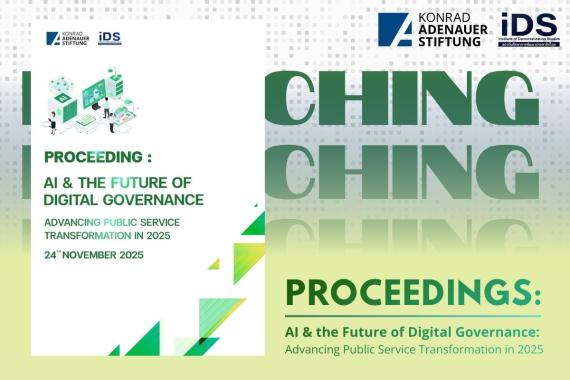
AI and the Future of Digital Governance: Advancing Public Service Transformation in 2025
The proceedings on key discussions, policy insights, and challenges surrounding the transition toward digital government in the age of AI
 KALUZA+SCHMID
The Quiet Driver of Economic Success
Competition Policy with Backbone and Reform Ambition
 KAS
KAS
Gatekeepers in the Cloud
Integrated Intermediation, Indirect Ecosystem Capture, and the Case for Cloud Neutrality
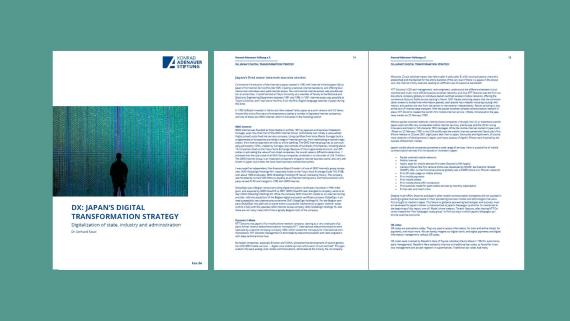
Summary of OpenGov for Citizen
In collaboration with the Office of the Public Sector Development Commission (OPDC) since 2023

 NongAsimo, stock.adobe.com
Three years of ChatGPT – an interim assessment
Where do we stand and what does the future hold for the European economy?


Event Reports on the topic
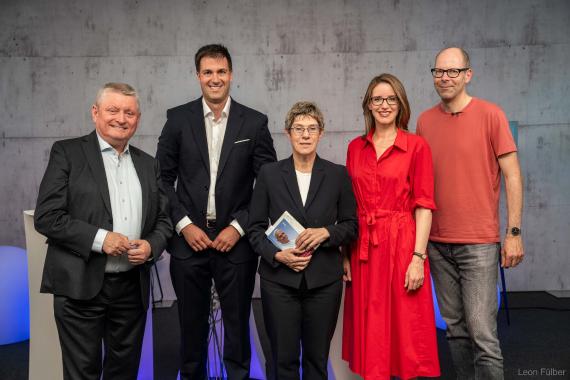 Leon Füllber
AI and Human Dignity
What implications does the encyclical Magnifica humanitas have for politics, the economy, and society?
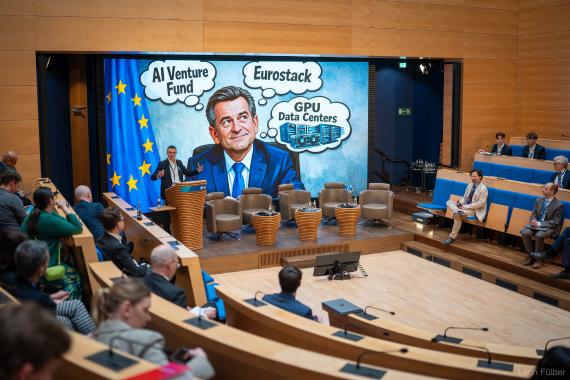 Leon Fülber
European Data Summit 2026 – Enforce. Simplify. Build.
Strengthening Europe’s Digital Economy Between Regulation and Sovereignty
 Beke-Bramkamp
Chance und Herausforderung: KI im Gesundheitsbereich
Werkstattgespräch „KI im Krankenhaus“
 KAS / Leon Fülber
Studienvorstellung: „Stille Triebkraft wirtschaftlichen Erfolgs“
Wettbewerbspolitik mit Rückgrat und Reformgeist
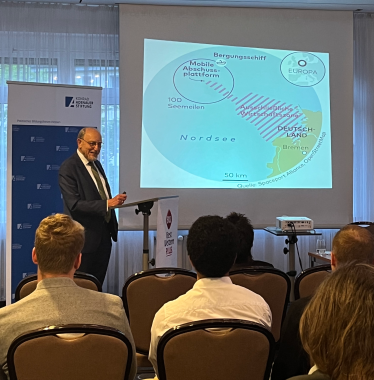
Weltraumsicherheit: Europa muss sich auch im Orbit verteidigen können
Eine Veranstaltung in Kooperation mit der Europa-Union Hessen
 KAS/Lukas Gründel
Vom Norden lernen: Wie Open Source zur Schlüsselstrategie für digitale Souveränität wird
Die Landesverwaltung von Schleswig-Holstein als Open Source Vorreiter

"Wir brauchen für den Wohnungsmarkt einen Befreiungsschlag"
Stadt. Land. Wohnraum? – Der Wohnkongress für alle
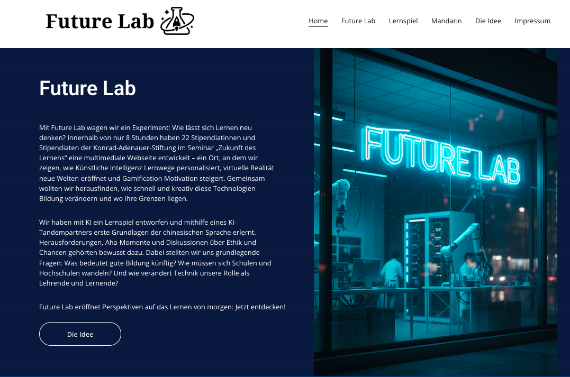
Künstliche Intelligenz, virtuelle Realität und Gamification – Wie sieht die Zukunft des Lernens aus?
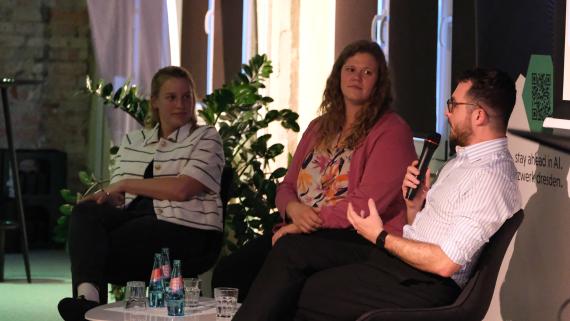 KI Netzwerk Dresden
Künstliche Intelligenz als Brandbeschleuniger?
Veranstaltungsbericht zur Veranstaltung "KI und Extremismus - Brandbeschleuniger oder Alltagshelfer?"
 KAS/Kai Schläfke
Transparenz und Nutzen von Gesundheitsdaten
Die elektronische Patientenakte als großer Schritt für die Digitalisierung im Gesundheitswesen
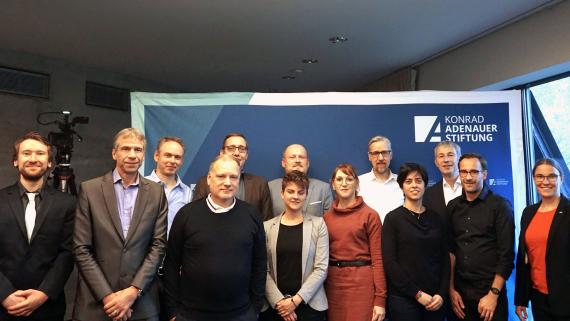
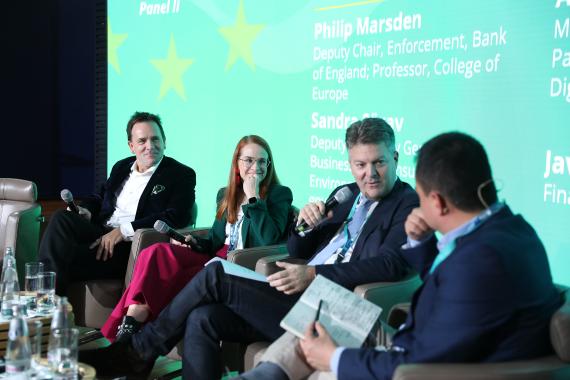 KAS
KAS