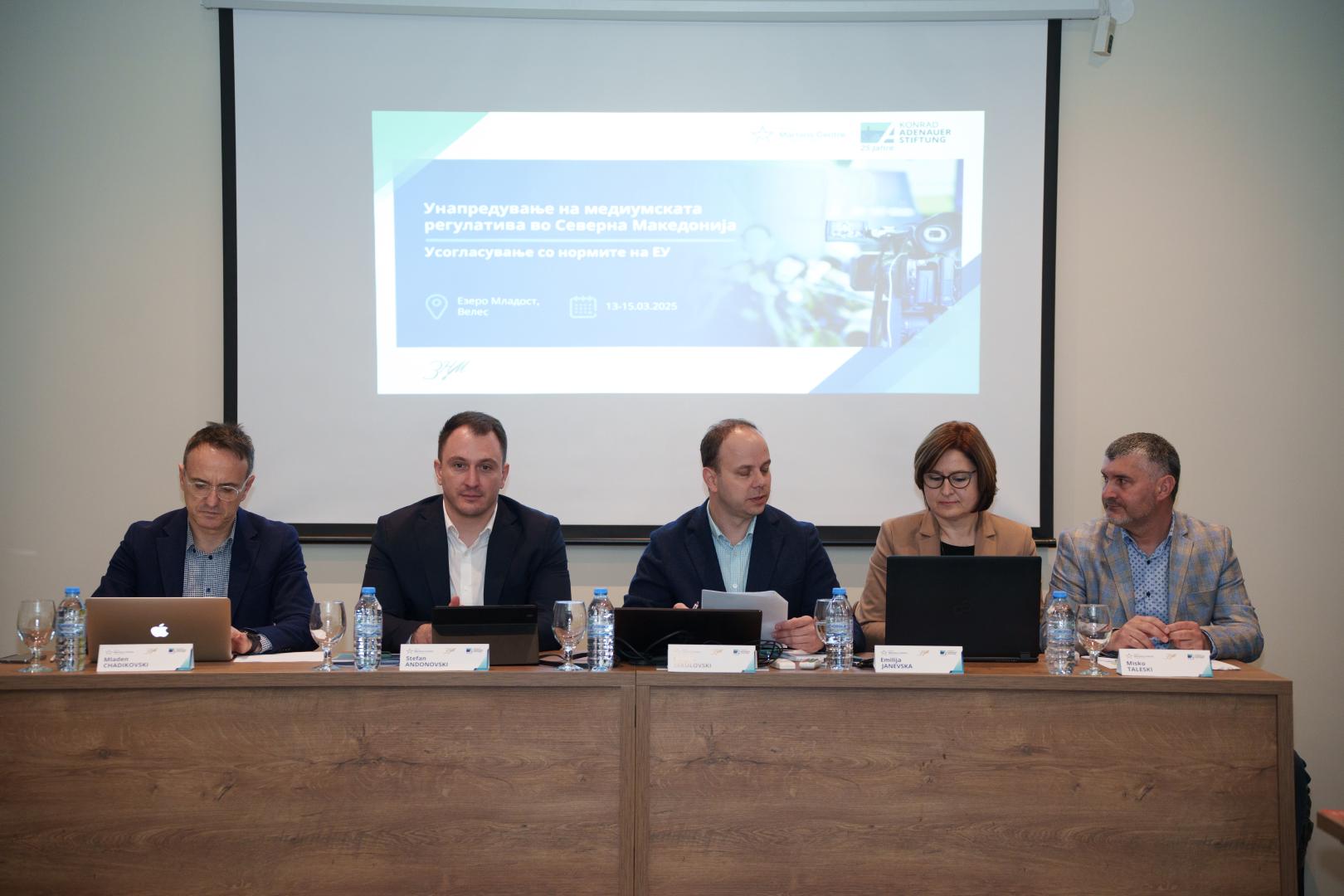
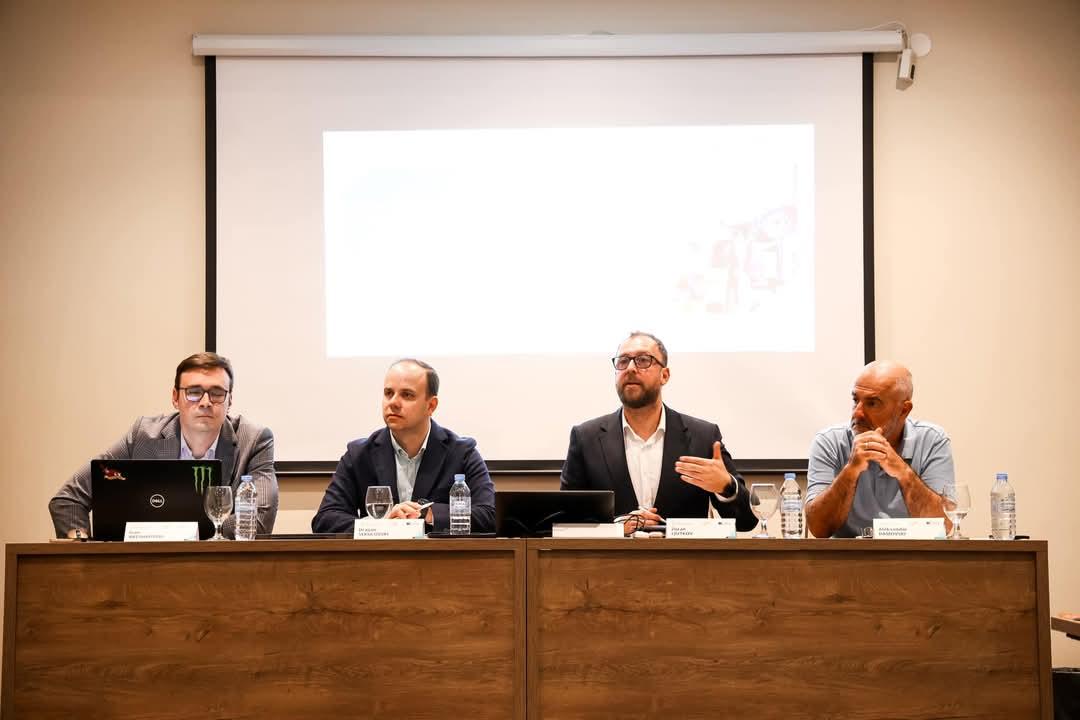
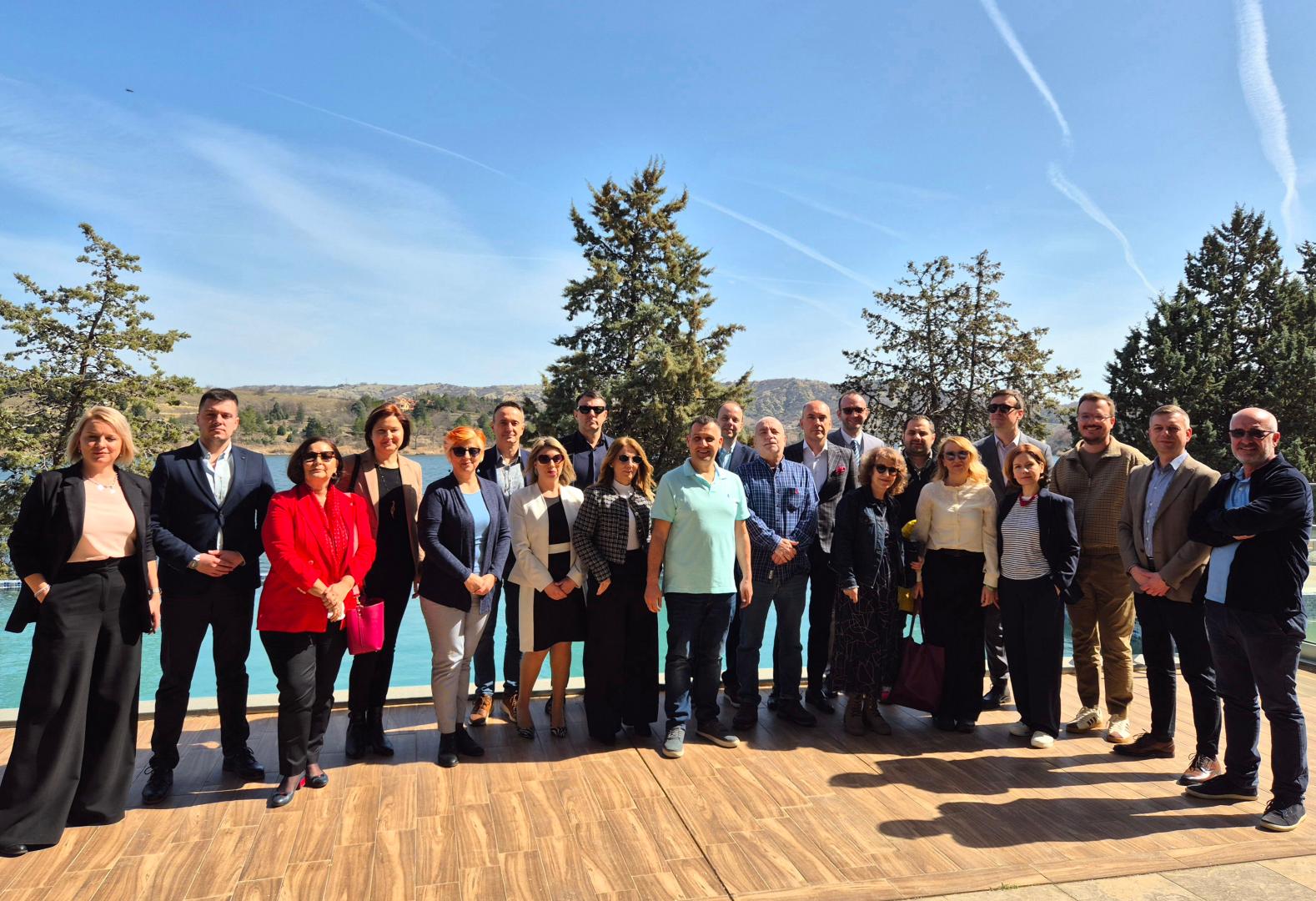
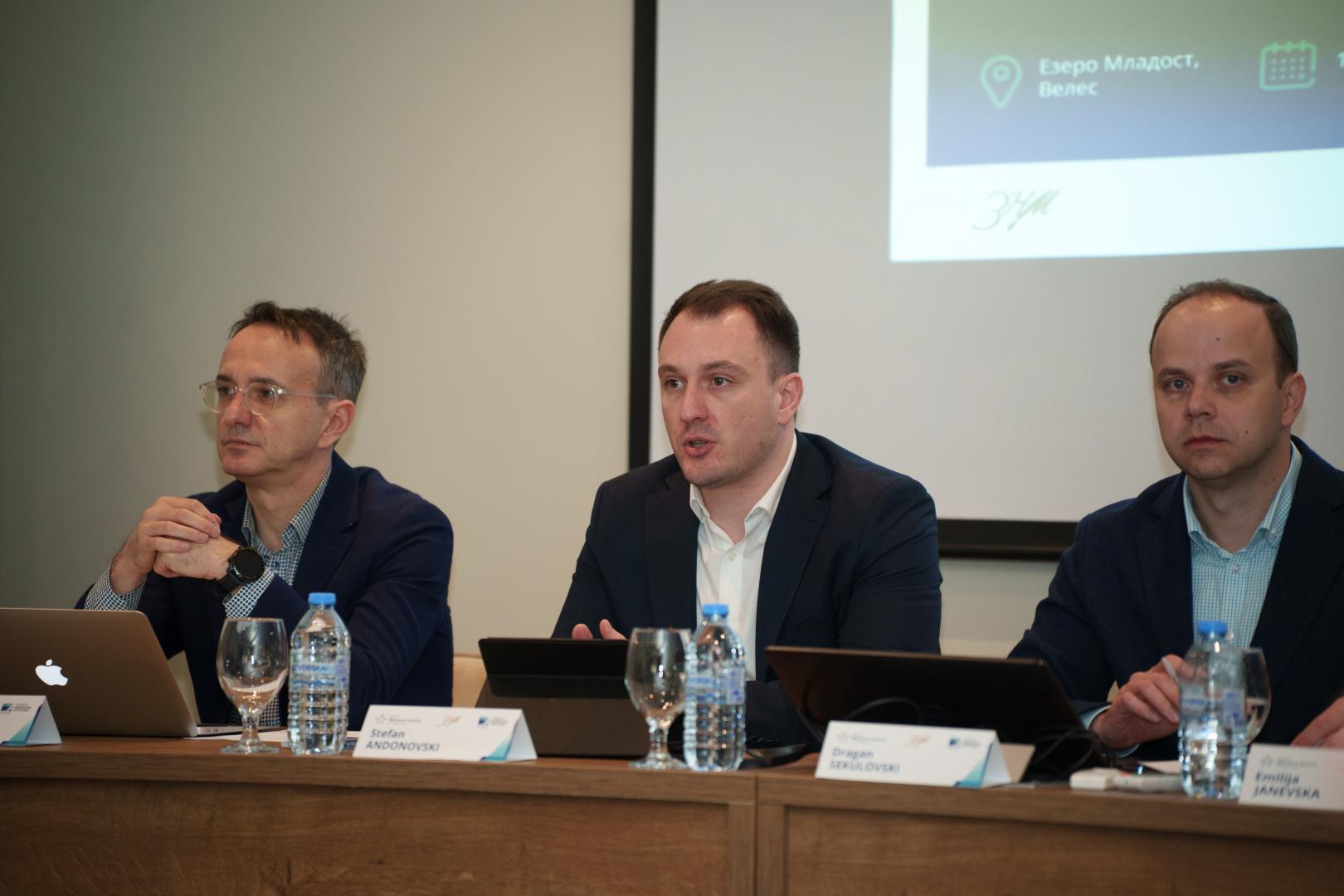
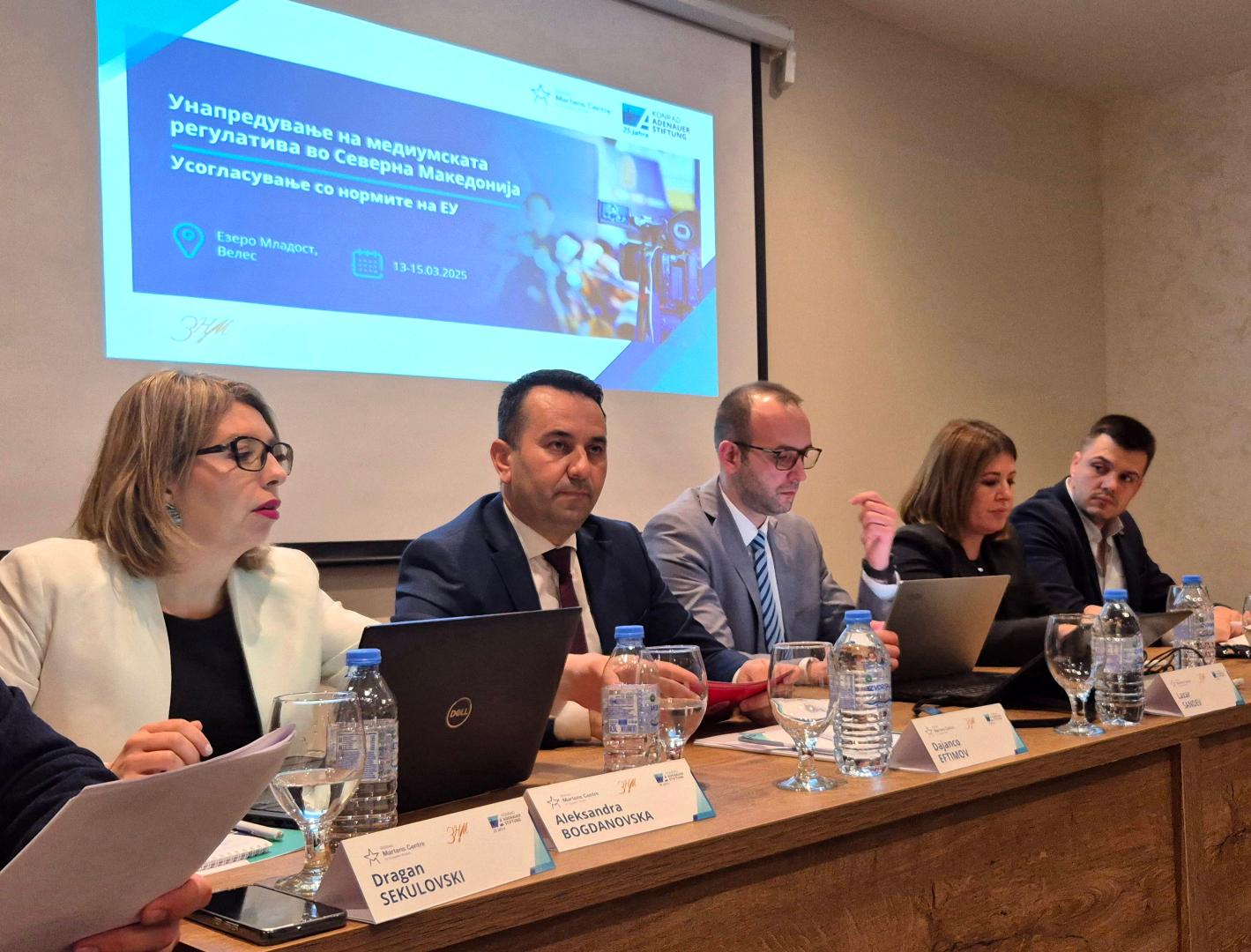
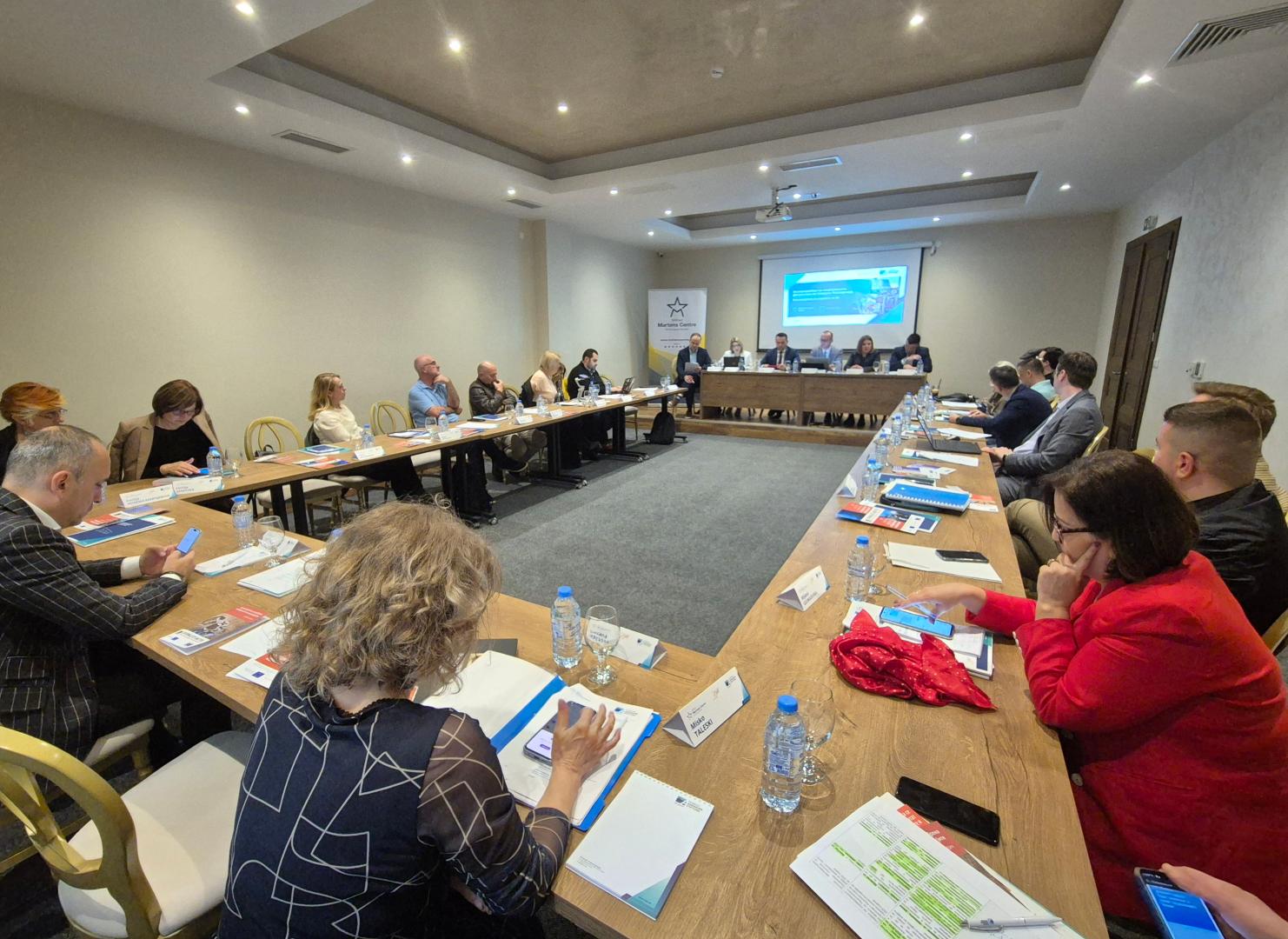
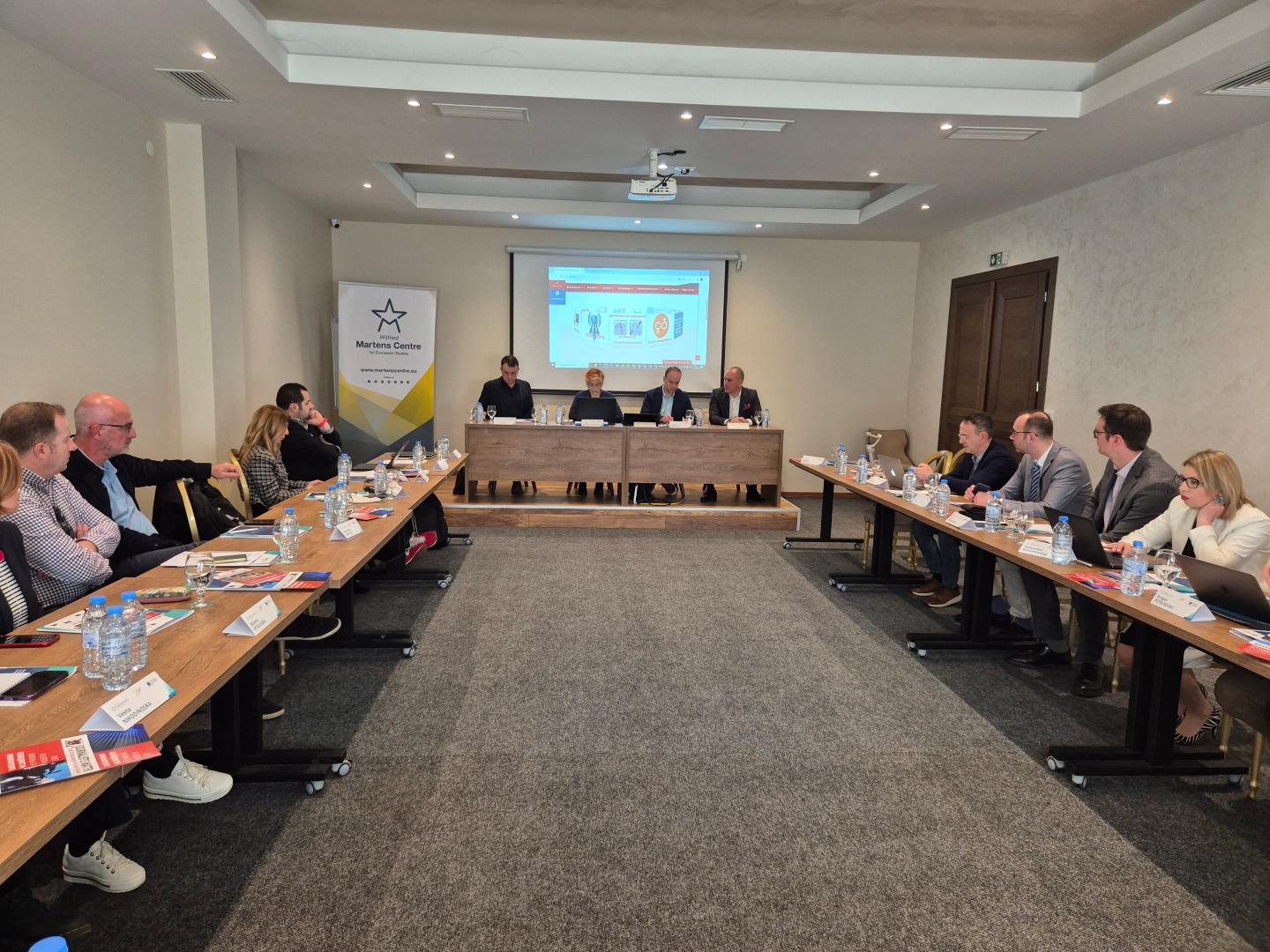
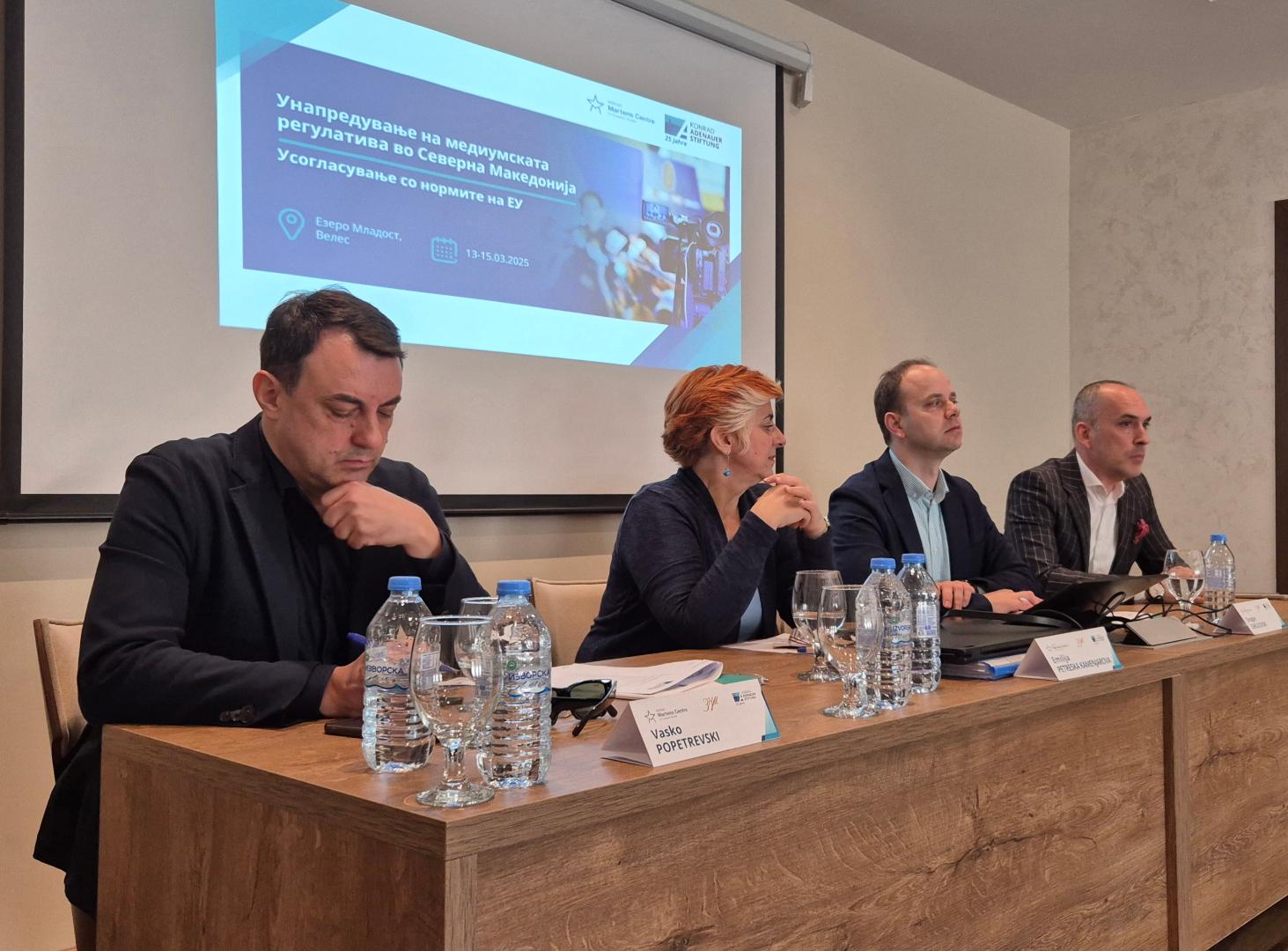
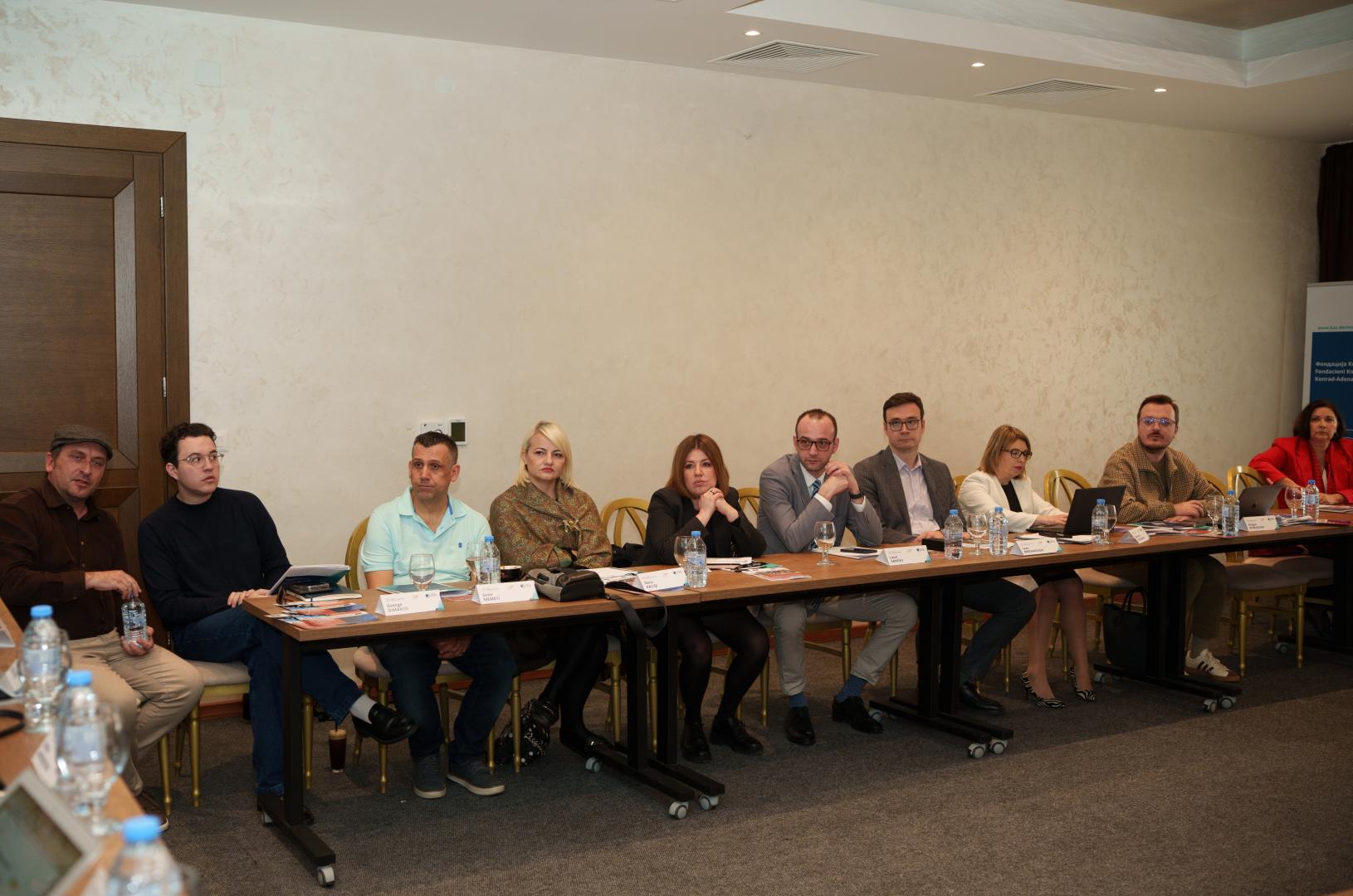
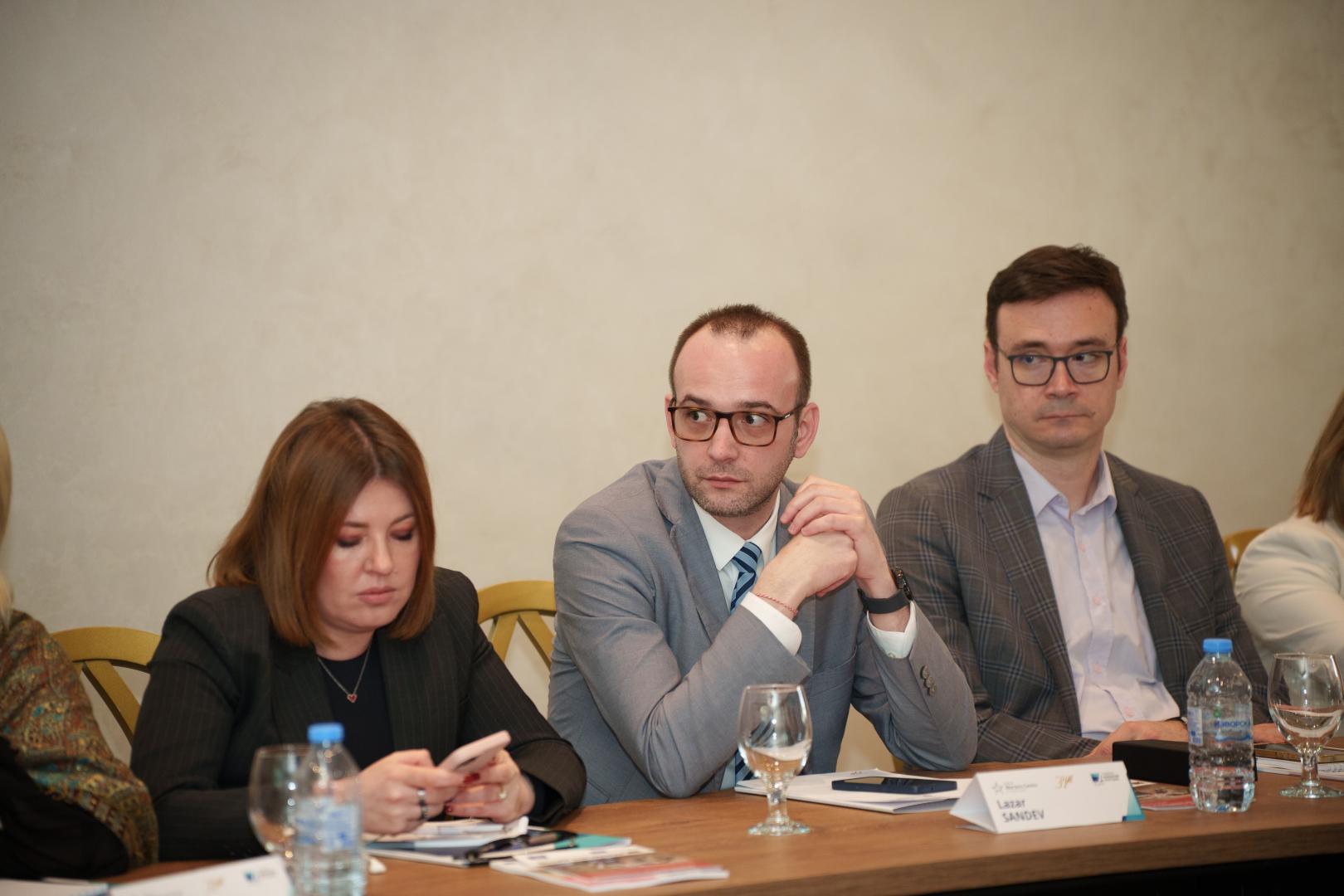
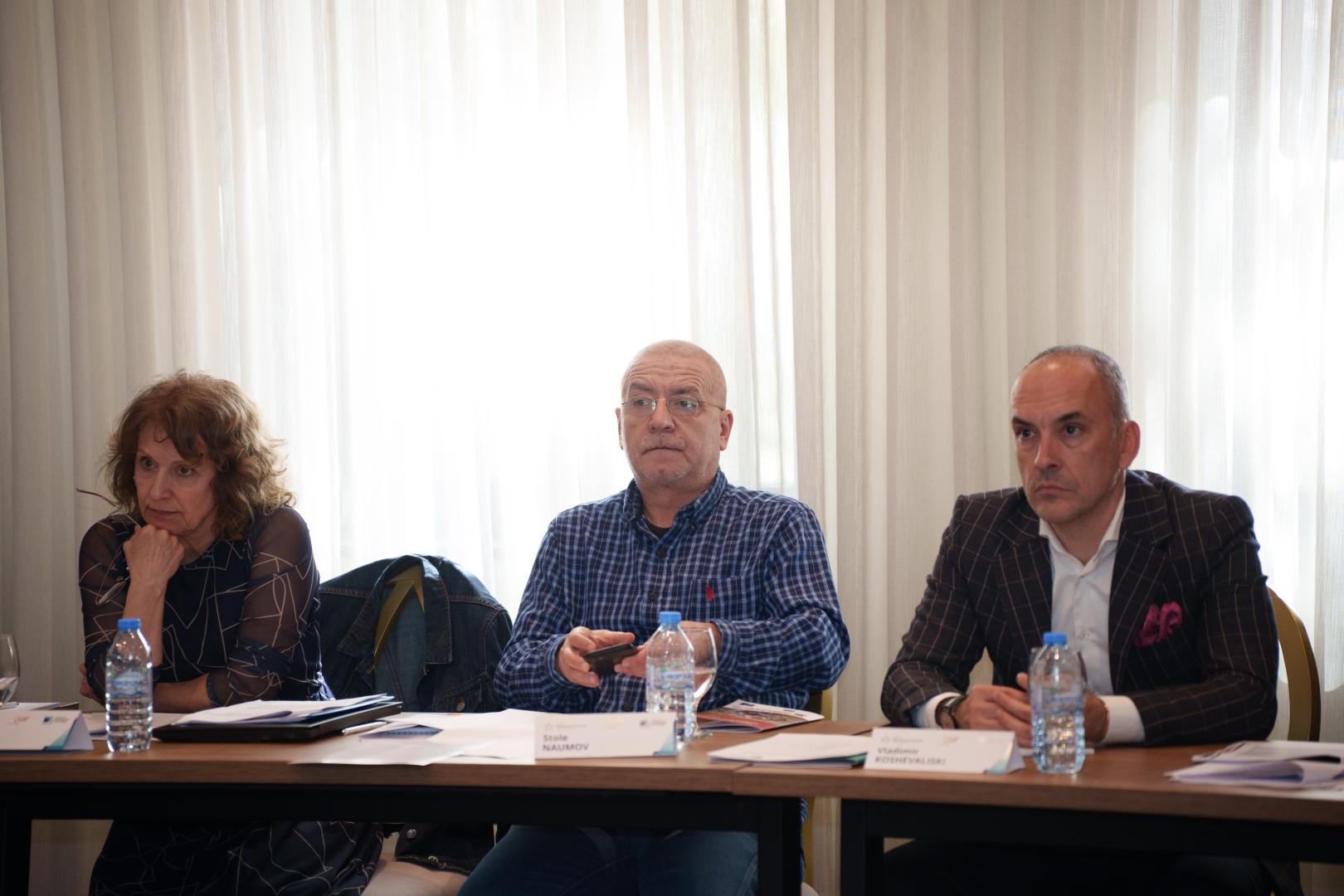
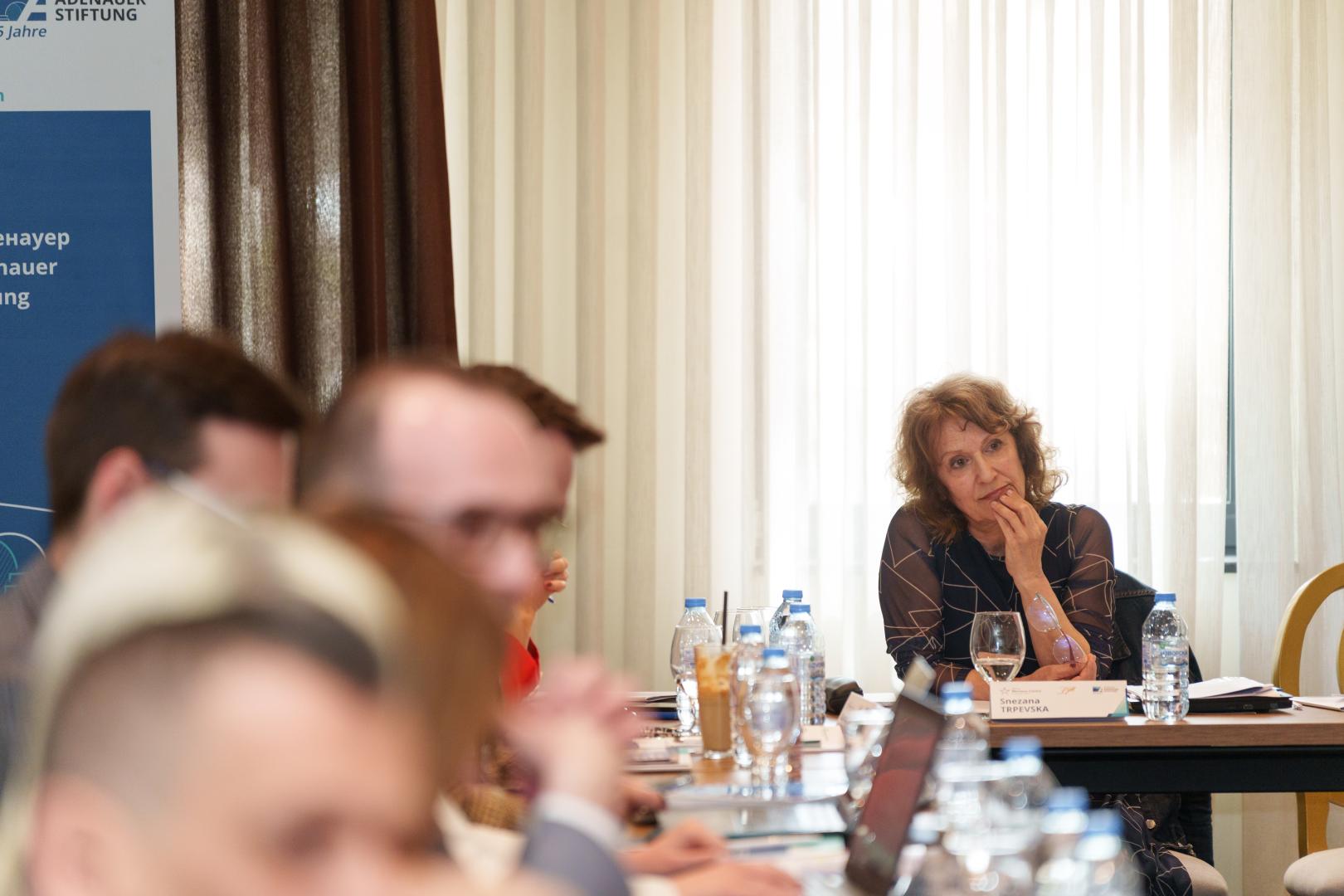
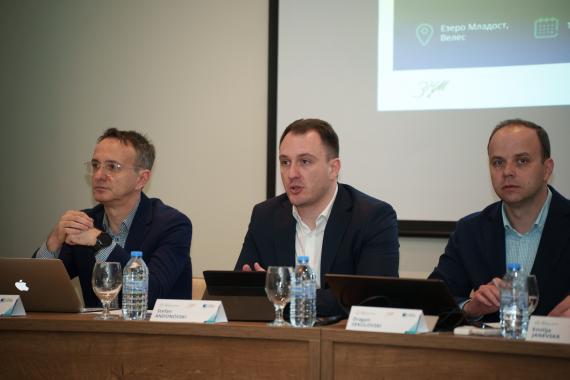
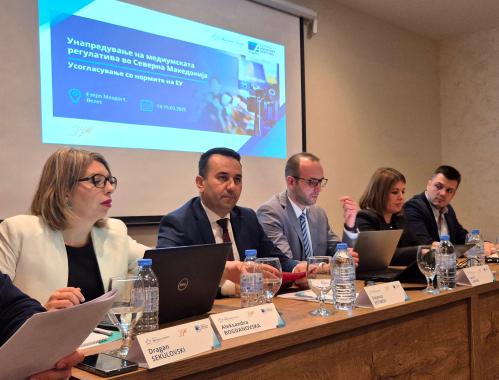
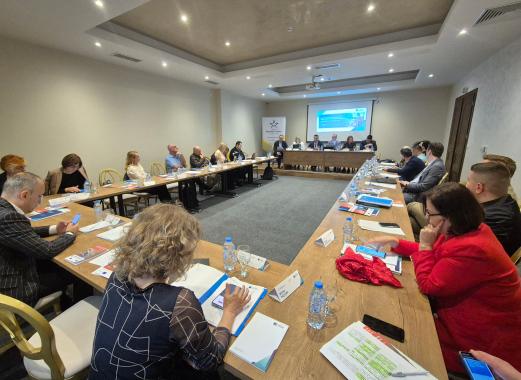
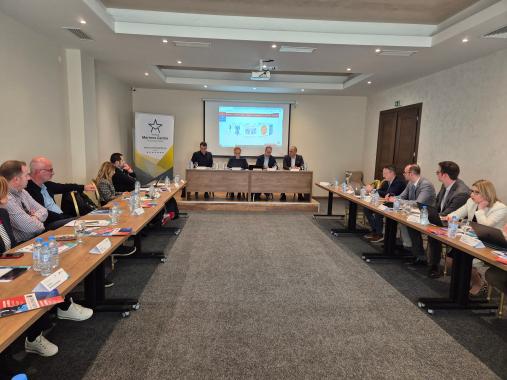
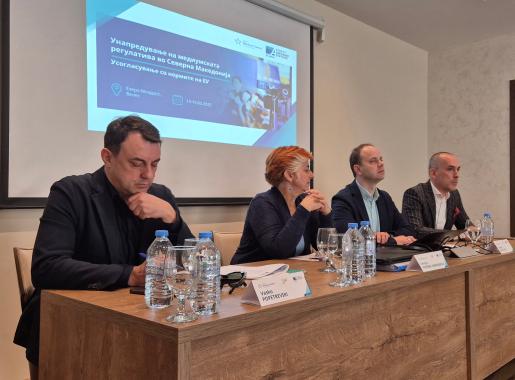
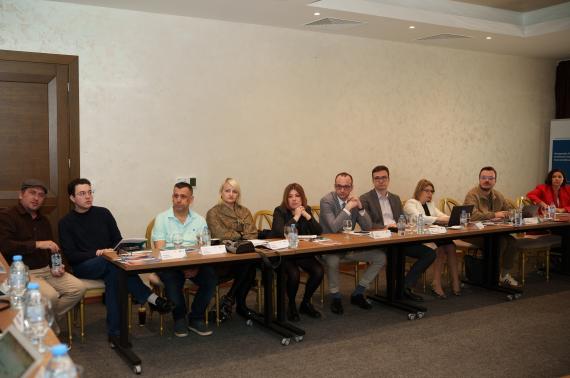
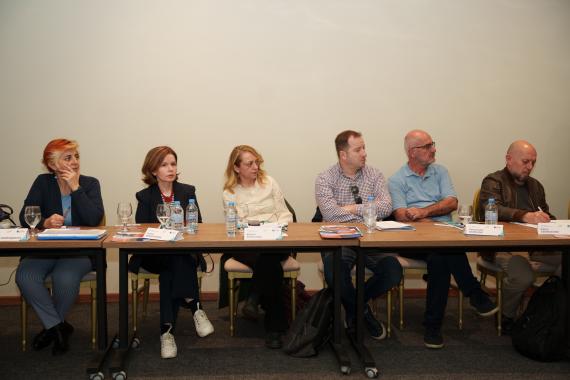
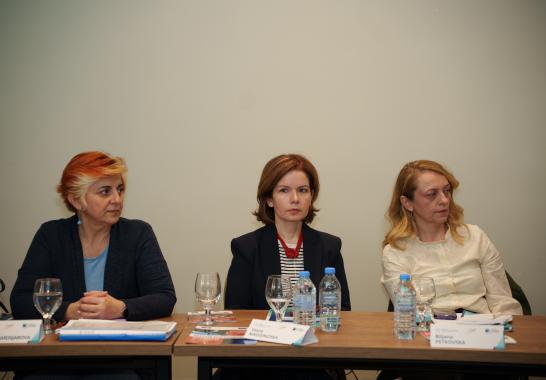
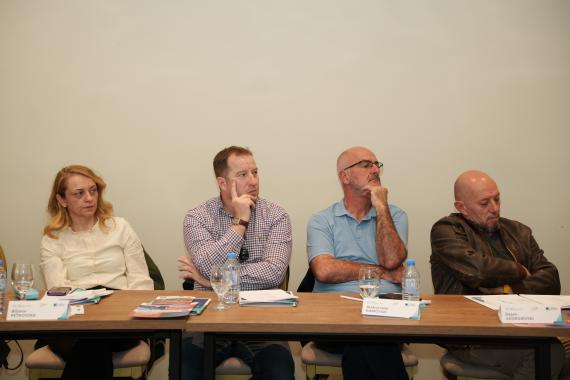
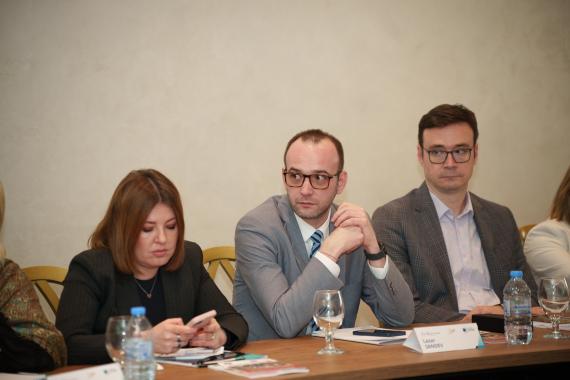
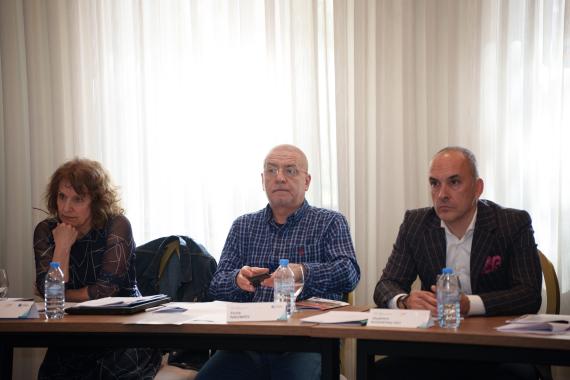
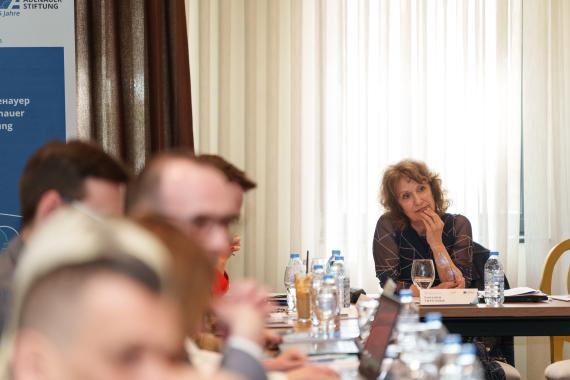
The workshop addressed key topics such as the announced amendments to the Media law, which foresee the introduction of a register for online media; the need to amend the Law on Copyright and Related Rights in order to strengthen protection for journalistic works; and the necessity of systemic solutions to create safeguards against so-called SLAPP (Strategic Lawsuits Against Public Participation) lawsuits targeting media professionals.
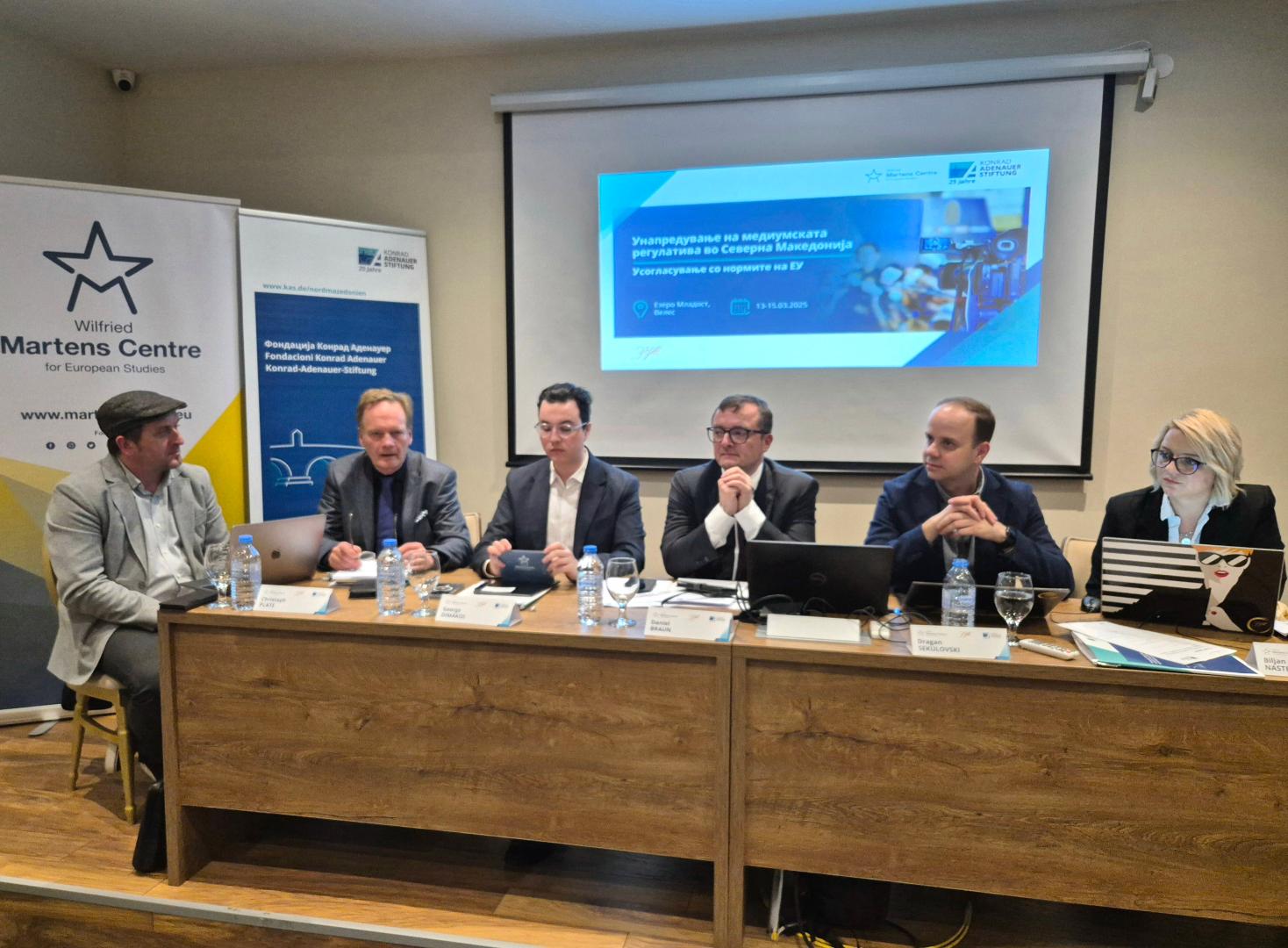
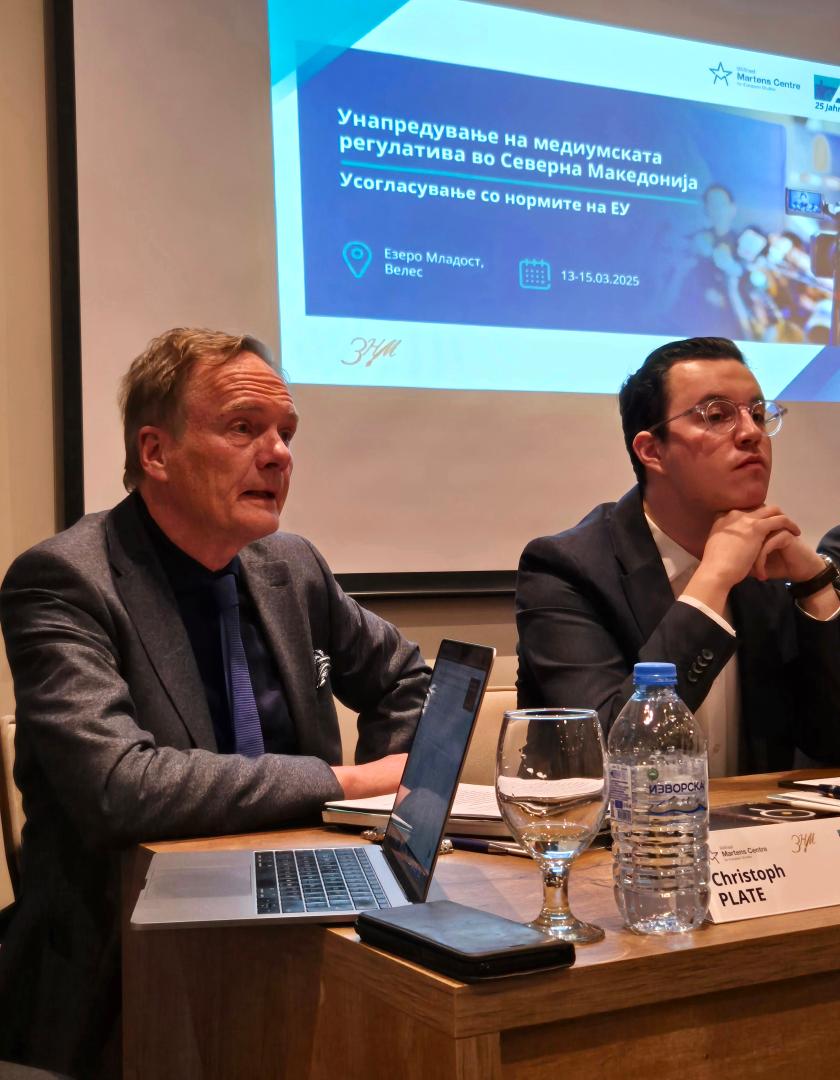
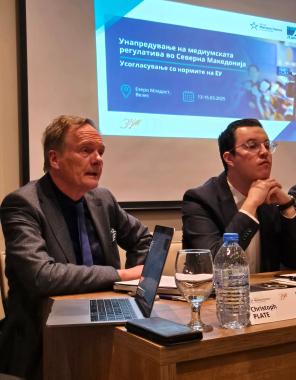
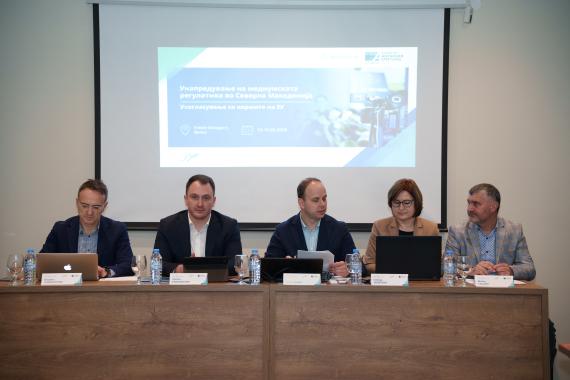
Opening remarks were delivered by Daniel Braun, Official Representative of KAS; George Dimakos, Project Officer from the Wilfried Martens Centre; and Biljana Nasteska-Kalanoska, Communications Officer from AJM. During the opening, Christoph Plate, Director of the KAS Media Programme Southeast Europe, shared his insights on the state of media and media regulation in the region.
In addition to journalists and media experts, the event was attended by Stefan Andonovski, Minister for Digital Transformation; Zoran Ljutkov, Minister of Culture and Tourism; Dajanco Eftimov, State Secretary at the Ministry of Justice; and representatives from the media regulatory body.
The workshop also explored the challenges arising from rapid technological developments, the growing digitalization of media, and frequent legal amendments that do not always align with the best European practices and standards for journalist protection.
Media reforms in the country should aim to increase transparency, protect journalists, and align with European standards. Ensuring an independent and pluralistic media sector requires collaboration between state institutions, media and journalist organizations, and civil society.
Key amendments to the Media Law, which is in the final stages of drafting, relate to the need for alignment with the European Media Freedom Act (EMFA) and the Digital Services Act. One of the main challenges is the absence of a voluntary online media register within the media regulatory authority, as well as the growing influence of news aggregators. The Ministry for Digital Transformation and the regulator propose a model of voluntary online media registration, while the AVMS (Agency for Audio and Audiovisual Media Services) is also planning, via bylaw, a specific register for content creators (influencers, bloggers, YouTubers). The aim is to enhance transparency and professionalism, but concerns remain within the media community about potential selective application of the online media register and possible discrimination against certain media outlets that do not meet the requirement of employing at least three full-time staff members.
Registration is particularly important for online media functioning as civil society organizations, and these types of outlets need to be recognized in the upcoming amendments to the Media Law. Some journalists believe these media should be included in the register of professional media, and their operations should be clearly defined in the law to prevent selective enforcement. Minister Andonovski noted that the draft amendments to this law are in their final phase and will soon enter parliamentary procedure.
There has been a noticeable increase in SLAPP lawsuits, used as tools to silence critical media and investigative journalists. On this topic, State Secretary Dajanco Eftimov stated that the Ministry of Justice will continue focusing on improving the situation to enable journalists to carry out their work professionally and with dignity.
These lawsuits, filed by powerful individuals or corporations, aim to discourage journalists and media organizations through lengthy and costly legal proceedings. The lack of adequate legal mechanisms for protection means that media professionals are often left at the mercy of the legal system without sufficient support or protection. In 2024, the European Parliament adopted the so-called Anti-SLAPP Directive, alongside recommendations from the Council of Europe, guiding member states to develop anti-SLAPP legislation by amending procedural laws in both civil and criminal domains.
Another challenge in the media sector is the protection of copyright for media professionals, particularly regarding the recognition of journalistic texts as original works. The digital era has introduced new forms of content use and distribution, necessitating legal reforms that will ensure fair compensation for journalists whose work is used across different platforms. In this regard, it is essential to harmonize national legislation with EU directives that foresee greater protection of copyright and regulate relationships among media workers, editorial offices, and digital platforms—especially considering that the current law dates back to 2012 and EU directives have since evolved.
In his speech, Minister of Culture and Tourism Zoran Ljutkov emphasized that in times of rapid technological advancement, copyright protection is under threat. The digital revolution poses risks, especially for the rights of journalists, photojournalists, and other media professionals. He also noted that the Ministry of Culture is working on reforms to align national regulations with European standards and to create a sustainable model for financing and protecting media authors.
One of the proposed mechanisms for addressing media pluralism is the establishment of a Media Pluralism Fund. The proposal has already been submitted to the Ministry for Digital Transformation, but there remains a need for clear criteria, an independent commission, and transparent monitoring of fund distribution.
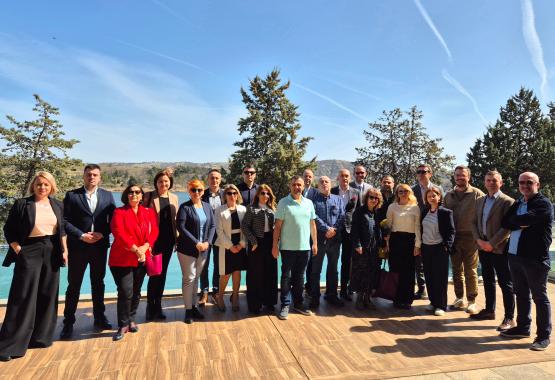
The workshop provided a platform for exchanging ideas and discussing ways to improve the media landscape in the country. Participants emphasized the need for continued work on legislative improvements to ensure a transparent, professional, and independent media sector.