First-year political record and German-British friendship treaty
One year after taking office, Prime Minister Keir Starmer surprises with a foreign policy record that even sceptics acknowledge. He has succeeded in repositioning the UK as a global and European player - with initiatives to support Ukraine, to build and expand European defense capabilities and through international trade agreements. One of his most important successes is undoubtedly the rapprochement with Europe. At the beginning of his term of office, Starmer announced a “Brexit reset” in order to advance cooperation with European partners. Relations with Germany in particular are a high priority. During the first official visit by Federal Chancellor Friedrich Merz on July 17, a comprehensive bilateral agreement will be signed with Germany - the most far-reaching agreement that the UK has ever concluded with a single European country. Starmer himself speaks of a “generational treaty”.
Domestically, however, the balance sheet is mixed. The Prime Minister is under pressure - from his own party, from an increasingly dissatisfied electorate, and from the opposition. The right-wing populists from Reform UK are a particular concern. His government policy sometimes seems contradictory: pragmatic in its implementation but often lacking a discernible guiding principle. Since taking office, Starmer has shown considerable ideological flexibility - a course that is causing friction within the party. Even before the election, he had already led Labour towards the political center; in many areas, his government is now following the agenda of its Conservative predecessors. This change of course is particularly evident in migration policy, but is also reflected in other areas: deregulation of environmental protection in some areas, cuts to the welfare state and a significantly increased defense budget at the expense of international development cooperation. On the occasion of the first anniversary of the Starmer government, one might provocatively ask whether Labor are the better conservatives.
#11: Hannah Lim on Legal Technology in South East Asia
As Head of Rule of Law and Emerging Markets at LexisNexis in Singapore, Hannah identifies areas where LexisNexis can, leveraging on technology, support the rule of law.
#6: Lee San Natalie Pang on the General Data Protection Regulation & its influence in Southeast Asia
For the last episode of our first series “Data Protection” we go to Asia and take a closer look at the Southeast with Dr Lee San Natalie Pang, our expert on Data Protection.
#5: Ridwan Oloyede about the GDPR and its influence in African legal framework
Ridwan Oloyede is co-founder of a Nigerian start-up, that helps businesses to achieve operational excellence through the reliable and efficient application of technology.
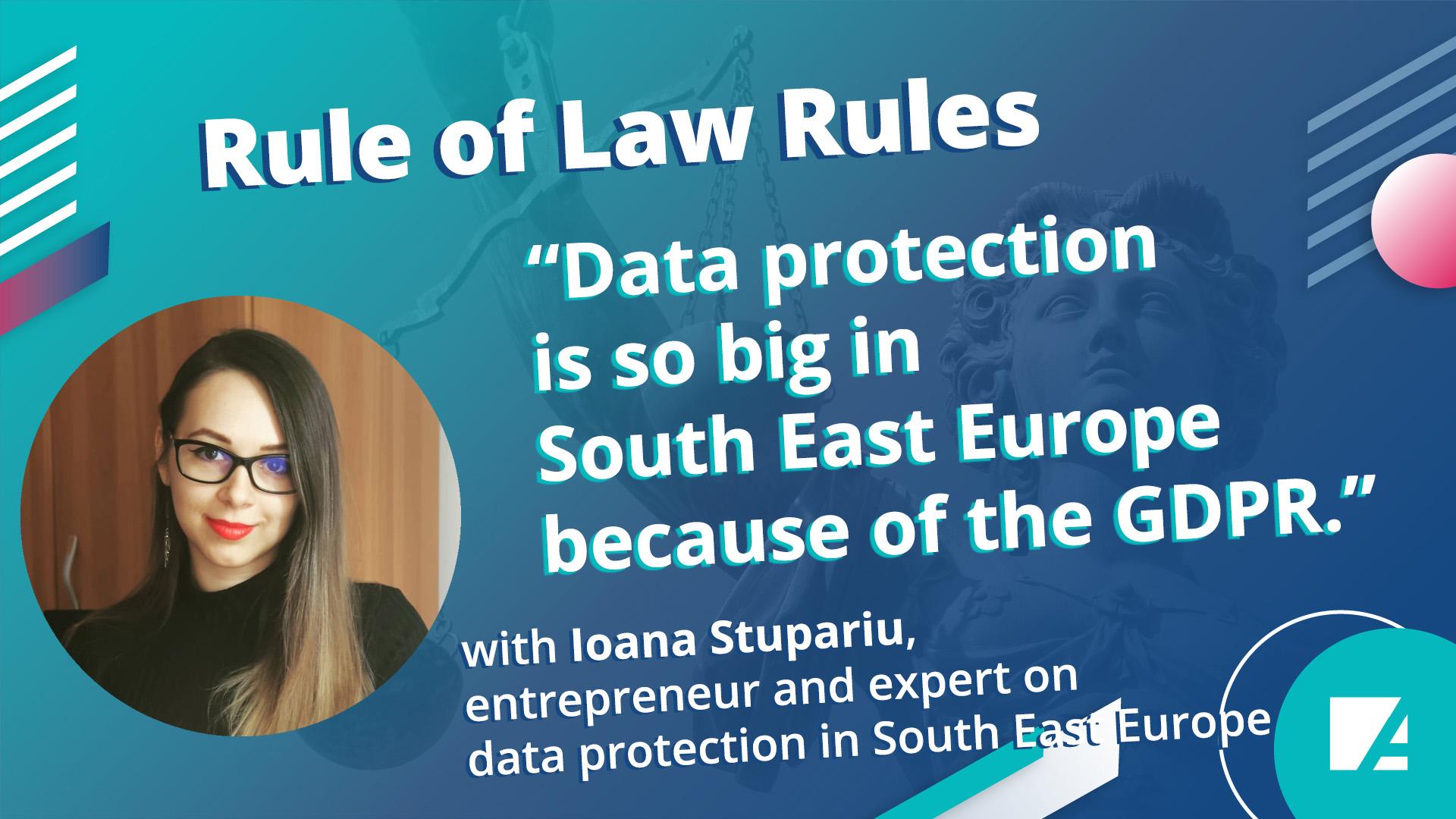
#2: Ioana Stupariu on the GDPR's influence in South East Europe
Ioana Stupariu works with tech and healthcare start-ups and companies across Central and Eastern Europe. And she researches on Data protection & Privacy.
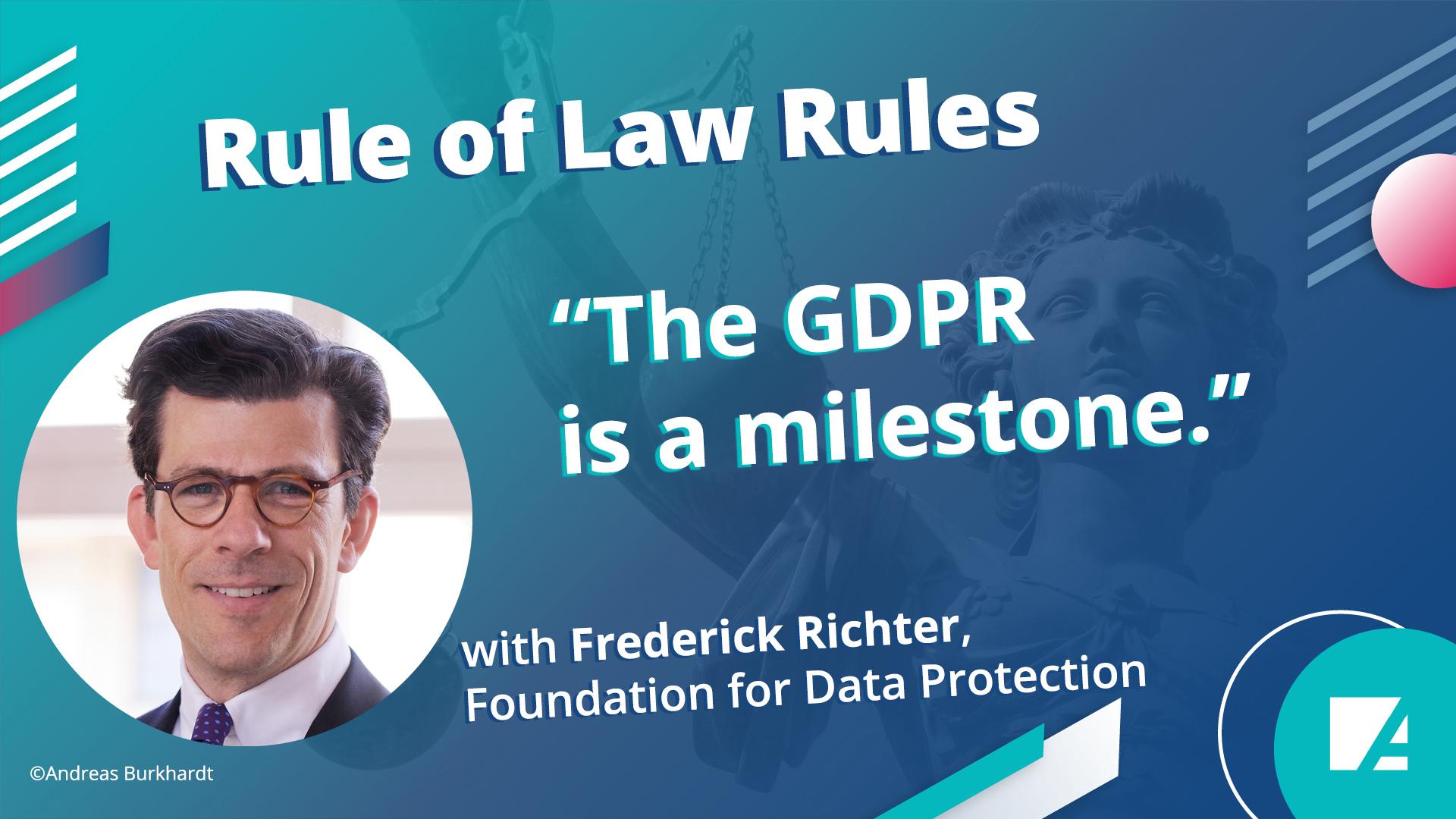
#1: Frederick Richter on the the EU’s GDPR and data protection worldwide
We look at the EU’s GDPR: How is data protection handled in other parts of the world? How can we establish international standards? And what will happen next?