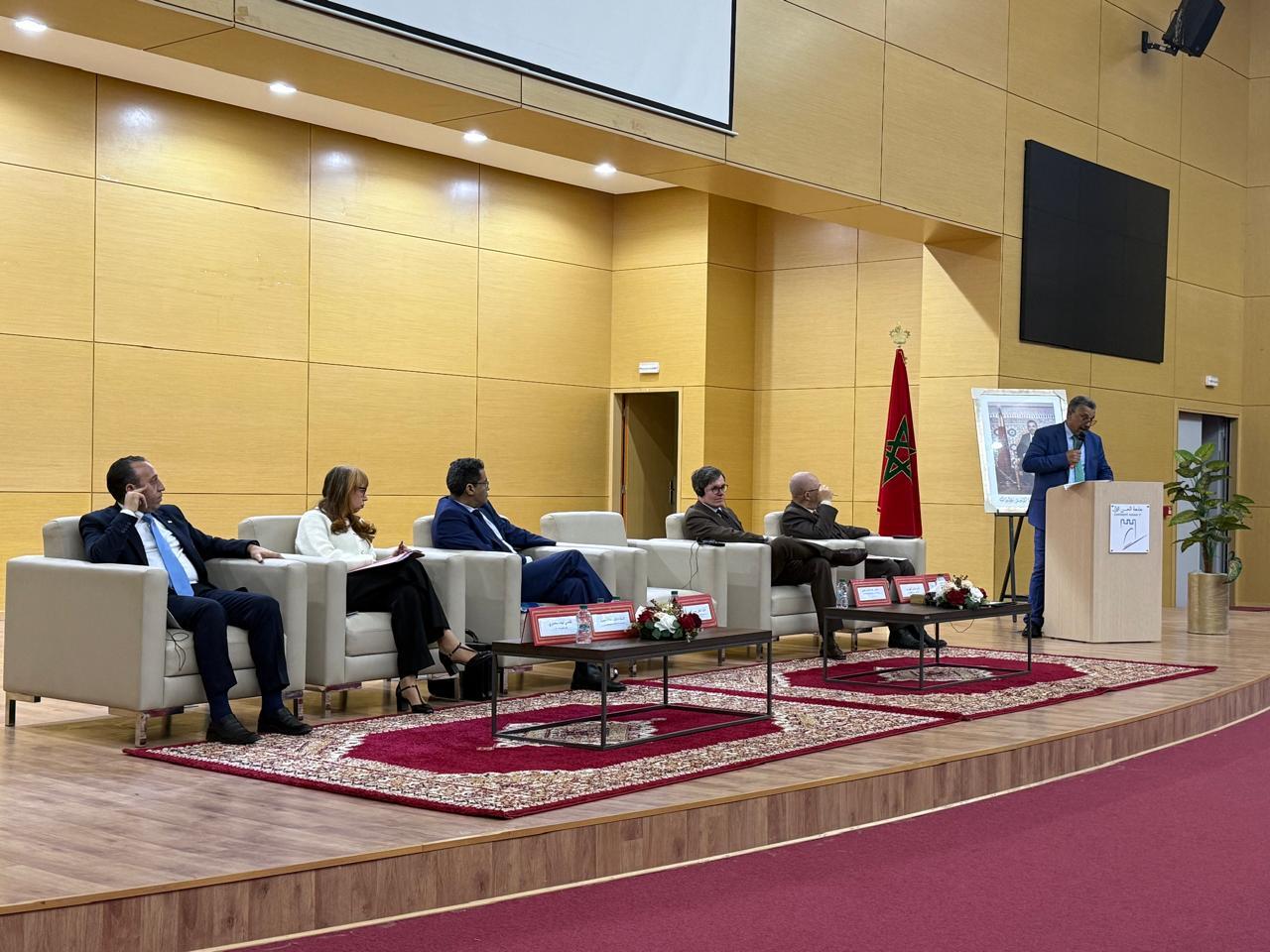
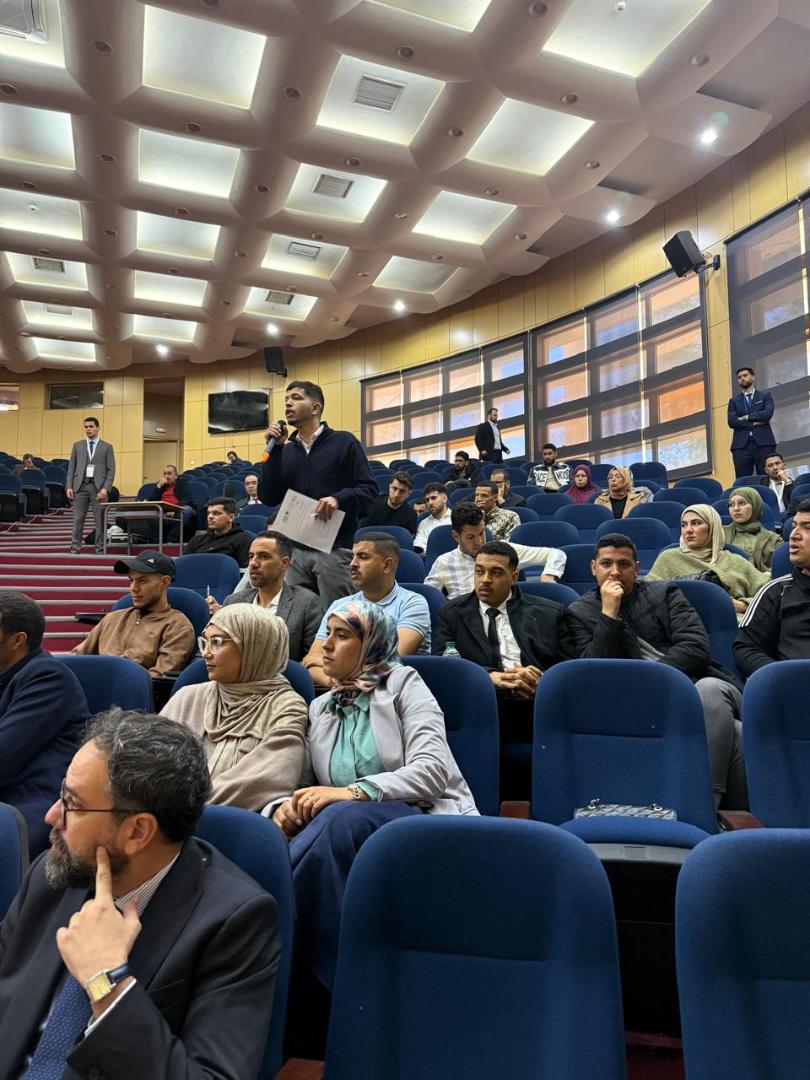
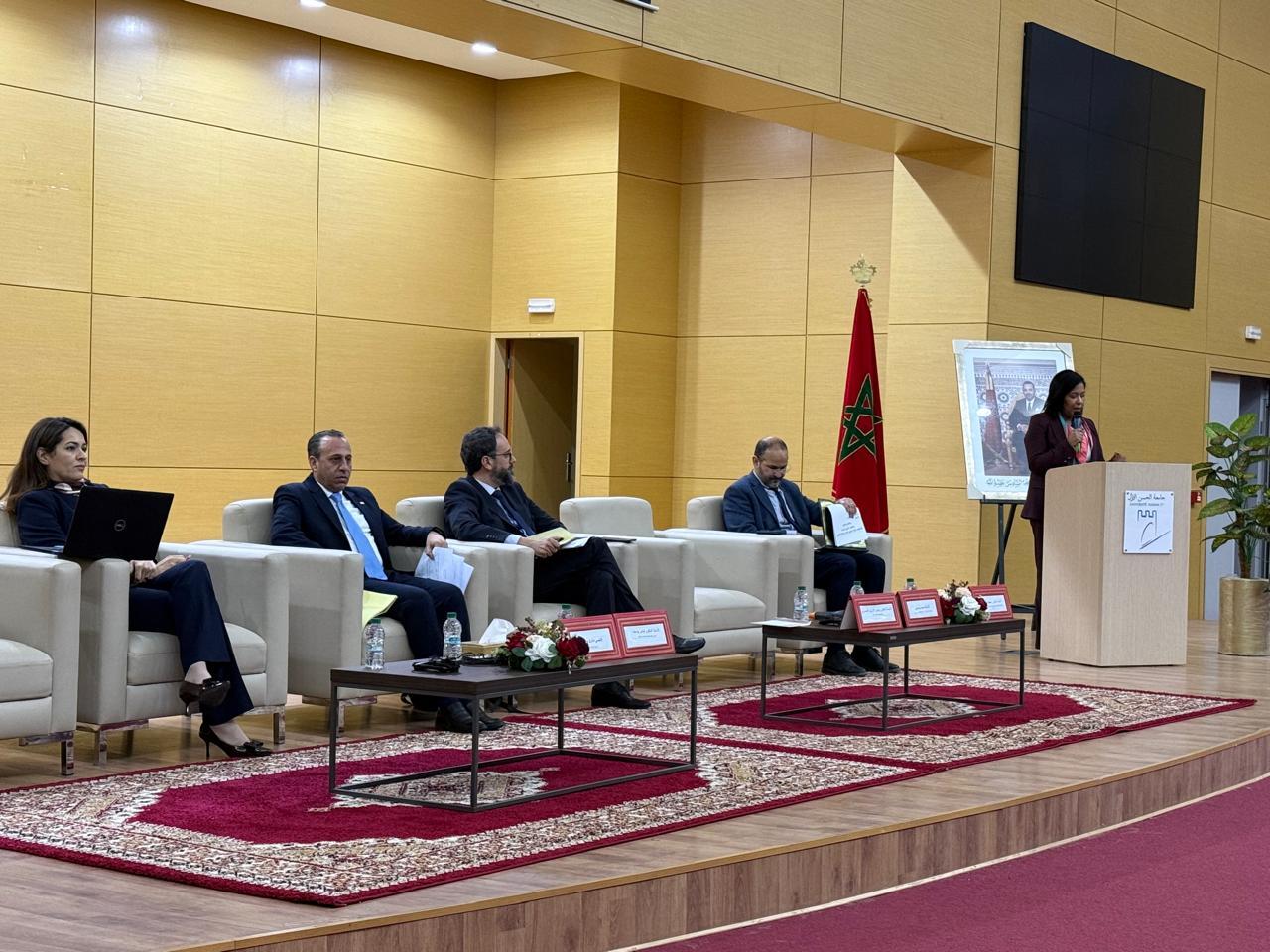
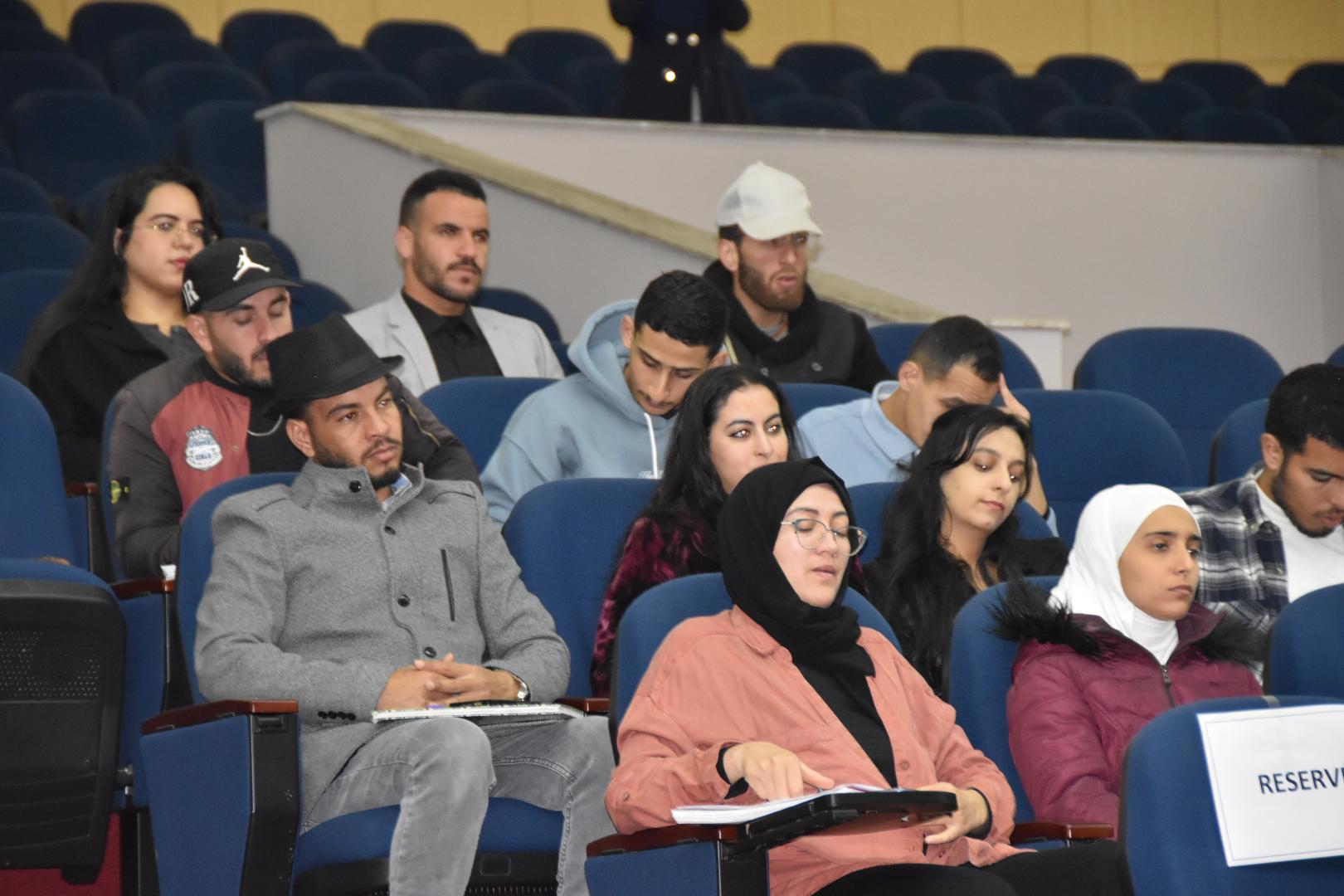
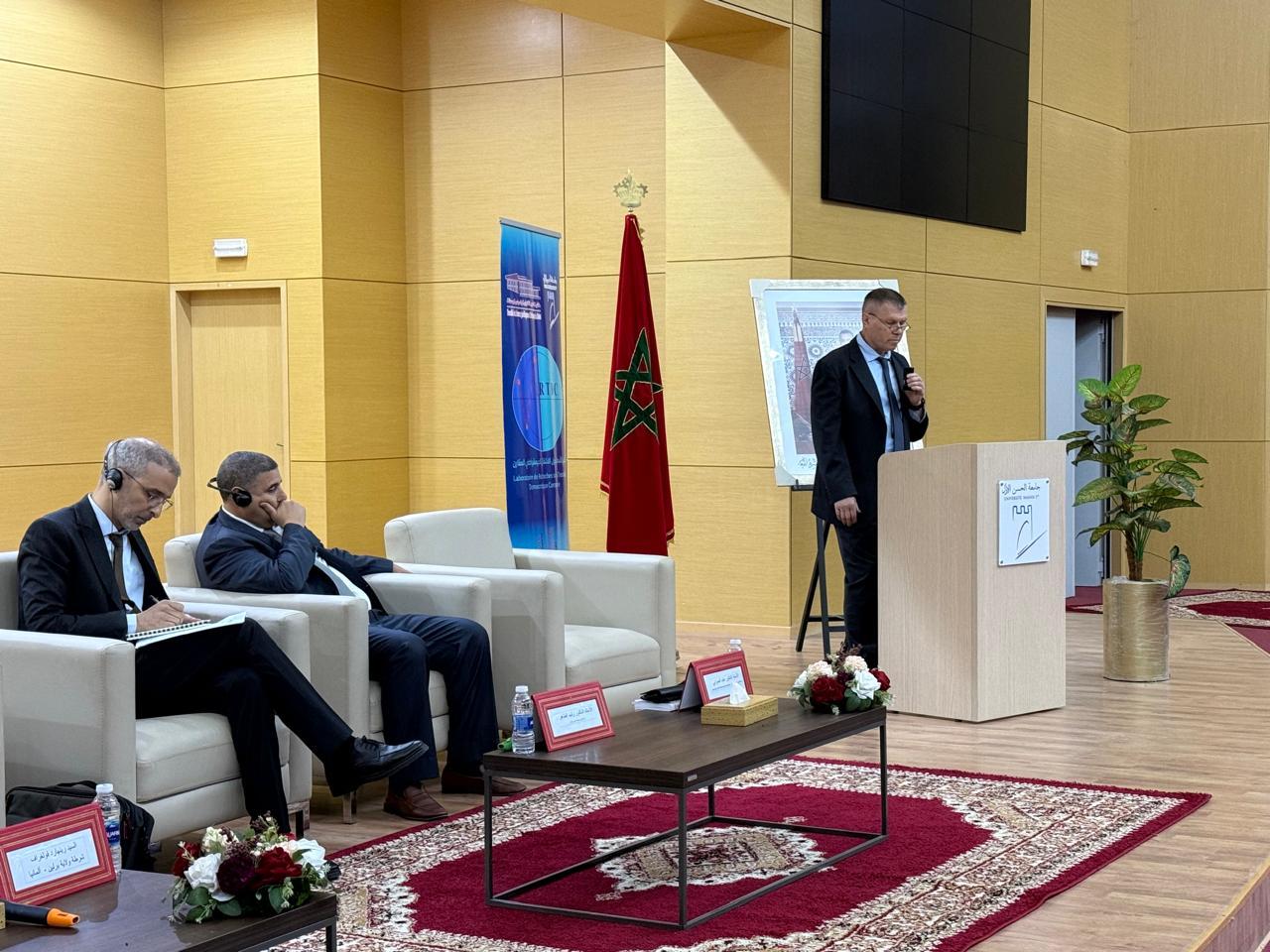
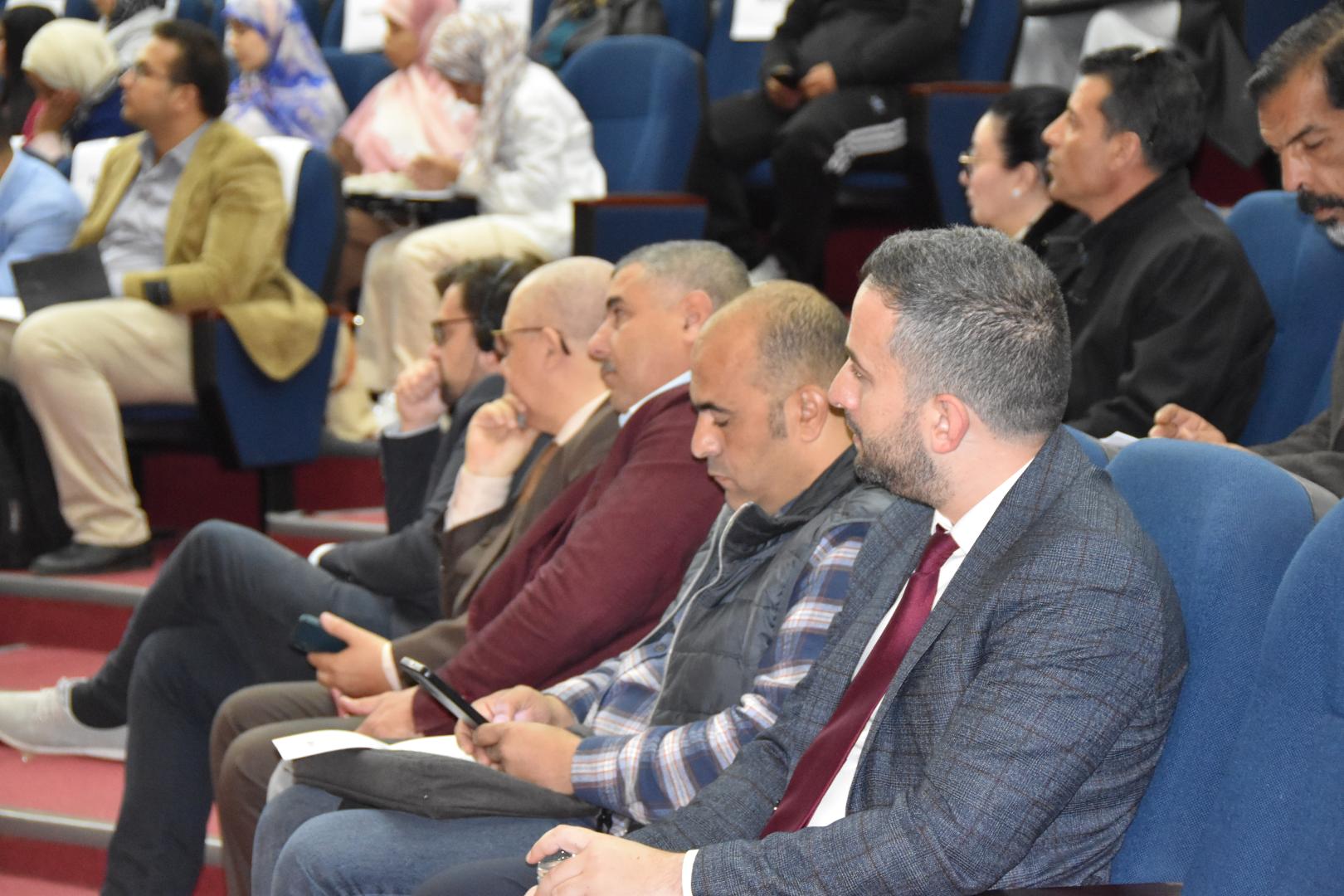
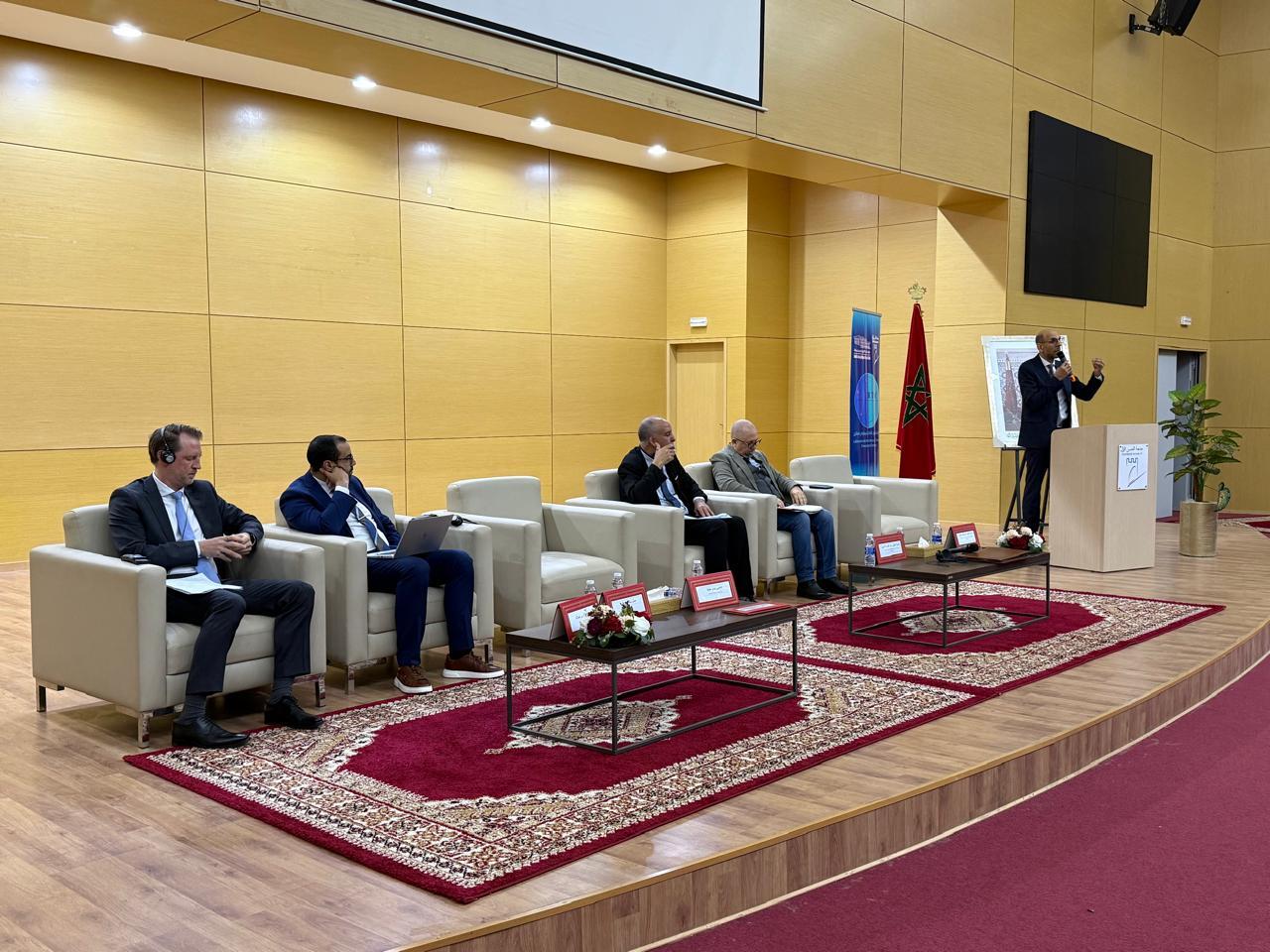
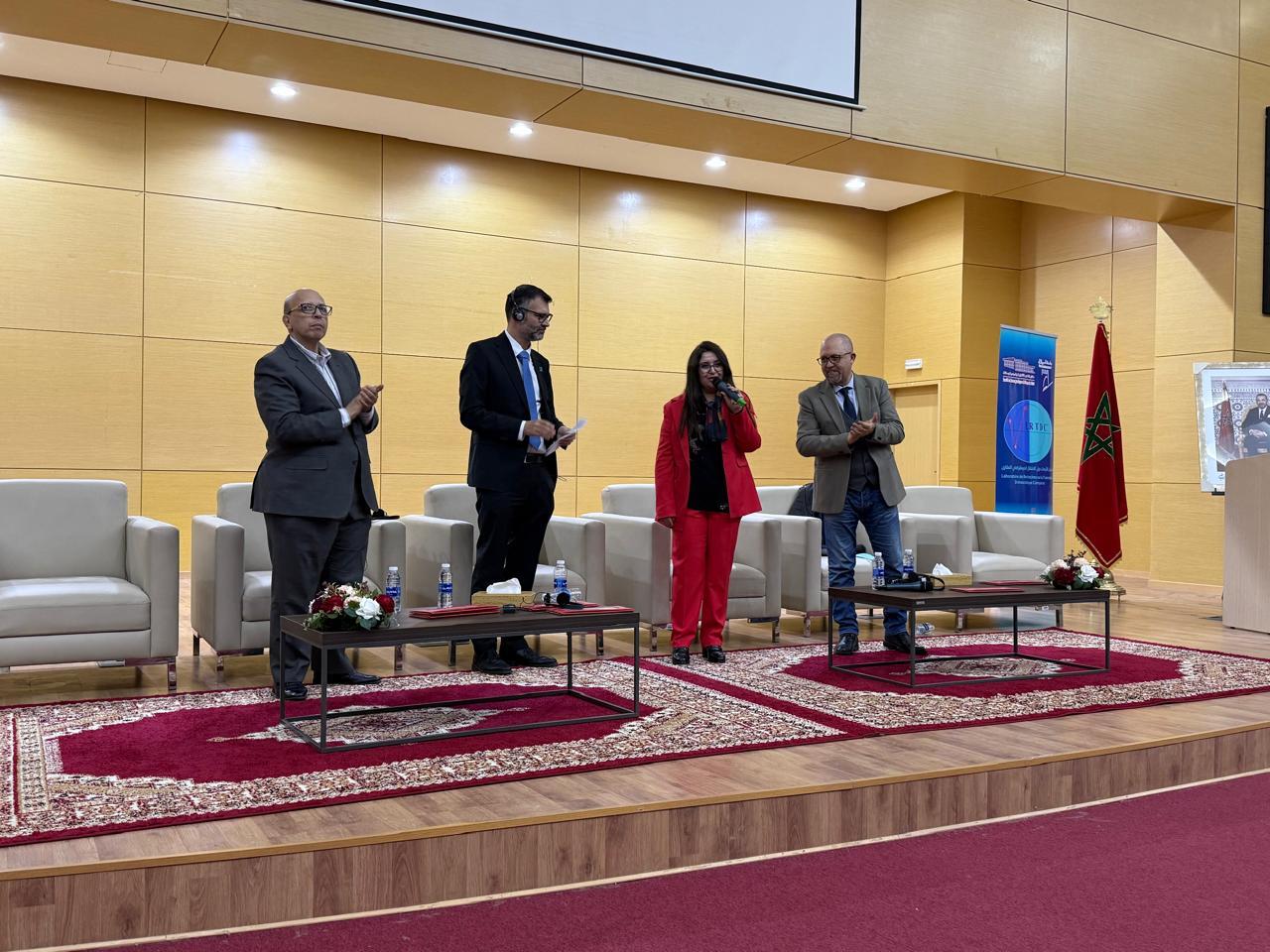
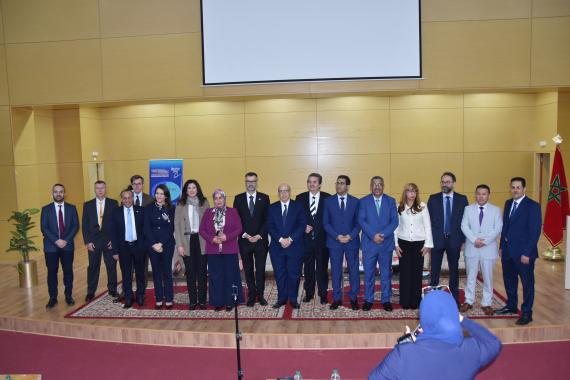
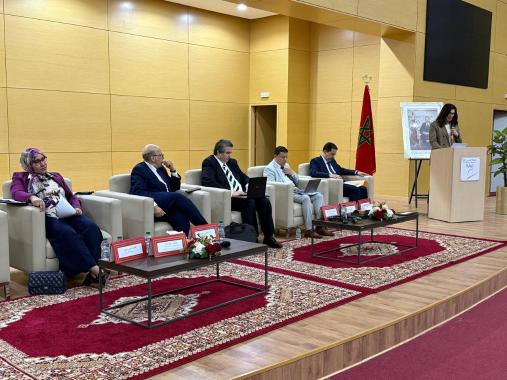
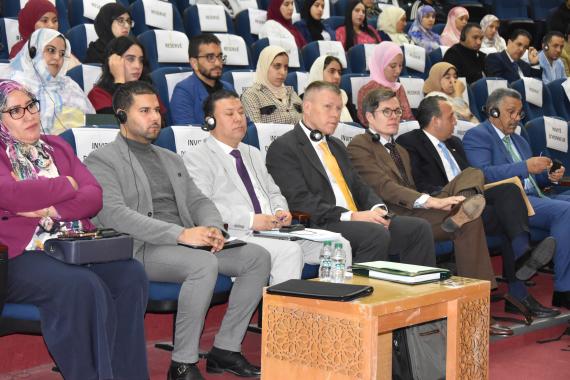
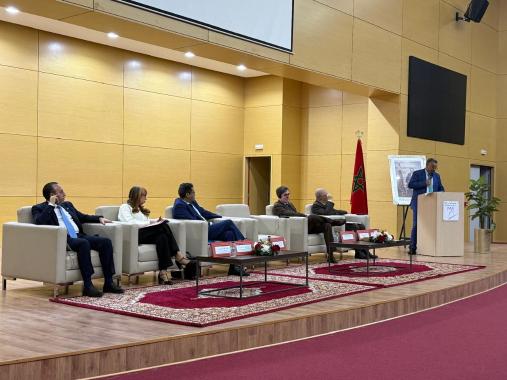
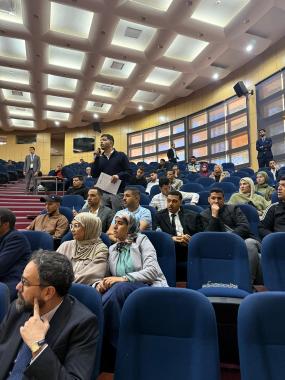
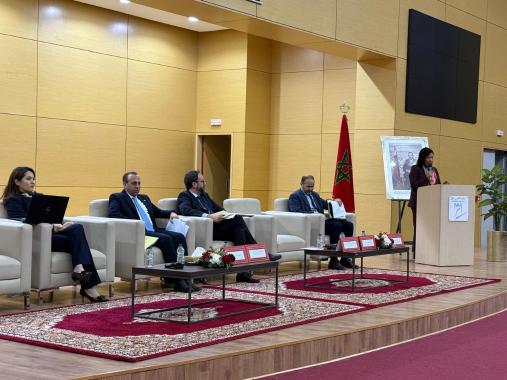
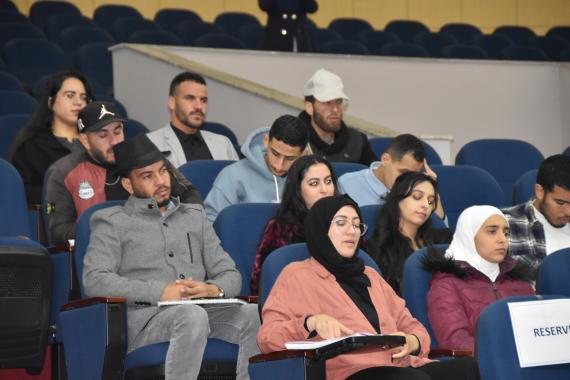
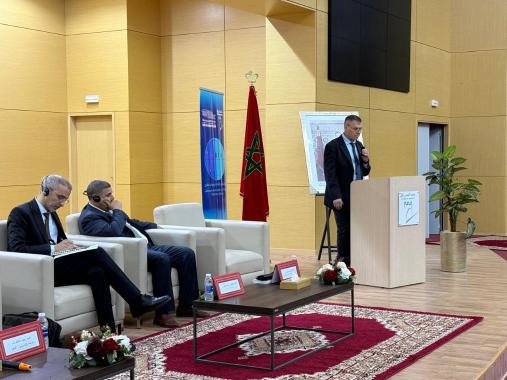
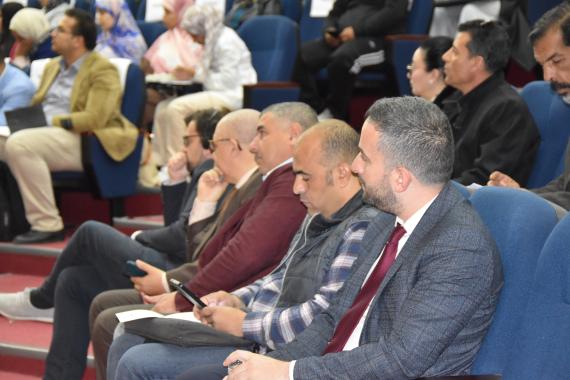
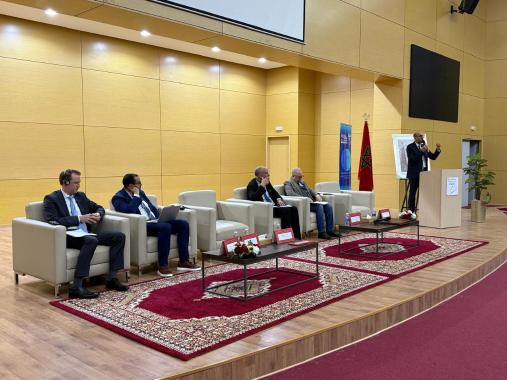
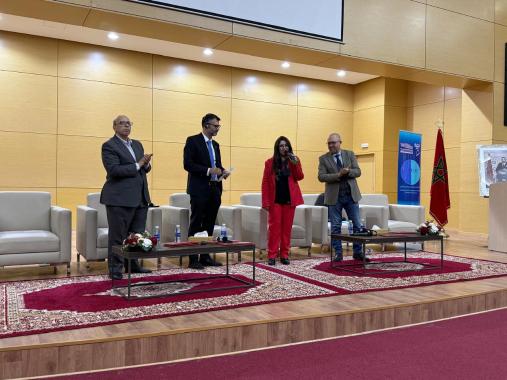
Opening Session
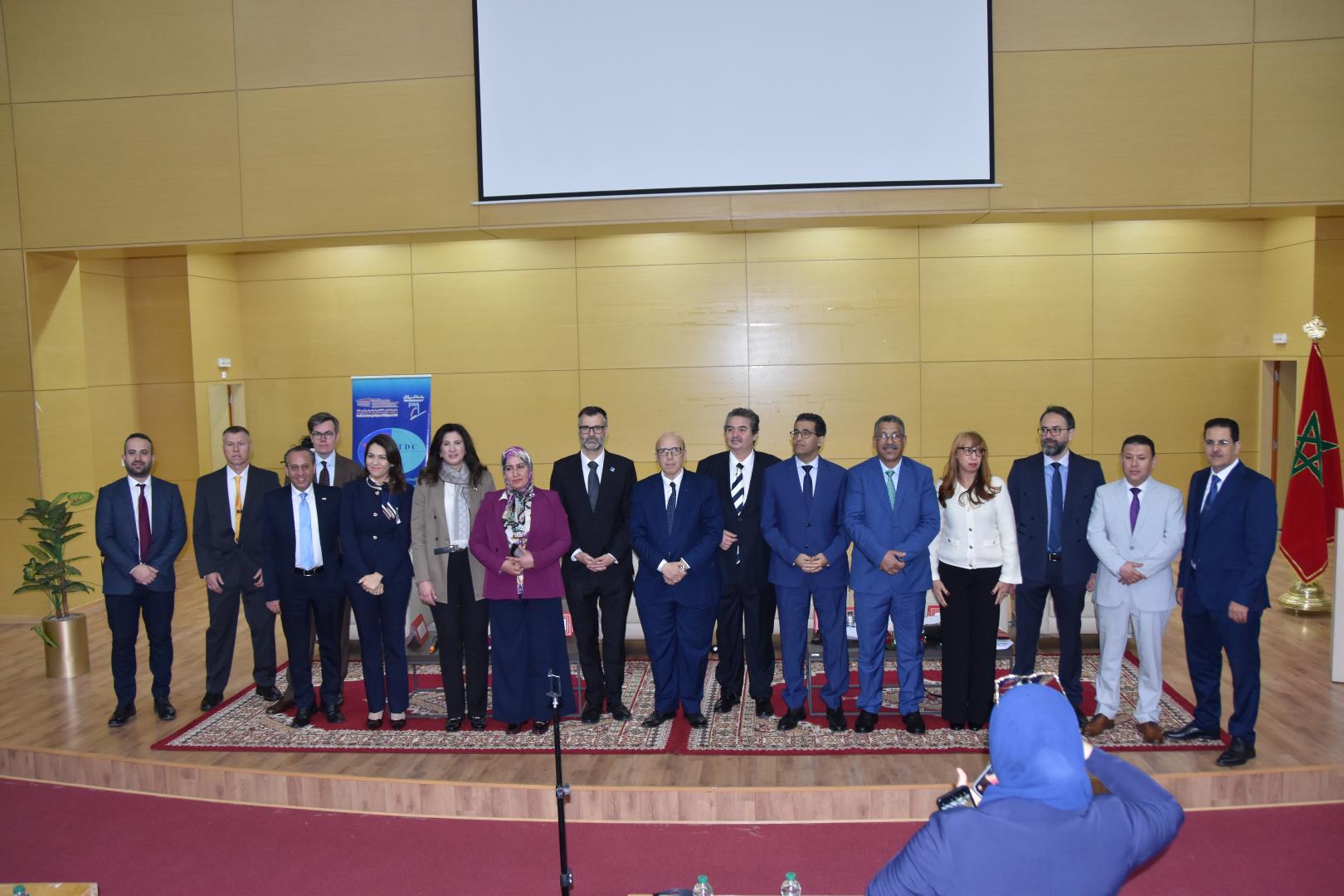
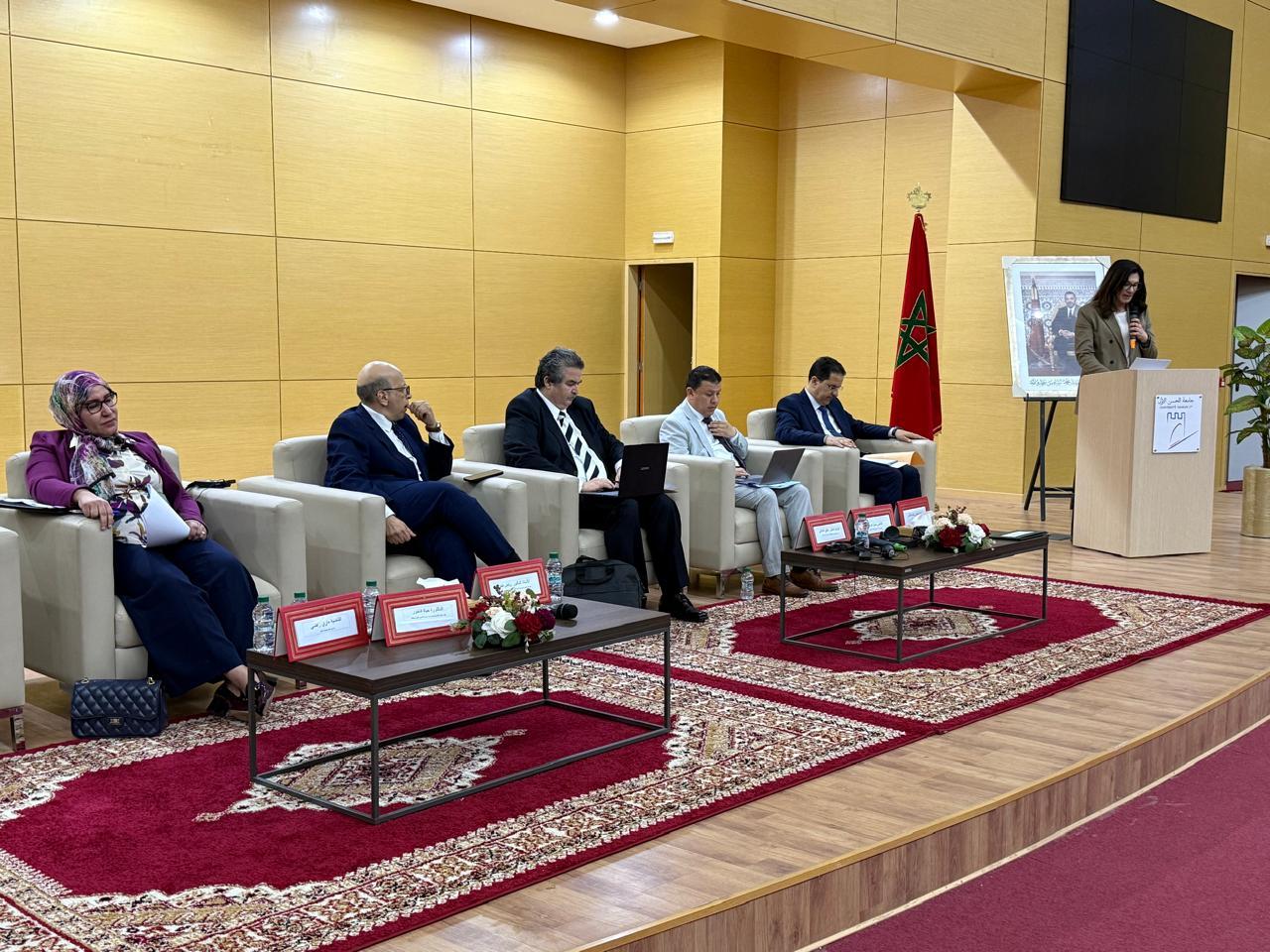
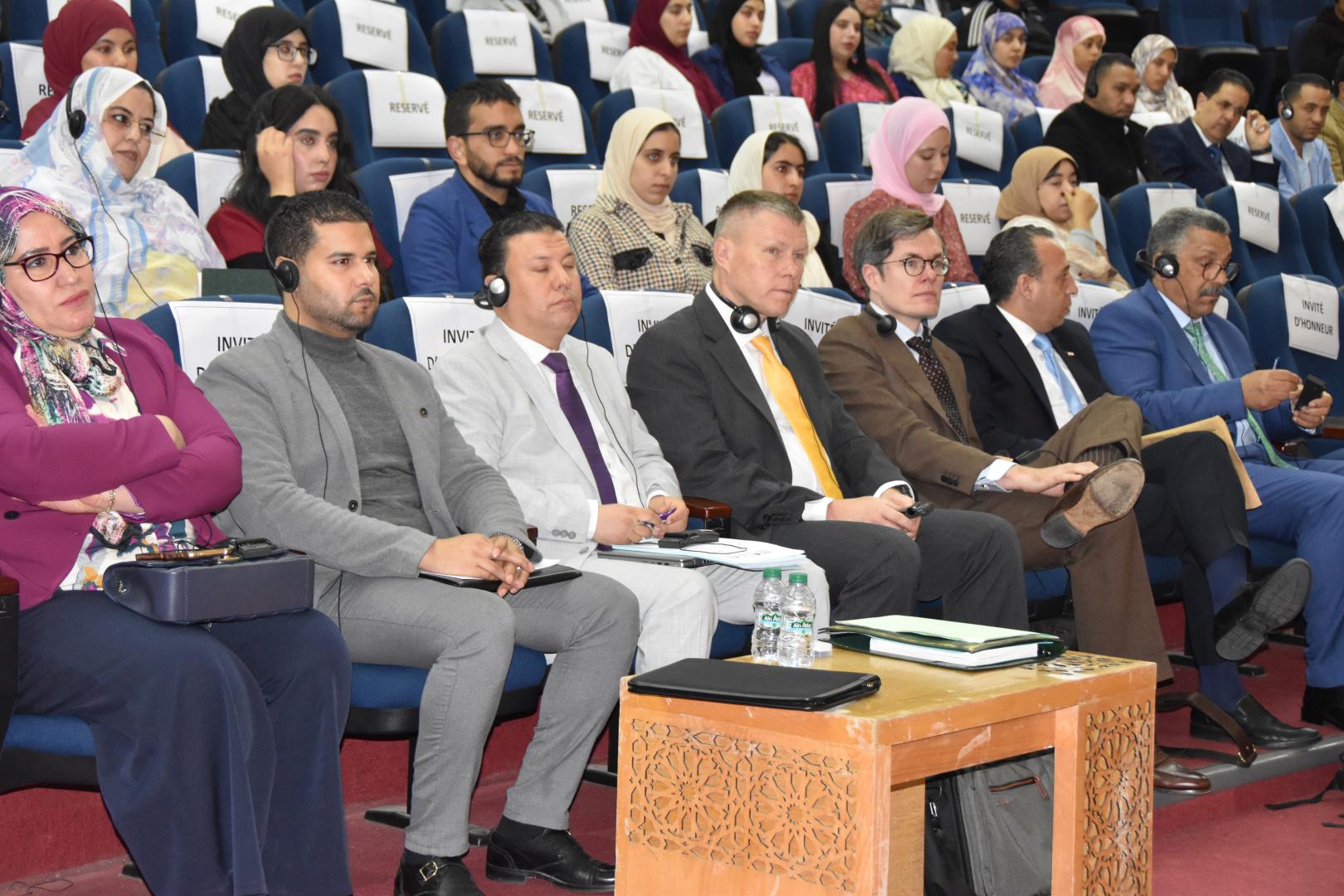
The conference opened with welcoming remarks by Prof. Abdellatif Moukrim, President of Hassan I University; Prof. Hasna Kaji, Dean of the Faculty of Legal and Political Sciences; and Prof. Dr. Hans Joerg Dietsche, Director of the KAS Rule of Law Programme MENA.
Additional remarks were delivered by Prof. Dr. Riad Fakhri, Director of the Business Law Research Laboratory, emphasizing the importance of academic and institutional cooperation in addressing financial crimes.
Panel 1: Legal and Institutional Frameworks to Combat Money Laundering
Moderated by Dr. Riyad Fakhri, this panel examined the alignment of national legal frameworks with international standards, particularly the FATF Recommendations, and assessed institutional effectiveness in the region.
Contributions by Judge Hasan Farhan (Morocco), Judge Marie Rady (Lebanon), Dean Dr. Lotfy Chedly (Tunisia), and Prof. Dr. Rachid Al-Tahir (Morocco), with additional input from Mr. Abdelmajid Sorour and Prof. Dr. Hayat Fakhour, highlighted the gap between legislative development and effective enforcement. Discussions emphasized the importance of judicial independence, institutional coordination, and strengthening prosecutorial capacities.
Panel 2: Financial Investigations, Asset Tracing, and Confiscation
Moderated by Prof. Dr. Abdeljabbar Arrach, this panel focused on the operational dimensions of combating money laundering.
Experts including Prof. Dr. Kilian Wegner (Germany), Prof. Dr. Abdel Salam Raisi (Morocco), Judge Ehab Baassiri (Lebanon), Prof. Dr. Mohamed Braw (Morocco), and Prof. Dr. Aisha Fadel (Morocco), with the contribution of Mr. Ali Bennani Khir, addressed challenges related to complex financial investigations, evidentiary standards, and cross-border asset recovery.
The discussion highlighted the importance of strengthening financial intelligence units, enhancing inter-agency cooperation, and developing effective confiscation mechanisms while ensuring respect for due process.
Panel 3: Preventive Mechanisms and the Role of Financial and Non-Financial Actors
Chaired by Prof. Dr. Youness Lazrak Hassouni, this panel explored preventive AML mechanisms and the responsibilities of financial institutions and designated non-financial businesses and professions (DNFBPs).
Interventions by Ms. Najwa Benmadni (Morocco), Judge Ehab Baassiri (Lebanon), Prof. Dr. Ines Youssef (Tunisia), and Prof. Dr. Hafiz Elyounsi (Morocco) addressed key issues such as customer due diligence, beneficial ownership transparency, and suspicious transaction reporting.
Participants emphasized the need to balance professional secrecy with compliance obligations and highlighted challenges related to regulating non-financial sectors in cash-based and informal economies.
Panel 4: Cross-Border Cooperation and International Judicial Assistance
Moderated by Prof. Dr. Rachid Al-Tahir, this panel addressed the transnational nature of money laundering and the necessity of effective international cooperation.
Contributions from representatives of the Supreme Council of the Judiciary in Morocco, Mr. Reinhard Füllgraf (Berlin State Police), and Prof. Dr. Abed El Omrani (Morocco) focused on mutual legal assistance, extradition, and the exchange of financial intelligence.
Discussions identified practical obstacles to cooperation, including differences in legal systems and procedural frameworks, while highlighting the importance of trust-building and institutional coordination.
Panel 5: Comparative Perspectives and Best Practices – Lessons from Germany and the MENA Region
Moderated by Prof. Dr. Abdelkarim Ennouhi, the final panel provided a comparative analysis of AML systems and practices.
Experts including Judge Bahado Hafiz (Morocco), Dr. Lars Teigelack (Germany), a representative of Bank Al-Maghrib, Prof. Dr. Abdeljabbar Arrach, and Dr. Nihad Oufkir shared insights into prosecutorial specialization, institutional design, and innovative investigative tools.
The panel highlighted transferable lessons from the German experience while emphasizing the need to adapt best practices to local legal and institutional contexts in the MENA region.
Key Outcomes and Impact
The conference resulted in:
- Strengthened regional dialogue and exchange among legal and institutional stakeholders;
- Enhanced technical understanding of financial investigations, asset tracing, and AML enforcement;
- Identification of key challenges in implementation, coordination, and judicial practice;
- Development of practical, policy-oriented recommendations for improving AML frameworks;
- Consolidation of a regional network of experts committed to combating financial crimes.
Advancing the Rule of Law
By addressing money laundering as a fundamental rule of law challenge, the conference contributed to strengthening transparency, accountability, and institutional resilience in the MENA region.
The discussions reaffirmed that effective anti-money laundering efforts require not only comprehensive legal frameworks, but also strong institutions, judicial independence, and sustained regional and international cooperation.
Media library
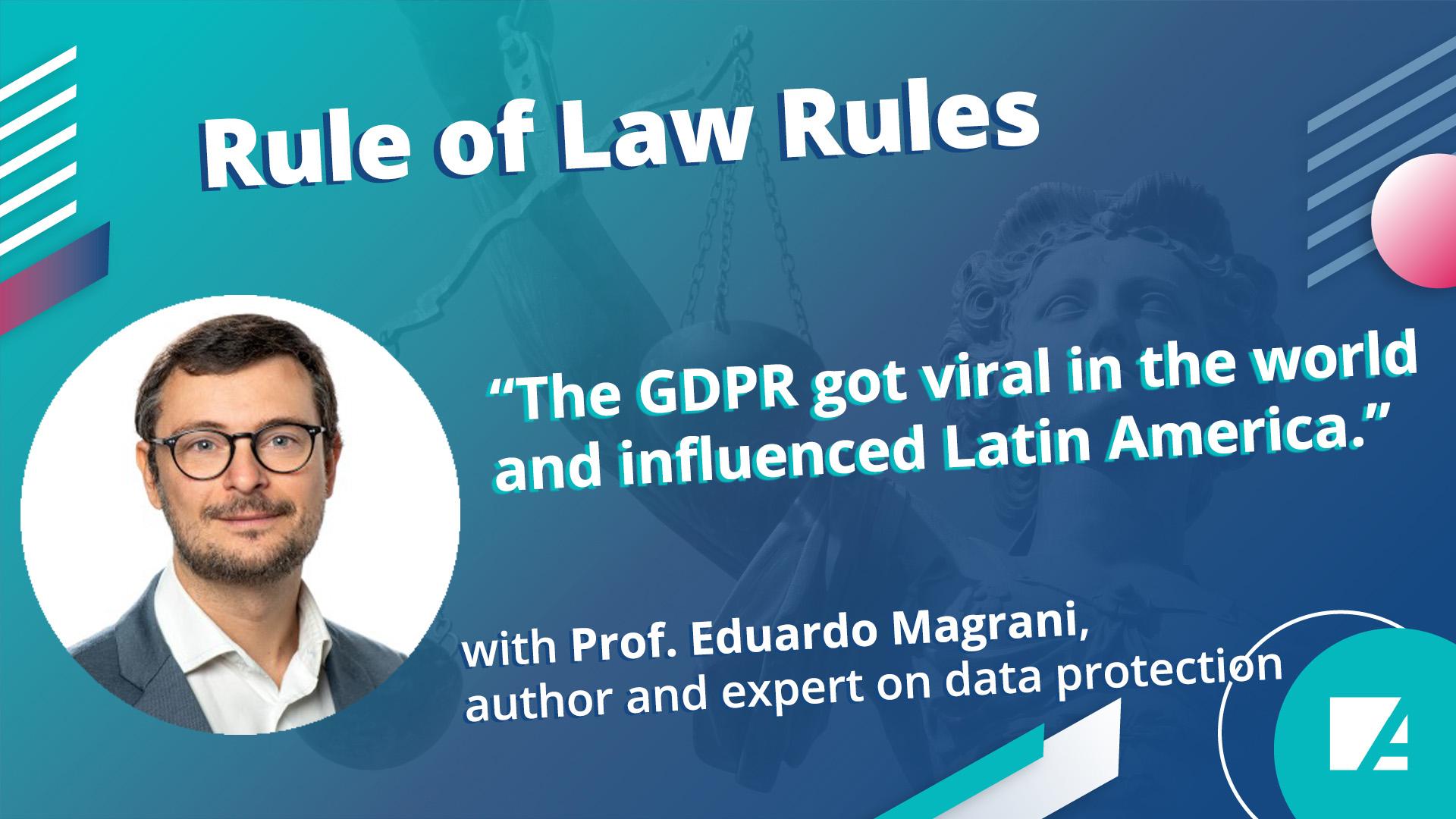
#3: Eduardo Magrani on Data Protection in Latin America
We speak with Eduardo Magrani about the General Data Protection Regulation and its influence in Brazilian and Latin American legal framework.
Read now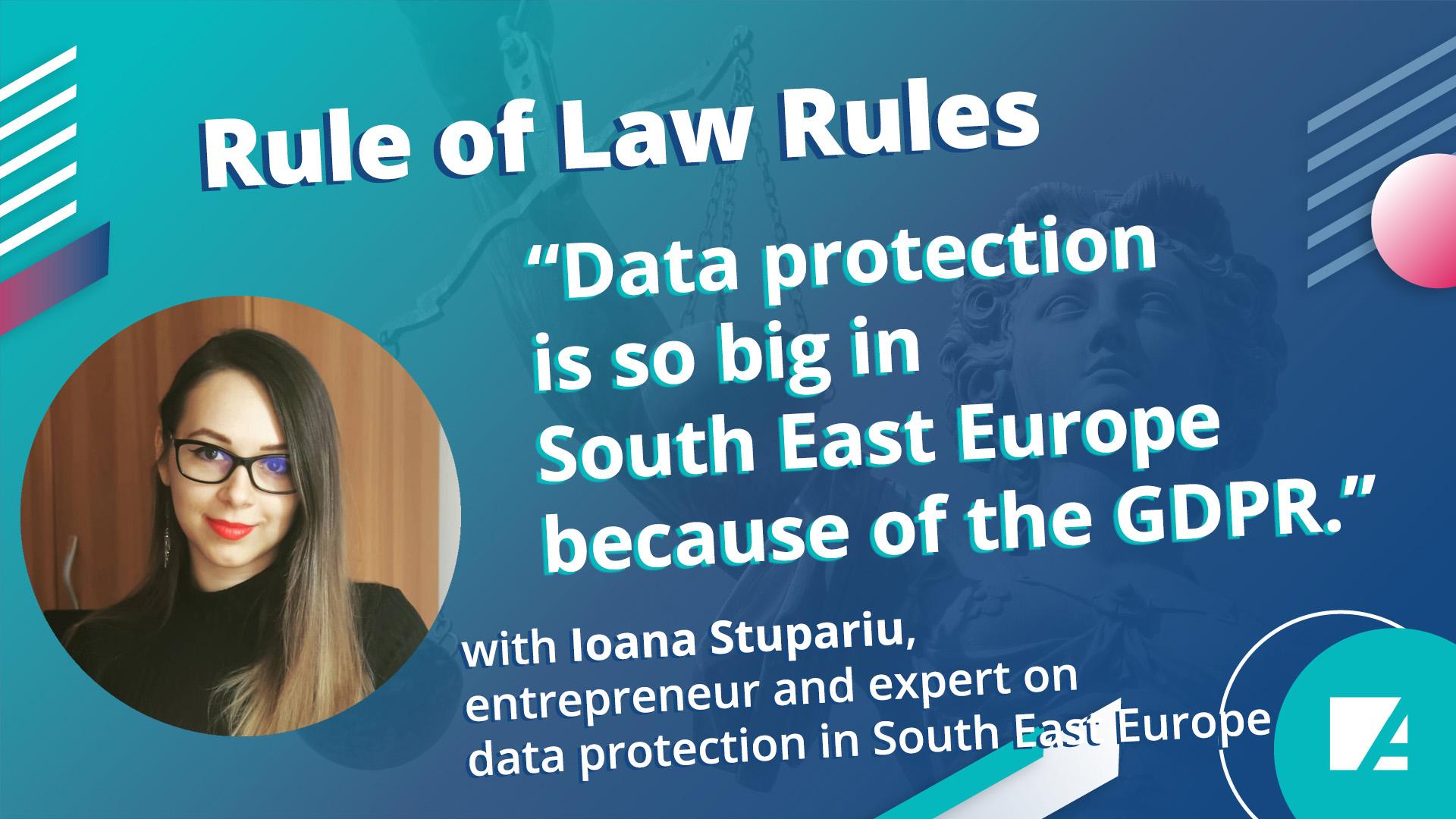
#2: Ioana Stupariu on the GDPR's influence in South East Europe
Ioana Stupariu works with tech and healthcare start-ups and companies across Central and Eastern Europe. And she researches on Data protection & Privacy.
Read now