




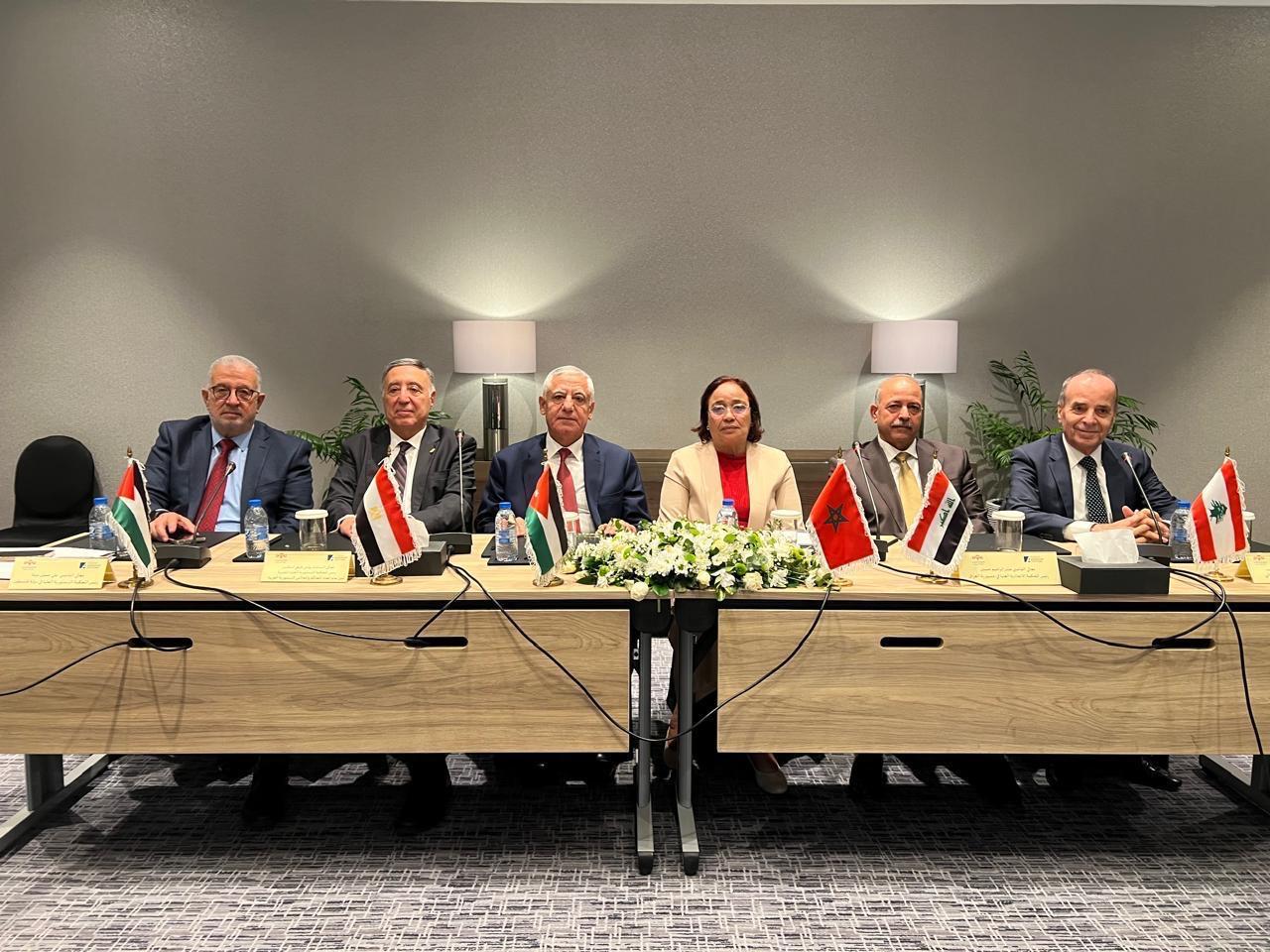
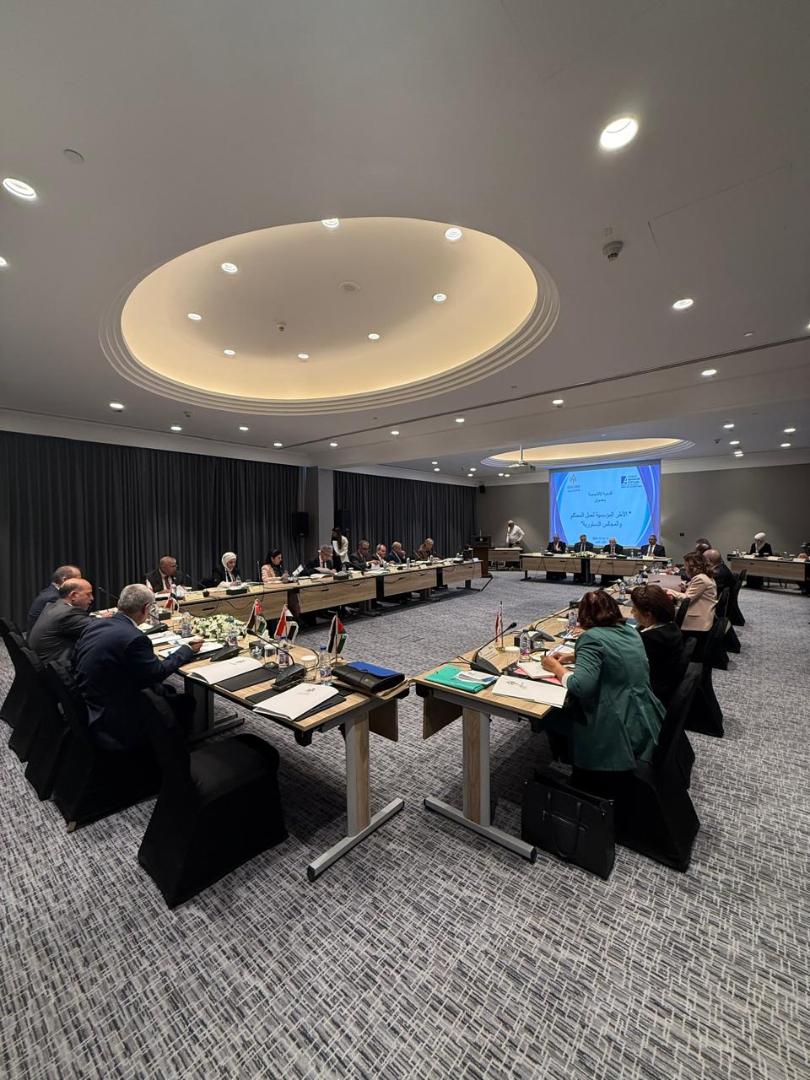
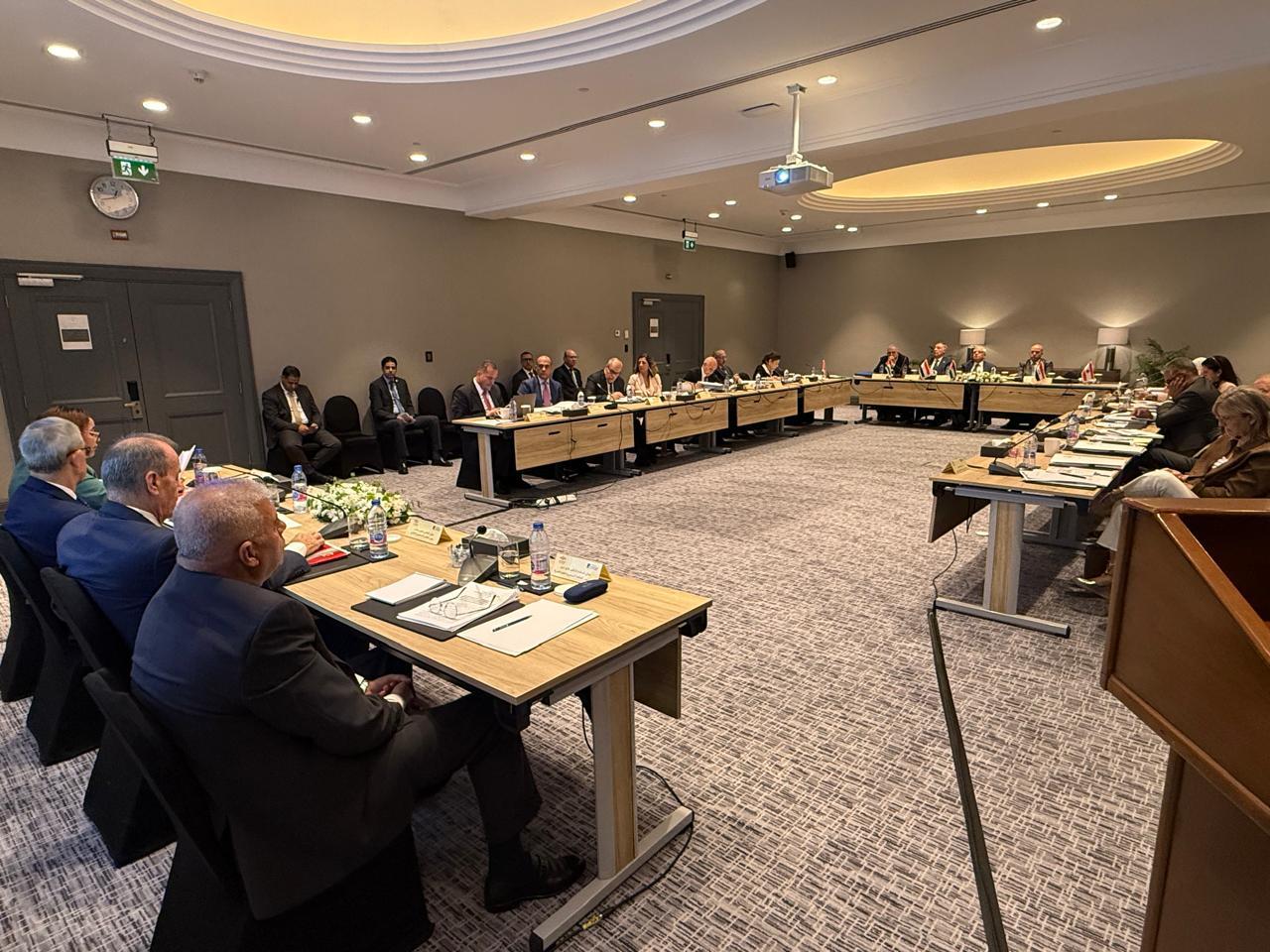

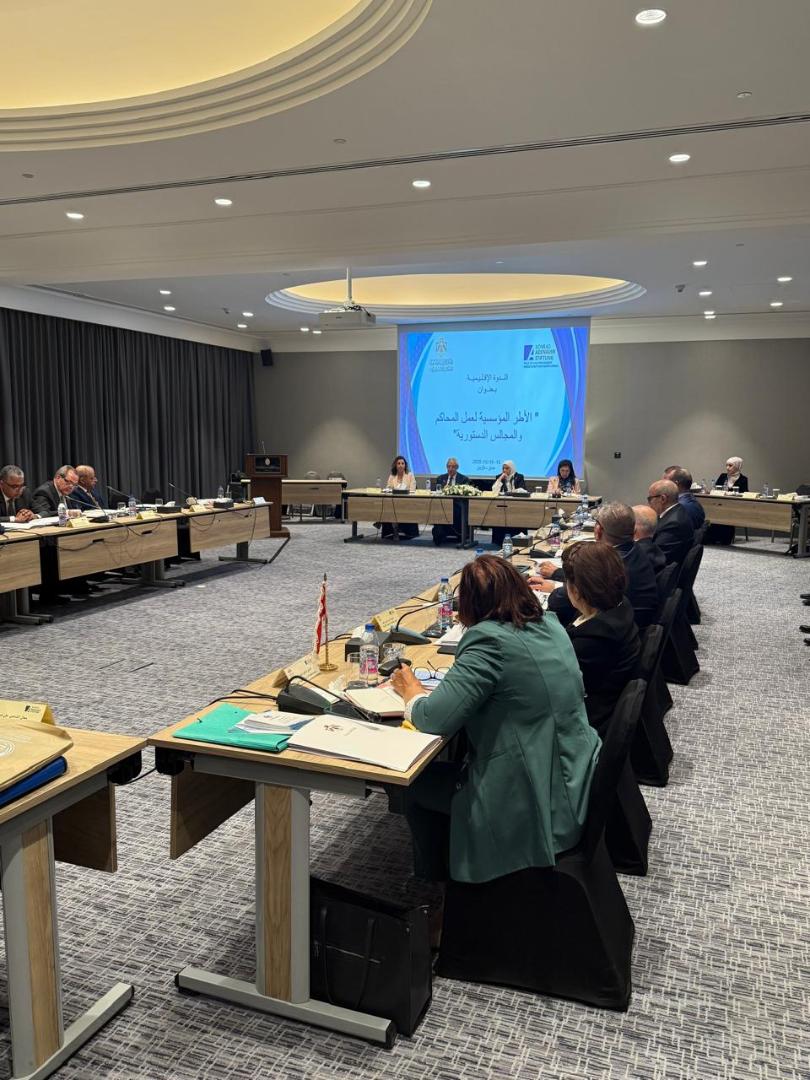

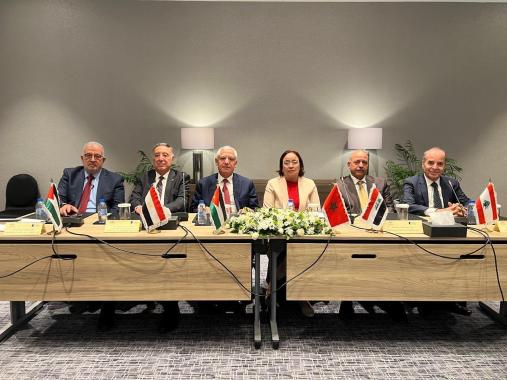
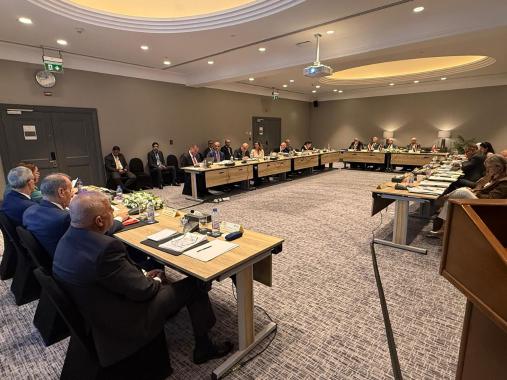

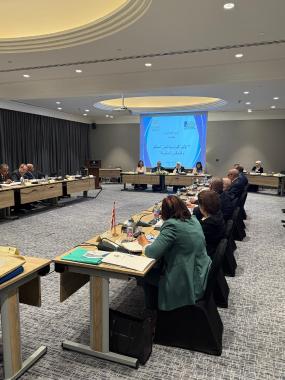

Over the course of two days, the symposium featured a series of thematic panels and discussions addressing key aspects of the institutional and functional frameworks of constitutional courts and councils. Participants examined issues related to constitutional interpretation, the adjudication of electoral disputes, the appointment and immunities of judges, and the broader jurisdictional scope of constitutional justice in the region.
Opening Session
The event was inaugurated with welcoming remarks by Judge Mohammad Al-Ghazou, President of the Constitutional Court of Jordan, who emphasized the importance of fostering dialogue between constitutional jurisdictions in the Arab world to enhance the effectiveness and credibility of constitutional review mechanisms. He highlighted Jordan’s commitment to consolidating constitutional principles and to maintaining the independence of the judiciary as a cornerstone of democratic governance.
In his address, Mr. Edmund Ratka, Director of the Konrad-Adenauer-Stiftung Office in Jordan, reaffirmed the Foundation’s dedication to supporting constitutional institutions and promoting the rule of law throughout the Middle East and North Africa. He commended the collaboration with the Jordanian Constitutional Court and noted that such exchanges contribute to strengthening legal culture, mutual understanding, and institutional cooperation across the region.
Panel 1: The Authority and Boundaries of the Interpretation of the Constitution
The first panel explored the authority and boundaries of constitutional interpretation exercised by constitutional councils and courts in the MENA region. Discussions centered on the interpretive powers granted to these bodies, the sources and reference texts used in constitutional adjudication, and the methods by which conflicting constitutional principles are reconciled.
The panel featured Judge Boulos Fahmy Eskandar, President of the Supreme Constitutional Court of Egypt; Judge Ali Jamil Mhanna, President of the Constitutional Court of Palestine; and Judge Haidar Ali Nouri, Member of the Federal Supreme Court of Iraq. The session was moderated by Judge Mohammed Homsi, Member of the Constitutional Court of Jordan.
The speakers underscored that constitutional interpretation lies at the heart of judicial independence, serving as a vital mechanism to preserve the supremacy of the constitution while adapting its principles to evolving political and social realities.
Panel 2: Jurisdiction of Constitutional Councils and Courts on Electoral Disputes under Separation of Powers
The second panel focused on the jurisdiction of constitutional courts over electoral disputes, examining how these institutions operate within the framework of separation of powers to ensure the fairness and transparency of electoral processes. Panelists discussed the delicate balance between upholding the integrity of elections and respecting the will of the electorate, as well as the procedural safeguards required to maintain judicial neutrality in electoral adjudication.
The panel brought together Judge Tannous Mechleb, President of the Constitutional Council of Lebanon; Judge Latifa Khal, Member of the Constitutional Court of Morocco; and Judge Dr. Tarek Chebel, Vice President of the Supreme Constitutional Court of Egypt. The session was moderated by Judge Hani Qaqish, Member of the Constitutional Court of Jordan.
Participants agreed that constitutional oversight of electoral disputes constitutes a key element in consolidating democratic legitimacy and public confidence in the rule of law. They emphasized that while courts must refrain from interfering in political decision-making, they bear the responsibility of ensuring that elections are conducted in accordance with constitutional principles and procedural fairness.
Panel 3: Appointment Mechanisms and Immunities of Members of Constitutional Courts and Councils
The third panel addressed the mechanisms for appointing members of constitutional courts and councils, the standards and procedures governing their selection, and the immunities and guarantees provided to them to safeguard judicial independence. Panelists compared national experiences and debated possible reforms aimed at enhancing the transparency and integrity of appointment processes.
The discussion featured Judge Mohammad Al-Ghazou, President of the Constitutional Court of Jordan; Judge Amina El Massoudi, Member of the Constitutional Court of Morocco; and Judge Mireille Najem Chekrallah, Member of the Constitutional Council of Lebanon, and was moderated by Judge Maysaa Baydoun, Member of the Constitutional Court of Jordan.
Speakers highlighted that judicial independence is inseparable from the credibility of appointment systems. They noted that objective criteria, clear procedures, and adequate legal protections for judges are essential to maintain both internal integrity and public trust in constitutional institutions.
Final Session and Evaluation
The second day of the symposium, held on 16 October 2025, began with opening remarks by Judge Mohammad Al-Ghazou, who commended the depth and substance of the discussions and emphasized the importance of translating the symposium’s outcomes into actionable recommendations.
The final session, moderated by Judge Al-Ghazou with the participation of Judge Hussein Kaissy, Member of the Constitutional Court of Jordan, focused on assessing the jurisdictions of constitutional courts and councils in the region, identifying both convergences and differences in their mandates and powers. Participants also considered comparative insights from international experiences to draw lessons relevant to Arab constitutional systems.
The deliberations culminated in a set of concluding recommendations that underscored the necessity of ongoing dialogue among regional constitutional courts, the exchange of judicial experiences and capacity-building initiatives, and the reinforcement of institutional frameworks that uphold judicial independence and transparency.
Cultural Visit
Following the conclusion of the formal sessions, participants embarked on a cultural visit to the ancient city of Jerash, one of Jordan’s most renowned archaeological sites. The visit, followed by a traditional Jordanian lunch at a local restaurant, offered an informal setting for further networking and cultural exchange, reflecting the spirit of cooperation that characterized the symposium.
Conclusion
The symposium “Institutional Frameworks for the Work of Constitutional Courts and Councils” marked an important step in advancing regional dialogue among Arab constitutional jurisdictions. It reaffirmed the shared commitment of the participating courts and the Konrad-Adenauer-Stiftung to strengthening the rule of law, consolidating judicial independence, and promoting constitutional governance across the Middle East and North Africa.
Media library

#3: Eduardo Magrani on Data Protection in Latin America
We speak with Eduardo Magrani about the General Data Protection Regulation and its influence in Brazilian and Latin American legal framework.
Read now
#2: Ioana Stupariu on the GDPR's influence in South East Europe
Ioana Stupariu works with tech and healthcare start-ups and companies across Central and Eastern Europe. And she researches on Data protection & Privacy.
Read now