





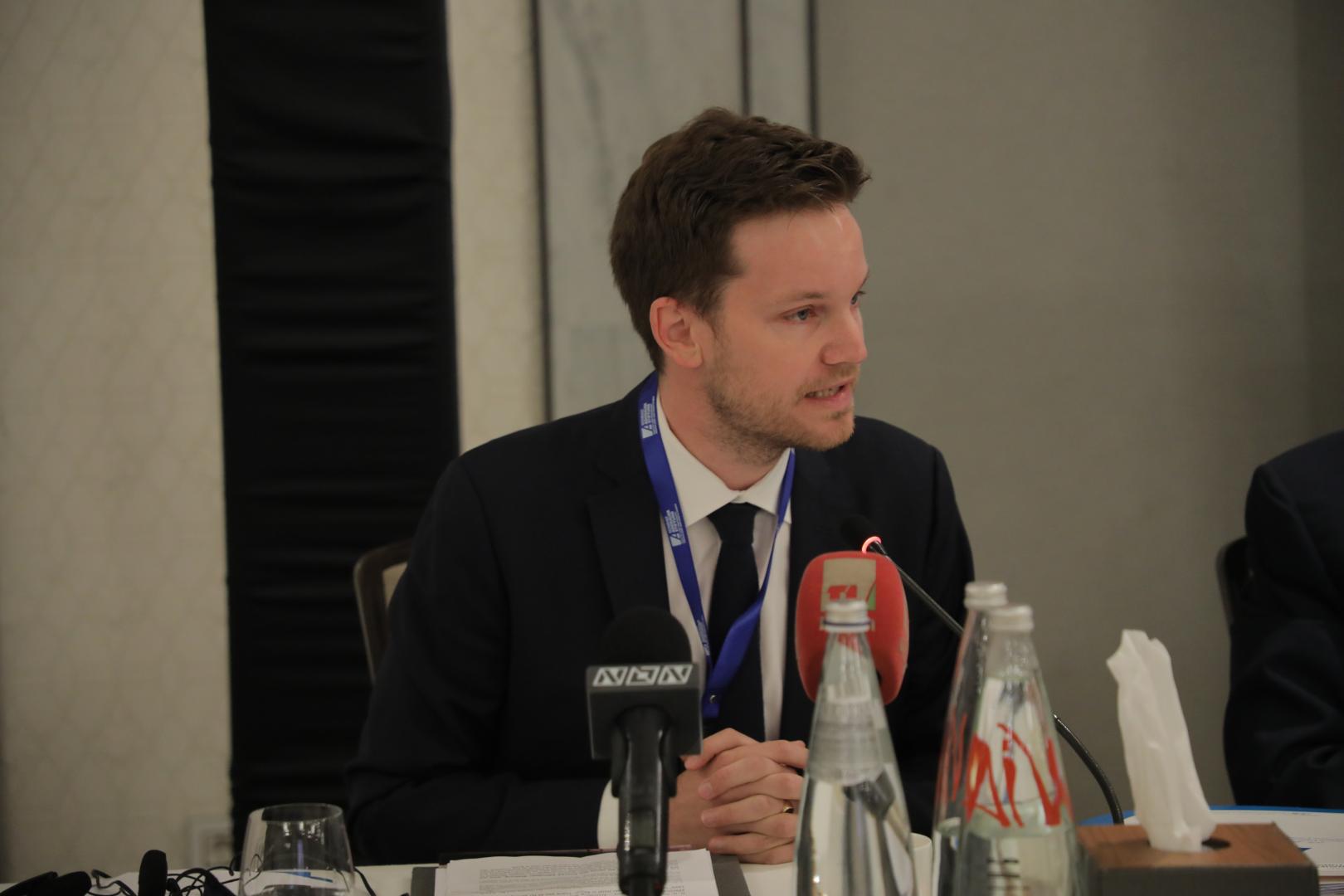
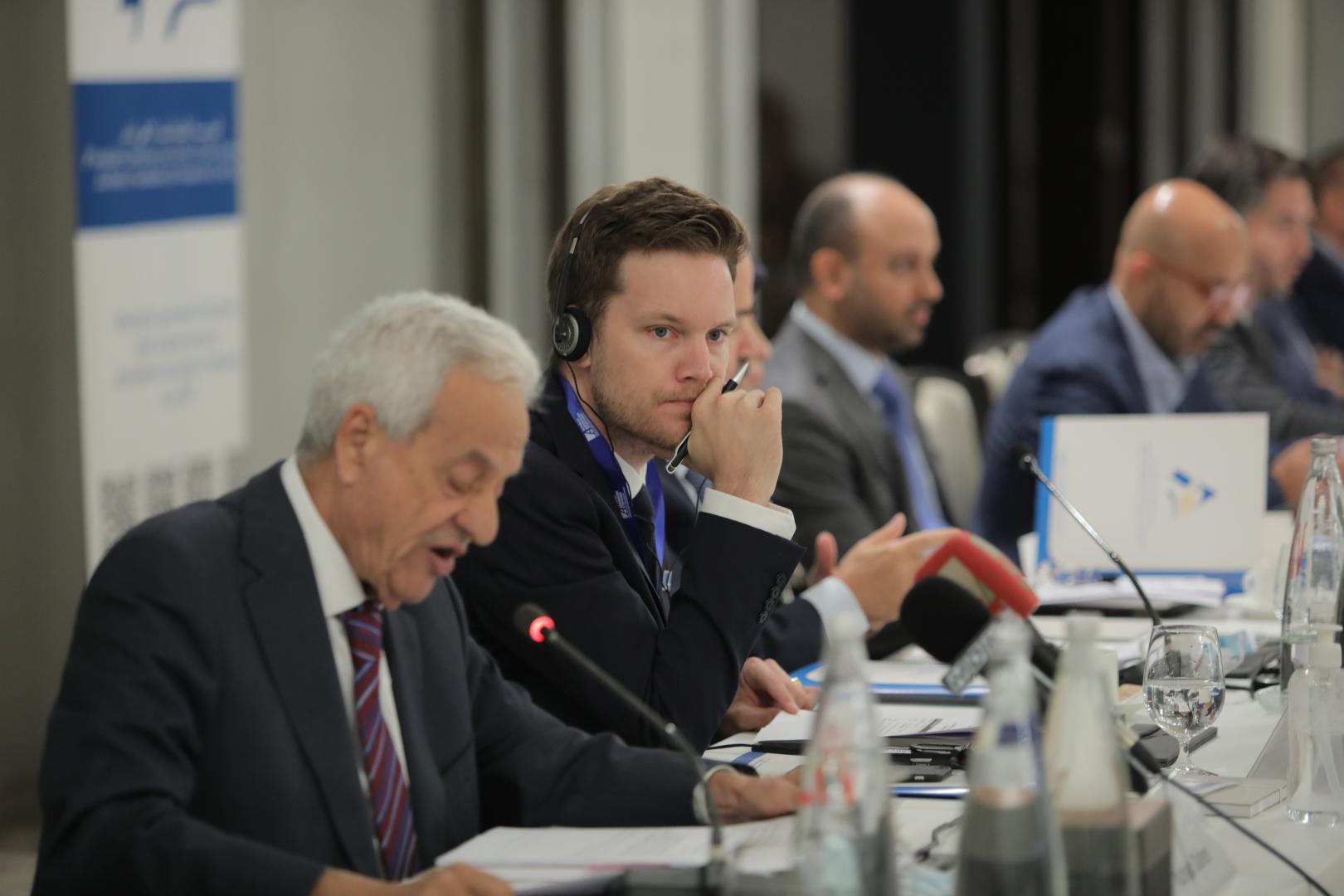
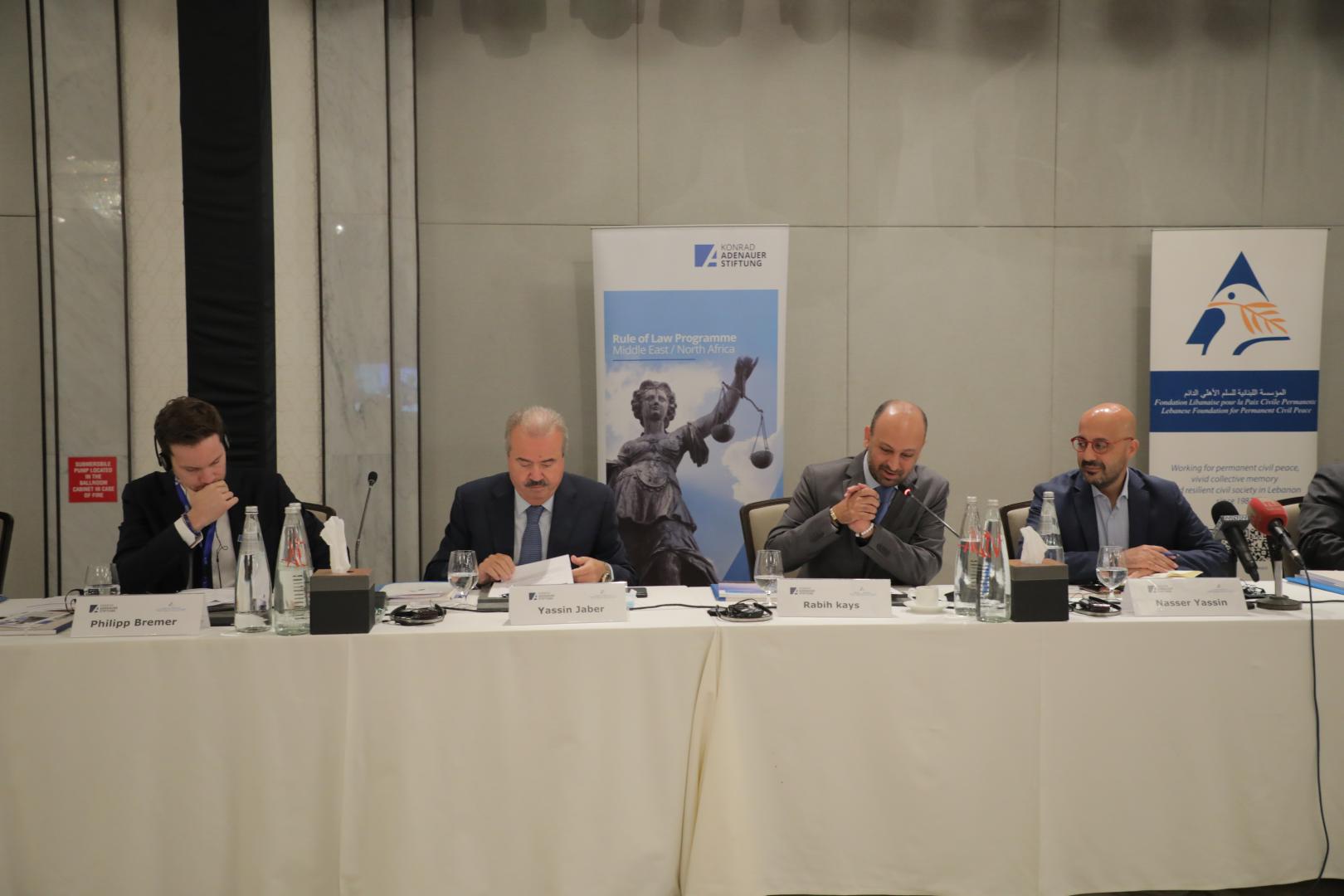
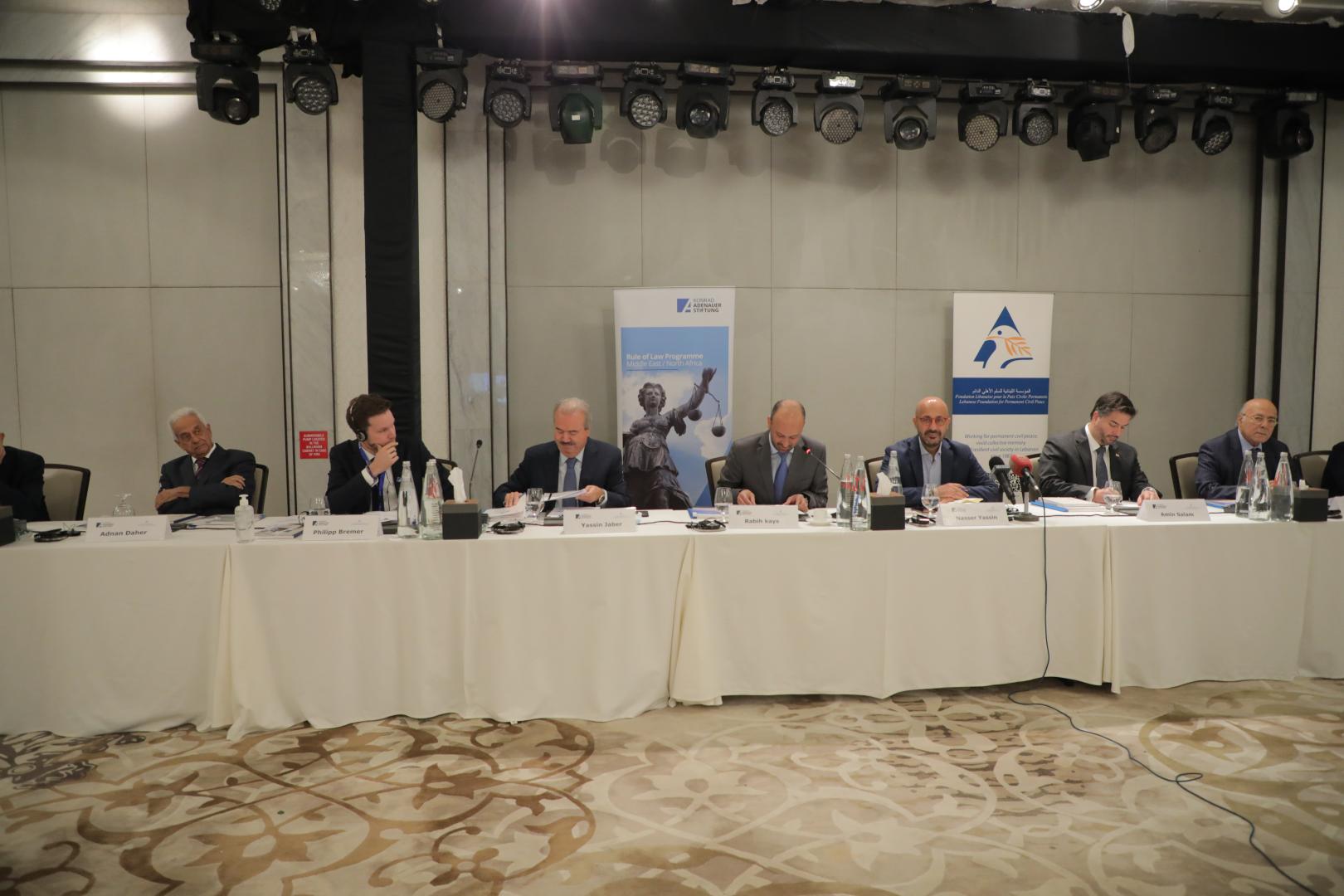
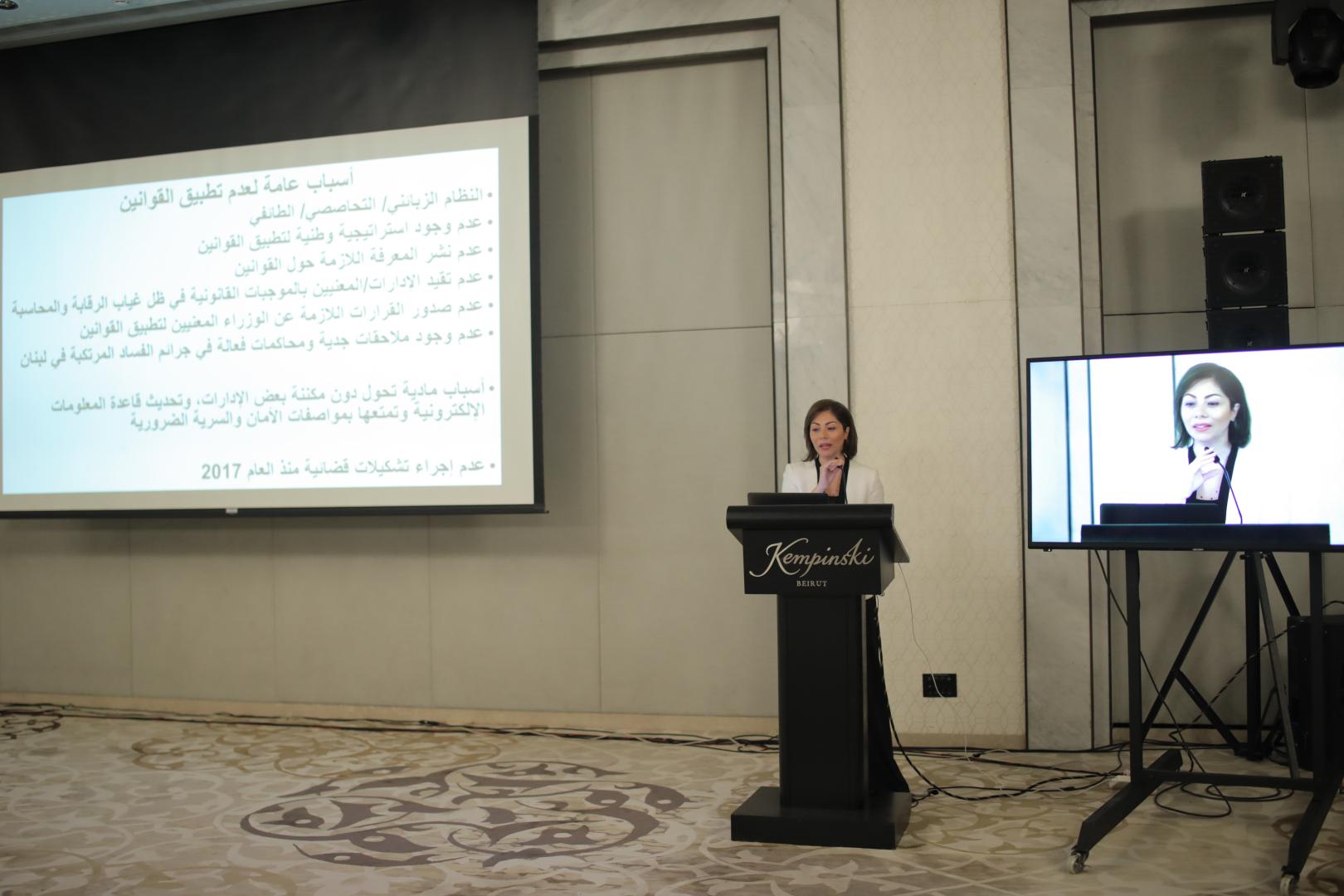
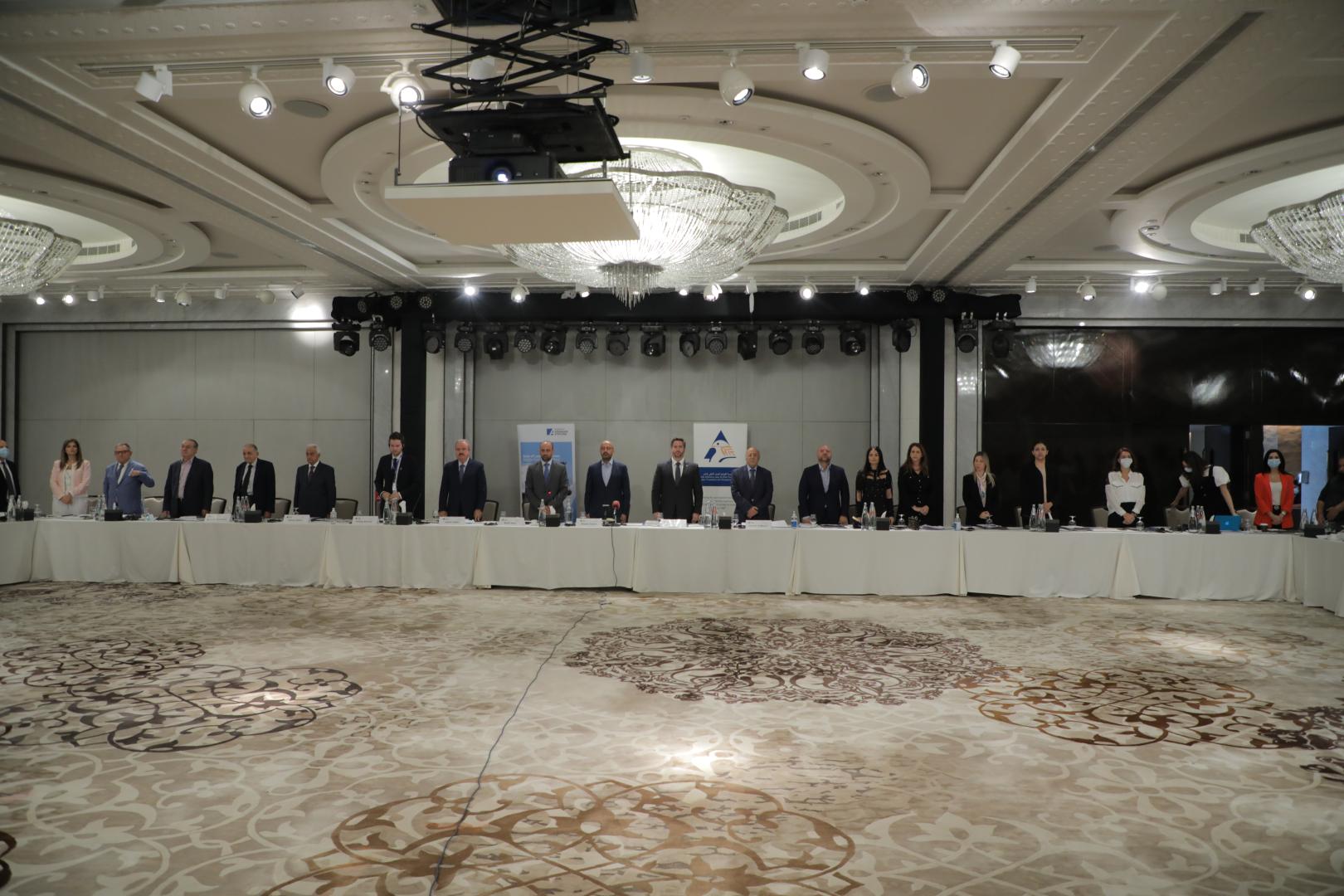
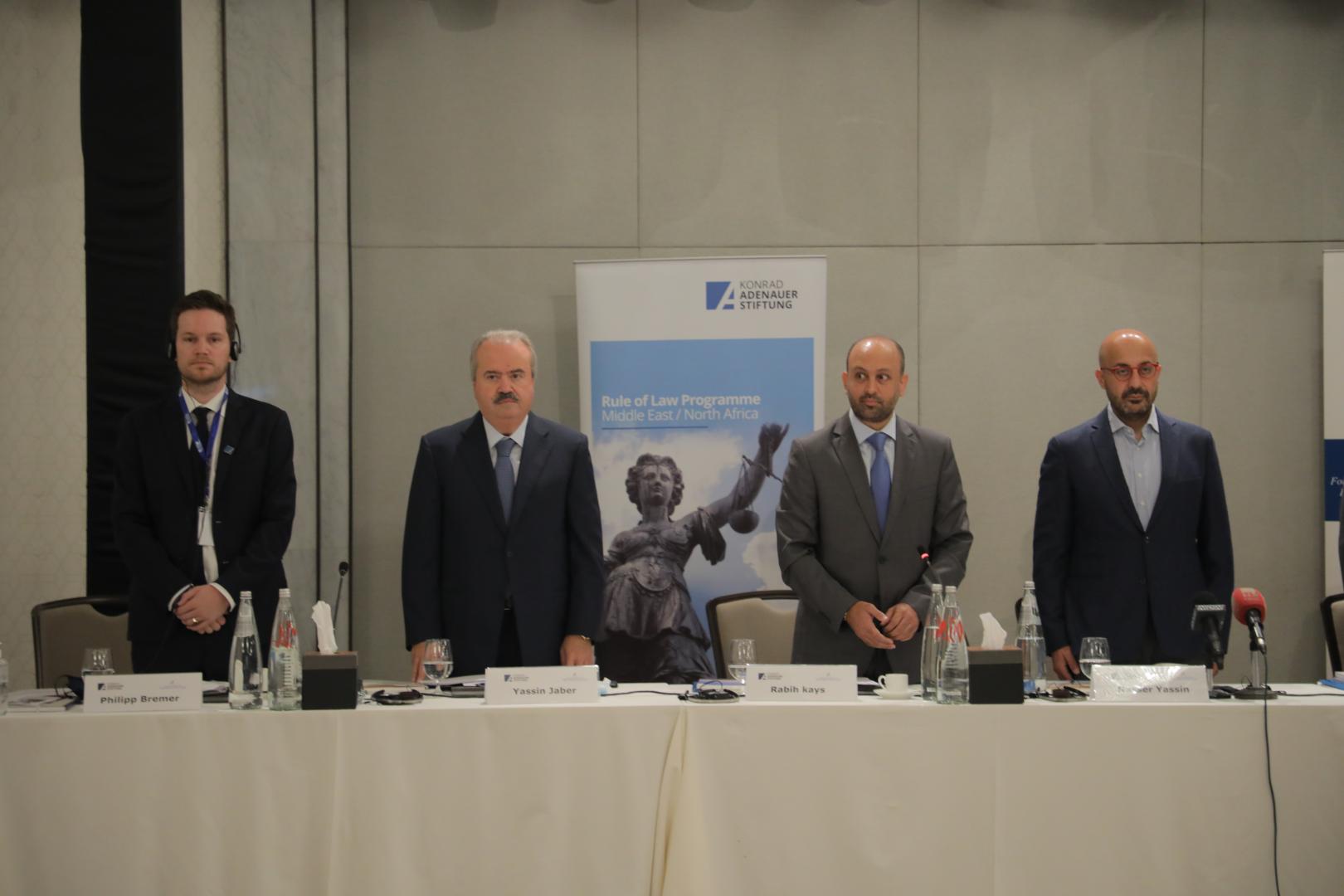
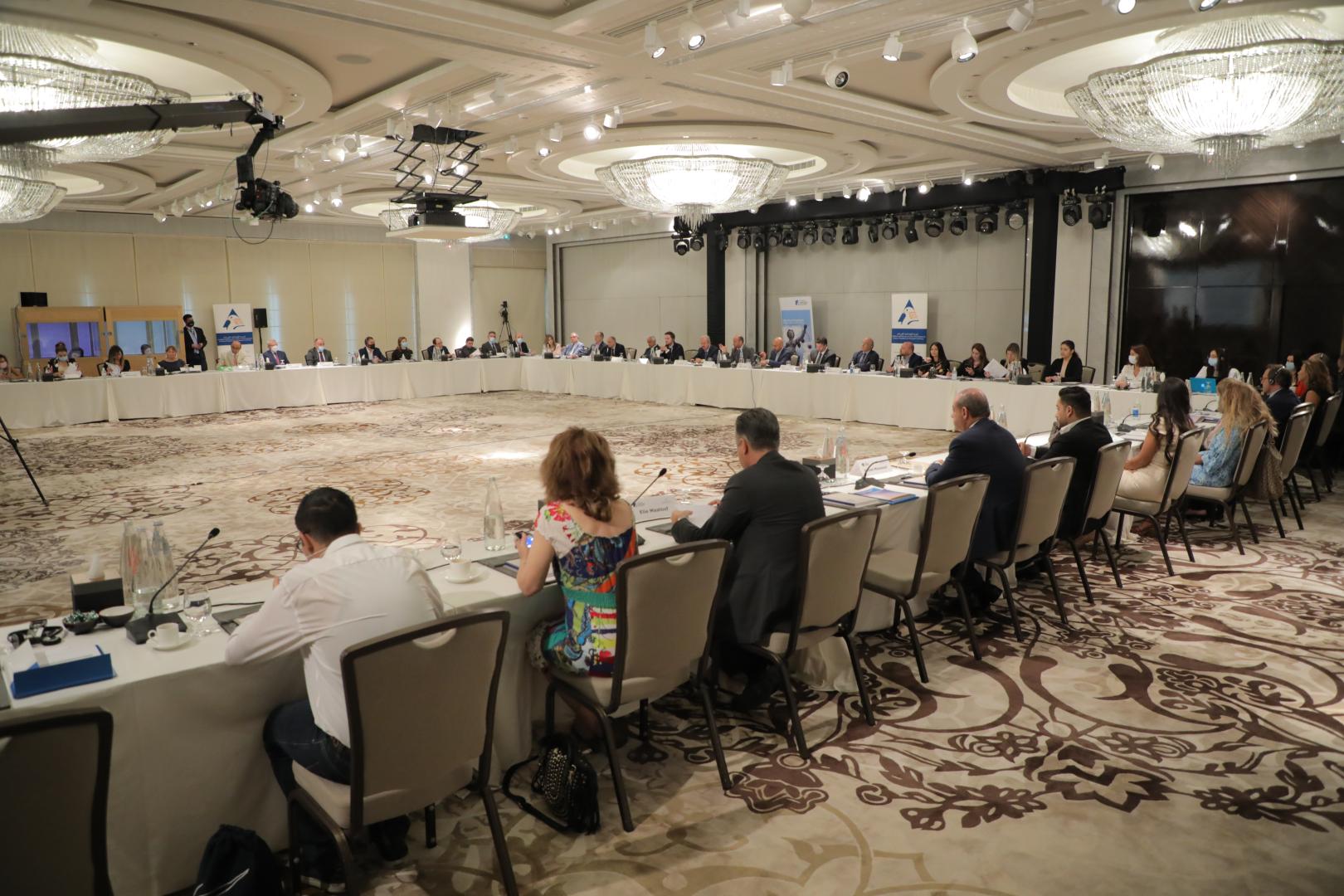


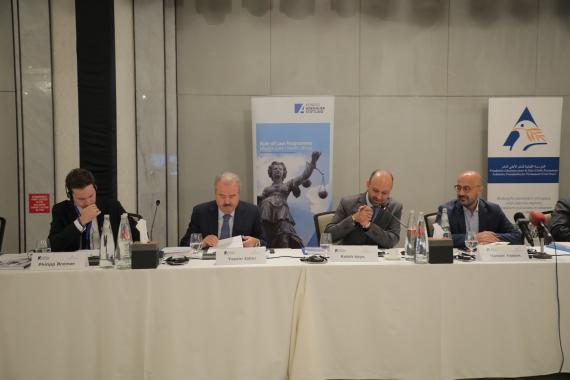
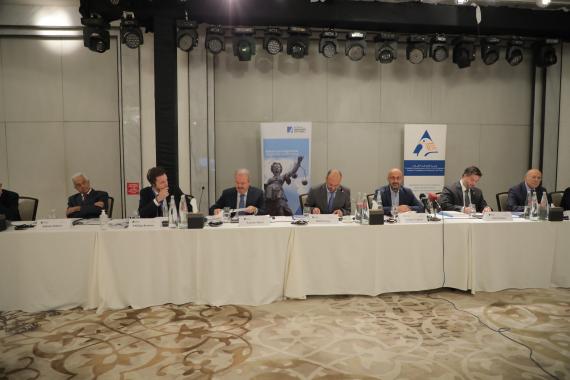
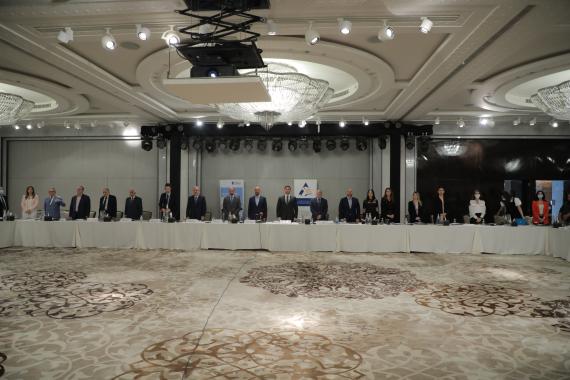
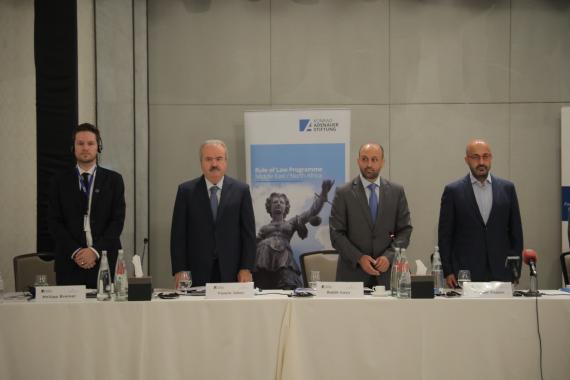
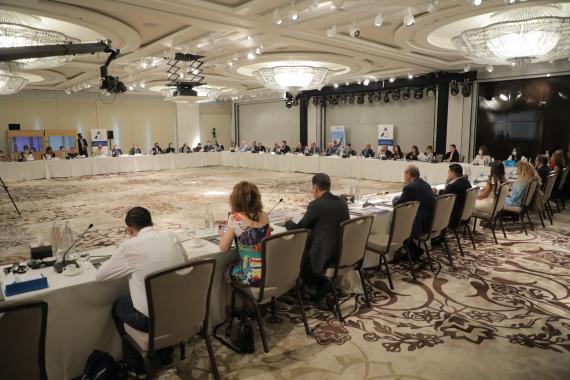


At 9 am, this one-day workshop, started with a welcoming speech from Lawyer Rabih Kays, in which he highlighted the importance of laws implementation and urged the attendees to take concrete actions.
The workshop was divided into two parts: ‘the opening session’ and ‘the presentations’.
- The Opening Session:
In this first part, six guests held the opening remarks and were as following:
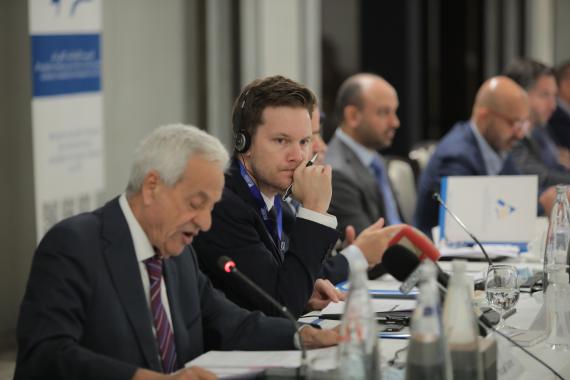
Dr. Antoine Messarra, President of the Lebanese Foundation for Permanent Civil Peace started with a small brief about the meaning of laws as texts promulgated based on certain standards and principles. Then he stressed: “the societal importance of the parliamentary committee responsible of following up the implementation of laws, because each law must be the subject of a feasibility study”.
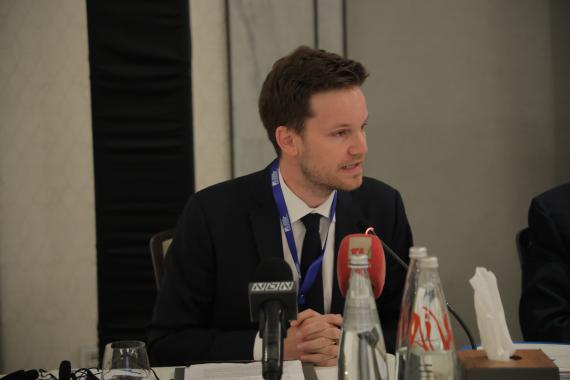
In his following opening remarks, the head of the Rule of Law Progamme Middle east and North Africa at the Konrad-Adenauer-Stiftung Mr. Philipp Bremer introduced the attendees to the Konrad-Adenauer-Stiftung, its programs in Lebanon and in the region. He highlighted the importance of the workshop topic by stating: “the Rule of Law requires that no one is above the law; indeed, everyone is equal in the face of the law and all laws must be maintained. Ultimately a law is only worth as much as it is felt in practise”, thus “what is a law worth that hasn’t been implemented?”. Mr. Bremer added that there are quite a few laws in Lebanon that have not been implemented, in whole or in parts. This non-implementation can have administrative or political reasons, sometimes it has to do with the wording of the law or the fact that the implementation decree is missing.
Then, Dr. Nasser Yassin, minister of the environment, pointed out that there is a great work for everyone to do, noting that “in the first session of the Ministry Council, 72 laws lacking regulatory decrees were highlighted”. He added: “when you get inside the administration, you realize that the institutions are dilapidated, the employees are exhausted, and we are today in a very difficult situation, but this does not mean that we have to give up, but rather we have to work”.
“As prayer establishes faith in the hearts, the law establishes the advancement of nations” with this sentence, the minister of economy and trade, Mr. Amin Salam started his speech. He explained that laws go through many stages and their goal is always serving the public interest, however some laws are in place years ago without being implemented, thus many of those laws are no longer important,
therefore a careful review must take place to keep pace with the changing times, development and humanity”.
The fifth opening remark was held by the head of the parliamentary committee on the law implementation H.E. Yassin Jaber. His excellency pointed out that Ministers who do not implement the law are the one violating it. He added that the role of the minister is to ensure the proper implementation of the law in his ministry. On the other hand, and as a member of the parliament, he shed light on the political interference in the legislative that stood in the way of accountability.
The last remark was Dr. Khaled Kabbani’s one. The former minister of justice mentioned that no justice can be established with underestimated and non-respected laws. He said that: “it’s not the sol-responsibility of the citizen to respect the law but also the responsibility of the government, because he should be aware the prestige a law must have”.
- The Presentations:
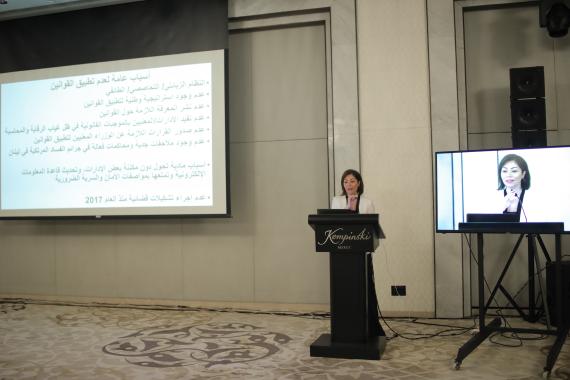
Researchers in the field of the effective implementation of legislation were assigned to prepare beforehand analytical papers in relation to the main non-implemented laws, gasps and next steps needed to ensure their implementation. Each researcher was responsible of a specific topic.
In this second part, nine research papers were prepared and presented:
1)- Secretary general of the Lebanese parliament H.E. Mr. Adnan Daher – “Les cavaliers budgétaires, budget laws”.
2)- Judge Elie Maalouf – “Economic and tax laws”.
3)- Judge Iyad Bardan – “Environmental laws”.
4)- Judge Rana Akoum – “Anti-corruption laws and human rights’ laws”.
5)- General Director Simon Mouawad – “International treaties and administration laws”.
6)- Dr. Sabine el Kik – “Bank and comercial laws”.
7)- Lawyer Toufic Hindi – “Health and food quality control laws”.
8)- Dr. Tony Atallah – “Civic and higher education laws in addition to the Lebanese University laws”.
9)- Judge Stephany Feghaly – “Civil procedure laws and leasing laws”.
At the end of those presentations, the whole day workshop came to an end. All the guests and speakers were invited for lunch.
Finally, a paper draft wrapping up all the analytical papers and presentations will be made, translated, edited, issued and disseminated in both Arabic and English languages.
you can watch the full workshop discussion:
Part 1: HERE
Part 2: HERE
Media library
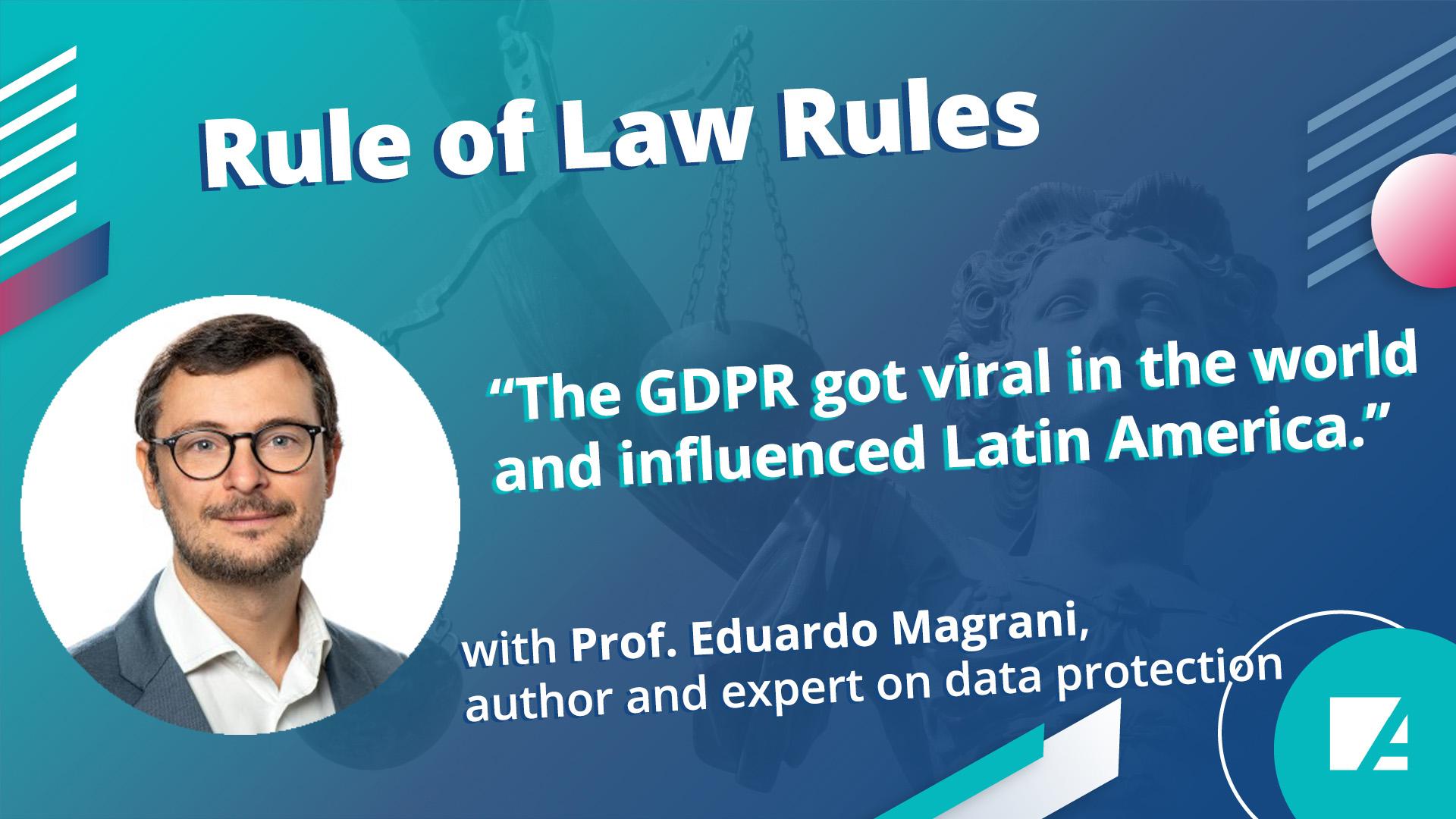
#3: Eduardo Magrani on Data Protection in Latin America
We speak with Eduardo Magrani about the General Data Protection Regulation and its influence in Brazilian and Latin American legal framework.
Read now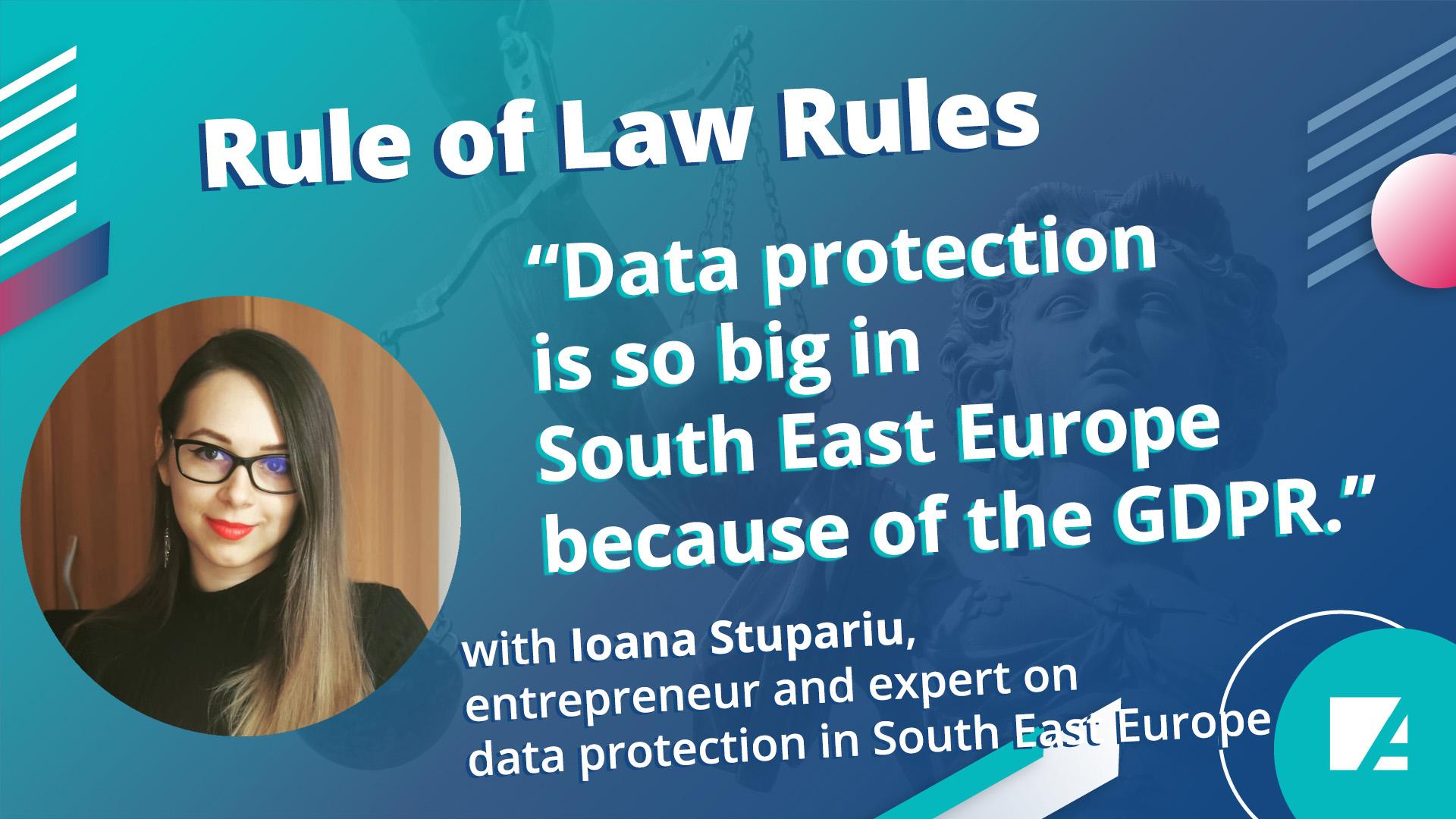
#2: Ioana Stupariu on the GDPR's influence in South East Europe
Ioana Stupariu works with tech and healthcare start-ups and companies across Central and Eastern Europe. And she researches on Data protection & Privacy.
Read now