Opening Session
The program opened with welcoming remarks by Aghiad Ghanem, Co-Director of the MENA Program at Sciences Po; Prof. Dr. Hans Joerg Dietsche, Director of the KAS Rule of Law Programme MENA; Prof. Dr. Guillaume Tusseau, Director of the Sciences Po Law School Research Centre; and Prof. Sanaa Alsarghali, UNESCO Chair on Human Rights, Democracy and Peace at An-Najah National University and Visiting Professor at Sciences Po Law School.
The speakers highlighted the importance of constitutional dialogue in times of profound political uncertainty and emphasized the need for critical reflection on constitutional transitions in the Middle East.
Opening Panel: Transitions and Interim Constitutions
The opening panel examined the role of interim constitutions in fragile and transitional political contexts.
Moderated through an interactive dialogue led by Prof. Sanaa Alsarghali, contributions from Prof. Christina Murray, Prof. Tamara El Khoury, and Ms. Sharon Pia Hickey explored how temporary constitutional arrangements can assist states in navigating periods of instability while laying the groundwork for long-term constitutional governance.
Discussions focused on the opportunities and risks associated with transitional constitutional frameworks, including questions of legitimacy, inclusion, political bargaining, and institutional continuity. Participants examined comparative experiences from various constitutional transitions and reflected on lessons applicable to current developments in the Middle East.
Case Study: South Africa’s Constitutional Transition
The afternoon session featured an in-depth case study presented by Prof. Christina Murray on South Africa’s constitutional transition.
The session examined the process through which South Africa moved from an interim constitutional framework to a permanent democratic constitution. Participants discussed the political conditions that enabled constitutional negotiations, the role of key stakeholders, and the challenges encountered throughout the transition process.
The case study provided valuable comparative insights into how interim constitutions can function as mechanisms for managing political transformation while creating pathways toward lasting constitutional settlements.
Panel: The Arab World in Motion – New Balances, Emerging Orders, and Regional Case Studies
The final session of the first day explored the broader political transformations reshaping the Middle East and North Africa.
Contributions by Prof. Nathan J. Brown, Prof. Stéphane Lacroix, and Dr. Amr Hamzawy examined shifting regional dynamics, emerging political alignments, and evolving centers of power across the Arab world. The discussion assessed how domestic political developments, regional rivalries, and international interventions continue to influence governance structures and constitutional trajectories throughout the region.
Participants reflected on the implications of these transformations for Syria and the Palestinian Territories, particularly regarding prospects for constitutional reform, political legitimacy, and state-building.
Session: The Case of the Palestinian Territories
The second day began with a session dedicated to the emerging Interim Constitution for the State of Palestine.
Presentations by Prof. Sanaa Alsarghali, a member of the Interim Drafting Committee, and Prof. Christina Murray provided participants with an overview of the drafting process, the constitutional objectives of the initiative, and the challenges facing its implementation. The discussion was enriched by comments from Prof. Nathan J. Brown.
Participants examined the constitutional, political, and practical implications of developing an interim constitutional framework under conditions of ongoing conflict, fragmentation, and occupation. Particular attention was given to questions of democratic legitimacy, institutional design, public participation, and the prospects for future elections and state-building.
The session highlighted both the potential opportunities and the significant constraints facing constitutional development in the Palestinian Territories.
Session: The Case of Syria
The subsequent session focused on Syria’s recently adopted interim constitutional declaration and its role in shaping the country’s political future.
Contributions by Dima Moussa, Mutasem Syoufi, and Aghiad Ghanem examined the constitutional and political context surrounding the transitional framework currently governing Syria. The discussion addressed the challenges arising from years of conflict, institutional fragmentation, foreign intervention, and competing claims to legitimacy.
Participants explored whether the interim constitutional declaration could serve as a meaningful bridge toward a permanent constitutional settlement or whether it risks extending transitional governance indefinitely. Comparative perspectives and practical experiences offered valuable insights into the complexities of constitutional design in post-conflict environments.
Panel: The Need for an Electoral Systems Approach in Interim Constitutions
The final substantive session examined the relationship between constitutional frameworks and electoral system design in transitional settings.
Prof. Elenora Bottini introduced the theoretical foundations of electoral system design within constitutional processes, emphasizing the importance of aligning constitutional arrangements with democratic representation and political stability.
Building on this framework, Vladimir Pran explored the electoral challenges facing Syria, while George Zeidan examined the prospects and obstacles related to future elections in the Palestinian Territories. Discussions focused on electoral legitimacy, institutional capacity, political inclusion, and the practical feasibility of conducting elections in fragile and conflict-affected environments.
Participants engaged in an interactive discussion assessing whether constitutional and electoral frameworks currently under consideration can support credible democratic transitions in both contexts.
Final Dialogue and Reflections
The training concluded with an interactive feedback session during which participants reflected on the key themes and lessons emerging from the two-day program.
Discussions underscored the importance of comparative constitutional learning, inclusive constitutional processes, and realistic assessments of political and institutional conditions when designing interim constitutional frameworks. Participants also emphasized the value of continued dialogue among constitutional scholars, practitioners, and policymakers working on governance and transition processes in the region.
Key Outcomes and Impact
The training resulted in:
• Enhanced understanding of the role and limitations of interim constitutions in conflict and post-conflict environments;
• Strengthened comparative knowledge of constitutional transitions and state-building processes;
• Increased awareness of the constitutional and political developments currently unfolding in Syria and the Palestinian Territories;
• Valuable exchanges between constitutional scholars, legal practitioners, and governance experts from different regions;
• Improved practical understanding of the relationship between constitutional design, electoral systems, and democratic transition.
Advancing Constitutional Dialogue in Times of Uncertainty
By examining constitutional transitions in Syria and the Palestinian Territories through both theoretical and practical perspectives, the training contributed to a deeper understanding of the challenges and opportunities facing constitutional governance in times of political uncertainty.
The discussions reaffirmed that constitutional processes are inseparable from broader political realities and that sustainable constitutional development requires inclusive participation, institutional legitimacy, and a long-term commitment to democratic governance and the rule of law.
Media library
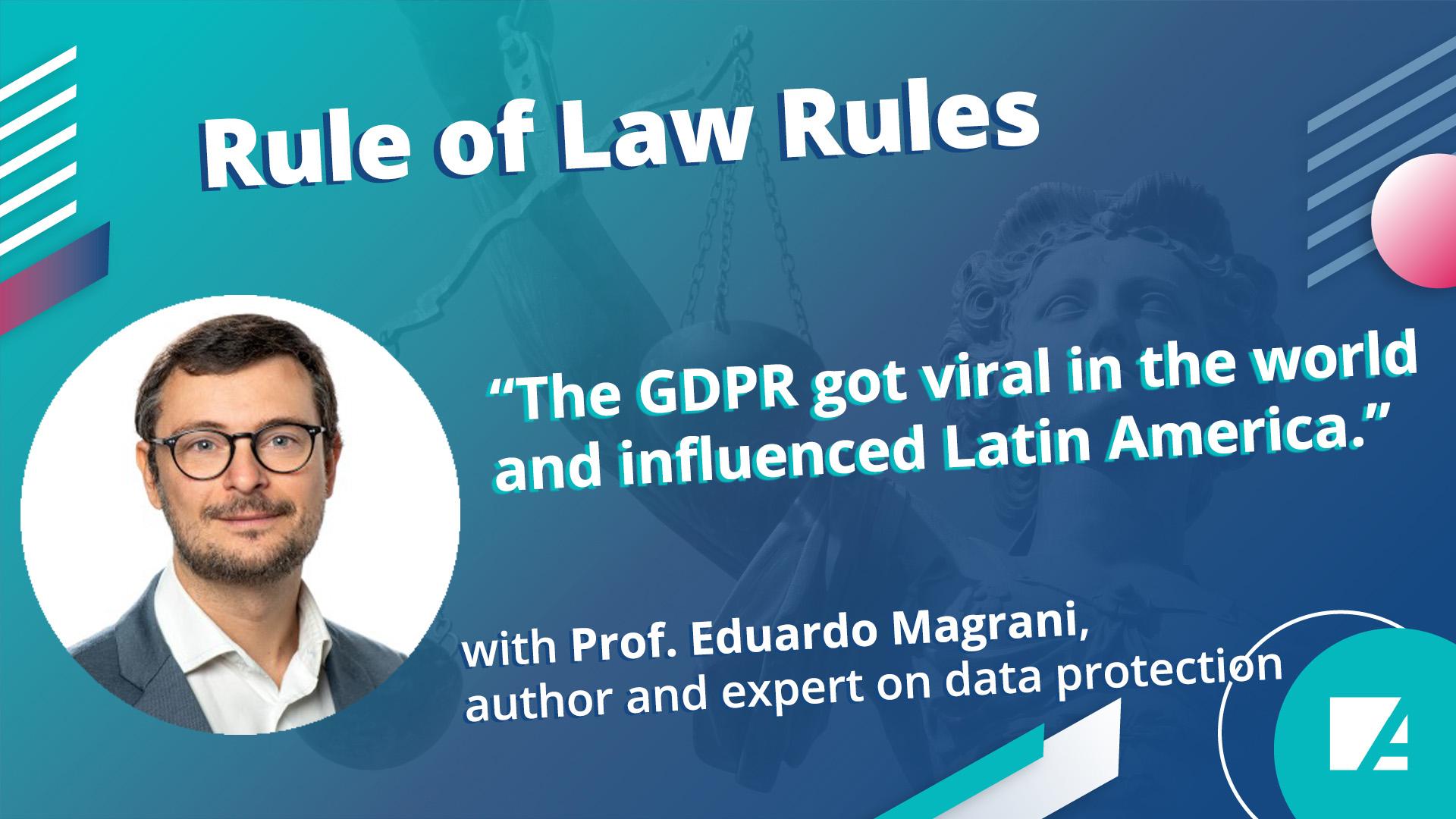
#3: Eduardo Magrani on Data Protection in Latin America
We speak with Eduardo Magrani about the General Data Protection Regulation and its influence in Brazilian and Latin American legal framework.
Read now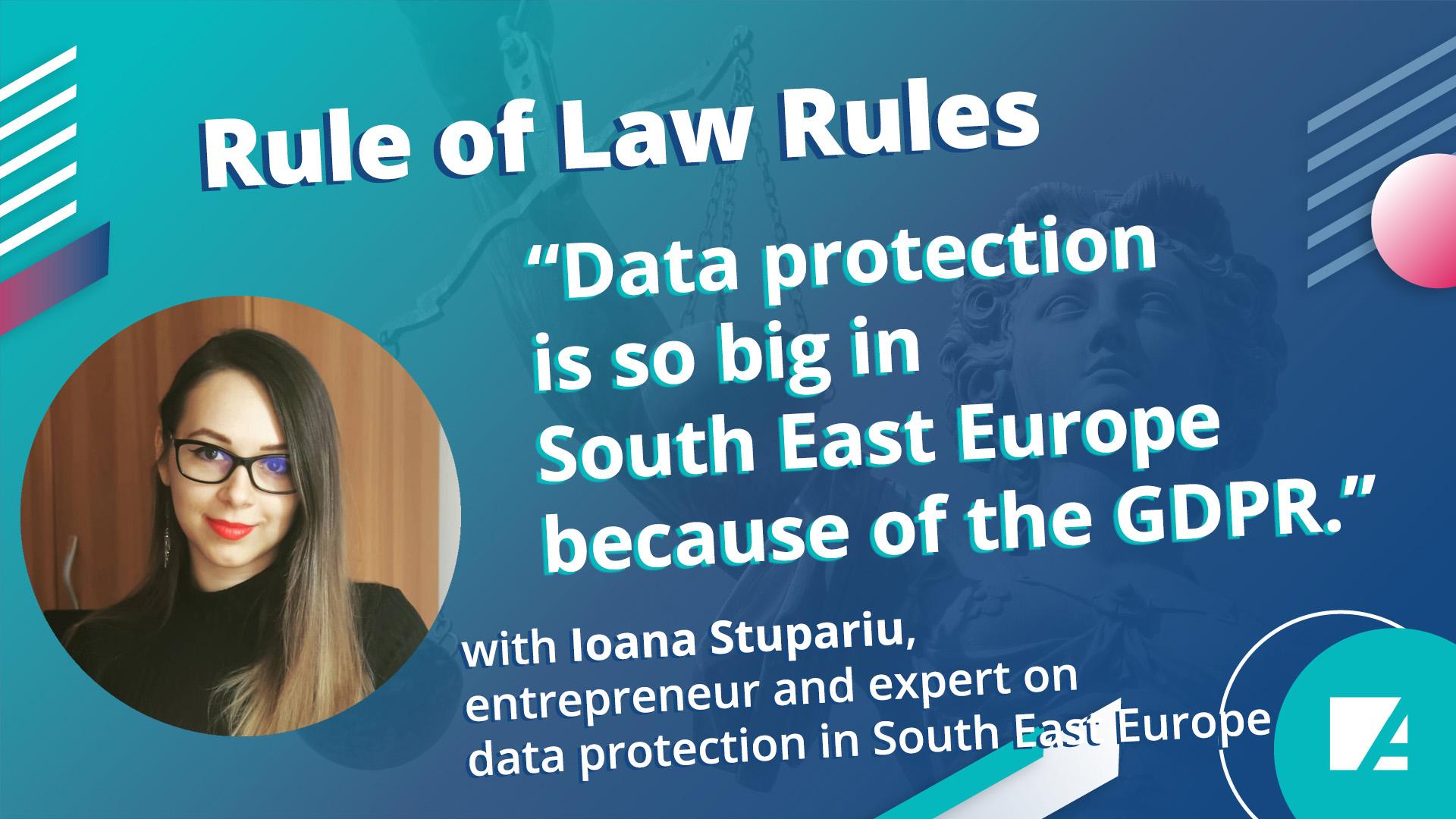
#2: Ioana Stupariu on the GDPR's influence in South East Europe
Ioana Stupariu works with tech and healthcare start-ups and companies across Central and Eastern Europe. And she researches on Data protection & Privacy.
Read now