




Opening Session
The conference opened with welcoming remarks by Ambassador Feisal Amin Rasoul al-Istrabadi, Founding Director of the Center for the Study of the Middle East at Indiana University; Prof. Dr. Susan H. Williams, Former Director of the Center for Constitutional Democracy; and Prof. Dr. Hans Joerg Dietsche, Director of the KAS Rule of Law Programme MENA.
The speakers emphasized the importance of strengthening networks among women constitutional judges, promoting judicial dialogue across jurisdictions, and creating a platform for the exchange of experiences on constitutional developments in the region.
Panel 1: The Role of Constitutional Courts in Protecting the Rights of Future Generations: Nature, Culture, and New Technologies
Moderated by Prof. Dr. Susan H. Williams, the first panel explored the growing responsibility of constitutional courts in safeguarding the interests of future generations.
Participants discussed the role of constitutional adjudication in addressing environmental challenges, including climate change, sustainable development, and the protection of natural resources. The panel further examined constitutional approaches to preserving cultural heritage and identity, particularly in contexts affected by conflict, migration, and social transformation.
Special attention was given to the constitutional implications of emerging technologies, including artificial intelligence, data governance, and digital rights. Discussions highlighted the need for constitutional courts to adopt forward-looking approaches that protect human dignity, privacy, equality, and democratic accountability while responding to rapidly evolving societal realities.
Panel 2: When Constitutional Courts Decide Not to Decide: The Practice of Judicial Abstention
Moderated by Ambassador Feisal Amin Rasoul al-Istrabadi, the second panel examined the concept of judicial abstention and the circumstances under which constitutional courts choose not to rule on certain issues.
Participants explored the legal and institutional considerations that may justify judicial restraint, including respect for the separation of powers, preservation of judicial legitimacy, and deference to democratic institutions. Comparative experiences demonstrated how judicial abstention can serve as a strategic tool while also raising important questions concerning accountability, access to justice, and the protection of fundamental rights.
The discussion highlighted the delicate balance constitutional courts must maintain between exercising their constitutional mandate and avoiding undue interference in political processes.
Panel 3: The Principle of Proportionality in the Enforcement of Constitutional Rights
Moderated by Dr. Tamara El Khoury, this panel focused on the principle of proportionality as one of the most influential methods of constitutional reasoning.
Participants examined how constitutional courts use proportionality analysis to balance competing rights, public interests, and governmental objectives. Discussions covered a range of constitutional issues, including freedom of expression, equality, public security, and economic regulation.
The panel emphasized that proportionality serves as a structured judicial methodology that enables courts to protect constitutional rights while ensuring that any limitations remain necessary, appropriate, and proportionate to legitimate public objectives.
Panel 4: The Importance of the Role of Women on Constitutional Courts in Transitional Settings
Moderated by Prof. Sanaa Alsarghali, the fourth panel addressed the unique contributions of women constitutional judges in periods of political, legal, and institutional transition.
Participants discussed how women judges contribute to more inclusive and representative constitutional jurisprudence, particularly in contexts characterized by constitutional reform, democratic transition, or post-conflict reconstruction. The discussion highlighted the value of diverse judicial perspectives in addressing issues related to equality, minority rights, transitional justice, and social reconciliation.
The panel also explored challenges faced by women judges, including political pressures, institutional fragility, and societal expectations, while underscoring their important role in strengthening public trust in constitutional institutions and advancing the rule of law.
Panel 5: Landmark Decisions of Constitutional Courts: Insights from the Bench
Moderated by Prof. Susan H. Williams, this interactive session provided participating judges with the opportunity to present landmark constitutional decisions from their respective courts.
Each participant highlighted a ruling considered particularly influential in shaping constitutional jurisprudence, protecting fundamental rights, or addressing significant constitutional questions. The presentations offered valuable insights into judicial reasoning processes and showcased the diversity of constitutional experiences across the MENA region.
The discussion facilitated a unique exchange among judges, enabling participants to compare approaches to constitutional interpretation and reflect on the broader societal impact of constitutional adjudication.
Final Session: Reflections and Future Directions of the Conference
The conference concluded with an interactive discussion dedicated to reflecting on the themes addressed throughout the two-day event and identifying priorities for future editions.
Participants shared feedback on the conference format and exchanged ideas for future topics, emphasizing the importance of maintaining a dedicated forum for women constitutional judges. Discussions highlighted emerging constitutional challenges, including technological developments, democratic resilience, judicial independence, and the protection of fundamental rights.
The session reaffirmed the value of continued regional and international dialogue among constitutional judges and the importance of strengthening professional networks that support judicial cooperation and the exchange of expertise.
Key Outcomes and Impact
The conference resulted in:
• Strengthened regional and international networks among women constitutional judges and constitutional law experts;
• Enhanced exchange of comparative experiences on constitutional adjudication and judicial reasoning;
• Greater understanding of emerging constitutional challenges related to technology, environmental protection, and democratic governance;
• Valuable discussions on judicial independence, constitutional interpretation, and the role of courts in transitional contexts;
• Identification of future priorities for cooperation and dialogue among women constitutional judges in the MENA region.
Advancing Constitutional Justice and Judicial Dialogue
By bringing together women constitutional judges from across the MENA region, the conference contributed to strengthening judicial dialogue, promoting comparative constitutional learning, and supporting the role of constitutional courts in safeguarding democratic governance and fundamental rights.
The discussions reaffirmed that constitutional justice plays a critical role in addressing contemporary societal challenges and that continued cooperation among constitutional judges remains essential for advancing the rule of law and strengthening constitutional institutions throughout the region.
Media library

#3: Eduardo Magrani on Data Protection in Latin America
We speak with Eduardo Magrani about the General Data Protection Regulation and its influence in Brazilian and Latin American legal framework.
Read now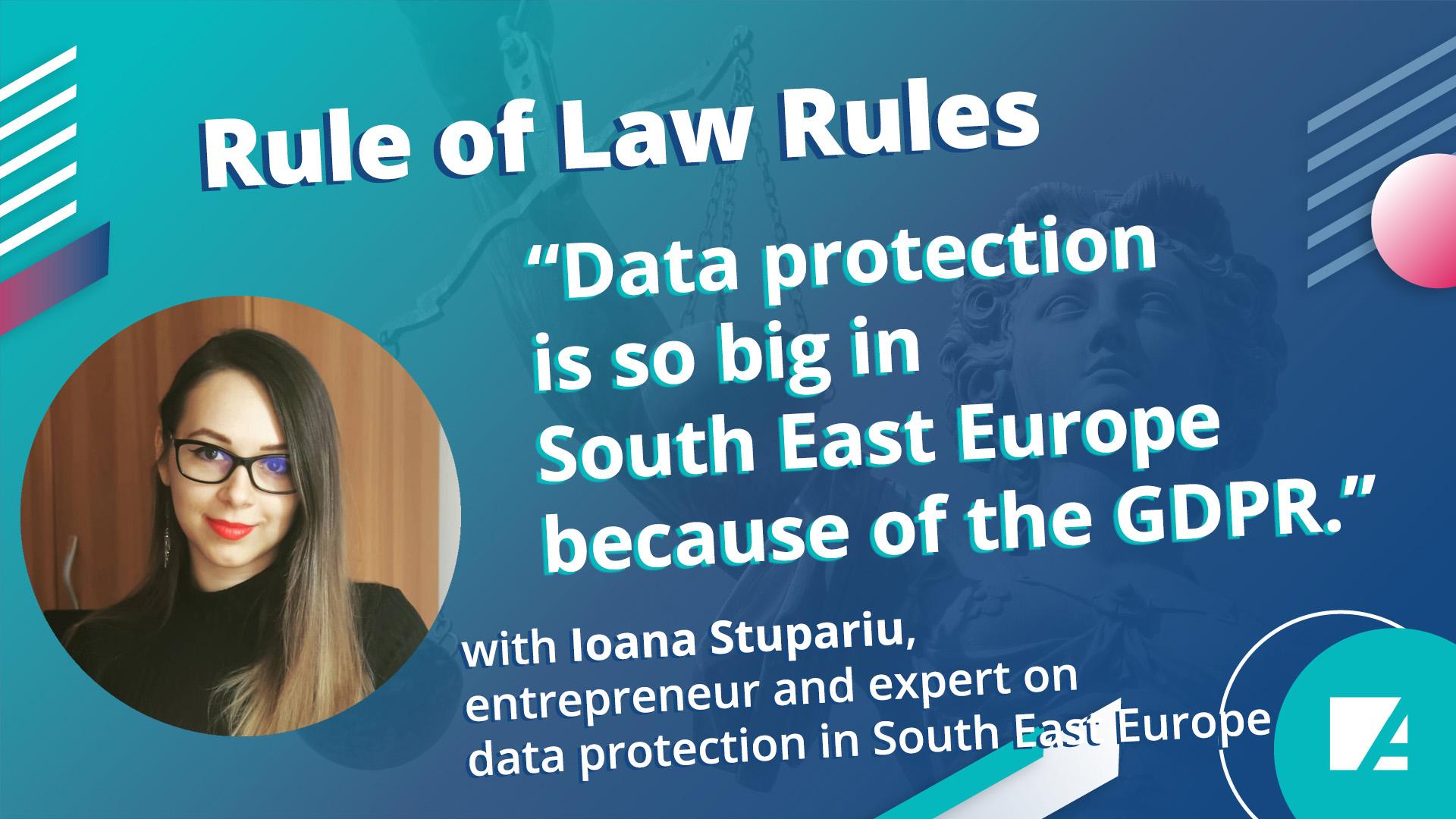
#2: Ioana Stupariu on the GDPR's influence in South East Europe
Ioana Stupariu works with tech and healthcare start-ups and companies across Central and Eastern Europe. And she researches on Data protection & Privacy.
Read now