


Asset Publisher

Publications

Asset Publisher

Vietnam - A Beneficiary of a Fragmented World?

From Efficiency to Resilience in Global Supply Chains

The global economic order is undergoing profound transformation. Geopolitical fragmentation and the growing rivalry between the United States and China are reshaping the parameters of international economic relations: considerations of security and strategic policy are increasingly taking precedence over efficiency and cost. Governments and companies are prioritizing resilience, risk mitigation, and the reduction of critical dependencies. The EU and Germany, too, are moving away from a purely market driven logic in global value chains. Against this backdrop, Vietnam is gaining importance as a location for the diversification of production and supply chains.

IMAGO / Xinhua

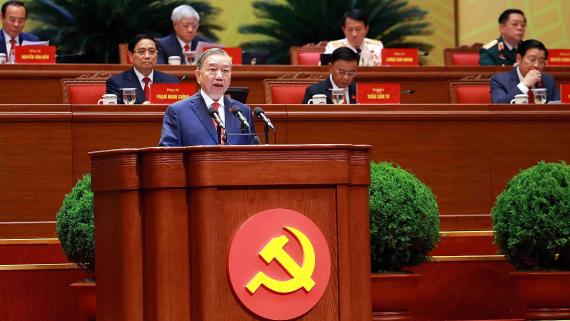
The 14th National Congress of the Communist Party of Vietnam

New Mandate, New Benchmarks - General Secretary To Lam and His Epoch Making Reform Agenda

The 14th National Congress of the Communist Party of Vietnam took place in Hanoi from 19 to 23 January 2026. At the country’s most important political event, more than 1,500 delegates elected a new 200 member Central Committee for the next five years, from which the members of the Politburo are drawn. This year’s Party Congress was pivotal for Vietnam’s development strategy, as it put to the test the most comprehensive reforms since the country’s economic opening in 1986.

Vietnam’s bamboo diplomacy and defense strategy amid competing geopolitical blocs

Hanoi maintains careful balance among the major powers while advancing modern defense procurement, international partnerships, and the development of its domestic defense industry

Vietnam’s foreign policy of strategic balancing, which has been described as “bamboo diplomacy”, is exerting an increasingly significant influence on the country’s defense and industrial policymaking. In the context of escalating tensions in the South China Sea and growing uncertainty within global supply chains, Hanoi is pursuing new partnerships while avoiding any abrupt disruption of its existing dependencies. This report analyzes the interplay between diversification, technological acquisition, and domestic value creation, and evaluates the associated risks and opportunities for regional stability and for cooperation with European partners.

Research - Assessment of Top 500 Vietnamese Private Enterprises

VPE500 - Report 2025

This report, conducted by the National Institute for Economics and Finance (NIEF), Ministry of Finance with support from the Konrad-Adenauer-Stiftung (KAS) Vietnam, examines Vietnam’s 500 largest private enterprises during 2022–2023 as the economy rebounds from COVID-19 and enters a high-growth phase. Rankings are based on employment, assets, and revenue, aiming to assess performance and economic impact rather than mere listing.

Research - How FDI inflows contribute to industrialisation in Vietnam

This report, conducted by the National Institute for Economics and Finance (NIEF), Ministry of Finance with support from the Konrad-Adenauer-Stiftung (KAS) Vietnam, presents findings from a 2025 research project. It aims to clarify the role of FDI in Vietnam’s industrialization, focusing on the period from 2011 to the present. The analysis highlights FDI’s contributions across key dimensions: industrial development, economic growth, trade, science and technology, labor, and social transformation. The report offers evidence-based insights into how FDI has shaped Vietnam’s journey toward becoming a modern industrialized nation.

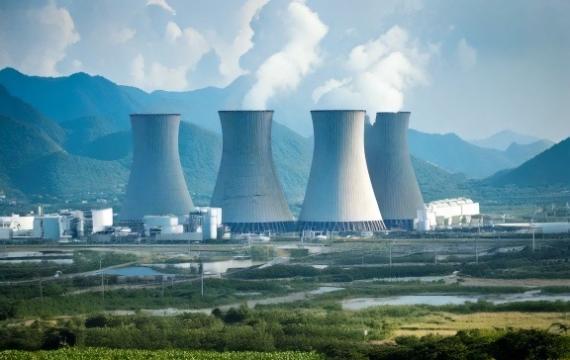
Nuclear power plant in VietnamKI-generated with Adobe Firefly, Konrad-Adenauer-Stiftung e. V.

A second chance for nuclear energy in Vietnam

The increasing energy demand in Vietnam is leading to a (re)entry into nuclear energy

Vietnam, one of the fastest-growing economies in Southeast Asia, faces the urgent challenge of sustainably and reliably meeting its steadily increasing energy demand. Power shortages and blackouts in recent years have alarmed foreign investors. In light of global efforts to reduce greenhouse gas emissions and the need to diversify the national energy mix, nuclear energy is increasingly coming into focus.

Research: Global E-Commerce Trends and their Implications for Eu-Vietnam Trade

This study, conducted by the Vietnam Institute for Development Strategies (VIDS) with support from Konrad-Adenauer-Stiftung Vietnam, highlights the essential role of e-commerce in strengthening the EU-Vietnam trade relationship. By pinpointing key trends and suggesting actionable strategies, the report offers a roadmap to fully leverage the EVFTA. The insights and recommendations are crucial for policymakers, businesses, and stakeholders to navigate the evolving digital economy, ensuring Vietnam's competitiveness and success in the global market.

Research - Impact of IUU Yellow Card on Vietnam's Seafood Export to the EU Market

Joint project between Konrad-Adenauer-Stiftung Vietnam and the Vietnam Institute for Economic and Policy Research

The report provides an in-depth analysis of the current situation and the steps being taken to address the IUU yellow card, emphasizing the importance of continued efforts and international collaboration.

Job Announcement

Part-time Position: Project Admin plus Accountant

The German Political Foundation “Konrad-Adenauer-Stiftung” (KAS), seeks to contract a PROJECT ADMIN PLUS ACCOUNTANT part time position for three years project “Preserving the Global Commons: Promoting Maritime Diplomacy in Southeast Asia” in Ha Noi, Viet Nam. Konrad-Adenauer-Stiftung (KAS) together with the Diplomatic Academy of Vietnam (DAV) is implementing this project. This project aims to support maritime diplomacy and foster a rules-based maritime order in Southeast Asia by enhancing regional cooperation, capacity-building, and joint research on maritime issues.

IMAGO / photothek

How much sun can be fed into the grid?

Challenges and opportunities of solar roof promotion in the context of Vietnam's energy transformation

Vietnam is one of the five countries most affected by climate change worldwide. At the same time, the energy demands of the high-consuming middle class are growing day by day. Vietnam wants to be climate-neutral by 2050. For that its industry needs to become greener, for which large-scale solar parks have been built to satisfy the new hunger for energy. But the solar boom appears to have exhausted itself. Now the focus is on non-commercial solutions: small systems on the roofs of households and offices. What opportunities does solar roof funding offer, and can we expect new impulses from it?