


Asset Publisher

Country Reports

Short political reports of the KAS offices abroad

Publications

Atlantic Spotlight Series III

Entdecken Sie weitere Beiträge in unserer neuen Politikreihe „Atlantic Spotlight“, Tschornobyl und Saporischschja – es reicht!

Read articles of the 2025/2026 period, and we invite you all to read publications, and write any feedback/opinions you might have!

KAS

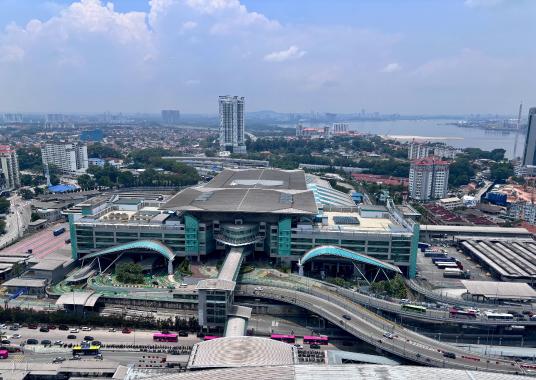
Malaysia's Special Economic Zones

Growth Engine and Balancing Tool

Malaysia's Special Economic Zones reflect a dual-track economic strategy: rapid integration into high-value regional supply chains and long-term domestic rebalancing. The Johor-Singapore Special Economic Zone (JS-SEZ), launched in 2025, demonstrates strong early momentum, attracting RM68 billion (USD17 billion) in approved investments within nine months and leveraging cross-border complementarities with Singapore. In contrast, the East Coast Economic Region (ECER) SEZ, established in 2008-2009, targets structural disparities by promoting industrial development in less-developed states. While JS-SEZ benefits from proximity to global capital and logistics networks, ECER faces constraints linked to geography, visibility, and execution capacity. Together, these zones illustrate Malaysia's attempt to move up the value chain while addressing internal inequality. The central policy challenge lies in sustaining investor confidence through credible execution and ensuring that high-growth zones do not deepen regional imbalances. These zones serve two distinct functions. First, they attract foreign direct investment in higher-value sectors such as digital services, advanced manufacturing, and green industries. Second, they address uneven development across regions. The contrast between the Johor-Singapore SEZ and the ECER SEZ illustrates this dual objective clearly.

IMAGO / dts Nachrichtenagentur

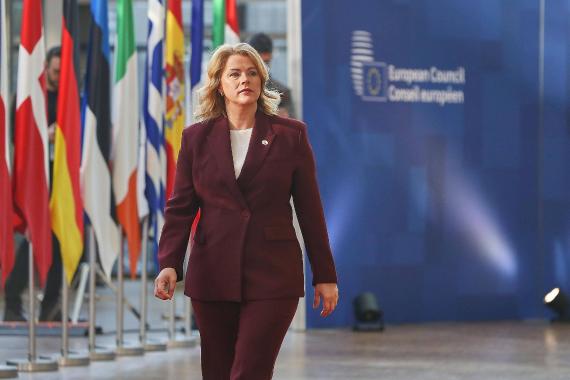
Evika Siliņa resigns: Latvia's primary phase begins with government crisis

Vienotiba: between a coalition breakdown, an election campaign and a general election

Prime Minister Evika Siliņa (Jaunā Vienotība / EPP) announced her resignation on 14 May. The occasion was the forced resignation of Defense Minister Andris Sprūds (Progresīvie) on May 10 after drone incidents in Latgale — which were subsequently identified as Ukrainian missiles diverted by Russian electronic warfare. This ends the three-party coalition of JV, ZZS and Progresīvie, which has been in office since September 2023 — just under five months before the parliamentary elections on October 3. On the same morning, Agriculture Minister Armands Krauze (ZZS) was arrested by the anti-corruption office KNAB as part of the "wood industry affair". Siliņa continues to conduct official business in an acting capacity; On 15 May, President Edgars Rinkēvičs will start consultations with all Saeima parliamentary groups. There are three scenarios for the transition phase.

IMAGO / Anadolu Agency

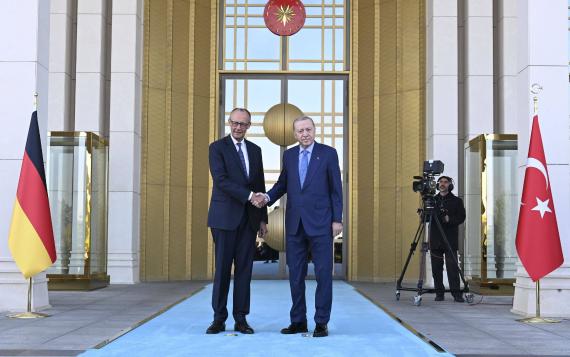
Strategic Bet: How Germany Is Rediscovering Turkey

From Bilateral Rapprochement to a Shared Security Architecture

On 18 May 2026, the Strategic Dialogue Mechanism between Germany and Turkey is scheduled to be resumed. Since Chancellor Friedrich Merz’s inaugural visit to Ankara in late October 2025, German–Turkish relations have taken on renewed momentum. Both countries currently see tangible opportunities to achieve concrete progress in their bilateral cooperation. From a German perspective, Turkey has increasingly come into focus as a strategic security partner. The upcoming NATO Summit in Ankara in July 2026 offers a valuable opportunity to further strengthen cooperation in the field of defence. Additional substantive impulses may also emerge from the forthcoming 18th Istanbul Security Conference®.

IMAGO / Wolfgang Maria Weber

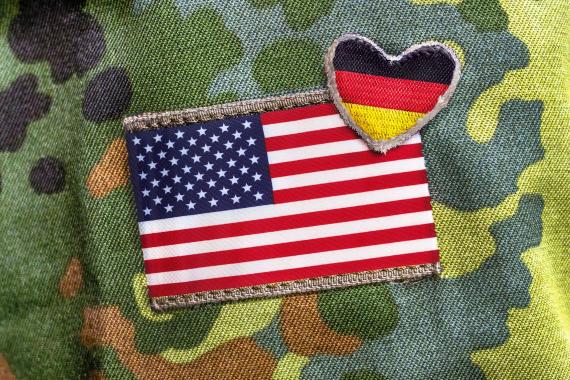
Reactions and Background to the Trump Administration’s Decision to Reduce Troops in Germany

Gradual Withdrawal or New Strategy?

The United States’ decision to withdraw 5,000 troops from Germany over the next year reflects not only President Donald Trump’s displeasure with America’s European allies, but also the continuation of a policy by the Trump Administration to hold American allies responsible for their own security. This move was substantially criticized by members of both houses of Congress, including many of Trump’s Republican allies, for being short sighted, lack of transparency (especially considering the lack of a released Global Posture Review) and demonstrating weakness. This may also be driven by an attempt to shore up Trump’s political base ahead of the 2026 midterm elections after the president’s approval rating sharply fell after the attack on Iran.

Atlantic Spotlight Series II

Bitte lesen Sie die neue Politikreihe „Atlantic Spotlight“, Russlands Krieg gegen die Ukraine gilt als Versuch Vladimir Putin's, russischen Einfluss wiederherzustellen.

Read articles of the 2025/2026 period, and we invite you all to read publications, and write any feedback/opinions you might have!

IMAGO / Xinhua

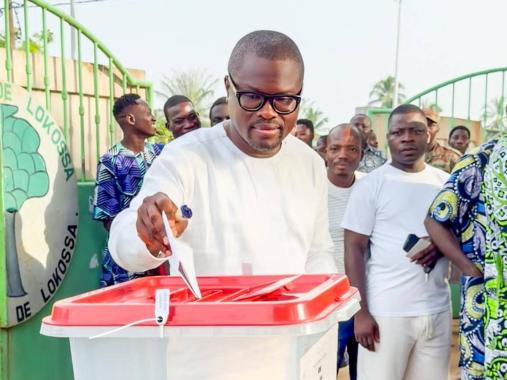
Presidential Election in Benin in the Context of Democratic Backsliding in West Africa

Government Candidate and Former Finance Minister Romuald Wadagni Wins the Election

On 12 April 2026, the citizens of Benin elected a new president. Romuald Wadagni, the former Minister of Finance and candidate of the governing coalition, emerged as the clear winner with 94.05 per cent of the vote. His sole opponent, Paul Hounkpè, chairman of the opposition party Forces Cauris pour un Bénin Émergent, lagged far behind with just under six per cent. Given the exclusion of the main opposition party Les Démocrates, the outcome of the election was largely predictable prior to the vote. Against this backdrop, observation focused less on the electoral result itself and more on voter turnout.

Morocco's Energy Wager: What European Partners Should Expect by 2030

Policy Brief 09

Smarterpix / Kirill_m

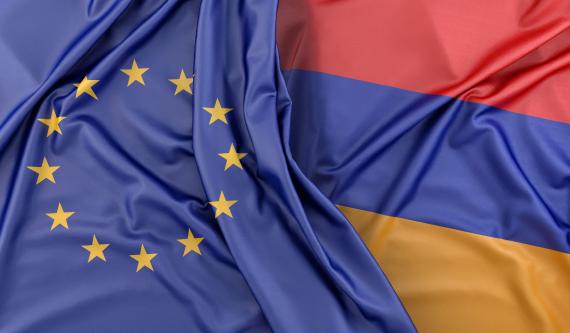
Yerevan in Europe’s Spotlight

One month before Armenia’s parliamentary elections, Europe’s heads of state and government convene in Yerevan for the European Political Community summit, followed by the first EU–Armenia Summit.

At a time of significant geopolitical tensions and just weeks before a landmark parliamentary election, Europe's eyes will turn to Armenia in early May 2026. Within a few days, Yerevan will be the venue for several high-level international formats – the meeting of the European Political Community (EPC), the first ever EU-Armenia summit and the high-level conference "Yerevan Dialogue". The concentrated presence of European heads of government, decision-makers, diplomats and international experts is more than a protocol event. It is an expression of a strategic repositioning of Armenia – and underlines Europe's role in the South Caucasus.

IMAGO / Italy Photo Press

Giorgia Meloni’s reform agenda in the Political Laboratory of Italy

Judicial reform, electoral law, premiership

The failed judicial reform referendum marked Giorgia Meloni’s first major political setback. Having narrowly avoided a more serious government crisis, the question arises as to what remains of her far reaching institutional reform agenda. In the meantime, concerns are growing that the next parliamentary election could result in a stalemate between the centre right coalition and a potentially unified Campo Largo – a scenario of political stagnation that may be averted through a reform of the electoral system. This country report examines Meloni’s reform agenda in the light of three decades of structurally driven political instability and the earlier reform projects of Silvio Berlusconi and Matteo Renzi.

Asset Publisher

About this series

The Konrad-Adenauer-Stiftung is a political foundation. Our offices abroad are in charge of over 200 projects in more than 120 countries. The country reports offer current analyses, exclusive evaluations, background information and forecasts - provided by our international staff.

Order details

Editor

Konrad-Adenauer-Stiftung e.V.