


Asset Publisher

Country Reports

Short political reports of the KAS offices abroad

Publications

IMAGO / Xinhua

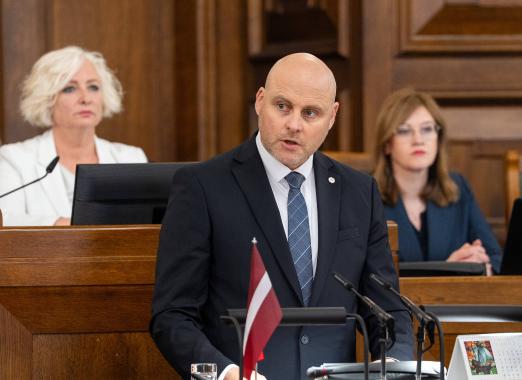
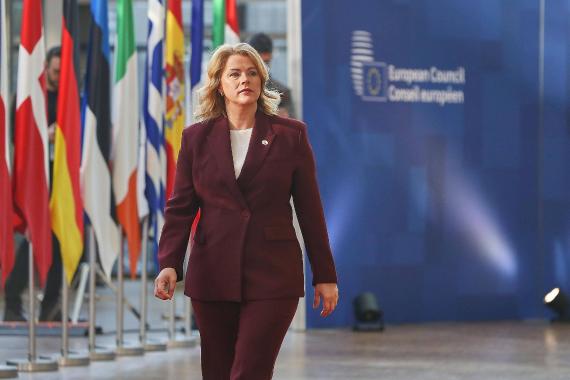
New government in Latvia: Four-party alliance under Kulbergs

JV remains security policy anchor

On 28 May 2026, the Saeima confirmed the new government under Prime Minister Andris Kulbergs. The 47-year-old businessman, economist and trained car mechanic from the centrist United List (Apvienotais saraksts, AS) takes over the duties of Evika Siliņa (Jaunā Vienotība, JV), whose cabinet collapsed on May 14 over a dispute over the replacement of the defense ministry after several drone incidents, including the impact on an oil storage facility in mid-May. President Edgars Rinkēvičs then tasked Kulbergs with forming a government. The new prime minister promises an "effective, professional and accountable government" and describes himself as a "realist". Kulbergs leads a four-party coalition.

Adrian Grycuk | Wikipedia Commons

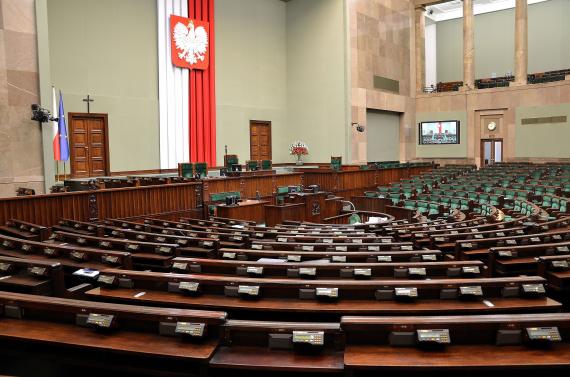
Before the 2027 Parliamentary Elections – Poland’s Party Landscape Shifts to the Right

Poland’s political landscape is entering a period of change. New political forces are gaining importance, and the question of future parliamentary majorities is becoming increasingly relevant.

Grafik mit KI Copilot generiert / Konrad-Adenauer-Stiftung

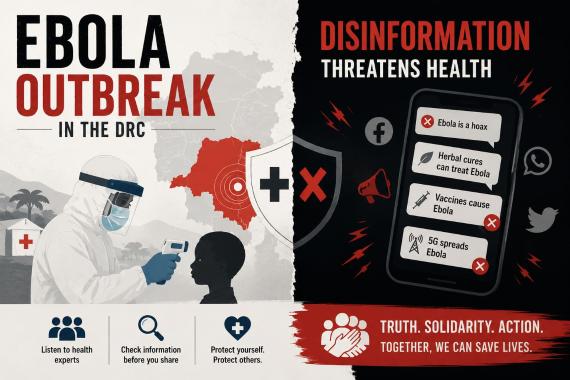
The Playbook of Health Disinformation and the Ebola Outbreak in the DRC and Uganda

Bioweapons, Big Pharma and Simple Remedies

The current Ebola outbreak in the Democratic Republic of the Congo and Uganda has been accompanied by targeted health disinformation just hours after the WHO emergency declaration. Our report analyses the narratives, actors and dynamics of this information manipulation – from bioweapons claims and conspiracy narratives to alleged “simple remedies” and anti-Western narratives. The analysis shows that: Ebola disinformation is not a new phenomenon but has followed a recurring pattern for decades. Many of the narratives spread today resemble earlier campaigns about HIV/AIDS, COVID-19 or other epidemics. Particularly problematic is the combination of fear, political instrumentalization and economic interests: Health disinformation has long become a business model. The report classifies the current situation, describes typical narratives and shows why health cri-ses are particularly vulnerable to disinformation and what countermeasures policymakers, authorities and media should now take.

Credit IMAGO / Anadolu Agency

A Test for Bolivia’s Government

Less than six months after President Paz took office, a wave of protests is threatening the stability of the country.

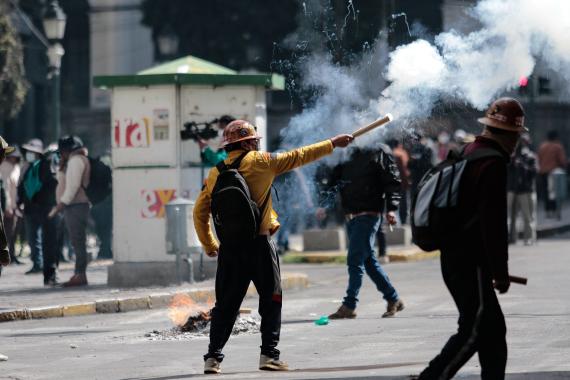
Severe supply shortages and road blockades are shaping the image of Bolivia’s capital, reviving memories of past crises in the country. The escalation is fueled by an explosive mix of political legacies, social conflicts, and growing dissatisfaction among influential groups. The government of President Rodrigo Paz is under acute pressure to act, yet from the very beginning of its term it has been confronted with a dual structural problem: the heavy legacy of the socialist era and an extremely fragile power base of its own.

Parlamentswahl in der Republik Zypern - Der Sieg der Vernunft

Die wichtigsten Erkenntnisee

Die Parlamentswahlen in Zypern fanden in einer Zeit großer Instabilität im östlichen Mittelmeerraum statt. Entgegen den Umfragen, die auf eine starke Zersplitterung hindeuteten, zeigte das Wahlergebnis eine deutliche Tendenz der Zyprer zu Stabilität, zugleich aber auch ein zurückhaltendes Bedürfnis nach einer Erneuerung der politischen Landschaft.

IMAGO / ITAR-TASS

Is an entry of Belarus into the war against Ukraine looming?

For weeks, Ukrainian President Zelensky has been warning that Russia is attempting to openly draw Belarus into the war.

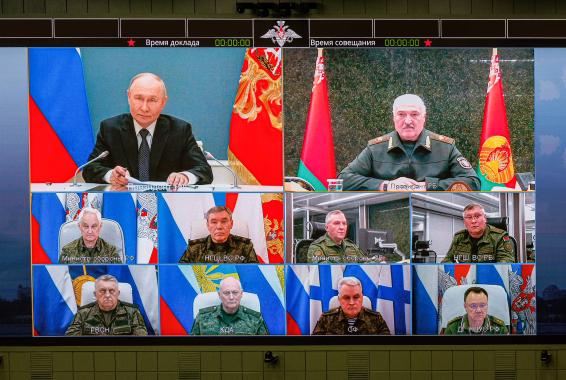
Ukrainian intelligence services have reportedly registered the construction of roads leading toward the Ukrainian border as well as the preparation of artillery positions in Belarus. According to the Ukrainian side, Russia is considering offensive scenarios launched from Belarus toward Chernihiv and Kyiv. The Commander-in-Chief of the Ukrainian Armed Forces stated that the Russian General Staff is examining offensive operations from the north in order to stretch the front line. However, according to the prevailing assessment of independent Belarusian analysts, no troop movements have so far been observed that would clearly substantiate these scenarios. A direct Belarusian entry into the war remains rather unlikely. Nevertheless, the situation remains tense given the country’s close military alignment with Russia and its high degree of militarization. Most recently, Russia and Belarus conducted joint exercises with a nuclear dimension, thereby creating a clear posture of intimidation. On 25 May, Sviatlana Tsikhanouskaya, the leading representative of the democratic Belarusian opposition, arrived in Kyiv — an important political signal from Ukraine that Ukrainian Belarusian relations are to be oriented more strongly toward the democratic opposition and distanced from dictator Lukashenka.

Atlantic Spotlight Series III

Entdecken Sie weitere Beiträge in unserer neuen Politikreihe „Atlantic Spotlight“, Tschornobyl und Saporischschja – es reicht!

Read articles of the 2025/2026 period, and we invite you all to read publications, and write any feedback/opinions you might have!

KAS

Malaysia's Special Economic Zones

Growth Engine and Balancing Tool

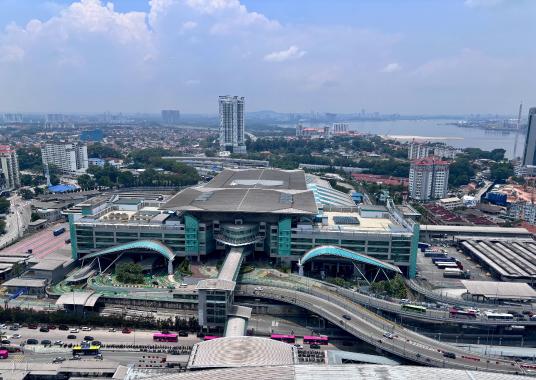
Malaysia's Special Economic Zones reflect a dual-track economic strategy: rapid integration into high-value regional supply chains and long-term domestic rebalancing. The Johor-Singapore Special Economic Zone (JS-SEZ), launched in 2025, demonstrates strong early momentum, attracting RM68 billion (USD17 billion) in approved investments within nine months and leveraging cross-border complementarities with Singapore. In contrast, the East Coast Economic Region (ECER) SEZ, established in 2008-2009, targets structural disparities by promoting industrial development in less-developed states. While JS-SEZ benefits from proximity to global capital and logistics networks, ECER faces constraints linked to geography, visibility, and execution capacity. Together, these zones illustrate Malaysia's attempt to move up the value chain while addressing internal inequality. The central policy challenge lies in sustaining investor confidence through credible execution and ensuring that high-growth zones do not deepen regional imbalances. These zones serve two distinct functions. First, they attract foreign direct investment in higher-value sectors such as digital services, advanced manufacturing, and green industries. Second, they address uneven development across regions. The contrast between the Johor-Singapore SEZ and the ECER SEZ illustrates this dual objective clearly.

IMAGO / dts Nachrichtenagentur

Evika Siliņa resigns: Latvia's primary phase begins with government crisis

Vienotiba: between a coalition breakdown, an election campaign and a general election

Prime Minister Evika Siliņa (Jaunā Vienotība / EPP) announced her resignation on 14 May. The occasion was the forced resignation of Defense Minister Andris Sprūds (Progresīvie) on May 10 after drone incidents in Latgale — which were subsequently identified as Ukrainian missiles diverted by Russian electronic warfare. This ends the three-party coalition of JV, ZZS and Progresīvie, which has been in office since September 2023 — just under five months before the parliamentary elections on October 3. On the same morning, Agriculture Minister Armands Krauze (ZZS) was arrested by the anti-corruption office KNAB as part of the "wood industry affair". Siliņa continues to conduct official business in an acting capacity; On 15 May, President Edgars Rinkēvičs will start consultations with all Saeima parliamentary groups. There are three scenarios for the transition phase.

IMAGO / Anadolu Agency

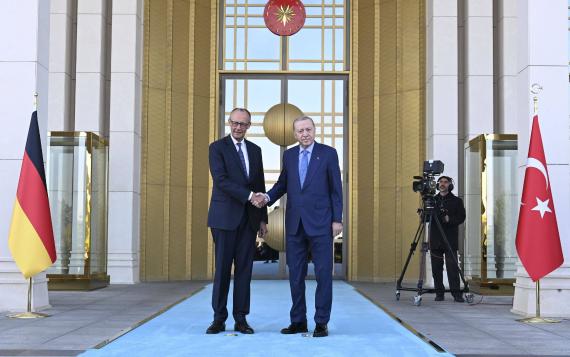
Strategic Bet: How Germany Is Rediscovering Turkey

From Bilateral Rapprochement to a Shared Security Architecture

On 18 May 2026, the Strategic Dialogue Mechanism between Germany and Turkey is scheduled to be resumed. Since Chancellor Friedrich Merz’s inaugural visit to Ankara in late October 2025, German–Turkish relations have taken on renewed momentum. Both countries currently see tangible opportunities to achieve concrete progress in their bilateral cooperation. From a German perspective, Turkey has increasingly come into focus as a strategic security partner. The upcoming NATO Summit in Ankara in July 2026 offers a valuable opportunity to further strengthen cooperation in the field of defence. Additional substantive impulses may also emerge from the forthcoming 18th Istanbul Security Conference®.

Asset Publisher

About this series

The Konrad-Adenauer-Stiftung is a political foundation. Our offices abroad are in charge of over 200 projects in more than 120 countries. The country reports offer current analyses, exclusive evaluations, background information and forecasts - provided by our international staff.

Order details

Editor

Konrad-Adenauer-Stiftung e.V.