





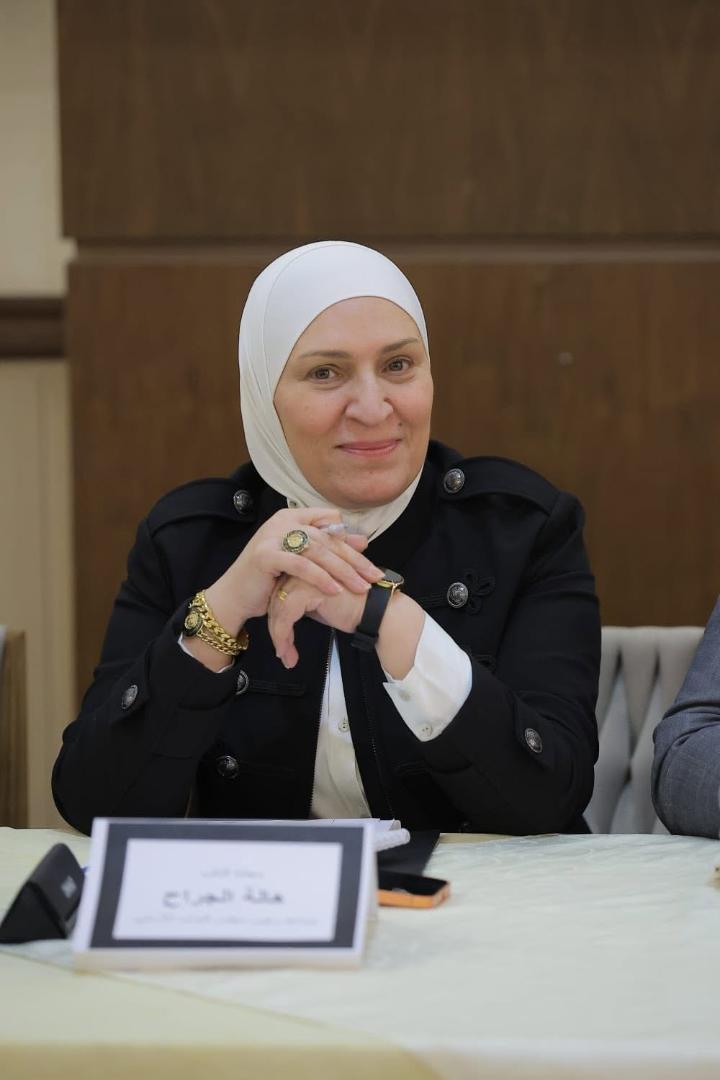
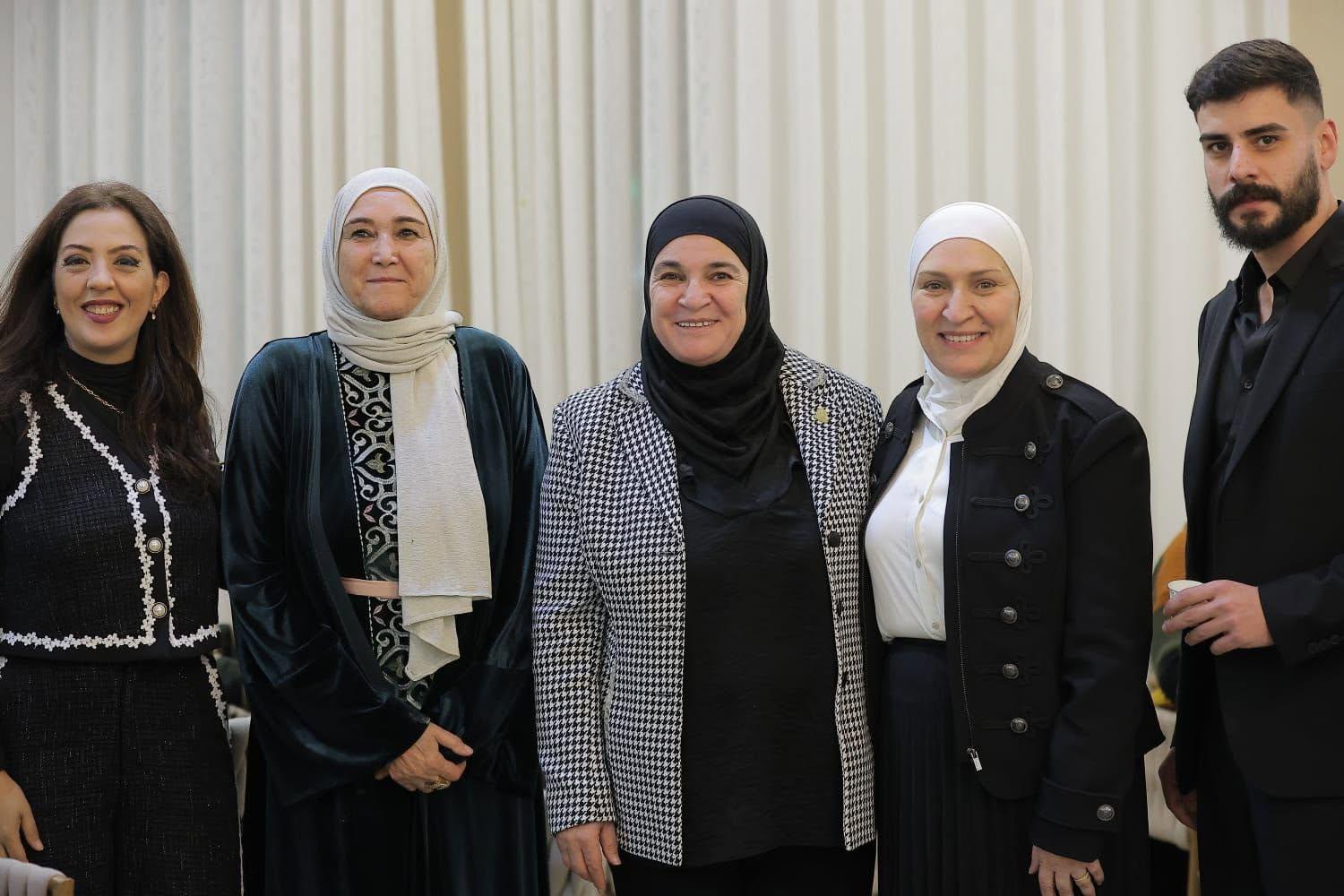
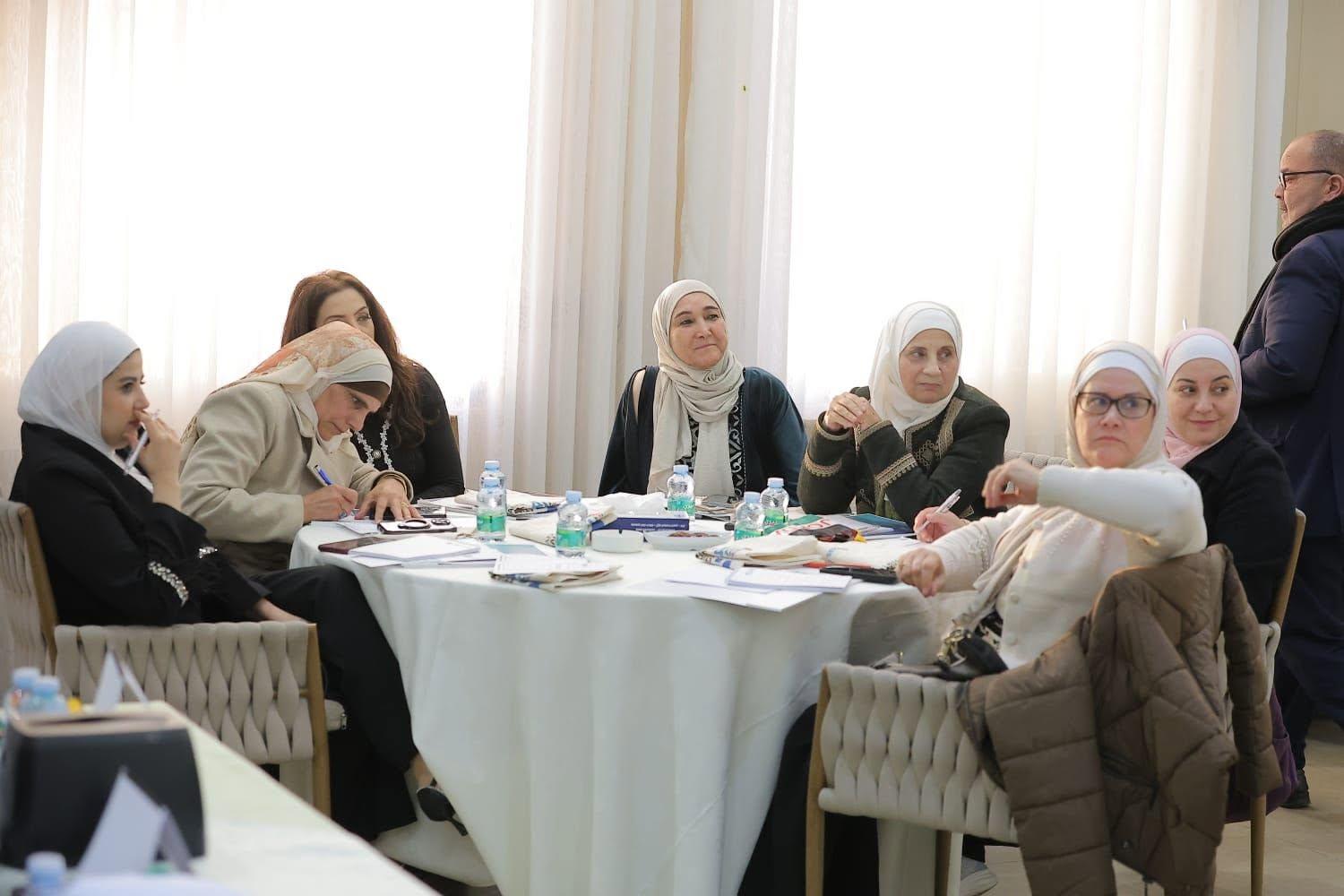
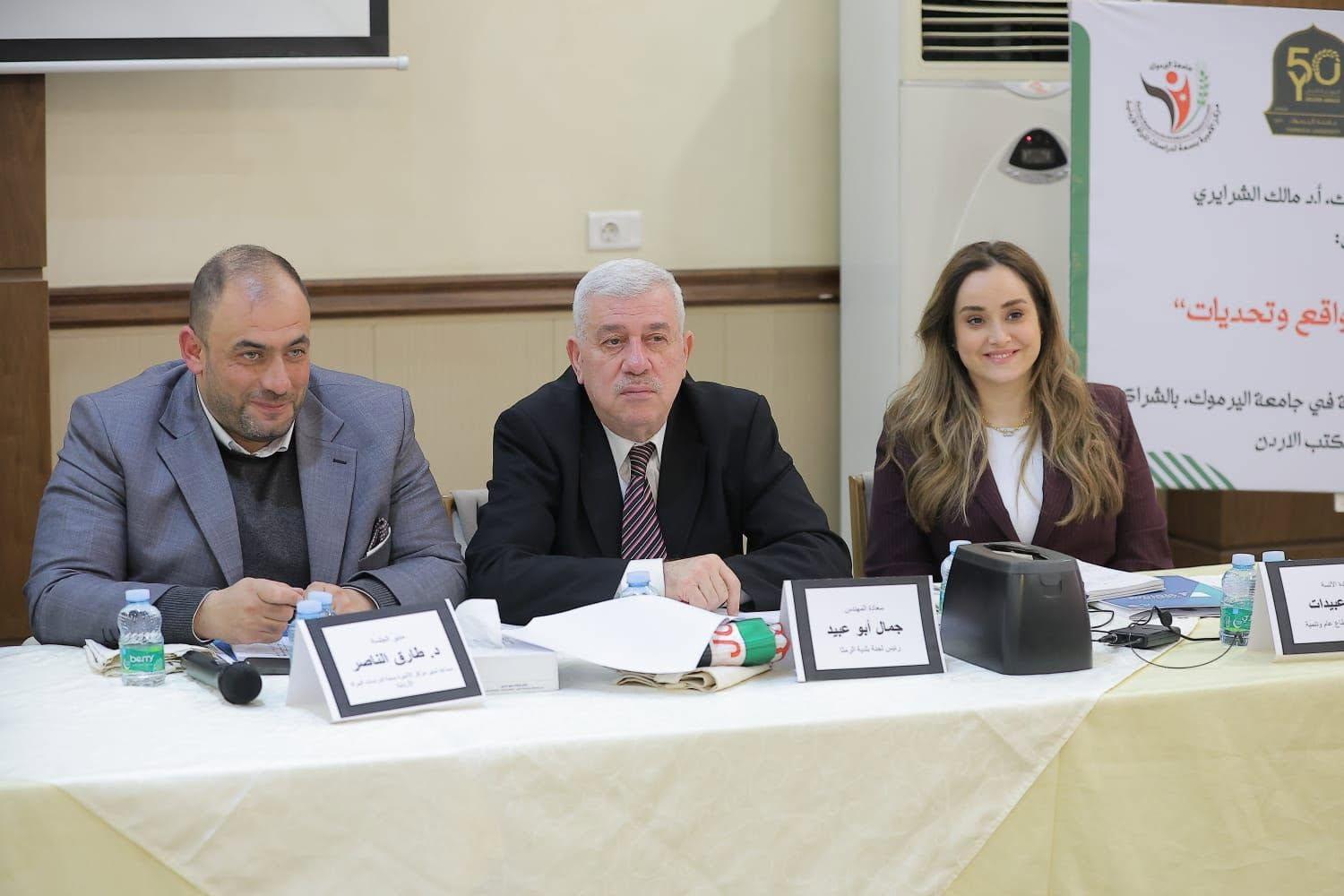
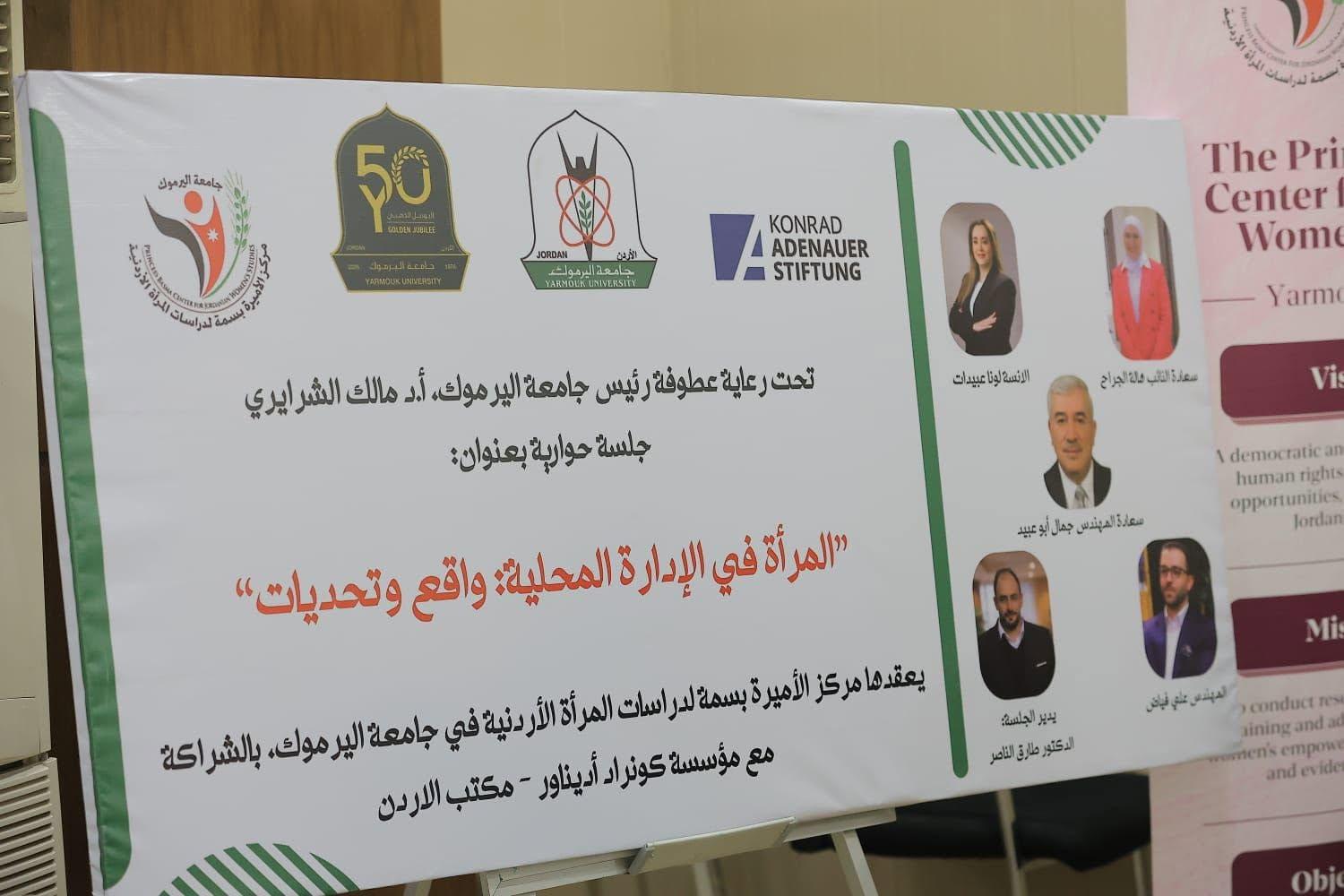
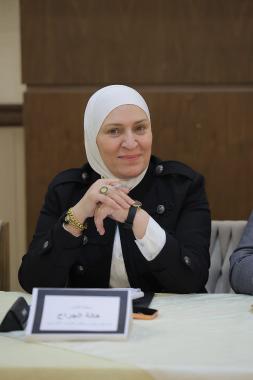
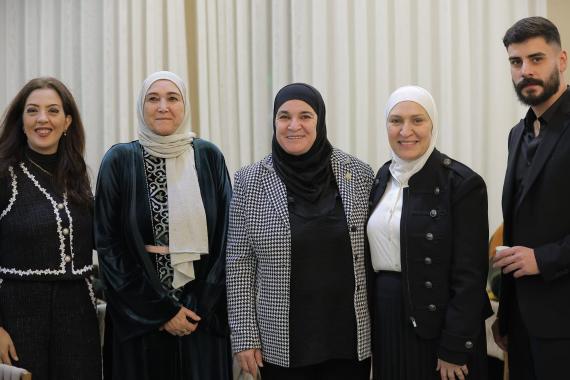
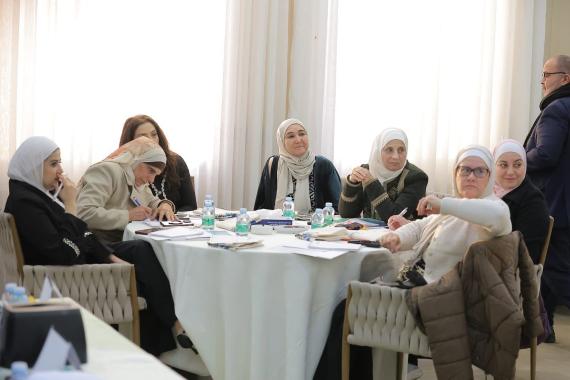
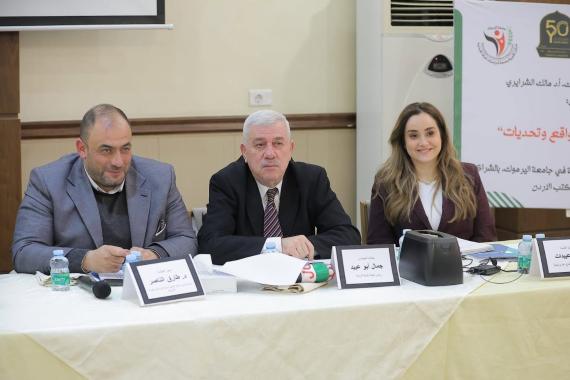
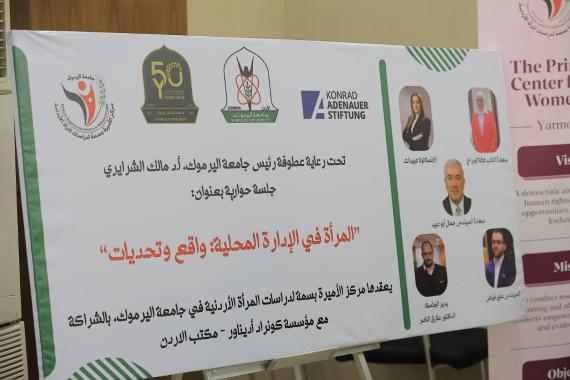
The panel discussion brought together 30 female leaders, civil society representatives, activists and women interested in the field. Both male and female academics from relevant departments at Yarmouk University were also present at the event. Professor Ruba Bataineh, Yarmouk University Vice President and professor at the department of Curriculum and Methods of Instruction, presided over the meeting. Members of the panel also included Dr. Batoul Al Muhaisen, Director of the Princess Basma Center; Hala Al Jarrah, Assistant Speaker of the Jordanian House of Representatives; and Jamal Abu Obeid, head of the Ramtha Municipal Committee. Also on the panel were Ali Fayyad, Executive Director of Partners Jordan and Luna Obeidat, public sector reform and development expert. Dr. Tariq Al Nasser, Assistant Director of the Princess Basma Center, moderated the session.
During her opening remarks, Professor Bataineh stressed that empowering women in the local governance sector is no longer merely an option, but rather “a fundamental pillar for achieving equitable representation and efficient performance.” She pointed out that discussing local governance is essentially discussing development that touches people’s daily lives, adding that Jordanian women have proven their competence in leadership and their impact in local governance. Professor Bataineh pointed out that Yarmouk University, through the Princess Basma Center for Jordanian Women’s Studies and in partnership with the Konrad-Adenauer-Stiftung, seeks to move from the concept of ‘representation’ to that of ‘actual influence’. She explained that the real challenge today lies in removing the structural and cultural obstacles that may limit the scope of women’s participation.
Bataineh emphasized the need to develop practical recommendations that address certain key questions: What has been achieved? What challenges remain? And how do we move from legislative empowerment to comprehensive institutional and societal empowerment, in line with the national modernization and development initiatives led by HM King Abdullah II and HRH the Crown Prince? She said that organizing this session aims not only to raise questions but also to create safe spaces for critical thinking and intergenerational exchange of experiences. It also aims, she added, to highlight expert voices in local governance and women’s activism, recognizing them as true partners in shaping the future.
In her comments, Dr. Batoul Al Muhaisen, head of the Princess Basma Center, stated that the challenges being discussed and the attempts to describe the reality of women’s participation in local governance, require participatory approaches that integrate academic expertise with field experience. She noted that the Center believes that empowering women is inseparable from empowering society as a whole and that investing in community awareness is an investment in the stability and progress of nations.
The panellists and participants discussed various aspects related to the role of women in local governance, particularly as it is a fundamental pillar in promoting comprehensive development and decision-making that is responsive to community needs. They pointed out that legislative developments in Jordan have provided broader opportunities for women’s participation in local leadership positions, which have positively impacted the level of planning and responsiveness to citizens’ priorities. They emphasized the need for supportive policies and sustainable training programs that enhance women’s presence and effectiveness in local governance, thereby consolidating the principles of good governance and contributing to balanced and sustainable development.