










Asset Publisher

Facts and Findings

Selected contributions to the series with international relevance

Publications

NongAsimo, stock.adobe.com

Three years of ChatGPT – an interim assessment

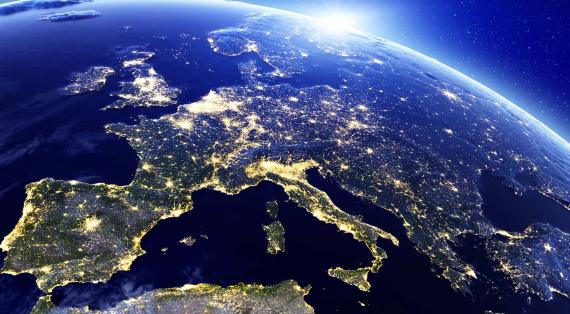
Where do we stand and what does the future hold for the European economy?

ChatGPT has spread rapidly in Germany in the private sphere, primarily among younger people. Companies, on the other hand, are more hesitant and exploratory in their use of the technology as artificial intelligence. The decisive factors here are not only the technical characteristics of ChatGPT, but also product features such as transparency and specifications. For Europe, therefore, it is not a question of replicating ChatGPT with a delay. Rather, it is important to develop its own models or adapt non-European ones so that they are better suited to institutionalised structures as products.

IMAGO / ZUMA Press Wire

Power games at sea

When maritime law erodes: The Baltic Sea, the South China Sea and Europe's security vulnerability

In the wake of global power shifts, the world's oceans are increasingly becoming the focus of authoritarian power politics. Countries such as Russia and China are deliberately undermining maritime law in order to strategically shape maritime spaces, a practice known as “lawfare.” In the Baltic Sea, acts of sabotage reveal Europe's vulnerability, while in the South China Sea, China demonstrates how law becomes a question of power. Both cases illustrate that when maritime law is undermined, Europe's security, capacity to act, and rules-based order are jeopardized.

KI M365 Copilot

Global Governance in Crisis

Does the G20 Still Play a Role in Times of Geopolitical Fragmentation?

For many years, the G20 has suffered from thematic overload, institutional weaknesses, and growing geopolitical tensions. Yet it is an indispensable format for global governance and must therefore regain its legitimacy and effectiveness. This can only succeed if it focuses on its core mandate, develops the troika into a multi-year planning body, strengthens the OECD as a quasi-secretariat at institutional level and gears its working methods more strongly towards realisable outcomes. Germany should work towards this together with its partners.

Smarterpix / ArchManStocker

Pragmatically reducing bureaucracy – lowering construction costs

Insights from the Konrad Adenauer Foundation's Housing Congress ‘City. Country. Living Space?’ – on 16 October 2025

The German housing market is in the midst of a profound structural crisis. A lasting solution can only be achieved through increased housing construction – but high construction costs and complex regulatory requirements are significantly hampering building activity. To solve this problem, there is an urgent need to reduce regulatory complexity.

IMAGO / Mike Schmidt

No Alternative: The AfD and Israel

Manifestations, functions, and perceptions of Alternative for Germany (AfD)’s “Israel solidarity” policy

Representatives of Jewish organisations describe the Alternative for Germany (AfD) as a ‘party for anti-Semites’. Nevertheless, the AfD has succeeded, especially internationally, in positioning itself as a champion of Israeli interests and a protector of Jewish life in Germany. This positioning contradicts a number of other positions represented in the party and serves several political functions. These include, above all, the legitimization of Islamophobia, attacks on political opponents and the distraction from extremism and antisemitism within its own ranks.

SmarterPix / siraanamwong

Setting Clear Limits to Industrial Policy

Prosperity Emerges Through Competition

In the current debate on Germany’s economic future, industrial policy is gaining prominence. However, the Konrad-Adenauer-Stiftung’s analysis warns against inflated expectations: government interventions aimed at promoting specific sectors or companies often lead to losses in prosperity, stifle innovation, and create dependencies. Industrial policy should only be used in clearly justified exceptional cases and must always be market-oriented. Competitiveness and prosperity arise from open markets – not from permanent subsidies.

Adobe Stock / Shutter B

Priorities for an Interest-Driven German Foreign Economic Policy

From Values to Reality

Germany’s foreign economic policy is under pressure: geopolitical instability, growing dependencies on China, and stalled trade agreements threaten prosperity and strategic autonomy. This paper calls for an interest-driven realpolitik: concluding trade agreements faster and more pragmatically, diversifying raw material partnerships, clearly separating trade promotion from development policy, and strengthening the defence industry. Only then can Germany remain economically and strategically capable of action,

IMAGO / Bihlmayerfotografie

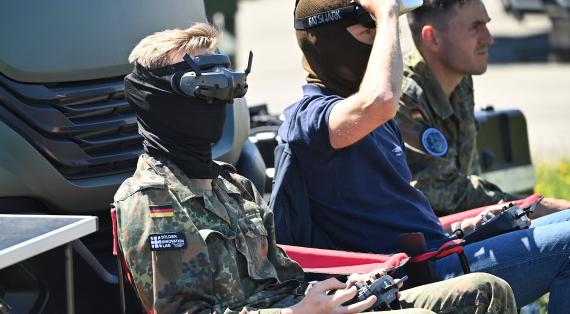
Thank you for your service! – Levers for a Combat-Ready Bundeswehr

How can defence be ‘de-socialised’?

Personnel shortages, outdated equipment, and an over-civilianized force are undermining Germany’s ability to defend itself. The Bundeswehr needs more than money: structural reforms, a renewed military mindset, and societal support are essential. Measures such as a mandatory “Bundeswehr Week”, employer incentives for reservists, a shift back to core military tasks, and a Combat Readiness Score aim to make Germany’s military capable of fighting – before it's too late.

stock.adobe.com/A2Z AI

India's importance for Germany's science and innovation

From Bangalore to Berlin: Indian students strengthen STEM fields and contribute to securing skilled labor

India is becoming increasingly important to Germany as a geopolitical partner and hub of innovation, especially due to its young population, strong economic growth, and technological progress. With around 50,000 individuals, Indian students form the largest international group in Germany, particularly in STEM fields. Many stay after graduation and work in highly skilled professions. To better harness their potential, more English-language degree programs, faster visa processes, affordable housing, language support, practical training opportunities, and strong integration networks are needed.

IMAGO / Eibner

Climate policy-motivated sabotage – Extreme forms of action in the name of the climate

How left-wing extremist forms of action are increasingly expanding their thematic focus to include the climate crisis

Climate protection is being exploited in some cases for acts of extremist sabotage. Left-wing extremist groups use violence to target infrastructure, businesses and government institutions. This article analyses three categories of action and highlights international networks – such as the transnational Switch Off network. Also it provides detailed recommendations for politicians, security authorities, academics and civil society on how to protect legitimate protest and effectively counter further radicalisation.

Asset Publisher

About this series

The series informs in a concentrated form about important positions of the Konrad-Adenauer-Stiftung on current topics. The individual issues present key findings and recommendations, offer brief analyses, explain the Foundation's further plans and name KAS contact persons.


Order details

Editor

Konrad-Adenauer-Stiftung e.V.