Introduction
On 30 June, the world marked the International Day of Parliamentarism, established by the United Nations General Assembly in 2018 to coincide with the founding of the Inter-Parliamentary Union in 1889. It is a day to reflect not only on the institution of democracy, but on the purpose these institutions serve. We commemorate it this year at a moment when voters are voting with emotion rather than ideology, with frustration rather than hope.
Politics has shifted from persuasion to performance. Leaders succeed not because they represent solutions, but because they are driven by anger, identity, or retribution. That is the stark reality facing Parliaments across the world, including our own.
The danger of the current conjuncture is that this populist surge, if unaccompanied by policy depth and ethical leadership, can quickly descend into demagoguery. That is the challenge before every Parliament in 2026, and it is precisely why this year's theme matters.
Bringing human rights into focus is imperative for Parliament, not as a slogan, but as the standard by which we legislate, oversee and cooperate.
Multilateralism under threat
We observe the International Day of Parliamentarism in difficult times, when multilateralism is being undermined, the rules-based trading system is under strain, international climate collaboration is losing momentum, and power politics are crowding out dialogue.
When the system that connects nations weakens, it is not diplomats who suffer first. It is citizens, as we have seen in Yemen, Iran and the Sahel, where supply chain shocks and conflict translate directly into hunger and blackouts. It is therefore incumbent on Parliaments worldwide to unite and defend multilateralism.
As Parliamentarians, we must use the International Day of Parliamentarism to revive our vanguard role; legislation that creates certainty, oversight that demands delivery, and cooperation that respects sovereignty, so that multilateralism remains the infrastructure of human rights.
As Parliament, we must strengthen our oversight of bilateral agreements and ensure that they, too, bring human rights into focus. Every trade, energy or infrastructure deal must be measured against jobs, dignity, health, food security and a just energy transition.
The scale of this strain is measurable. In the first ten months of 2025 alone, countries imposed more than 2 500 new trade restrictions worldwide, nearly five times the number recorded over the same period in 2015, according to Global Trade Alert data cited by the World Bank. The World Trade Organization's own dispute-settlement mechanism, the system that once allowed even the smallest economies to hold larger trading partners to account, remains paralysed. When its Fourteenth Ministerial Conference convened in Yaoundé, Cameroon in March 2026, the first ever held on African soil, it closed without agreement on reform and without a final declaration. That failure, on our own continent, should concern every Parliament on this side of the world.
The World Trade Organization projects that global merchandise trade growth will slow to just 1,9% in 2026, down from 4,6% in 2025, as tariff uncertainty and geopolitical fragmentation take their toll. The smallest and poorest economies carry the heaviest cost of this fragmentation: the world's least developed countries accounted for a mere 1,1% of global exports in 2024, still far below the 2% target set for 2030. This is the multilateral order Parliaments are being asked to defend, and it is fraying fastest for the countries that can least afford it.
Climate change and the responsibilities of government
Climate change represents one of the most significant challenges of our time, posing a threat to ecosystems, human health, and economies worldwide. As the concentration of greenhouse gases in the atmosphere continues to rise, largely due to human activity, the consequences are becoming increasingly severe.
The severity of climate change is no longer a future warning. For South Africa, it means more frequent droughts in the Western Cape and Karoo, floods in KwaZulu-Natal and the Eastern Cape, and mounting pressure on water, food and energy systems.
For Africa, it threatens agriculture, which employs an estimated 60% of our people, as well as coastal cities and health systems already under strain. For global society, it means supply chain shocks, climate migration and conflict over scarce resources.
The International Day of Parliamentarism must awaken our collective conscience to act through climate-resilient infrastructure and multilateral cooperation that leaves no country behind. We must ensure, through our chambers, that we influence government to implement G20 resolutions relating to climate change.
This is also where climate action and economic justice must meet. South Africa's youth unemployment crisis is not an abstraction: in the first quarter of 2026, the unemployment rate for those aged 15 to 24 stood at 60,9%, and at 45,8% for youth aged 15 to 34 overall, according to Statistics South Africa's Quarterly Labour Force Survey. Put simply, six in ten young jobseekers under 25 cannot find work. This is precisely why the Just Energy Transition cannot be treated as an environmental side issue.
South Africa's transition plan targets some 29,5 gigawatts of new renewable energy capacity by 2030, and industry analysts project that the renewable energy sector alone could create up to 275 000 youth jobs by 2030, with solar power accounting for roughly 140 000 of those positions, spanning installation, engineering, project management and maintenance. The green economy's share of overall employment has already risen from 12,4% in 2022 to 14,8% in 2024. If Parliament does its oversight work properly, ensuring that skills programmes, the Presidential Youth Employment Intervention, NYDA grants and TVET partnerships are aligned to these emerging value chains, the just energy transition can become one of the most powerful youth employment interventions this country has. That is what it means to bring human rights, including the right to dignified work, into focus.
World peace and silencing the guns
As we commemorate the International Day of Parliamentarism, we, as legislators, must call for world peace and the silencing of the guns. Global displacement is near record levels. According to the Internal Displacement Monitoring Centre's 2026 Global Report, 82,2 million people were living in internal displacement worldwide at the end of 2025, the second-highest figure ever recorded, and more than double the number a decade ago.
Sub-Saharan Africa recorded 14,5 million new conflict-related displacements in 2025 alone, and remained home to some 31,6 million internally displaced people, well over a third of the global total. Conflict and violence, not disasters, were the leading driver of displacement worldwide in 2025 for the first time in a decade.
The impact of violence on Africa and the world is measured in numbers that demand action, and it is fundamentally a human rights and development crisis. Sudan, the Democratic Republic of Congo, the Sahel and Nigeria show us the cost of inaction. As the world's Parliament, we cannot ignore this challenge.
Human rights begin at home: gender-based violence and poverty
If Parliament is serious about bringing human rights into focus, we cannot look only outward, to global conflict and climate strain. We must look at our own provinces, our own communities and our own homes.
Gender-based violence remains one of South Africa's gravest human rights crises. The Human Sciences Research Council's first national gender-based violence study found that 33,1% of South African women aged 18 and older, an estimated 7,3 million women, have experienced physical violence in their lifetime, and 9,9%, or roughly 2,15 million women, have experienced sexual violence. Between April 2023 and March 2024, 5 578 women were killed, a 33,8% increase on the previous year, and our femicide rate remains close to five times the global average. A woman is murdered in this country roughly every three hours. These are not statistics; they are a verdict on how far we still are from making human rights real in the daily lives of women and girls. As the House of Parliament that represents the provinces, the NCOP has a constitutional duty to interrogate how the National Strategic Plan on Gender-Based Violence and Femicide is resourced and implemented on the ground, not merely legislated in Pretoria.
Poverty is the second front of this crisis. Statistics South Africa's most recent national poverty lines place the food poverty line at R796 per person per month, the lower-bound poverty line at R1 109, and the upper-bound poverty line at R1 634. Independent analysis by the Pietermaritzburg Economic Justice and Dignity group estimates that some 30,4 million South Africans, or 55% of the population, live below the upper-bound poverty line, and 13,8 million below the food poverty line. A young person cannot exercise a single constitutional right, not education, not dignity, not political participation, on an empty stomach. Human rights that stop at legislation and never reach the dinner table are not yet human rights at all.
This is what bringing human rights into focus must mean in practice: budgets tested against their impact on gender-based violence and poverty, oversight that follows the money from national allocation to provincial delivery, and a Parliament, and an NCOP in particular, that treats these figures not as background noise but as the primary business of the House.
The impact of austerity measures on Parliaments
The impact of the global economic crunch and austerity measures is to weaken the very institutions meant to hold power to account. If Parliaments cannot oversee, citizens cannot see where money goes.
As parliamentarians, we must ensure that fiscal consolidation does not erode democratic oversight. The danger of fiscal consolidation to Parliaments is democratic erosion: when Treasury reduces fiscal support, Parliament's oversight capacity is the first casualty.
If democracy is to thrive, then Parliaments, as the cornerstone of functioning democracies, need to be strong, transparent, accountable and representative.
The impact of austerity is to silence the public at the exact moment their voices are most needed. Fewer hearings, fewer submissions processed, and weaker research capacity mean that laws and budgets are made without community evidence. When participation shrinks, trust shrinks too. Legitimacy is the hidden cost of austerity.
Conclusion
Eight years ago, the UN General Assembly established the International Day of Parliamentarism. Today, in 2026, we must ask ourselves the hard questions as to whether we are making tangible differences as parliamentarians in putting human rights at the centre, including in the fight against gender-based violence and poverty in our own communities? Whether we use our influence constructively and be sure not to just patronise our communities? And do we have the capacity to shape our countries' positions on peace, climate change, artificial intelligence, migration and finance?
The answer cannot be silence. If oversight is weakened, if participation is narrowed, if women and children remain unsafe in their own homes, if millions remain below the poverty line, and if Africa is left out of the policy development and legislative landscape, then we are not progressing. As parliamentarians, we must protect our mandate, fund our capacity, and ensure that human rights and dignity are non-negotiable in every budget, every law, and every G20 decision.
About the Author
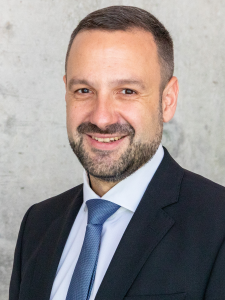
Honorable Mr. Les Govender is a South African politician from KwaZulu-Natal who currently serves as the Deputy Chairperson of the National Council of Provinces. A member of the Inkatha Freedom Party (IFP), he served in the KwaZulu-Natal Provincial Legislature until the May 2024 general election.