World Press Freedom Day:
Press freedom is under attack worldwide
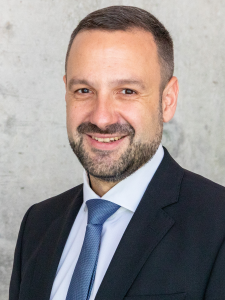
Fabian Wagener
When the United Nations General Assembly decided in 1993 to establish World Press Freedom Day, the world looked a lot different. The Cold War had ended just a few years earlier, and in many places, there was a palpable sense of optimism. At the time, there was hope that with the end of the bloc confrontation, which had shaped global politics for decades, a new era of democracy would emerge—alongside a flourishing of free and independent media.
As World Press Freedom Day is held on May 3 this year, there is unlikely to be much optimism. The reason: The state of press freedom is increasingly alarming. According to a UNESCO report, freedom of expression has been declining for years, while government efforts to control and restrict the media have intensified. “Press freedom is under attack worldwide,” the report states.[1]
The renowned organization Reporters Without Borders, which works globally to protect journalists from persecution and repression, paints an equally grim picture in its annually published World Press Freedom Index. “For the first time in the history of the Index, the conditions for practising journalism are ‘difficult’ or ‘very serious’ in over half of the world’s countries and satisfactory in fewer than one in four,” the organization stated when releasing the 2025 ranking.[2] Journalists are being monitored, imprisoned, kidnapped, displaced, and killed. According to UNESCO, more than 300 journalists were killed between 2022 and mid-2025, with an alarmingly small number of these cases being solved.[3]
However, there are significant regional differences: While the situation in Europe is generally the most favourable for journalists despite ongoing challenges, many parts of Asia and Africa remain extremely difficult environments for independent reporting. In the “Middle East and North Africa” region, more than half of the countries fell into the dark red—and thus the worst—category (“very serious”) in the 2025 Press Freedom Index.[4]
Development Goals at Risk
These developments are bad news for the world. Independent and free journalism is essential for holding those in power to account, demanding transparency, and thereby reducing the risk of corruption and mismanagement. Moreover, it is essential to provide people with reliable information, particularly in areas that directly affect their well-being, such as health or climate policy. UNESCO rightly points out that the negative trends in press freedom are jeopardizing the achievement of the United Nations Sustainable Development Goals (SDGs), as progress toward these goals “depends on reliable, accessible information.”[5]
Economic Pressure
A key reason for this precarious situation is the difficult economic position of many independent media outlets. Advertising revenue, once a reliable source of income, is increasingly being absorbed by major digital platforms that dominate the sector. In some countries, moreover, the media landscape is controlled by just a handful of influential companies. In many cases, self-censorship also plays a role, driven by economic pressures: out of fear of losing key advertisers, media outlets choose silence over scrutiny.[6]
On top of that, at least for certain media outlets, there is another troubling development: cuts in media development funding – a strand of development cooperation that was never particularly well-funded in the first place. These cuts, primarily, though not exclusively, from the United States, are hitting hardest those media outlets operating under particularly sensitive political conditions and relying on external support.
With the increasing use of AI tools, the financing crisis facing independent media could now intensify even further. Instead of accessing the websites of professional media outlets via search engines, users are now being served “news” directly by AI, bypassing the original reporting and contributing to declining traffic for reputable news platforms.[7]
Reliable Information to Counter Disinformation
The importance of independent and professional media in today’s world, shaped by crises, war, and intensifying great-power rivalry, is obvious. The spread of disinformation on social media is a major challenge. The once-held hope that social media would serve as a great engine of democratization has, in many cases, given way to deep skepticism, with many now viewing the algorithm-driven platforms primarily as drivers of social polarization and as a threat to democratic processes. It is the responsibility of reputable media to counter the multitude of misleading and false reports with accurately researched information, a responsibility that has become even more critical with the emergence of deepfakes that can be generated in the blink of an eye.
Curbing disinformation is central to a democratic and pluralistic public discourse and is also a matter of regulating major tech companies. However, a nuanced approach is necessary. Authoritarian governments often attempt to curtail freedom of expression and press freedom under the guise of combating disinformation. This reflects a broader trend of democratic erosion and increasing repression of journalists.[8] Certain actors also deliberately attempt to undermine journalists' credibility by systematically portraying them as purveyors of falsehoods.
Scandalization and the Loss of Trust
The external pressure on independent media is enormous. At the same time, a number of problems are also “home-grown.” For instance, too many media outlets succumb to the hype cycles of social media, relying on oversimplification and sensationalism, thereby contributing to polarization and a loss of trust. Furthermore, the distinction between reporting and opinion is becoming increasingly blurred, and some “journalistic” articles take on a rather “activist” tone. This does not help build trust. Journalism is journalism, and political activism serves a different purpose.
Conclusion
The state of press freedom is dire globally, with no sign of a turnaround. Repression and surveillance are a daily reality for many journalists, and the economic crisis facing independent media is often a question of survival. This underscores the importance of those who advocate for free journalism. Support for independent media remains essential, particularly in authoritarian contexts, and should be backed by appropriate development assistance resources. Furthermore, debates on effective legal regulations that safeguard the integrity of public discourse while protecting freedom of expression and enabling innovation must be advanced. Promoting measures that help people distinguish credible news from disinformation and propaganda is also crucial for the resilience of democratic societies.[9]
Despite all the justified concerns, there are also developments that offer hope and provide a foundation for the future. For example, UNESCO points out that the number of people paying for online news is steadily growing.[10] This is particularly encouraging regarding the sustainable financing of quality journalism. Moreover, the rapid development of AI offers not only risks but also opportunities. For instance, AI can open up entirely new research possibilities for newsrooms worldwide, free up resources, and enhance journalistic quality.
Ultimately, one thing is clear: independent journalism is a central prerequisite for a free society – or as UN Secretary-General António Guterres said on World Press Freedom Day last year: “Freedom for people depends on freedom of the press. Free and independent journalism is an essential public good. It’s the backbone of accountability, justice, equality, and human rights.”[11]
About the Author
Fabian Wagener is Director of the Konrad Adenauer Foundation’s Media Program Asia, based in Singapore. Previously, he was responsible for the foundation’s foreign policy podcast. Before joining the foundation, Fabian Wagener worked for several years as a journalist, including at the Mitteldeutsche Zeitung.
World Press Freedom Day:
In a Time of Democratic Backsliding, Press Freedom Becomes a Global Task
Hendrik Sittig
With the adoption of the 2030 Agenda, the United Nations agreed on 17 Sustainable Development Goals. SDG 16 – “Peace, Justice and Strong Institutions” plays a particularly important role among them: it aims to promote peaceful, just and inclusive societies, strengthen the rule of law, ensure transparency and accountability, and guarantee access to information. These goals cannot be achieved without free, independent and professional media. Press freedom is therefore not a marginal issue within the 2030 Agenda – it is one of its central preconditions.
World Press Freedom Day comes at a time when the global environment for journalism is visibly deteriorating. In many regions of the world, democratic structures are coming under pressure – and with them the foundations of free and pluralistic media. Press freedom is no longer a regionally confined issue, but the expression of a global development in which authoritarian tendencies, economic fragility and technological disruption converge.
For years, international studies have documented a decline in democratic quality. Almost everywhere, this is reflected in increasingly difficult working conditions for journalists: media outlets come under political influence, regulatory grey zones are used strategically, and economic dependencies intensify. Even in established democracies, attacks on journalistic credibility, the polarisation of public debate and the erosion of shared public spaces are no longer marginal phenomena.
Against this backdrop, World Press Freedom Day is less an occasion for reassurance than an invitation to take stock globally – and to ask how the goals of SDG 16 can be defended and brought to life under changing political realities.
Press Freedom as a Measure of Democratic Resilience
Across the globe, a clear pattern emerges: where democratic institutions are weakened, journalistic work becomes a target more quickly. Restrictions are rarely imposed openly. More often, legal amendments, informal political pressure or economic constraints undermine editorial independence.
This development affects countries with very different political systems. It shows that press freedom is not a stable or permanent achievement, but remains closely tied to the overall constitutional health of the political order. It is both a measure of democratic resilience and one of its earliest casualties. In this sense, press freedom is a core component of SDG 16, which depends on functioning institutions and informed public participation.
Sub‑Saharan Africa is part of this global dynamic, but displays specific characteristics. In many countries of the region, the space for media is not clearly closed, but marked by contradictions: formally guaranteed press freedom on the one hand, selective repression, legal uncertainty and economic vulnerability on the other. Journalistic work often becomes a permanent process of negotiation – with state authorities, media owners and external funders.
What We Learn from Our Work
The work of the Konrad‑Adenauer‑Stiftung’s regional Media Programme Sub‑Saharan Africa shows that challenges facing the media are similar worldwide – while their concrete effects depend strongly on local context. We encounter investigative journalists who initiate complex reporting on corruption, abuse of power, or environmental crimes, only to see publication fail due to legal uncertainty or a lack of institutional backing. This clearly illustrates how closely press freedom is linked to other objectives of SDG 16, including transparency, accountability, and public access to reliable information.
At the same time, we see young media professionals entering journalism with great motivation, but limited opportunities to develop sustainable career paths. We also observe media organisations forced to balance political pressure against economic survival. Despite these conditions, Sub‑Saharan Africa demonstrates remarkable journalistic innovation: cross‑border cooperation, new investigative formats, data‑driven reporting, and digital publication strategies. These initiatives often emerge not in spite of difficult political and economic circumstances, but precisely in response to them.
Our activities – conferences, round‑table discussions, and workshops – therefore go beyond individual skills development. They are deliberately designed to build networks, trust, and professional support structures that strengthen journalistic independence in the long term, thereby making a tangible contribution to the implementation of SDG 16.
Disinformation and Loss of Trust: A Global Challenge
One of the greatest threats to press freedom and democratic public discourse today is not only state repression, but the loss of trust in the media. Disinformation, coordinated influence campaigns, and the fragmentation of digital public spaces undermine journalistic credibility worldwide.
Sub‑Saharan Africa is affected just as much as Europe, the Americas, or Asia. False information spreads more rapidly, while reliable content struggles for attention. High‑quality journalism that is verifiable, transparent, and closely connected to people’s lived realities, therefore, becomes all the more important. Combating disinformation is not a technical side issue, but a core concern of SDG 16 and a prerequisite for informed civic participation.
Public Service Media as a Pillar of Democratic Public Space
At a time of increasing fragmentation of public discourse and growing disinformation, public service media play a particularly important role worldwide. Where they are independent, adequately funded, and institutionally protected, they can provide a shared reference point for fact‑based information, social dialogue, and political accountability.
In many countries of Sub‑Saharan Africa, public service broadcasting is often among the few media offerings with nationwide reach, particularly beyond urban centres. At the same time, it is especially vulnerable to political interference and budgetary dependence. Strengthening public service media is therefore not merely a technical issue, but a deeply political one.
In our work, we regularly meet journalists in public service media organisations who uphold professional standards under difficult conditions. Ensuring them sufficient institutional space and legal safeguards for independent work is crucial for building resilient media systems.
Local Journalism: Proximity, Trust, and Democratic Participation
Alongside national flagship media and public service broadcasters, local journalism plays a frequently underestimated role in democracy and social cohesion. It is particularly at the local level that people decide whether media are perceived as relevant, trustworthy, and close to everyday life. Local journalists report on municipal politics, public services, land use, environmental issues, or corruption in people’s immediate surroundings. They expose power structures long before these issues attract national attention.
At the same time, local journalism is particularly vulnerable: limited resources, low visibility, and restricted access to training pose major challenges. For this reason, we support local journalism in a targeted way – including through the annual KAS Media Award for Local Journalism, which recognises outstanding local reporting in Sub‑Saharan Africa, and through our annual Local Journalism Conference, which took place in Malawi this year. These formats create visibility, recognition, and exchange – and strengthen local journalism as a foundation of democratic public life from the ground up.
Artificial Intelligence: Efficiency Gains and New Vulnerabilities
One of the most significant current challenges for journalism worldwide is the growing use of artificial intelligence in newsrooms. AI‑supported tools promise increased efficiency, broader reach, and new research possibilities – from automated translation and data analysis to editorial support. At the same time, they raise fundamental questions about transparency, responsibility, editorial control, and ethical standards. The boundary between journalistic work and automated content production is becoming increasingly blurred, disinformation can be scaled more easily, and economic pressure creates incentives to prioritize speed over quality.
Our recent study on the use of AI in everyday journalistic practice in South Africa, presented in Johannesburg, paints a nuanced picture: AI is already being used pragmatically in many newsrooms – often experimentally, rarely embedded in clear strategies. At the same time, significant knowledge gaps remain, along with a lack of editorial guidelines and a strong need for orientation. These questions are not region‑specific. They point to a global responsibility to align technological innovation with journalistic standards and the normative goals of the United Nations.
Rethinking International Solidarity
World Press Freedom Day ultimately highlights the need for international cooperation beyond traditional support models. Press freedom today can neither be safeguarded solely at the national level nor separated from technological developments. Decisions on platform regulation, AI governance or digital security are made globally, while their effects are felt locally by journalists. The implementation of SDG 16 is inconceivable without such international coordination.
In this context, international solidarity does not mean exporting models, but opening spaces for learning – between regions, newsrooms and political systems. Sub‑Saharan Africa is not only a recipient in this process, but also a source of impulses, shaped by experiences of journalism under particularly fragile institutional conditions.
Commitment Instead of Ritual
World Press Freedom Day is an annual call to attention. It reminds us that press freedom is under pressure worldwide – and that protecting it requires more than symbolic declarations. For us at the Media Programme Sub‑Saharan Africa, this day represents above all a commitment: to strengthening journalism at national and local levels, to supporting independent public service media, to actively engaging with disinformation and technological change, and to embedding regional experience in a global debate on the future of free media as a foundation of democratic, just and peaceful societies.
About the Author
Hendrik Sittig has been Director of the Media Programme Sub‑Saharan Africa of the Konrad‑Adenauer‑Stiftung (KAS) in Johannesburg since 2023. Prior to this, he headed the KAS Media Programme Southeast Europe in Sofia from 2018 to 2023. He began his career with KAS as a Project Manager in Moscow (2008–2010). Before moving to Sofia, he worked for eight years in the office of the Programme Director for TV, radio and online at the German public broadcaster Rundfunk Berlin‑Brandenburg (RBB). Hendrik Sittig studied Journalism and Psychology at the University of Leipzig and completed an editorial traineeship. He also worked as an editor and reporter for ARD TV News in Leipzig and Erfurt and held working fellowships in Georgia, Poland, Belarus, Ukraine and Western Siberia.
Footnotes
[1] UNESCO, 2025, “Journalism: Shaping a World at Peace. World Trends in Freedom of Expression and Media Development, Global Report 2022/2025”, p. 7, unesdoc.unesco.org/ark:/48223/pf0000396638/PDF/396638eng.pdf.multi.
[2] Reporter Without Borders, 2025, “RSF World Press Freedom Index 2025: economic fragility a leading threat to press freedom”, https://rsf.org/en/rsf-world-press-freedom-index-2025-economic-fragility-leading-threat-press-freedom.
[3] UNESCO, 2025, n. 1, p. 34.
[4] Reporter ohne Grenzen, 2025, „Rangliste 2025: Weltweite Entwicklungen im Überblick“, https://www.reporter-ohne-grenzen.de/rangliste/2025/ueberblick.
[5] UNESCO 2025, n. 1, p. 20.
[6] Reporter ohne Grenzen, 2025, n. 4.
[7] UNESCO, 2025, n. 1, p. 39.
[8] Ibid., pp. 31-33.
[9] Ibid., p. 49.
[10] Ibid., p. 19.
[11] Guterres, António, 2025, “Secretary-General's message on World Press Freedom Day”, https://www.un.org/sg/en/content/sg/statements/2025-05-03/secretary-generals-message-world-press-freedom-day-scroll-down-for-french-version.