








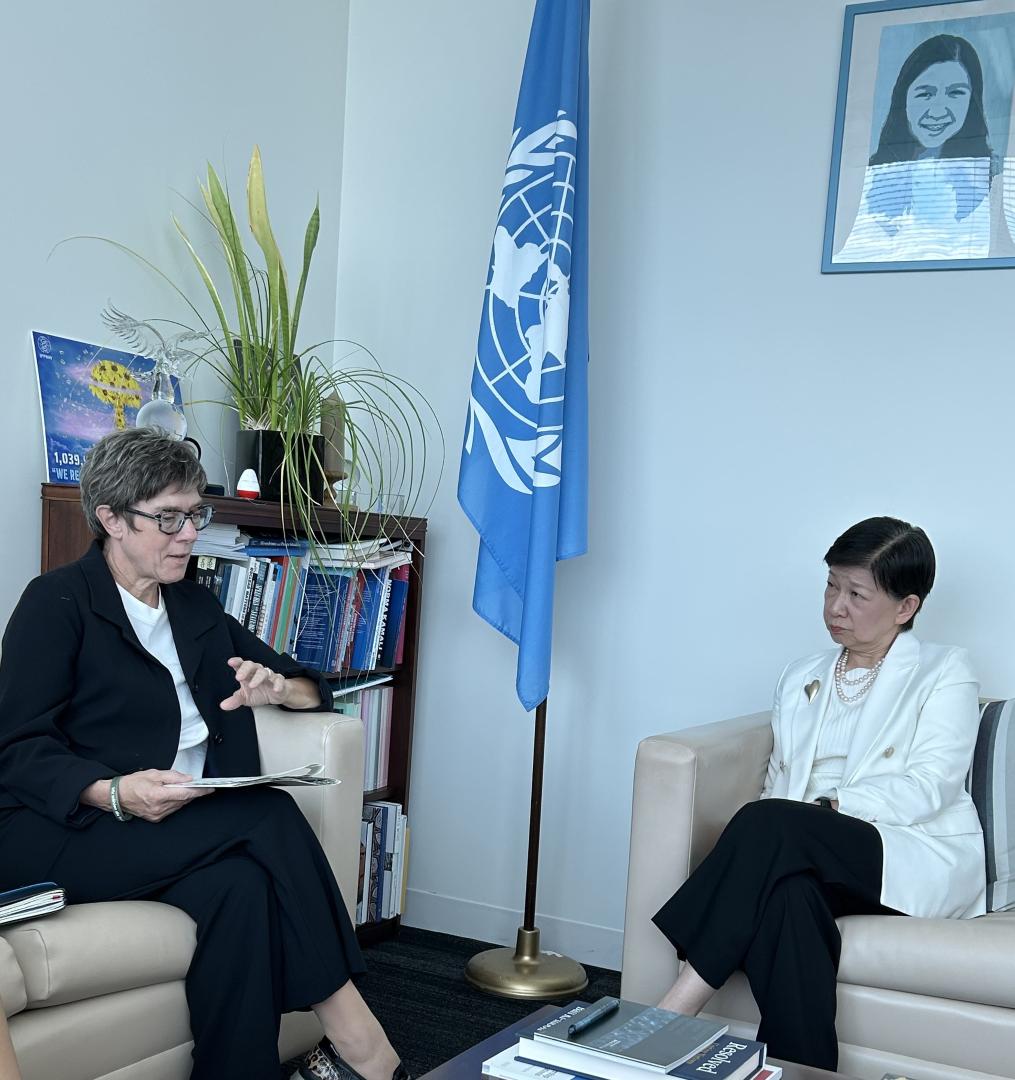
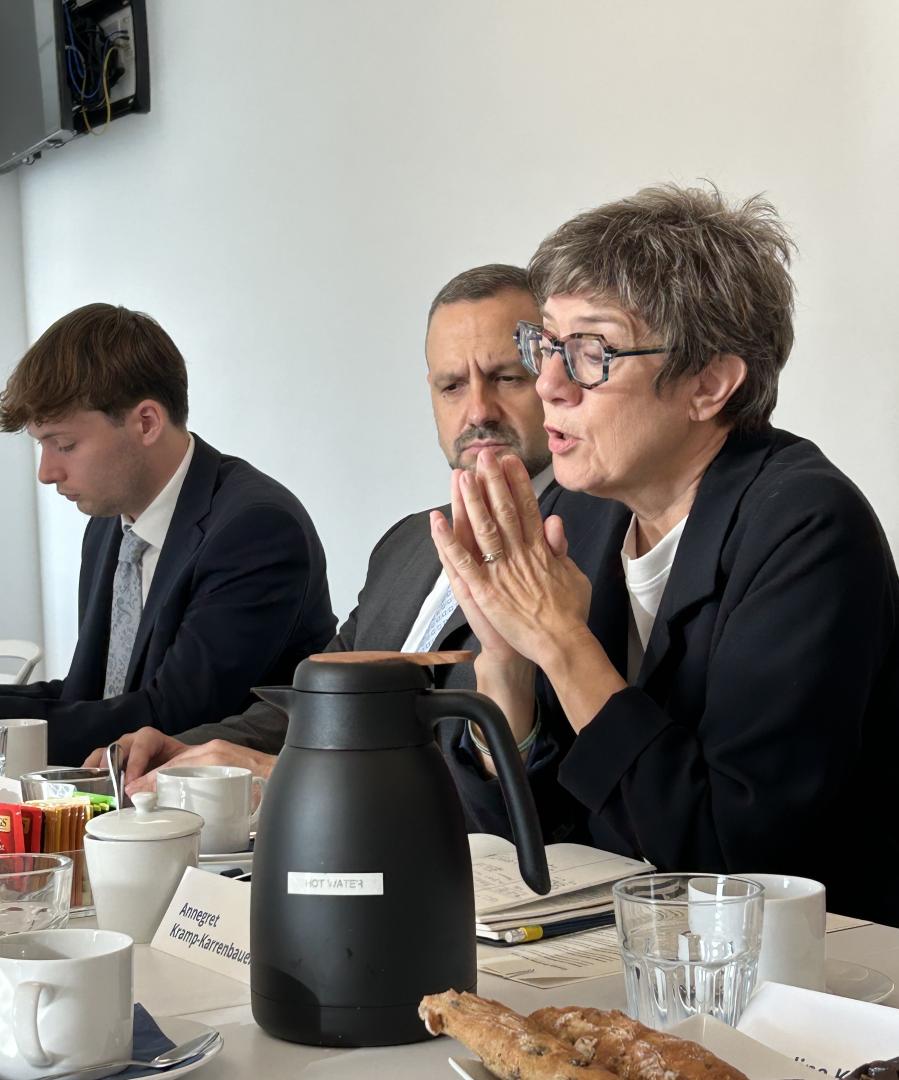
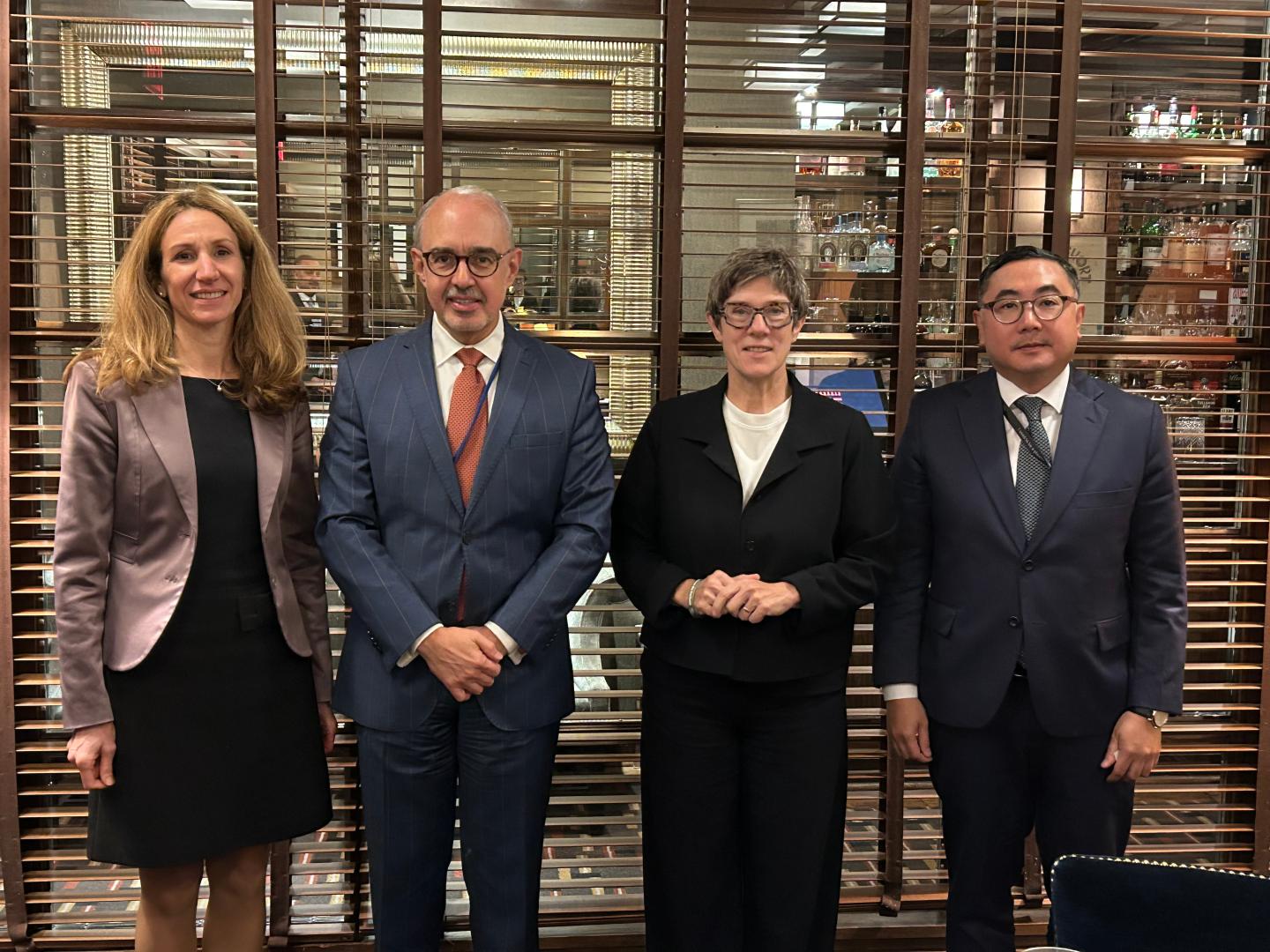
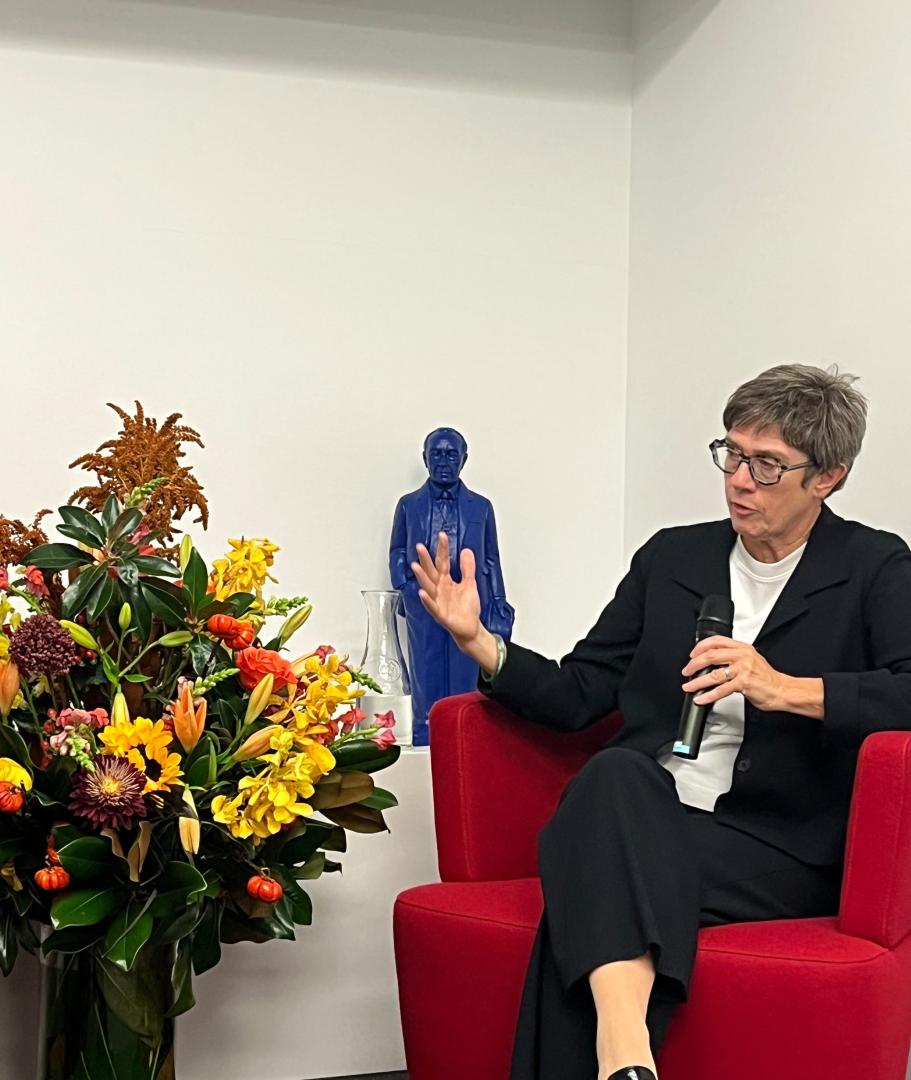
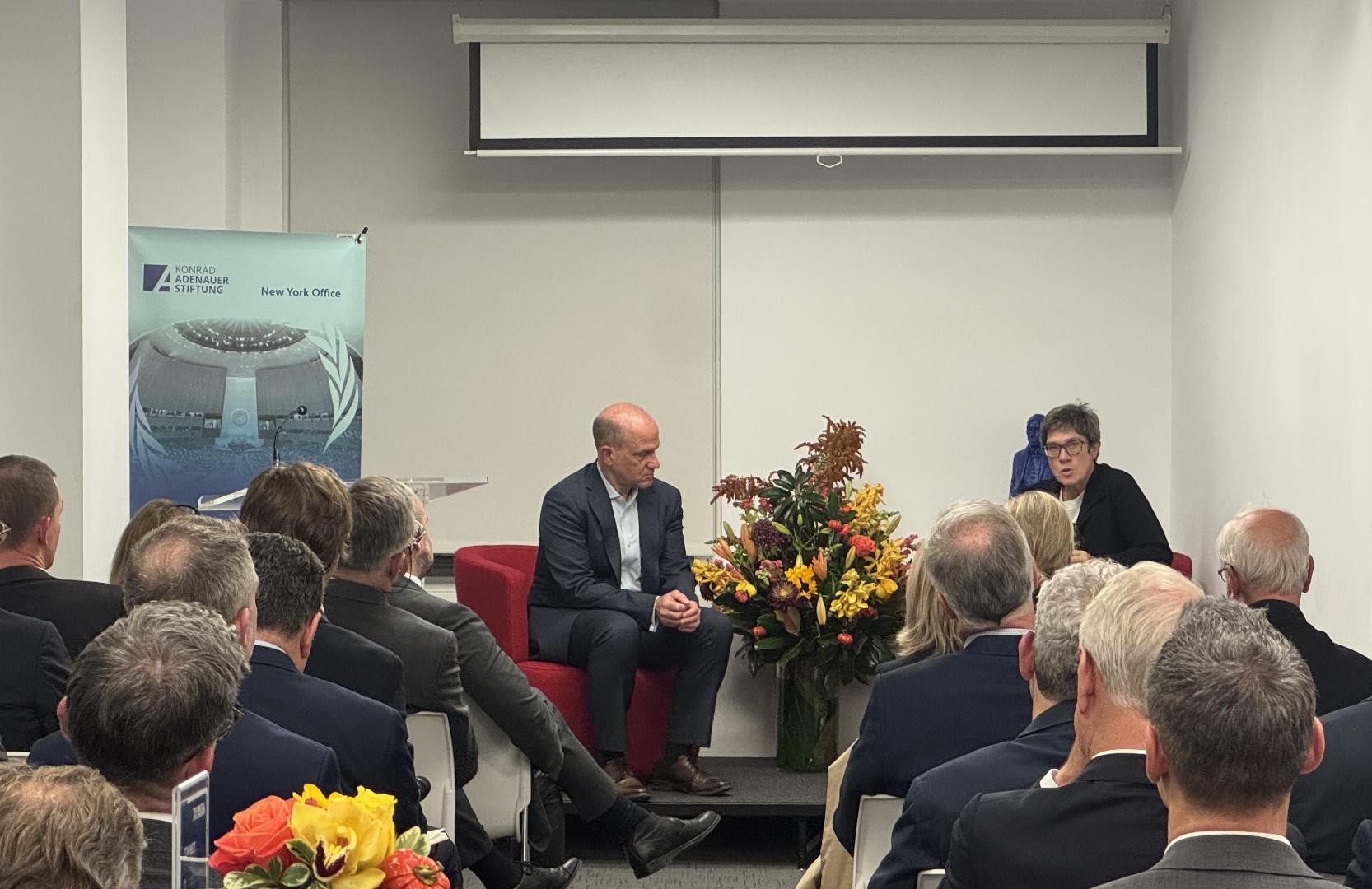
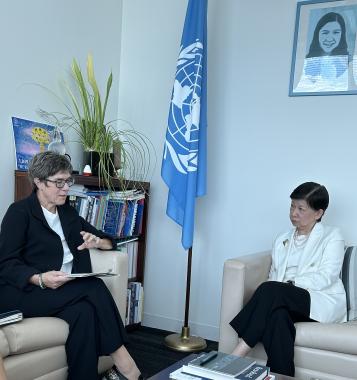
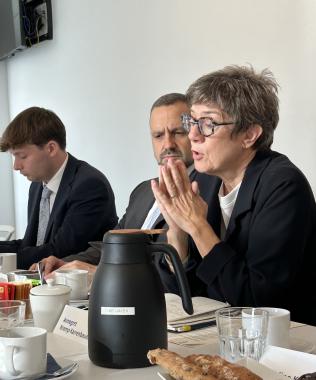
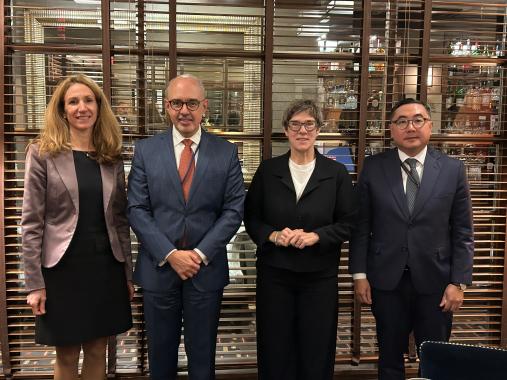
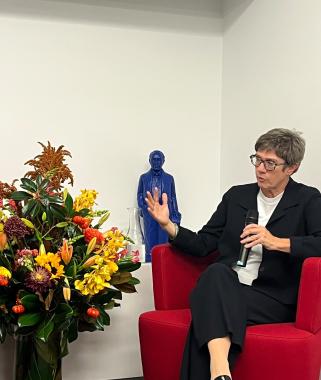
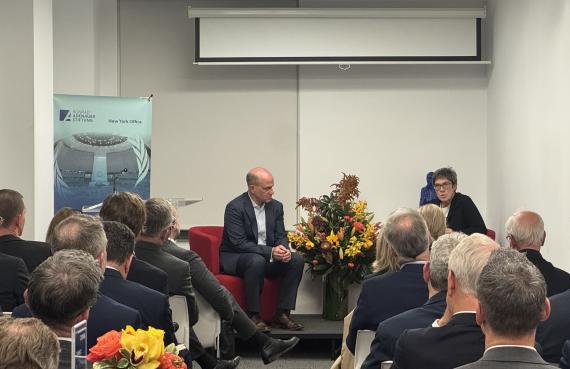
From October 4-5, the KAS New York Office welcomed Annegret Kramp-Karrenbauer, Chairwoman of the Konrad-Adenauer-Stiftung (KAS) and former Federal Minister of Defense of Germany, for a dialogue program exploring the challenges facing the multilateral system and transatlantic relationship in an era of disruption and transition. As part of her visit, the Chairwoman delivered the keynote address at a discussion and reception on October 5—co-organized by the American Council on Germany—celebrating 150 Years of Konrad Adenauer and reflecting on Germany’s Foreign and Security Policy Today: Navigating the Polycrisis and a Fractured Transatlantic Relationship.
The international environment is very different today than it was in the immediate post-World War II era as Konrad Adenauer was navigating myriad challenges. Overlapping and reinforcing threats—from armed conflicts to climate change, new and emerging technologies to growing inequality—are overwhelming and outpacing the global community’s ability to respond. Further, geopolitical divides are pushing countries to prioritize national interests over global commitments and responsibilities. Against this backdrop, tensions are also playing out in the transatlantic relationship, which for decades has been a central pillar of the Western security order in general and for Germany in particular.
Reflecting on this fraught context, discussion underscored:
-
Germany’s commitment to multilateralism and the rules-based international order are a reflection of its post-war experience. As the security landscape become more complex and countries prioritize national interests over international commitments, it has both the capacity and responsibility to contribute to international stability.
-
Similarly, while pressures from Washington on European members of the North Atlantic Treaty Organization (NATO) have turned burden-sharing to burden-shifting, Germany must contribute more to European security and become more of an active, rather than reactive, security provider.
-
Europe and North America are stronger together than apart. Bridging the transatlantic divide does not require perfect agreement. Rather, when common principles do not align, pragmatic cooperation on common interests can provide an opening.
-
The European Union has the political clout, economic weight, and institutional capacity to be a major actor on the global stage—but the question remains whether it is willing to take on a significant leadership role. Political shifts towards the far-right, for example in Germany and France, will test this resolve in coming years.
-
Drawing lessons from Konrad Adenauer’s leadership, strategic clarity, political determination, willingness to act, and reliable partnerships are key tools for navigating an uncertain and unpredictable world.
Topics
The Foreign Policy Dimension of Germany’s New Approach to Migration
Kenya’s Global Player Ambitions
The Pact for the Mediterranean as a Building Block for Diversifying European Partnerships
Why Australia’s New Foreign Policy Role Creates Opportunities for Germany
The EU’s Partnership Policy in Transition