






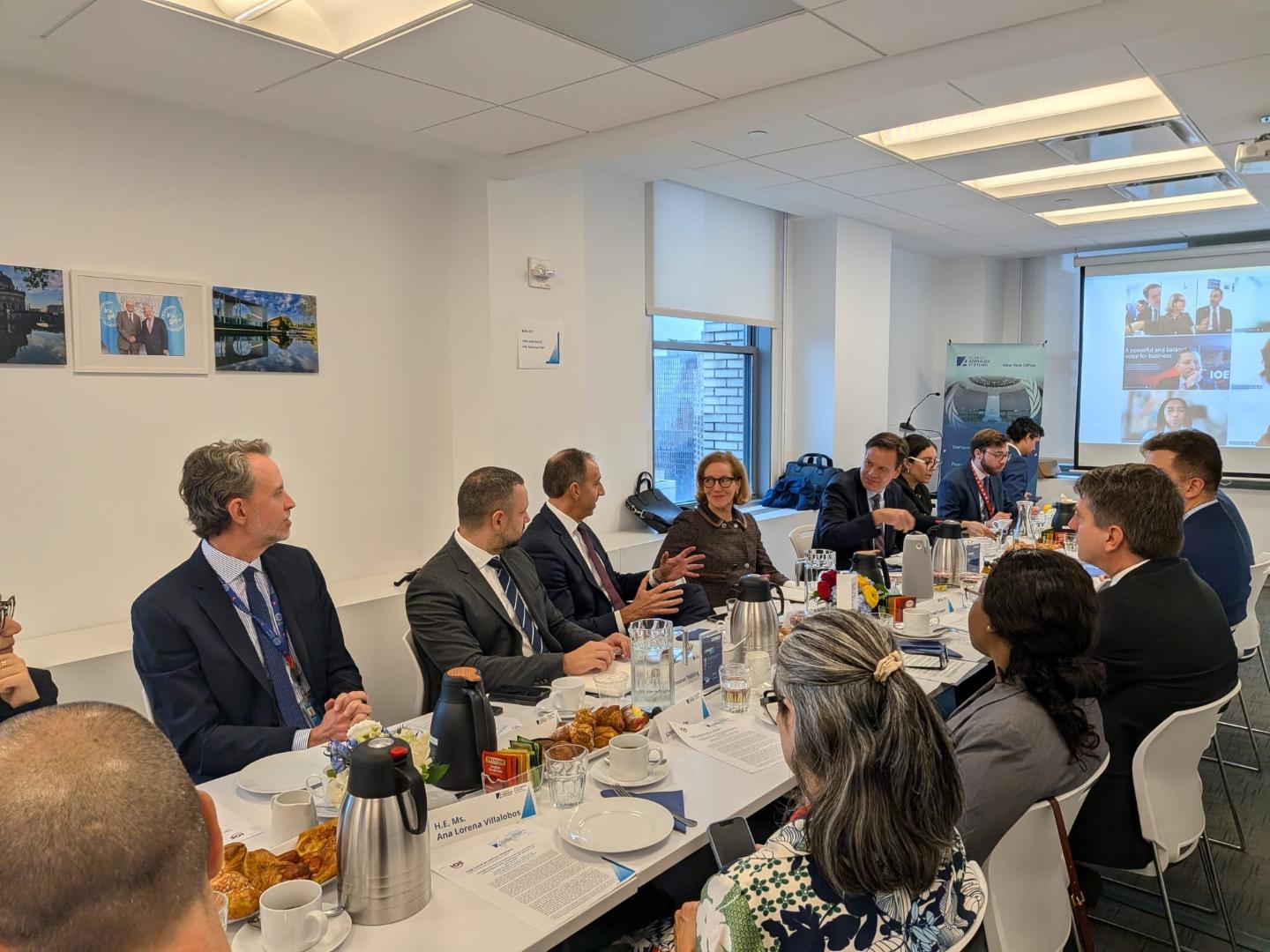
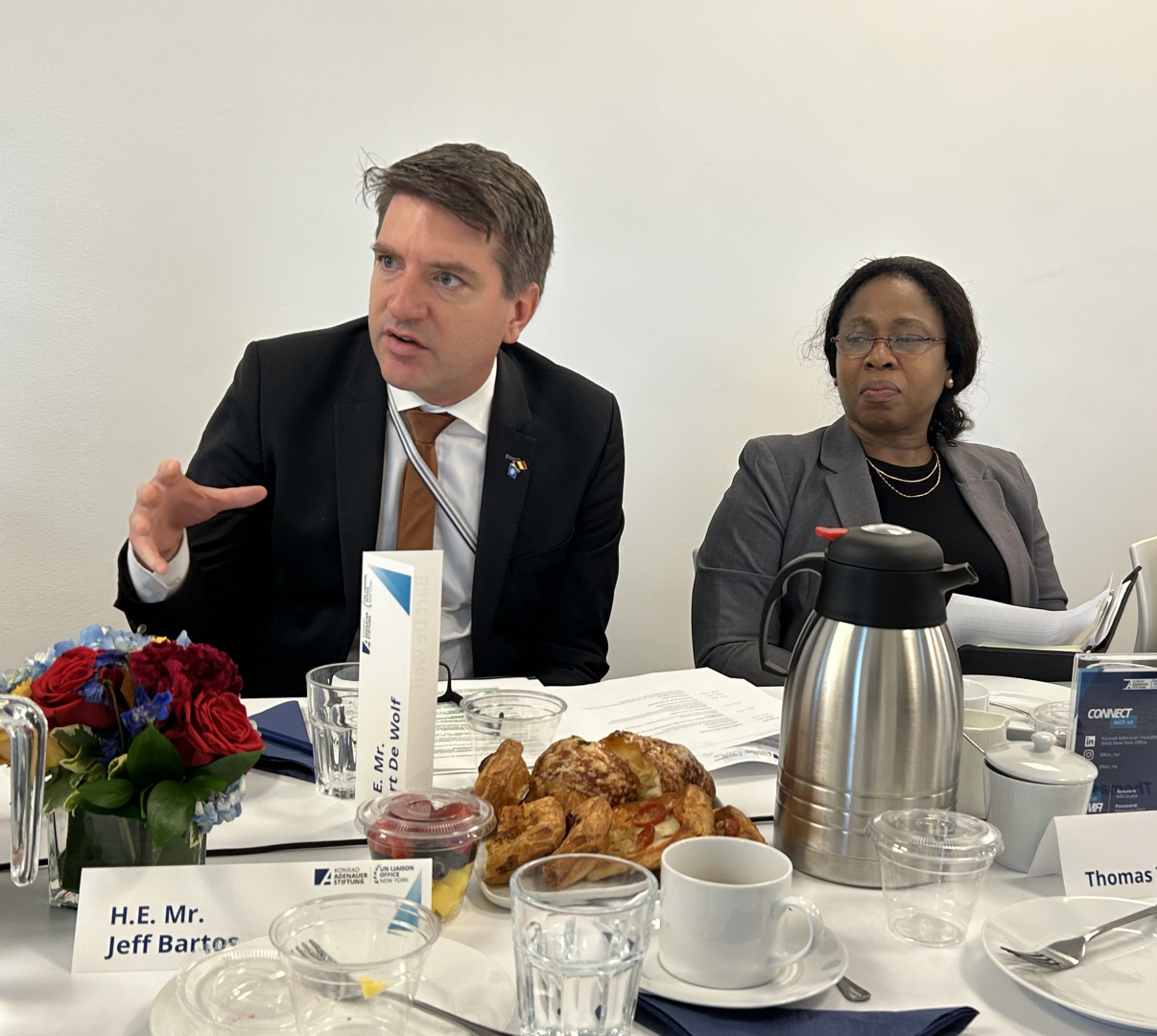
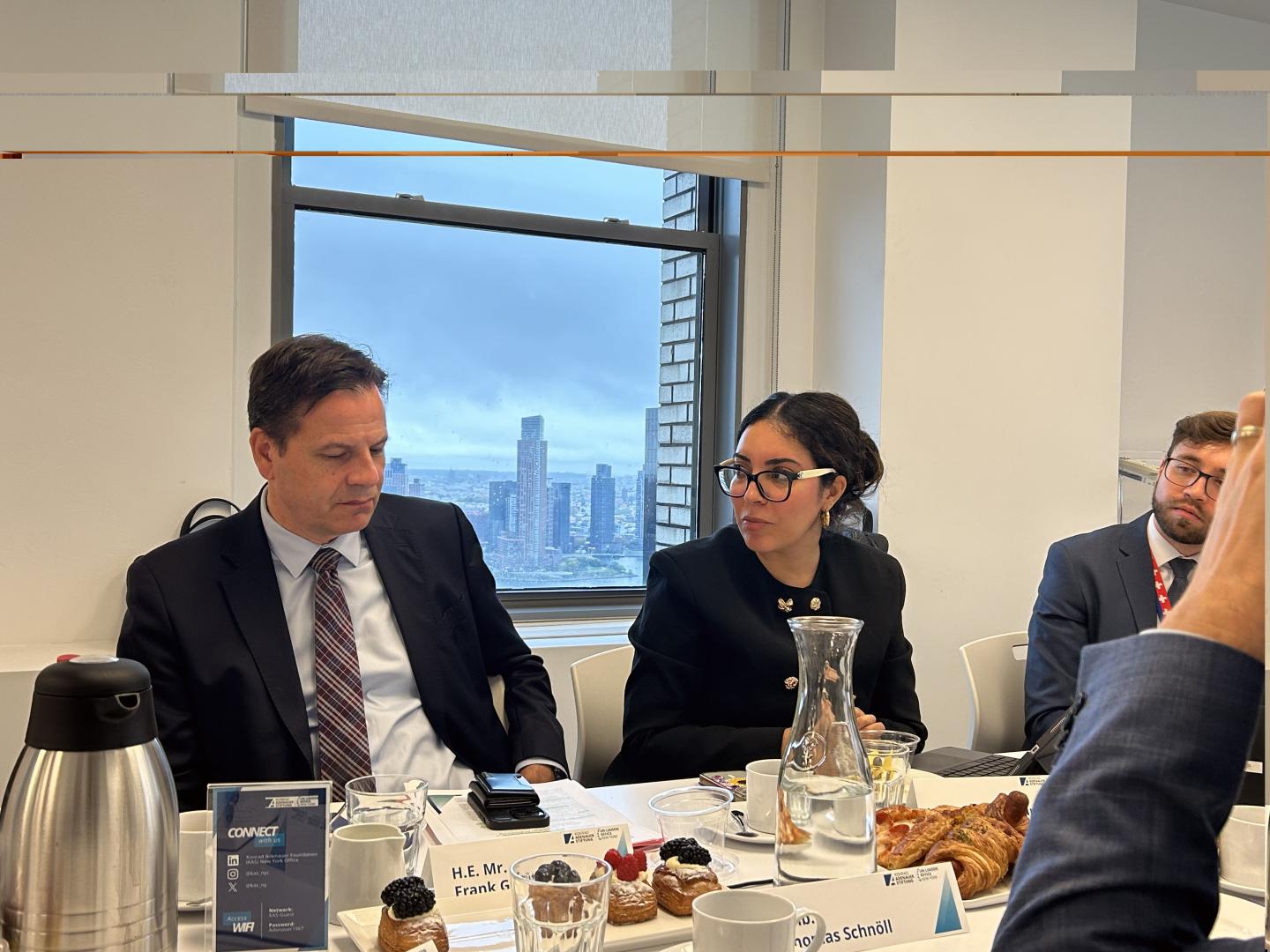
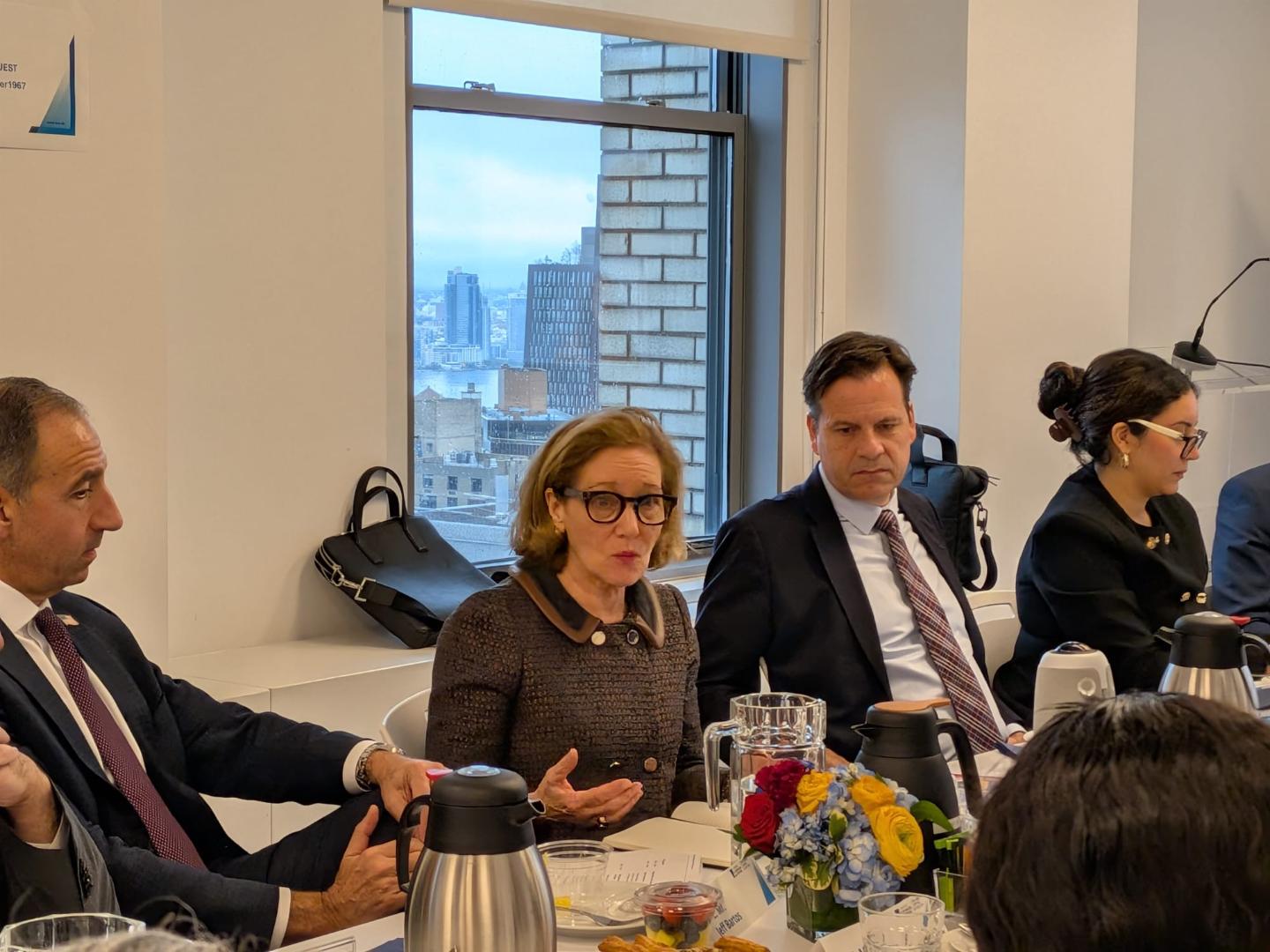
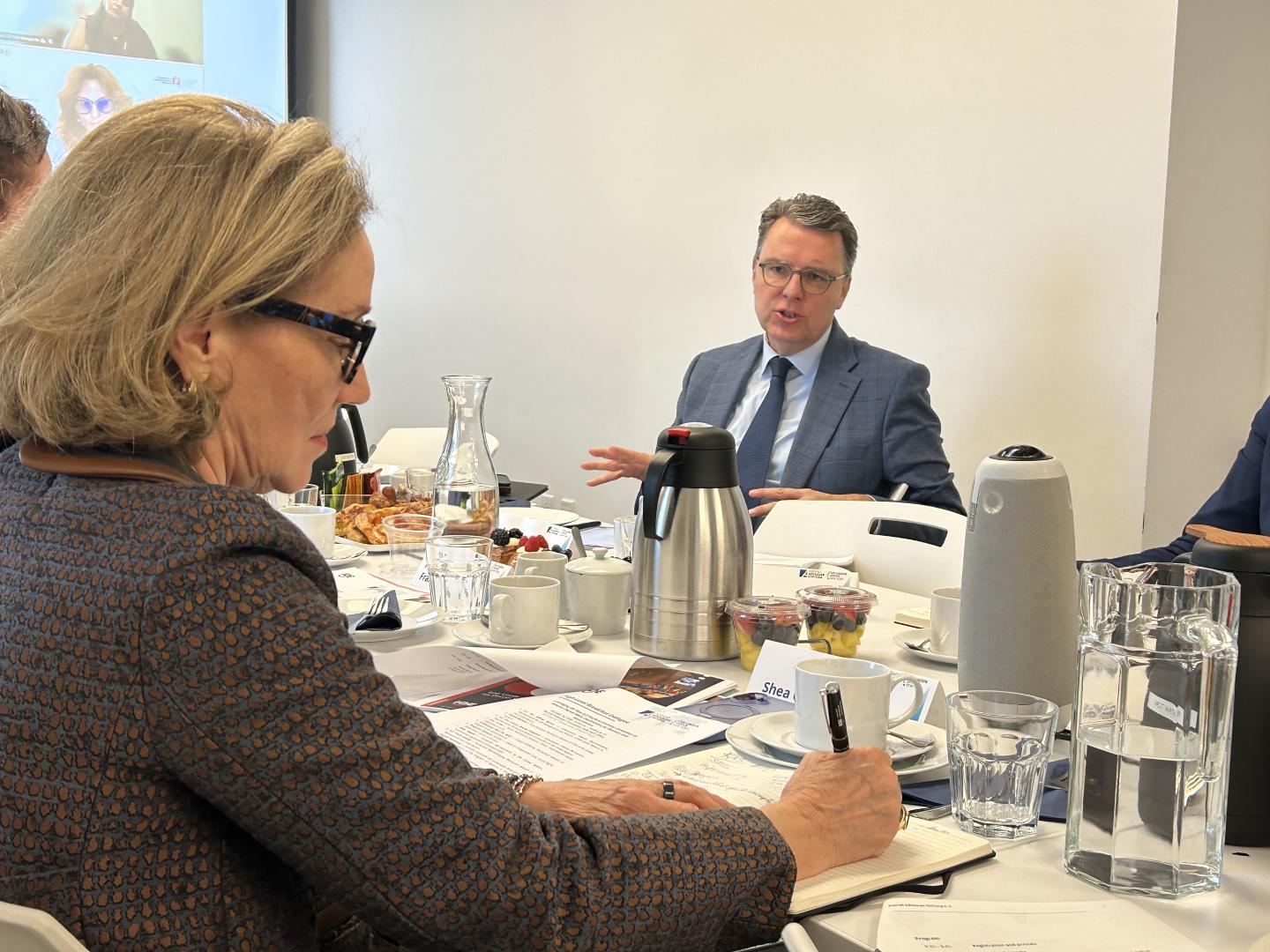
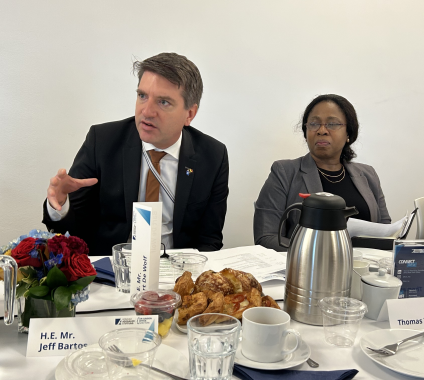
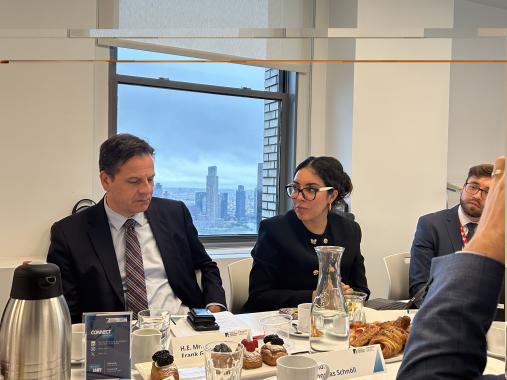
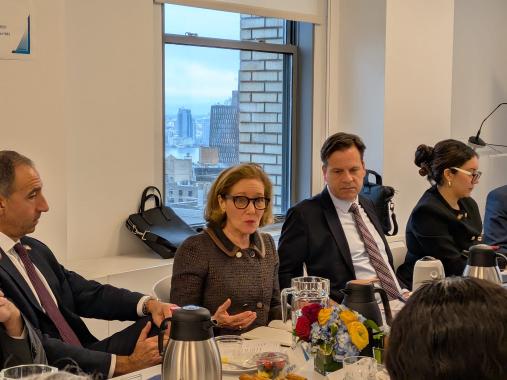
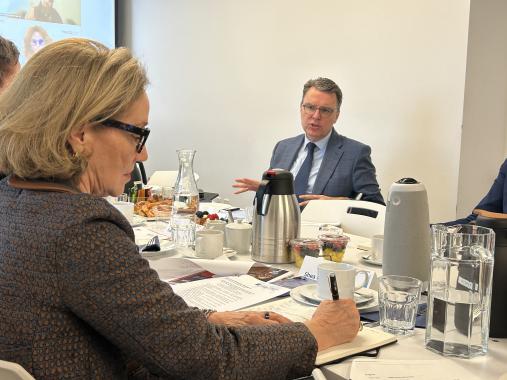
On October 16, the Konrad Adenauer Foundation (KAS) New York Office and the International Organisation of Employers (IOE) convened a high-level breakfast discussion, “Leveraging the New ILO Platform Economy Convention to Advance Decent Work: Implications for Business and Governments,” bringing together representatives from governments, international organizations and business.
From tourism and hospitality to transportation, agriculture and professional services, platform work is reshaping how people earn a living and how businesses operate. An estimated 400 million people engage in platform work globally, making this a major area for jobs, innovation and sustainable development. But realizing that potential requires the right framework. The discussion therefore looked beyond the Convention itself to broader questions of UN reform, implementation and stakeholder participation. Participants emphasized the value of the ILO’s tripartite model, which brought governments, employers and workers together around a complex and rapidly evolving issue, and considered how similar approaches could inform wider UN processes. The exchange also highlighted the need for stronger links between Geneva and New York and for business to be engaged earlier in policy discussions, rather than only at the implementation stage.
A key takeaway was that the private sector contributes far more than financing alone. Businesses and employers’ organizations bring knowledge, innovation, infrastructure, networks and implementation capacity that can help make multilateral cooperation more effective. Participants also stressed the importance of trust, better coordination and meaningful participation as the UN considers how to become more responsive, effective and fit for purpose.