



Asset Publisher

Further publications

Asset Publisher

IMAGO / Anadolu Agency

Deepening the partnership at the 11th EU-Korea Summit

Focus on digital agreements, economic dialogue and security

At the 11th EU - Republic of Korea Summit on June 10 2026 in Brussels, both sides agreed on a further deepening of the already close cooperation. On the EU side, both European Council President António Costa and European Commission President Ursula von der Leyen participated; President Lee Jae Myung represented the Republic of Korea. The probably most important success of the meeting was the signing of the agreement on digital trade. In addition, several further cooperations, especially in the areas of economy and security, were initiated or strengthened. The summit was another piece of the puzzle in the EU’s efforts to deepen partnerships with like-minded countries in various policy areas and to strengthen its own resilience in a significantly more volatile geopolitical environment.

IMAGO / Photosport NZ

Background and Analysis on the 2026 FIFA World Cup in the United States

A Summer Fairytale with Stumbling Blocks?

As the opening match of the 2026 FIFA World Cup kicks off in Mexico City, the largest tournament in the competition's history has begun. For the first time, 48 teams will take part, with matches played across the United States, Mexico, and Canada. Yet the most remarkable feature of this World Cup may not lie on the pitch at all. While the tournament's political significance in the United States is hard to miss, public enthusiasm has so far remained surprisingly muted. President Donald Trump has been closely involved in the preparations—establishing a national World Cup task force, appearing at key FIFA events, and announcing that he intends to hand the trophy to the winners himself. At the same time, polls suggest that large parts of the American public are approaching the tournament with comparatively little interest. It is precisely this tension that makes the event such a revealing lens on the United States as host.

IMAGO / Aton Chile

100 days of the Kast government in Chile

Disillusionment rather than a new beginning

On 11 March, the ultra-conservative José Antonio Kast took office as Chile’s president. Following the four-year term of left-wing President Gabriel Boric, expectations were high that the new president would bring about the urgently needed shift in security and economic policy. Around a hundred days after the Kast government took office, many Chileans are disappointed. The promised reforms are slow in coming, and the government has already had to weather its first cabinet crisis.

IMAGO / Anadolu Agency

Charged climate ahead of the Local Government Elections: Xenophobic violence in South Africa is on the rise

The xenophobic unrest in South Africa reflects a polarised debate on migration, which threatens to destabilise the country both domestically and internationally in the run-up to the 2026 Local Government Elections.

The recent xenophobic unrest in South Africa reflects an increasingly tense domestic political climate in the run-up to the 2026 Local Government Elections, in which migration is becoming ever more polarising. It is being exacerbated by socio-economic pressures, widespread anti-migrant narratives, and the mobilisation of corresponding radical groups. At the same time, it poses significant domestic and foreign policy risks, particularly for the country’s stability and its relations with African partners.

IMAGO / Kyodo News

Sánchez or Fujimori

Outcome of the Presidential Elections in Peru Still Open

On Sunday, June 7, 2026, the second round of the presidential elections took place in Peru. After approximately 98% of the votes have been counted, Keiko Fujimori, candidate of the conservative party Fuerza Popular, is slightly above the 50% mark, while Roberto Sánchez, candidate of the left-wing party Juntos por el Perú, is slightly below it. This currently indicates a deadlock, in which any outcome remains possible. Peru’s foreign policy, shaped by its role as a self-confident middle power that values stable relations with the international community, has traditionally followed long-term strategic lines. This approach is expected to continue under the new government, regardless of its political orientation.

IMAGO / ZUMA Press

Armenia Ahead of a Pivotal Parliamentary Election

Despite a polarized campaign and pressure from Russia, Prime Minister Pashinyan has strong prospects for re-election

Armenia is heading into a pivotal parliamentary election of broader regional significance. Rarely has the international community paid such close attention to a vote in the South Caucasus republic. Trump offers praise, Putin issues warnings, Aliyev makes demands, and the European Union is deploying a new mission to support the country - seen as a democratic frontrunner in an otherwise largely authoritarian neighborhood - in combating disinformation and cyberattacks. Domestically, the country is experiencing a highly polarized campaign marked by fierce political confrontation. Nevertheless, Prime Minister Nikol Pashinyan and his Civil Contract party appear to have a strong chance of securing another mandate.

Imago / Anadolu Agency

Surprise in Colombia: Conservative Outsider Wins First Round

Strong performance by Abelardo de la Espriella makes a political shift more likely

Colombian voters have delivered a surprise in the first round of the presidential elections. Contrary to polling predictions, conservative outsider Abelardo de la Espriella managed to defeat government candidate Iván Cepeda. The two will face each other in a runoff on June 21. The security crisis and the weakness of the political center are reshaping Colombia’s political landscape. While votes were still being counted, the government camp publicly questioned the results, further intensifying political polarization.

Christian Life in Israel

Between Protection, Uncertainty, and Participation

Pentecost is one of the most important moments in the Christian year; believers come together to celebrate the descent of the Holy Spirit and the beginning of the Church, as was the case recently on Pentecost Sunday in Jerusalem. Jerusalem is holy to three world religions. Jews, Muslims, and Christians look at the city from different perspectives and from all over the world, closely following what happens there. Above all, the sites sacred to the three religions symbolize the Middle East conflict and the still-unresolved question of whether and how Jews and Muslims, Israelis and Palestinians, can live together and side by side in lasting peace. In the meantime, however, another line of conflict has emerged, as Christians in Israel and East Jerusalem increasingly report attacks, repression, and violence. What is the situation regarding the lives of Christians in Israel?

IMAGO / Xinhua

New government in Latvia: Four-party alliance under Kulbergs

JV remains security policy anchor

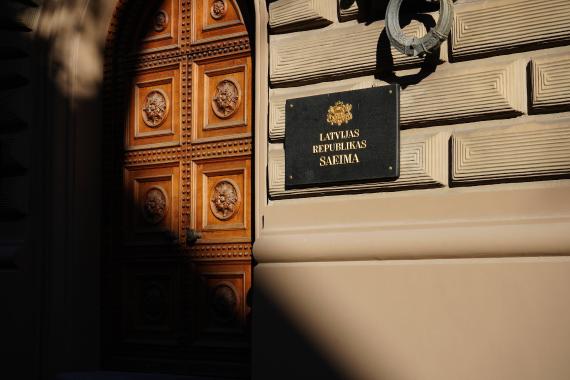
On 28 May 2026, the Saeima confirmed the new government under Prime Minister Andris Kulbergs. The 47-year-old businessman, economist and trained car mechanic from the centrist United List (Apvienotais saraksts, AS) takes over the duties of Evika Siliņa (Jaunā Vienotība, JV), whose cabinet collapsed on May 14 over a dispute over the replacement of the defense ministry after several drone incidents, including the impact on an oil storage facility in mid-May. President Edgars Rinkēvičs then tasked Kulbergs with forming a government. The new prime minister promises an "effective, professional and accountable government" and describes himself as a "realist". Kulbergs leads a four-party coalition.

Grafik mit KI Copilot generiert / Konrad-Adenauer-Stiftung

The Playbook of Health Disinformation and the Ebola Outbreak in the DRC and Uganda

Bioweapons, Big Pharma and Simple Remedies

The current Ebola outbreak in the Democratic Republic of the Congo and Uganda has been accompanied by targeted health disinformation just hours after the WHO emergency declaration. Our report analyses the narratives, actors and dynamics of this information manipulation – from bioweapons claims and conspiracy narratives to alleged “simple remedies” and anti-Western narratives. The analysis shows that: Ebola disinformation is not a new phenomenon but has followed a recurring pattern for decades. Many of the narratives spread today resemble earlier campaigns about HIV/AIDS, COVID-19 or other epidemics. Particularly problematic is the combination of fear, political instrumentalization and economic interests: Health disinformation has long become a business model. The report classifies the current situation, describes typical narratives and shows why health cri-ses are particularly vulnerable to disinformation and what countermeasures policymakers, authorities and media should now take.