
There are currently no events planned.
State of Play: Strategic Competition and Regional Agency in the Gulf
Roundtable on great power dynamics and middle power maneuvering from a transatlantic lens
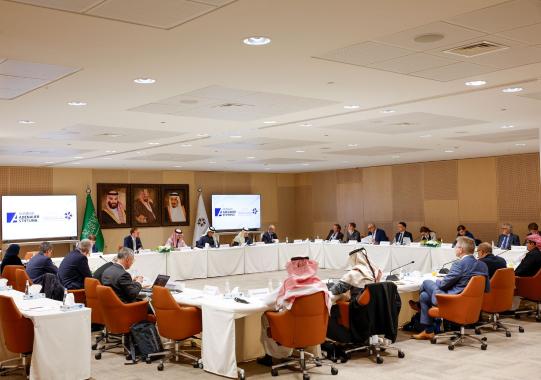
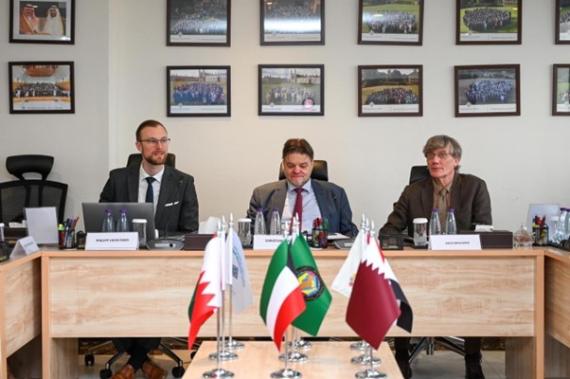
The 2026 US/Israel-Iran war has reshaped the strategic landscape of the Gulf, raising new questions about great-power competition, regional agency, and the future of European and transatlantic engagement in the region. This closed-door roundtable in Brussels brings together policymakers, scholars, and experts from the United States, Europe, and the Gulf to examine the implications of the post-war moment and the recalibration of partnerships across the three regions.
The Young Parliamentarian Programme (YPP) - Closing Ceremony
The Eighth Edition of the Young Parliamentarian Forum & Closing Ceremony
The Young Parliamentarian Forum (YPF) and the closing ceremony of the eighth edition of the Young Parliamentarian Programme (YPP) will take place on 7 February 2026 in Manama under the patronage of H.E. Ali bin Saleh Al Saleh, Chairman of the Shura Council. Bringing together young participants, parliamentarians, and key stakeholders, the Forum provides a platform for dialogue on key social, economic, and regulatory issues in the Kingdom of Bahrain, building on a year of training and policy engagement implemented by the Youth Pioneer Society (YPS) in cooperation with the Konrad-Adenauer-Stiftung’s Regional Programme Gulf States (KAS-RPG).
From Barriers to Partnership: EU-GCC Leadership to Strengthen the International Economic Order
Two-day workshop in Riyadh
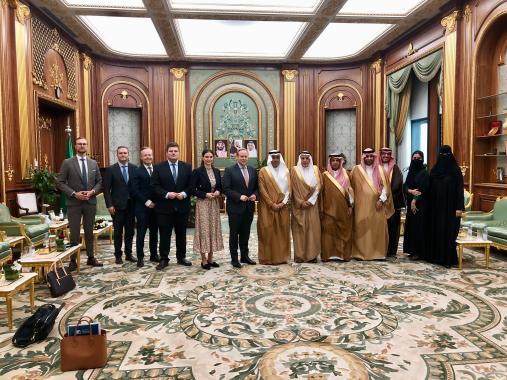
Together with the Prince Saud Al Faisal Institute for Diplomatic Studies, the Konrad-Adenauer-Stiftung (KAS)'s Regional Programme Gulf States will organise a workshop on deepening EU-GCC trade relations and strengthening the global rules-based economic order from 26-27 January 2026 in Riyadh, Saudi Arabia. As threats to this international system of positive-sum, mutually beneficial trade relations multiply, the workshop aims to discuss the potential for Saudi-German and GCC-EU leadership to strengthen the institutions, norms, and practices underpinning the rules-based economic order, starting with deepening bilateral ties between the two blocs.
Gulf-EU Relations in the Age of Strategic Isolation
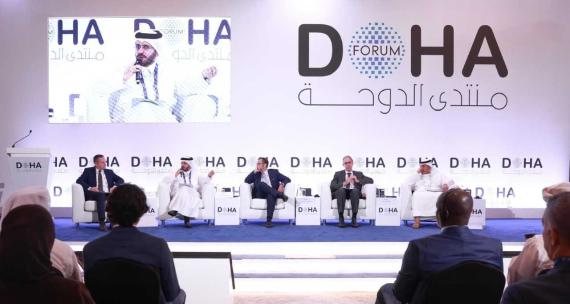
Panel Discussion at the Doha Forum
As part of the Doha Forum, the Regional Programme Gulf States (RPG) of the Konrad-Adenauer-Stiftung (KAS), in partnership with the Centre for International Policy Research (CIPR), the Italian Institute for International Political Studies (ISPI) and the Gulf Research Centre (GRC), will bring together leading voices from Qatar, Saudi Arabia, Germany and Italy to examine the evolving landscape of Gulf–EU relations. In an era marked by geopolitical shocks, technological shifts and intensifying great-power competition, the discussion explores how both regions are navigating a world of overlapping crises through bloc functionality, conflict-management efforts and joint regional initiatives. Panelists will unpack the current strategic context and offer forward-looking policy recommendations to enhance cooperation in key areas such as security, economic relations and inter-societal exchange.
State of Play: Strategic Competition and Regional Agency in the Gulf
Roundtable on great-power dynamics and middle-power manoeuvring in Qatar
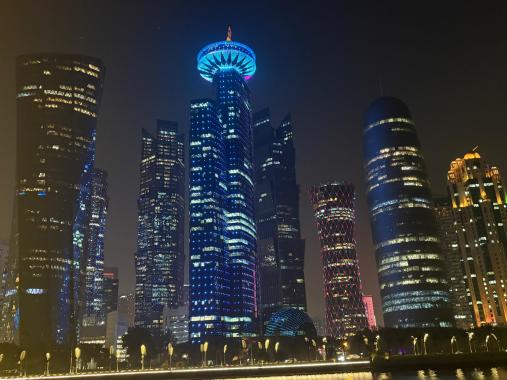
As the global order shifts and rivalries intensify, the countries of the Gulf Cooperation Council (GCC) have become a key arena where great-power dynamics intersect with a growing desire for regional agency and multi-alignment. Held in Doha, Qatar, this roundtable convenes experts and policy-makers from the US, Europe, and Qatar to examine how Washington and Brussels, alongside Beijing, Moscow, and others, are recalibrating positions on Gulf security and engagement. It will also assess the instruments and strategies employed by Qatar and other Gulf States to project power beyond their borders and protect their own sovereignty, along with their ambitions to shape regional dynamics and the constraints revealed by recent shocks.
The Future of Migration to Saudi Arabia and the Gulf: Retaining Foreign Talents and Skills
How do GCC Countries Fare in the Global Competition for Talent?
In cooperation with the Gulf Research Centre (GRC), the Konrad-Adenauer-Stiftung (KAS) Regional Programme Gulf States will host a workshop focusing on highly skilled workers’ onward migration from the Gulf to the EU and North America on 2 December 2025 in Riyadh, Saudi Arabia. The event will feature authors presenting their key findings and policy recommendations, setting the stage for discussions that bring together leading academics, experts and stakeholders from the GCC, the wider Middle East, Europe and North America to examine emerging patterns of onward migration among highly skilled workers.
Shared Interests, Shared Actions in Maritime Security
Securing the waterways around the Arabian Peninsula
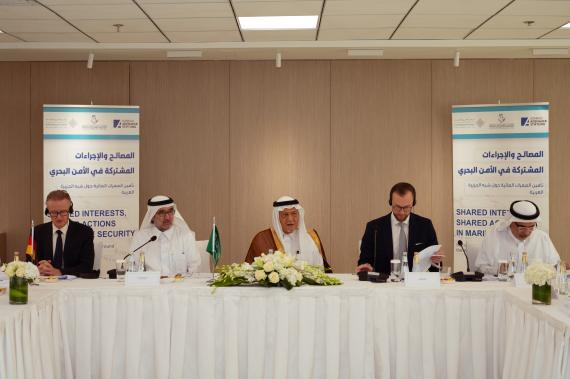
In cooperation with the Gulf Research Center (GRC), the Konrad-Adenauer-Stiftung (KAS) Regional Programme Gulf States will host a closed-door workshop on protecting freedom of navigation in waterways around the Arabian Peninsula from 5-6 November 2025. Maritime security in these waters faces its greatest challenges in decades, and the events of the past two years have demonstrated that neither European countries, the Gulf states, nor other littoral powers can take freedom of navigation for granted. Simultaneously, responses in the EU and GCC to recent threats to maritime security in the Red Sea and Gulf have diverged, with each bloc following distinct approaches to address these challenges. This workshop provides opportunities for experts, political decision-makers, and military leaders from Saudi Arabia, European countries, and East African states to exchange perspectives on how to safeguard freedom of maritime navigation in a global political environment characterised by turbulence, upheaval, and challenges to international law and global norms.
Stepwise and Return Migration between the Gulf, Europe, and North America
A Workshop in the Context of the Gulf Research Meeting 2025
In cooperation with the Gulf Research Center (GRC), KAS will convene experts to discuss policy recommendations focusing on stepwise and return migration. Based on a range of policy papers, authors will explore the role of Gulf states in shaping skilled migrants’ long-term migration aspirations, and how these migrants view the GCC as a stepping stone to life in Europe and North America. Additionally, the discussions will examine the push and pull factors driving such migration patterns while also exploring the scale of return migration from European countries, the US and Canada back to the Gulf.
The Social Impacts of Saudi Arabia's Vision 2030
Continuity and Change
On 8 July 2025, the Konrad-Adenauer-Stiftung (KAS)'s Regional Programme Gulf States will host a Saudi Arabian delegation from the King Faisal Centre for Research and Islamic Studies (KFCRIS) at the KAS Academy for a closed-door, roundtable discussion titled ‘The Social Impacts of Saudi Arabia’s Vision 2030: Continuity and Change’. Featuring inputs from Dr Mark Thompson, Senior Research Fellow and Head of the Socioeconomics Programme at KFCRIS, and four young citizens of Saudi Arabia hailing from different parts of the Kingdom, the workshop will discuss the scale and impact of the changes occurring in the country under Vision 2030, thus highlighting the socioeconomic complexity, diversity, and ambition of a transforming Kingdom. Please note that this is an invitation-only event. If you are interested in attending, please contact the KAS Regional Programme Gulf States at gulf@kas.de.
3rd GCC-German Young Leaders Forum
An Exclusive Side Event of the 7th German-Arab Gulf Dialogue on Security and Cooperation
In cooperation with the German-Arab Friendship Association (DAFG) and The Diwan, the Konrad-Adenauer-Stiftung (KAS)'s Regional Programme Gulf States will host the 3rd GCC-German Young Leaders Forum, an exclusive side event of the 7th German-Arab Gulf Dialogue on Security and Cooperation, on 24 June 2025 at the KAS Academy in Berlin. The Young Leaders Forum is an annual meeting that convenes up-and-coming leaders from the fields of policy-making, academia, analysis, and practice to discuss topics of importance to relations between Germany and the member-states of the Gulf Cooperation Council (GCC). Cognizant of the significant milestones in EU-GCC relations that will occur in the coming years this year’s Forum will discuss ideas for what relations between the two blocs could look like in the future. Please note that this is an invitation-only event. If you are interested in attending, please contact the KAS Regional Programme Gulf States at gulf@kas.de.