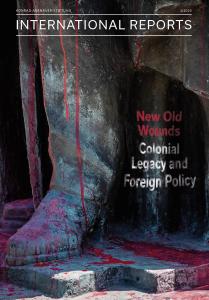
Issue: 2/2025




In a Nutshell
- Brazil is a Western country. Unlike most African and Asian states but similarly to most other Latin American countries, its independence dates back around 200 years. Throughout much of this time, Brazil’s international relations have been characterised by continuity and close ties with Western states.
- Since the 1970s and 1980s, however, Brazil has increasingly diversified its foreign policy towards the “Global South”. Disappointment with the stance taken by Western countries during the Brazilian debt crisis was a key factor behind this shift.
- Postcolonial discourse is not the root cause of this development, but it has at times been an amplifying factor. In Brazil, such narratives are largely an elite phenomenon imported from North American and European universities, which tend to resonate primarily with leftist parties and their affiliated organisations.
- In recent years, these narratives have become more prominent in foreign policy, particularly through the presidential diplomacy of Luiz Inácio “Lula” da Silva, as evident, for instance, in his harsh rhetoric towards Israel and his close alignment with African states. In these respects, Lula’s positions sometimes diverge from the policies of the Brazilian Foreign Ministry, the Itamaraty.
One was baptised in the Jordan River, the other declared persona non grata in Israel: The contrast between former President Jair Messias Bolsonaro and current President Luiz Inácio “Lula” da Silva could hardly be starker. While Bolsonaro pursued an overtly pro-Israel course, Lula has sought confrontation. At the African Union summit in February 2024, Lula did not hold back when he stepped up to the microphones, his voice slightly hoarse as he described the Israeli air force’s bombardment of the Gaza Strip as an unprecedented crime: Nothing comparable had happened, he said, “since Hitler [had] decided to exterminate the Jews”.
After Lula had refused to supply ammunition to Ukraine or to explicitly condemn Russia’s war of aggression, Europeans were once again taken aback when the Brazilian president labelled Israel’s attacks on the Gaza Strip a genocide. Such harsh wording was not what they had expected. The Israeli government responded swiftly by banning the former trade union leader. Since then, relations between Brasília and Jerusalem have been frozen. Israel may be a special case – long viewed by proponents of postcolonial thought as a “modern apartheid state” or as a “colonial state” and a popular target of criticism. However, like most Latin American nations, Brazil has not typically been seen on the international stage as an advocate of postcolonial positions, with the possible exceptions of Cuba and Bolivia. This article aims to shed light on the extent to which postcolonial ideas and theoretical frameworks actually play a role in Brazilian foreign policy.
How Postcolonial Is Brazil?
Looking up at the grey November sky, he did not know whether he would ever return: At the end of 1807, the Portuguese prince regent and future king João VI boarded the ship that would carry him on a months-long journey to Rio de Janeiro. He was fleeing Spanish and French troops advancing on Lisbon, preparing to occupy the ancestral lands of his dynasty. João VI had no intention of submitting to Napoleonic rule or of going into exile in Britain, the kingdom’s long-standing ally. No – he chose Brazil as his place of refuge, hoping to outlast the European conflict there.
A European monarch relocating to a colony is not the only remarkable feature of the period leading up to Brazil’s independence. While still part of the Portuguese empire, Brazil’s role grew in significance – not least because it became the royal seat, gaining new prominence within the imperial structure of Lusitania. Even before its political emancipation from Portugal, Brazil was at times more important than the colonial power itself, its sheer size and the wealth of its fields and mines making it too significant to remain in the shadow of the mother country.
Brazil freed itself from Portuguese colonial rule, gaining independence in 1822. However, this event did not bring about a profound transformation. Indeed, the monarchy continued under João’s son, styling itself as the Empire of Brazil. The colonial hierarchy of Brazilian society – including slavery – was barely revised, and economically, the country remained focused on the production and export of a few raw materials. This historical perspective is especially relevant when considering Latin America’s relationship to the former colonies of Africa and Asia. On the one hand, Latin America gained independence around 140 years before most African and Asian countries, thereby giving it far more time to engage in nation-building. In this sense, the “post” in postcolonial can be given greater emphasis in the case of Brazil. On the other hand, clear parallels between Latin American and Afro-Asian states remain. Most notably, the persistently high levels of social inequality in Brazil and across Latin America seem to be a characteristic feature of the social long-term effects of the colonial era.
The voices of postcolonial discourse in Brazil rarely come from those who have been marginalised in society.
The Long March to Postcolonialism
For decades, Brazil has ranked near the top of global inequality indicators, such as the Gini coefficient. Even more than 200 years after gaining independence from Portugal, social power structures remain in place that seem rooted in a bygone era. Afro-Brazilian communities in particular continue to face significant disadvantages: They tend to have poorer access to education, are more frequently victims of violence and remain underrepresented in politics. At the same time, the question as to how ethnicity and socio-economic participation intersect cannot be answered easily or conclusively due to the strong heterogeneity of the Brazilian population. However, despite ongoing improvements, there is no doubt that Brazil still exhibits stark inequalities reflecting power structures that bear unmistakable echoes of the colonial period.
The primary social echo chambers for postcolonial narratives in Brazil are the country’s universities, which still retain a degree of social exclusivity. While Brazil has made significant progress in this area, the academic sphere remains disproportionately populated by social groups that are less likely to face structural disadvantage in everyday life. As a result, there is a certain tendency for social inequality to perpetuate itself. A diploma is essential when it comes to participating in the competitive concurso exams, with these exams granting access to the upper ranks of the civil service, which offer generous salaries. Likewise, only with an appropriate university degree is it possible to enter an influential think tank. In short: The voices of postcolonial discourse in Brazil rarely come from those who have been marginalised in society. This places them in line with the academic forerunners of postcolonialism – Edward Said, Frantz Fanon and above all, the bourgeois intellectual Michel Foucault.
As in Germany, postcolonial approaches enjoy particular popularity within the country’s humanities and social sciences faculties. Just like in Germany, these departments tend to lean politically to the left. Also as in Germany, adopting a postcolonial perspective is considered de rigueur in academic circles. As a guiding academic framework, postcolonialism is largely a fashion – a trend imported from Anglophone universities that has spread to local institutions. Within this ideological context, academic work is often produced through a postcolonial lens by dissecting its subject matter in terms of asymmetric power structures. The insights that such an approach yields are often limited, with other explanatory factors at risk of being marginalised or trivialised by this postcolonial mode of analysis. Yet this is not a phenomenon unique to Brazilian academia; the same pattern can also be observed in Germany.
In Brazil, postcolonialism as an academic trend follows in a long line extending from the university-based Marxism of the 1950s and 1960s through to dependency theory and world-systems theory in the 1970s and 1980s. However, as the dependência theories of Brazilian sociologist – and later president – Fernando Henrique Cardoso made clear, these frameworks lacked any inherent socio-revolutionary impulse. This is not without logic: After all, those who champion these ideas are unlikely to seek a radical change to their own social status. As (supposed) advocates for those who are marginalised in society, they carry their convictions into federal politics and public administration even though their influence there remains limited. Postcolonialism has no shortage of political appeal, however, as it lends itself to blaming injustices on the international order or on former colonial powers.
Postcolonial perspectives are primarily to be found in Brazil’s leftist parties and in their affiliated organisations. The political claim of representing disadvantaged population groups is thereby translated into a global outlook. The fight for justice is not seen as a phenomenon limited to Brazil. Postcolonialism enables the construction of a sense of solidarity – however superficial – among formerly colonised peoples. As the host of major international events in 2024 and 2025, the Brazilian government has succeeded in bringing social issues onto the global stage. Fighting world hunger and introducing a globally binding tax on so-called super-rich individuals were key items on Brazil’s agenda at last year’s G20 summit, for example. At this year’s BRICS+ summit, the hosts will also focus on food security.
In his foreign policy, Lula primarily uses postcolonial argumentation patterns to consolidate his support base at home.
While these are not explicitly postcolonial messages, they form part of a broader sequence of remarks that the ever-active President Lula makes in front of the global media. In a speech to the Angolan National Assembly in August 2023, he addressed both these issues directly: “It is unacceptable that one per cent of the world’s population is richer than the poorest 50 per cent. It is unacceptable that although the world produces enough food for all living beings, 735 million people still go to bed hungry every night.” Reducing social inequality was originally a key domestic priority for Brazil’s leftist parties, particularly the ruling PT. However, it was only with the diffusion of postcolonial theories from the universities into politics that this agenda also began to shape Brazil’s foreign relations. In his foreign policy, Lula primarily uses postcolonial lines of argument to consolidate his support base at home, with garnering support abroad being a secondary effect. This approach reflects an interdependence between Brazil’s domestic and foreign policy.
Foreign Policy Priorities and Postcolonial Ambivalences
It is precisely this interplay between domestic and foreign affairs that explains the stark contrast between Bolsonaro and Lula in their relations with Israel. Lula’s predecessor Bolsonaro showed an almost-fervent enthusiasm for the “Holy Land” and sought close alignment with the Israeli government. He maintained excellent relations with Benjamin Netanyahu, whom he referred to as a friend and a brother. This close relationship was naturally facilitated by the ideological affinity between the two leaders. At the same time, Bolsonaro was also able to gain domestic political capital from his decidedly pro-Israel stance.
Evangelicals have emerged as a significant political force in Brazil.
Support for Israel is just one example – albeit a highly visible one – of how the former president sought to portray himself as a defender of Christian–Western values. A similar pattern can be observed in the case of US President Donald Trump, who is likewise known as a staunch supporter of Israel and the Netanyahu government. This performative religiosity is further reinforced by the assassination attempts that both Bolsonaro and Trump narrowly survived – an experience they interpreted as a divine mandate to lead their nations. The primary – though not sole – target audience of such staging is the evangelical community, which has become a loyal political base.
Evangelicals have established themselves as a powerful political force in Brazil — one that can no longer be ignored. No other religious group is growing as rapidly as this charismatic movement within the Church. Bolsonaro instinctively recognised the political relevance of these evangelicals and integrated them into his campaign from the outset, even travelling to Israel with one of Brazil’s most prominent pastors to be baptised by him in the Jordan River. This strategy proved highly effective: Even today, around 80 per cent of evangelicals claim that they would vote for Bolsonaro. At rallies in Brazil supported by Bolsonaro, it is now common to see the Israeli flag flash among the crowd clad in Brazil’s national colours of yellow and green. In addition to evangelicals, the political Right traditionally draws support from the country’s middle and upper classes. This has led to a degree of ethnic distinction between the two political poles – even in a country as heterogeneous as Brazil.
The Left is seeking to reposition Brazilian identity more firmly in relation to its non-European roots.
The political Left draws on different demographic groups to consolidate its support. Former union leader Lula has thus far failed to win over the evangelical community and instead draws heavily on his traditional base. Particularly within the academic Left – where anti-American sentiment is often pronounced – support can be mobilised by invoking a familiar canon of admired countries and leaders. Just as the Right looks to figures such as Trump, Javier Milei and Nayib Bukele, the Left has icons of its own: Indeed, during his first two terms in particular, Lula repeatedly expressed admiration for Venezuelan President Hugo Chávez and Cuban leader Fidel Castro. Nevertheless, these gestures of solidarity remained largely symbolic – vague enough not to harm Brazil diplomatically yet clear enough to win over supporters at home.
However, the Left soon appeared to be running out of role models. Admiration for Castro’s Cuba undoubtedly harkens back to the 1950s and 1960s, when the small island stood up to the mighty United States and sought to export its revolution. The enthusiasm for Chávez’s Venezuela stems from the 2000s, when booming oil revenues made it possible to fund generous social programmes. However, this latter example came with a limited shelf life: As soon as the petrodollars stopped flowing into the treasury, the gloss of “21st-century socialism” faded – and so too did the excitement of its supporters. Over the past two decades, Venezuela has lost its appeal for both the Brazilian and the wider Latin American Left. It was only with the rise of postcolonial theories at universities that a new narrative framework for public sympathy emerged.
Combined with identity politics, the previously material concept of inequality was supplemented with an ethnic dimension. Through postcolonialism, the newly imagined dividing line no longer runs solely between rich and poor, but also between white and non-white. The addition of this new attribute expanded the potential for shared identification. Where an international socialism – defined by political common ground – had previously served as the unifying element, the focus has now shifted to a category of countries with a colonial past and with corresponding ethnic features in their populations. In Brazil – as elsewhere – the term “developing countries” has largely fallen out of use, with the term “Global South” taking its place. The political Left is now seeking to reposition Brazilian identity more firmly in relation to its non-European roots.
A similar development has been observed in other Latin American countries in recent decades, often referred to as “re-indigenisation”. Countries such as Ecuador, Peru and especially Bolivia have increasingly emphasised their Indigenous heritage, often at the expense of European influence. This act of “rediscovery” is intended by political leaders to strengthen the socio-cultural fabric of the nation – and by extension also the leaders’ core voter bases. In Brazil, a comparable – albeit more muted – attempt can be seen in the emphasis on the country's African roots. As such, the political divide between left and right is also fuelled by the question of identity – and by the role that European versus African heritage should play in defining Brazil’s national self-image. The political Left embraces postcolonial solidarity and questions the European legacy, while the Right presents itself as the guardian of a Christian–Western tradition, thereby implicitly reinforcing ties with Europe.
These are polarised positions, of course, but they are clearly reflected in the presidential foreign policies of Lula and Bolsonaro. Just as Lula’s attacks on Israel caused controversy, Bolsonaro repeatedly made undiplomatic remarks about Venezuela. Both presidents used foreign policy to target the allies of their domestic opponents with the aim of discrediting them. Nonetheless, these sharp shifts in presidential diplomacy are not echoed in the institutional foreign policy of Brazil’s foreign ministry, the Itamaraty. Brazil’s overall foreign relations are shaped by continuity and pragmatism, meaning that politically charged alliances are usually avoided: What ultimately matters is what benefits Brazil.
However, this does not rule out the use of postcolonial arguments in official Brazilian foreign policy. Indeed, questioning established power structures – and, where possible, reshaping them – offers a number of openings for Itamaraty diplomats. Brazil has long championed issues such as reforming the United Nations Security Council, creating alternative reserve currencies to the US dollar and transforming the remaining Bretton Woods institutions, such as the International Monetary Fund. Altering the global status quo is clearly in Brazil’s interest. The country views itself as a (future) global power and aligns its foreign relations accordingly, with the aim of supporting economic development, strengthening its international standing and underlining its ambitions. In this sense, postcolonial discourse can at times serve the logic of Brazil’s foreign ministry.
This situation is especially evident in two world regions: the Middle East and sub-Saharan Africa. Beginning long before 7 October 2023 – in fact, ever since the 1970s – Brazilian foreign policy has supported the idea of Palestinian self-determination in relation to Israel. This is reflected in Brazil’s consistent voting record in international organisations – notably in the United Nations – in favour of the Palestinians. Brazil is home to the world’s largest diaspora of people of Syrian and Lebanese origin, but this is not the reason behind the nation’s position; rather, it is a matter of strategic calculation. While Brazil was heavily dependent on oil imports from the Arab world 50 years ago, economic considerations still largely underpin its support for the Palestinians today. In demographic and economic terms, Israel cannot compete with the Arab states. Although Brazil no longer relies on oil imports, it continues to maintain close trade ties with the Arab world, which remains a significant destination for Brazilian exports.
Lula’s Holocaust comparison caused offence among more than only diplomats.
It should be noted that Brazil’s support for the Palestinians is not rooted in ideological conviction. At least according to Itamaraty’s framing, the country’s voting behaviour in favour of the Arab world is not intended to be seen as a vote against Israel. As such, there is at times a degree of tension between presidential and institutional foreign policy, especially when the president strays too far from Itamaraty’s official line. Lula’s Holocaust comparison caused offence among more than just diplomats, and the president has since tempered his remarks. On the other hand, Bolsonaro failed in his attempt to move the Brazilian embassy from Tel Aviv to Jerusalem. The divergent examples of Presidents Bolsonaro and Lula represent the two extremes of the foreign policy spectrum. As head of the executive, the Brazilian president has numerous ways of influencing the country’s foreign policy, but his powers are not without limits.
Brazil also pursues an interest-driven policy towards sub-Saharan Africa. Since the 1970s, the country has sought to expand its ties across the South Atlantic. Popular points of connection include Brazil’s sizeable Afro-Brazilian population and the legacy of Portuguese colonial rule, particularly when dealing with the PALOP states – that is, African countries in which Portuguese is an official language. By presenting itself to African states as a fellow developing country, Brazil aims to build broader support in international organisations – especially in the United Nations. Here, too, the objective is ultimately to gain certain advantages for itself. Lusophony is not a prerequisite for engagement, but it does facilitate exchange. At the height of its Africa policy in the 2000s, Brazil also intensified its relations with Anglophone and Francophone African countries.
While the Israeli–Palestinian dualism occupies a special place within postcolonial theory and is particularly prone to polemics, Brazil’s relations with sub-Saharan Africa stem from a different context. Given Brazil’s marked African heritage, ties across the South Atlantic are more than just a geopolitical litmus test, as in the case of Israel. Indeed, they are also historically tangible. It is therefore hardly surprising that President Lula emphasises the commonalities between Brazil and Africa. Even here, however, the former trade union leader tends to pursue a somewhat different path from the Itamaraty: He generally maintains closer ties with the African continent than those envisaged in institutional foreign policy.
Shortly before making the comparison between the Israeli attacks on the Gaza Strip and the genocidal crimes of the Nazis at the African Union General Assembly, Lula invoked the bond between Brazil and Africa: “Africa’s struggle has much in common with the challenges facing Brazil. More than half of Brazil’s 200 million people say they have African roots. We – Africans and Brazilians – must find our own paths in the emerging world order.” Here, too, the president pursued both a foreign and a domestic agenda. Evoking shared roots serves to strengthen the connection between Brazil and the African continent across the South Atlantic, with the aim of securing influence and support abroad. Domestically, the former trade unionist’s Africa policy generates sympathy and approval among those segments of the population that are increasingly embracing their African heritage.
On a West-Southwest Course?
Brazil’s entry into so-called South–South cooperation was no coincidence. Indeed, it came during the “lost decade” of the 1980s, when the country groaned under a crushing debt burden and was economically incapacitated. Previously hailed as the “second Japan” and seemingly on the verge of becoming an industrialised nation, Brazil instead fell into the debt trap. Only after being disappointed by its former close partners in North America and Western Europe – when the latter withdrew support for Brazil’s economic development – did the country turn southwards. Whether considering Brazil’s role in BRICS or certain excessive displays of postcolonial rhetoric, this historical context must not be forgotten. Statements and decisions from the presidential palace may surprise and confuse some, yet Brazil remains fundamentally a Western country. The West is not just NATO or the OECD. Indeed, it extends further. Europeans and Germans in particular need to make themselves attractive again – attractive enough for Brazil to want to resume close cooperation as was the case before the 1980s. However, that can only happen through offers that serve the interests of both sides.
– translated from German –
Philipp Gerhard is Trainee at the Konrad-Adenauer-Stiftung’s Brazil Office.
Choose PDF format for the full version of this article including references.