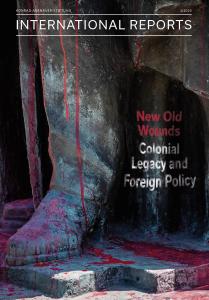
Issue: 2/2025




In a Nutshell
- Postcolonial and anti-capitalist thought patterns have been closely intertwined in Latin America for decades, forming the ideological foundation of many left-wing politicians’ rhetoric – with Havana as the epicentre.
- This discourse is marked on the global stage by stark black-and-white thinking: The West is cast as the aggressor, while the “Global South” – authoritarian regimes included – is seen as the victim.
- Defending and glorifying left-wing authoritarian governments in Latin America is a core element of this rhetoric and of the organisations that promote it, foremost among them being the Foro de São Paulo, founded in 1990 by Fidel Castro and Lula da Silva. Criticism of dictatorships is rejected, claiming it violates the principle of non-interference in internal affairs.
- While the Latin American Left rails against Western “imperialism”, it far too often turns a blind eye to the imperial ambitions of its international allies, such as Russia and China.
- Power exerted through culture and public discourse is a key factor in the success of the Latin American Left. Centre-right actors must engage with this discourse and defend terms such as democracy and universal human rights against identity-driven distortions.
On 19 January 2025, the Cuban dictatorship’s online outlet Cubadebate published a commentary in its “Anti-Capitalist Tribune” series entitled “Against Fascism and Imperialism: Politics, Tactics and Organisation”. In the piece, Manu Pineda – a Spanish Member of the European Parliament for the “United Left” – describes the autocratic regimes in Cuba and Venezuela as “key pillars” of an “anti-hegemonic project” and calls on all left-wing and “progressive” movements in Latin America to rally behind them “without fear or complexes” in order to challenge the “political and economic dominance of the West”. Any “lukewarm” attitude towards Cuba and Venezuela, he argues, undermines efforts to build a “fairer, multipolar world freed from the yoke of imperialism”. Pineda’s commentary has been widely disseminated – not only by the Venezuelan regime-controlled regional broadcaster TELESUR, but also by the Lebanese TV channel Al Mayadeen – which is linked to Hezbollah – and by the Syrian news agency Shafaqna.
Pineda’s article exemplifies three core dynamics within the Latin American Left. First, it reflects a common view of international relations in which the West assumes the role of villain, with the means used to oppose it being considered secondary. Second, the article shows the transnational character of this discourse and its global resonance, with a Spanish left-wing politician writing on a Cuban website in support of leftist authoritarian regimes in Latin America and being welcomed not only in Latin America itself, but also in Islamist circles. Third, Havana once again acts as the main axis of articulation – a near-sacred point of longing since the 1959 Cuban Revolution for generations of Latin American and international leftists, and a self-declared bastion of the anti-colonial struggle.
Many of the narratives espoused by Latin America’s authoritarian Left originate directly from Havana’s ideological kitchen or are delivered there as raw ingredients, refined with a romantic revolutionary aroma and then consumed and assimilated across the continent. This applies especially to discourses that fit into postcolonial thought patterns. Susanne Schröter defines these discourses as follows: “Postcolonial theory is essentially based on a binary worldview in which the roles of perpetrator and victim are clearly assigned. In simplified terms, it casts the ‘West’ as the perpetrator and the so-called Global South as the victim.” She also notes that many postcolonial theorists operate within the tradition of the Soviet Union’s original strategy of linking anti-colonialism and anti-capitalism as part of a communist logic. The Soviet Union, she argues, succeeded in portraying itself as an anti-colonial power on the world stage despite acting as a colonial force itself.
“Hyenas and Jackals”
Post-revolutionary Cuba quickly became a Latin American laboratory for this fusion of anti-colonialism and anti-capitalism. One prime example is a speech by then industry minister and central bank president of the revolutionary government Ernesto “Che” Guevara that was given in uniform at the United Nations in 1964: “Our eyes, now free, are opening to new horizons. They are free to see what they could not when we were colonial slaves – that ‘Western civilisation’ hides behind its flashy façade a picture full of hyenas and jackals.”
From this, Guevara – who was killed in 1967 while fighting as a guerrilla in Bolivia – derived his call for the “liberation of Latin America from the colonial yoke”. Fidel Castro had addressed the same global forum four years previously: “It must be made clear that the government of the United States is not an advocate of freedom, but an instrument of exploitation and oppression against the peoples of the world.”
Since its inception in 1959, Cuba’s dictatorship has presented itself as a victim and claimed this status on behalf of the “peoples of the world”. In line with its portrayal of Western civilisation as a collection of “hyenas and jackals”, the Castro regime quickly entered into a symbiotic alliance with the Soviet Union, which was in truth the free world’s main global adversary.
Despite being a de facto vassal of the Soviet Union, Cuba played a major role in shaping the so-called Non-Aligned Movement.
In his book “Fue Cuba”, Argentine diplomat and journalist Juan B. Yofre shows that coordination between the Cuban revolutionary government and the Soviet Union began almost immediately after the revolutionaries had taken power. Cuba’s role as a “subordinate” of the Soviet Union rather than as a true partner became especially clear during the so-called Cuban Missile Crisis in 1962, when the decision to station Soviet medium-range missiles and troops on the island was made in Moscow before Cuban authorities had even been informed.
Despite being a de facto vassal of the Soviet Union, Cuba played a major role in shaping the so-called Non-Aligned Movement – which had been founded in Belgrade in 1961 – and used the movement to raise its global profile with lofty claims of being a “model” for the world. Cuban guerrilla fighters and their carefully staged media appearances fed the revolutionary longings of generations of Latin American and European leftists. This strategy proved highly effective – and continues to do so to this day. Despite a one-party dictatorship that has resulted in tens of thousands of victims as well as in countless human rights violations and in the total absence of the rule of law, free press and legal opposition for over 65 years, Havana still manages to shape the discourse of many on the Latin American Left in a striking way. The moral whitewashing of the Cuban dictatorship – or at least its relativisation – is also culturally rooted in the West. One example is the 2004 Hollywood movie “The Motorcycle Diaries”, which is based on Ernesto Guevara’s autobiography.
This ongoing publicity success of Cuba’s dictatorship is all the more surprising given that the collapse of the Soviet Union from 1989 to 1991 had left Cuba in a dire position. Lacking any significant natural resources, the island was plunged into a deep crisis both economically and ideologically.
At that moment, Fidel Castro turned to his Latin American friends and admirers – chief among them being Brazilian trade unionist and current President Luiz Inácio (“Lula”) da Silva. From 2 to 4 July 1990, the two invited 48 leftist revolutionary parties and in some cases militant organisations from 14 countries to São Paulo. Their aim was to develop “unified and unanimous proposals for the people’s anti-imperialist struggle”. With that, the Foro de São Paulo (FSP) was born. Within a single decade, FSP-affiliated forces had come to power through democratic elections in much of the region. Taking office in 1999, Venezuelan President Hugo Chávez became its key figurehead and financial backer. The ageing Fidel Castro became a kind of ideological father figure to Chávez, whose oil revenues helped stabilise the Cuban regime.
The Crown Jewel of Cuba’s Soft Power
Drawing its identity from unwavering support for Havana’s regime, the Foro de São Paulo quickly became the crown jewel of Cuba’s soft power. Through it, Cuba managed not only to maintain the legitimacy of its narrative of the international and anti-colonial class struggle against its systemic enemy, the US, but also to embed this narrative at the highest levels of power across Latin America. The FSP’s 2017 political manifesto – adopted in Managua (Nicaragua) and titled Consenso de Nuestra América – not only is dedicated to “the example of revolutionary resolve set by Comandante Fidel Castro”, but also calls for “the liberation of our peoples from imperialist and capitalist domination” and from “colonial rule”.
A closer look at the parties that lend legitimacy to such declarations through their membership in the FSP reveals not only the autocratic ruling parties of Cuba, Venezuela and Nicaragua, but also parties that operate under democratic rules at home, such as Lula’s Brazilian Workers’ Party, Chile’s Socialist Party of former President and UN Human Rights Commissioner Michelle Bachelet, Costa Rica’s Frente Amplio and key factions of the Uruguayan and Chilean Frente Amplio. These parties evidently have few qualms about associating with their authoritarian counterparts. At the same time, anti-colonial resentment is used internally to justify the exercise of power. One example is the letter sent by Mexico’s former left-wing populist president Andrés Manuel López Obrador (AMLO) – whose MORENA party also belongs to the FSP – to the King of Spain in 2019, in which AMLO called on Felipe VI to apologise for the crimes committed during the Spanish conquest of the Americas in the 16th century. The monarch’s refusal to comply led to his exclusion from the inauguration of AMLO’s successor and fellow party member, Claudia Sheinbaum.
Leading actors of the Latin American Left maintain very close relations with Russia, China and Iran.
As the 2024 book “The Pink Galaxy” reveals, a whole ecosystem of left-wing international organisations, party alliances, think tanks, academic associations, activist groups and state and private media outlets has emerged from both the FSP and the Lula–Castro alliance. This pink galaxy includes the Grupo de Puebla – a group of prominent left-wing politicians featuring former Presidents Rafael Correa (Ecuador) and Evo Morales (Bolivia) as well as former Spanish Prime Minister José Luis Rodríguez Zapatero – in addition to the academic association CLACSO (Consejo Latinoamericano de Ciencias Sociales) and the transnational organisation Progressive International, which has significant activity in Latin America.
Such groups are ideologically rooted in the Left’s tradition of internationalism, which was established by organisations ranging from the Comintern to the Non-Aligned Movement. Progressive International’s 2019 founding congress was entitled “Internationalism or Extinction” and adopted a manifesto calling for the “decolonisation of the planet”, with Cuba remaining the epicentre of these efforts. In 2024, the organisation held a congress in Havana on a “new world economic order”, with Cuban President Miguel Díaz-Canel as keynote speaker. Figures such as former Colombian President Ernesto Samper, former Ecuadorian presidential candidate Andrés Araúz and Grupo de Puebla coordinator Marco Enríquez-Ominami jointly developed a “plan for the uprising of the Global South – for the renewal of the world system through new and alternative institutions”.
Transnational Authoritarian Cooperation
In the tradition of Cuba’s close ties with the Soviet Union, leading actors of the authoritarian Latin American Left maintain very close relations with the global authoritarian players of Russia, China and Iran while largely ignoring these countries’ imperial ambitions. As with Che Guevara, the shared aim remains opposition to the dominance of the Western liberal-democratic order. Rather than exporting guerrilla warfare, today’s strategy involves other forms of transnational authoritarian cooperation – in the media, in academic and cultural fields and in politics. For China in particular, the economic benefits of this cooperation are more than merely a by-product.
One of the most striking elements of this alliance is media collaboration: Not only is the Spanish-language program Russia Today (RT) the Kremlin mouthpiece’s most successful foreign-language outlet, but it also often recruits its journalists from former staff of Venezuelan or Cuban state media or from the circles of left-wing populist politicians. One example is the RT talk show hosted by former Ecuadorian President Rafael Correa in which he interviews like-minded figures such as Nicolás Maduro (Venezuela), Evo Morales (Bolivia) and Cristina Fernández de Kirchner (Argentina). Russian state media outlets such as Sputnik additionally amplify Venezuelan regime narratives – just as Venezuelan state media celebrated the “liberation” of cities in Donetsk by Russian forces. Iran’s Spanish-language broadcaster HispanTV follows a similar logic: Alongside its anti-Israel programming, it consistently echoes narratives associated with the pink galaxy. Spanish political scientist Sergio Castaño explains this by pointing to common ground despite ideological differences: Islamist fighters and self-styled secular “progressives” both find shared cause “in anti-capitalism and anti-imperialism, prompting them to join forces to advance their respective goals”.
Criticism of authoritarian regimes is dismissed in the name of the “autonomy of the peoples”.
A similar dynamic can be observed in the academic sphere. In October 2023, amidst Russia’s war of aggression against Ukraine, an academic forum brought together leftist scholars and Kremlin-aligned academics. The forum was organised by Saint Petersburg State University, the agency Sputnik and CLACSO, which is the academic arm of the pink galaxy. One attendee was former CLACSO executive director Atilio Borón, who wrote in the Latin American press that Russia was merely defending itself against “NATO aggression”. CLACSO’s subordination to the Cuban agenda became evident in 2023 when current executive director Karina Batthyány was inducted into Cuba’s state-run Academy of Sciences. In a country with strictly controlled universities, the Uruguayan sociologist declared: “We are united by open, critical scientific knowledge with social impact.” CLACSO also “cooperates” with Chinese state research institutions – for instance, on a 2023 book project promoting the official historical narrative of the Chinese Communist Party in Spanish.
Politically, China, Russia and the pink galaxy stand united behind Latin America’s authoritarian left-wing regimes. One recent example was the congratulatory message sent by the Chinese ambassador to Nicaragua in March 2025 to celebrate the country’s new constitution. The charter – which secures all state power for the ruling Ortega-Murillo family and effectively suspends the rule of law and the separation of powers – was described by the diplomat as “democratic” and “revolutionary”. Chinese President Xi Jinping was among the first to congratulate Venezuelan strongman Nicolás Maduro after the sham election on 28 July 2024. The Venezuelan regime and his own government, Xi said, were “good friends who trust one another”. China would always “support Venezuela’s just cause”, he continued, and “oppose all foreign interference”.
An Absolutist View of Non-Interference
The principle of non-interference in internal affairs – a legacy of the Non-Aligned Movement – plays a prominent role in left-wing authoritarian discourse. Commenting on the Grupo de Puebla’s stance towards Cuba and Venezuela, Chilean member Daniel Flores stated, “We don’t discuss these projects, because we respect the autonomy of the peoples”. However, when all criticism of authoritarian regimes is dismissed in the name of the “autonomy of the peoples”, this amounts to a rejection of the Universal Declaration of Human Rights and of the very concept of individual rights. The Latin American Left’s narrative converges with China’s long-standing campaign to redefine the concept of human rights internationally in the sense that the “right to economic development must take priority over all other rights, especially civil and political ones”.
US legal scholar Tanner Larkin refers to China’s attempt to redefine international norms in this way as “normfare”. The Chinese Communist Party, Larkin writes, holds a “rigid, absolutist view of state sovereignty and non-intervention”, thereby putting it in direct opposition to Western democracy. The moment that anti-colonial and anti-imperialist struggle becomes an end in itself, liberal democracy is reduced to a tool of Western domination.
The pink galaxy succeeded in systematically embedding postcolonial thought patterns into Latin America’s modern political landscape.
One telling example of this worldview can be found in the writings of Argentine psychologist, philosopher and Marxist activist Marcelo Colussi. In a 2024 book entitled “Let’s go for socialism”, published by CLACSO and funded through a cooperation agreement between CLACSO and the Swedish development agency SIDA, he writes, “The world revolves around two opposing poles – those who own the means of production, and the workers. Added to this are all other contradictions: patriarchy, racism, imperialism, colonialism, heteronormativity, ecocide. Socialism […] is a call to arms to create a new society in which all these injustices can be eliminated together.” Later, he adds, “What seems absolutely clear is that within the framework of bourgeois democracies, it is not possible to create genuine socialist alternatives through elections. […] Socialism can only be achieved by destroying the apparatus of domination controlled by the ruling class – the bourgeoisie.”
Cultural and Political Victories of the Authoritarian Left
Why, then, are anti-colonial and anti-democratic discourses so successful? Álvaro García Linera – former vice president under Evo Morales as well as member of the Grupo de Puebla and Progressive International – offered insights into the strategy of the authoritarian Left during a speech at the 2018 Latin American Conference on Social Sciences, organised by CLACSO:
“Governments and progressive forces in Latin America also had the strength to build on earlier cultural victories – over a span of ten to twenty years as well as during the concentrated period leading up to major cathartic social uprisings. Gramsci was right: Every political or military victory by the people requires prior cultural victories achieved in various spheres of life – universities, media, neighbourhoods, everyday life, the family and so on.”
The actors gathered within Latin America’s pink galaxy succeeded in penetrating the cultural sphere systematically, thereby allowing them to embed postcolonial thought patterns – long cultivated in Cuba – into Latin America’s modern political landscape.
The binary worldview of postcolonialism – dividing the world into “perpetrators” and “victims” – is clearly visible in the actions of these left-wing authoritarian actors. According to their logic, the “hyenas and jackals” of Western civilisation, “neoliberalism”, “imperialism” and “fascism” are the perpetrators, while anyone opposing them automatically belongs to the victim group – including autocratic regimes and dictatorships. As urged in the article cited at the beginning of this text, support for Venezuela, Cuba, China or Russia becomes a kind of anti-colonial profession of faith, and any attempt to question it is treated as a betrayal. However, even some leftists view this as going too far. In 2024, journalist Gerhard Dilger – former director of the Rosa Luxemburg Foundation’s offices in São Paulo and Buenos Aires – wrote aptly in the German newspaper taz, “In these circles, one rarely hears a critical word about self-styled caudillos like Daniel Ortega in Nicaragua or Bolivia’s Evo Morales – leaders for whom democratic power transitions are not part of the worldview. The well-founded distrust of the United States and its interventions over the past 200 years far too often descends into crude black-and-white thinking – a mindset that continues to cast Beijing’s or Moscow’s politics in an astonishingly benign light.”
Democracy and human rights are the political centre’s most valuable discursive assets.
The Political Centre’s Failure to Assert Itself in Public Debate
The relative strength of authoritarian and postcolonial narratives in Latin America is also due to the weakness of their political opponents. The political centre – particularly the centre-right – limits itself far too often to issues such as the economy and security, thereby leaving the cultural and discursive area to the authoritarian Left. This reluctance to engage clears the way for the actors of the pink galaxy: Even during periods of conservative rule, the intellectual and cultural terrain remains largely dominated by left-wing authoritarian and postcolonial discourse. At the same time, this failure on the part of the centre to assert itself opens the door to right-wing populist actors whose identity politics and conspiratorial agendas have little to do with liberal-democratic values. One example is 35-year-old Argentine bestselling author Agustín Laje, who is a supporter of Argentine President Javier Milei. Laje has popularised calls for a “culture war” against so-called “globalism” in Latin American right-wing circles.
A serious attempt to challenge the cultural-discursive dominance of the pink galaxy and to replace it with liberal-democratic narratives is urgently needed, not least for the political centre’s own survival. There are many ways of going about this. The concept of democracy as a universal political ideal must be constantly defended against distortion and hollowing-out, and it must be brought to life through substance and practice. The same applies to the universal value of human rights. These two concepts – still broadly supported by the Latin American public, according to all surveys – are the political centre’s most valuable discursive assets. It is thus all the more important to not dilute or undermine these concepts through overly broad definitions or identity-driven interpretations.
Based on these values, the contradictions of the authoritarian Left must be exposed – and beyond the echo chambers of the Right. If the democratic Left cannot be emotionally and intellectually detached from the authoritarian Left through clear information and argument, the task will prove extremely difficult. The greatest challenge is to uncover the many contradictions that lie beneath the constant posture of attack found in postcolonial discourse and to break the perpetrator–victim mindset. There is no shortage of ways to do this, including by visualising the human rights records of left-wing authoritarian regimes, by exposing torture and political prisoners, by debunking the myths of anti-colonial icons such as Fidel Castro or “Che” Guevara and by laying bare the international networks of authoritarian cooperation.
European states in particular must recognise in this era of global polarisation that anti-Western narratives often take hold most effectively in overlooked spaces, such as at Latin American universities. Even European development cooperation should take a hard look at whether all of its “partners” truly deserve that name: Indeed, behind anti-colonial narratives lies a transnational network of actors who undermine the West’s civilisational self-image and seek to dismantle the core values of the liberal-democratic model.
– translated from German –
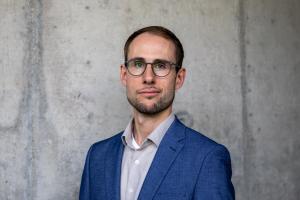
Sebastian Grundberger is Desk Officer for the Andean Countries at the Konrad-Adenauer-Stiftung. Until December 2024, he headed the Regional Programme Party Dialogue and Democracy in Latin America, based in Montevideo. He is also author of the book “The Pink Galaxy. How the Foro de São Paulo, the Grupo de Puebla, and their International Allies Undermine Democracy in Latin America”.
Choose PDF format for the full version of this article including references.