



Asset Publisher

Country Reports

Short political reports of the KAS offices abroad

Publications

IMAGO / Anadolu Agency

Senegal Between Vision 2050 and Political Reality

Stability Amid Transformation

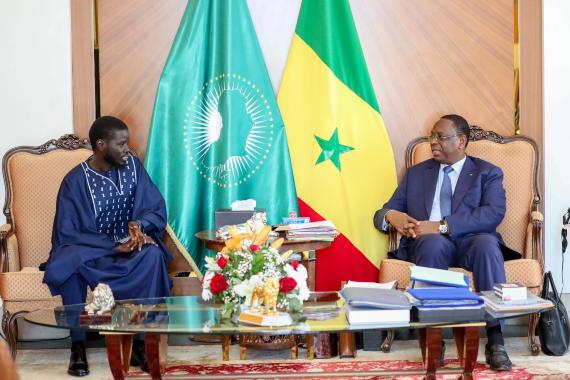
The transfer of power in 2024 marked a historic turning point for Senegal. With Bassirou Diomaye Faye and Ousmane Sonko, a political movement from outside the established centers of power entered the presidential palace and secured a parliamentary majority for the first time. Expectations of the new leadership were correspondingly high: it promised a fundamental political and economic renewal, greater transparency, stronger sovereignty, and a fairer distribution of economic opportunities. Two years later, the record is mixed. Ambitious reform plans and the long-term development agenda of Vision Sénégal 2050 are confronted by significant economic challenges, a debt crisis, and a deepening conflict within the former alliance. At the same time, Senegal has succeeded in expanding its diplomatic influence in West Africa and beyond.

KAS / Kelly Dam

Brand building in China and the 'Guochao' (national trend) phenomenon

From national trend in China to global phenomenon?

This report examines Guochao ("China Chic or the national wave"), a cultural and consumer trend that has grown from a niche aesthetic movement into a defining force in China's marketplace. By merging traditional Chinese heritage with modern design, domestic brands have tapped into a growing sense of cultural pride, especially among Generation Z consumers. The report traces the evolution of Guochao into its current "3.0" phase, analyses its effects on branding strategies and consumption patterns, and considers what it means for international companies operating in or entering the Chinese market. Finally, it looks at Guochao's broader significance for China's cultural influence and its role in extending the country's soft power on the global stage.

IMAGO / Anadolu Agency

Mauritania between national dialogue and geopolitical power politics

Stability cannot be taken for granted

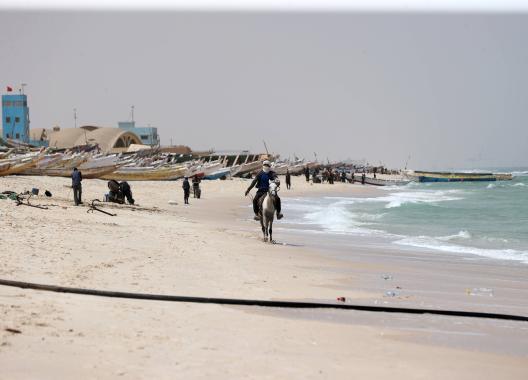
Political developments in Mauritania are often underestimated in Europe. Yet today, the country is one of the democratic West’s last reliable partners in a region increasingly turning away from Europe. While Mali, Burkina Faso, and Niger are under military rule – with a high influence of Russia in recent years – Nouakchott is prioritizing political stability, international cooperation, and cautious reforms. However, challenges might rise faster than the state’s capacity to act. The “national dialogue” could therefore prove to be a crucial test for the country’s future stability.

IMAGO / ZUMA Press Wire

Israel’s Election Campaign Begins

A major upheaval?

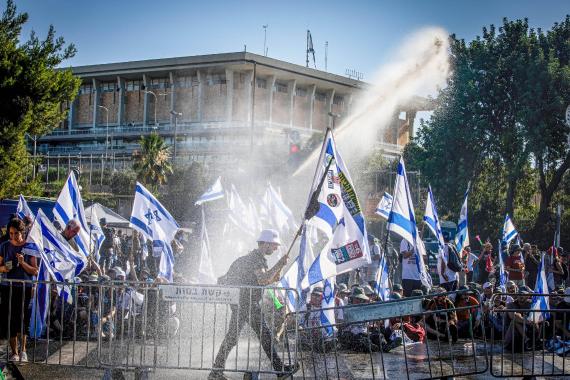
Israel is facing one of the most important elections in its recent history. Events during the current legislative term—particularly the Hamas attack on October 7, 2023—have profoundly transformed Israeli politics and society. At the heart of the October 27, 2026, election is the question of the country’s future political direction, as well as whether the era of Prime Minister Benjamin Netanyahu—now 76 years old—will continue or come to an end.

IMAGO / ABACAPRESS

Senate elections in France

The Senate as an anchor of stability during a turbulent presidential election campaign

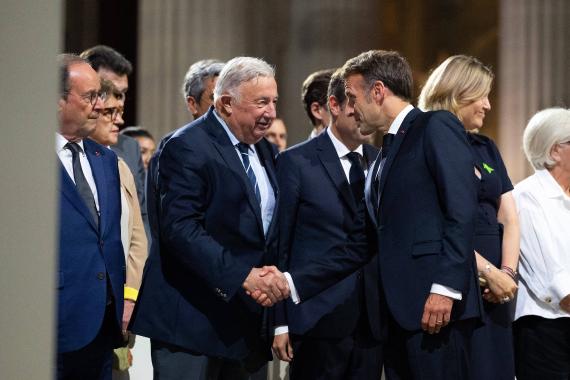
The whole of Europe is eagerly awaiting the 2027 presidential election in France. Yet it is often forgotten that during late summer 2026, on 27 September 2026, another important election will shape the political Rentrée: the partial renewal of the Senate. The upper house of the French Parliament comprises 348 senators, who are elected for six-year terms, with half the seats being up for election every three years. The last Senate elections on 24 September 2023 confirmed the existing centre-right majority. The Senate is not elected directly, but by an electoral college (Grands Électeurs), which is predominantly made up of local councillors and members of parliament at national and regional level; the election takes place at the level of the départements (which represent the constituencies for the Senate elections) and the minimum age for standing for election is 24. The electoral system varies depending on the size of the constituencies: in départements with up to three seats to be filled – which constitute the majority – a two-round first-past-the-post system applies, while in larger départements with four or more seats, elections are held under a proportional representation system. This system gives smaller and rural local authorities, in particular, disproportionate influence. Against this institutional backdrop, there are strong indications that the Senate will continue to be characterised by a stable centre-right majority even after the elections. Nevertheless, a few months before the presidential election, politically symbolic shifts could occur – particularly through the possible formation of a separate parliamentary group by the Rassemblement National (RN). At present, the party holds only three seats in the Senate; however, given its strengthened local roots, it could reach the threshold of ten seats required to form a parliamentary group.

IMAGO/Dreamstime

Djibouti’s geostrategic importance

Country profile, external actors and Germany’s role in security policy

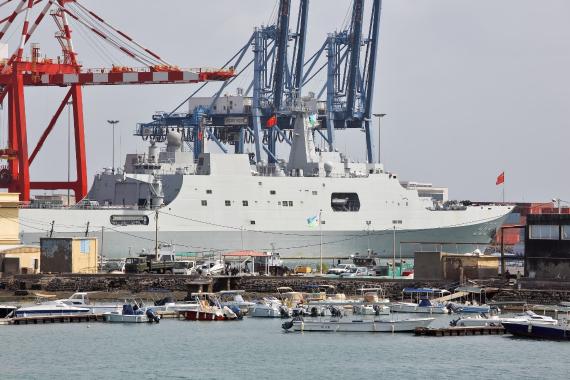
For some time now, the Horn of Africa has been the scene of strategic competition between external powers, which are continually expanding their military and economic influence in the region. Within the context of this rivalry, the small coastal state of Djibouti is of particular importance. Owing to its geostrategic location at the Bab al-Mandab Strait between the Red Sea and the Gulf of Aden, five states have already established permanent military bases there. Although Germany is not part of this group of countries, until a few years ago the German Navy was stationed off the Horn of Africa to work alongside European partners in combating maritime threats such as smuggling at sea, piracy and terrorism. In view of the recent resurgence of Somali piracy and the latent threat to international merchant shipping posed by the Yemeni Houthi militia, securing maritime trade routes in the Horn of Africa is more important than ever for Western nations.

Konrad-Adenauer-Stiftung e. V.

Ukraine - Barrierefreiheit zwischen sowjetischem Erbe und europäischen Werten

Inklusion weltweit - aktueller Stand aus der Ukraine

Die Ukraine hatte kaum begonnen, sich von der sowjetischen Logik der Absonderung von Menschen mit Behinderungen zu lösen und menschenwürdige, inklusive Strukturen aufzubauen, als sie von einem Krieg überrollt wurde. Der großangelegte russische Angriffskrieg zerstört nicht nur Städte und Infrastruktur, sondern vergrößert täglich die Zahl der Menschen mit dauerhaften Beeinträchtigungen – unter Verteidigern ebenso wie unter der Zivilbevölkerung. Barrierefreiheit ist kein Randthema, sondern eine Frage von Würde, Teilhabe und Zukunftsfähigkeit.

Konrad-Adenauer-Stiftung e. V.

Zwischen Reform und Realität – Politische Partizipation von Menschen mit Behinderung in Jordanien

Inklusion weltweit – aktueller Stand aus Jordanien

Jordanien hat in den vergangenen Jahren wichtige Reformprozesse angestoßen, um politische Teilhabe auszubauen und Menschen mit Behinderungen stärker in gesellschaftliche und politische Strukturen einzubinden. Neue gesetzliche Grundlagen, institutionelle Entwicklungen und internationale Initiativen prägen diesen Wandel und setzen Impulse für mehr Inklusion. Gleichzeitig stehen diese Entwicklungen in einem Kontext, in dem bestehende Strukturen, gesellschaftliche Rahmenbedingungen und laufende Umsetzungsprozesse die tatsächliche Teilhabe weiterhin limitieren. Vor diesem Hintergrund bewegt sich die politische Partizipation von Menschen mit Behinderungen in Jordanien im Spannungsfeld zwischen Reformanspruch und Realität.

IMAGO / Bestimage

Le Pen intends to stand as a candidate

The Court of Appeal’s ruling and its political consequences in France

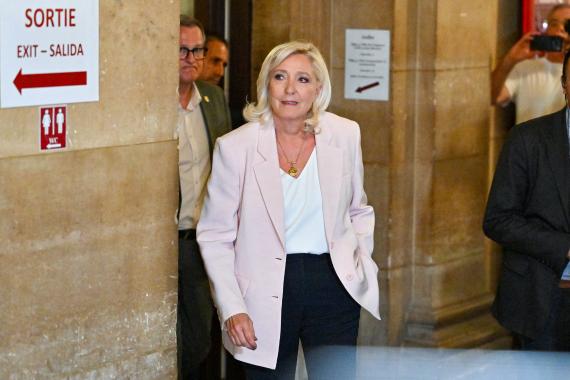
The Court of Appeal’s ruling against Marine Le Pen on 7 July 2026 marks the start of a new phase in the run to the 2027 presidential election. Whilst the leader of the Rassemblement National (RN) parliamentary group has confirmed her candidacy and announced further legal action by appealing to the Court of Cassation – which will examine whether the two lower courts committed any procedural errors – the RN is banking on the leadership duo of Marine Le Pen and Jordan Bardella. The ruling marks the actual start of the presidential election campaign, which is likely to further deepen political polarisation in France.

IMAGO / Lucian Alecu

Frozen Conflict: Government Crisis in Bucharest Continues

Parliament goes into summer recess without electing a new prime minister, while confidence in President Dan is eroding due to questionable crisis management

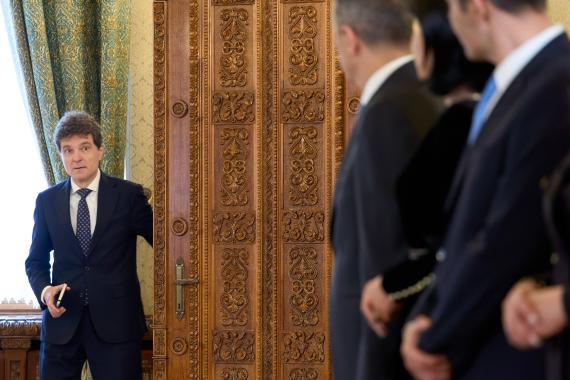
Romania’s parliamentary summer recess has begun anything but quietly. The vote of no confidence against the government of Prime Minister Ilie Bolojan (PNL) on 5 May triggered fierce political battles across the Romanian political landscape. The vote itself was widely perceived as a sacrilege: the motion of no confidence was jointly introduced by the Social Democratic Party (PSD) and the right-wing populist Alliance for the Union of Romanians (AUR). It remains unclear which side was effectively enabling the other. The motion received 281 votes—well above the 233 votes required for its adoption. Following the vote, PSD members withdrew from the government. Since then, Bolojan has continued to serve in a caretaker capacity, together with the reform-oriented Save Romania Union (USR) and the party representing the Hungarian minority (UDMR). Acting as a mediator in the increasingly tense political situation, President Nicușor Dan is steadily losing the confidence of many of his former supporters.

Asset Publisher

About this series

The Konrad-Adenauer-Stiftung is a political foundation. Our offices abroad are in charge of over 200 projects in more than 120 countries. The country reports offer current analyses, exclusive evaluations, background information and forecasts - provided by our international staff.

Order details

Editor

Konrad-Adenauer-Stiftung e.V.