
Asset Publisher

Further publications

Asset Publisher

© mit der KI Adobe Firefly generiert, Konrad-Adenauer-Stiftung e. V.

‚Zeitenwende‘ for the Principle of Separation! From Information Exchange to Joint Risk Assessment

Approaches to Help the Police and Intelligence Agencies Cope with the New Situation

Germany’s security architecture is tailored to an era of clearly distinct threats. However, hybrid threats such as espionage, sabotage, cyber operations, and disinformation transcend the jurisdictional boundaries of government agencies and make it difficult to conduct an effective threat assessment. This paper develops proposals for closer cooperation between the police and intelligence services through joint analyses, early risk detection, and institutionalized situation assessment.

smarterpix / ZOOMYimages

More space for the family

Family-friendly policies: an international comparison

 Despite a long-standing, stable desire to have children, Germany’s fertility rate has fallen to a historic low. What obstacles make it difficult for young people to start a family, and what policy frameworks can help ensure that more of these wishes are realized? Recent research and a comparison of family policy approaches in various countries offer insights for the needs-oriented further development of family policy in Germany. 

Timo Roujean

The Democratic Republic of the Congo at a Turning Point

The Democratic Republic of the Congo at an Institutional Crossroads: How the Planned Constitutional Referendum is Pushing the Country to the Brink

The Democratic Republic of the Congo is facing a critical political moment as President Félix Tshisekedi seeks to amend the 2006 Constitution to allow a third presidential term. The proposed law for the organisation of a constitutional referendum has already passed Parliament and the Senate and was recently declared constitutional by the country's highest court, making its enactment largely a formality. The initiative comes at a particularly sensitive time, with parts of eastern Congo still under the control of AFC/M23 rebels and the country grappling with a worsening Ebola outbreak. Against this backdrop, the practical feasibility of such a referendum, as well as the political responsibility of pursuing it, has come under increasing scrutiny. Critics argue that prioritising constitutional change amid these crises undermines democratic principles and continues a broader trend of eroding the rule of law that began under former President Joseph Kabila. Moreover, the reform could exacerbate existing political tensions and push the country into a more profound institutional crisis.

© Rawpixel/smarterpix.com, mit KI bearbeitet

Safe Social: Social Media That Protects Kids and Strengthens Sovereignty

Proposal for the creation of a new interoperable European “Safe Social” market: For a social media ban for under-16s – linked to an EU-wide system of certified exemptions

The “Safe Social” approach combines a widely supported child protection policy with a competition policy strategy for digital sovereignty. With a social media ban for under-16s many countries are responding in this way to dangerous digital products and to years of inaction by dominant platforms. It should be linked to an EU-wide system of certified exemptions. The goal is to realign the rules for digital services: children must be effectively protected, while at the same time the market must be opened up to European alternatives to today’s oligopoly.

IMAGO / Avalon.red

Britain Has Another New Prime Minister: Andy Burnham

What Andy Burnham can do, what he wants to do, and what his arrival in Downing Street means for Germany and Europe

On 20 July 2026, Andy Burnham took office as Britain's seventh Prime Minister since the Brexit referendum. The former Mayor of Greater Manchester promises nothing less than a fresh start. He wants to be a "circuit-breaker" for British politics, rewiring the country's political and economic systems. Whether that ambition holds will depend less on the scale of the vision than on the conditions for delivering it: tight fiscal room for manoeuvre, an impatient and fragmented electorate, and the cohesion of a parliamentary party that already broke his predecessor. Canan Atilgan and Sebastian Schnorrenberg assess what Burnham can do, what he wants to do, and what his arrival in Downing Street means for Germany and Europe.

IMAGO / Anadolu Agency

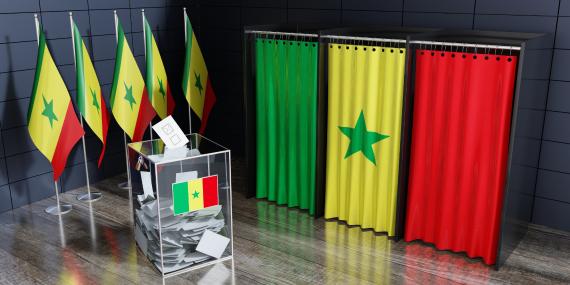
Senegal Between Vision 2050 and Political Reality

Stability Amid Transformation

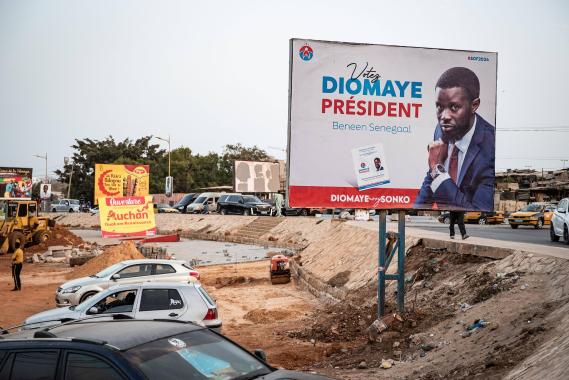
The transfer of power in 2024 marked a historic turning point for Senegal. With Bassirou Diomaye Faye and Ousmane Sonko, a political movement from outside the established centers of power entered the presidential palace and secured a parliamentary majority for the first time. Expectations of the new leadership were correspondingly high: it promised a fundamental political and economic renewal, greater transparency, stronger sovereignty, and a fairer distribution of economic opportunities. Two years later, the record is mixed. Ambitious reform plans and the long-term development agenda of Vision Sénégal 2050 are confronted by significant economic challenges, a debt crisis, and a deepening conflict within the former alliance. At the same time, Senegal has succeeded in expanding its diplomatic influence in West Africa and beyond.

KAS / Kelly Dam

Brand building in China and the 'Guochao' (national trend) phenomenon

From national trend in China to global phenomenon?

This report examines Guochao ("China Chic or the national wave"), a cultural and consumer trend that has grown from a niche aesthetic movement into a defining force in China's marketplace. By merging traditional Chinese heritage with modern design, domestic brands have tapped into a growing sense of cultural pride, especially among Generation Z consumers. The report traces the evolution of Guochao into its current "3.0" phase, analyses its effects on branding strategies and consumption patterns, and considers what it means for international companies operating in or entering the Chinese market. Finally, it looks at Guochao's broader significance for China's cultural influence and its role in extending the country's soft power on the global stage.

IMAGO / Anadolu Agency

Mauritania between national dialogue and geopolitical power politics

Stability cannot be taken for granted

Political developments in Mauritania are often underestimated in Europe. Yet today, the country is one of the democratic West’s last reliable partners in a region increasingly turning away from Europe. While Mali, Burkina Faso, and Niger are under military rule – with a high influence of Russia in recent years – Nouakchott is prioritizing political stability, international cooperation, and cautious reforms. However, challenges might rise faster than the state’s capacity to act. The “national dialogue” could therefore prove to be a crucial test for the country’s future stability.

IMAGO / ZUMA Press Wire

Israel’s Election Campaign Begins

A major upheaval?

Israel is facing one of the most important elections in its recent history. Events during the current legislative term—particularly the Hamas attack on October 7, 2023—have profoundly transformed Israeli politics and society. At the heart of the October 27, 2026, election is the question of the country’s future political direction, as well as whether the era of Prime Minister Benjamin Netanyahu—now 76 years old—will continue or come to an end.

IMAGO / ABACAPRESS

Senate elections in France

The Senate as an anchor of stability during a turbulent presidential election campaign

The whole of Europe is eagerly awaiting the 2027 presidential election in France. Yet it is often forgotten that during late summer 2026, on 27 September 2026, another important election will shape the political Rentrée: the partial renewal of the Senate. The upper house of the French Parliament comprises 348 senators, who are elected for six-year terms, with half the seats being up for election every three years. The last Senate elections on 24 September 2023 confirmed the existing centre-right majority. The Senate is not elected directly, but by an electoral college (Grands Électeurs), which is predominantly made up of local councillors and members of parliament at national and regional level; the election takes place at the level of the départements (which represent the constituencies for the Senate elections) and the minimum age for standing for election is 24. The electoral system varies depending on the size of the constituencies: in départements with up to three seats to be filled – which constitute the majority – a two-round first-past-the-post system applies, while in larger départements with four or more seats, elections are held under a proportional representation system. This system gives smaller and rural local authorities, in particular, disproportionate influence. Against this institutional backdrop, there are strong indications that the Senate will continue to be characterised by a stable centre-right majority even after the elections. Nevertheless, a few months before the presidential election, politically symbolic shifts could occur – particularly through the possible formation of a separate parliamentary group by the Rassemblement National (RN). At present, the party holds only three seats in the Senate; however, given its strengthened local roots, it could reach the threshold of ten seats required to form a parliamentary group.

Showing 11 to 20 of 4,061 entries.