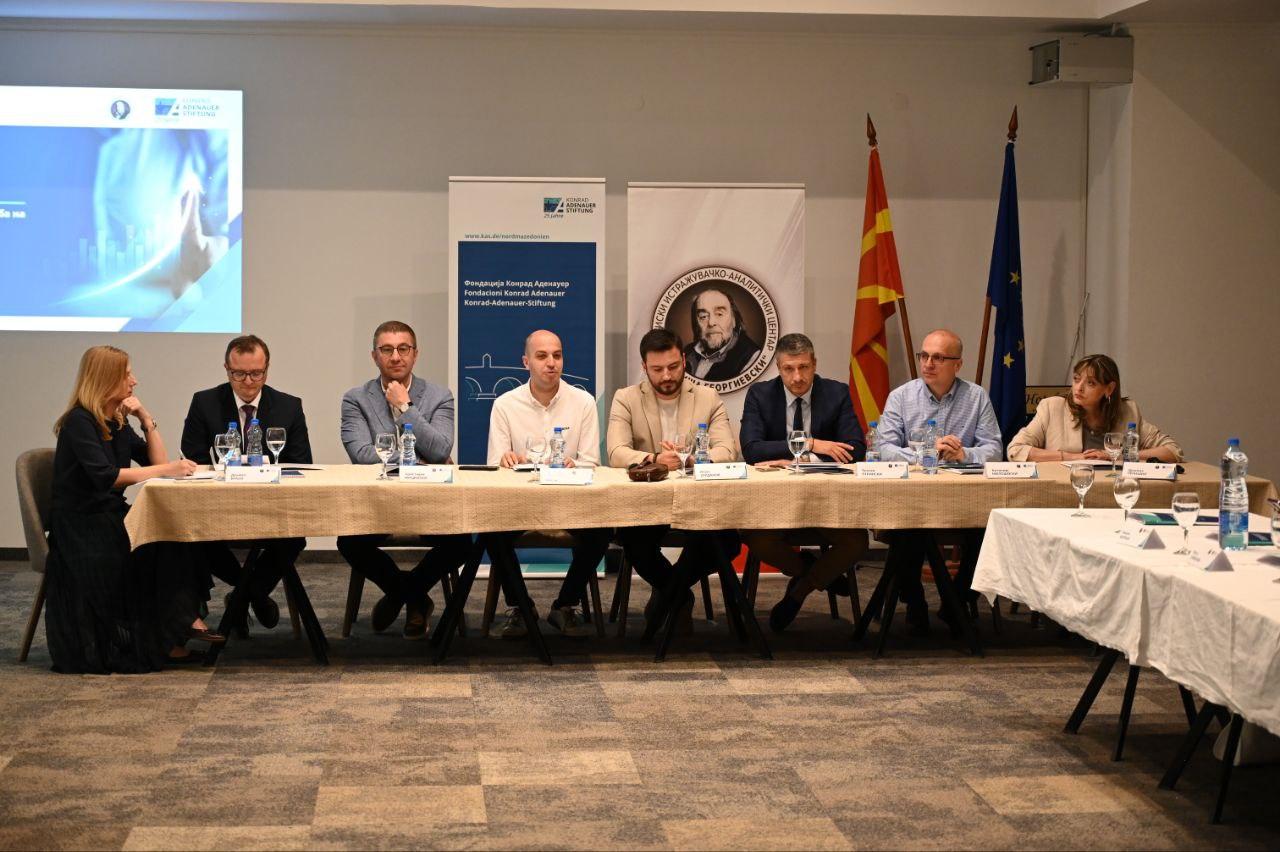
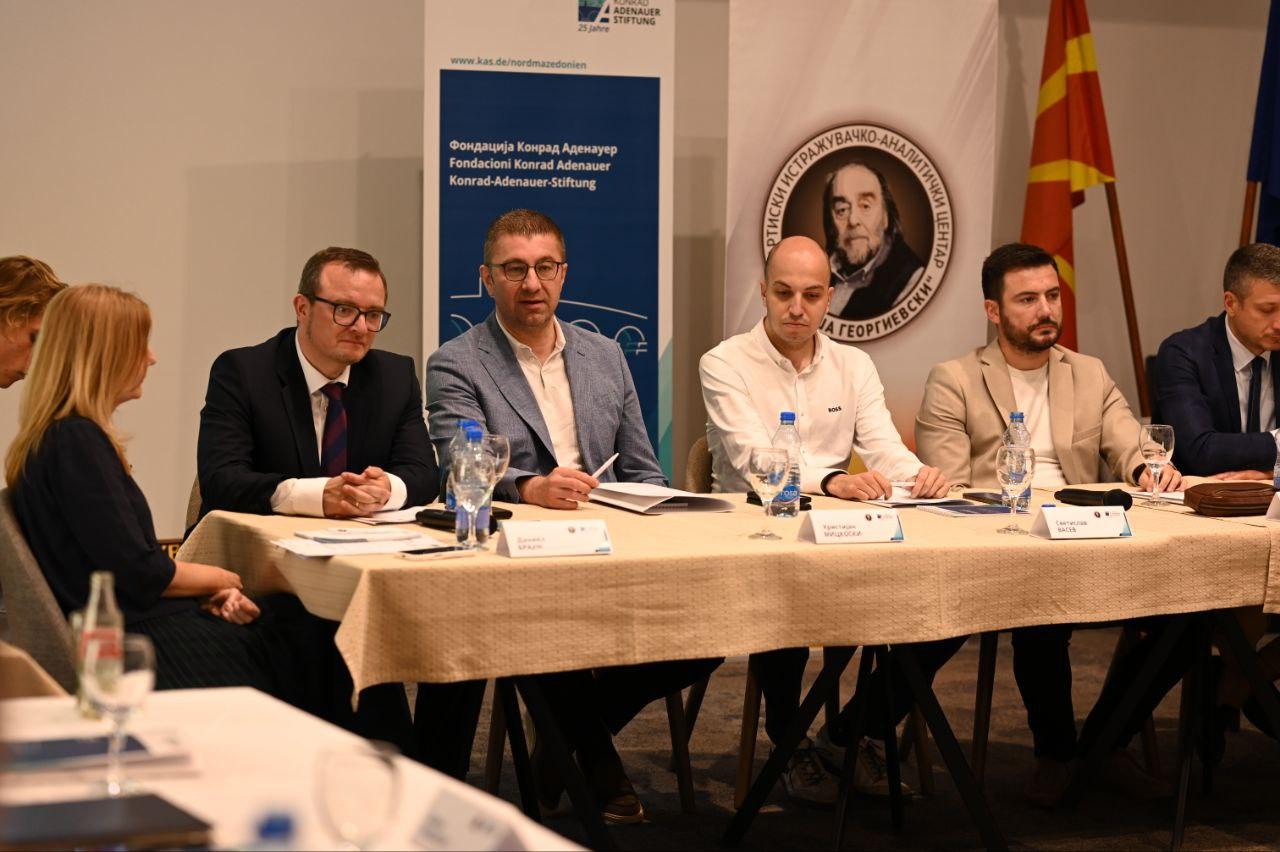


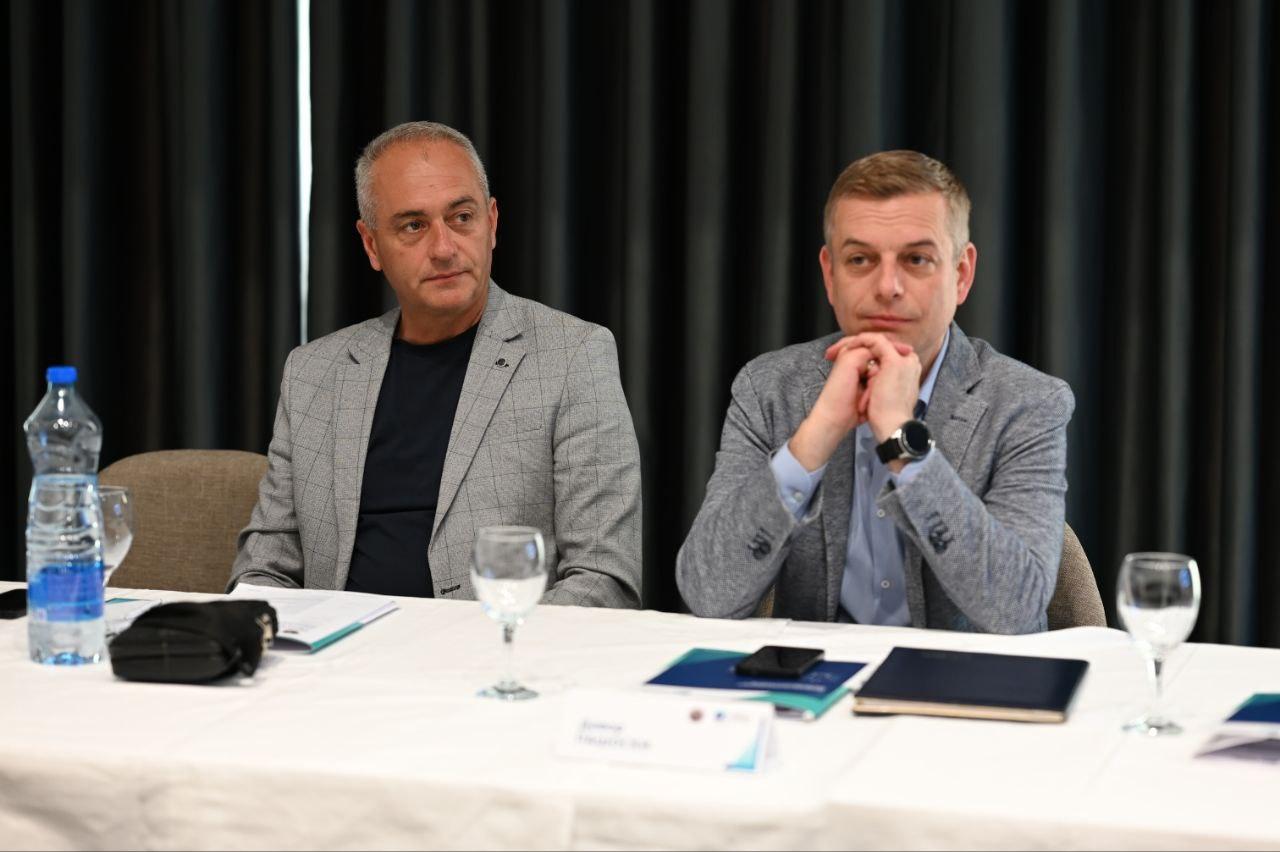



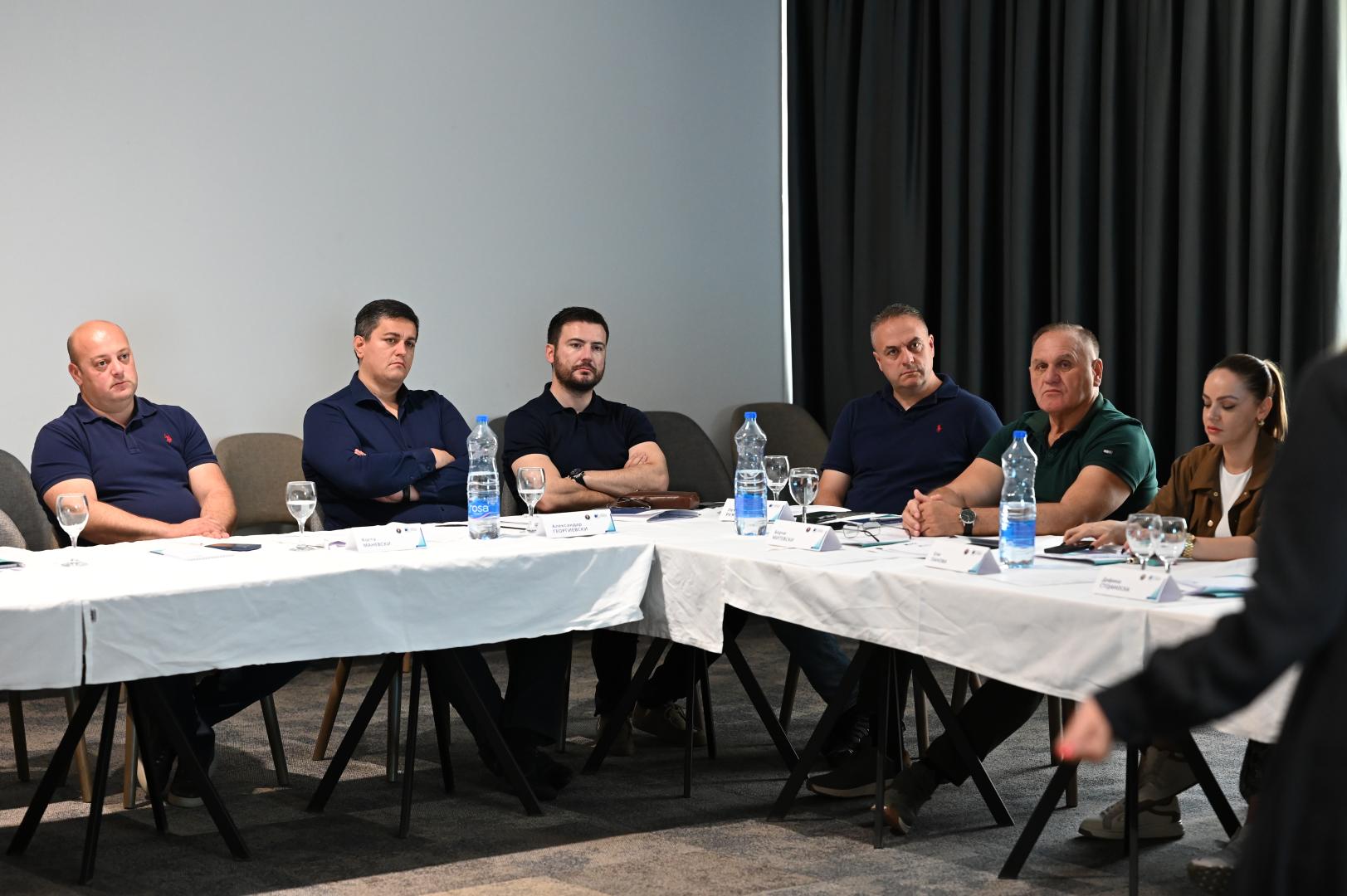
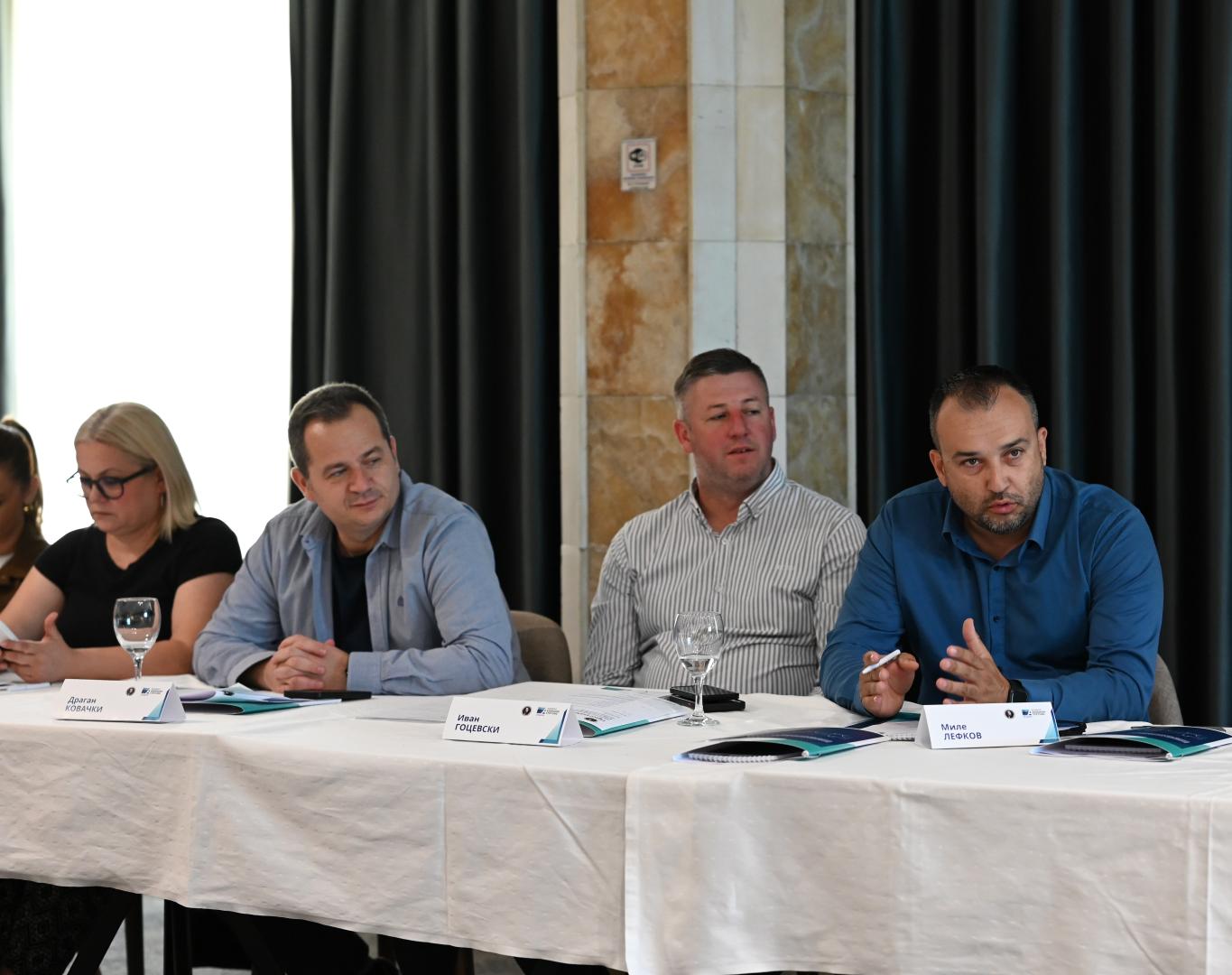



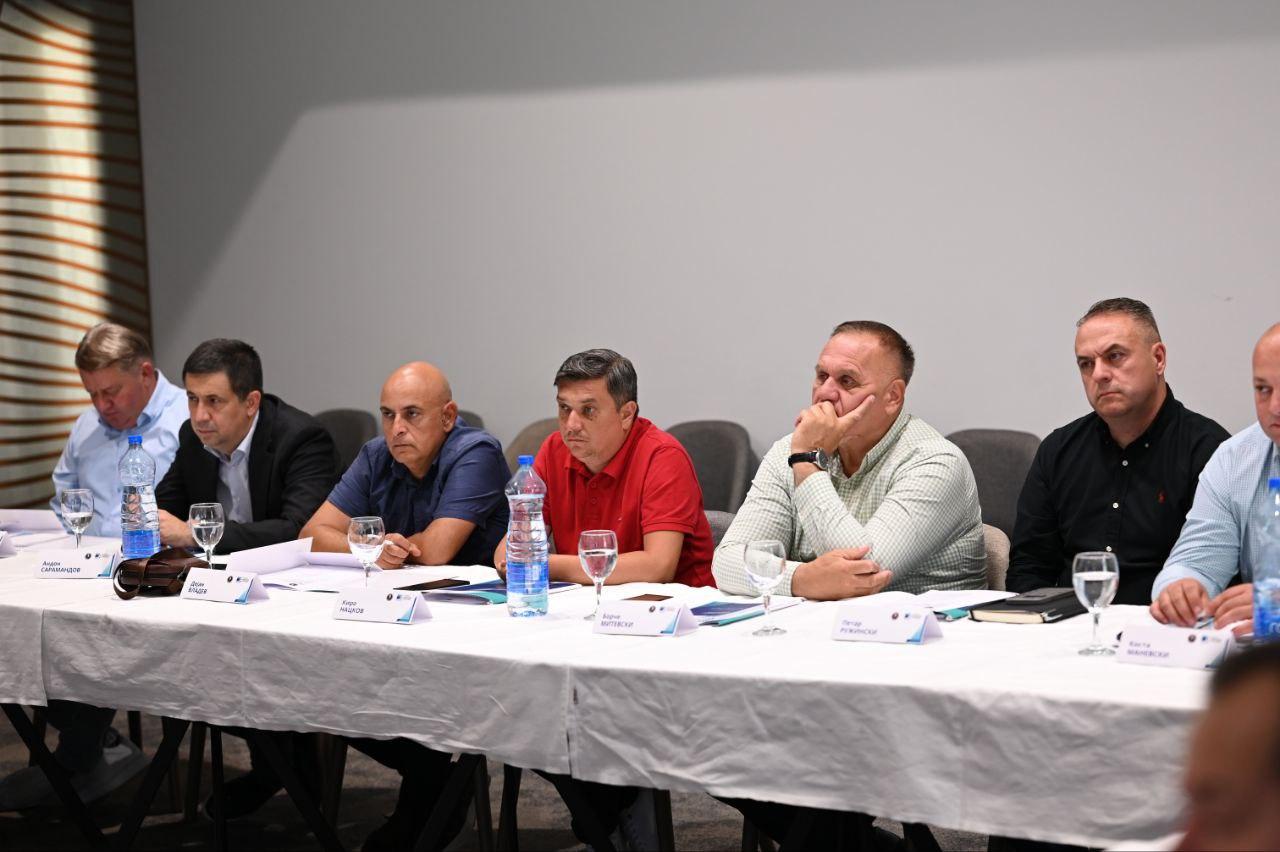
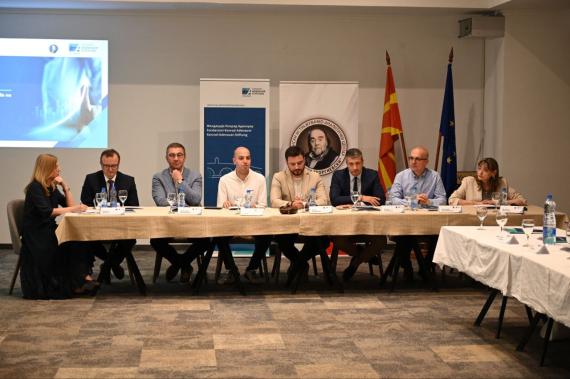
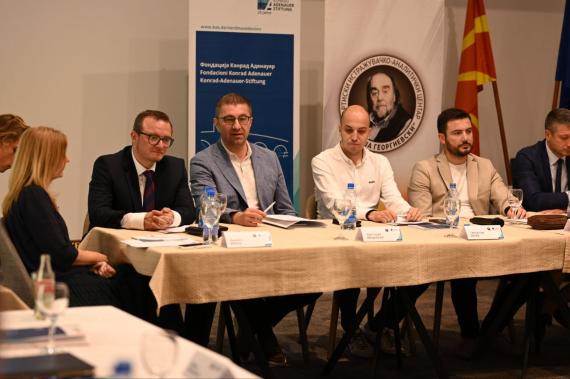
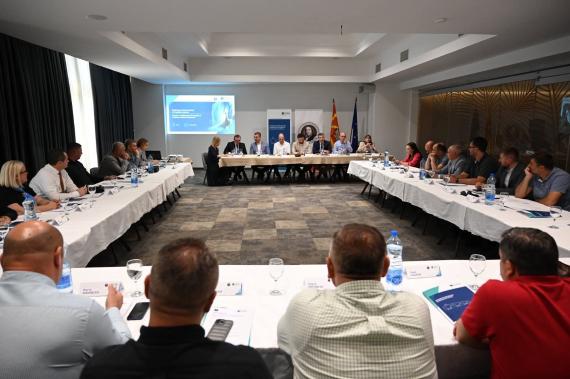
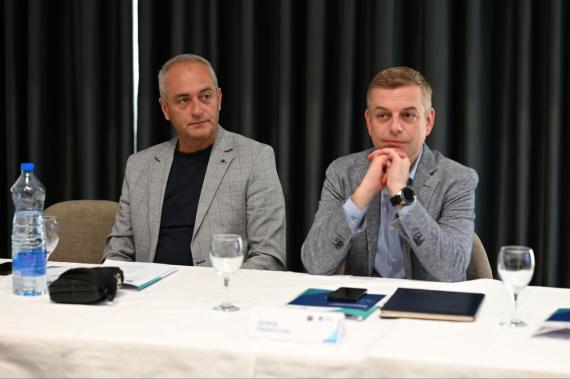



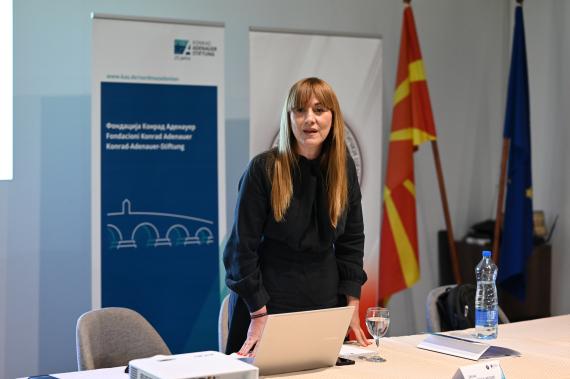
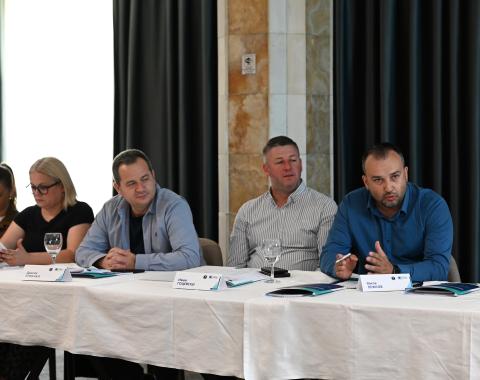
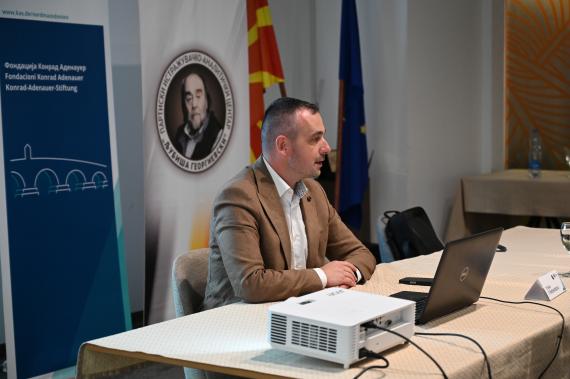


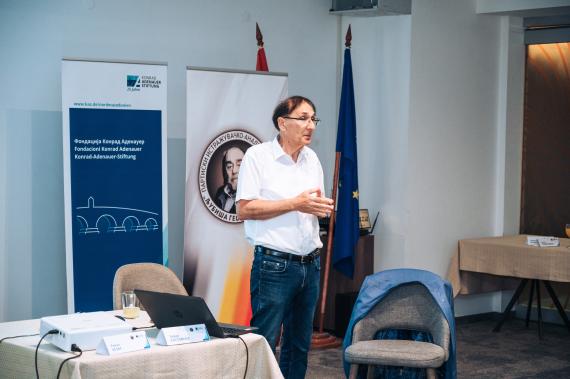

In his welcoming address, Daniel Braun, Official Representative of KAS, emphasized that the municipal level of governance should not be underestimated or seen as minor, but rather as a critical point of contact where citizens directly experience and evaluate politics at the national level. He stressed that it is at the local level where decisions are made that determine whether people feel heard and see their concerns addressed — making local governance an essential service to the public. Braun also cautioned that unresolved issues at the municipal level can escalate into larger problems with nationwide consequences. He concluded on an optimistic note, stating that these challenges can be avoided through honest, effective, and responsible work at the local level.
In his address, Hristijan Mickoski, Prime Minister and President of VMRO-DPMNE, reflected on the context of the upcoming local elections, the importance of cooperation between local and national levels of governance, and the broader political strategy of the current government. Using examples such as infrastructure projects and investments in tourism, Mickoski illustrated that the sustainable development of the country depends on close and effective collaboration between local and national authorities. He stressed that maintaining this cooperation is essential for progress and that the upcoming elections will be pivotal in ensuring its continuation. He concluded on a broader note, stating that the quality of governance at home forms the foundation for the country’s reputation and relationships on the international stage.
The Head of the Party Research and Analytical Center "Ljubisha Georgievski" Svetislav Vasev, welcomed everyone on the training, he gave his gratitude to KAS for organizing this event, undermining the good relations that KAS has with the Party and the Analytical Center.
Concluding the welcoming addresses, Ivan Jordanov, Mayor of Shtip, highlighted his city as a concrete example of the positive impact that a strong focus on local governance can deliver. Citing key projects such as the new highway to Skopje and the construction of clinical centers in Shtip, he emphasized that these developments are recognized and valued by the citizens of Shtip. Jordanov further stressed that such infrastructure projects are essential not only for improving local quality of life but also for preventing population decline by creating opportunities and stability that encourage people to remain in their communities. In closing, he set the tone for the two days ahead, noting that success stories like Shtip’s often have their roots in events such as this training.
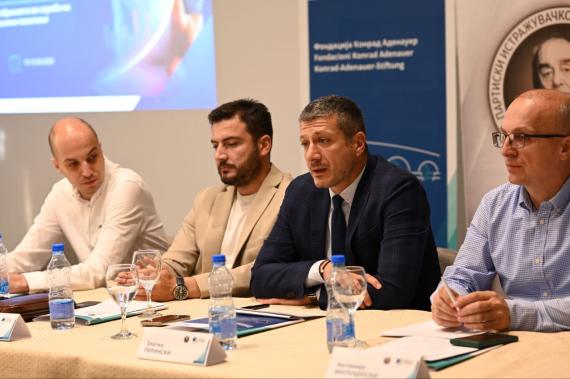
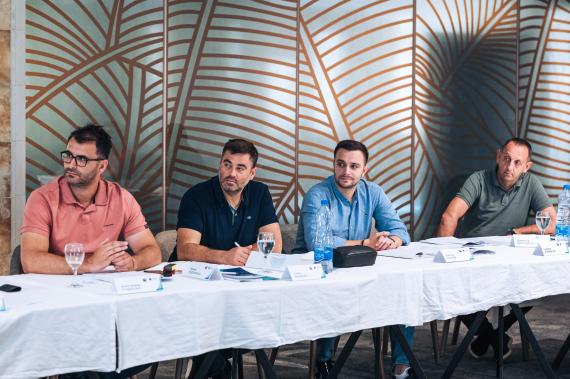
The training continued with a panel discussion on the topic “Joined Forces for Local Impact: Building Effective Cooperation Between Government, Parliament and Municipalities to Meet Citizens’ Needs” in which participated Antonio Miloshoski, Vice President of the Assembly; Zlatko Perinski, Minister of Local Self-Government and Dusica Perisic, Executive Director of the Association of the Units of the Local Self-Government (ZELS). Among other topics, the panel discussion addressed the Government's ongoing policies aimed at supporting municipalities. It was emphasized that over 250 million euros have been allocated for local projects, with the commitment to continue this financial assistance in the future. All municipalities are eligible to apply for funding to support their local development priorities. The discussion also highlighted the importance of two-way communication between the national and local levels, underlining that state institutions must listen to the needs expressed by municipalities and respond in a timely and adequate manner.
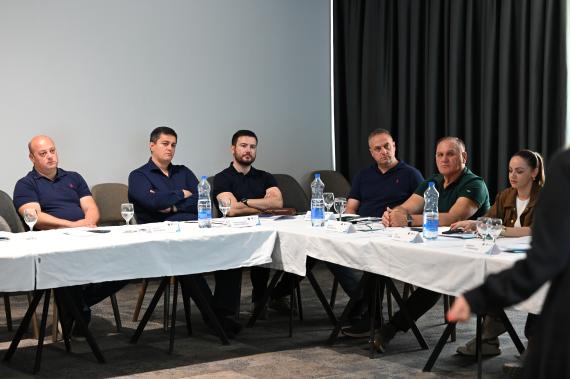
In the following two days, the seminar continued with an intensive training agenda focused on communication, leadership, and strategic local development.
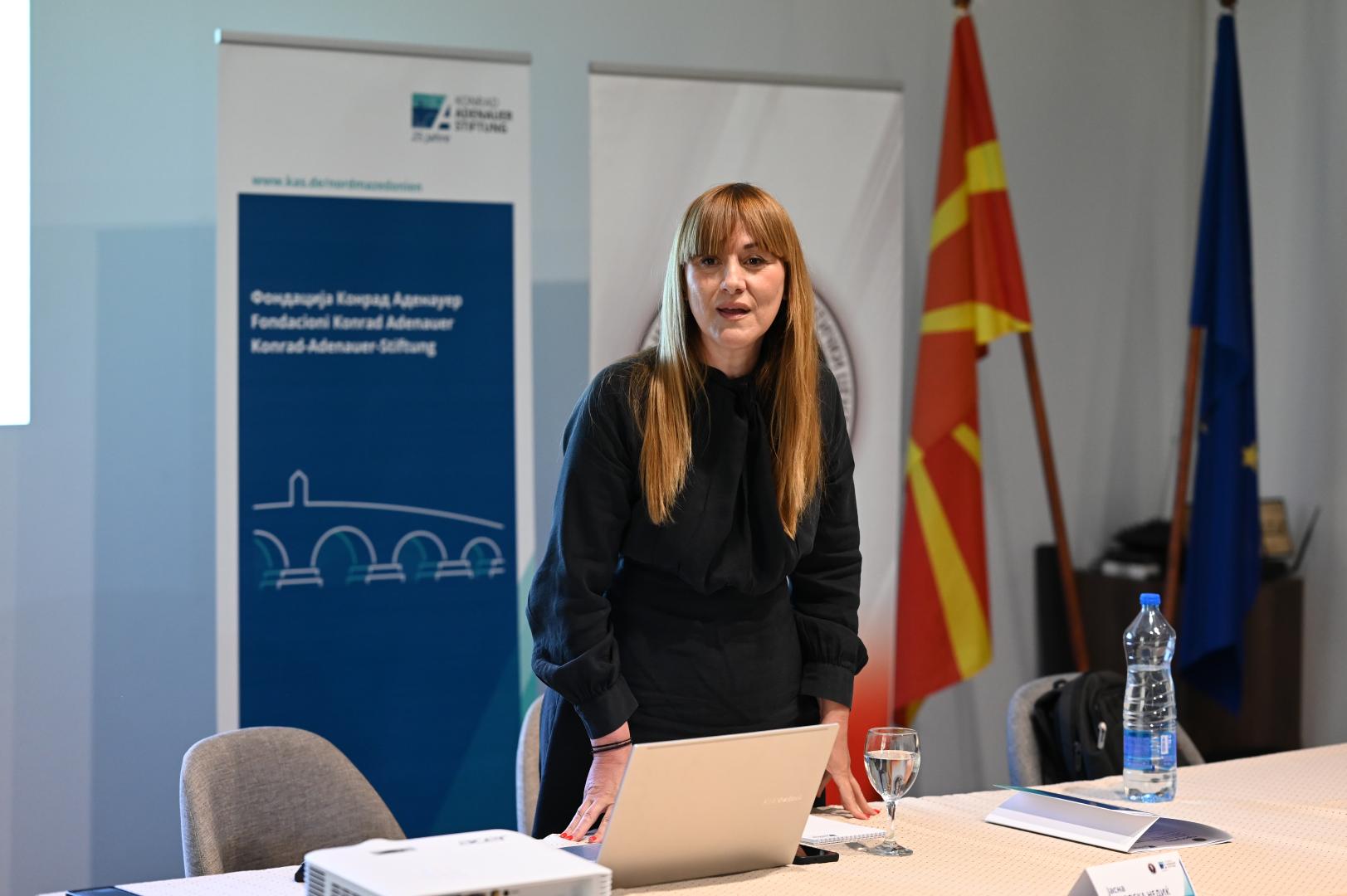
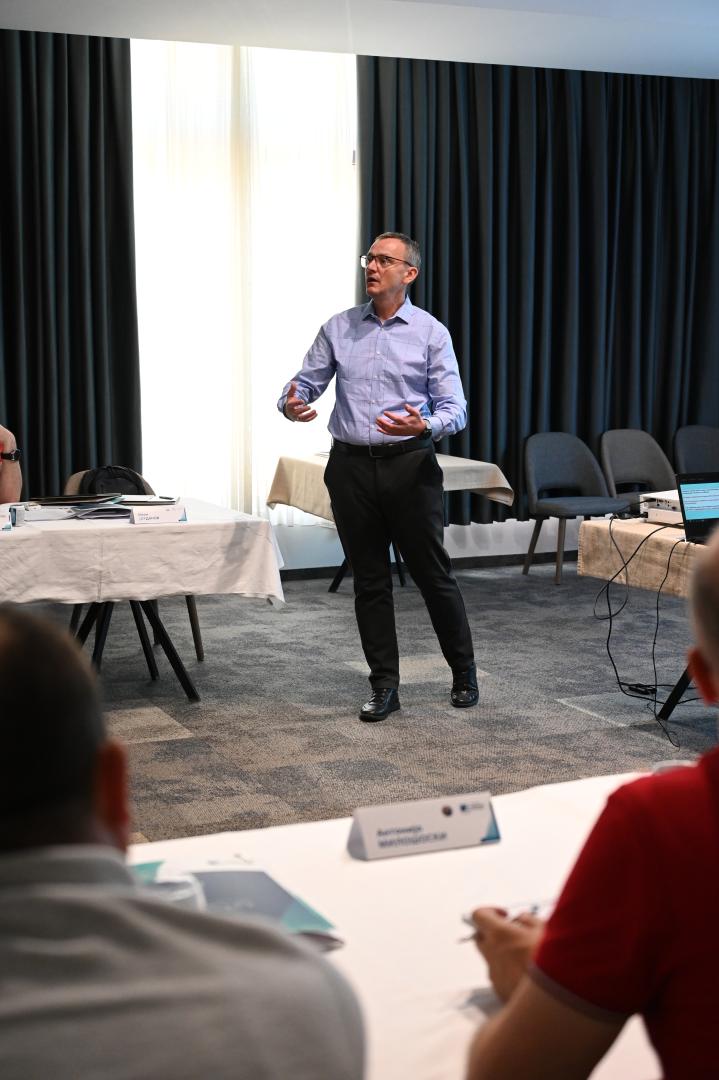
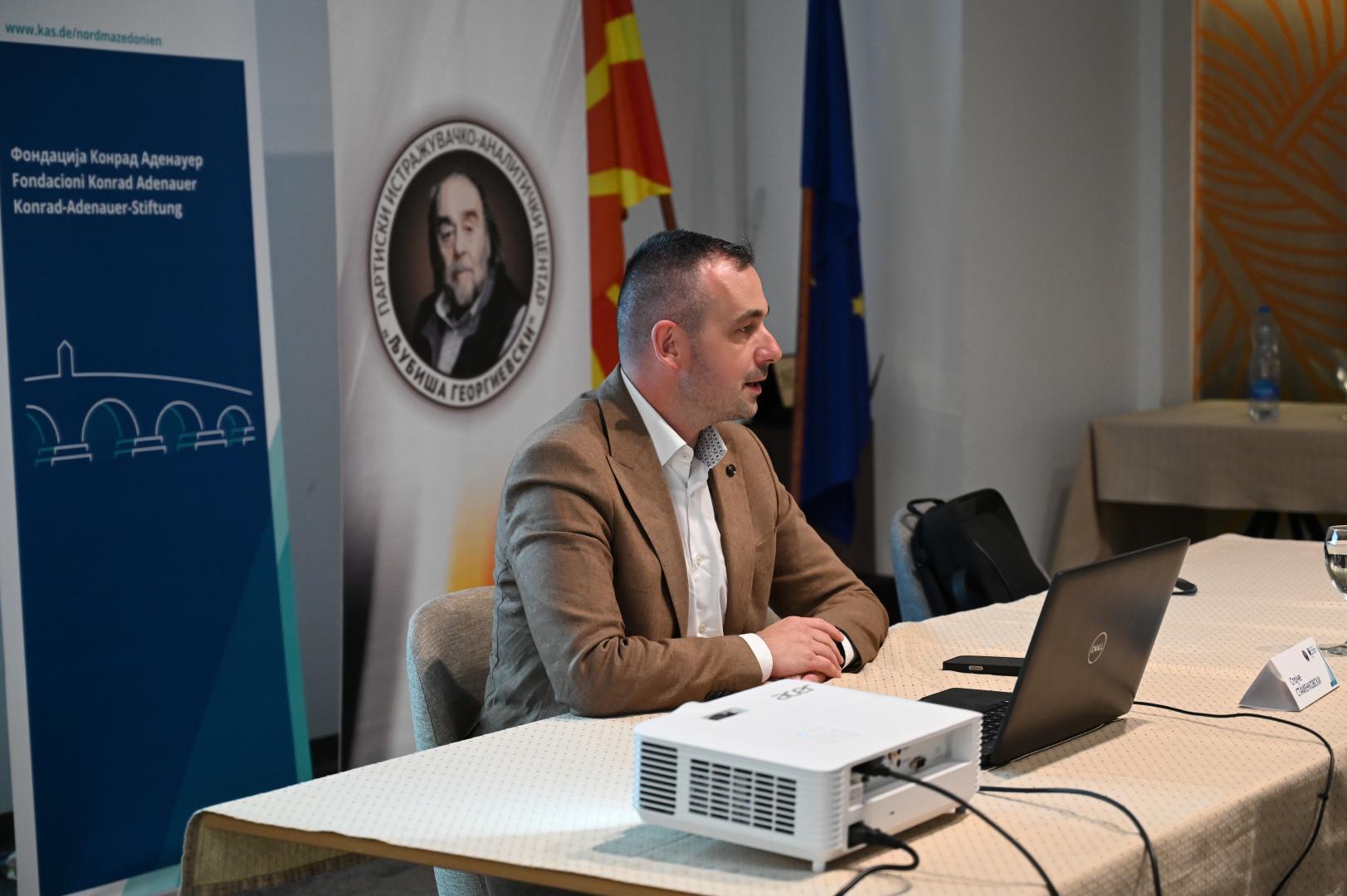
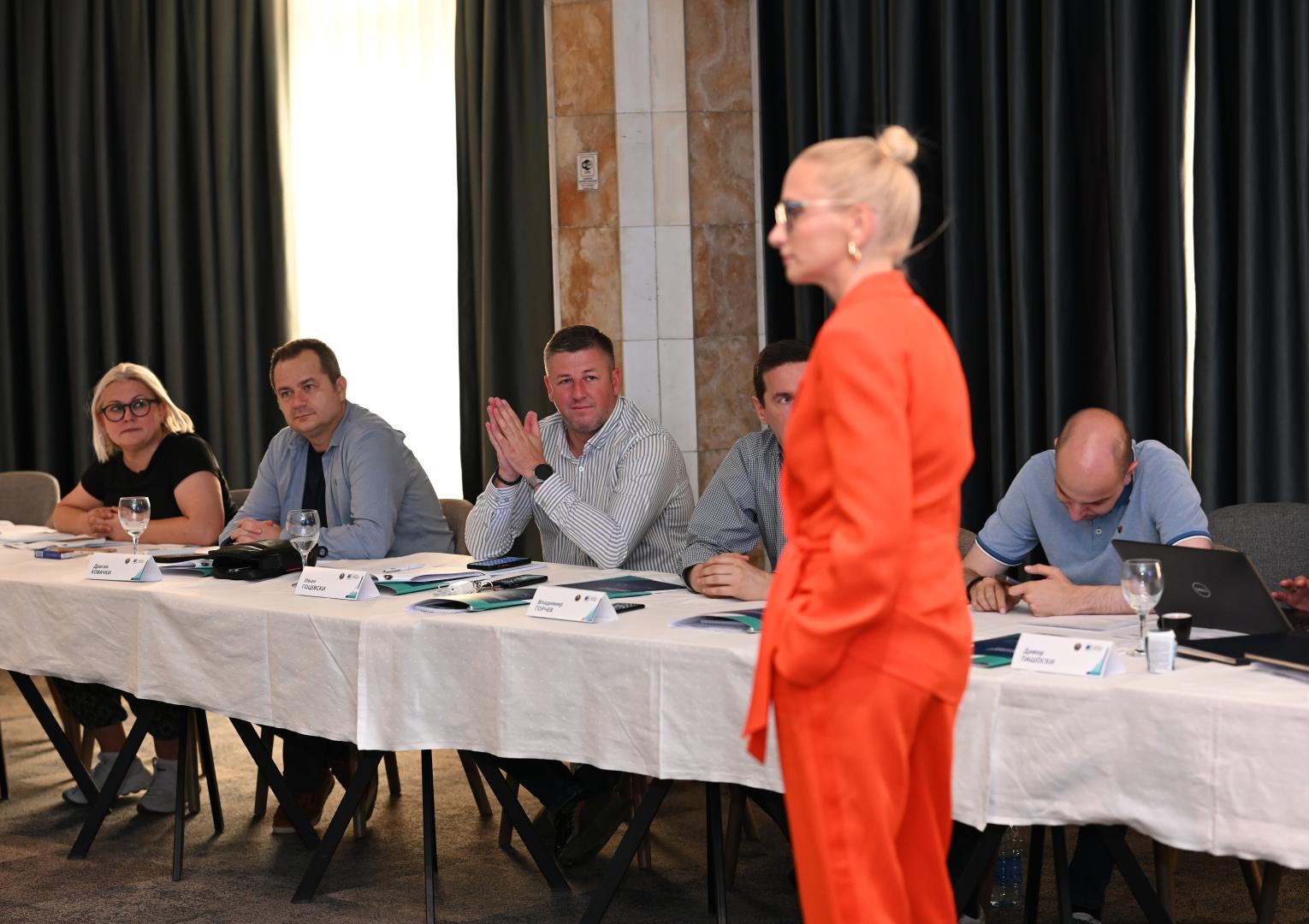
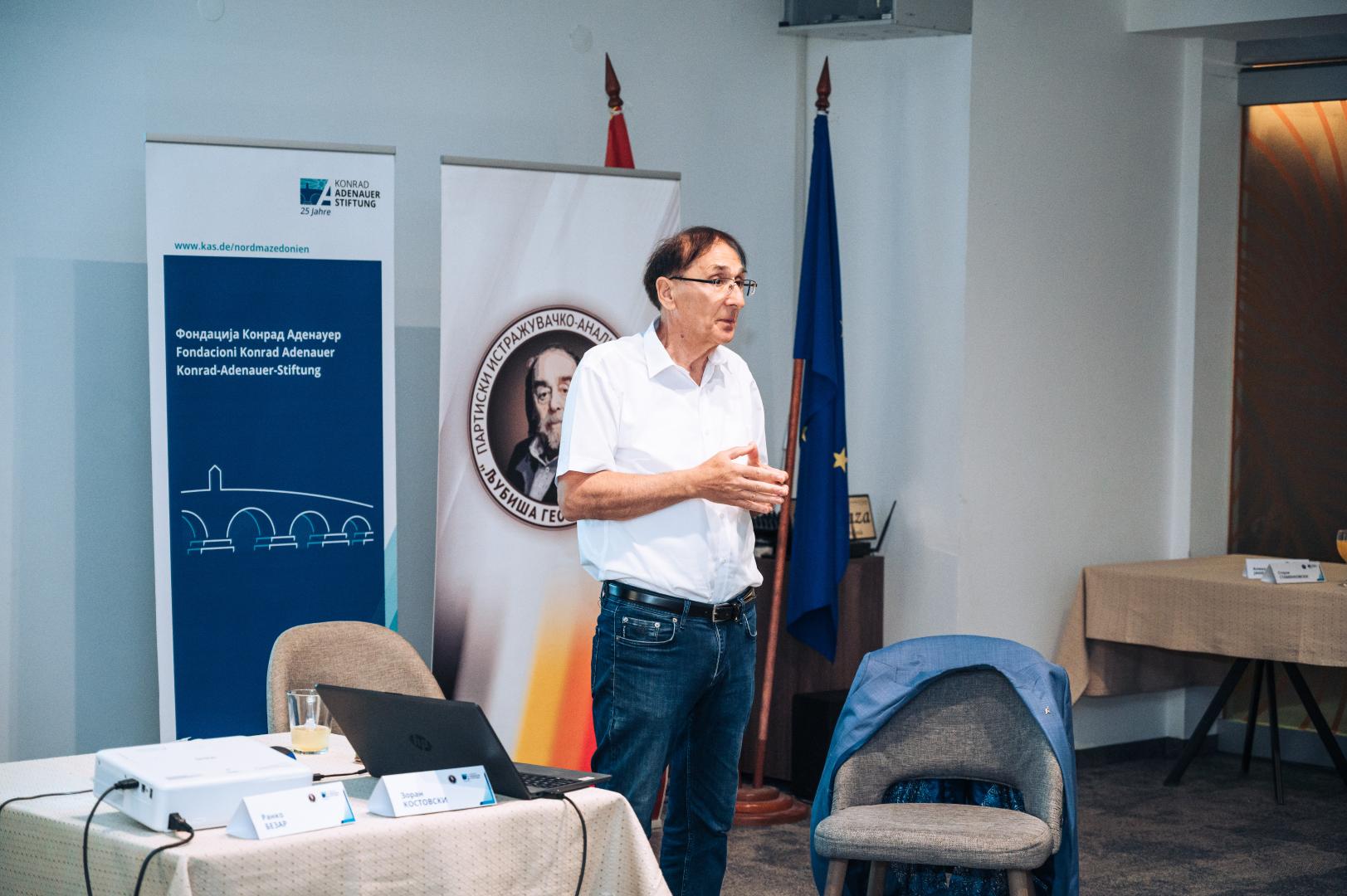
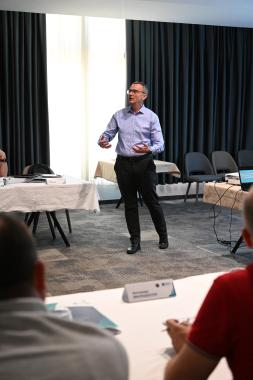
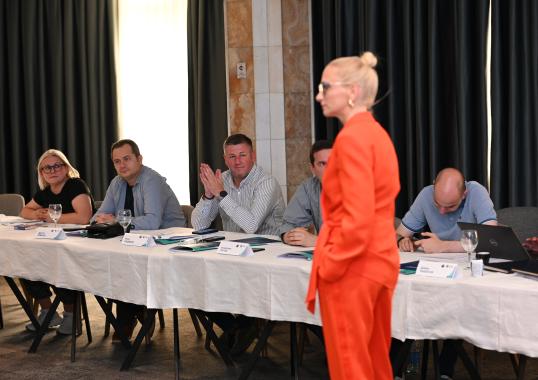
On Saturday, the sessions featured a series of lectures and interactive discussions led by university professors and professionals in the field of political communication and leadership. Jasna Bacovska Nedic and Aleksandar Spasenovski, both professors at the Faculty of Law “Iustinianus Primus” in Skopje, offered insights into trust-based communication strategies and the balance between internal cohesion and public engagement. The training continued with Stojche Stamenkovski, a digital media expert, who delivered a session on increasing political visibility and building public trust through strategic use of digital platforms. In the afternoon, Aleksandra Janeska-Iliev from the Faculty of Economics in Skopje guided participants through a session on personal growth and resilience in public leadership.
Sunday was dedicated to applied skills training led by the team from Motiva Management Education & Training. Their interactive workshop focused on mastering leadership and communication skills for delivering clear, credible, and compelling messages to various audiences. Additionally, an emotional intelligence assessment was conducted with all participants, offering valuable self-awareness insights to support their personal and professional development.
At the end of the seminar, Davor Pasoski, Programme Manager at the Konrad-Adenauer-Stiftung, and Svetislav Vasev, Head of the Party Research and Analytical Center “Ljubisha Georgievski”, addressed the participants. In their closing remarks, they emphasized the strategic relevance of the seminar in strengthening cooperation between state institutions and local self-government units. They also underlined the importance of continued investment in the political and professional capacities of municipal leadership, reaffirming the commitment of the organizers to long-term institutional development and inclusive democratic governance.