





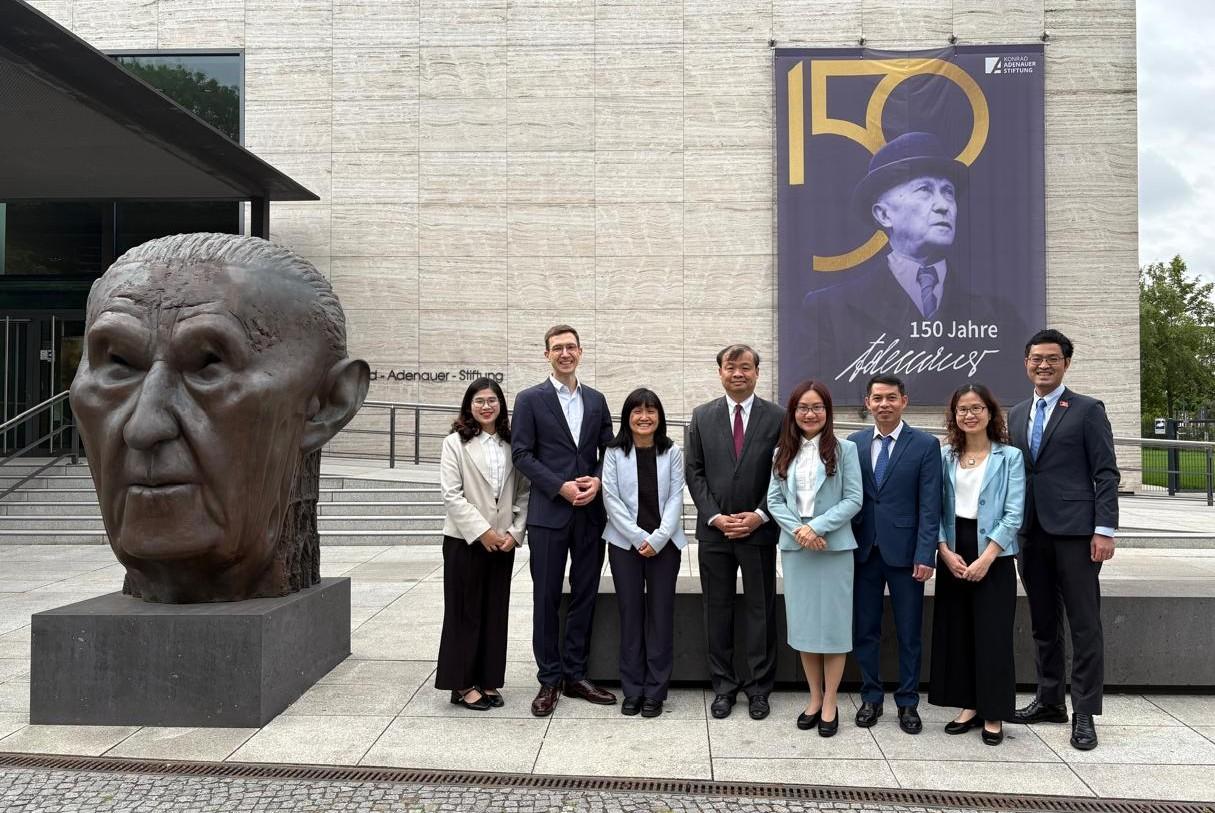
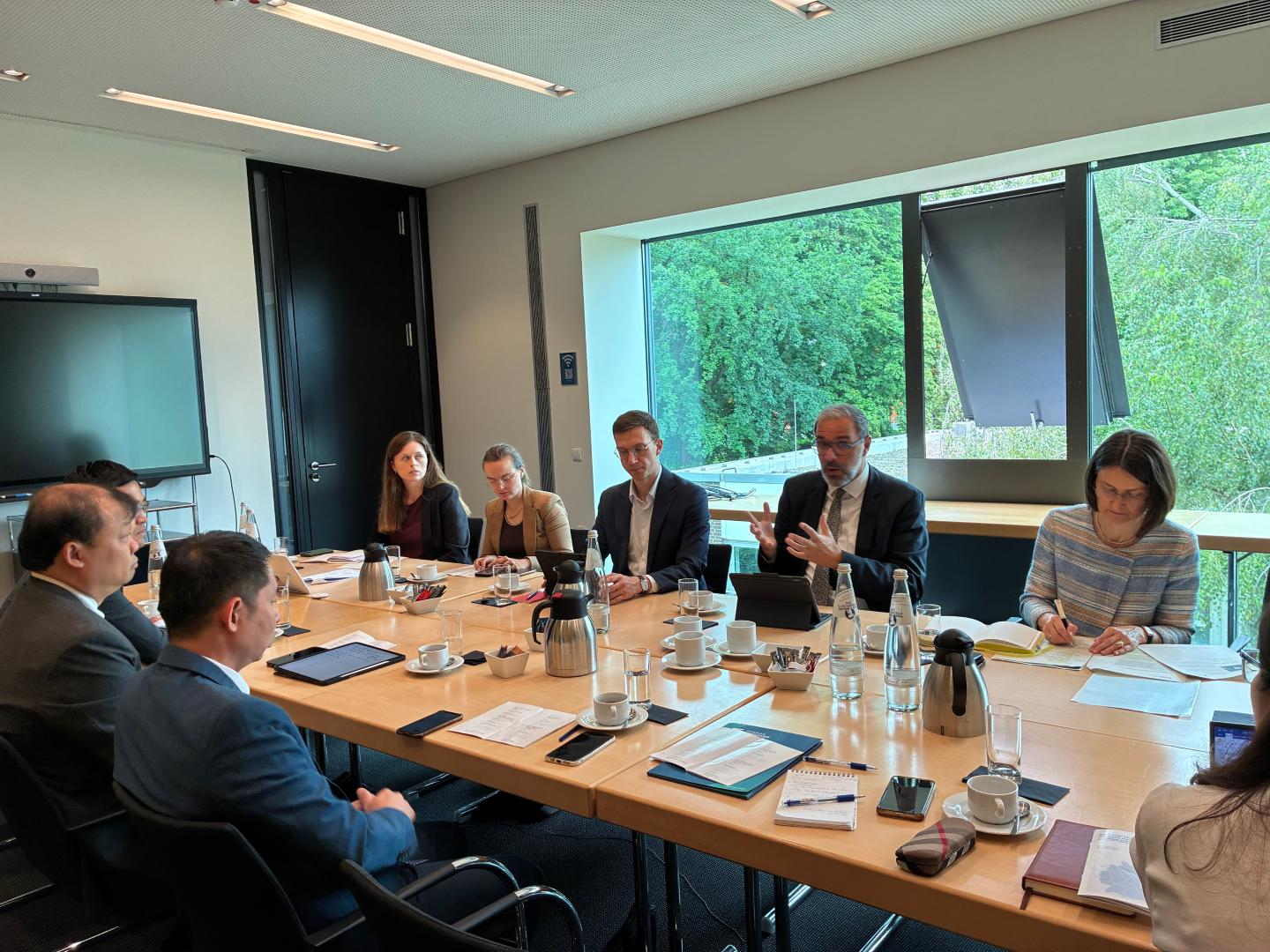
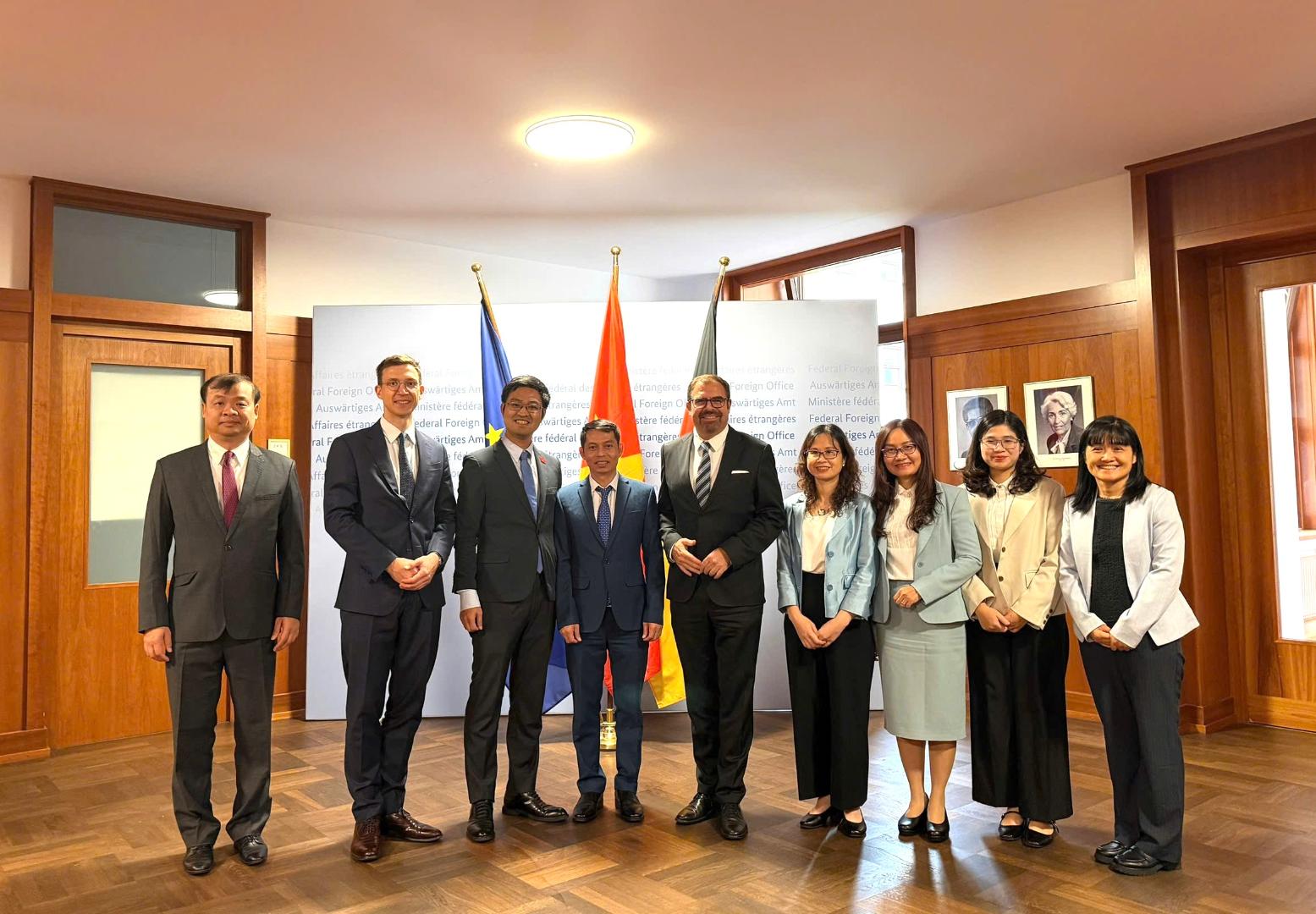
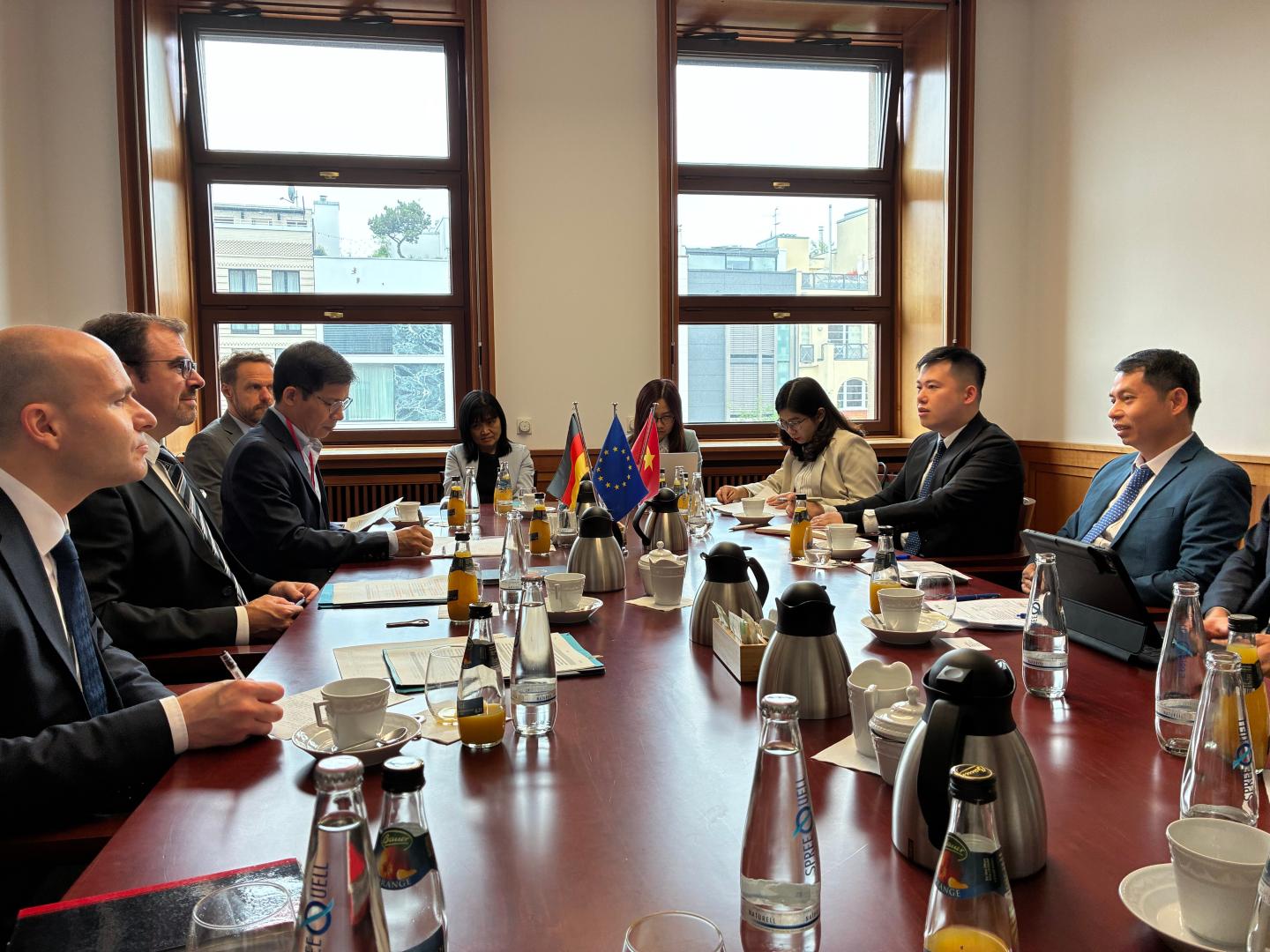
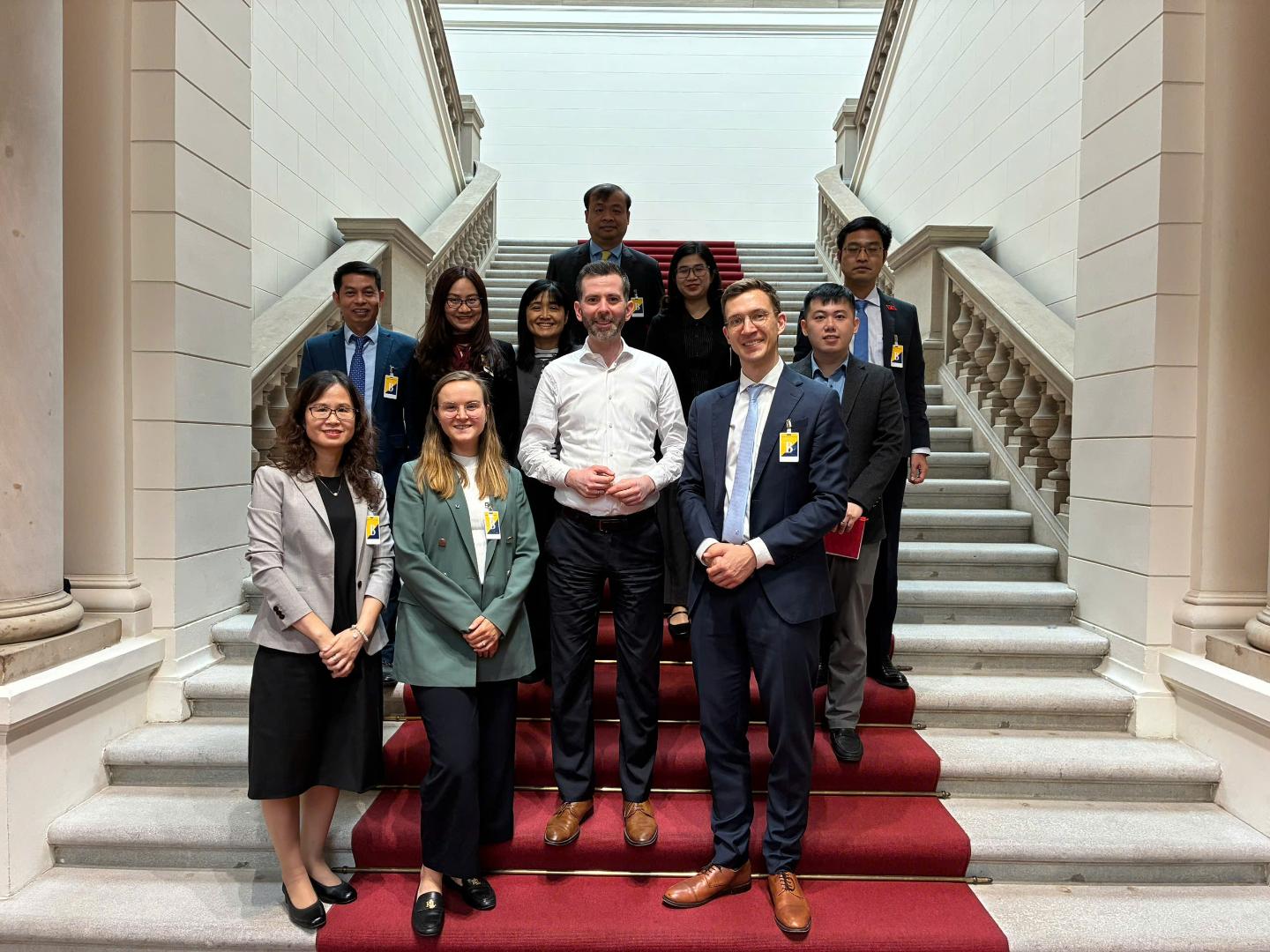
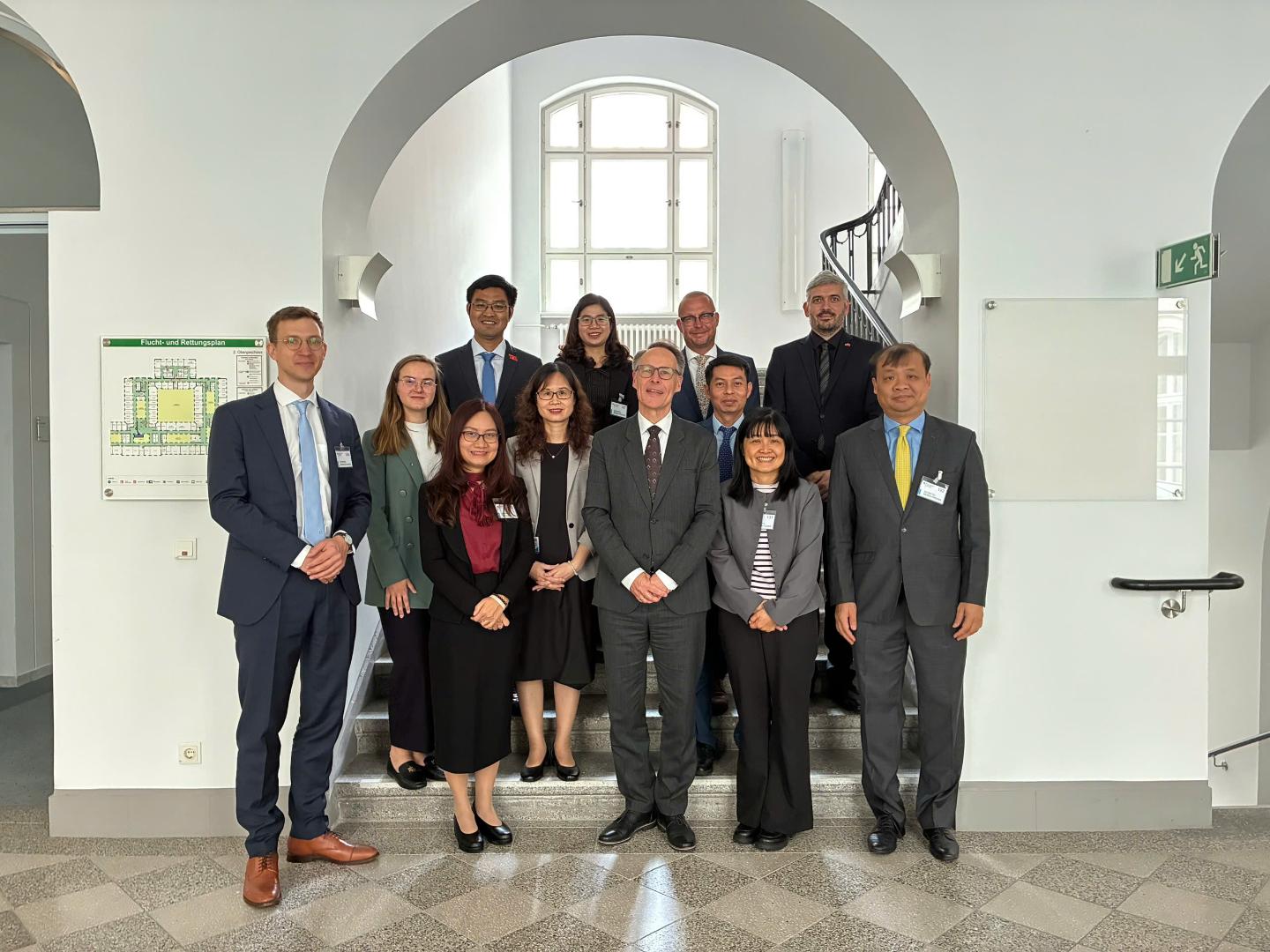
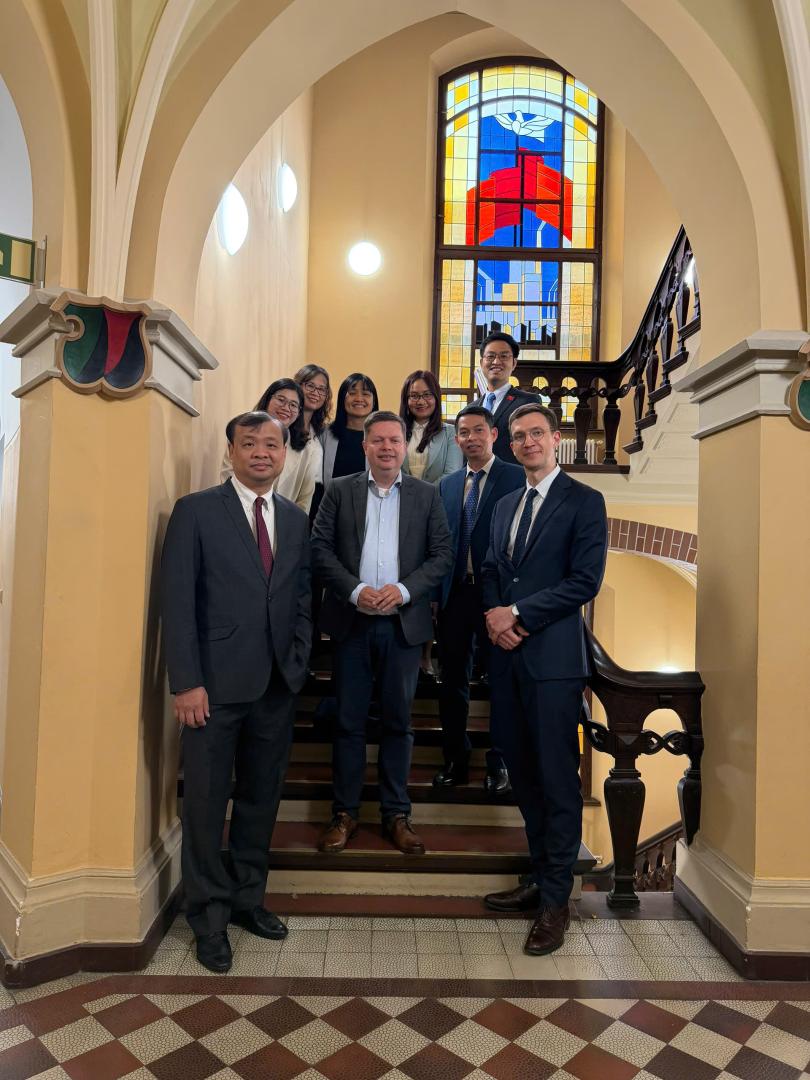
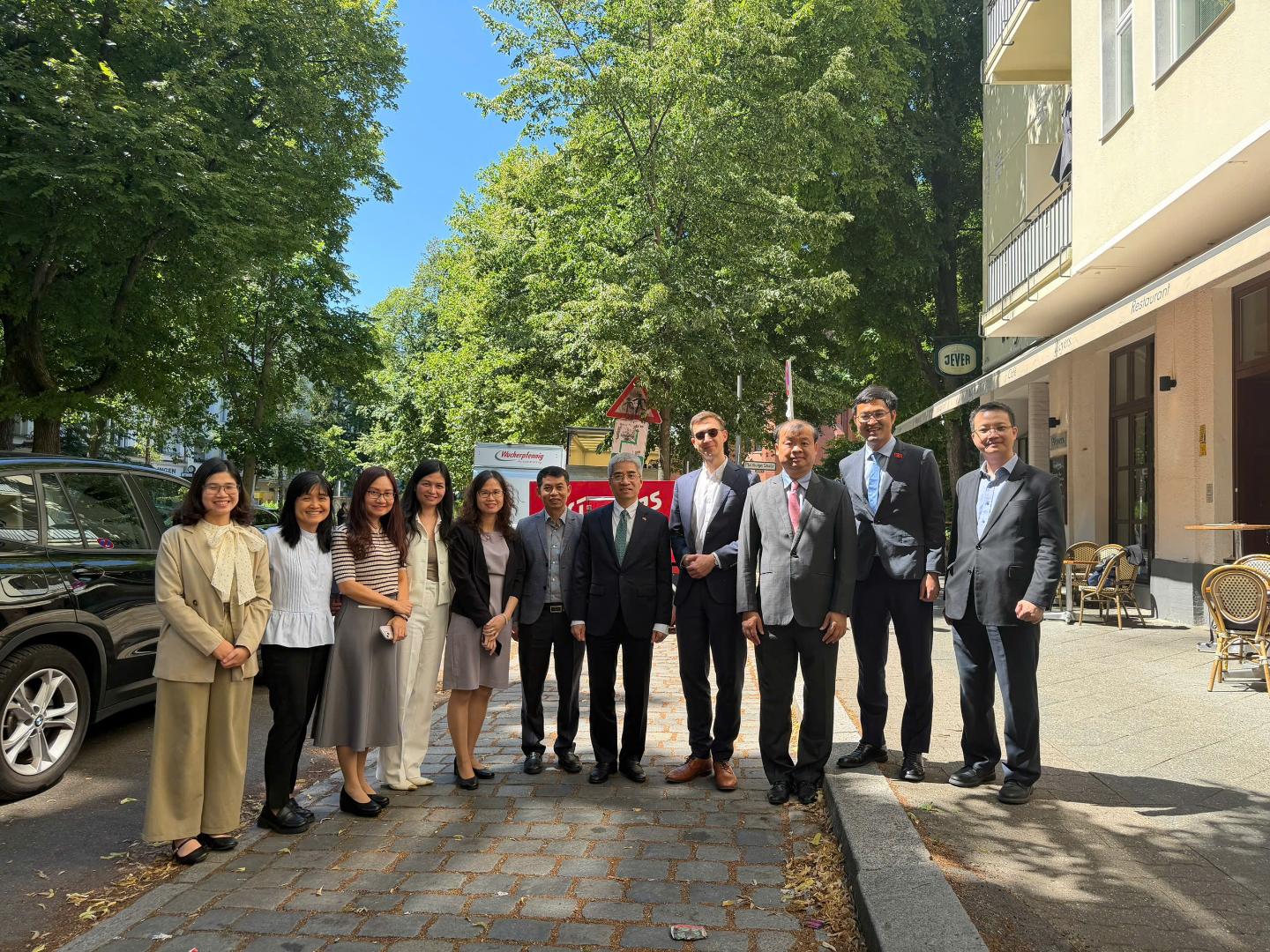
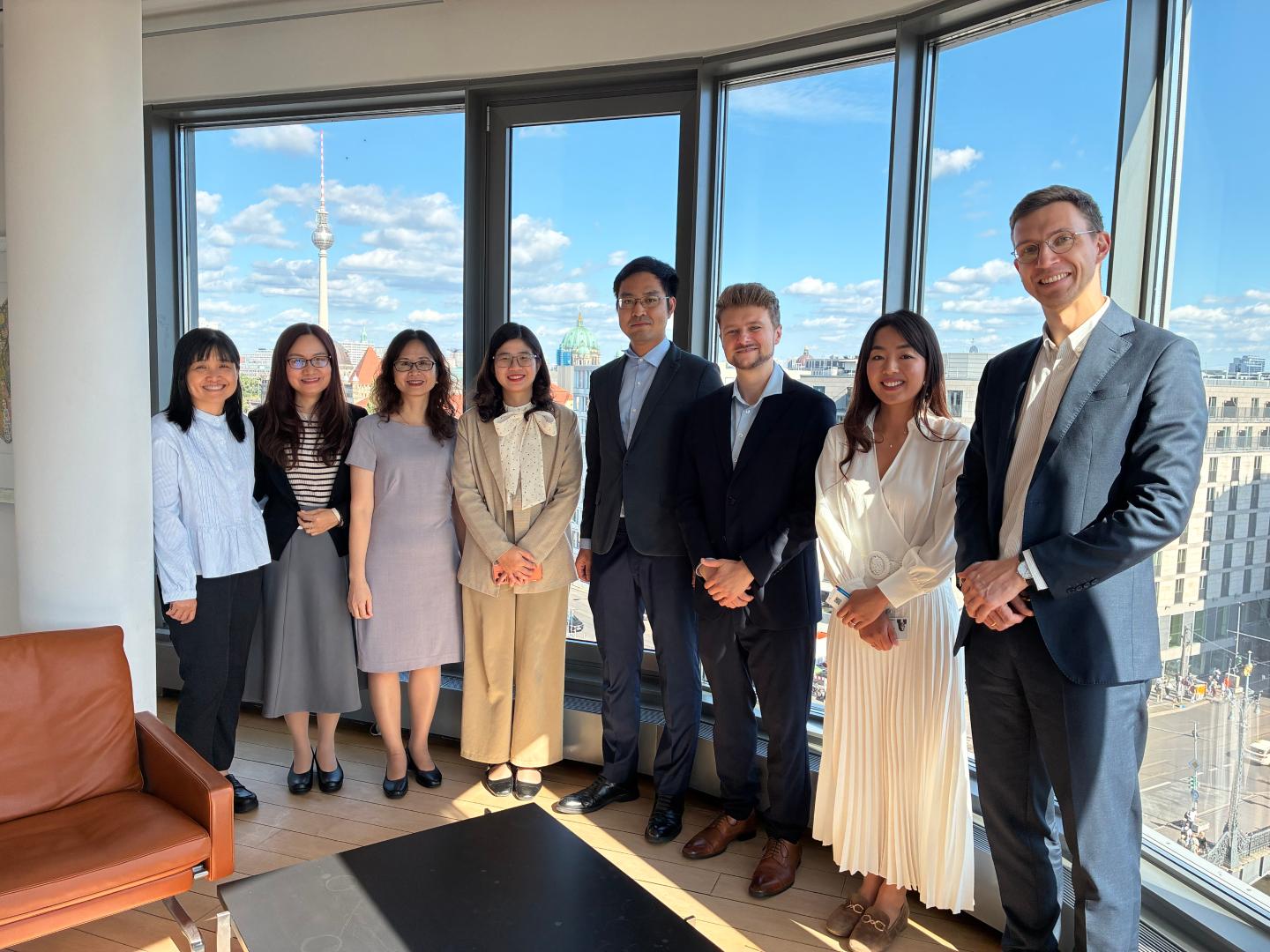
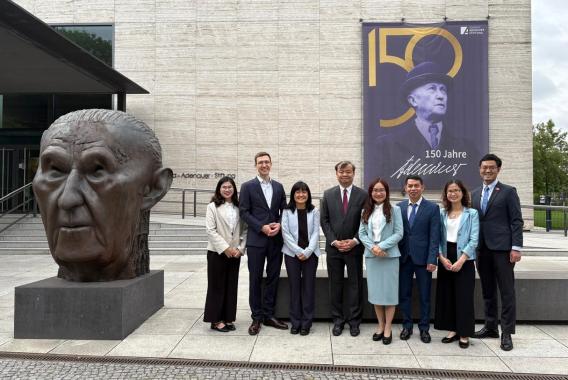
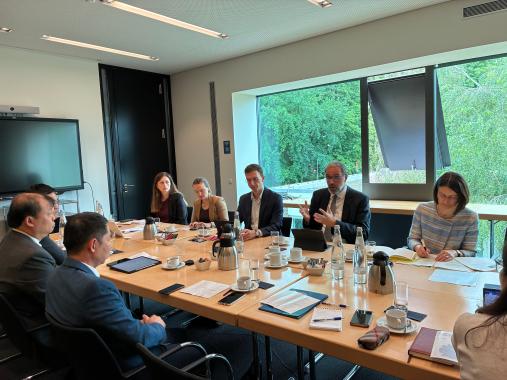
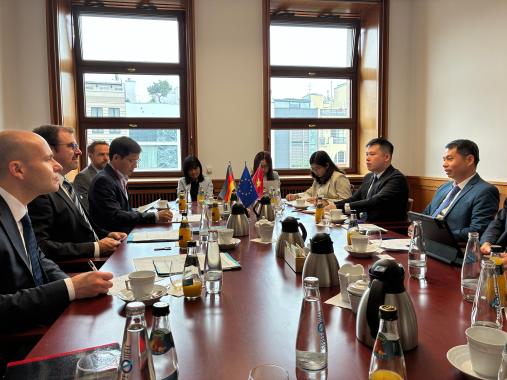
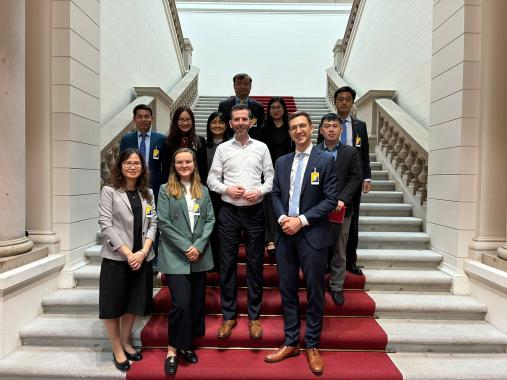
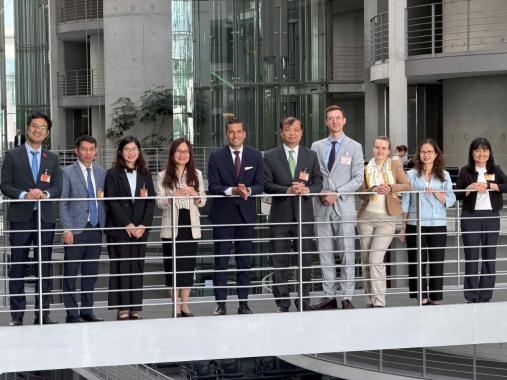
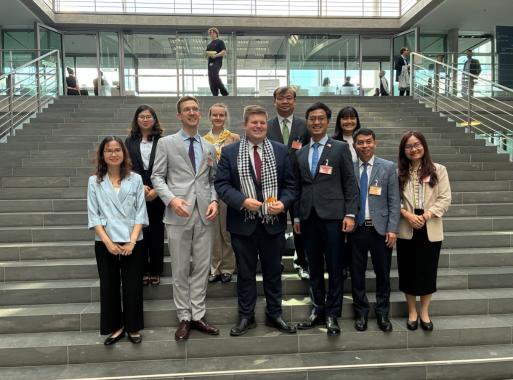
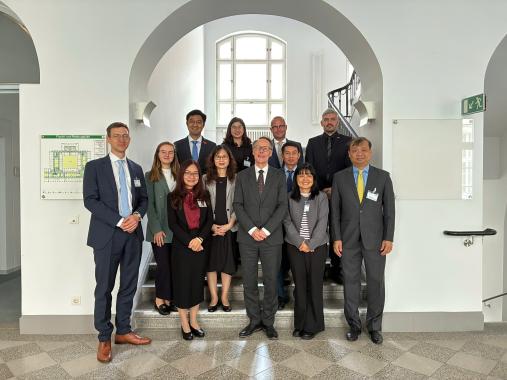
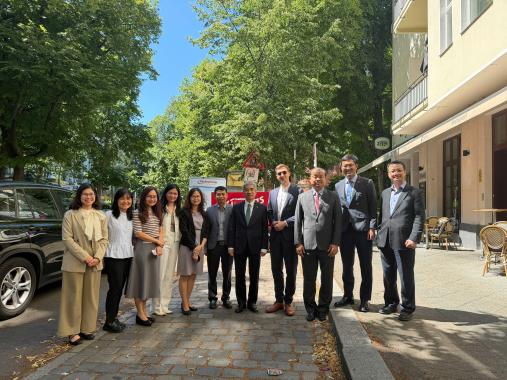
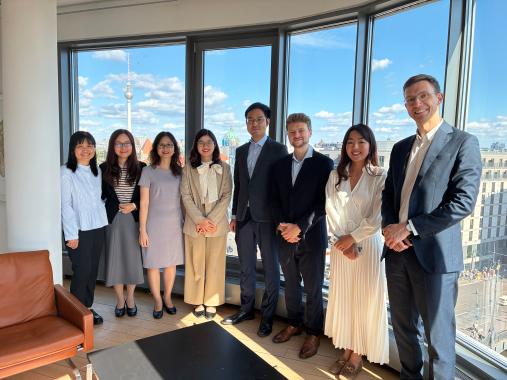
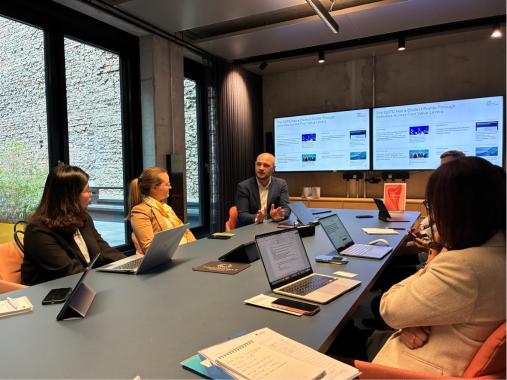
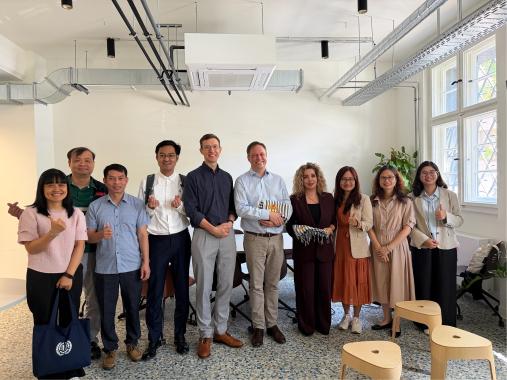
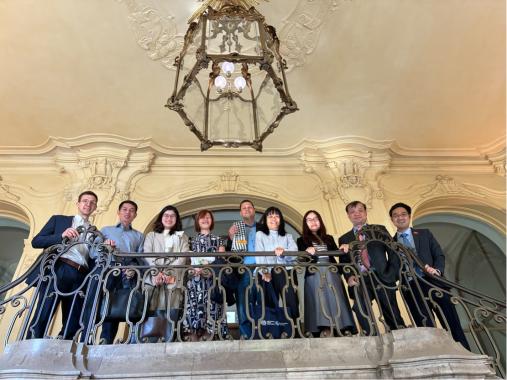
The programme began with a policy briefing at KAS Headquarters in Berlin, where participants exchanged views on Germany’s political and economic outlook, competitiveness, sustainability and developments in the Asia-Pacific region, providing important context for the discussions that followed.
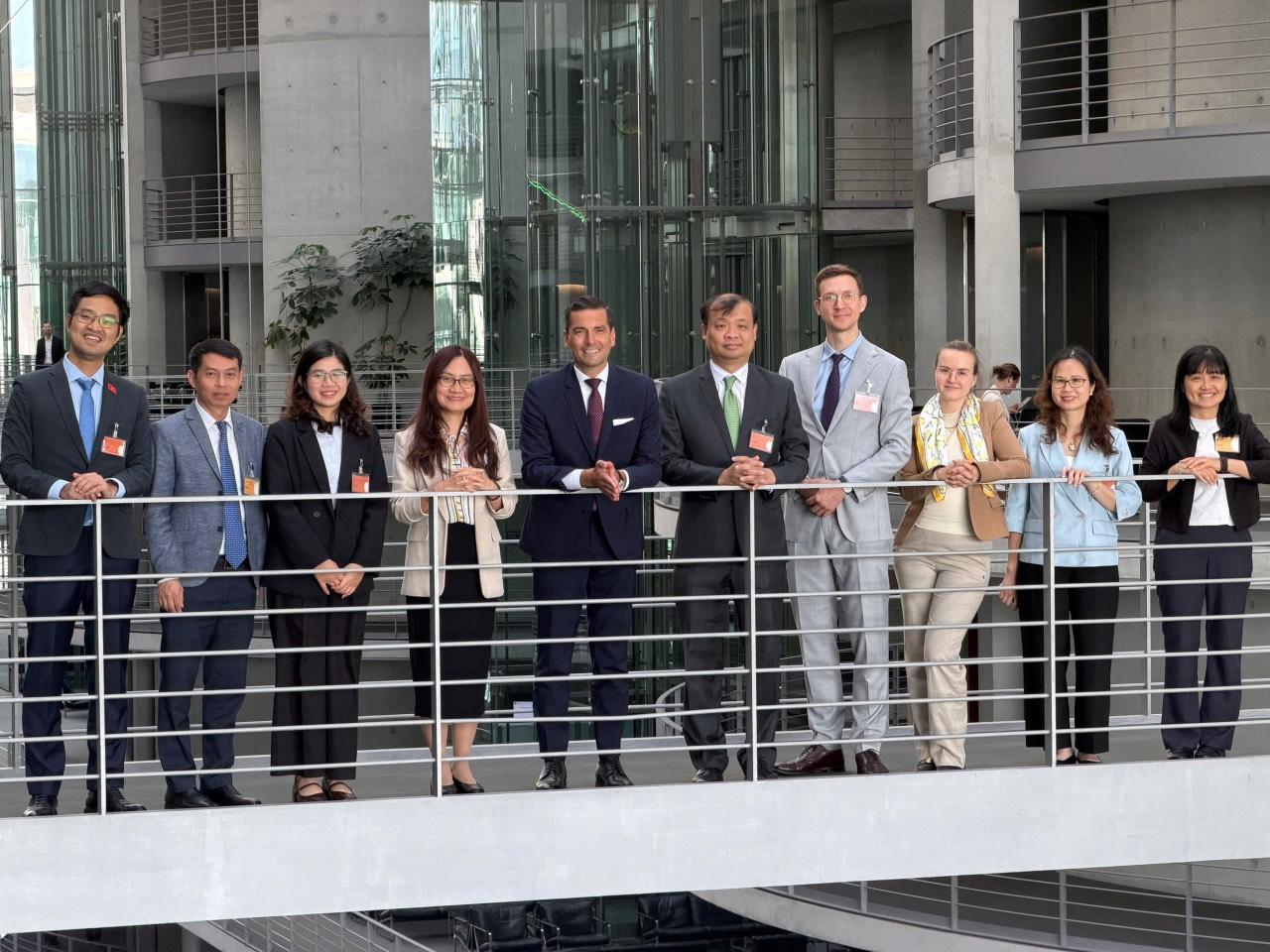
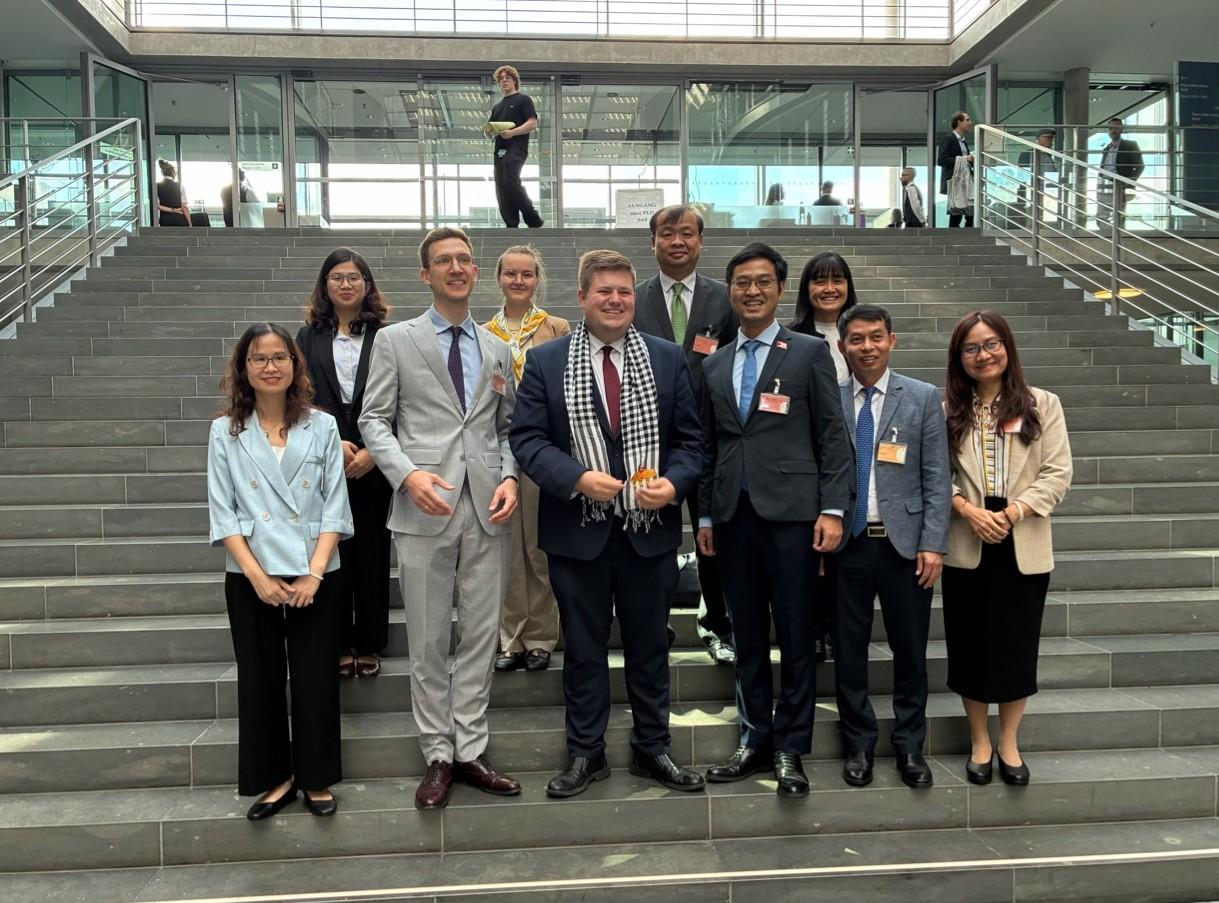
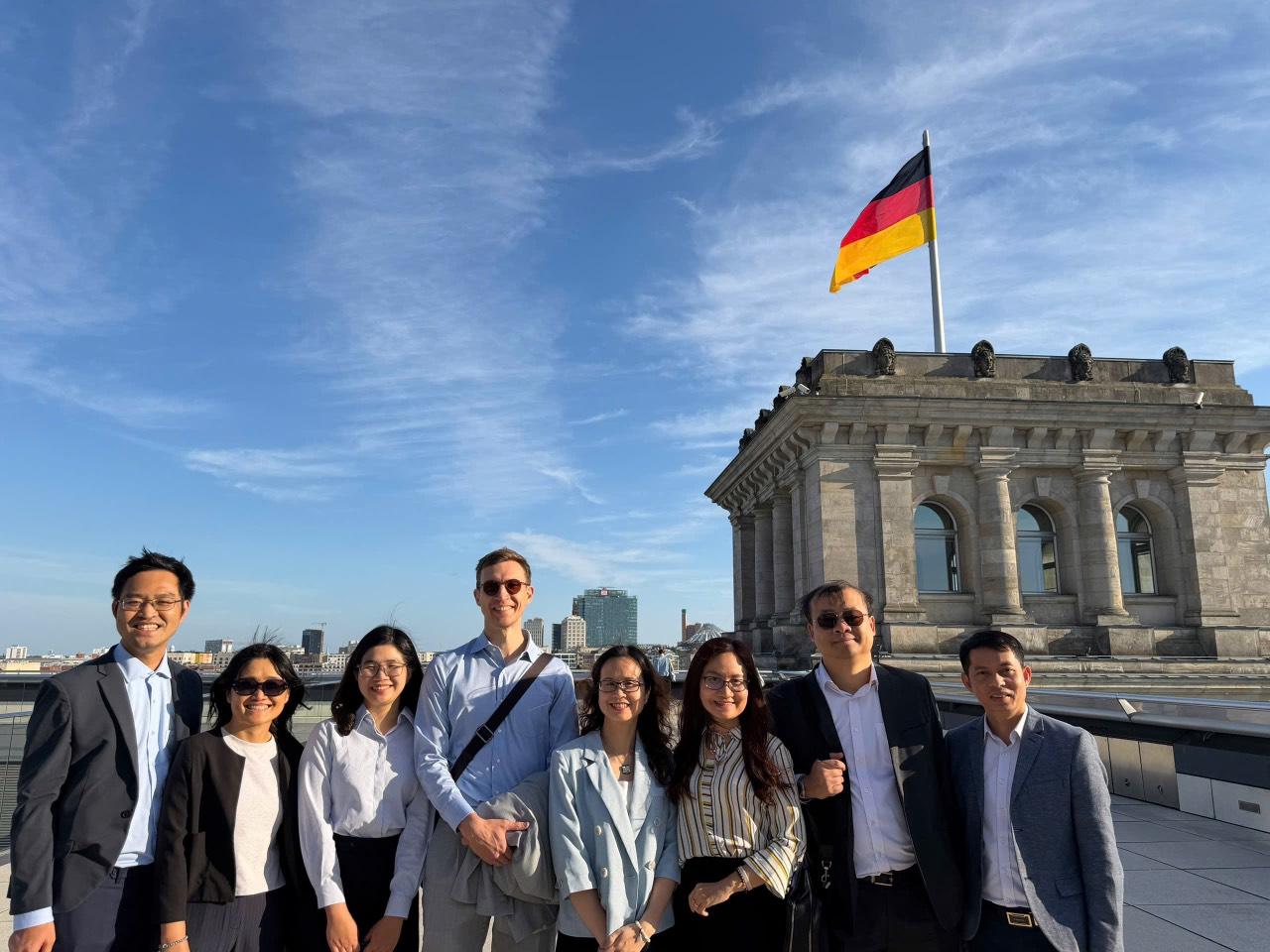
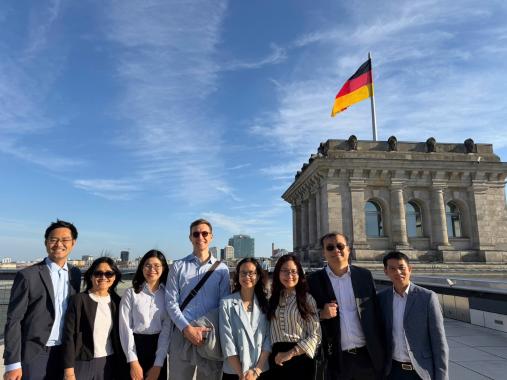
A central theme throughout the programme was the growing importance of parliamentary diplomacy and institutional cooperation. Discussions at the German Bundestag with MPs Johannes Volkmann (CDU) and Nicolas Zippelius (CDU) took place against the backdrop of Germany’s de-risking strategy, which seeks to diversify economic partnerships and reduce vulnerabilities in global supply chains. German lawmakers highlighted Viet Nam’s increasing importance as a trusted partner in Southeast Asia, citing its strong economic performance, expanding industrial base and deeper integration into global manufacturing networks. The discussions explored regulatory reform, innovation-driven growth and economic competitiveness, while identifying opportunities for closer cooperation in trade, investment and supply-chain diversification. They also reflected growing interest in strengthening ties between the legislative institutions of both countries and demonstrated how parliamentary dialogue can reinforce strategic trust and economic cooperation.
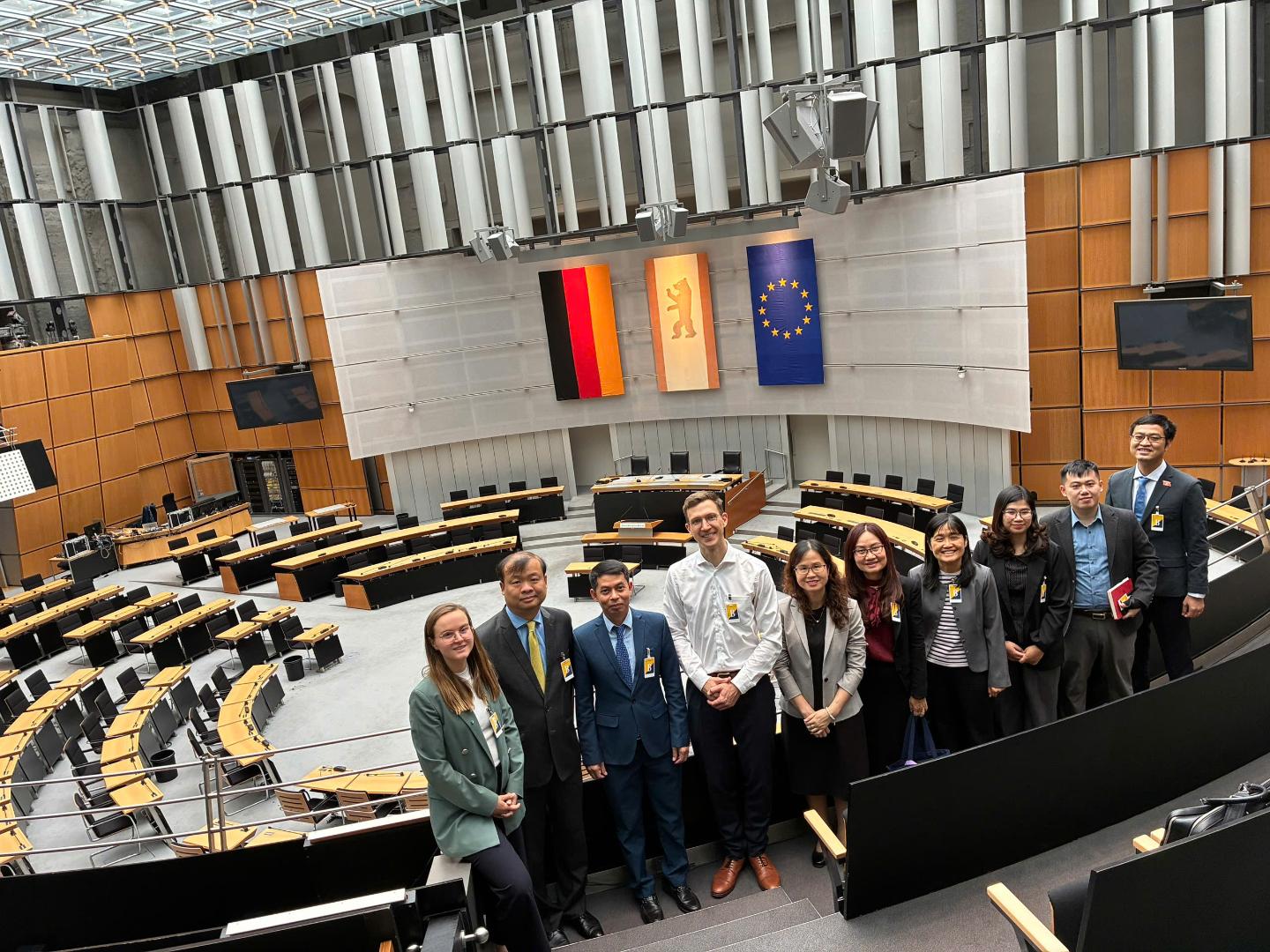
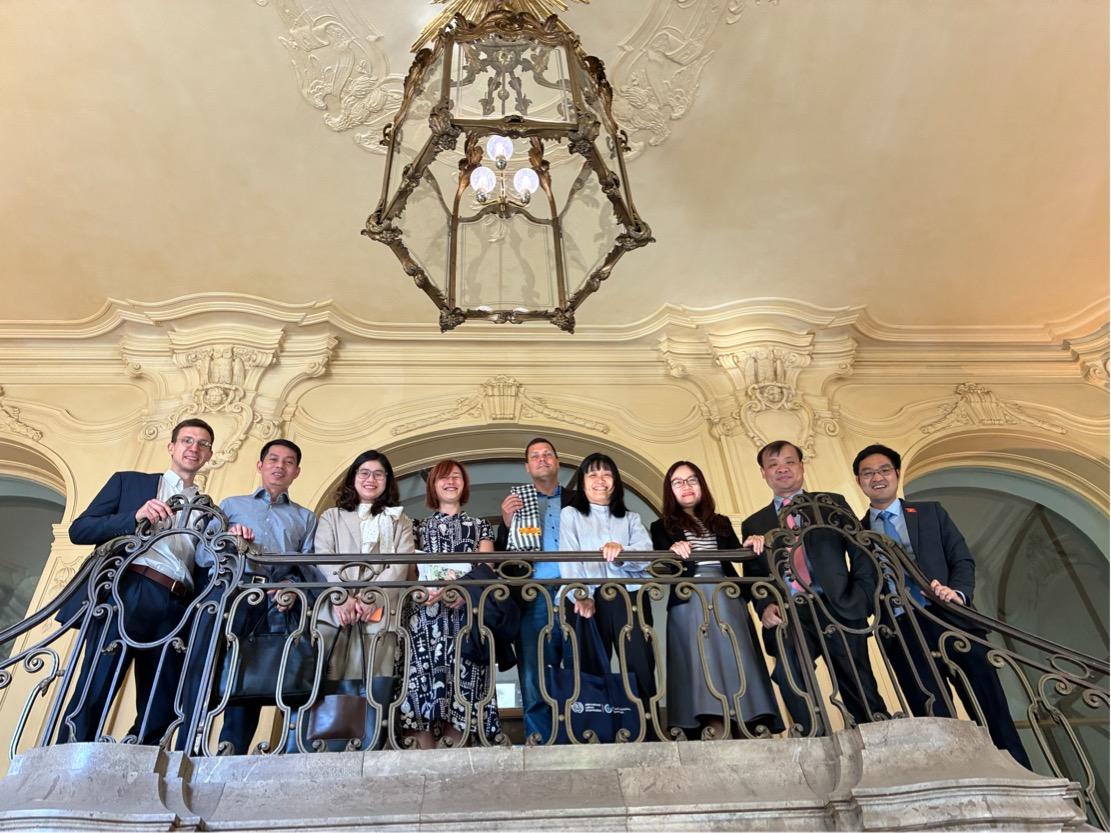
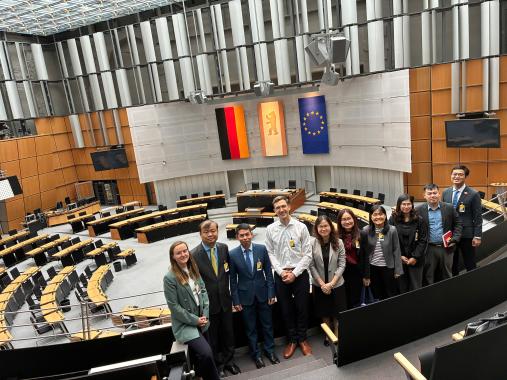
The delegation also visited the Berlin House of Representatives, where discussions with Prof. Dr. Martin Pätzold focused on regional competitiveness, innovation policy and the role of local governments in supporting economic modernization. The exchange illustrated how effective governance at both national and subnational levels can contribute to stronger innovation ecosystems and sustainable economic development.
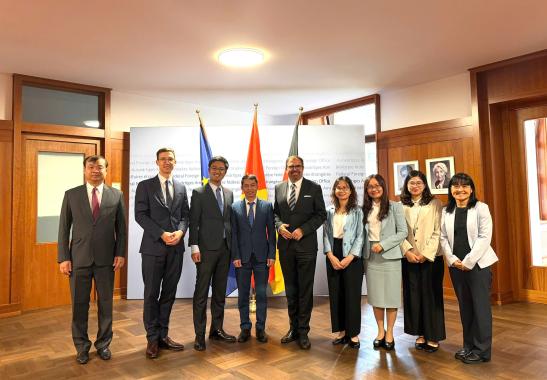
Political dialogue was further advanced at the Federal Foreign Office during a meeting with Florian Hahn (CSU), Minister of State. Discussions centered on the future development of the Viet Nam–Germany Strategic Partnership, evolving geopolitical dynamics and opportunities to expand cooperation in trade, investment, innovation, and sustainable development. German counterparts emphasized the growing importance of partnerships with trusted and dynamic economies in the Indo-Pacific, with Viet Nam increasingly viewed as an important political and economic partner in the region.
Beyond political exchanges, the study tour focused extensively on economic transformation, innovation, and SME development. At the Federal Ministry for Economic Affairs and Energy (BMWE), discussions concentrated on economic policy, energy security, investment promotion, and the implementation of the EVFTA and EVIPA. As Germany remains Viet Nam’s largest trading partner in Europe, the exchanges highlighted opportunities to deepen economic cooperation between Viet Nam, Germany, and the European Union, particularly in the context of reconfigured global supply chains and growing demand for resilient economic partnerships.
Particular attention was given to small and medium-sized enterprises (SMEs), which form the backbone of both economies. Participants examined how financing mechanisms, innovation support systems and enabling regulatory frameworks can help SMEs adopt new technologies, improve productivity, and strengthen long-term competitiveness. These experiences offered valuable insights for Viet Nam as it seeks to build a more innovation-driven growth model.
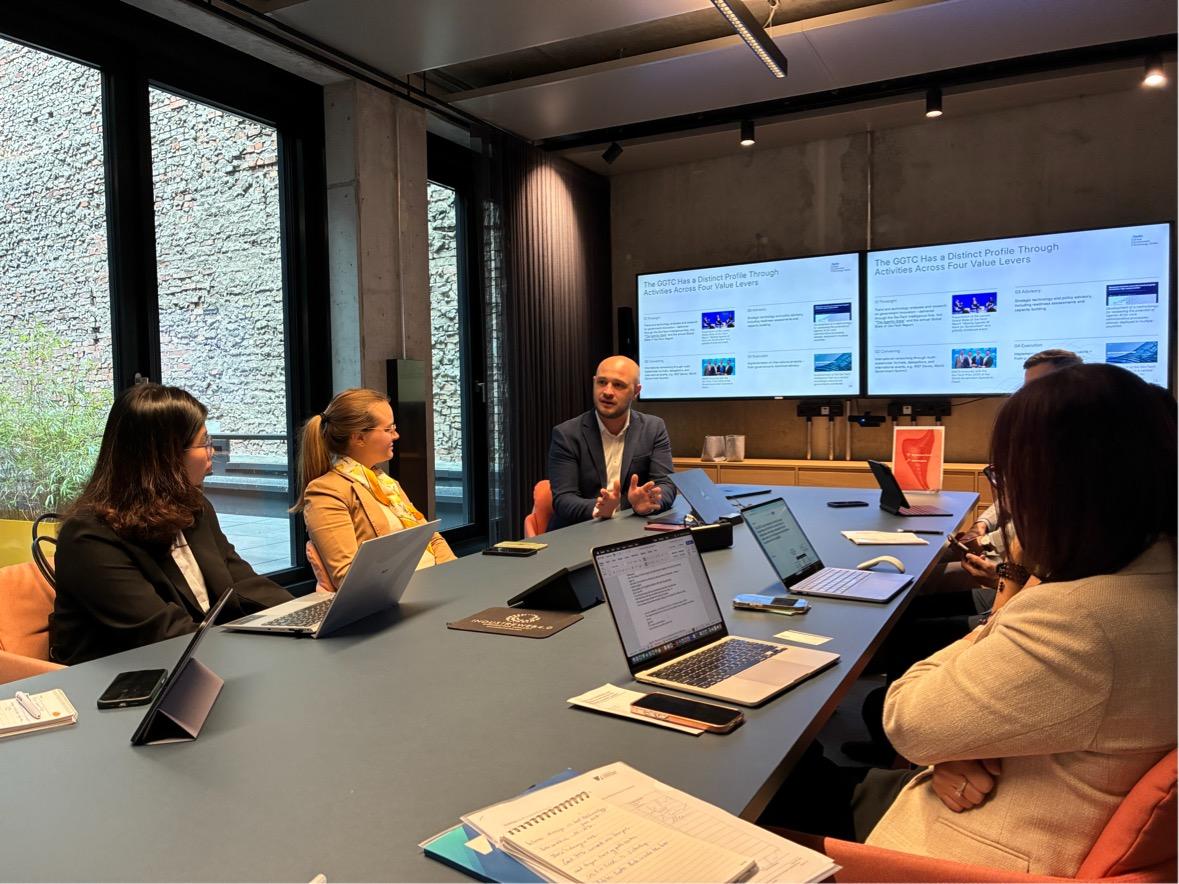
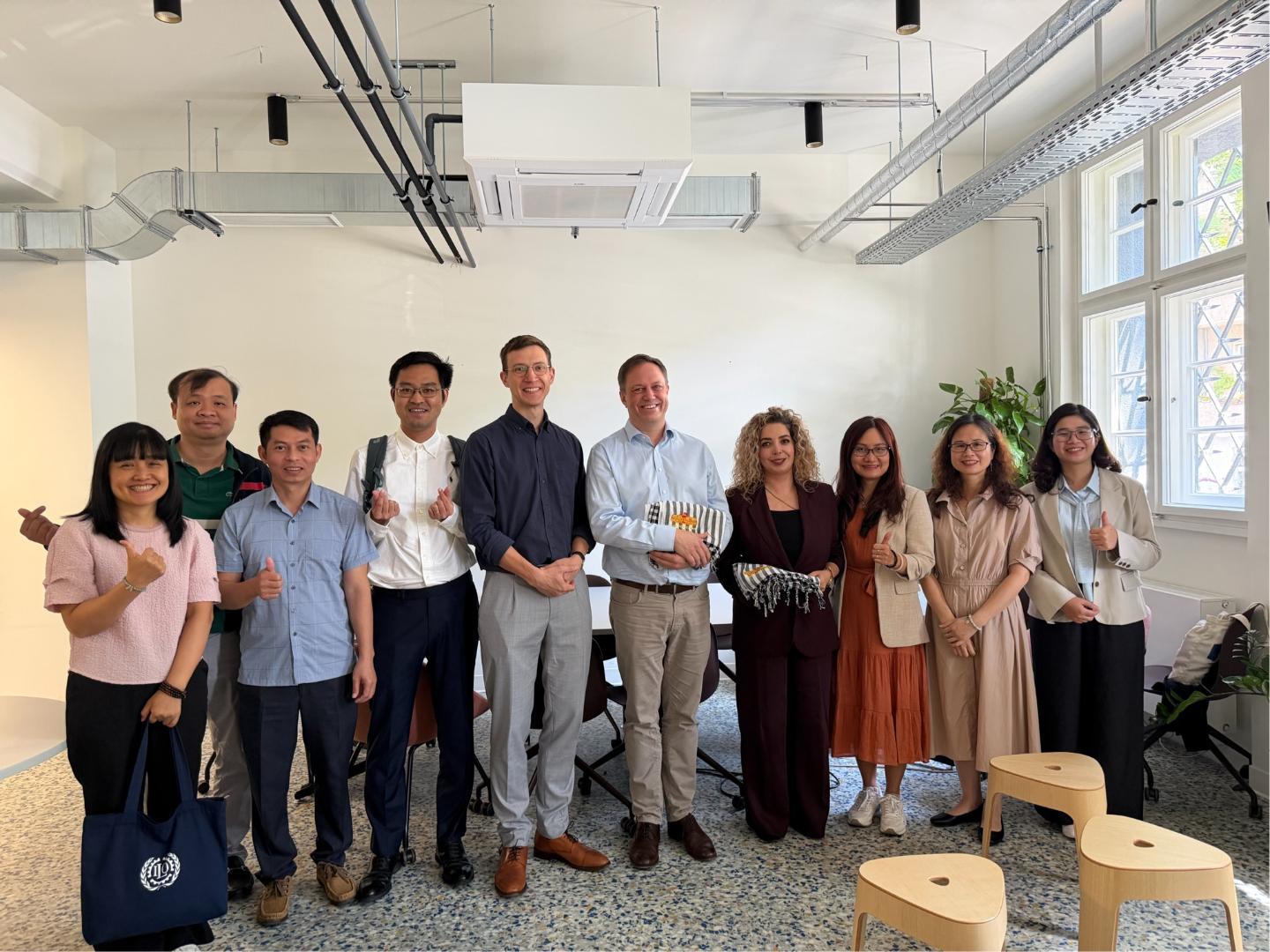
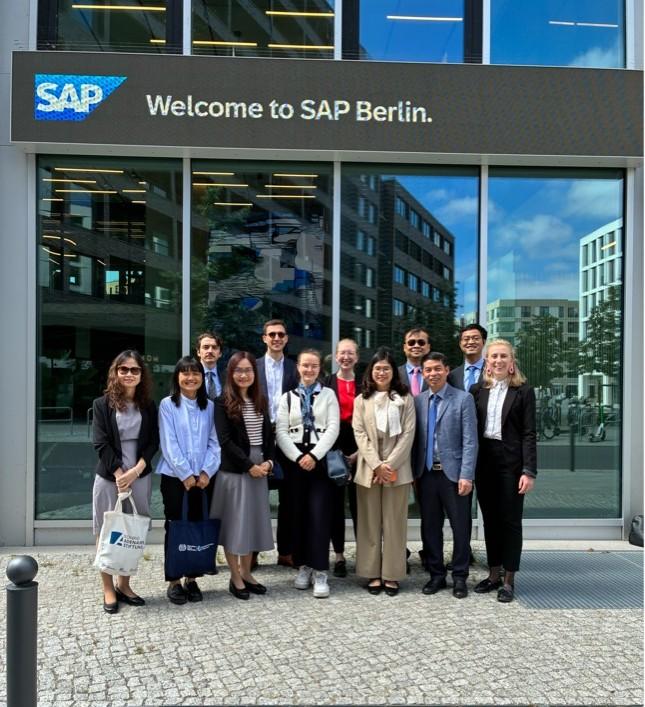
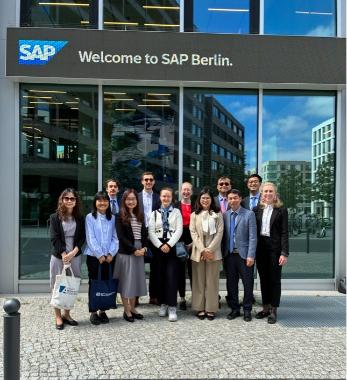
The delegation also engaged directly with Germany’s innovation ecosystem through visits to GovTech Campus Berlin and the SAP Experience Center Berlin. Discussions highlighted how digital technologies, innovation-oriented governance and public-private cooperation can support start-ups and SMEs. Participants gained practical insights into how technology adoption can improve business efficiency, accelerate digital transformation, and create new opportunities for growth.
Another important focus was sustainable development and energy transition. During discussions with EnBW, one of Germany’s leading energy companies, participants examined approaches to renewable energy development, infrastructure expansion, and energy security. The exchange demonstrated how economic competitiveness and sustainability can be pursued in parallel through long-term planning, technological innovation and supportive policy frameworks, offering relevant lessons for Viet Nam’s green transition and net-zero ambitions.
Research and academic cooperation formed another important pillar of the programme. At GISMA University, discussions focused on innovation, sustainability research and university-business partnerships in developing workforce skills and supporting the practical application of science and technology. Meanwhile, exchanges with experts from the German Institute for International and Security Affairs (SWP) provided broader perspectives on the economic and strategic dimensions of Viet Nam–Germany and Viet Nam–EU relations, including opportunities arising from deeper economic integration and the reconfiguration of global supply chains. Together, these discussions highlighted the importance of linking policymaking, research, innovation, and skills development to sustain long-term competitiveness.
The programme also highlighted the contribution of local-level cooperation and diaspora communities to bilateral relations. Discussions with Martin Schaefer, District Mayor of Lichtenberg, focused on the district’s long-standing ties with Hanoi and the role of Berlin’s Vietnamese community in facilitating business connections, supporting entrepreneurship, and strengthening economic cooperation between the two countries. Complementing these exchanges, the delegation met with Ambassador Nguyen Dac Thanh and representatives of the Embassy of Viet Nam in Germany to discuss the outlook for bilateral economic relations and opportunities to strengthen cooperation in trade, investment, innovation, and business connectivity.
Taken together, the study tour highlighted the growing convergence between Viet Nam and Germany on key priorities including economic resilience, innovation-driven growth, and sustainable development. Germany’s recognition of Viet Nam as an increasingly important partner within its de-risking strategy reflects Viet Nam’s rising strategic relevance in Europe’s engagement with the Indo-Pacific region. At the same time, the exchanges demonstrated that future Viet Nam–Germany cooperation will increasingly be driven not only by trade and investment, but also by innovation partnerships, green transition, human capital development and stronger links among policymakers, businesses, researchers, and academic institutions.
More broadly, the programme demonstrated that the strength of the Viet Nam–Germany relationship increasingly lies in its ability to connect stakeholders across political, economic, academic, and societal levels. By facilitating these multi-level exchanges, KAS Vietnam continues to contribute to stronger institutional cooperation, deeper mutual understanding, and new momentum for the Viet Nam–Germany Strategic Partnership.