








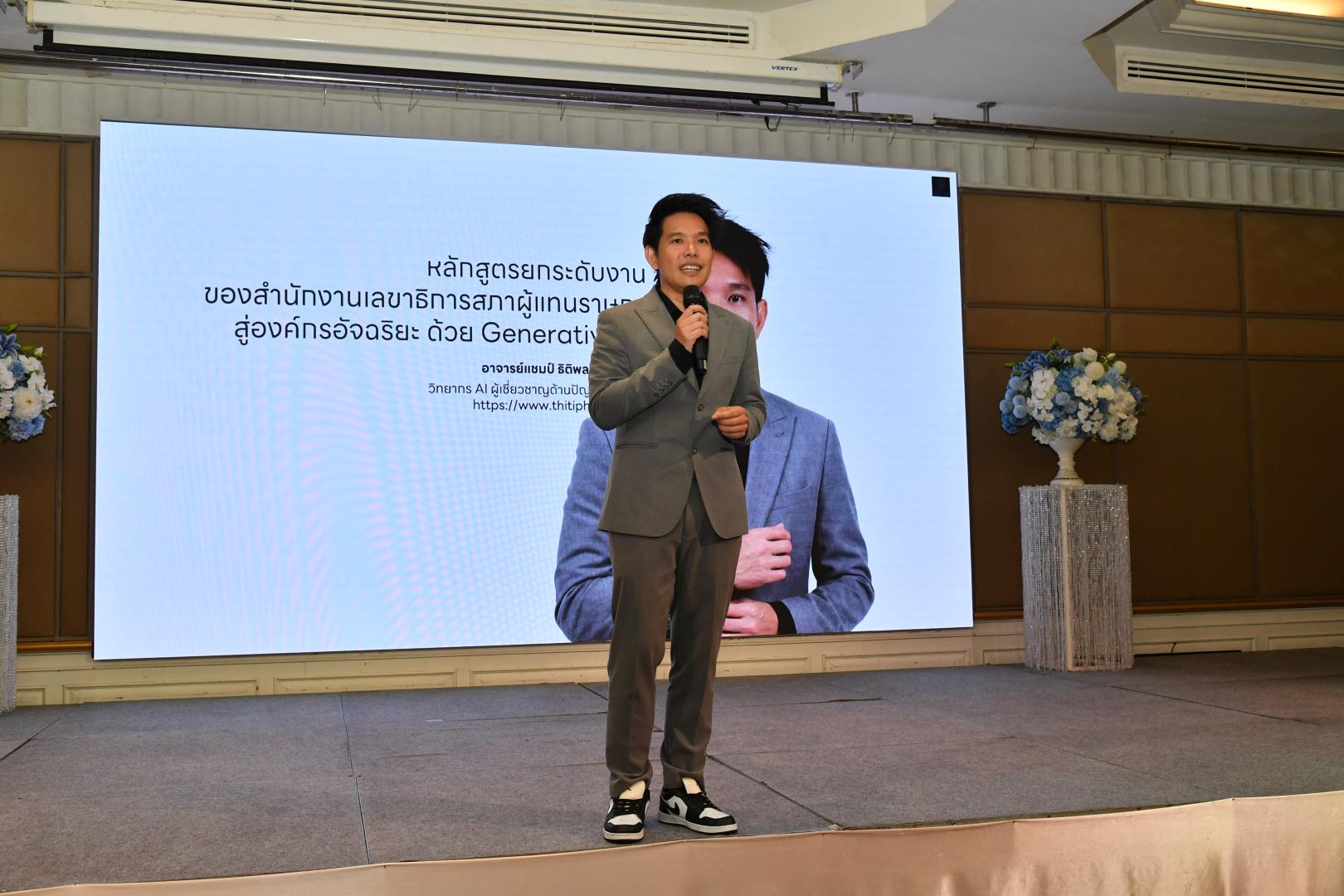
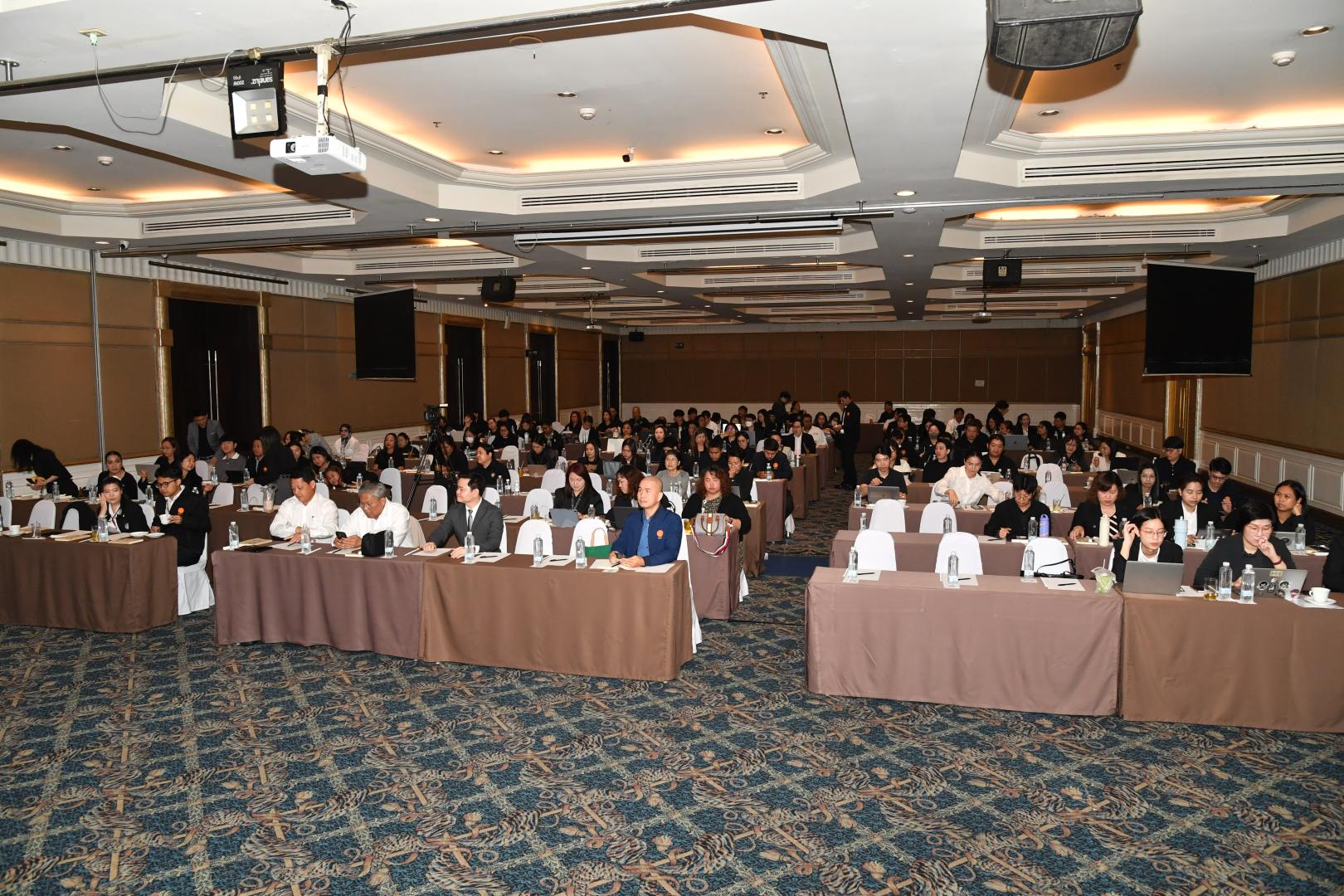
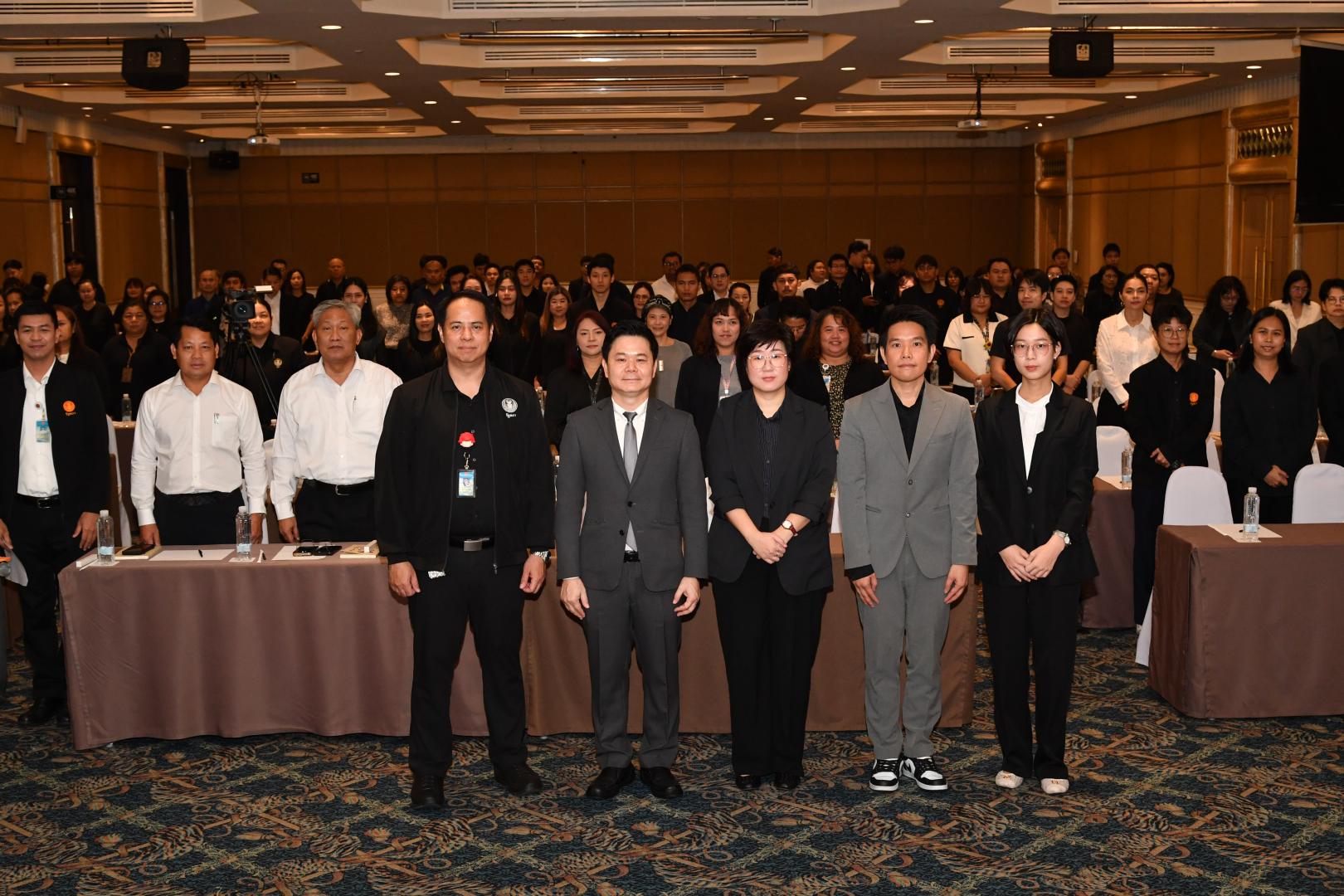

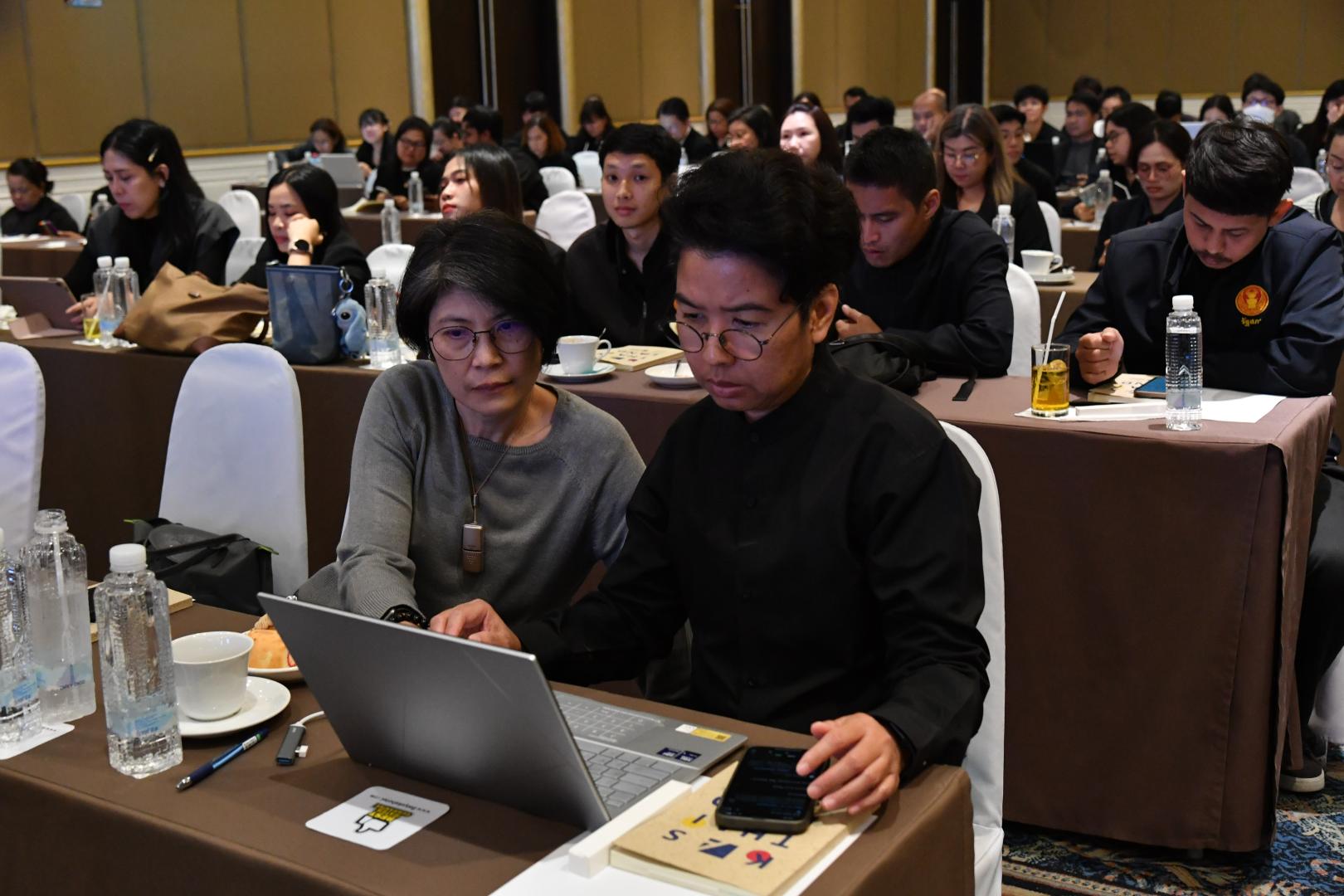
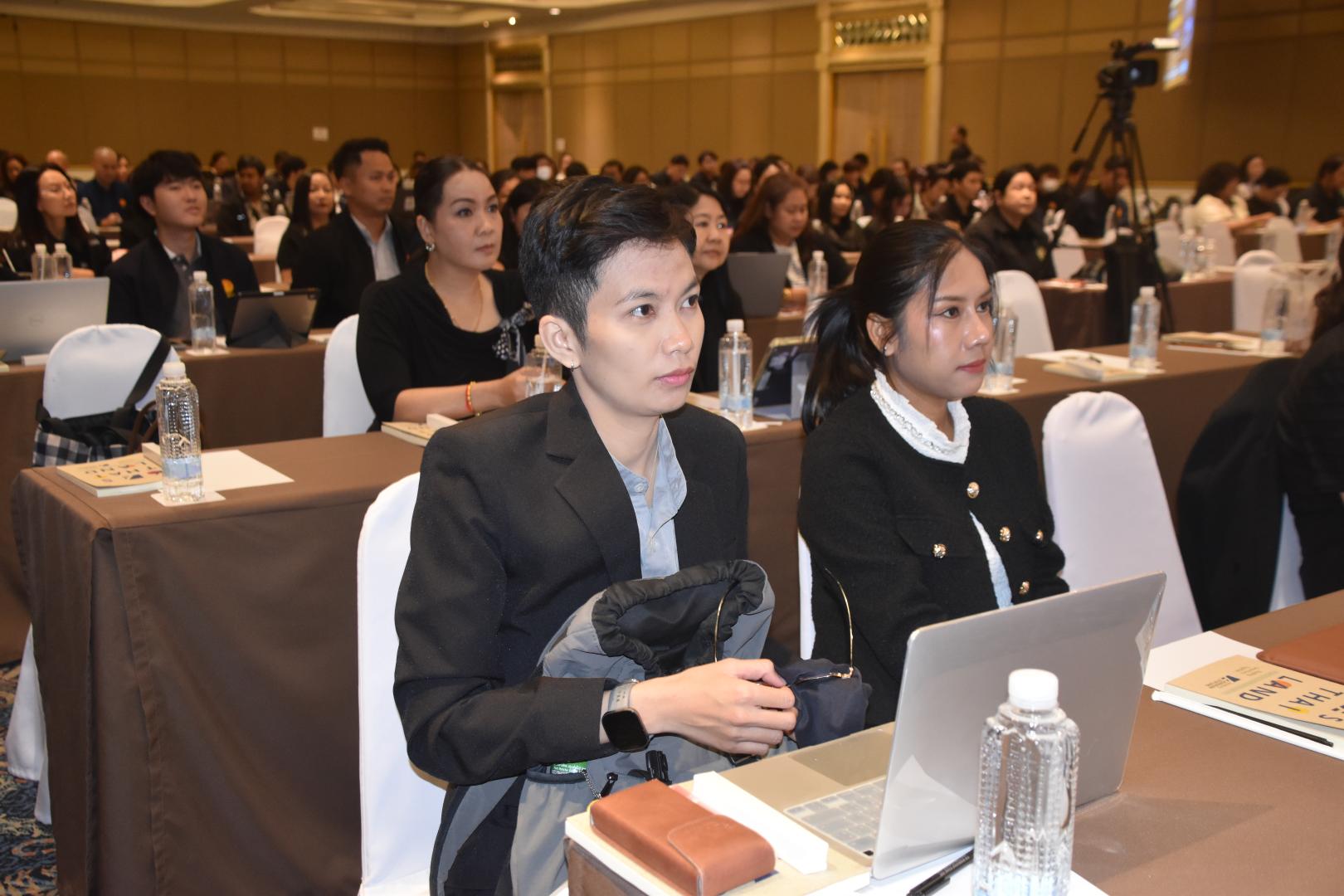

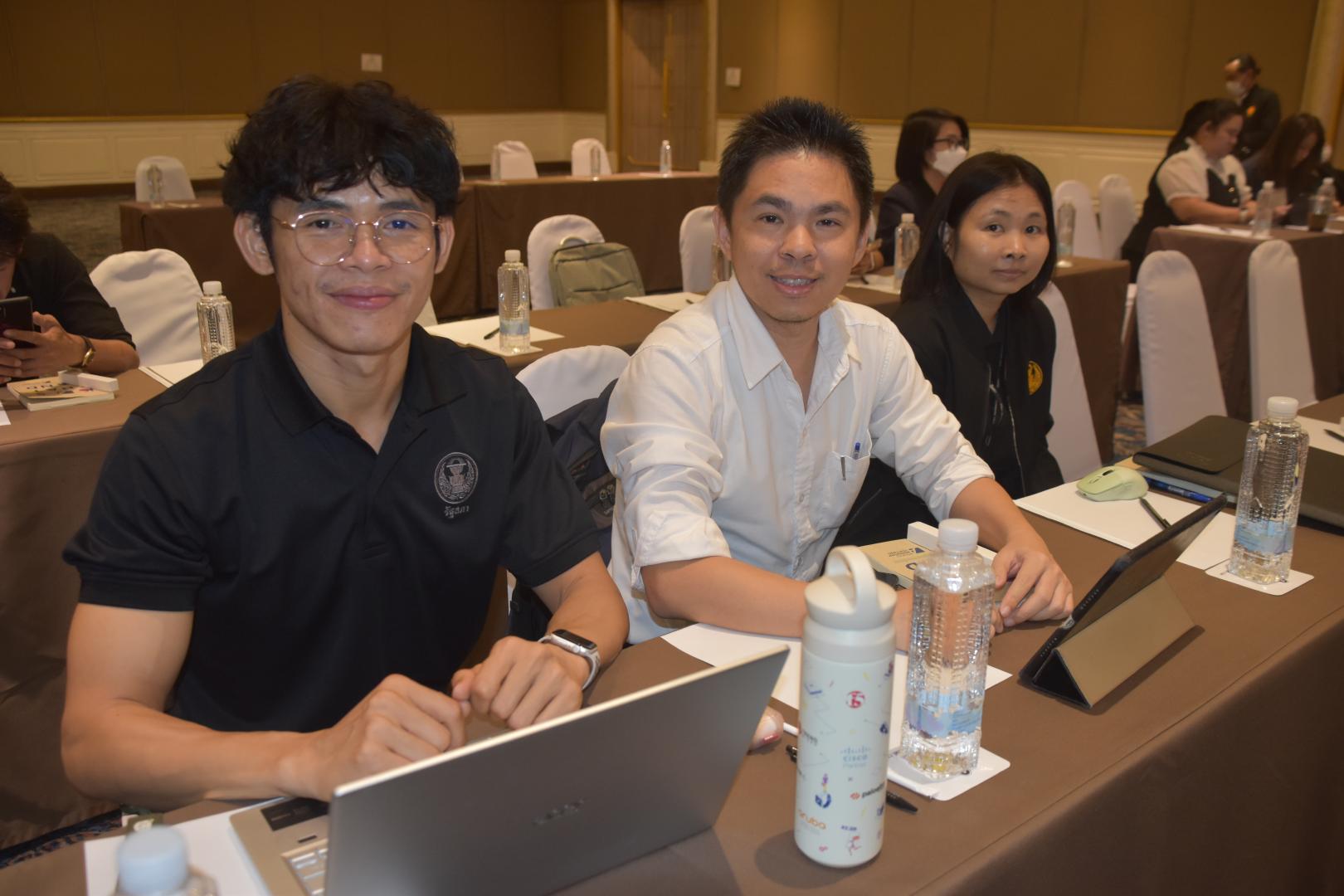
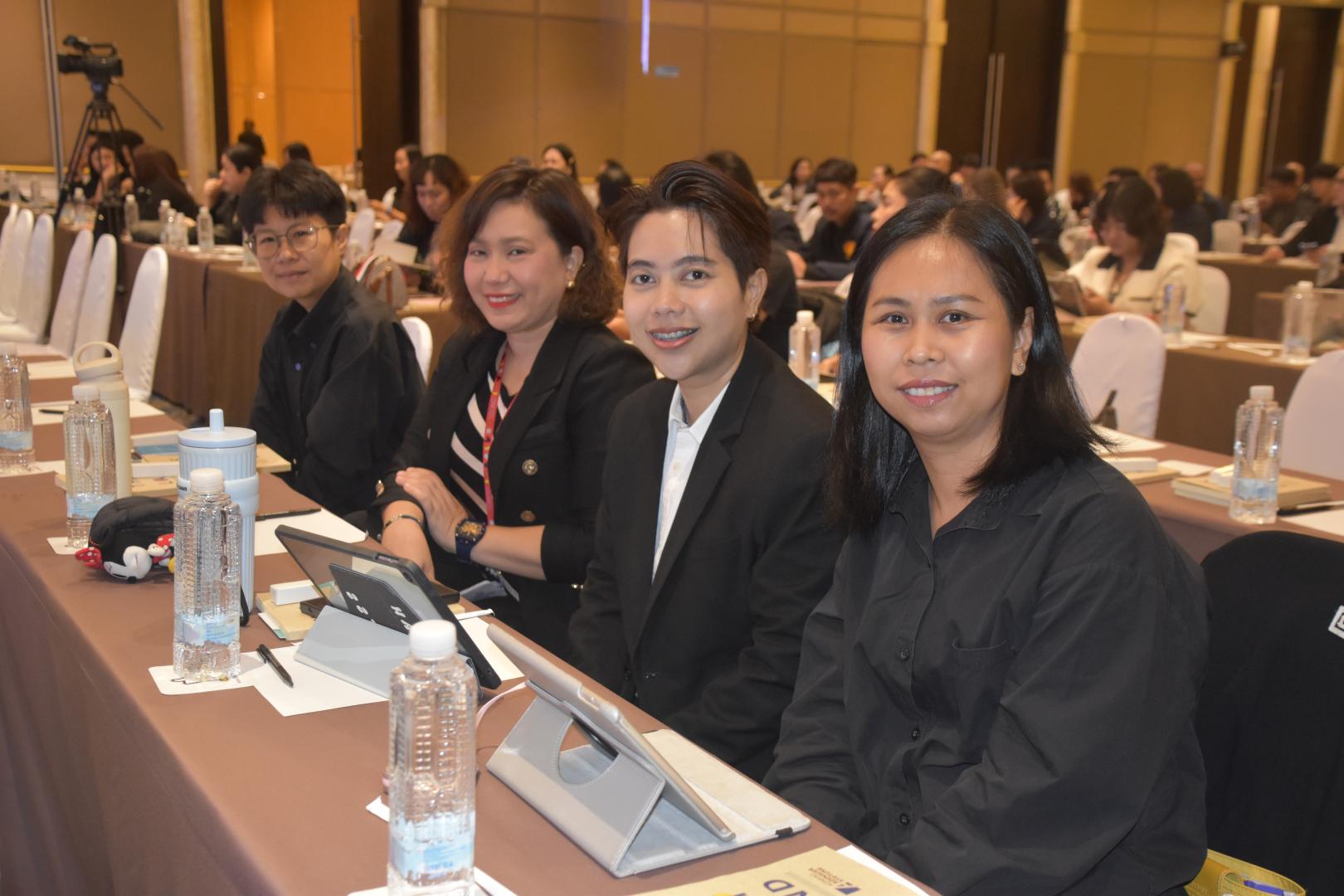
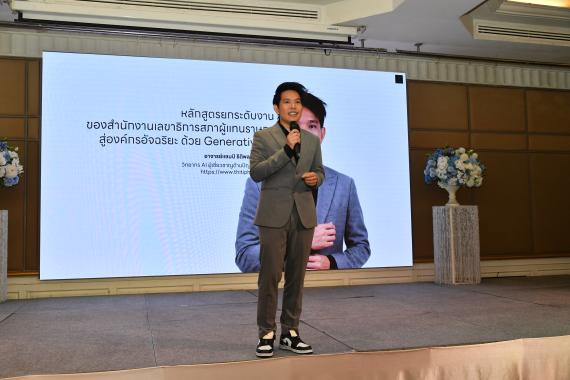
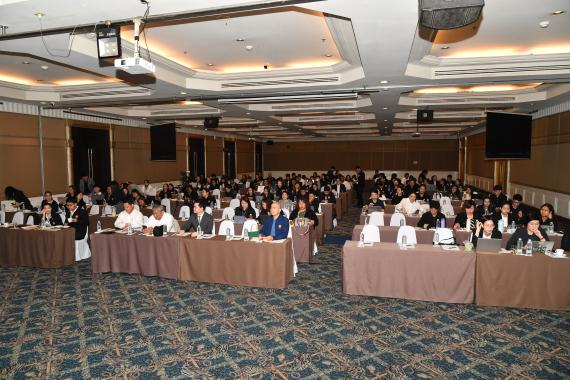
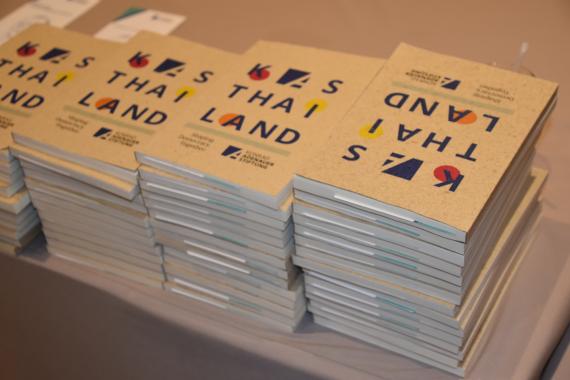
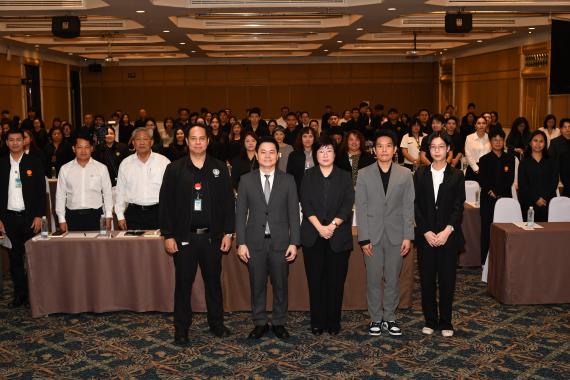

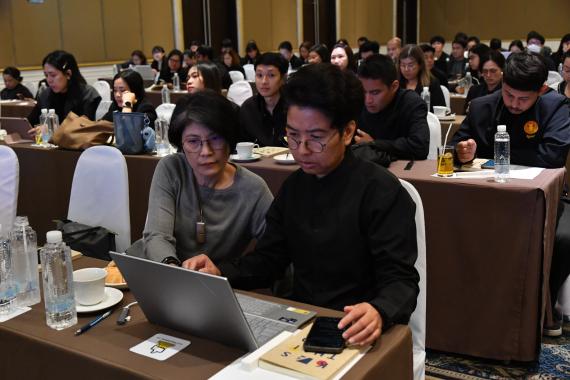
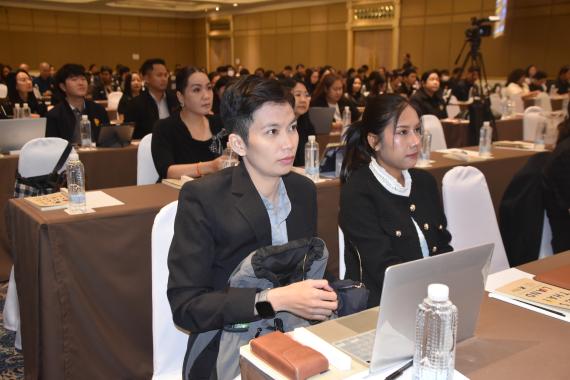

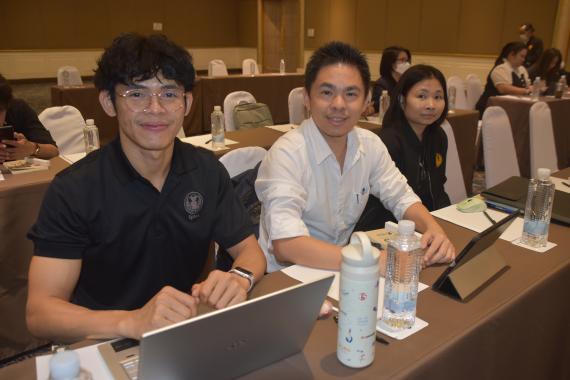
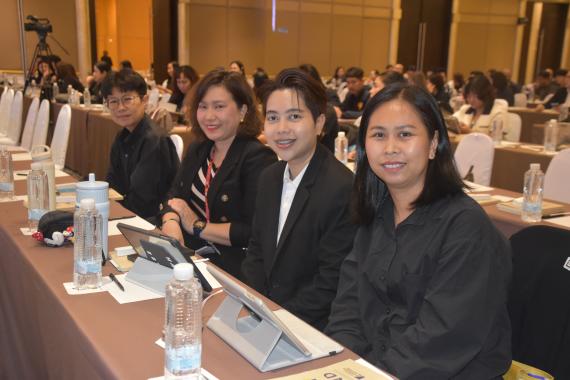
The training featured Mr. Thitiphon Tiemchan, a consultant and expert in online marketing and digital platforms, as the keynote speaker. He began by laying the foundation of Generative AI, covering its origins, types, and key considerations, while also providing insights into the AI market landscape and approaches to cybersecurity awareness.
The session further introduced practical approaches to Generative AI-assisted media creation across four categories: text, images, video, and audio. Each category requires distinct prompting techniques to generate effective outputs aligned with specific objectives. Participants showed particular interest in using Generative AI for information management tasks, such as summarising meetings and preparing briefing materials, as well as generating visual content like infographics and presentation slides for effective public relations about the progress of the legislative system.
Importantly, the speaker highlighted key limitations of AI, especially the issue of AI hallucination, where AI generates incorrect or unverified information with high confidence. This underscores the need for users to verify outputs carefully before use. AI systems may still produce errors in content, spelling, or visuals, making human judgement and validation essential at every stage.
At the closing session, Ms. Orapan Suwanwattanakul, Project Manager at the Konrad-Adenauer-Stiftung Thailand Office, compared AI to an “intern” that supports various tasks. However, users remain responsible for verifying the accuracy and sources of the information provided.
She emphasised that while the training provides tools and methods, the quality of outputs ultimately depends on the user’s ability to connect ideas and creatively work with AI. Although prompting AI has become accessible to everyone, producing meaningful, distinctive, and purpose-driven work still requires human imagination and creativity.
In this regard, Generative AI should be viewed as a supporting tool that enhances efficiency, while humans remain responsible for defining direction and intent. Relying entirely on AI risks losing the human element, creativity, and depth that are essential to high-quality work.

Topics
Freedom of Expression – Legal Guardrails for Democratic Discourse
The Democratic Republic of the Congo at a Turning Point
Safe Social: Social Media That Protects Kids and Strengthens Sovereignty
AI and Human Dignity
Why a Lithium Partnership with Bolivia Is Strategically Crucial for Germany and Europe