Contents
- Australia – Kester Abbott
- Japan – Riho Aizawa
- The Philippines – Herman J. Kraft
- South Korea – Hyun-Wook Kim
- South Korea – Bo Ram Kwon
- Taiwan – Christina Chen
- Maritime Security – Bec Strating
Australia – Kester Abbott
Kester Abbott is a Research Associate at the United States Studies Centre (USSC), an independent, research centre based at the University of Sydney, Australia. He primarily works on US Indo-Pacific strategy and Northeast Asia strategic dynamics.

KAS Korea Office
What were Australia’s initial expectations before the Trump 2.0 administration took office? How did the government prepare?
Kester Abbott
There are a range of views on the U.S.-Australia alliance amongst Australians, but confidence in the alliance has remained strong, even amidst concerns about a second Trump presidency. Polls conducted by the United States Studies Centre during the lead up to the U.S. presidential election in 2024 found that 47% of Australians thought a second Trump presidency would be bad for Australia. By comparison, before Kamala Harris replaced Joe Biden as the Democratic Party’s candidate, USSC’s polling found that only 19% of Australians thought a second Biden administration would be detrimental to Australia. For the most part, concerns in Australia about the implications of a second Trump presidency centred on how it would impact the United States’ standing at home and abroad, but particularly on issues like how it would shape the state of democracy and political divisions within the United States itself.
However, for many Australians, when it came to key defence and security issues, there was surprisingly little difference between the two candidates. In the leadup to the 2024 U.S. election, the majority of the Australian public showed growing confidence in the strength of the U.S.-Australia alliance, regardless of the election’s outcome. In 2024, only 26% of Australians thought their country should withdraw from the alliance should Trump be re-elected – down from 37% in 2023. According to the Lowy Institute’s annual polling, about 83% of Australians support the security alliance with the U.S. in 2024. Historically, Australian support for the alliance has been one of the most resilient features of Australia’s international relations, largely withstanding leadership changes and political swings in the United States.
At the working government level, Australia’s preparation for a possible second Trump administration began well in advance, not the day after the election. As Australia’s Ambassador to the United States, Kevin Rudd, mentioned during the USSC’s 2024 Sydney International Strategy Forum, the Australian Embassy in Washington worked proactively to ensure important defence engagements and initiatives between Australia and the United States would proceed on a firm footing. There wasn’t an expectation either that Australia would simply be working with a repeat of the first Trump administration, but it did offer important lessons. For example, it’s true that Australia’s trade deficit with the United States helped during the first Trump administration, but it wasn’t the only reason behind Australia’s relative success in working with Trump then.
Australia had managed well because, coming out of the 2016 White Paper, its defense spending was rising and because Australia had taken significant steps to counter China’s malign influence, which strengthened its standing with the Trump administration. Australia was the first country to ban Huawei from its 5G mobile infrastructure in 2018 and had called for an international inquiry into the outbreak of COVID-19 in 2020. By 2024, many Australians believed the evolving regional strategic environment would reinforce Australia as a key U.S. security partner. As Ambassador Rudd in Washington DC put, the U.S.-Australia alliance "has never been more relevant or more important than it is today."
KAS Korea Office
Have these positive expectations proven true in the first few months? What developments have you observed so far?
Abbott
So far, it appears that the Trump administration has largely maintained its cooperative security approach with Australia, and we’ve seen important developments indicating this continuity. On his first day as Secretary of State, Marco Rubio met with the foreign ministers of the Quad – Australia, India, and Japan – signalling Trump’s commitment to this partnership, which he originally revived in 2017. The joint statement produced from the Quad meeting was insightful. While defense cooperation wasn’t mentioned directly as part of the Quad’s security agenda, it is strongly hinted when it says, “the rule of law, democratic values, sovereignty, and territorial integrity’, should be “upheld and defended” in the Indo-Pacific. Note the “defended” addition to this. The Quad navies already participate in the annual Malabar exercises, and it’s likely that military collaboration will expand beyond non-combat operations like disaster relief into deterrence efforts, where Australia will play an important role.
Another major development came in February when U.S. Secretary of Defense Pete Hegseth met with Australia’s Defence Minister Richard Marles. This was Hegseth’s first engagement with any international counterpart, which in itself reflected the importance of the defense and strategic importance of the U.S.-Australia alliance to the administration. Australia committed a $500 million downpayment on the U.S. submarine industrial base under AUKUS, and Hegseth, along with Rubio, has expressed strong support for the partnership, calling it a "blueprint for cooperation."
Beyond rhetoric, the U.S. has taken concrete steps to advance AUKUS. In February, the U.S. Virginia-class attack submarine USS Minnesota visited the HMAS Stirling base in Western Australia, marking the start of a series of planned U.S. submarine visits in 2025. These visits will help Australia build its nuclear submarine capabilities, with a rotational force expected to be established by 2027, including one UK Astute-class submarine and up to four U.S. Virginia-class submarines. By the middle of the year, around 50-80 US Navy personnel will also arrive in Western Australia to engage in training.
KAS Korea Office
Do you think there will be a susceptible gap between the rhetoric and the actual policy implementation toward Australia?
Abbott
Trump’s transactional approach to alliances has certainly raised concerns about the U.S.'s ability to deliver on current security initiatives, leading some in Australia to argue for developing a so-called “Plan B” to the AUKUS enterprise. One major issue sceptics of AUKUS point to is the 2023 National Defense Authorization Act, which mandates that by 2031 – 270 days before the sale of the first Virginia-class submarine – the U.S. president must certify that certain conditions are met, particularly that the transfer of submarines will not degrade U.S. undersea capabilities. This concern has also been reflected by Trump’s Undersecretary for Defense Policy Elbridge Colby, who, despite strong political support for AUKUS, warns that if the U.S. submarine industrial base does not expand sufficiently, it may not be able to provide Australia with the promised capabilities.
However, there are several important points that mitigate these concerns about the future of AUKUS under the Trump administration. First, while obvious, it is crucial to recognize that AUKUS is not a traditional military alliance but a technological accelerator pact. This distinction is significant because it avoids the type of alliance commitments that Trump has criticized in the past, such as NATO. AUKUS does not require Australia to be committed to every regional contingency alongside the U.S.
Second, even if there were executive-level opposition to AUKUS – which we have not seen from the Trump administration so far – Congress retains control over funding, who have so far demonstrated strong bipartisan support for the initiative.
Third, while concerns about production capacity remain valid, the consistent financial and industrial commitments being made by both countries suggest that the U.S. industrial base’s capacity to deliver the submarines is increasing. Critics of AUKUS often point to the Pentagon’s last budget request to the U.S. Congress seeking funding for a single new Virginia-class SSN in 2025, rather than the usual two. They argue that this is an early indication that Washington is unable or unwilling to meet AUKUS agreements.
However, this overlooks the United States unprecedented injection of US$4 billion into the submarine industrial base it proposes for 2025, and US$11 billion over the next five years, which will be invested in concert with Australia’s promised US$3 billion into the US and UK submarine industrial bases. Additional funding for US submarine is also awaiting US National Security Supplemental appropriation. Together, these sources could collectively see over US$21 billion injection into workforce, training, education, shipyards, the supply chain and manufacturing. It will be important to continuously examine and assess large and costly defence initiatives like AUKUS, but we should place close attention to these areas, which are more indicative of the United States ability to deliver AUKUS commitments than just its current annual production rate of 1.2 SSNs.
KAS Korea Office
Still, Trump is pressuring Australia to increase defense spending. Will his demands be fulfilled?
Abbott:
The Trump administration views burden-sharing in the Indo-Pacific largely through two key metrics: defense spending relative to GDP (particularly around the 2% benchmark) and trade balance with the U.S. Currently, no Indo-Pacific ally fully meets both criteria.
Australia has pledged to increase its defense budget from 1.9% to 2.4% of GDP, with an additional A$1 billion allocated in 2025. The opposition Coalition has also signalled support for raising defense spending. Notably, Australia is the only U.S. ally in the Indo-Pacific with which the U.S. enjoys a trade surplus – about US$17.7 billion – an important factor in alliance stability.
Regarding long-term spending, Australia’s defense budget is set at A$56 billion (US$36 billion) for this year, with a commitment to surpass an annual defense budget of A$100 billion (US$ 65 billion) by 2033. Much of this will go towards funding the development of nuclear-powered submarines, a new fleet of frigates, and long-range strike capabilities.
While the U.S. is pushing allies to increase defense spending, Australia had already independently assessed that its strategic environment - the most volatile and complex since World War II - demands it. So, the U.S. pressure adds momentum, but Australia’s 2023 Defense Strategic Review and 2024 National Defense Strategy already provided an indigenous decision to expand its defense spending.
KAS Korea Office
Has the Australian Government thought about a diversification of arms purchases or security cooperation? Might Australia become too dependent on the U.S.?
Abbott
Sovereignty – particularly defense sovereignty – is a major topic in Australia, touching on decisions around capabilities and procurement. The defense relationship between Australia and the U.S. has been deeply intertwined for decades. While concerns about overdependence exist, there’s no strong move to replace U.S. cooperation or seek entirely new suppliers. Instead, Australia is focusing on complementing the U.S. industrial base.
The Australian defense market is not large enough on its own to sustain efforts such as the production of enough missiles and ordinance components – U.S. cooperation is essential both for sustaining momentum in the Australian defense industrial space and integration with the American supply chain. The long-term goal is to increasingly serve as a secondary source or reserve for the U.S. defense industrial base. Most notable example of this includes U.S.-Australia cooperation on Australia’s Guided Weapons and Explosive Ordinance Enterprise (GWEO). Whilst GWEO began as an Australian effort to bolster its strategic capabilities, it has now emerged as an alliance initiative that is part of the United States efforts to leverage and expand its partners’ growing defense industrial capabilities to address declining stockpiles of legacy weapons systems and cater to high global demand for defense materials.
Moreover, moving away from the U.S. would risk destabilizing initiatives that have helped keep the U.S. engaged in the Indo-Pacific. Australia’s defense strategy relies heavily on the U.S. as a stabilizing force in the regional balance of power. Programs like AUKUS and increased defense cooperation are central to Australia’s deterrence strategy, in ways that alternative arrangements would struggle to replicate.
KAS Korea Office
Is there a concern that the U.S. may decide at any point to withhold crucial defense technology?
Abbott
It’s important to consider the depth of political investment in these partnerships. Initiatives like AUKUS and broader defense cooperation reflect a strong, bipartisan commitment in both countries. There is currently no alternative that offers a cheaper or faster route for Australia than working with the U.S. on defense industry matters. For the US, Australia offers a strategic and defense industrial partnership that will be critical in realizing its defense and foreign policy objectives in the region.
KAS Korea Office
How does Australia view the current trajectory of U.S.-China relations under the Trump administration?
Abbott
Australia sees the Trump administration's appointment of several known “China hawks” to top roles in the NSC, Pentagon, State Department, and elsewhere as a clear signal that China remains a key strategic priority. Rather than turning inward, the administration appears to be taking an “Asia-first” approach. Early actions – like exempting Taiwan and the Philippines from the aid freeze – indicate continued U.S. engagement in the region, if not prioritization.
Looking back, the Biden administration's framing of U.S.-China competition built on Trump’s original diagnosis of a new era of great power rivalry. Many fear Trump might abandon current frameworks, but much of the United States understanding about the scale of the challenge it faces from China and working with partners – like his revival of the Quad - actually stems from Trump’s first term. Australia expects continuity on core strategic goals, even if the economic dimension gets more emphasis this time.
That said, there is understandably some concern in Australia that Trump could sideline allies and partners to cut a deal with Xi Jinping – as some fear might happen with North Korea, or like what happened between the United States and Russia over Ukraine during their meeting in Saudi Arabia. But with China, the decision-making is more complex and influenced by a range of voices, than say, North Korea. Nevertheless, allies like Australia believe they will remain central to the U.S. approach, even as Trump weighs personal diplomacy.
KAS Korea Office
What about Trump’s push for greater self-reliance among Indo-Pacific allies, especially in light of recent Chinese naval drills near Australia?
Abbott
While these drills are legal under international law, and similar to what many navies conduct on the high seas, their proximity highlighted vulnerabilities in Australia's maritime response. Because key refuelling ships were out of service, the Australian Navy had limited ability to shadow Chinese vessels. It also exposed the gaps in Australia’s maritime and port infrastructure, particularly between Perth and Darwin. Many Australian commentators have said that the deployment of China’s Task Group 107 to the Tasman Sea was a deliberate show of operational capability – meant to demonstrate to partners like Australia what China is capable of in the region.
This feeds into a broader push, partly aligned with Trump-era expectations, for U.S. allies like Australia to become more self-reliant in defense. Australia is already responding with initiatives like the Guided Weapons and Explosive Ordnance enterprise (GWEO) to build long-range strike capabilities at home, as well as the AUKUS enterprise, of course. But self-reliance doesn’t mean going it alone. The U.S. remains critical – especially with the planned rotational deployments of U.S. and UK submarines to Western Australia by 2027 which will be important of the intermediate period before Australia develops more robust indigenous capabilities.
KAS Korea Office
What does Australia hope to see from EU countries’ engagement in the Indo-Pacific?
Abbott
When it comes to the European dimension and understanding how Indo-Pacific and Euro-Atlantic security are interconnected, Australia – alongside the other members of the Indo-Pacific Four (Japan, Korea, and New Zealand) – has made considerable strides in recognizing these linkages. All four countries have attended every NATO summit since the war in Ukraine began, signaling a shared recognition that developments in Europe have direct implications for security in the Indo-Pacific.
That said, there are still open questions about what exactly Australia and its Indo-Pacific partners expect from European involvement. It’s encouraging that NATO, in its 2022 Strategic Concept, identified China as a "challenge" – not yet an adversary, but still a significant concern. There’s growing clarity among partners on both sides that China poses serious long-term challenges, but how to respond remains a complex issue.
While there's a desire to be more clear-eyed and strategic in approaching China, the conversation is still in its early stages. The precise expectations of what Europe can and should do in the Indo-Pacific – beyond diplomatic support and sanctions – haven’t been fully articulated. Ongoing dialogue, both at NATO summits and through lower-level bilateral and multilateral engagements, will be essential in shaping how Australia and Europe can better support one another in this evolving security environment.
KAS Korea Office
There will be a general election in Australia in May. In what way could a possible change of government influence U.S.-Australia security relations?
Abbott
Both parties have emphasised working closely with the United States and increased defense spending. So, we’re unlikely to see any significant shift in that regard. Regardless of who wins the election, the strategic benefits that Australia’s defense and defense industrial capabilities provide mean the U.S.-Australia alliance will continue to be a bedrock for Australian security and U.S. strategic interests in the region.
KAS Korea Office
The picture you paint of recent U.S.-Australia relations is a positive one. But is there any concern this could change? How does Australia perceive Trump’s approach to the Ukraine conflict?
Abbott
When the Oval Office incident between Trump and Zelensky happened, it sparked significant reaction in Europe, with strong support rallying around Zelensky. In contrast, Prime Minister Anthony Albanese was more measured, but reiterated Australia’s support for Ukraine and emphasized that Vladimir Putin clearly has imperialistic designs for Ukraine and the broader region.
Australia – and other Indo-Pacific nations – understands that global security dynamics are interconnected. What happens in Europe can impact the Indo-Pacific. However, the Trump administration has shown and stated that it will prioritize the Indo-Pacific more heavily than Europe. As discussed earlier, this is reinforced by the appointment of several China hawks in key positions within Trump’s team. They’re focused on concentrating U.S. military forces and attention in the Indo-Pacific. With the exception of homeland security and, perhaps, parts of the Middle East, the Indo-Pacific is undoubtedly a priority for the Trump administration.
There’s also growing sense among many Australians that Trump wants to resolve other conflicts – such as Ukraine – quickly so that Washington can focus more fully on China and the Indo-Pacific. So, while there's awareness of potential unpredictability, Australia remains confident that it will remain a core strategic priority for the U.S.
KAS Korea Office
What would be the most crucial issues to watch in the near future in U.S.-Australia security relations?
Abbott
One of the key areas will be how the Trump administration approaches Taiwan and a Taiwan contingency. What happens in Taiwan will significantly affect the credibility of the U.S. alliance system across the region. There are still unanswered questions about what exactly the U.S. expects from its allies in a Taiwan contingency. The U.S. maintains a position of strategic ambiguity, and until that’s clarified, Taiwan remains the litmus test for regional perceptions of U.S. credibility.
Another issue to watch is rhetoric. While actions are more important than words, rhetoric still has a major impact on domestic public opinion, particularly in Southeast Asian countries, where we’ve historically seen a decline in support for the United States when issues such as Washington’s handling of Middle East issues, like Israel, aren’t received well. These voices will be especially important for Australia, who depends on Southeast Asia for overflight and maritime passage, should a conflict further north in the region breakout and undermine Australia’s strategic interests. In Australia’s case, while current support for the alliance remains strong, any future rhetorical attacks on allies or inconsistent messaging could erode momentum or support for large alliance defense projects like AUKUS in Australia. It would take a major incident, but it's a vulnerability worth monitoring.
We will also have to see how much the Trump administration is able to separate its economic policies, like trade deficit, with longstanding security ties. While this is less an issue for Australia, if economic considerations negatively impacted Washington’s other regional alliances and partnerships, including Korea or Japan, it would not be in Australia’s interest, as Australia depends on these relationships for a favourable balance of regional power. Despite these challenges, confidence in the U.S.-Australia alliance remains strong.
Japan – Riho Aizawa
Riho Aizawa is a research fellow at the National Institute for Defense Studies (NIDS), the Japanese Ministry of Defense’s core policy research arm. She also served as a speechwriter and policy advisor in the Ministry of Defense’s Indo-Pacific Policy Division. Her expertise includes U.S. foreign policy, U.S.-China relations and security in the Indo-Pacific Region.

KAS Korea Office
What were the initial expectations before the Trump 2.0 administration took office, and how did Japan prepare?
Riho Aizawa
Before the Trump administration took office, there was a clear expectation that the United States would push allies and partners to take greater responsibility for their own defense, both in the terms of capabilities and monetary burden sharing. Some of his close advisors, especially so-called "prioritizers” like J.D. Vance, argued that the U.S. should focus primarily on the threat posed by China. While it was uncertain how much influence these views would have on actual policymaking, I anticipated that the new administration would emphasize the need for allies to make greater contributions to regional security issues, particularly in response to China’s growing power, while maintaining the U.S.’s own deterrence posture.
In Japan, most of the media was sceptical that Trump would be re-elected, focusing more on his unpredictable remarks and erratic behaviour. Despite that, the Japanese government appeared to take steps to prepare for the possibility of a Trump return. It gathered information and worked to build connections with the Trump camp. Former First Lady Akie Abe, along with close aides to former Prime Minister Shinzo Abe, played an important role in helping to arrange the first Japan-U.S. summit meeting after Trump was inaugurated.
KAS Korea Office
Does Japan see the second Trump administration more as a challenge or an opportunity in terms of security relations?
Aizawa
It is both a challenge and an opportunity: A challenge because Japan is likely to be asked to contribute more – both financially and militarily – to deter aggression from China in the Indo-Pacific region. But it also presents an opportunity, as the Trump administration continues to view China as the primary adversary, ensuring sustained U.S. strategic focus on this region in alignment with Japan’s interests.
While the Trump campaign’s foreign policy platform emphasized starting negotiations to end the war in Ukraine, the team’s appointments suggest a broader goal: responsibly winding down that conflict while preparing for intensifying competition with China.
Even if President Trump himself focuses more on Europe at the moment, other key figures – like Secretary of State Marco Rubio, Secretary of Defense Pete Hegseth, and Under Secretary of Defense Elbridge Colby – have actively signaled support for U.S. allies in Asia and increasing pressure on China.
KAS Korea Office
Did this view change in the light of the tariffs Trump announced? How could these trade frictions influence the security cooperation?
Aizawa
The Japanese government finds itself in a difficult position when dealing with the economic pressure from the Trump administration. At the same time, Japan shares core security concerns with the U.S. and would not allow economic tensions to undermine the foundation of the security alliance.
While economic pressure from even an allied partner is challenging, the U.S.-Japan Security Treaty and the U.S. security commitment remain indispensable to Japan’s defense. What matters most is that the U.S. continues to demonstrate serious efforts to strengthen deterrence against China in this region.
However, U.S. protectionist policies could lead to a gradual erosion of economic alignment, which in turn may reduce the effectiveness of U.S. economic leverage against adversaries. President Trump has even hinted at imposing economic countermeasures if China invades Taiwan, but if economic coordination between the U.S. and its allies or partners falters, it could impair unity in imposing sanctions or other joint measures.
KAS Korea Office
Could the Trump administration use America’s extended deterrence commitments as leverage in economic negotiations with Japan?
Aizawa
The threats especially posed by China and North Korea make extended deterrence – including the U.S. nuclear umbrella – an indispensable element of Japan’s national security. I do not believe that President Trump would go so far as to use the U.S. nuclear umbrella or extended deterrence commitments as leverage in economic negotiations. He has never explicitly done so in the past, and such a move would contradict his administration’s stated objective of deterring Chinese aggression. If the credibility of the U.S. nuclear commitment were undermined by its own statements or actions, it could embolden China or other adversaries – a risk that I believe President Trump and his advisors fully understand.
KAS Korea Office
How does Japan assess the current U.S.-China dynamics?
Aizawa
The United States is intensifying its pressure on China across various areas – not just through tariffs, but activities in places like the Indo-Pacific region, Greenland and Panama, among others. This approach seems to be shaped largely by the leadership of figures like Secretary of State Marco Rubio, Secretary of Defense Pete Hegseth, and Under Secretary of Defense Elbridge Colby.
Officials at the Department of Defense and the Department of State, continue to focus on balancing against China. On the other hand, President Trump himself has placed greater emphasis on the economic and societal aspects of the competition with China, rather than military dimensions. This divergence has prompted some concern in Japan about the credibility of U.S. commitment in the event of serious military escalation or aggression by China.
There also remains a long-standing anxiety in Japan – dating back to the 1990s or even earlier – that the U.S. and China might reach a deal over Japan’s head, potentially involving terms that Tokyo would find difficult to fully support.
KAS Korea Office
What kind of rhetoric does Trump employ when it comes to Japan?
Aizawa
President Trump has not directly used coercive rhetoric toward the U.S.–Japan alliance in the way he has with European NATO allies. For example, he has publicly stated that if NATO countries fail to meet their defense spending commitments, the U.S. might not come to their aid. When it comes to Japan, however, his tone has been somewhat different.
He has questioned the structure of the U.S.–Japan Security Treaty – specifically, why the U.S. is obligated to defend Japan, while Japan is not obligated to defend the U.S. Still, these remarks were more rhetorical in nature than explicit threats. His overall approach has combined pressure and encouragement – urging allies to contribute more, but not necessarily threatening to withdraw U.S. commitments.
If the U.S. were to even rhetorically question or suggest abandoning its treaty commitments, it could undermine the credibility of the threat it poses to China, thereby weakening deterrence against potential Chinese aggression.
KAS Korea Office
How then is Trump’s approach toward Russia-Ukraine War perceived in Japan?
Aizawa
There is growing skepticism in Japan that the U.S., especially under the Trump administration, prioritizes restoring stability over addressing acts of revisionism—raising concerns about whether the U.S. would truly share Japan’s strategic interests or take decisive action in the event of a potential or actual combat situation.
Unlike the Biden administration, which framed strategic competition in ideological terms – democracy versus autocracy – the Trump administration seems more open to transactional diplomacy with rival states. While senior officials have expressed strong concerns about Russia, they also appear to believe that maintaining channels of communication with Moscow is necessary to prevent a regional war in Europe from escalating into a world war that could draw in the U.S.
Thus far, Japan has refrained from distancing itself from the United States or openly criticizing the current administration. Rather, Tokyo appears intent on maintaining and reinforcing the U.S. alliance framework. For example, the incident at the White House in February triggered a strong show of support for President Zelensky and Ukraine in Europe. In contrast, Japanese Prime Minister Ishiba took a notably moderate position. During a Diet session in March, he stated: “I do not intend to side with either party. We will focus our efforts on maintaining U.S. engagement and promoting unity among the G7.”
KAS Korea Office
And towards NATO allies?
Aizawa
President Trump has expressed dissatisfaction with NATO allies, demanding them to increase defense spending. While these demands might strengthen allied defense capabilities and cohesion in the short term, they also carry the risk of undermining long-term trust among allies in the long run. The reputational cost for the U.S. – particularly in how it treats its European allies in the midst of an ongoing war – could have a ripple effect on Indo-Pacific partners, raising concerns about U.S. reliability and commitment.
KAS Korea Office
The United States has increasingly called on Japan to raise its defense spending as well. Do you believe these demands will be met?
Aizawa
Japan has been increasing its defense budget based on its own national security assessments. Prime Minister Ishiba has clearly stated that “Japan decides its defense budget on its own, not based on requests from other countries.” Chief Cabinet Secretary Hayashi echoed this stance, emphasizing that “what matters is the content of the defense capabilities, not the amount or GDP ratio.” Just before Secretary of Defense Pete Hegseth visited Japan, Japanese Defense Minister Nakatani had also stated that Japan’s defense budget was on a steady path to reach 2% of GDP by FY2027, in line with Japan’s National Security Strategy.
Secretary of Defense Hegseth’s remarks during his visit to Japan were notably milder than those he had made just days earlier in Brussels, where he had strongly pressed NATO allies to increase their defense spending.
KAS Korea Office
Recently, public opinion polls have shown for the first time that a super-majority of the Japanese public supports constitutional revision. Do you think the U.S. might pressure Japan to revise Article Nine to allow for greater international military involvement?
Aizawa
The Japanese Constitution has never been amended, and revising it involves several procedural hurdles – including drafting a bill, parliamentary debate, and a national referendum. While Article Nine remains a focal point of public debate, constitutional reform overall involves broader issues. Given the current political climate and the existing legal frameworks – such as the security legislation that already enables Japan to contribute to regional security issues – a revision of Article Nine appears unlikely in the near term.
U.S. Asia policy experts also recognize how difficult it is for the Japanese government to pursue such a change, due to both historical sensitivities and the lack of strong political leadership within the ruling Liberal Democratic Party (LDP) and across the broader political landscape.
While the Trump administration has expressed serious concern over China’s capabilities, it appears to take a more measured view regarding China’s intentions to act aggressively. For instance, the Annual Threat Assessment (ATA) released by the U.S. intelligence community under the Trump administration identifies China as the most capable actor in threatening U.S. interests globally. At the same time, it notes that China is more cautious than other adversaries – such as Russia, Iran, and North Korea – about engaging in aggressive or disruptive behavior that might damage its economic and diplomatic image.
Given this assessment and considering that the primary objective for the United States is to prevent aggression in the Indo-Pacific region, it is unlikely that Washington would encourage Japan to revise its Constitution if such a move were perceived as provoking China and thereby worsening regional security. However, if China were to engage in even more provocative actions toward other regional states, and if Washington came to see Japan’s expanded role in regional security as necessary, there might be growing voices in favor of revisiting structural arrangements – including constitutional revision.
KAS Korea Office
Given the planned transition of U.S. Forces Japan into a Joint Force Headquarters, do you anticipate any changes in the U.S. military presence in your country?
Aizawa
The U.S. has already launched the first phase of upgrading U.S. Forces Japan into a Joint Force Headquarters. A full transfer of operational command authority from U.S. Indo-Pacific Command in Hawaii to Japan has been put on hold. This could mark a realistic step – financially and geopolitically – given the challenges and costs associated with transferring command functions from Hawaii to a location geographically closer to China. While the new headquarters will not hold comprehensive operational command authority, it is expected to play a crucial role in realizing further effective cooperation on bilateral activities from peacetime to contingency, especially through closer coordination with Japan’s new Joint Operations Command.
Secretary Hegseth’s visit also reflected progress in practical cooperation. During his trip, he announced the initiation of the joint force headquarters upgrade. Japan and the U.S. discussed efforts to improve command and control, accelerate co-production of AMRAAM missiles, and explore further collaboration, including on the SM-6 missile system. These discussions were viewed positively in Japan, seen as tangible signs of improving operational coordination.
There are also signs of structural adjustments within U.S. Forces Japan. Media reports suggest that long-standing practices – such as the dual-hatting of the Fifth Air Force Commander as Commander of U.S. Forces Japan – are under review, with discussions ongoing about the appropriate rank and service affiliation for the future Joint Force Commander. Importantly, there is no indication of a large-scale troop reduction; rather, the current trajectory points to strengthening deterrence in light of evolving regional challenges.
KAS Korea Office
What is Japan’s view on the U.S. strategic shift from the Korean Peninsula toward China, and what implications does this have for dealing with the North Korean threat?
Aizawa
Japan broadly agrees with the U.S. assessment that China poses the most significant long-term strategic challenge in the Indo-Pacific and thus understands the rationale behind Washington’s strategic focus shifting toward China. While North Korea remains a serious concern, it is often viewed as a more erratic but less capable actor, particularly in terms of conventional military power.
However, the regional security environment is increasingly shaped by growing coordination among adversarial powers. North Korea’s expanding military cooperation with Russia has become a particularly alarming trend. Pyongyang is reported to have supplied ammunition, missiles and troops to support Russia’s war in Ukraine. In return, it is suspected that North Korea may be receiving missile and submarine-related technologies. These developments raise concerns that North Korea may become more capable and less dependent on China, thus altering the regional security balance.
The U.S. intelligence community (IC) is fully aware of these developments and increasingly views North Korea within the context of adversarial cooperation. The IC has also indicated that China plays the most critical role in this alignment. Therefore, North Korea may draw greater attention but is likely to be framed as a secondary front within the broader framework of great-power competition.
Particularly given that North Korea, is seen as a relatively less complex actor than China or Russia, it is essential for Japan and its regional partners to enhance both bilateral and multilateral cooperation in addressing the North Korean threat. At the same time, it is necessary for U.S. allies including Japan and ROK to continue close coordination with the United States, including on strengthening extended deterrence and advancing missile defense cooperation – such as those prompted by President Trump’s recent Executive Order to Build the Iron Dome for America.
KAS Korea Office
Will the trilateral security cooperation between South Korea, the US and Japan continue?
Aizawa
The trilateral security cooperation among Japan, the U.S., and South Korea is expected to continue and deepen. With North Korea increasingly acting as an international player – evident through its military support for Russia’s war in Ukraine – and with China continuing its coercive behavior in the region, trilateral messaging plays a key diplomatic role.
The scope of trilateral cooperation is gradually expanding. The February 2025 joint statement by the three foreign ministers explicitly addressed broader regional issues, including the South China Sea and the Taiwan Strait, signaling shared concern over coercive actions and a commitment to regional stability.
Cooperation is likely to grow in areas like missile defense, maritime domain awareness, and strategic signaling. Even when joint activities are restrained to avoid escalating regional tensions or due to domestic political conditions, the three countries share a strong commitment to the rules-based international order. South Korea’s growing defense exports to Southeast Asia, for example, contribute to regional capacity-building and illustrate how each country plays a distinct but mutually reinforcing role within the broader strategic framework.
KAS Korea Office
What about other multi- and minilateral formats, of which the US and Japan are part of?
Aizawa
Slowing down multilateral or minilateral cooperation would not contribute to regional stability – particularly in light of the growing cooperation among adversarial powers.
President Trump himself has not been particularly vocal in support of multilateral defense initiatives, especially in Europe. However, in the Indo-Pacific region, frameworks such as the Quad and AUKUS have remained central under key figures like National Security Advisor Mike Waltz, Secretary of State Marco Rubio, Secretary of Defense Pete Hegseth, and Under Secretary of Defense Elbridge Colby.
Japan, meanwhile, has been actively expanding its bilateral and multilateral security ties with like-minded countries, aiming to uphold the international order based on international laws. Going forward, Japan will continue to build a multi-layered network centered on the U.S.-Japan alliance.
KAS Korea Office
What role does Japan expect EU countries like Germany to play in this multi-layered security network?
Aizawa
Japan values the active engagement of European countries such as Germany, the United Kingdom, and France in advancing the Free and Open Indo-Pacific vision. The deployment of European naval vessels, participation in joint exercises, and support for defense capacity-building in the region are viewed as concrete contributions to regional deterrence and as reflections of shared strategic interests and a commitment to a rules-based international order.
To facilitate and institutionalize such cooperation, Japan has concluded several security-related agreements. For example, it has signed Acquisition and Cross-Servicing Agreements (ACSA) with European countries including the United Kingdom, Germany, and France. Japan also recently signed a Reciprocal Access Agreement (RAA) with the Philippines. An RAA serves to pre-establish the legal status of visiting forces, simplify procedures for mutual visits, and promote further reciprocal engagement. Among the three European partners, only the United Kingdom has concluded an RAA with Japan; discussions with Germany and France are still ongoing.
Concluding such agreements with additional European partners would not only deepen bilateral security ties but also demonstrate a trans-regional commitment to upholding the rules-based international order.
KAS Korea Office
What would be the most crucial issues to watch in the near future concerning U.S.-Japan security relations?
Aizawa
One of the most crucial near-term issues in U.S.-Japan security relations will be the strengthening of the overall deterrence posture. This includes two major components:
First, enhancing command and control. Recent decisions – such as establishing the U.S. Joint Force Headquarters in Japan and Japan’s own Joint Operations Command – represent significant institutional progress. These developments are essential for ensuring seamless coordination between the two allies across the full spectrum from peacetime to contingency.
Second, advancing extended deterrence. As regional threats become more complex, ensuring the credibility of the U.S. extended deterrence is vital. Mechanisms such as extended deterrence dialogues will continue to play a critical role in maintaining allied assurance and strategic stability.
A second pillar to watch closely is non-military security cooperation. Economic security coordination is emerging as a vital but potentially challenging area. Since the war in Ukraine, the idea of deterring or punishing aggression through coordinated economic sanctions has gained traction, particularly under the Biden administration. President Trump has also suggested imposing 150–200% tariffs if China were to invade Taiwan – signaling a willingness to use economic leverage as a coercive tool.
However, Japan and other U.S. allies and partners have experienced trade-related measures under the Trump administration, including tariffs on their exports. Trump’s transactional approach – including toward allies – raises doubts about whether economic sanctions could be effectively coordinated in a crisis. Allied responses may not always align, particularly when core economic interests are at stake.
Finally, trust will remain a defining issue. On one hand, the U.S. already applies economic pressure on China for a range of domestic and geopolitical reasons – including supply chain resilience, industrial policy, trade imbalances, and border security. This raises credibility questions about whether the U.S. can sustain sufficient economic leverage to deter potential Chinese aggression.
On the other hand, Trump’s rhetoric – particularly his use of security commitments as leverage against European allies during wartime – has raised doubts about the reliability of U.S. treaty commitments. While such skepticism might encourage regional actors to bolster their own capabilities, it also underscores the need to restore confidence in alliance structures in order to deter aggression in the Indo-Pacific more effectively.
In this context, the future of U.S.-Japan security relations may depend not only on shared interests, but also on the perception of shared resolve.
The Philippines – Herman J. Kraft
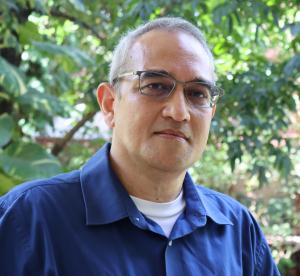
Herman Joseph S. Kraft is a Professor at the University of the Philippines' Department of Political Science and Convenor of the Strategic Studies Program at the Center for Integrative and Development Studies. He has published work on International Relations, regional security, ASEAN, security sector reform, and intra-state conflict in the Philippines.
KAS Korea Office
What were your initial expectations before the Trump 2.0 administration took office, and how did the Philippines prepare for this?
Herman Kraft
There are two ways to look at this question. If it is about our expectations regarding a Trump 2.0 administration, the assumption from the start was that the nature of our relationship with the United States would not change. The Marcos administration was expected to be able to deal with whomever won the American presidential election. So, also with Donald Trump, the expectations remained the same regarding the Philippines-U.S. relationship.
As for preparations, the most significant action taken was by the Philippine Ambassador to the United States, who warned undocumented Filipinos in the U.S. to consider returning home rather than waiting to be deported, as this would prevent them from being able to return in the future. However, in terms of the security relationship, there were no specific measures taken by the security sector in the Philippines in preparation for a Trump administration.
KAS Korea Office
After 100 days of Trump 2.0, did these expectations prove right?
Kraft
One recent development is the visit of U.S. Defense Secretary Pete Hegseth to the Philippines. Observers have noted that he visited the Philippines before Japan, which suggests the country's importance in American security calculations, regardless of the administration in power. It tells us the U.S. is prepared to enhance coordination and cooperation, not only at the policy level but also at the operational level. This reinforces the perception that a Trump administration would not differ significantly from others in terms of the alliance relationship.
KAS Korea Office
Trump is known for his transactional approach; should we expect more U.S. weapons purchases like the planned order of Typhon missile systems?
Kraft
That’s likely, though the U.S. understands the Philippines’ budget limitations. Unlike European nations or Singapore, the Philippines isn’t in a position to buy F-35s. However, there's growing preference for American military equipment over diversifying sources. The Philippines is interested in increasing defense spending. The question is, how much more can we put into defense spending?
Partly the problem for us is the structure of our defense budget. So much of it is used to pay staff, which means that we have to come up with a separate fund for weapons purchases. From our perspective, the increase in arms purchases is still significant. But from the perspective of the United States, not that much.
KAS Korea Office
If the Philippines will align even more closely with the U.S., how likely is an increase of U.S. military presence in your country? Will we eventually even go back to U.S. bases on Philippine soil?
Kraft
We will probably not return to permanent bases anytime soon, as that would bring local politics into the decision-making process. However, there will likely be a gradual increase in the rotational deployment of American forces. The number of personnel per rotation might increase, along with the quality of forces deployed. While the large bases the U.S. once had in the Philippines are no longer in play, several locations have been identified where these rotational deployments can take place. Even if these involve smaller units, such as company-sized forces or a squadron of fighters here and there, the cumulative presence of American forces in the Philippines at any given time could still be significant.
KAS Korea Office
So in this regard, you also expect that joint naval drills and other exercises with the U.S. will continue or even expand?
Kraft
Yes, definitely. I also suspect there will be greater diversification in the nature of U.S.-Philippines military cooperation in the near future. This could include increased collaboration in cybersecurity, missile system deployment, and training, especially if the Philippines moves forward with purchasing missile systems from the United States.
KAS Korea Office
Filipino officials recently emphasized that the Philippines is not Ukraine, it’s not going to be subject of this kind of rhetoric abandonment. What makes them so sure about this?
Kraft
They might tell you that it's about a long-standing historic relationship, and the confidence that our history with the United States ensures they will always have our back. I would be more confident in that assurance if it weren’t for Donald Trump being the president.
KAS Korea Office
But why does the U.S. administration seem to be rather benevolent toward the Philippines, while Trump, at the same time, upsets other historically allied countries in the region and worldwide by calling security commitments into question?
Kraft
For the U.S. there isn’t much expectation regarding the Philippines. Economically, it’s not like Japan or South Korea, and the U.S. military presence is limited. However, given that the U.S. has no permanently stationed forces in Southeast Asia, the Philippines remains a key strategic location for power projection in the South China Sea. I don’t anticipate major changes in U.S. rhetoric under Trump.
The U.S. doesn’t see the Philippines as a threat economically. Our trade relations with the U.S. are generally viewed as mutually beneficial, and unlike other allies Trump has not accused us of taking unfair advantage of American security commitments. From the American perspective, the Philippines has not exploited its relationship with the U.S. In fact, it's the opposite. We are the ones raising concerns that the U.S. is not doing enough for our security. This dynamic creates a certain alignment of interests. Washington wants to expand its military presence and access in the Philippines, while for us, given the growing threat from China, such an expansion would be largely welcomed.
KAS Korea Office
This sounds like there is no uncertainty in the U.S.-Philippine alliance. However, we've seen the Philippines starting to diversify its security posture with agreements with countries like Australia, Japan, New Zealand, South Korea, and recently Canada. Do you think this trend will continue, and what does it mean?
Kraft
This trend started even before Trump 2.0, back when Biden was president. The concern was that we were too dependent on the United States. The problem for us was: What if the U.S. doesn’t see the China threat the same way we do? Given that uncertainty, we decided it would be better to diversify our security relationships, especially with partners in the region.
But this diversification also serves as a security backup, especially given the unpredictable nature of President Trump. Trump often thinks in terms of making deals, so we worried that he might decide to strike a deal with China, which could leave the Philippines in a vulnerable position.
KAS Korea Office
How concerned is the Philippines about this big deal scenario between Donald Trump and Xi Jinping?
Kraft
We're concerned about it in the sense that Donald Trump has his own way of looking at the world. You may have China hawks like Marco Rubio in the new administration, and it was always said that if there's anything common amongst Democrats and Republicans, it's the way that their perspectives converge on how to deal with China. But I don't think that this is going to prevent Trump from taking personal initiatives in terms of doing a deal with Xi Jinping.
KAS Korea Office
If we are going along these lines, how confident can the Philippines be that the U.S. will, in fact, fulfil its mutual defense commitments in case of a contingency?
Kraft
It’s a question of how predictable Donald Trump is. One of the things that has been consistent across past U.S. administrations before Donald Trump came up was the strategic perspective. The idea of increasing their presence in the Asia-Pacific region has been a constant part of the American strategic calculus. But now we cannot be too sure, precisely because Trump seems to show a preference for being more isolationist, reducing American commitments overseas.
And it’s not just Donald Trump. The problem is the extent to which those views are shared by a significant number of Americans. Even if you don’t have Donald Trump as president, the question is, to what extent can you see the next American administration, whether it's Republican or Democrat, reversing this foreign policy direction that the Trump administration seems to be taking? That is why it makes sense for us to look at other security partners and strengthen those partnerships outside of the United States. That’s not to say that we wouldn’t like to see our relationship with the United States continue on its current course, and we're still hoping that in case of a contingency, the United States will come to our assistance. And even if we talk about diversifying security commitments and relationships, we know that the alliance with the United States can't be replaced by any other as of now.
KAS Korea Office
What is the current approach of the Philippines in the West Philippine Sea to ward off China? And to what extent is the U.S. willing to support against grey zone tactics?
Kraft
Right now, the approach has been to increase engagements – military and civil engagements – between the Philippines and the United States. As a result, we are seeing more and more exercises taking place in the maritime domain, rather than in terrestrial areas where they usually occurred in the past.
I've been asked whether this is an assertion of Philippine sovereignty. I don’t think so, because most of these exercises are taking place outside Philippine territorial waters. This means that while these are waters where we might have sovereign rights, they do not fall under our sovereignty. So, rather than an assertion of sovereignty, it is more of a signal to China, demonstrating the closeness of the relationship. However, the consistency of this approach depends more on the Philippines increasing its own capabilities, rather than on the American presence continuing to expand over time.
KAS Korea Office
Why doesn’t the Philippines send its Navy into the West Philippine Sea? Is China tricking the Philippines into not using its Navy by deploying the Chinese Coast Guard, which is indirectly under the Central Military Commission? Meanwhile, the Philippine Coast Guard falls under the Ministry of Transportation, making it a law enforcement agency rather than a military force.
Kraft
If we go back to the Scarborough Shoal standoff in 2012, it was actually China that accused us of escalating the situation because a Philippine Navy warship was the first to confront the Chinese Coast Guard ships protecting their fishermen, who were engaged in illegal activities.
The point about us potentially falling into a trap set by China is valid. Essentially, we are operating within the framework of China’s own discourse regarding "white-on-white" (Coast Guard vs. Coast Guard) interactions. Even our Coast Guard, which is the most aggressive branch of our maritime forces in the West Philippine Sea, adheres to this approach. They are there regularly, at the forefront of what we call the Transparency Initiative, insisting on the "white-on-white" arrangement.
The reluctance to deploy the Navy stems from concerns that doing so would make us susceptible to accusations of escalation. So even from our perspective, the issue of whether to stick to "white-on-white" or shift to "grey-on-grey" remains unsettled. For now, we are operating within the narrative that China has effectively imposed on us.
KAS Korea Office
From the perspective of the Philippines, how should the U.S. and the Philippines respond to China’s growing naval power? They now have the world’s largest navy, with increasingly advanced technology.
Kraft
This is primarily an issue for the United States because it’s a great power competition. The Philippines is affected because our relationship with China is seen by Beijing through the lens of its rivalry with the U.S. For us, the challenge is getting China to treat our maritime dispute as a bilateral issue, rather than part of its broader strategic calculus against Washington. To achieve that, we must assert ourselves while avoiding a simplistic binary mindset: either fully aligning with the U.S. against China or outright appeasing China. The key is to find a middle ground that allows us to engage China directly, without being overshadowed by its geopolitical struggle with the U.S.
KAS Korea Office
How do you see the future of the Philippines’ involvement in multilateral or minilateral security engagements?
Kraft
Right now, the key challenge for the Philippines is to translate these diplomatic initiatives into operational realities. Much of our focus has been on diplomacy and policy coordination, but at the operational level, there’s still a lot of uncertainty. For instance, we have a trilateral arrangement between the Philippines, Japan, and the United States. The question now is: Where is that going? Similarly, we are working on a potential trilateral framework with Japan and Australia, but the long-term direction remains unclear.
KAS Korea Office
What kind of security engagement does your country expect from EU states in the Indo-Pacific?
Kraft
The European engagement would likely be limited to political support rather than military presence. Whether it's Germany or a collection of EU countries, Europe would struggle to maintain a meaningful presence. To push back against China, you need consistent presence on the ground; something that even the United States has struggled to maintain since losing its bases in the Philippines. If the U.S. can't sustain this kind of presence, what can Europe do?
KAS Korea Office
How concerned is the Philippines of attacks on the northern regions in case of a Taiwan contingency?
Kraft
This is not a topic that’s widely discussed in the country. Some have compared our approach to an ostrich burying its head in the sand. Even those who are strongly pro-U.S. and anti-China in the West Philippine Sea dispute often insist that Taiwan is not our conflict. The official Philippine position has been clear: our primary concern is evacuating the 150,000 Filipinos in Taiwan. There is an understanding with the U.S. that, if a conflict erupts, Washington should assist in this evacuation. But when it comes to actual operational preparations for a potential shooting war between the U.S. and China over Taiwan, we are not actively preparing. Some are raising the question and proposing possible responses, but there are no concrete plans in place at this time.
South Korea – Hyun-Wook Kim
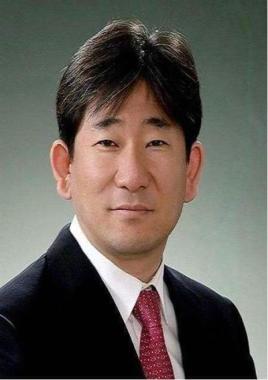
Hyun-Wook Kim is the President of the Sejong Institute, an independent and non-partisan private policy think tank based in Seoul. His expertise includes the ROK-U.S. alliance, U.S. foreign policy and East Asian security.
KAS Korea Office
What were the South Korean government’s initial expectations before President Trump took office again, and how did it prepare?
Hyun-Wook Kim
South Korea’s expectations going into Trump’s second term were largely shaped by what happened during his first. The previous Trump administration was already characterized by an “America First” approach and a semi-isolationist stance, which influenced its policy toward the Korean Peninsula.
One of the main concerns for the South Korean government was defense burden-sharing. During Trump’s first term, negotiations over the cost-sharing agreement for U.S. forces in Korea stalled, with no final deal reached. It wasn’t until the Biden administration that a new Special Measures Agreement (SMA) was concluded. So, going into Trump 2.0, there was a strong expectation that he would revisit and push hard on this issue again.
A second major concern was Trump’s approach to North Korea, particularly the possibility of renewed direct engagement with Kim Jong Un. In his first term, Trump held summits in Singapore and Hanoi. The Singapore summit resulted in agreements on denuclearization, normalization of relations, and establishing a peace regime on the Korean Peninsula. However, the Hanoi summit ended without any deal.
After the Singapore deal, Trump unilaterally announced the suspension of joint U.S.–South Korea military exercises as a gesture toward North Korea. This attitude of Trump towards US-South Korea alliance was also a big concern, which would weaken the alliance.
These three areas – burden-sharing, the unpredictable nature of Trump’s diplomacy with North Korea and the weakening of the alliance – were at the forefront of South Korean concerns and preparations heading into his return. While some elements of his current policies echo the past, others have taken unexpected turns.
KAS Korea Office
What developments have you observed so far in the first 100 days of Trump’s second turn regarding these issues?
Kim
Once the domestic political situation in South Korea stabilizes, there will be talks about what to do regarding defense burden sharing between South Korea and the United States. However, one good thing is that unlike during the first Trump administration South Korea is not a priority target. The priority target for Trump now is NATO.
The second thing that came up differently from our expectations is that Trump’s policy is not only isolationist. This particularly is reflected in two aspects. First, Trump’s foreign policy priority in his second term is bashing China. In his first term, he didn’t treat China this way – he mainly focused on reducing the trade deficit with China and increasing the U.S. trade surplus. But now, Trump sees China as the number one challenge that he must deal with.
Secondly, he seems to be more expansionist. He’s shown interest in places like Greenland and the Panama Canal, and all kinds of global spots that might serve U.S. interests. He seems to be targeting those areas with an expansionist mindset. During his first term, Trump was more of a restrainer, believing that U.S. forces should avoid being overly engaged in other regions or contingencies. But now, because the global security situation has worsened, Trump wants to use the alliance systems more effectively, even if the U.S. doesn’t pay as much.
KAS Korea Office
Do you expect any changes to the structure or composition of U.S. Forces in Korea, also concerning the number of troops?
Kim
Trump is unlikely to withdraw U.S. forces from South Korea, as he aims to utilize alliance networks – including U.S. Forces Korea and the South Korean military – to counter China in the region. Two main developments are expected. First, he will continue pressing allies like South Korea and Japan to contribute more financially to hosting U.S. troops. Second, the role of U.S. Forces Korea may shift toward deterring China, alongside U.S. Forces Japan and the Japanese Self-Defense Forces.
Currently, around 80% of U.S. Forces Korea are ground forces, with only about 20% being air and naval units. If the focus shifts to potential contingencies involving Taiwan, the emphasis will likely move toward air and naval capabilities. This could result in a restructuring that reduces ground forces – traditionally oriented toward North Korea – and expands air and naval assets. The U.S. may expect South Korea to take care of the North Korean threat while it concentrates more on China.
KAS Korea Office
Could this signal the beginning of “strategic flexibility” for U.S. Forces Korea, allowing the U.S. to shift troops from Korea in scenarios like a Taiwan contingency?
Kim
That is a highly sensitive issue. Strategic flexibility is essentially a U.S. prerogative. It reserves the right to move its forces as it sees fit. For now, the U.S. and South Korea share a common threat perception focused on North Korea, with joint strategic objectives centered on deterrence.
However, as differences in threat perception and strategic priorities begin to emerge – especially if the U.S. increasingly focuses on China – the likelihood of the U.S. pursuing strategic flexibility will grow. This will require deeper discussions between the two countries and could lead to disagreements.
KAS Korea Office
What is the future of joint military drills, especially as North Korea appears to be a lower priority for the new Trump administration?
Kim
The purpose of the drills is shifting. While South Korea, the U.S., Japan, and others have conducted joint exercises for years, these drills are no longer focused solely on the Korean Peninsula. The alliance now increasingly emphasizes regional issues. Over time, the exercises have expanded beyond bilateral drills to include trilateral and multilateral formats. As a result, purpose-driven joint military exercises – especially those addressing broader regional security – will likely carry more weight than those focused only on the North Korean threat.
KAS Korea Office
You mentioned that Trump is unlikely to withdraw U.S. troops from South Korea, though restructuring and strategic flexibility are possible. There's also the ongoing debate over Wartime Operational Control (OPCON) transition. Do you see Trump 2.0 changing extended deterrence commitments or pushing South Korea toward greater self-reliance in the near future?
Kim
Even under Trump, the U.S. is unlikely to abandon South Korea, as it would risk losing a key ally in the region to counter China. The OPCON transition is condition-based, not time-based. That means it requires South Korea to demonstrate sufficient combat readiness, and for the Peninsula’s security situation to stabilize – conditions that are unlikely to be met within Trump’s term.
Also, it’s important to note that OPCON transfer has been primarily driven by the South Korean government, especially under progressive leadership, not by the U.S. If the transition occurs prematurely, and a regional conflict like a Taiwan contingency arises, from the US perspective, the U.S. could face major coordination challenges with South Korea’s military. And with North Korea now considered a nuclear state, this further complicates the possibility of meeting the conditions for a smooth OPCON transfer anytime soon.
KAS Korea Office
How likely is it that South Korea will pursue its own nuclear ambitions – either through “nuclear latency” or outright development of nuclear weapons?
Kim
The possibility of South Korea going fully nuclear on its own is very low for now. Trump would not support South Korea developing its own nuclear weapons nor redeploying U.S. tactical nuclear weapons here. The deployment of U.S. non-strategic nuclear weapons in this region would also undermine any disarmament talks Trump might want to pursue with China or Russia.
As for nuclear latency – such as through revisiting the 123 Agreement and enhancing South Korea’s nuclear capabilities without crossing the threshold – that might be a more feasible topic for discussion with Trump. The U.S. may be concerned about South Korea heading in that direction, but we know from experience that if such a development seems imminent, Washington will step in quickly to apply pressure and stop it. In short, even if South Korea strengthens its latent capabilities, turning that into an actual nuclear arsenal would not be easy.
KAS Korea Office
Do you think we’ll see U.S. Navy vessels being built in South Korea anytime soon?
Kim
A bill to reform the Jones Act was recently reintroduced in the U.S. Congress but passing it will take a long time and its chances are uncertain. U.S. labour unions are expected to lobby heavily against it, which could block the bill from being enacted. So, as for shipbuilding by Korean companies, I don’t think that’s a realistic near-term possibility. There are too many legal and political hurdles to overcome.
A more feasible option would be increasing the MRO (Maintenance, Repair, and Overhaul) cooperation: servicing and overhauling U.S. military vessels and aircraft carriers stationed in the region. For South Korea, this also presents an opportunity to grow its capabilities and expand from domestic shipyards in places like Geoje-do to areas like the Philippines.
KAS Korea Office
How would the security relations with the U.S. change under a new Korean government under the progressive Democratic Party’s (DP) leadership?
Kim
The Democratic Party (DP) generally aims to maintain a balanced position between the U.S. and China. If the U.S. expects South Korea to function as a regional ally beyond the Korean Peninsula, a DP government might express agreement in principle but is unlikely to take meaningful steps to strengthen the alliance. On North Korea, however, Trump and the DP could find common ground through a shared emphasis on dialogue and hopes for peace on the Peninsula. That alignment might lead to the suspension of joint military exercises again, potentially weakening the alliance.
KAS Korea Office
Turning to North Korea, how does South Korea view the possibility of a renewed Trump-Kim bilateral diplomacy?
Kim
Many South Korean experts believe that the idea of denuclearizing North Korea is more of a slogan than a realistic goal. Trump would likely treat it that way as well. In the meantime, he might pursue more limited agreements, such as halting missile launches or nuclear tests. For Trump, that may be sufficient, as his main priority would be reducing tensions and calming the North Korean threat.
From a South Korean perspective, however, that’s not enough. North Korea is now recognized as a nuclear-armed state, and if there are no concrete steps to roll back its nuclear capabilities, while South Korea remains non-nuclear, it creates a deeply unbalanced and concerning situation.
I spoke with someone from the Trump administration, and they said the likelihood of the U.S. deploying nuclear weapons to the Indo-Pacific – whether to South Korea, Guam, or elsewhere – is very low. The U.S. might instead rely on showing presence through nuclear submarines patrolling near the peninsula or rotating strategic assets into the region as needed. But that won’t be enough to reassure the South Korean public.
So, if Trump and Kim strike a deal like that again – focusing only on symbolic gestures without substantive denuclearization – it could come as a major shock and disappointment to the South Korean people.
KAS Korea Office
What’s your assessment of the idea that Trump might strike a bilateral deal with Xi Jinping and essentially "sell out" the Indo-Pacific partners to appeal to his MAGA base?
Kim
Trump has multiple customers, so to say. One of them is the MAGA base. But are these people still useful to him? They helped elect him, but now that he can’t run for a third term, I’m not sure how important they still are.
More influential now could be those with economic clout – Wall Street and Silicon Valley – whose interests often align with Trump’s own. This is evident in his approach to platforms like TikTok. Though he previously promised to ban it, in practice he explored ways to acquire or benefit from it. That reflects how his economic engagement with China may take precedence over tough talk.
Another economic clout is those people who are very hawkish on China. They prefer strong tariffs on China. But this second clout clashes with the first clout which are Wall Street and Silicon Valley. This confrontation might make Trump’s economic policy towards China very confusing.
At the same time, the strategic military focus will still shift toward China. Trump has emphasized China as the primary challenge, and under his leadership, U.S. forces would likely be reoriented away from Europe and toward the Indo-Pacific. But again, this shift will be balanced by an economic pragmatism in his engagement with Beijing.
When dealing with Xi Jinping, Trump will likely focus not only on strategic pressure and competition but also on maintaining channels that protect or advance the financial interests of American businesses – and perhaps his own circle. That balancing act will define his approach: publicly confronting China but privately preserving or even expanding economic opportunities.
KAS Korea Office
Do you think the recently announced tariffs and trade frictions will significantly affect the security situation, or do you see these as separate issues?
Kim
Yes, I think so. If tariffs become an effective tool to pressure China, this can be an important tool to make Xi Jinping stop invading Taiwan. In order for that, tariffs on China should not be a problem for the U.S. domestic economy. If tariffs create a problem for U.S. domestic economy and this doesn’t deal a real blow on China, then Trump might have to think of other economic tools rather than tariffs.
KAS Korea Office
How might Trump’s trade policies affect China–South Korea relations?
Kim
One upside is that China is no longer as economically beneficial for South Korea as it used to be. Labor costs in China have gone up, consumer demand has declined, and Chinese high-tech companies are now competing with – and in some areas surpassing – Korean companies.
The downside is that many small and medium-sized South Korean firms still export components to Chinese manufacturers, for example for electric vehicles. If Trump imposes heavy tariffs on Chinese products, those Korean suppliers could be hit hard. They would need to start looking for alternative markets to survive.
KAS Korea Office
What role do you think does South Korea play in the long-term strategic vision of the Trump administration towards the Indo-Pacific?
Kim
Looking at the big picture, I believe Trump will place greater emphasis on trilateral relations among the U.S., Japan, and South Korea. While it may not be as solid or institutionalized as under Biden’s leadership, the focus will likely be on strengthening military cooperation among the three countries, forming a key pillar of regional mini-lateralism centered on security issues. In that sense, the U.S.–South Korea alliance will likely align closely with this trilateral framework.
During the Moon Jae-in administration, when South Korea–Japan relations were strained, the U.S. consistently stepped in to encourage cooperation between the two countries in order to stabilize the trilateral relationship. I expect similar efforts going forward. Even though the Democratic Party’s candidate, Lee Jae-myung, tends to advocate a balanced stance between the U.S. and China and is often antagonistic toward Japan, Trump is likely to pressure him to engage in trilateral cooperation. As a result, South Korea may adopt a posture more oppositional toward China than under previous DP governments.
KAS Korea Office
What does South Korea expect from European or EU security engagement in the Indo-Pacific?
Kim
European countries have become increasingly proactive in engaging with the Indo-Pacific, which we welcome. Some of this is driven by their economic ties with Pacific nations, but with the U.S. pressing for a greater burden-sharing, we’ll likely see more cooperation between Europe and countries in this region.
As for the form of engagement – whether it's military presence, joint exercises, or non-traditional security areas like education and training – that remains to be discussed. It will also depend on who is in power in South Korea. A Democratic Party government would prioritize relations with China and dialogue with North Korea, reducing the perceived need for European military involvement. In contrast, a conservative government may see value in greater European integration into the U.S.-led security architecture for the region.
KAS Korea Office
What are the most crucial issues to watch right now?
Kim
The most critical issue is redefining and communizing threat perception. The U.S. is increasingly focused on China, while South Korea still views North Korea as the primary threat. This divergence raises serious questions. If U.S. forces in South Korea are no longer primarily focused on North Korea, what role are they playing? Are they still here for South Korea's security, or for regional contingencies like China? That creates a challenge: How do we align our strategic objectives? How do we redefine the common ground between the U.S. and South Korea? That’s the key issue moving forward.
South Korea – Bo Ram Kwon
Bo Ram Kwon, Ph. D., is a Research Fellow at the Korea Institute for Defense Analyses (KIDA), a government funded defense think tank in Seoul. Her research expertise includes U.S. security and defense strategy, the ROK-US Alliance, the nexus between U.S. foreign policy and domestic politics, and economic sanctions.

KAS Korea Office
What were your initial expectations before the Trump 2.0 administration took office?
Bo Ram Kwon
Having experienced the first Trump administration, I expected a certain level of chaos, but the speed and scale at which changes are happening are surprising. While Trump's campaign promises are largely being followed through, the Korean Ministry of National Defense (MND) always prepares for the worst-case scenario, considering both the most dangerous and the most likely outcomes. President Trump has never been particularly fond of alliances, but we still believe the 12th Special Measures Agreement (SMA), the major defense cost-sharing deal between South Korea and the U.S. concluded last year, will hold. To fundamentally change this framework would impose much stress on alliance relations.
The second Trump administration seems to be focused on domestic economic fixes first, then the Americas, Europe, the Middle East, the Indo-Pacific region, and China. The tool of choice is tariffs (even secondary!) and we are learning much about them. The regional sequence is interesting. Our priority is anticipating U.S. demands and preparing a rational response that serves South Korea’s national interests.
KAS Korea Office
Roughly 100 days have now passed since Trump took office for the second time – what developments of the U.S. alliance politics in the security realm have you observed so far?
Kwon
For the U.S., it is increasingly about pushing Europe toward self-reliance, with Russia seen as a primary threat that Europe can handle on its own. Russia’s intentions more than its capabilities seem to be at issue. Meanwhile, the Trump administration perceives China as a much greater threat in terms of its capabilities. The U.S. is shifting its security focus to Asia, or at least is trying to. The Trump administration is determined to make all allies pay more, demanding increased contributions, market openings for American products, and direct investment (FDI) into the U.S. The demands about paying more are not limited to defense spending as U.S. tariff policy shows.
Diplomatically, it seems best to avoid creating unnecessary trouble, as all nations prioritize their own interests. According to the Interim National Defense Strategic Guidance, the U.S. has signaled a willingness to “assume risks” in Europe and the Middle East to focus more on Asia due to the China threat. The Trump administration follows a strategy of denial. Alliances and partnerships are being reshaped to support the strategic objective to counter and hamper the rise of China, with a focus on integrated deterrence. This approach would force Europe to rearm and reindustrialize – it has already begun to do so. As for Asia, the U.S. remains engaged but expects allies to pay more, both through domestic investment and trade concessions, while also joining deterrence efforts against China. This could begin with making clearer diplomatic condemnations at China’s provocative military actions in the South China Sea and the Taiwan Strait. In recent years, China has taken softer but all the more coercive measures against Taiwan that may need to be called out.
KAS Korea Office
What key continuities and departures do you see compared to the previous administration’s Indo-Pacific strategy?
Kwon
It is still early to tell, but there appears to be more continuity than change. The focus on China has intensified, particularly regarding Taiwan, though the emphasis seems to be more on strengthening deterrence rather than war fighting. The shifting of military capabilities is also apparent – China remains the central concern, and there is little indication that the Korean peninsula is a priority in these considerations. The situation in Ukraine and Iran may also influence U.S. strategic attention and could prolong U.S. engagement in Europe and the Middle East, making it more difficult to pivot fully to the Indo-Pacific. Previous U.S. administrations have tried and have not been fully successful.
KAS Korea Office
Do you observe any major shifts in rhetoric versus concrete policy implementation toward South Korea?
Kwon
Compared to President Trump’s first term, his rhetoric is even harsher now. However, he leaves open backdoors for negotiation, meaning policy execution may not always align with strong initial statements. I suspect there will be a noticeable gap between rhetoric and actual implementation, also when it comes to South Korea.
KAS Korea Office
How does South Korea perceive the behaviour of the US administration towards the Ukraine conflict?
Kwon
The Trump administration is not keen on providing the bulk of military assistance when the Europeans “could do more.” Unlike Ukraine, South Korea is an ally of the U.S. so we expect different treatment should conflict occur on the Peninsula. However, because the Trump administration emphasises cost-saving and reluctance towards overreaching and entrapment, we are keenly monitoring the situation.
KAS Korea Office
Turning to the issue of burden-sharing, can we expect a more assertive economic quid pro quo stance by the U.S. government under Trump toward South Korea?
Kwon
President Trump will likely bring up renegotiating the aforementioned SMA at least rhetorically, but we must persuade him otherwise. The SMA requires National Assembly approval in South Korea unlike the U.S. The best approach might be to maintain the deal while working around it in issue-linked negotiations. Given the polarization of the major Korean political parties at this moment, a renegotiated SMA might have difficulty passing the National Assembly again. This could be used as leverage. The level of attention Trump pays to the agreement will depend on who is going to explain it to him in the White House. Briefings will matter. Regardless, the likelihood of a demand of a significant lump-sum increase in contributions remains high, and our challenge will be negotiating terms that are manageable and compatible to South Korea’s national interest. A surge in anti-Americanism will not be helpful to either country. If high reciprocal tariffs are indeed imposed, such sentiment would be more likely to emerge.
KAS Korea Office
So, you expect South Korea to further increase its defense spending after increased pressure applied by the Trump administration?
Kwon
While we can attempt to increase spending, South Korea already allocates a substantial amount of its GDP to defense, around 2.5% of late. Our defense budget has been rising consistently, with a 3.6% increase expected for the year 2024. Any further increase will likely be directed toward visible areas such as arms purchases from the U.S.
KAS Korea Office
Do you see any signs regarding a change in the status quo of U.S. military presence in your country?
Kwon
The South Korean defense community strongly values the U.S. Forces Korea (USFK) presence, and even the removal of a few hundred troops could send a significant negative signal. South Korea will actively work to persuade the Trump administration that maintaining the current force levels is crucial. At the same time, the South Korean leadership needs to understand and help explain to the Korean people that the current force levels (approximately 28,500 but which fluctuates over time) should not be a religiously worshipped number. A fixation on numbers may trigger an unwanted response from President Trump. There is also a risk that he sees troops primarily as a financial cost and may push for withdrawal unless convinced of their strategic importance and South Korea’s financial contributions to the USFK.
KAS Korea Office
Following up on that, what can you say about the current state and future of joint military drills?
Kwon
Joint military exercises have been increasing in frequency and scale in recent years, serving as a demonstration of alliance solidarity as well as a key vehicle for sustaining readiness. During President Trump’s first term, drills were scaled down to facilitate the Summitry between the U.S. and North Korea but balanced with other activities. Multi-national military exercises focusing on China may increase in other nearby areas, such as the Philippines, while drills on and near the Peninsula remain primarily focused on North Korea. While the Trump administration sees the former exercises as vital, it might have a lesser opinion on the latter. It might also think all field military exercises are costly.
KAS Korea Office
What is the South Korean perspective on a possible bilateral revival of Trump-Kim diplomacy? Will South Korean policy on North Korea change based on U.S. policy?
Kwon
Should talks occur, North Korea will likely request reductions in joint military exercises, which could be negotiated. However, an official summit seems unlikely. North Korea’s strategic leverage has increased with its partnership with Russia and is likely to ask for a much larger package than scaled down exercises or sanctions relief. The Trump administration may or may not be willing to accept this as a winning deal. Meanwhile, South Korea’s stance on North Korea will be influenced more by its immediate domestic politics than pending Trump-Kim diplomacy.
KAS Korea Office
Amid increasing tensions, does South Korea need permanent deployment of U.S. nuclear weapons? How realistic is it for South Korea to develop its own nuclear capabilities or "nuclear latency"?
Kwon
Extended deterrence remains South Korea’s currently preferred policy, but security experts are analyzing other options such as regular deployment of U.S. non-strategic nuclear weapons in the Indo-Pacific region. Independent nuclear weapons development in South Korea is emotionally popular but seems highly unlikely due to technical and political barriers. Regarding the so-called "nuclear latency" option, this would require significant legal and diplomatic adjustments. For example, the U.S.-ROK nuclear agreement from 2015 is still in place. In order to achieve nuclear latency, this would have to be revised with close consultation with the U.S.
KAS Korea Office
How much does the Korean military still rely on US-American weapons?
Kwon
The South Korean armed forces remain highly dependent on U.S. procured weapons, especially in terms of parts and technology. While there is a history of pursuing self-reliance within the alliance relationship, with domestic production of essential components and a high rate of domestic manufacturing for certain weapon systems, this has not significantly reduced overall dependency. The United States continues to lead in strategy, equipment, and technological advancements. However, South Korea needs a steady supply of weapons specifically tailored to the unique security conditions of the Korean Peninsula and should keep focusing on domestic production. Developing the defense industrial base is also crucial to keep up its accomplishments in arms exports as well as enhance alliance cooperation with the U.S. in a more fundamental way.
KAS Korea Office
Does Korea fear the so-called “strategic flexibility” of the USFK, meaning that the U.S. could pull away troops from the peninsula in case of a Taiwan or South China Sea contingency?
Kwon
Strategic flexibility has been a discussion point since 2006, and while it remains a possibility, concrete moves in this direction have not yet materialized. Some recent changes have been reported such as the relocation of some South Korean Patriot air defense missiles to the Middle East. While deterring North Korea is key, South Korea needs to prepare for discussions about strategic flexibility with the Trump administration as the China threat is at the core of U.S. defense strategy and the Americans are determined to act.
KAS Korea Office
How likely is a Wartime Operational Control (OPCON) transition to the ROK forces in the near future?
Kwon
There is a lack of domestic consensus regarding wartime OPCON transfer, even among experts. The current conservative South Korean government has maintained the conditions-based wartime OPCON transition approach. The conditions include securing the military capacity to lead the joint forces, developing comprehensive response capabilities to counter North Korea’s nuclear and missile threats, and ensuring stability in the security environment on and around the Korean Peninsula. The progressive wing is likely to support expeditious OPCON transfer, whereas conservatives fear that the conditions are not met, and it might lead to an eventual U.S. withdrawal. The political landscape remains fluid, so the future direction is uncertain.
KAS Korea Office
How do you expect South Korea’s current domestic political situation to influence security relations with the U.S.?
Kwon
The instability in South Korean domestic politics has led the United States to adopt a wait-and-see approach. The situation is not particularly favorable for creating inroads with the Trump administration but with presidential elections scheduled for June 3rd, we have moved on. Recent discussions with experts and Congressional staffers in Washington D.C. showed that limited harm was done to our credibility. By holding free and fair presidential elections, South Korea needs to stabilize its internal affairs and focus on enhancing its security relationship with the U.S.
KAS Korea Office
How would U.S. relations change with a new Korean government led by the progressive Democratic Party, who is currently in the opposition?
Kwon
A government led by the Democratic Party is likely to advocate for greater self-reliance and pragmatic relations with China. However, the importance of the ROK-U.S. alliance would not go unrecognized. Much uncertainty lies with President Trump’s approach to its Asian allies, which so far seems surprisingly aligned with traditional thinking.
KAS Korea Office
Trump has announced tariffs on South Korea. How do these trade frictions influence the security alliance?
Kwon
Recently, reciprocal tariffs were rolled back for 90 days for all countries except for China. This is a temporary relief, but difficult bilateral negotiations lie ahead with universal tariffs. The full impact of trade frictions is uncertain, and it is essential to closely monitor changes in U.S. public opinion as Americans will pay the brunt of tariff increases. In addition to the stock market crash that President Trump could not ignore, I believe fervent lobbying from the financial sector and political leaders with unhappy constituents helped realize this roll back.
Currently, tariffs remain the priority tool for President Trump. It is unclear if he might directly connect the trade issues with the military alliance, although he has implied this. How tensions in trade will affect traditional security alliances is the million-dollar question, and we need to wait and see how actual negotiations happen. Evidently, South Korea and Japan have a different approach from European allies. If economic pressures being to hinder security cooperation with allies, it will be detrimental to U.S. primacy.
KAS Korea Office
Do you think the trilateral cooperation between the U.S., Japan, and South Korea will continue?
Kwon
In South Korea’s perspective, trilateral security cooperation remains essential to deter North Korea, although the extent of U.S. leadership in this framework is unclear. While domestic politics influence cooperation between South Korea and Japan, the weak link, the underlying security trends support continued engagement. For example, the need to maintain economic sanctions on North Korea necessitates trilateral coordination. If there is a push to shift the trilateral focus from North Korea to China by the U.S and Japan, South Korea will be reluctant to accept.
President Trump prefers bilateral engagements, but his partners will continue to engage in minilateral negotiations to bond and increase collective leverage. Trade tensions could push allies and unlikely partners closer together. Smaller, flexible groupings of three or four countries may emerge to deal with U.S. tariffs in a cross-dimensional manner.
KAS Korea Office
To what extent does the Trump administration influence the state of the hub-and-spokes system of U.S.-centered military alliances in the Indo-Pacific?
Kwon
We need more time to observe to assess this. For decades, the U.S. and China have engaged in networked competition to shape regional security structures to their liking. As for the Indo-Pacific region, the alliance structure will largely prevail. While there may be temporary tensions within the hub-and-spokes system, broader efforts toward integration between the spokes could be enhanced.
KAS Korea Office
How does South Korea assess the possibility of bilateral dealmaking between Donald Trump and Xi Jinping?
Kwon
Despite seeing China as a threat, President Trump is open to cooperation with Xi. A U.S.-China deal of some sort remains a possibility, although the rising tensions with the tariff war seems to reduce that to some degree. No matter how much U.S.-China bilateral relations could deteriorate, South Korea remains wary that great powers can strike a deal to their liking without considering smaller powers. It understands the importance of keeping all channels of communication open with both parties.
KAS Korea Office
What does South Korea expect regarding European/EU security engagement in the Indo-Pacific?
Kwon
South Korea welcomes greater European involvement in Indo-Pacific security, but questions remain about Europe’s ability to contribute in substance. While President Biden’s integrated deterrence strategy sought to link Indo-Pacific and European security, President Trump’s cost-saving approach seems to complicate this vision. Military as well as economic cooperation between Europe and Indo-Pacific partners will continue. Key areas for potential collaboration include trade diversification, defense industrial cooperation, and complementary weapons systems development. However, building a sustainable security-industrial relationship will take time as each region has its own needs and priorities that may lead to competition in certain weapons markets. Trade and defense engagement should be reciprocal, fostering deeper ties in both directions.
Given Europe’s current focus on ending the war in Ukraine, cooperation in the Indo-Pacific will require identifying the right platforms for engagement. While the ROK-U.S. alliance remains intact, South Korea is actively exploring broader international partnerships to diversify its security and economic options. The NATO-IP4 construct remains a viable option.
Taiwan – Christina Chen
Christina Chen, Ph. D., is a researcher at the Institute for National Defense and Security Research (INDSR) in Taipei, a non-partisan think-tank funded by the Taiwanese government. Her research expertise includes political economy, East Asian politics, Chinese politics and state-society relations.

KAS Korea Office
What were your initial expectations before the Trump II administration took office?
Christina Chen
Public sentiment in Taiwan was leaning more toward the positive. Security experts were more reserved because, as we already saw during his previous term, Trump tends to shift his stance, and unlike Biden or the Democrats, his approach is more transactional.
When he was running for presidency in 2024, Trump criticized Taiwan, accusing it of unfair practices regarding chips and semiconductors. However, overall sentiment in Taiwan remained largely positive because, during his first term in office, the U.S. administration became more pro-Taiwan. While the Biden administration also labelled China as a competitor, it was actually Trump’s previous administration that initiated this policy shift toward a more competitive stance against China. In fact, when Biden took office in 2021, there was initial concern in Taiwan that he might not continue this approach. However, he ultimately did, which came as a relief to many. As a result, Trump and his administration are often credited with laying the foundation for a closer U.S.-Taiwan relationship and a stronger U.S. stance on China.
KAS Korea Office
So how did the Taiwanese government prepare with this in mind?
Chen
There was already a lot of talk about Taiwanese defense spending, even before Trump came to office. Last year we invited former UN Ambassador Kelly Craft to an event here in Taiwan. During her opening remarks, she explicitly stated that it was best for Taiwan to boost its defense spending. This was something that we in the think tank community in Taiwan, as well as our government, were aware of. I wouldn’t say we were taking immediate steps, but we heard that message. I believe there were active attempts by the Taiwanese officials to communicate with the Republicans, to let them know that Taiwanese government has been investing and would continue to invest in defense to deter rising Chinese threat. That might partially explain why (Taiwanese) President Lai Ching-te later announced that Taiwan was ready to increase defense spending from 2.5% to 3% of the GDP.
The Trump administration and the U.S. government now seem to believe that Taiwan needs to demonstrate a stronger resolve to defend itself. Increasing defense spending is one very clear indication of this, and the whole-of-society approach is another. The message from the U.S. seems to be: "We are not going to let you be a free rider. You need to show that willingness and demonstrate that capability."
KAS Korea Office
How likely is it – also keeping in mind the remarks by Trump’s undersecretary of defense for policy, Elbridge Colby – that Taiwan will ramp up its defense spending to 10 percent of its GDP?
Chen
10 percent is insane. It's not possible, given Taiwan's current context. We have two factors: One is domestic politics. We have an opposition party, the KMT, not even that willing for Taiwan to increase its spending to 3 percent. Another thing is that defense spending is usually upped by a special budget. But you cannot create one huge special budget after another – so Taiwan would need to increase its tax revenue if it doesn’t want to squeeze out other kinds of spending. Most Taiwanese people would not support that. So, increasing the ratio from 2.45 percent to 3, given that Taiwan has already been increasing spending, is more practical than to eye 5 or even 10 percent.
KAS Korea Office
After 100 days of Trump 2.0, what kind of developments have you perceived or observed so far in terms of security policy and cooperation of the U.S. toward Taiwan?
Chen
While the rhetoric may change, at the implementation level, there seems to be consistent and very close ties between Taiwan and the U.S. Most people would agree that the two sides have reached the peak of Taiwan-U.S. cooperation, especially in terms of continuity and even moving forward.
For instance, the news recently showed that the two sides have agreed to create a mutual naval training program. Additionally, there was news about the U.S. naval fleet, which was accidentally spotted replenishing alongside the Taiwanese naval fleet. I don’t think these types of cooperations will stop in the near term. They may become less visible, more under the radar, but the actual military and security cooperation will continue.
KAS Korea Office
You are not seeing any significant departures from the line the first Trump and the Biden administrations pursued?
Chen
Again, it's the rhetoric that's changing. The Trump administration is asking not just Taiwan, but other countries as well, to take on more of the burden in their defense. That's the major departure. Trump 1.0 also made similar claims, but in Trump 2.0, they are taking this more seriously and actually implementing it. So far, Taiwan has been responding to that.
KAS Korea Office:
When recently asked, Trump again refused to say outright that the U.S. would defend Taiwan in case of a contingency. In contrast, Biden explicitly stated, the U.S. will defend Taiwan. Is that also part of this new rhetoric?
Chen:
I would not think so. Yes, Biden made that statement repeatedly, but then his staff sometimes came out and clarified, saying that U.S. policy hadn’t changed. Trump however maintains that he wouldn’t be very clear about whether the U.S. would intervene on behalf of Taiwan in a conflict. But then, his Secretary of State, who is very pro-Taiwan and anti-China, balanced things out.
KAS Korea Office
Can Taiwan count on the U.S. extended deterrence under Trump 2.0 in case of a Chinese blockade or attack, especially if Taiwan does not respond in the monetary or transactional terms Trump wants?
Chen
Generally, it's very likely that this commitment will persist, given that Taiwan is still considered strategically important in U.S. policy circles. If you abandon Taiwan, then China will clearly show its ambitions. It's not hiding it. There are increasing signs of China intensifying its threat and pressure in the Indo-Pacific. So, the argument for Taiwan's strategic value still holds. However, there are also more voices in Washington suggesting that if we give up Taiwan, “it won’t be that bad.”
That's why the Taiwanese government is working really hard to communicate to U.S. policymakers that it’s not just about our democracy, and that Taiwan has geostrategic value. If you don't come through with extended deterrence, you are facing a real threat from China. And it’s not just Taiwan; it could be the Philippines, the first island chain, or the second island chain.
The current posture in the U.S. is that they understand Taiwan’s importance. Taiwan is probably the top priority on their Indo-Pacific list. However, they also want to emphasize that Taiwan can't just rely on the U.S. to be there. Taiwan needs to show its resolve and demonstrate that it is working hard to increase its own capabilities. That is the same demand for Japan and other countries in this region.
KAS Korea Office
How concerned is the Taiwanese public about an imminent change of the status quo?
Chen
In general, people are very calm about the war scenario. A lot of people in Taiwan don’t think armed conflict or a very serious conflict will happen in the near future. That’s something that reflected in our public opinion survey results. I also teach at a local university, and when I talk to my students about these things, their response is very similar to what we gather in the polls. They say, "Oh, yeah, teacher, you talk about this, but to us, it seems really distant."
Another thing I observed in one of INDSR’s polls is that after Nancy Pelosi’s visit in 2022 and the subsequent Chinese military drills, the view of war happening seemed slightly higher, but it went back down again. My assessment is that Pelosi’s visit was very visible in Taiwan, and we publicized the incident, as well as the Chinese military drills. The Chinese also carried out a hybrid attack, hacking Taiwanese government systems and even convenience stores. For example, you could go to a train station and see signs with simplified Chinese characters, which are not used here. For the Taiwanese, these are things they could observe and that had a direct impact on their lives. My guess is that because, so far, most of the Chinese grey zone attacks have been invisible to ordinary people, they see it on the news and think: "So what."
KAS Korea Office:
So, how does Taiwan perceive the behavior of the U.S. administration towards Ukraine?
Chen:
Even though the situation of Ukraine and Taiwan is different, there is a negative impact on how the general Taiwanese public sees Trump’s approach on Ukraine. I can recall from a public opinion survey we just conducted. We asked people about their perspective on the outlook of U.S.-Taiwan relations under Trump, compared to Biden. We asked this question in January and then again in March. What we found is that the percentage of people who thought relations would get worse increased more than 10 percent, while the percentage of people who thought they would remain the same, regardless of whether it’s Biden or Trump, decreased. This is a clear indication of how Trump’s behavior in office, and what he has said since coming to office, has affected Taiwanese views. What has happened in the past 100 days has caused many Taiwanese to think, "Maybe he won’t be as supportive of Taiwan as we thought."
KAS Korea Office
Despite some China hawks in the new U.S. administrations like Secretary of State Marco Rubio, there's this specter of a big bilateral deal between Donald Trump and Xi Jinping. What is the Taiwanese assessment of this scenario?
Chen
Let’s compare the Trump-Xi relationship to the Trump-Putin relationship. While both Xi Jinping and Putin are strongmen, their attitudes toward Trump and the U.S. are different. For instance, Putin and Trump actually spoke; they held talks before the Zelensky Oval Office incident. Then again, Trump has said he is willing to talk with Xi Jinping, thereby indicating an upcoming summit between the two, but so far, the Chinese Communist Party (CCP) hasn’t really responded. That reflects the CCP’s perception of Trump, which is more of a distrust. Xi Jinping does not truly believe in Trump’s consistency. Based on the policies the CCP has made so far, they are determined that, while Trump is open to deals, they still view the U.S. as a competitor and adversary.
When it comes to the economy and technology, China is focused on boosting its own technological development. The goal is that they will rely on themselves, no matter what. That’s the mentality within the CCP elite. Given that, Xi Jinping is looking at Trump’s propositions and potential deals with a wary eye.
KAS Korea Office
What would be in it for Donald Trump?
Chen
Perhaps to broker a deal to help Trump end the war in Ukraine? But that’s a little far-fetched because, given Trump’s preference for bilateral negotiations, relying on the Chinese to talk to the Russians to stop the conflict seems unlikely. As for access to the Chinese market, I don’t think that’s likely either. The Chinese market isn’t doing well right now. For that kind of deal to happen, China would have to agree to completely change its current policy direction, which is very unfavorable to foreign direct investment (FDI) and foreign multinationals. I can’t think of anything big China could offer to the U.S. in this kind of deal scenario.
KAS Korea Office
Turning to Taiwan again, how probable do you think it is that Trump will try to pressure Taiwan into buying more U.S. weapons in exchange for continuation of security guarantees, and also perhaps to prevent Taiwan from diversifying their trading partners in the defense industry?
Chen
Regarding the purchase of weapons, I don’t think the U.S. needs to pressure Taiwan. Taiwan will likely try to buy more from the U.S. The next issue is whether the U.S. can deliver on time when Taiwan places an order. Taiwan will pay for those weapons, but it needs them delivered when needed.
On diversification of trade partners: Taiwan has been trying to diversify all the time, but it’s not easy, as many other countries have reservations about selling weapons to Taiwan. To us the U.S. is the one so far that’s openly willing to make this kind of big transactions.
KAS Korea Office
The shipbuilding and special vessel industry is very slow in the U.S. right now. So where should Taiwan look for its naval capabilities? Should it turn to South Korea?
Chen
We really need those capabilities because maritime security is critical. China is very active and aggressive in expanding its maritime threats, not just to Taiwan, but also to the Philippines, the South China Sea, and the East China Sea. Taiwan views the U.S. as the only country it can count on for those capabilities and training – not just the hardware, but also the software. We are open and welcome cooperation with other countries, but I don’t think Japan or South Korea are ready for that yet.
KAS Korea Office
There are rumors of a huge weapon purchase from the U.S. worth USD 7 to 10 billion, including HIMARS rockets and coastal defense cruise missiles. Do you think this is going to happen?
Chen
I think, there is a good chance. If it was Biden in office, I don’t think such big deals would take place. But with Trump, even though his rhetoric has not always been friendly toward Taiwan – he's demanding that Taiwan take more responsibility for its own defence – the response from the Taiwanese administration has been to engage with the U.S. claims and demands.
KAS Korea Office
Will the joint military drills under Trump 1.0 and Biden continue, or even expand?
Chen
There seem to be no signs of a decrease in that cooperation.
KAS Korea Office
But no signs of increase either?
Chen
I have the feeling the cooperation will increase. The POTUS is more of a transactional type, and the China hawks in his administration clearly view China as the main security threat. They still believe that if they abandon Taiwan, the US will face a regional crisis. However, unlike Biden, Trump is shifting back more toward strategic ambiguity. On the tactical level though, cooperation will continue.
KAS Korea Office
Additionally, how would you expect the EU or European countries like Germany to approach Taiwan in terms of security?
Chen
We understand it’s difficult for Europeans to provide extended deterrence for Taiwan due to the physical distance and Ukraine being in their backyard. However, Europeans can still do a lot to help Taiwan, such as cooperating on defense industries, weapon purchases, or intelligence sharing. We would also appreciate more FONOPs. Even in terms of rhetoric, China is very active in legal warfare, as seen by their attempts to impose their characterization of the UN 2758 Resolution, to influence other countries to adopt China’s “One China Principle.” Europeans could help spread the correct message and engage in dialogue.
Likeminded European countries could act as a mediator to help Taiwan connect with Southeast Asian countries with a presence in the Indo-pacific like the French have. While Taiwan is their neighbor, many Southeast Asian countries, aside from the Philippines, still have varying views on China. We aim to strengthen our ties with more of our neighbors. And that means, not just the Japanese, with whom we are close already.
KAS Korea Office
What about trade frictions? Do you think Trump is content with the USD 100 billion investment promised by TSMC to invest and build factories in the USA, even though these factories will not produce the top-notch technology?
Chen
In the near term, Trump is likely to be happy because his focus for now is more on bringing jobs back to the U.S. He has repeatedly stated that Taiwan “stole our chips.” With TSMC agreeing to invest such a large sum, he can tell his supporters that he made a successful deal. As TSMC establishes more factories, especially in Arizona, it will be highly visible, and that can be framed as creating more manufacturing jobs. Trump is likely to be okay with TSMC’s investment, even if it means most of the advanced chips will still be made in Taiwan.
KAS Korea Office
Given that the semiconductor issue might be off the table for now, will the tariffs the U.S. recently imposed on Taiwan influence the security cooperation between the U.S. and Taiwan?
Chen
Personally, I would not rule out the possibility. Still, the Taiwanese government quickly responded to the tariffs – President Lai announced that Taiwan would not seek retaliatory tariffs and added that the government would launch a series of measures to mitigate the impacts of the high tariffs, including forming a team to negotiate with the U.S., and expanding purchases of American goods. I think the Taiwanese administration’s response may help ensure that security cooperation between the two would not be affected.
Maritime Security – Bec Strating
Bec Strating is the Director of La Trobe Asia and a Professor of International Relations at La Trobe University, Melbourne. She has extensive experience working in the academia-policy-public engagement nexus in the fields of international diplomacy and security. Her research focuses primarily on Asian regional security, maritime disputes, and Australian foreign and defense policy.

KAS Korea Office
What are the most crucial maritime security issues to watch at the moment in the Indo Pacific?
Bec Strating
Maritime security is a very expansive concept. We have a kind of conventional, national security-oriented approach to maritime security, which deals with issues around defending maritime areas or defending the homeland through maritime channels. This includes building up a navy in order to protect territory and population from attacks or invasion.
Some of the main disputes that we look at very closely are things like the South China Sea and the East China Sea. Even some other flashpoints like the Korean Peninsula and Taiwan have significant maritime elements. We just need to think about the grey zone tactics that China is using in the Taiwan Strait.
But there are also other ways in which maritime security might be conceptualized in a more civil sense. This refers to things like maritime crime – illegal fishing, piracy, or armed robbery at sea. These are the sorts of maritime security issues that coastal states deal with on a day-to-day basis. They require maritime law enforcement mechanisms to manage and deter these crimes within their maritime domain. We can also expand the concept even further to include issues like climate change.
While we often focus on the big flashpoints – such as the South China Sea and Taiwan – there are all these other important security challenges that also fall under the umbrella of maritime security. And often, as we see with grey zone tactics, the civil and military dimensions are increasingly combined. We see the use of maritime militia, coercion, and harassment tactics at sea, which are designed to pressure smaller and middle powers in the region and to deny them the use of maritime space.
KAS Korea Office
What kind of approach do you expect will the Trump 2.0 administration pursue, especially regarding more conventional maritime security threats?
Strating
In terms of conventional defense, the Trump administration has focused heavily on shipbuilding, aiming to compete with China’s rapidly expanding navy. China now has the world’s largest fleet, while the U.S. has struggled to meet its own naval production targets. At the same time, tariffs are dominating the administration's Asia approach, and a clear security strategy is still lacking. There’s a mixed message – strong rhetoric on economic competition with China, yet ongoing talk of potential deals. This introduces uncertainty, including the possibility of a bargain in East Asia, which seemed unlikely before.
These developments could impact U.S. credibility in the region. Countries may question whether the U.S. is a reliable partner, potentially shifting closer to China. This broader trust dynamic will influence maritime security and alliances. Freedom of navigation operations increased during Trump’s first term, but Trump himself didn’t emphasize the South China Sea or Southeast Asia much. Much of the maritime security policy was driven by advisors like Mike Pompeo, and with new personnel, it’s unclear what direction a second term will take.
KAS Korea Office
The great power rivalry between the U.S. and China is the central focus of U.S. security policy. How might the U.S. respond to China's advancing naval capabilities in coordination with Indo-Pacific partners? And could scrapping the Jones Act be part of that strategy?
Strating
That really depends on whether a Trump administration wants to do more with partners in the first place. There’s is a lot more opportunity for states to develop more collective strategies for tackling grey zone activities, but it currently seems unclear whether deeper cooperation is on Washington’s radar – although Secretary of Defence Pete Hegseth’s addresses in the Indo-Pacific do emphasise partnerships for deterrence.
Nevertheless, the bigger question for me is whether the Trump administration would actually want to be more involved in the South China Sea. If competition dynamics escalate, then maybe – but I'm more concerned about the broader issue of U.S. reliability as a partner. That’s something that increasingly preoccupies allies and analysts alike.
I was in Manila when Trump was re-elected last year, and there seemed to me to be initially cautious optimism in the Philippines. People pointed to figures like Marco Rubio, a strong supporter of the Philippines, and thought continuity with Biden-era engagement might be possible. But after what we’ve seen recently, I think any country would need to be cautious. This administration is extremely unpredictable, and it's hard to say with confidence what their security posture will be – let alone whether something as entrenched as the Jones Act would be scrapped. That feels unlikely, given how deeply embedded those protectionist impulses are in U.S. politics.
KAS Korea Office
Given the recent assertiveness of the Chinese navy – not just in the South China Sea but also near Australia, such as the Tasman Sea – do you anticipate increased U.S. naval deployments or interventions in the Indo-Pacific?
Strating
China’s recent activities, like the PLA circumnavigation around Australia and live-fire drills, suggest deliberate signalling – they’re demonstrating they can and will operate beyond their usual zones. This might be partly timed with Australia's upcoming election, but it's also a broader message to the region.
As for the U.S. response, again, it’s really hard to predict. Trump is the wildcard. On one hand, he’s expressed a desire to avoid overseas conflicts and has criticized past administrations for military entanglements. So, it's possible he may prefer striking economic deals with China over escalating tensions – playing to his image as a dealmaker.
On the other hand, if no deal is forthcoming, competition narratives could spiral, especially given Trump’s deep distrust of China. We might see more direct involvement in flashpoints like the South China Sea or Taiwan, though these areas are interconnected yet distinct. Taiwan, in particular, might feel vulnerable – recent tariff policies hit them harder than allies like Japan or South Korea, despite Taipei’s efforts to appease Washington with major semiconductor investments. So, the direction could go either way. There’s no strong signal yet of a major U.S. security shift in Asia or a more interventionist stance than what we've seen under Biden. Right now, the Trump administration seems preoccupied with Europe and trade.
KAS Korea Office
How do you expect the U.S.-centred hub-and-spokes system of military alliances in the Indo-Pacific to evolve?
Strating
At the moment, the economic uncertainty alone is pushing allies to question how much they can rely on the U.S. as a stable partner. That’s not entirely new; in Australia, for instance, we talk about the “fear of abandonment” – the tension between self-reliance and alliance dependence. But Trump’s unpredictability is intensifying those concerns.
Extended deterrence isn’t just about capabilities – it’s also about perception, credibility, and trust. And when that trust erodes, allies begin to consider more self-sufficient strategies. We’re already seeing countries like Japan and Australia deepen their bilateral defense ties – what some call a “quasi-alliance.” That’s an example of the spokes beginning to collaborate directly, reducing dependence on the U.S. hub. We might also see new minilateral or multilateral groupings emerge without the U.S. at the center, particularly if countries feel Washington is retreating from its leadership role.
KAS Korea Office
How effective could these new mini- or multilateral groupings be, especially when it comes to deter China?
Strating
This really gets to the heart of why countries like South Korea are even discussing nuclearization. Many Indo-Pacific states have long depended on the U.S. to balance China’s power. If that support becomes unreliable or begins to fade, it puts them in a very difficult position – especially since their military capabilities are often built to be interoperable with the U.S. That’s why, despite concerns, I don’t think it’s realistic for countries like Australia to walk away from the U.S. alliance. We simply don’t have the self-reliant defense capabilities to go it alone.
That said, we absolutely should be investing more in regional partnerships. While these minilateral or smaller group arrangements won’t replace the U.S., they can strengthen the regional order. Interestingly, we’re also seeing countries like Japan and Korea engaging more with China – not necessarily choosing sides but navigating a more complex strategic environment.
KAS Korea Office
What kind of role can like-minded European or EU states play in this situation?
Strating
European involvement may be a welcome addition to Indo-Pacific security, particularly for regional partners of the US. But much like the region’s response to the U.S., it will depend on whether Europe demonstrates long-term commitment and strategic clarity in its maritime engagement.
Also, Europe has its hands full – dealing with a U.S. that increasingly appears hostile, uncertainty around Russia’s next moves, and internal questions about its role in the Indo-Pacific. The long-running debate remains: Is Europe’s military engagement in the region substantive or symbolic? Beyond the UK and France, even with Germany’s increased presence, it’s unclear whether most European countries would be willing to take real risks or participate in a conflict in the region.
Things like naval presence, joint exercises, and port visits add some substance, but the idea of countries like Germany establishing a military base in the Indo-Pacific feels far-fetched. That said, Australia, for example, is actively seeking closer ties with so-called ‘like-minded’ countries – including in Europe – and would welcome deeper cooperation, especially in trade. With concerns about democratic backsliding in the U.S., partnerships based on shared values with countries like those in Europe and Canada are becoming more important. While dramatic military expansion by European states seems unlikely, more engagement – particularly in maritime operations – is already happening and is viewed positively by countries that prioritize freedom of navigation.
KAS Korea Office
Turning to the situation of grey zone tactics in the Taiwan Strait – how do you think this will develop, especially in light of mainland China's expanding naval equipment?
Strating
Taiwan is experiencing increasing coercive tactics both at sea and in the air. That’s the point of grey zone activity – putting constant pressure on Taiwan. The challenge for Taiwan is managing this daily coercion while also preparing for a D-Day scenario like a blockade or invasion. It needs an asymmetric defense strategy to address both. The scale of the current choking coercion – the so-called “Anaconda strategy” – is alarming. It’s about isolating Taiwan and pressuring it to capitulate. And that pressure could increase depending on U.S. priorities.
KAS Korea Office
Could reframing the concept of “grey zone tactics” help to respond to this? The Philippines, for example, is calling it illegal, coercive, aggressive, and deceptive behaviour.
Strating
I try to use the term "coercion" rather than "grey zone" – though it’s not always easy. Both terms highlight how these actions stay below the threshold of open conflict and blur civil and military lines. Reframing China’s Coast Guard as a military tool rather than civilian law enforcement does help clarify the nature of these operations. The Philippines’ Transparency Initiative sheds light on China’s actions, both domestically and internationally, making it clear that this behaviour is about harassment and coercion. That’s effective in raising awareness and gaining support. But has it changed China’s strategy? Hard to say. Vietnam, for instance, is quieter and gets less attention – but also less pressure. It’s possible that the Philippines is being targeted more precisely because it’s been so vocal. So, in terms of long-term impact, it’s still unclear.
KAS Korea Office
What developments do you expect in the near future in the South China Sea?
Strating
The tempo of coercive activities will likely increase even further. China is already using a wide range of tactics – from maritime militia operations to Coast Guard harassment – and I think we’ll continue to see that. We’re also likely to observe more challenges to undersea infrastructure, like submarine cables, which we’ve already seen happening around Taiwan.
Unless there’s a major diplomatic breakthrough, or some significant shift in U.S. policy that changes the overall strategic balance, I think this pattern of behaviour will escalate. And it won’t just be limited to the East and South China Seas. We’re already seeing some of these tactics extend beyond the region. For example, around Australia, we’ve seen signals that China may start exporting the kinds of coercive behaviours it uses in its near seas to other parts of the Indo-Pacific. While not all of these actions – like live-fire drills – are necessarily coercive in themselves, they are part of a broader strategy that could be applied elsewhere.
KAS Korea Office
Is it imaginable that the United States would intervene more directly with its own military in the South China Sea?
Strating
This is a possibility. There’s ongoing conversation about the U.S. protecting supply lines in the region – that discussion has been around for a while, and it continues. That said, I don’t think China is aiming to close off commercial shipping routes at the moment. Their goals in the South China Sea seem more strategic. Of course, there are commercial consequences, especially for local fishers who face harassment from other vessels, but I don’t currently see strong indications that China plans to shut down sea lanes anytime soon. The United States is going through such turmoil that it’s becoming a kind of own goal. China can boost its regional influence just by appearing like the more stable, rational actor.