
Issue: 3/2025




International Reports (IR): Germany and the UK are among the leading donors in international development assistance. However, we are seeing growing pressure on aid budgets across many countries, driven by fiscal constraints and the rise of strong right-wing populist parties campaigning against such spending. To start, we would like to hear your perspective: How has this debate evolved in the UK over the past few years?
Sir Andrew Mitchell: Many years ago, during the leadership of Tony Blair, Gordon Brown, David Cameron, and Theresa May, there was a broad political consensus that international development mattered. All four prime ministers made it a clear priority. So much so, in fact, that under David Cameron – even at the height of what others have termed a period of austerity – the Conservative government ring-fenced the development budget. We committed to spending 0.7 per cent of gross national income on aid, and that promise was delivered. It was a Conservative government that first reached the 0.7 per cent target.
Leadership from the top matters. When political leaders speak up for the value of development, they shape public opinion. Conversely, when Boris Johnson took office – followed by Liz Truss and now, in particular, Sir Keir Starmer – development ceased to be a priority. Johnson disrespected the agenda and reduced spending from 0.7 per cent to 0.5 per cent, but even he would not have dared cut it to 0.3 per cent. Yet that is exactly what the current Labour government has done. Alarmingly, the polls suggest that this has been their most popular policy decision to date.
We are living in a very different era now. The public and political appetite for development aid has largely dried up. Britain, once a beacon in international development, now sends a very different message. When I was Development Secretary, I could call my German counterpart and say, “We’re committing significant funds – you should too.” Today, by contrast, German politicians justify their own cuts by pointing to Britain’s example. A country once seen as a development superpower has relinquished that role, and other nations are following suit. We are now in a bleak and challenging climate for international development.
IR: What explains this shift?
Mitchell: It has come about for a number of reasons. First, the international system itself is under immense strain. There’s the detestable invasion of Ukraine by Vladimir Putin, destroying infrastructure and butchering Ukraine’s citizens. However, it is not just the war; it is also the fact that Putin is one of the permanent five members of the Security Council of the UN. When the UN is so fundamentally divided by having Putin in its own ranks, it becomes very difficult for it to speak with one voice.
Second, nationalists are rampant all around the world: From Xi Jinping to Donald Trump, from Narendra Modi to Recep Tayyip Erdoğan, nationalism has triumphed. We see the same trend in Germany with the AfD and in France with the Le Pen movement. Just at the moment when we need a strong and integrated international system – to respond to pandemics, climate change and migration – we are instead gripped by isolationism.
Third, cutting aid may be politically easy, but the consequences are significant. When wealthy nations united behind the 0.7 per cent target, it was a binding together of the world: a demonstration to the “Global South” that we were willing to back our words with action. That message has now been lost.
IR: What will be the consequences?
Mitchell: As the UK, the US, and possibly Germany, withdraw support from African nations, not just in terms of aid but also long-term development and governance investment, we are leaving a vacuum. And that space will not remain empty. This vacuum will be filled by Russia, China and terrorist networks across the Sahel. For people living in extreme poverty, the terrorist recruiter will be a siren voice as he points to rich nations living in comfort just a few hundred miles away.
We are turning our backs on brilliant projects. Take PEPFAR – the President’s Emergency Plan for AIDS Relief – the initiative launched by George W. Bush to combat HIV/AIDS in the Horn of Africa. It saved countless lives. Now, as USAID funding is slashed, the availability of life-saving antiretrovirals is under threat. Between 1990 and 2020, we witnessed the greatest reduction in global poverty in human history. That progress is now being reversed.
Finally, let me address a point that often arises: We hear, from the Starmer government among others, that the money is being redirected to defence.
IR: Indeed, the decision to reduce aid in favour of increased defence spending: Wasn’t that originally a Conservative proposal?
Mitchell: We never explicitly said we would take money from development and give it to defence. That wasn’t party policy. It was cut by Johnson from 0.7 per cent to 0.5 per cent. That was because of the debt incurred over the pandemic. However, no Conservative leader has proposed cutting development to put it into defence.
I am convinced that development and defence are indeed two sides of the same coin. And soft power is much cheaper than hard power. If we neglect soft power – tools to combat disease, manage migration, and build humanitarian capacity – we miss the bigger picture entirely.
IR: That is the reason why, in a previous comment, you called the redirection of funds from development aid to defence self-defeating.
Mitchell: Self-defeating. Yes.
IR: Let’s have a look at another aspect. There was a notable shift in the UK’s approach to development policy around 2020 under Boris Johnson. One major change was not only the budget cuts, but also the merger of two government ministries. This is a recurring topic of debate in Germany as well, including during the coalition negotiations earlier this year. In the end, however, we have consistently chosen not to merge our ministries. Given your government experience as Minister of State at the Foreign Commonwealth and Development Office – the FCDO – and also your role as Deputy Foreign Secretary, I would be very interested in your perspective. Do you see more challenges or more opportunities in such a merger? Particularly when the goal is to better align development policy with foreign and national security objectives.
Mitchell: That is an important point. In the past, though not so much today, the alignment of development, defence, and diplomacy in the UK was achieved through the National Security Council. It served as the mechanism that brought these strands together. The alignment did not come from merging departments.
The merger of the Department for International Development – DfID – with the Foreign Office was, in my view, an unmitigated catastrophe. It was a terrible mistake.
IR: Why?
Mitchell: Because DfID was a proud department, staffed by individuals who truly knew what they were doing. As a result, it was the undisputed global leader in development. DfID introduced innovations such as the Multilateral Aid Review and the Bilateral Aid Review, both of which were designed to ensure value for money for taxpayers. These approaches attracted international attention. The Americans, Germans, French, Canadians, New Zealanders, and Australians all came to DfID to learn from our practices – many of which they adopted themselves. DfID was not just a department of state; it was home to some of the world’s best development experts. Many of the greatest ideas in the field originated there and were emulated internationally. I used to say that while America was a military superpower, Britain was a development superpower. No one argued with that definition. I would say that, since Suez, the only example of Britain showing real and respected leadership was the work Britain did on international development.
Once DfID was merged, that expertise quickly dissipated. The professionals who had commanded respect across the international system – whether at the UN, the World Food Programme, or other institutions in New York, Geneva, or Washington – left. They were not prepared to be subsumed under diplomatic leadership. The result was confusion and internal turf wars within the Foreign Office. The clarity of purpose and leadership that had once given Britain real weight in development policy was lost.
IR: Irreversibly?
Mitchell: Reviving DfID will be extremely difficult. Because people are understandably reluctant to return to a structure that could be dismantled again. This has already happened twice, and many fear it would happen a third time. Moreover, the few senior civil servants who remain in Whitehall are unlikely to want to spend the final years of their careers rebuilding a department and navigating interdepartmental conflicts.
IR: Let us turn to the question of priorities and regional focus under the Conservative government. What were the main objectives in terms of sectors? Was the emphasis primarily on poverty alleviation, or more on economic development?
Mitchell: All of this was set out very clearly in the white paper I authored, which was launched by Rishi Sunak in November 2023. Poverty alleviation is right there in the title, but the most compelling chapters are those focused on finance and investment.
The central idea is that the most effective way to lift people out of poverty, whether in the UK or in the world’s poorest countries, is through being economically active. It is about having a job and creating opportunities. That is why investment is so important, particularly through British International Investment – BII –, which I believe is now the world’s leading development finance institution. BII is currently investing three-quarters of a billion US dollars in Africa.
This is not about loans, this is risk equity. The recipients are not paying it back in the conventional sense. It is a form of long-term investment, and it is one of the key ways in which you build prosperity.
IR: Does that mean it also takes into account trade and investment considerations that align with the UK’s national interest?
Mitchell: Of course. But it is more than that. International development aims to stop conflict, and once conflict has ended, to reconcile and rebuild societies. It also seeks to foster prosperity, because having a job and being economically active is the most effective way for people to lift themselves out of poverty. That is why I would argue that every penny of international development is spent in our national interest.
IR: Speaking of the national interest: In the past, development aid was primarily framed in moral terms. It was about the global responsibility that countries like the UK, Germany, and other European nations held. Today, however, that moral framing has largely disappeared. The discussion now focuses much more on national security and foreign policy priorities. Given that the UK played a pioneering role in mounting the case of development aid from the perspective of national interests, it would be great to have your assessment: How successful was this approach of putting national security interests before moral obligations?
Mitchell: That is again a very interesting point. We have spent a lot of time discussing this, particularly in conversations with researchers at Birmingham and London University who closely track public opinion on development issues. In the UK, roughly half the population opposes what they perceive as sending money overseas. Their position is often summed up by the phrase, “Charity begins at home”, to which I always respond, “Yes, but it doesn’t end there”.
The other 50 per cent believe that supporting international development is the right thing to do. They believe Britain should be a force for good and that we should use this small amount of money to help make a better world, supporting the people affected by disasters and hardship. Pollsters say the moral argument works best. But my view is that we have already reached those who respond to that reasoning. The challenge now is to develop a new narrative. One that still acknowledges the moral imperative but also emphasizes how it is hugely in our national interest to spend on development aid. That is how we can broaden public support.
IR: How successful has that been?
Mitchell: We have to be honest with ourselves: We have not yet succeeded in winning over the wider public with the argument of national interest. Interestingly, during the period of austerity under David Cameron, public support for development actually increased. So, it is not impossible. In those days, we were strongly advancing the case that development spending served the national interest, and that argument gained at least some traction.
Now, however, we have to understand that we are on the back foot, and that cutting aid is very popular. We have to find a new compelling argument that will make people say: “Yes, I understand why we should be spending more money on international development.” That is why we are currently talking to many people in the international philanthropic and political sector. We hope to continue this dialogue with the Konrad-Adenauer-Stiftung as a political foundation as well.
IR: If people in your constituency asked you to provide one or two examples where development aid really worked – what would you tell them?
Mitchell: So I would say that if you look around Africa and you look particularly in Kenya, a bit in Nigeria as well, Rwanda, you see British development aid at work building jobs. And you then see that those investments come back to Britain, because when, for example, Rwanda wants to raise capital, it uses our capital markets here. So that’s one way British development aid builds prosperity. There are loads of examples.
Here’s one that shows the connection between aid and quelling conflict: Somalia is a country where Britain is very heavily invested. And that is not just because we want to. We recognize that women and children in Somalia have a terrible time. I always wear this wristband against female genital mutilation, and Britain was supporting very good local partnerships that aim at stopping that. It’s not just a moral issue. It’s also a security issue: By improving governance in Somalia, we help them push back the al-Shabab terrorists there. At one point there were more British passport holders training in terrorist camps within Somalia than there were in Afghanistan and Pakistan. So, by intervening there, we don’t only stop terror and misery in Somalia. We stop it being exported, possibly onto the streets of Berlin, London or Birmingham.
IR: Talking about international development cooperation today, there is one aspect that we have not discussed in detail yet but that needs to be mentioned: US development policy. What consequences will the withdrawal of the US from development aid have for the wider international system?
Mitchell: The withdrawal of America is very severe indeed because they did what the Johnson government did: They took the cuts in-year which means you’re going to your partners and saying: “I’m sorry. I know we signed a contract, but we can’t pay.” So, as a result of the decision on USAID, clinics in Africa were closed. They weren’t allowed even to use the antiretrovirals they had stored. They were stopped from doing it altogether, which is a terrible thing to do. So, we’re not clear yet what America, which is the biggest supplier of food aid, intends to do about that. This was American pork barrel politics. They used to take the surplus from American farmers and then insist on shipping it around the world in American ships. So it was a very nationalistic thing to do. I don’t think they will really stop that food aid, because there are farmers who overproduce for what’s needed in the American domestic market. These farmers expect their crops to be used overseas. So, I’m not sure to what extent the US withdrawal will be disruptive to food-aid. But the decision they took on USAID was incredibly bad for America’s reputation. It had real consequences on the health and education of vulnerable people and reflected very badly on America. But if you’re an isolationist president, you don’t really care about overseas.
IR: Let’s close our conversation by giving a general outlook: What do you believe will the future of development aid look like in actuality?
Mitchell: There will be less money, there will be a greater emphasis on investment. And the current thing that people are saying is: “African countries, they don’t want aid, they want investment.” And of course, that’s true. They do want investment. Britain is a world leader in that through BII. When I came into government, it had 47 employees. It went down to 17 when my reforms bit in. And today it has over 800 people working. Investing in poor countries. That’s what will happen and governments will support that investment. But you can’t expect successful investment in very poor countries unless you build up their human capacity. And that requires education and health. Of course, we can do much less grant funding, which we have done and are doing. And we can put the money into technical assistance. But at the end of the day, these countries are going to need money, at least from the multilateral system, if not bilaterally.
So, overall, I think there will be more emphasis on investment. There will be an emphasis on technical assistance rather than grant money. And I think there will be a greater rigour – which Britain has had actually through the ICAI, the Independent Commission on Aid Impact. Greater focus on accountability and transparency and also an acceptance that when it comes to disasters, our countries must be leaders in going to the help and assistance of people who are caught in desperate need. But above those individual points, there needs to be an overarching narrative about the importance of development if we are to build it and if we are to win greater public support. We did pay a lot of attention to that, but we clearly didn’t do enough. But that’s something we should all be working on. And that’s where the Konrad-Adenauer-Stiftung might possibly come in, right? To try and think about this.
IR: Sir Andrew, thank you for your time and your thoughtful comments.
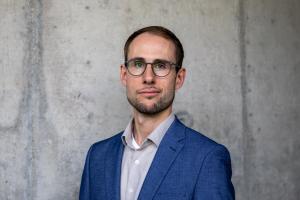
Sir Andrew Mitchell is a senior British Conservative politician who served as Secretary of State for International Development from 2010 to 2012 and also as Minister of State in the Foreign, Commonwealth & Development Office from 2022 to 2024. He also served as Deputy Foreign Secretary and, thereafter, as Shadow Foreign Secretary. Sir Andrew was first elected to Parliament in 1987 and currently represents the constituency of Sutton Coldfield.