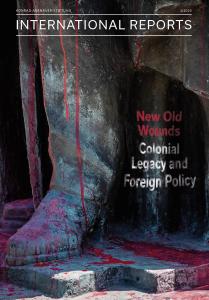
Issue: 2/2025




In a Nutshell
- The debate surrounding Germany’s colonial past in East Africa long remained a marginal political issue in Tanzania, but in recent years, it has gained greater prominence, largely due to efforts by the former German federal government.
- In particular, the former leadership of the Federal Foreign Office pursued a policy towards Tanzania that focused unilaterally on the past, often lacking an informed understanding of both historical facts and current debates within Tanzania itself.
- Led by the CCM party for over 60 years, Tanzania’s government shapes national memory politics and pursues its own interests in this area, which do not always align with those of the broader population or of the various ethnic groups. Nevertheless, Germany should not attempt to engage in a policy that bypasses the Tanzanian government.
- The issue of reparations is likely to occupy the new German government, which should avoid raising unrealistic expectations and should also act with caution, bearing in mind the difficult experience of negotiations with Namibia.
Although so-called Africa policy – i.e. Germany’s foreign policy towards the numerous African countries – still remains a peripheral issue in the German parliament, certain debates do make their way into national headlines from time to time. One such issue is the reappraisal of Germany’s colonial past on its neighbouring continent. According to the current coalition agreement between the Christian Democratic CDU/CSU and the Social Democratic SPD, the process of addressing colonialism is to be intensified. Unlike in more prominent policy areas, this field regularly sees constructive debate and underlying cross-party consensus in the political centre, that acknowledges the inexcusable nature of colonial crimes. Nonetheless, differences of opinion remain, especially when the debate on colonialism, originally rooted in cultural policy, risks becoming entangled in the pitfalls of foreign policy. The present article reports from Tanzania on the unintended problems that can arise from a one-dimensional approach to the issue, and outlines what a more strategic realignment of foreign and restitution policy towards Tanzania might look like. The discussion is guided by three main theses, which are elaborated in the following sections:
- The debate on colonialism as imposed by Germany in recent years is overly simplistic and lacks nuance. As a result, it fails to reflect complex realities on the ground in Tanzania. This can lead to serious foreign policy pitfalls.
- The process of addressing Germany’s colonial past in Tanzania must take place in partnership with local actors. This can – and should – be aligned with Germany’s foreign policy interests.
- German foreign and development policy towards Tanzania needs to be recalibrated in order to avoid diplomatic and cultural dead-ends. With a more pragmatic approach and a deeper understanding of local contexts, it is not too late to break free from the current policy stalemate vis-à-vis Tanzania.
The Political Relevance of Germany’s Current Debates on Colonialism
Who Are the Actors, and What Ideologies Do They Represent?
Debates on colonialism and their coverage in the media have increased significantly in Germany in recent years. Key topics include the renaming of streets, the treatment of colonial monuments, the repatriation of human remains and the restitution of cultural artefacts from colonial contexts. Many of these areas still require substantial progress, but there have been some notable achievements that are regarded as a success across different parts of the political spectrum. Museums (e.g. the current Tanzania exhibition at the Humboldt Forum in Berlin), libraries and universities are increasingly engaging with their colonial entanglements and with the origins of their collections, including the question of possible returns to the communities of origin.
Background Information: German East Africa
German East Africa was a colony of the German Empire from 1884/1885 to 1918. Its territory encompassed today’s Tanzania, Burundi, Rwanda and a small section of Mozambique. The German Empire had already established colonies in Togo, Cameroon and German South-West Africa in 1884. German East Africa was the most populous German colony and was regarded as having the greatest economic potential. The foundations of the colony were laid by the German East Africa Company (DOAG), whose representatives began talks with leaders of various local groups in 1884, pressuring them to sign unilaterally drafted treaties that “officially” relinquished all rights to these groups’ land in favour of the German colonisers. In February 1885, a “protection charter” signed by Kaiser Wilhelm I authorised Carl Peters – head of the DOAG – to occupy the territories. Colonial administration varied greatly by region: in some areas, German colonial officials did not appear until decades after Germany had claimed ownership. Peters was dismissed from office in 1897 due to his particularly brutal methods. Daily life in the European colonies in Africa was structured around the notion of separate “racial” groups. There was a fabricated hierarchy that placed whites at the pinnacle of civilisation, while blacks – sometimes not even regarded as full human beings – were at the bottom. This racist mindset served as the justification for a so-called “civilising mission” by Europeans, which in turn was used to excuse and legitimise harsh and discriminatory treatment. This racist and now-obsolete mindset was manifest in day-to-day life in German East Africa. There were repeated uprisings by the Indigenous population against German colonial rule. The Maji Maji Rebellion (1905 to 1907/1908) is especially remembered for its high death toll and brutality. The First World War marked the end of German East Africa. Following its defeat, Germany was forced to cede all its colonies, and German East Africa was transferred to British control.
However, certain civil society actors and left-leaning members of parliament are repeatedly calling for measures that – if implemented – would place the German government in a precarious foreign policy position. Various associations – such as “Berlin/Augsburg/Munich/Leipzig Postkolonial” and “Decolonize Berlin” along with academics and representatives of the Left Party – have called for general compensation for particularly severely affected Tanzanian communities and regions. Sevim Dağdelen, who was an MP for the left-wing populist BSW party until the beginning of 2025, is also among those who have demanded reparations: In a parliamentary question to the federal government in June 2024, she implicitly suggested that such payments need not necessarily take place “in coordination with or with the consent of the Tanzanian government”.
Demands for reparations are a central theme of mainstream postcolonial theories and debates. However, these demands are often based on simplified and therefore historically inaccurate representations of the past. The pre-colonial period in Africa – in which slavery, warfare and exploitation already existed – is frequently romanticised, while Western influence up to the present day is uniformly demonised. One of the main criticisms of postcolonial theory – which also becomes evident in the Tanzanian context – is the use of selective historical narratives to justify particular political convictions.
Germany’s Engagement in the Colonialism Debate
German President Frank-Walter Steinmeier visited Tanzania in 2023 and issued the first-ever apology for Germany’s colonial past in a speech delivered at the Maji Maji Museum in Songea. Also present was the responsible Minister of State at the Federal Foreign Office, who has visited Tanzania three times during her term of office from 2021 to 2025. During each of her trips, the focus has been on Germany’s colonial legacy. On her final visit in 2024, she took part in a memorial ceremony in Moshi – an event held at irregular intervals since 2018 and largely coordinated by external civil society initiatives based in Berlin. Apparently inspired by the president’s apology the previous year, she delivered a speech in a similar tone, apologising to the victims and figuratively bowing before them. She did so as an official representative of the German government and – as explicitly stated in her speech – also in a personal capacity as a descendant of Carl Peters, co-founder of the colony of German East Africa and therefore speaking on behalf of her family, as well. However, a planned dialogue with the descendants of Chagga King Mangi Meli – who was executed by the Germans – did not unfold as intended. Despite weeks of preparation, the Tanzanian government intervened on the day of the event and blocked direct contact with the descendants. The intimidated descendants were reminded by the government that in Tanzania, all such matters must first be addressed through official channels – and that any statements should be submitted to a state commission established expressly for this purpose. With some understanding of the hegemonic political self-image of the ruling CCM party, which has held uninterrupted power since Tanzania’s independence more than 60 years ago and also dominates national memory discourse in the country, such a development might have been anticipated. Tanzania’s political system is highly centralised, with individual regions overseen only by Regional Commissioners, who are directly appointed by the president. There are no freely elected regional parliaments.
At the memorial ceremony in Moshi, the Minister of State was accompanied by two activists from the German organisations “Berlin Postkolonial” and “Flinnworks”, both of which are involved in shaping the reappraisal of Germany’s colonial past and also call on the German government to pay reparations to descendants of colonial victims. These activists appear to have had a close relationship with the leadership of the Foreign Office during the term of Germany’s previous government because they were invited multiple times and participated in numerous joint events.
The debates in Germany reflect a limited understanding of how Tanzanians themselves remember the colonial period.
In the publicly accessible travel reports of the leadership of the Federal Foreign Office, there are several instances that reveal just how unprofessional the historical accounts in the travel descriptions are. For instance, the period from 1891 to 1919 is cited as the duration of the colony of German East Africa – an error that overlooks the actual beginning of colonial occupation by six to seven years. Furthermore, the reports claim that one-third of the population died as a result of the Maji Maji War. That figure continues to circulate in various online articles, but this claim originally stems from a Tanzanian PhD student’s estimate dating back to 1973 and was clearly labelled as a rough approximation at the time. Rather than citing a polemical and unverifiable figure, it would have been more appropriate to acknowledge that the precise number of deaths cannot be determined but that current estimates range between 200,000 and 300,000.
During all three visits, the Minister of State met with descendants of prominent individuals who had been executed by the Germans during the colonial period, and she raised the issue of the return of human remains and cultural objects with senior Tanzanian politicians, failing to place greater emphasis on other topics or at least link them more closely to the important issue of the colonial past. As one expert aptly put it, “You can’t help but get the impression that the federal government [the cabinet of Olaf Scholz, editor’s note] has no systematic plan for how it intends to proactively undertake a reappraisal of Germany’s colonial history.”
Culture of Remembrance in Tanzania: National Unity versus Local Diversity
What the debates in Germany have in common is a limited understanding of how Tanzanians themselves remember the colonial period, of how prominent the issue is within Tanzanian society and politics and of the range of views held locally, some of which are mutually contradictory. In order to steer Germany’s well-intentioned but often poorly executed efforts at addressing the colonial past back towards a more strategic and genuinely partnership-based approach – one that would also be recognised as such by the Tanzanian government – it is essential to understand how the issue is debated within Tanzania itself.
It is only since 2023 that the first academic publications dealing exclusively with how the German colonial era is remembered in Tanzania have begun to appear. Key insights from these studies have evidently not yet reached those responsible for shaping Germany’s foreign policy towards Tanzania in the recent past. However, these perspectives are crucial when it comes to making well-considered, nuanced decisions.
The state-led practices of remembrance are at times rejected by the wider population.
In Tanzania, there is a wide range of forms of remembrance that may often be surprising from a German perspective and that may sometimes seem to fundamentally contradict one another. The dominant actor is clearly the nation state, which has since independence aimed to establish a largely homogeneous culture of remembrance in order to support nation-building and foster patriotism. The Maji Maji War is the most significant event in this context and is a common theme in ceremonial speeches by Tanzanian politicians. In the state narrative, the Maji Maji War is regarded as the founding myth of the Tanzanian nation because it is seen as the first time 20 different ethnic groups “united” to resist German colonial forces. In the south of the country in particular, the war is commemorated with monuments, museums, streets, radio stations, restaurants, hotels and even a football club and its stadium being named after it.
Nevertheless, these state-led practices of remembrance are at times rejected by the wider population. One example is the obelisk in Kilwa Kivinje, originally erected to commemorate uprisings in the 1880s but later repurposed by the government as a memorial to the Maji Maji War. This change gave rise to such strong local opposition that residents spent years urging the government to restore its original meaning – something that has only recently been done. Similarly, the annual remembrance days for the victims of the Maji Maji War have been repeatedly marked by disputes between government representatives, the Ngoni people and the other 19 ethnic groups involved in the conflict. The latter have criticised the disproportionate focus on the Ngoni, even threatening to boycott the commemorations in 2023. These examples clearly indicate that the Tanzanian government pursues its own interests in shaping remembrance culture – interests that do not always align with those of the population at large.
The reappraisal of colonial history has gained momentum since the visits by German officials.
Knowledge of such local disputes – and the sensitivity that comes with it – was not clearly reflected in the visits to Songea by the German President and the Minister of State, which thus led to local dissatisfaction following the visits. President Steinmeier’s speech focused almost entirely on Ngoni leader Songea Mbano and was addressed directly to Mbano’s descendants. The other 19 ethnic groups were not mentioned, nor was there any acknowledgement of the fact that the war had actually been initiated by members of the Matumbi people. The Minister of State’s activities in the south of the country were likewise primarily focused on the Ngoni people. Although the main issue here appears to have been a lack of awareness of local specificities rather than ill intent, the conduct of official German representatives during their visits further contributed to the marginalisation of other population groups. These groups have long been calling for greater recognition and visibility, also through elected representatives in Tanzanian parliamentary debates. Local voices have reported that following the visits and the engagement with selected communities, the Tanzanian government first had to “clean up” and restore order to what Germany had disrupted.
Tanzanian Politics and the Colonial Legacy
The reappraisal of colonial history remains a marginal topic in Tanzania’s parliament, but it has gained momentum since the visits by German officials. In particular, representatives from southern Tanzania – a region that suffered severely under German colonial rule – have called not only for the construction of museums and memorials, but also for broader infrastructure and development support. In 2017, opposition MP Vedasto Ngombale (CUF) called for German reparations to the descendants of victims of the Maji Maji War in a question to then Defence Minister Hussein Mwinyi. While the minister publicly supported the idea, the cabinet appeared divided on the issue, and one year later, Foreign Minister Augustine Mahiga firmly rejected any demands for reparations and the return of cultural objects at a meeting with his German counterpart, Heiko Maas. During the same parliamentary term, the Tanzanian opposition also called for the dinosaur skeleton currently being held in the Museum of Natural History in Berlin to be returned to Tanzania. These requests were likewise dismissed by the government in parliament, citing high maintenance costs, a lack of exhibition facilities and limited economic value.
As a representative of the same government – and in contradiction to previous statements – Tanzanian Ambassador Abdallah Possi made a statement in 2020 calling for the return of all cultural objects and human remains. His remark appeared to be an initial attempt to gauge the response of the German side, and he went on to state that reparations would follow as the next step: “How this all develops will depend very much on the response of the German government. If they are open to negotiations, things will be straightforward. If they are not, then we may pursue not only a moral, but also a legal route.” The ambassador explained the timing of these demands by pointing to successful developments in comparable cases in other countries, to “activists who are increasingly speaking out – both in Berlin and in Tanzania” – and “the growing willingness among German policymakers to address these issues.” Since the visit by President Steinmeier, calls for reparations have also become more prominent within Tanzania itself.
No formal agreement has yet been drawn up between the two governments regarding the colonial past, nor has the Tanzanian government officially demanded reparations. This is partly due to the fact that on the Tanzanian side, there is still no clear political strategy on how to proceed. However, three separate committees have already been established in order to provide clarity: an expert committee, a committee made up of state secretaries and ministers and a negotiation committee tasked with ensuring the return of all human remains and cultural objects. The request for an initial visit by this committee to Berlin was approved in December 2024 by the former German government and took place in early 2025. Since then – and beginning even beforehand – Tanzania has been calling for the establishment of a similar commission on the German side. The new German government will now have to decide how to approach this process.
Pragmatism over Idealism: A Call for a More Strategic Approach to the Colonialism Debate
In recent years, it has become clear that an idealistic and one-dimensional approach to addressing Germany’s colonial legacy in Tanzania risks leading to cultural and diplomatic dead-ends. However, it is not too late to realign German foreign policy towards Tanzania – a realignment that must also take German interests into account. In order to achieve this goal, it is crucial to understand the dynamics triggered by past actions and demands as well as the potentially negative consequences they may yet produce.
The apology on the part of the German President is a welcome development.
The greatest stumbling block will likely be the demand for reparations that is now to be expected. In order to prepare a forward-looking dialogue that is less time-consuming and less prone to conflict, lessons must be drawn from the stalled negotiations with Namibia. In addition, any payments should not go directly to specific population groups without the approval of the Tanzanian government. This could potentially lead to the exclusion of communities that are not well represented in Tanzania’s mainstream remembrance culture. The Tanzanian government has already stated that it considers any direct engagement with individual groups to be a disruption to national unity that the country will no longer tolerate. However, past experience indicates that the Tanzanian government itself favours certain groups. Given the country’s ethnic diversity – with over 120 groups – distributing such funds would be even more complex than in a country such as Namibia. Whether it comes from German civil society or increasingly from Tanzania itself, any further talk of reparations only risks creating unrealistic expectations. Germany should be prepared for a Tanzanian proposal to reframe reparations as additional development cooperation. Given the already-above-average development budget allocated to Tanzania, such proposals should be critically questioned. Germany’s foreign policy has sent out mixed signals in this area – not least through its close cooperation with activist groups that advocate reparations and that have been given platforms at events in Tanzania.
Unlike in Namibia, where the lengthy negotiation process has meant that the right moment for a high-level apology has been missed, such an apology already took place in Tanzania with the visit of the German President. This is a welcome development. What matters now is both ensuring that any future visits or apologies are informed by a deep awareness of local cultural dynamics and taking care to avoid perceptions of favouritism towards a few selected ethnic groups, which would exacerbate existing inter-ethnic tensions. Since this has already occurred in the past, future visits must involve greater consultation with both the Tanzanian government and experts familiar with the specific local context.
Pragmatism over Ideology
Germany’s efforts to reassess its colonial past and foster remembrance culture are too important to be viewed solely as left-leaning political causes: Given the risks to foreign policy outlined above, it is important to ensure that this area is not monopolised by one end of the political spectrum. The German government should avoid offering concessions on demand, should refrain from sending out the wrong signals and should give greater weight to its own foreign policy interests. For this reason, engaging critically with the past must be more strategically linked to future-oriented cooperation.
Although colonial atrocities must never be downplayed and the colonial system continues to influence society, the economy and politics in some areas, Tanzanian partners should not be cast in a perpetual victim role that frames all failings of the country’s own autocratic government as ongoing consequences of colonialism. This postcolonial mindset is ultimately self-defeating as it reproduces the very clichés of African countries – that is, of being passive and helpless – that it seeks to challenge. In order to build a culture of remembrance that does justice to both sides, the Tanzanian perspectives described would need to be given greater consideration in Germany. If these perspectives continue to be ignored in the German debate, this would amount to a renewed marginalisation of formerly colonised societies. Unfortunately, the impression to date has often been that despite aspiring to engage in dialogue on equal footing, actions have been driven more by ideology than by a careful engagement with individual, cultural and political sensitivities on the ground. Even on the issue of the repatriation of human remains, for example, scant attention has been paid to the fact that the Tanzanian government is only at the beginning of its own internal processes. The Minister of State responsible at the Federal Foreign Office later acknowledged that unlike other consulted governments, the Tanzanian authorities showed “little interest in this topic”. This insight reveals once again that African countries differ widely and that a one-size-fits-all approach is inappropriate.
The colonial present can be seen particularly in the actions of Russia and China in Africa.
Another risk lies in placing too much focus on colonial history as the central theme of bilateral relations. This would mean missing out on opportunities for positive engagement in other areas, such as economic cooperation. Germany’s new government should make this clear to its Tanzanian counterparts. While the German President’s visit sent out a valuable signal by including a large business delegation, all subsequent visits by senior Foreign Office representatives have focused on the past. However, Germany has much to offer in addressing current challenges – to the benefit of both sides. In this context, Germany’s extensive development cooperation should also be more strongly emphasised and aligned with a clearer strategic focus. Traditional development projects or concepts such as a “feminist foreign policy” are not high on the list of priorities in many African countries: Indeed, most governments are primarily concerned with staying in power and with creating jobs for their young and growing populations.
Russia and China as New “Anti-Colonial” Actors?
Only an integrated approach that combines economic cooperation, diplomacy and development will allow Germany both to present a credible alternative to authoritarian models and to strengthen its position in Africa. Despite the necessary reckoning with colonial history, today’s geopolitical landscape makes it clear that there is also such a thing as a “colonial present”, as can be seen particularly in the actions of Russia and China in Africa. These states benefit from the missteps of Western governments and use disinformation campaigns to present themselves, in a strategically more savvy way, as supposedly “anti-colonial” actors. For instance, Russia increasingly refers to its allegedly anti-colonial past in contrast to the West – a narrative promoted through large-scale propaganda campaigns, such as those by RT in Dar es Salaam. Meanwhile, China is frequently described as neocolonial due to its aggressive economic power play and its tough stance towards its African debtors.
Germany’s frequently naïve foreign policy only plays into the hands of such anti-democratic narratives. This broader geopolitical context underscores why a more strategic approach to Germany’s colonial legacy is important – not only to do justice to the past, but also to navigate future competition in the region. In this light, it is a positive sign that the CDU/CSU and SPD coalition agreement states, “We will firmly oppose Russian and Chinese influence in Africa, together with our partners.”
Addressing Current Challenges Is the Priority for Our Partners on the Ground
In the case of Tanzania, colonial history does not play a major role in political and public discourse. Our African partners are less interested in retrospective soul-searching than in gaining greater support in facing up to the pressing challenges of the present. The former German government brought the issue of remembrance into bilateral relations too quickly – sometimes at the risk of alienating Tanzanian politics and society. A gridlock similar to that seen in Germany’s negotiations with Namibia is even more likely in Tanzania due to the country’s own internal cultural and political dynamics. Indeed, Tanzanian calls for “reparations on our terms” are only just beginning to emerge.
In conclusion, it seems unlikely that a misguided debate on colonialism would have taken root in Tanzania without German involvement. Now that the issue has gained traction, however, the new German government will have to deal with it for longer than it might wish – and likely with negative implications for the broader scope of German development cooperation.
– translated from German –
Tilmann Feltes was Head of the Konrad-Adenauer-Stiftung’s Tanzania Office until April 2025.
Sebastian Laschet is Project Manager with the Tanzanian non-governmental organisation JamiiForums.
Choose PDF format for the full version of this article including references.