Germany Should Respond to Hybrid Attacks, Including at Sea
Disinformation campaigns, sabotage, attacks o, and the foiled drone attack at Leipzig Airport: Moscow is intensifying its hybrid operations against Germany. Berlin should respond firmly, yet prudently. One effective point of leverage is Russia’s shadow fleet operating in the Baltic and North Seas.
Dr. Edmund Ratka, Johannes R. Fischbach
September 14, 2026
kurzum
Diplomatic Academy of Viet Nam/ Hoi Thao Phien Chieu
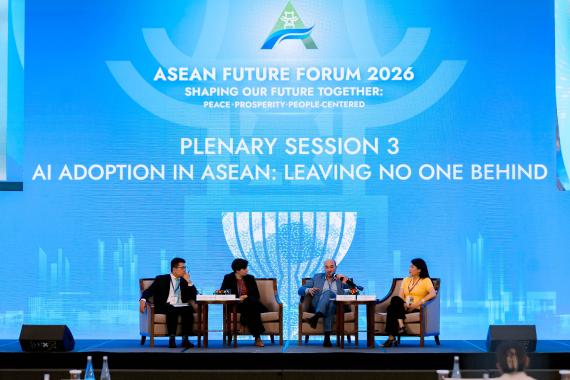
AI in ASEAN and the EU
Challenges, Opportunities, and potentials for Cooperation
ASEAN and the EU have very different starting points when it comes to AI, particularly in terms of resources and talent. However, this should not obscure the fact that there is great potential for cooperation in the governance of AI, as well as in AI applications and AI infrastructure. The transfer of innovation should be stepped up in this area.
Leonie Mader, Lewe Paul
August 31, 2026
kurzum
smarterpix / MikeMareen
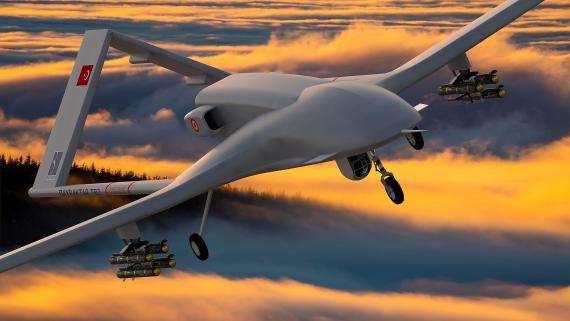
NATO in the age of drones
Why Germany and Türkiye should work more closely together strategically
The deployment of Turkish drones in the war in Ukraine is regarded as the moment when the drone era finally entered Europe’s political and military debate. The 18th Istanbul Security Conference® in 2026 highlighted Türkiye’s growing importance as a manufacturer of modern drone and UAV systems. Ahead of the 2026 NATO summit in Ankara, the Young Foreign Policy Working Group has addressed this issue: a strategic security partnership with Türkiye in the field of drone development should be a key component of German and European security policy considerations.
Yilmaz Akkoyun, Dr. Markus Hildebrand
July 7, 2026
kurzum
smarterpix / nhatipoglu
Recent developments in social media regulation: Child Protection “Down Under”
What Can Be Learned from Australia’s Ban on Social Media?
Children in Germany also spend several hours each day on social media platforms such as Instagram or YouTube. While the educational effects of social media are limited, evidence of addiction risks and other problematic consequences of intensive social media use is increasing. Is Australia’s ban on social media an answer to this challenge?
Sophia Brook, Elisabeth Hoffmann
June 4, 2026
kurzum
smarterpix / LeleMezzadri
Energy price shock: What a resilient energy transition must achieve
A resilient energy transition should be able to withstand geopolitical price shocks and be competitive with cheap fossil fuels
The energy price shock exposes Germany's structural market weaknesses. While geopolitics is driving up prices, spiralling system costs and Government-imposed levies are jeopardising our economic substance. A resilient energy transition counteracts this and remains competitive even when fossil fuel prices fall. This will secure our position as an industrial location and prevent climate protection from being bought at the expense of valuable added value.
Dr. Christian Hübner
March 13, 2026
kurzum
smarterpix / HayDmitriy
AI literacy requirements should be reformed to be more practical
Article 4 of the AI Act: Good for bureaucracy, bad in practice
Article 4 of the AI Act leads to abstract, one-off training courses that can be easily monitored bureaucratically. In practice, however, they offer little real added value. What is needed instead are agile, sector-specific teaching and learning programmes. Art. 4 should therefore be amended with the Digital Omnibus.
Leonie Mader
February 20, 2026
kurzum
Smarterpix/ sweet_tomato
Europe in the Age of Geoeconomics
Can ‘Buy European’ Strengthen Europe's Competitiveness and Resilience?
In addition to countervailing duties, international alliances and innovation promotion, ‘Buy European’ is being discussed as a tool for strengthening European industry. However, ‘Buy European’ should be a last resort and only applied in narrowly defined areas. A combination of targeted countervailing duties in cases of unfair competition and an ambitious free trade agenda would be more effective.
Tim Peter
February 19, 2026
kurzum
IMAGO / Xinhua
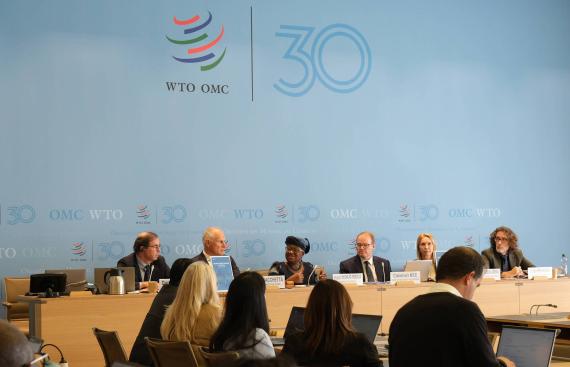
World trade continues even without WTO reform
The EU can shape trade rules with its partners
From 26 to 29 March 2026, the 14th WTO Ministerial Conference will be held in Yaoundé, Cameroon. Expectations for this highest-ranking world trade body are extremely low. No one seriously believes that the deadlock that has persisted since the 4th Ministerial Conference in Doha can be broken. The fundamental reform of the WTO that has been called for years will not succeed this time either. While this is not good news for the global trade order, it does not mean that the constructive forces within the international community, and in particular the EU, have their hands tied.
Gunter Rieck Moncayo
February 10, 2026
kurzum
IMAGO / Peter Homann
Youth protests against military service
Use school strikes against compulsory military service as a starting point for dialogue
After schoolchildren across Germany took to the streets in early December 2025 to protest against compulsory military service, politicians must not respond with rejection. They must openly address the concerns and needs of the younger generation. Only if young people are involved will measures such as the Military Service Modernisation Act or a potential community service find acceptance.
Martin Bieber
December 18, 2025
kurzum
smarterpics / Sonulkaster
Securing academic freedom for the long term
Establish a national contact point for research safety in the short term
Research safety in international collaborations has been the subject of intense debate since well before the publication of the German Science Council's recommendations on research safety in May 2025. Until a few years ago, these collaborations were generally viewed positively, as internationality in research is considered a driver of knowledge and the gold standard. However, since Russia's invasion of Ukraine, the risks of international collaborations have increasingly come into focus.
Christina Thelen
December 4, 2025
kurzum
Showing 1 to 10 of 100 entries.
Asset Publisher
About this series
Concise, reduced to the essentials, but always highly topical. In our series “in short”, our experts summarise an issue or problem on a maximum of two pages.