Reform of sexual offences legislation: Urgent introduction of the ‘Yes Means Yes’ model
On women’s right to sexual self-determination
The Giesèle Pelicot case has accelerated the political and social debate in France regarding the introduction of the so-called ‘Yes Means Yes’ model, under which only explicit consent to a sexual act is regarded as the criterion for consensuality. In Germany, the so-called ‘No Means No’ model is currently applied: It is not the absence of consent that constitutes the criterion for rape, but solely explicit opposition to a sexual act. Legally, this is governed by Section 177 of the Criminal Code.
Dr. Dana Fennert
October 29, 2026
kurzum
Why extremism requires new categories and prevention approaches.
At the intersection of conspiracy ideologies, extremism, and violence – Hybrid worldviews are transforming radicalization processes and security requirements
Extremist violence is evolving: ideologies are blending, traditional categories are becoming less distinct, and new hybrid milieus are emerging. The article examines how bridging narratives connect diverse extremist currents and the challenges this poses for security agencies, researchers, and prevention efforts. It highlights the necessity of cross-phenomenon analytical approaches and flexible prevention structures for the early detection of future radicalization dynamics.
Alexander Schiele, Leoni Heyn, Miriam Uludoğan-Heß
October 22, 2026
Facts and Findings
The Physical Race for AI
How Control over Electricity, Water, and Critical Minerals Is Becoming a Determinant of AI Leadership
The global race for AI leadership is often framed as a competition for technological innovation, yet it increasingly depends on access to physical resources. Growing demand for data centres is intensifying competition for electricity, grid capacity, water and critical minerals. For Germany and Europe, the challenge is no longer about innovation alone, but strategically ensuring the physical foundations that enable AI competitiveness and technological sovereignty.
Simon Engelkes, Alesia Makaj
October 21, 2026
Monitor
IMAGO / JOKER
„The Threshold for Family Formation Has Risen“
Interview with Professor Anna Rotkirch on declining fertility rates, the role of partnerships, and the conditions needed to help people realize their family intentions
Why are fewer and fewer people having children? Anna Rotkirch, Research Professor and Director at Väestöliitto, the Family Federation of Finland, examines the reasons behind declining birth rates and the growing barriers to family formation in Europe. She recommends looking beyond established family policy measures and paying greater attention to the conditions that shape people’s decisions about having children.
October 15, 2026
Interviews
IMAGO / Xinhua
China’s ‘Space Silk Road’ – Space Partnerships in Africa
Security Implications for Europe and Germany
China is rapidly expanding its military capabilities in space, while Africa is becoming an increasingly important arena for Chinese space activities. Chinese-funded and Chinese-built satellites, ground stations, and planned spaceports strengthen African space capabilities but may also create new technological and political dependencies. The dual-use potential of these systems allows China to expand its strategic influence in Africa. This paper examines the implications for Germany and Europe and identifies options for European engagement.
Amélie Wurl, Tilmann Feltes
October 9, 2026
Facts and Findings
IMAGO / IlluPics
Extremists’ Understanding of Democracy
The boundaries of democracy under Germany’s Basic Law, examined through the example of the Alternative for Germany party
Liberal democracy is under pressure. Using the Alternative for Germany (AfD) as an example, this study examines where the boundary lies between legitimate political criticism and efforts directed against the constitutional order. It focuses on human dignity and equality, freedom of religion, the separation of powers and independent institutions, as well as the relationship with Europe and the freedom of political parties. The analysis identifies areas in which AfD positions conflict with fundamental principles of Germany’s Basic Law.
Prof. Dr. Hans Hofmann
October 5, 2026
Monitor
smarterpix / macor
Fault Lines of the Public. Representative Survey on the Consumption of Political Information
Representative survey on the consumption of political information and the evaluation of the public broadcasters in Germany
The political public is divided along two fault lines. On the one hand, younger and older people have different ways of obtaining political information. Younger people use online media, while older people rely on newspapers and television. On the other hand, there is a divide along political attitudes: People who advocate for lower taxes coupled with reduced social benefits, prioritizing economic growth over climate protection, and stricter restrictions on immigration feel significantly less represented in public media. Both divides make it difficult to reach a common understanding on political issues.
Dr. Jochen Roose, Jonas Schwarzenberger
October 1, 2026
Monitor Election and Social Research
smarterpix / Fidaolga
Emotions in Democracy
Representative survey on the influence of emotions on political attitudes in East and West Germany
Emotions can be relevant to political attitudes and behaviour in many ways, especially fear and anger. The present study examines how widespread positive and negative emotions are and how they differ between voter groups. A total of eight different feelings are examined, three positive (happy, calm and composed, lots of energy) and five negative feelings (depressed, angry, overwhelmed, anxious, lonely). The negative emotions are examined in more detail and their influence on democratic attitudes is analysed.
Dr. Sabine Pokorny
September 24, 2026
Monitor Election and Social Research
smarterpics / Boarding_Now
Analysis of the state election in Mecklenburg-Western Pomerania on 20 September 2026
Analysis based on preliminary results, on the main determining factors, voter migration and social structure
In the state election in Mecklenburg-Western Pomerania, the AfD emerged as the largest party, ahead of the SPD. For the first time, the CDU failed to win a seat in a state parliament. Our election analysis provides explanations for the results, examining voter shifts and the key factors that influenced them. Drawing on exit polls and pre-election surveys, it explains the significance of voters’ assessments of leading figures, party capabilities and political issues for the election result.
Dr. Viola Neu, Dr. Sabine Pokorny
September 22, 2026
Monitor Election and Social Research
IMAGO / Emmanuele Contini
Analysis of the election for the Berlin House of Representatives on 20 September 2026
Analysis based on preliminary results, on the main determining factors, voter migration and social structure
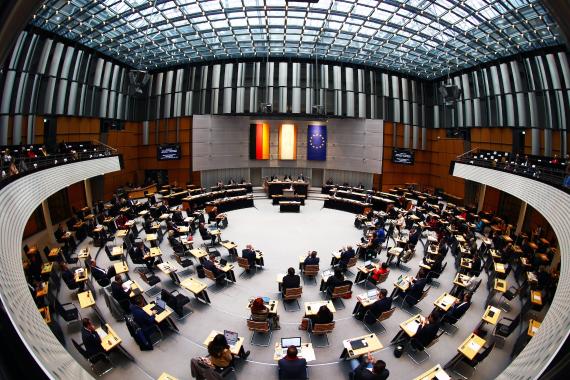
Following the elections in Berlin and Mecklenburg-Western Pomerania, the 2026 election year draws to a close with a mixed picture that does not allow any conclusions to be drawn about the 2027 elections. Our election analysis examines voter shifts and the key factors determining the election result. Drawing on exit polls and pre-election surveys, it explains, amongst other things, the significance of assessments of leading figures, party capabilities and political issues.