






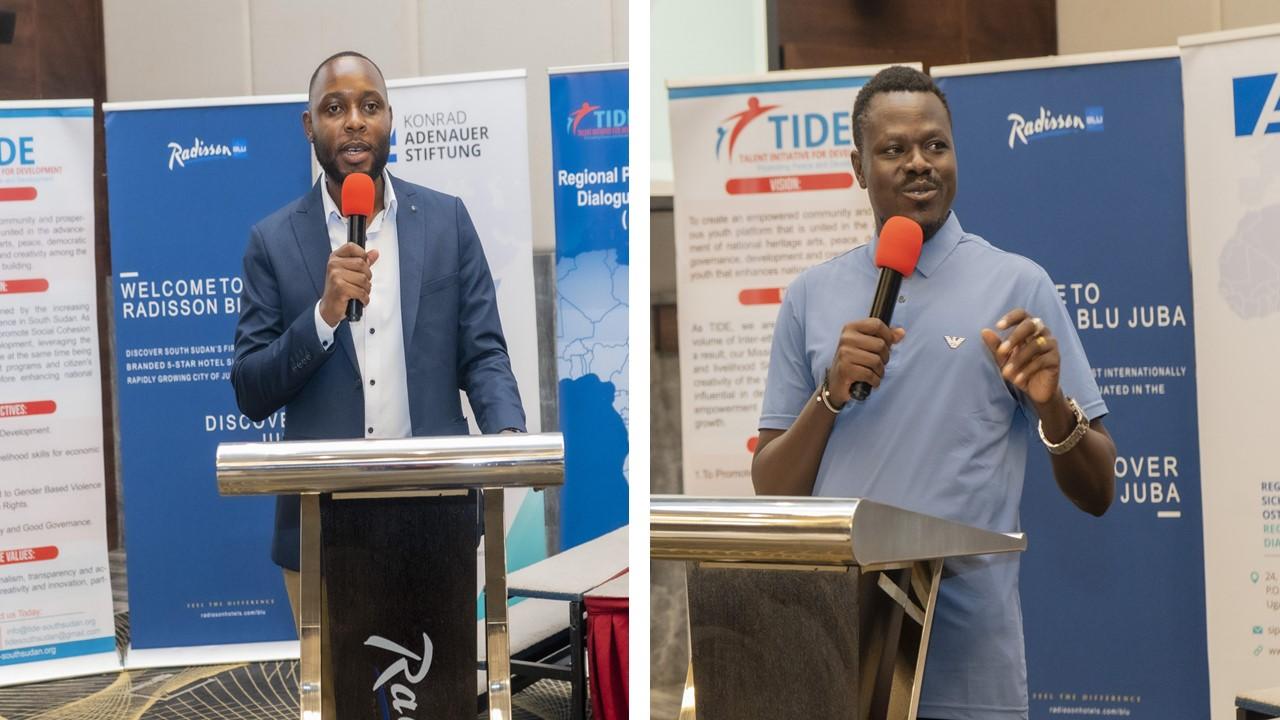
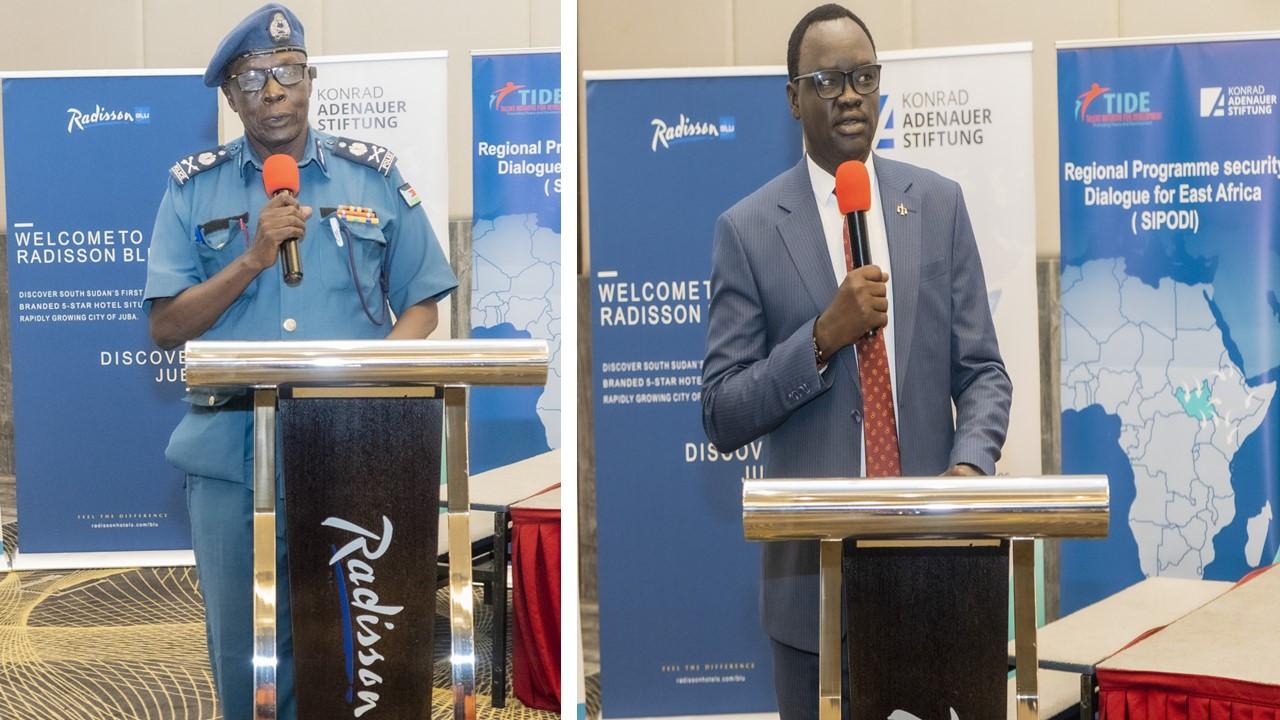
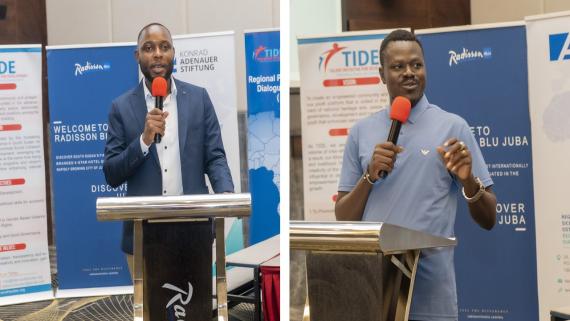
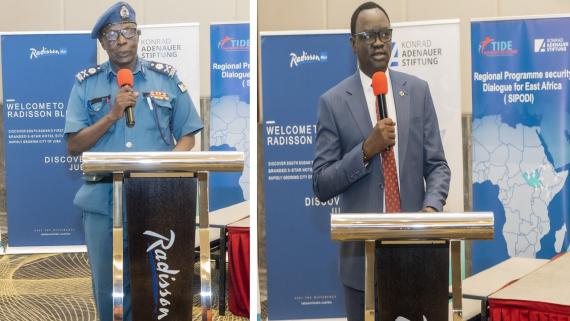
The dialogue was officially opened by Edgar Mwine, Project Manager, KAS RP SIPODI East Africa, who highlighted that Uganda’s open-door refugee approach built on a settlement model faces a sustainability crisis, driven by cuts in humanitarian aid. He further noted that restriction of migrations has become a global trend and addressing the challenges associated with such restrictions may require a review of conventions and protocols that regulate migration. Robert Guya Antipas, the Acting Executive Director of Talent Initiative for Development welcomed all the participants and emphasised that the discussion was timely and relevant, given South Sudan profile as a source and transit for refugees and asylum seekers.
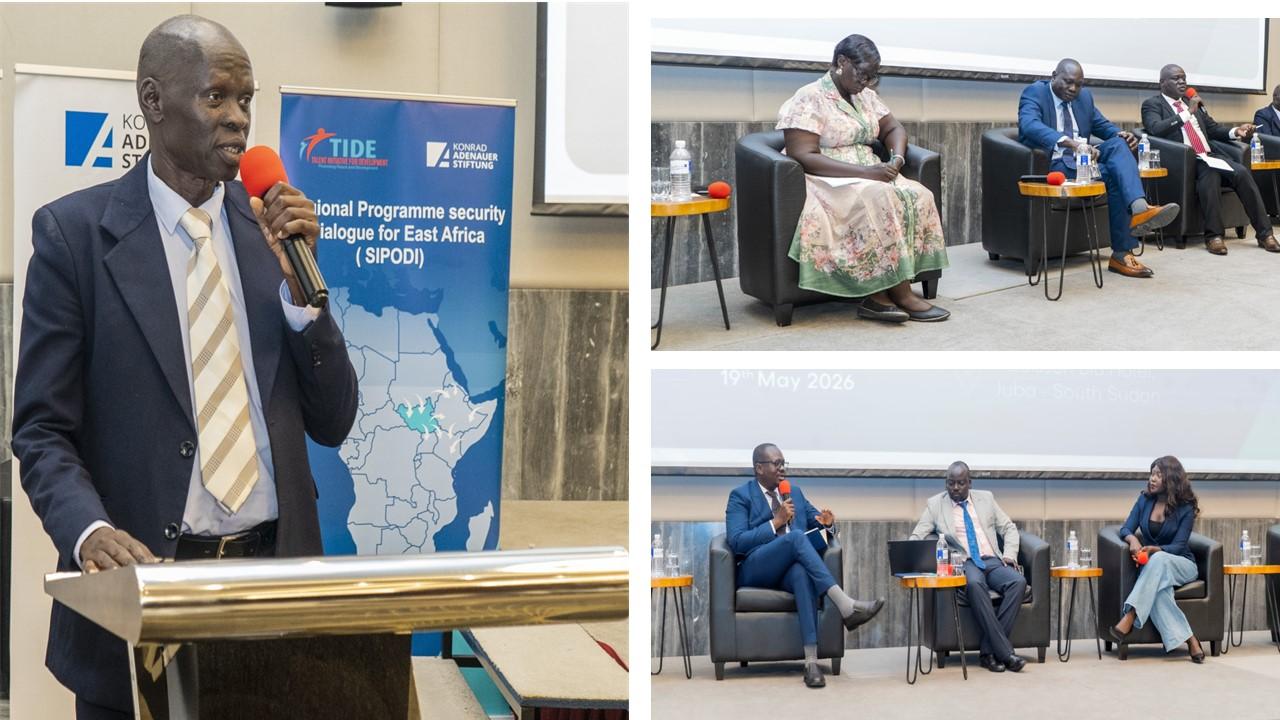
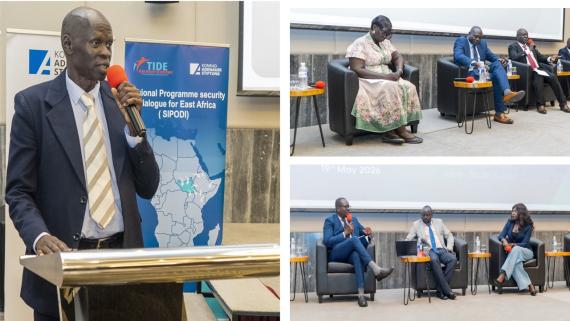
Maj Gen (Rtd) Nyang Thiciot Dak, the former Deputy Director, Civil Registry, Nationality, Passport and Immigration, Republic of South Sudan delivered a keynote address in which he highlighted that the policy shift by Uganda, to individual status determination may create bias, exclusion and administrative delays and impede Uganda’s commitment to regional and international protocols. He urged for a balanced approach to national interests, humanitarian support and regional stability, and shared responsibility towards refugees and vulnerable migrant populations.
Advocate Tong Kot Kuocin, Senior Refugee Lawyer made an opening statement in which he highlighted the legal implications of Uganda’s changing approach towards refugees. He noted that this move may result into collective rejection, protection gaps and family separation. He urged the Government of Uganda to clearly outline and publicise refugee verification procedures and also devolve the mandate and responsibilities of the Refugee Eligibility Committee.
The first panel, moderated by Stella Loki, Secretary General, Female Journalists Network, discussed the legal and humanitarian consequences of abolishing group status recognition of refugees. Panellists included Wani Francis, migration data analyst, Advocate Amanya Joseph, refugee law expert, Daniel Akaak, migration consultant and Prof Leben Nelson Moro, Head of Department, Migration Studies, University of Juba. Panellists noted that there was a lack of clarity on the new policy directive by Uganda and urged the government of Uganda to halt its implementation until there are more consultations and sensitisation of affected populations. The panel also noted that this policy shift may result into statelessness for asylum seekers whose claims may be rejected making them even more vulnerable. They urged the government of Uganda to halt this process and carry out wider consultations and more public sensitisation.
The second panel discussed regional responses and burden sharing as a sustainable alternative to refugee crisis. The panel was moderated by Prof John Akec, Vice Chancellor, University of Juba and comprised of Hon Beny Gideon Mabor, Former Minister for East African Affairs, Republic of South Sudan, Dr Abraham Kuol, Head of Department, Political Science, University of Juba, Agele Kennedy Mark, Executive Director, Safe Communities Forum and Shamila Khaltuma, Executive Director, Women for Peace action, South Sudan. The panel noted that there is need to strengthen and fund regional institutions and like the East African Community (EAC) and the Iner-governmental Authority for Development (IGAD) so that they can ably coordinate regional refugee responses. They also urged local communities to be more accommodative and integrate internally displaced persons rather than displa7ce them further across borders. Panellists also highlighted that the lasting solution for refugee crisis in the region is to ensure peace and stability in their own home countries so that refugees have peaceful places to return to.
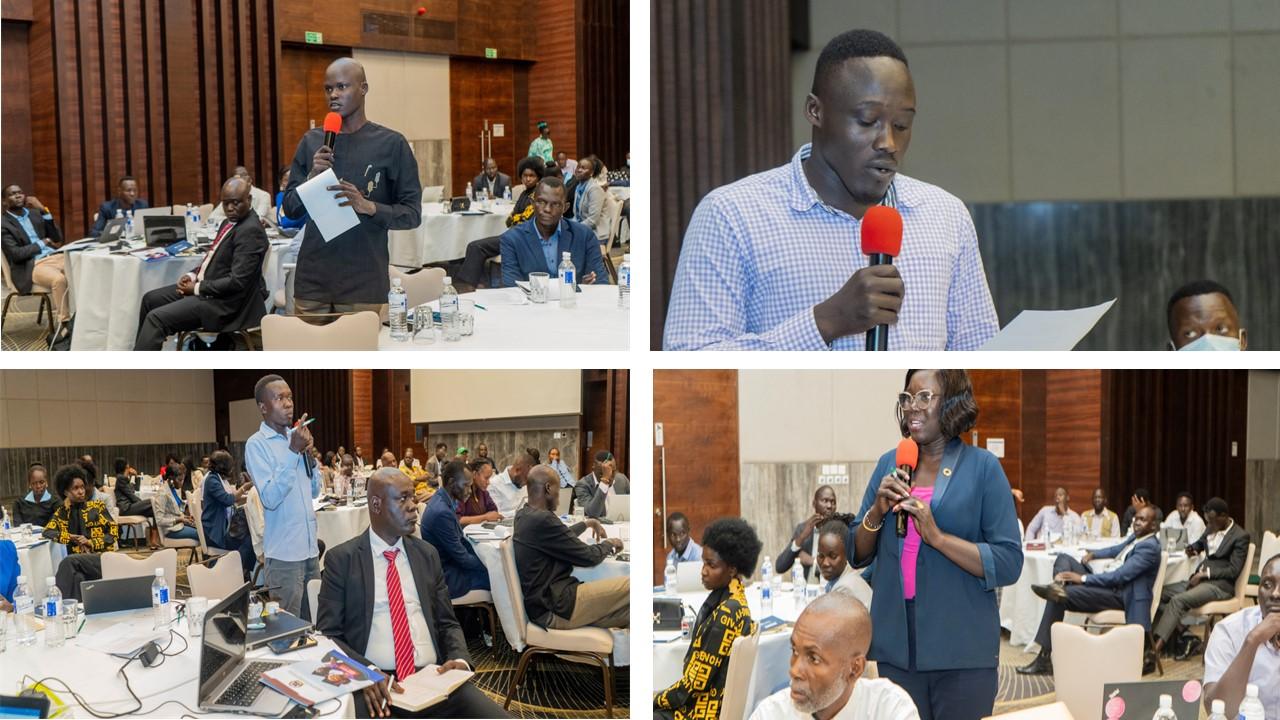
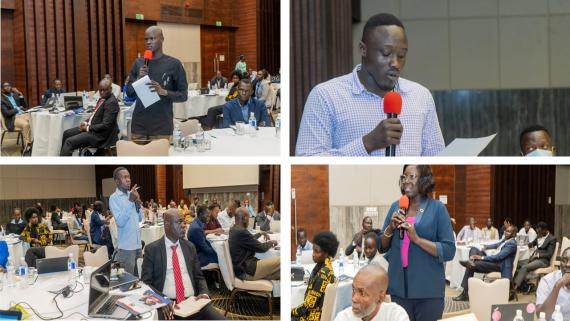
The dialogue concluded with a questions and answers session as well as closing remarks by Susan Natumanya, Project Manager, KAS RP SIPODI East Africa who thanked TIDE for their continued partnership with KAS and also thanked the participants for their active contributions to the discussions.

About this series
The Konrad-Adenauer-Stiftung, its educational institutions, centres and foreign offices, offer several thousand events on various subjects each year. We provide up to date and exclusive reports on selected conferences, events and symposia at www.kas.de. In addition to a summary of the contents, you can also find additional material such as pictures, speeches, videos or audio clips.