






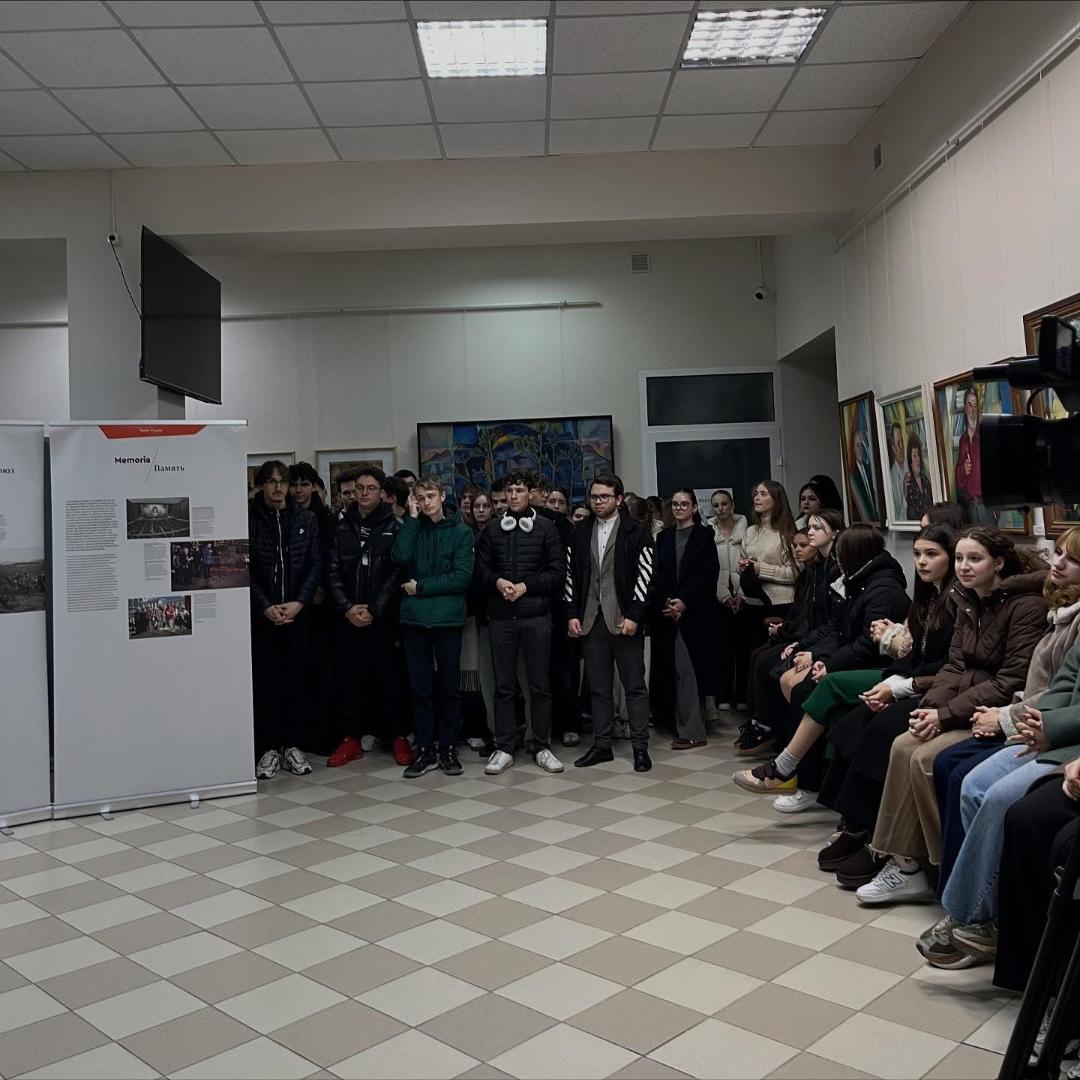
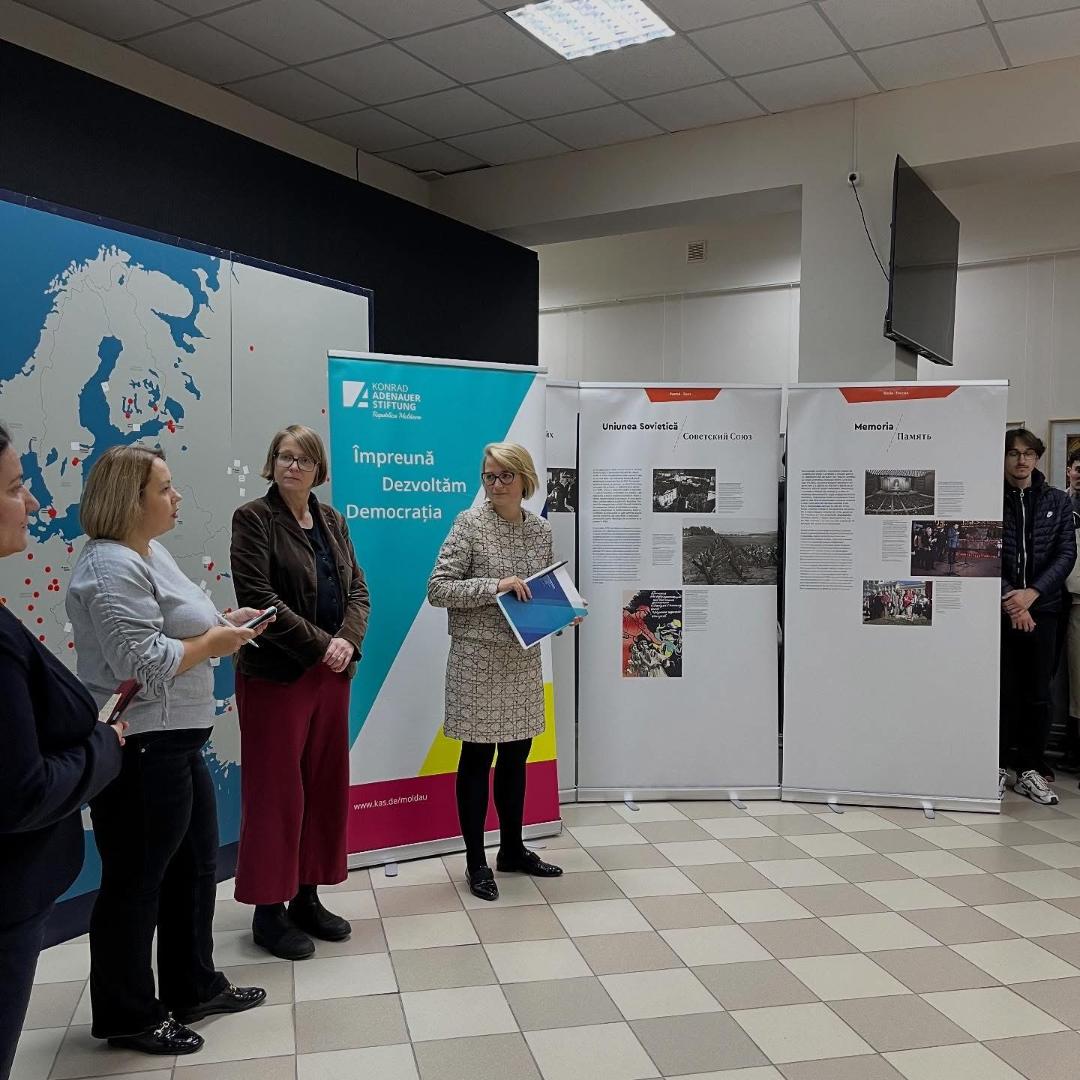
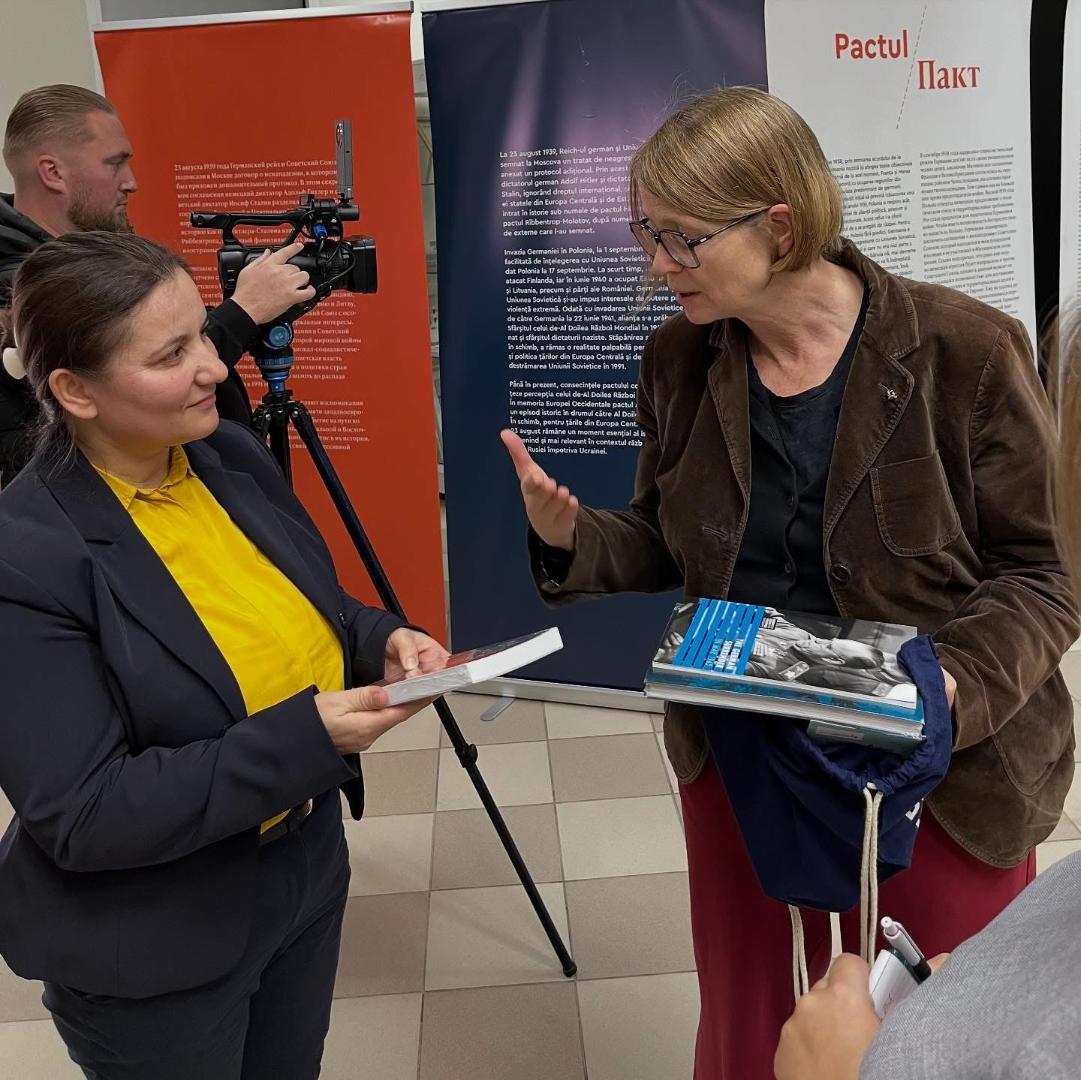

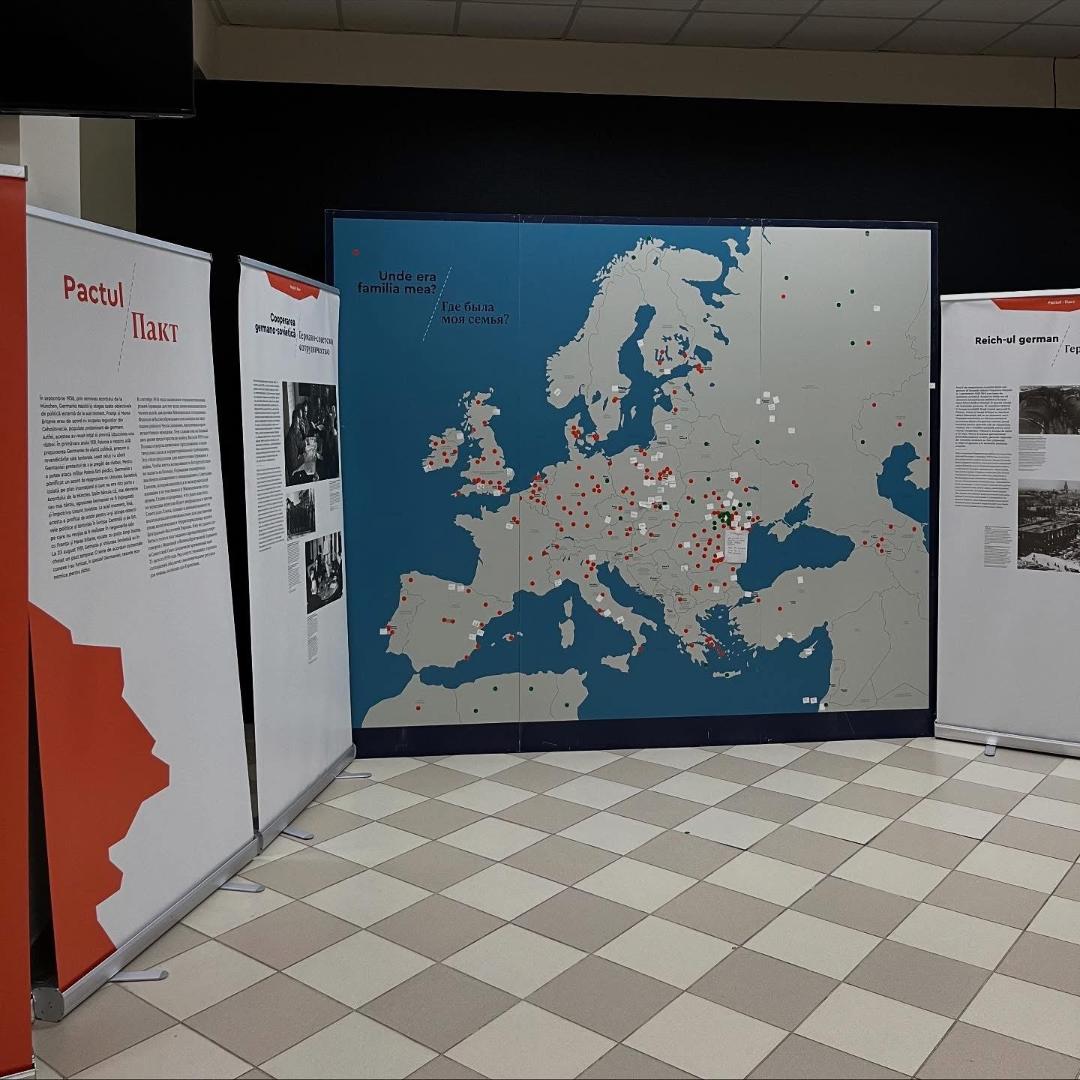
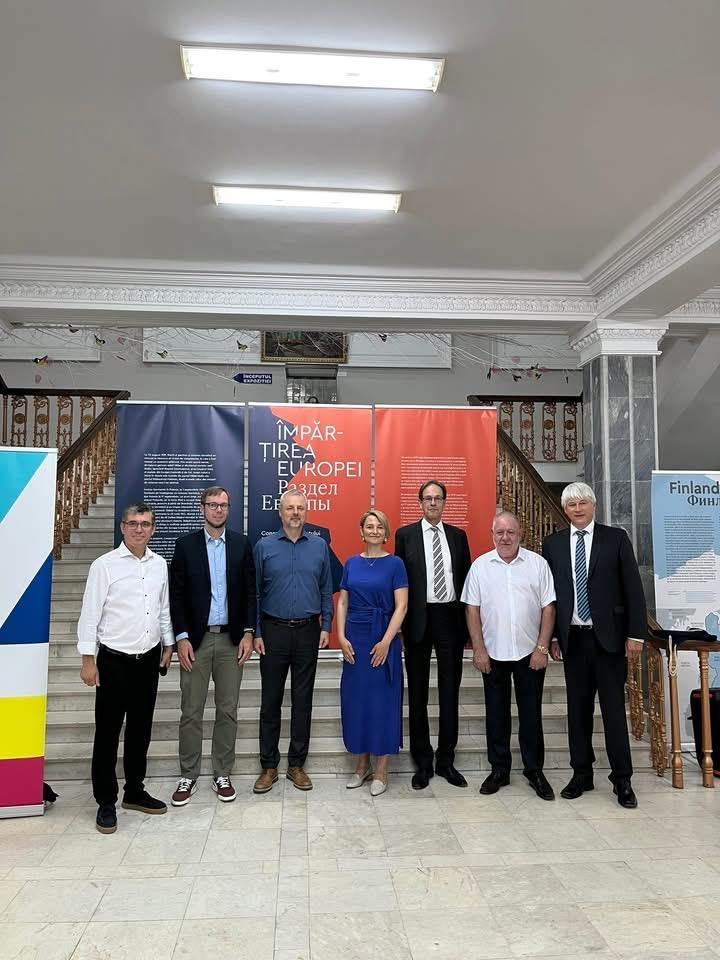
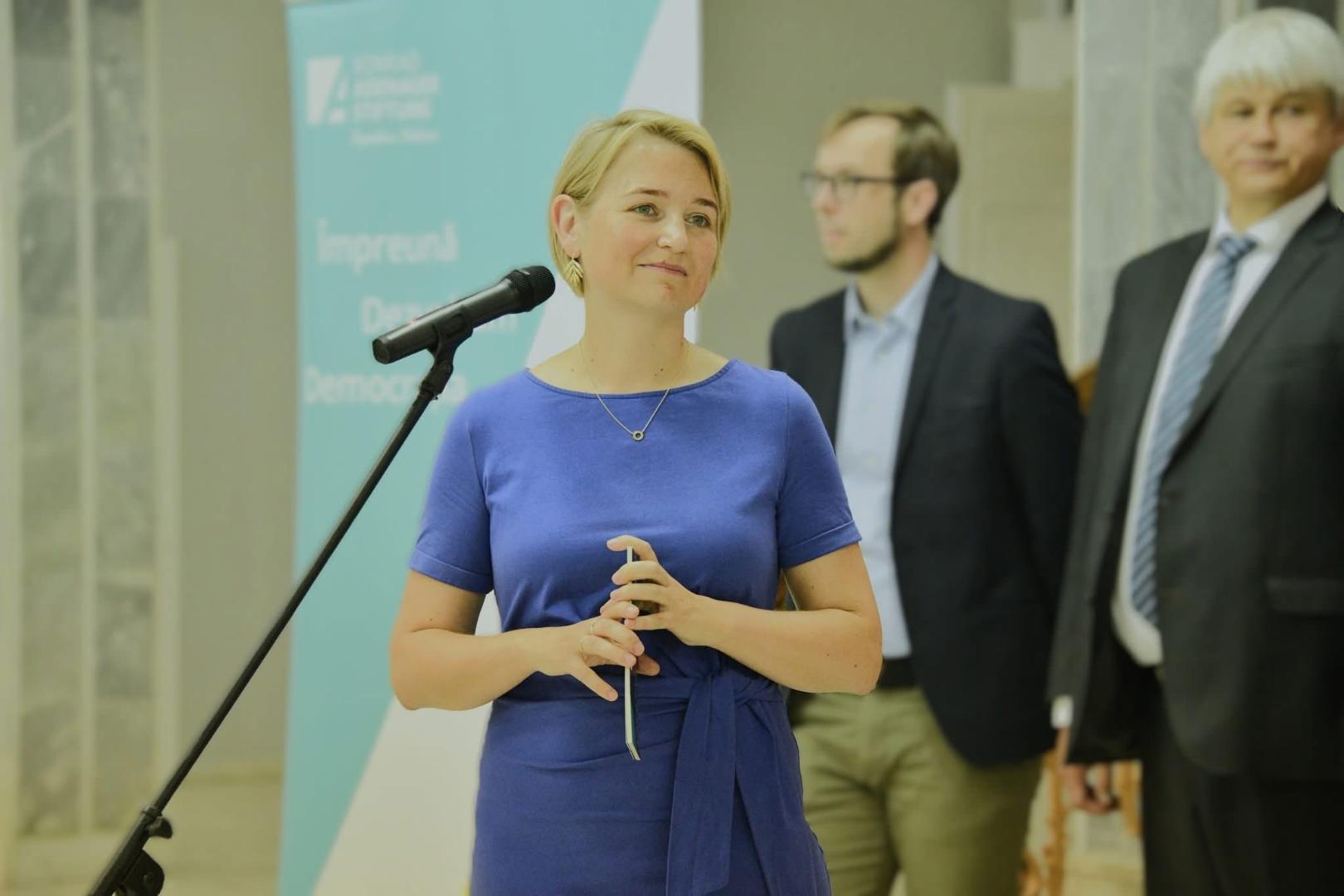
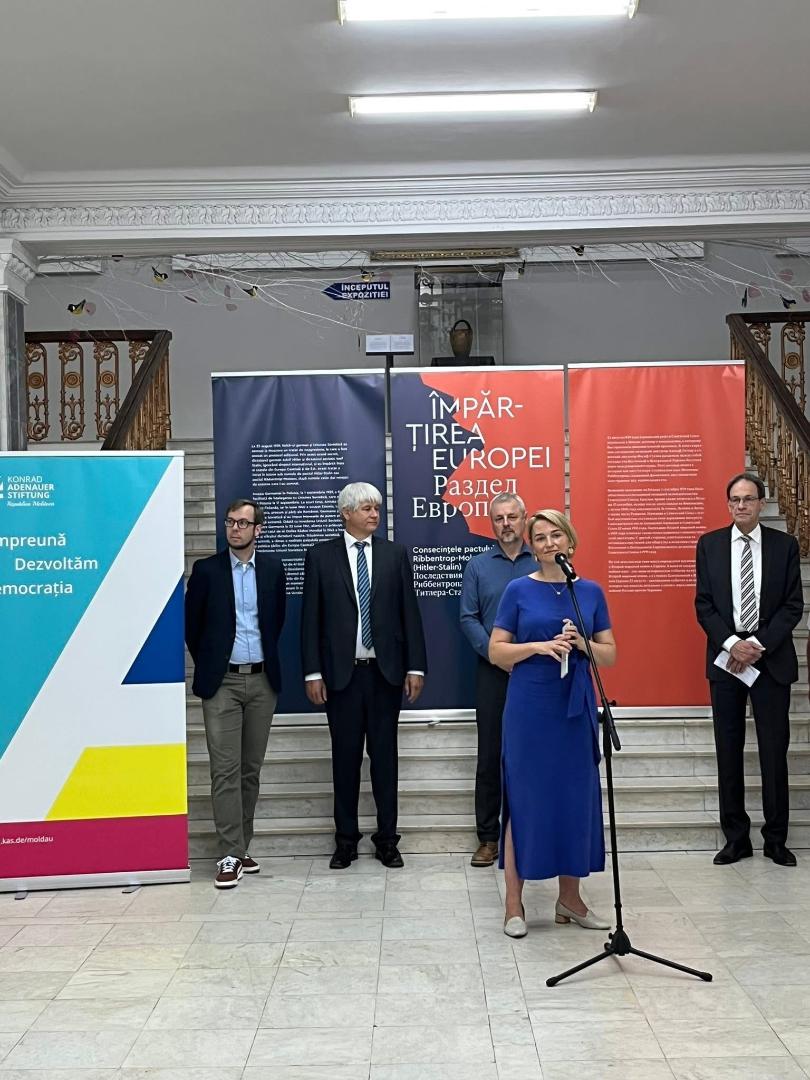
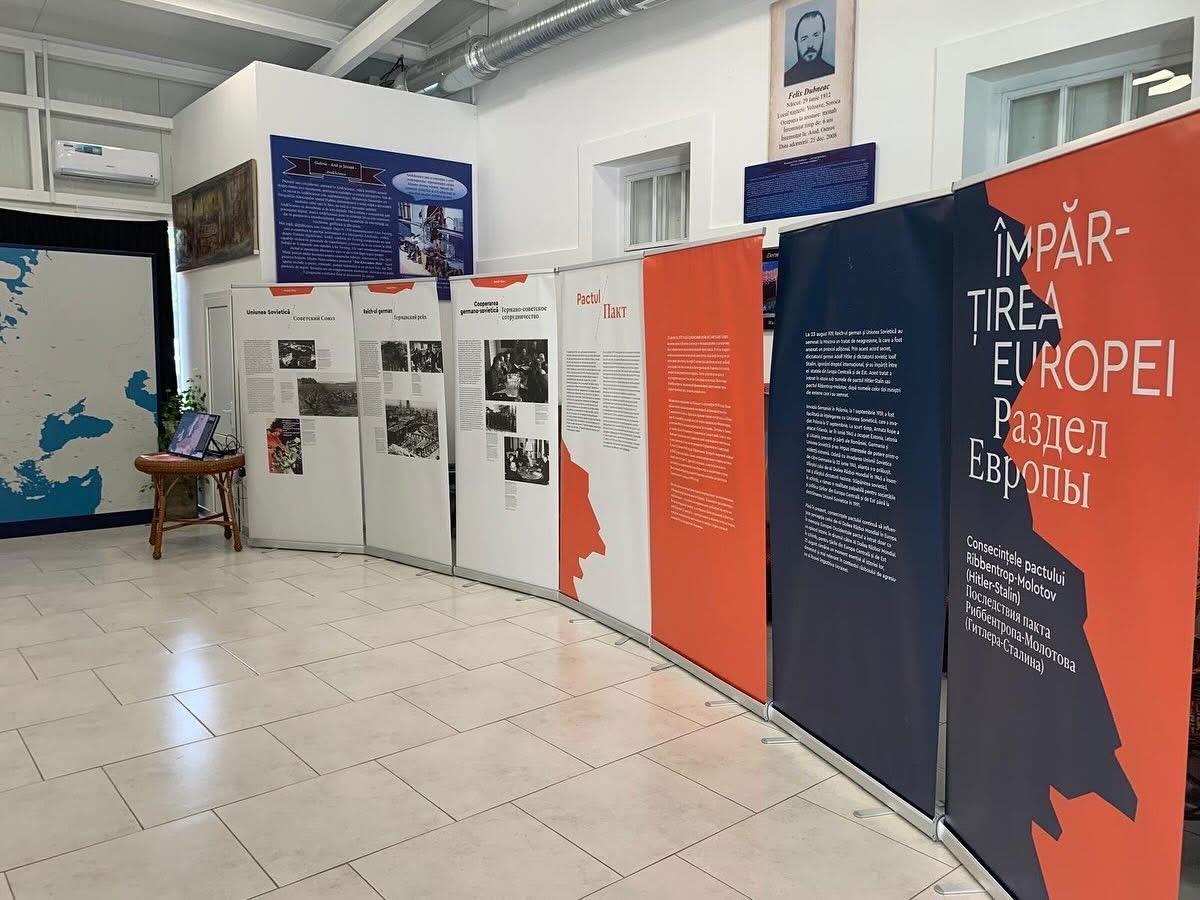
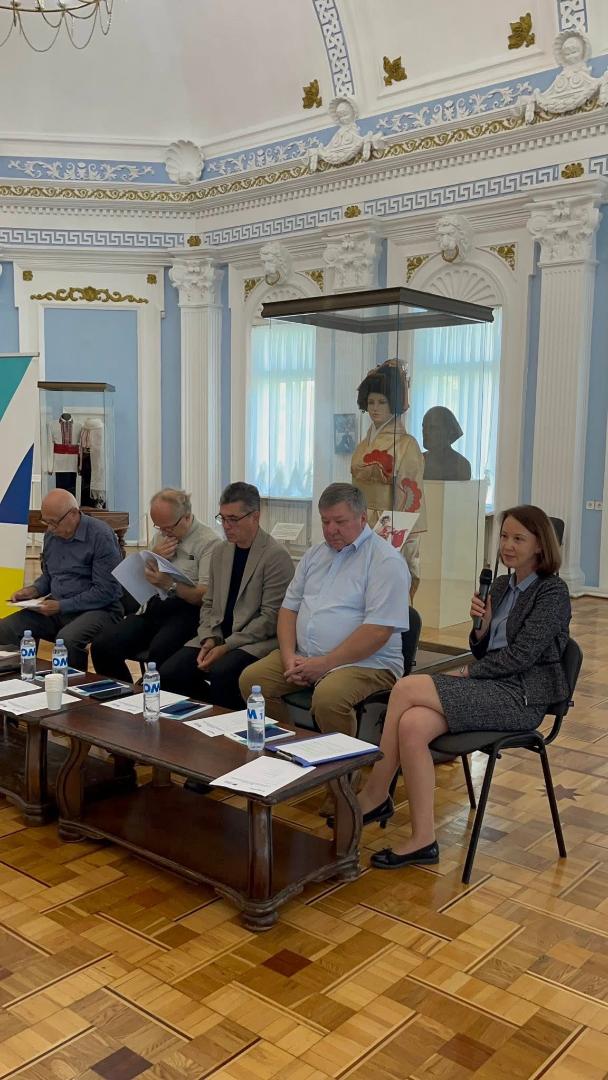
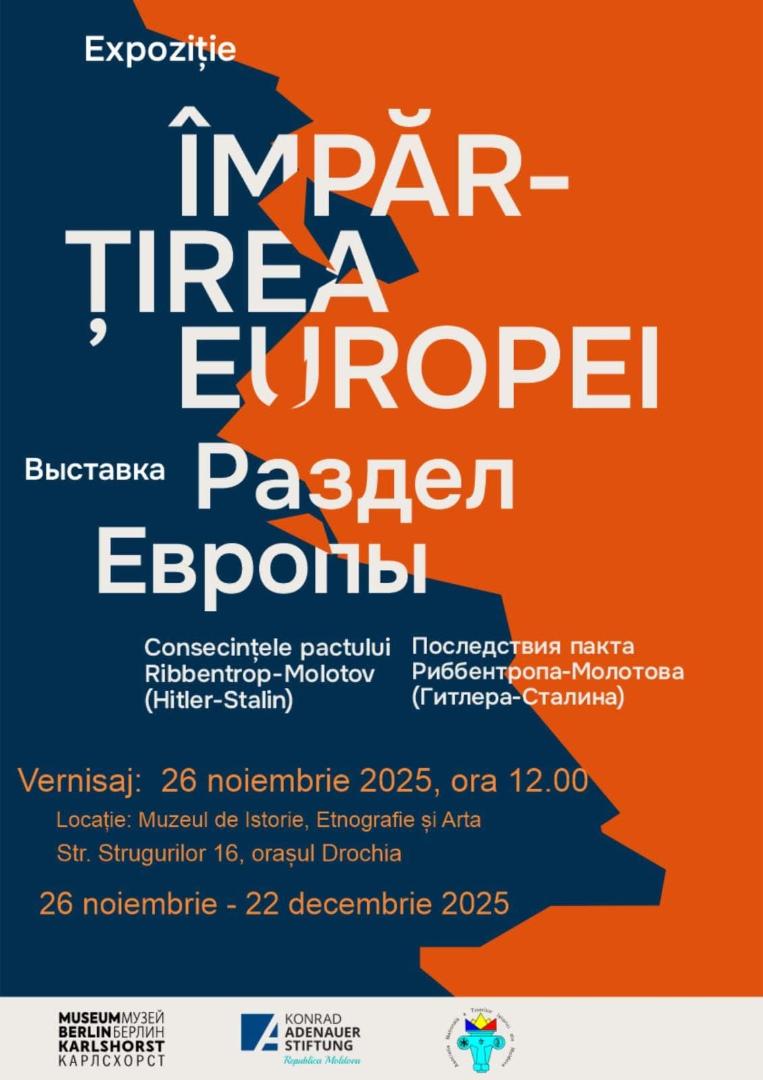
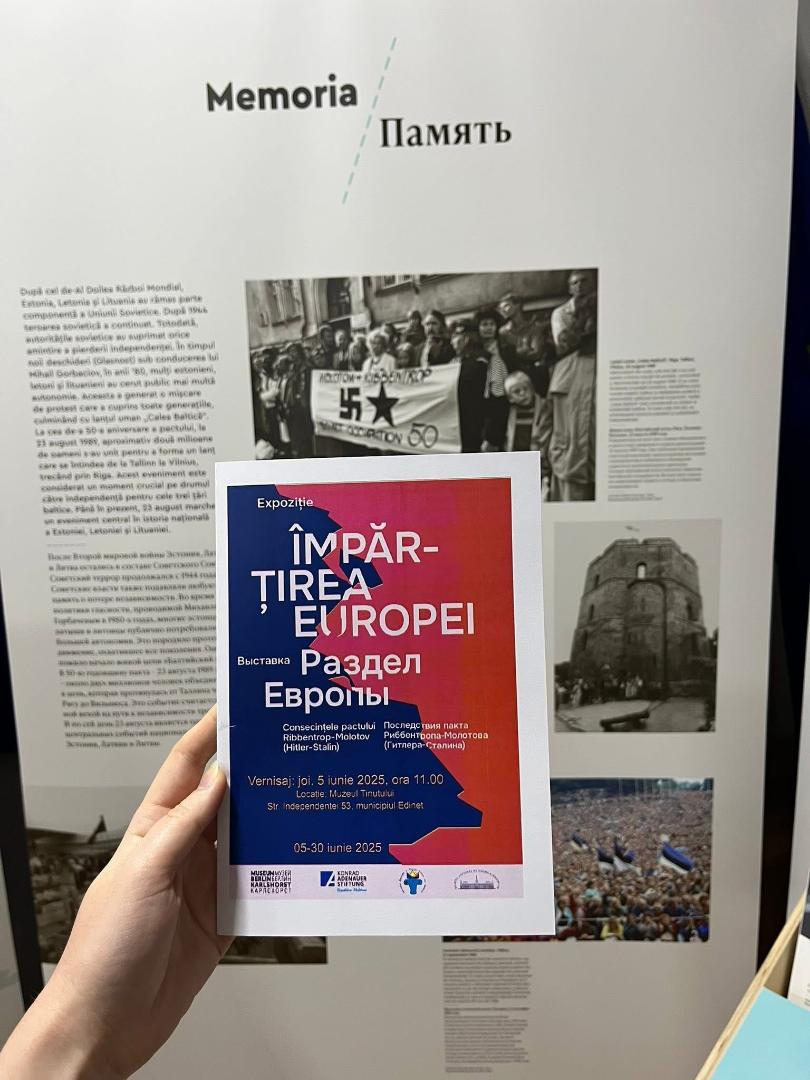
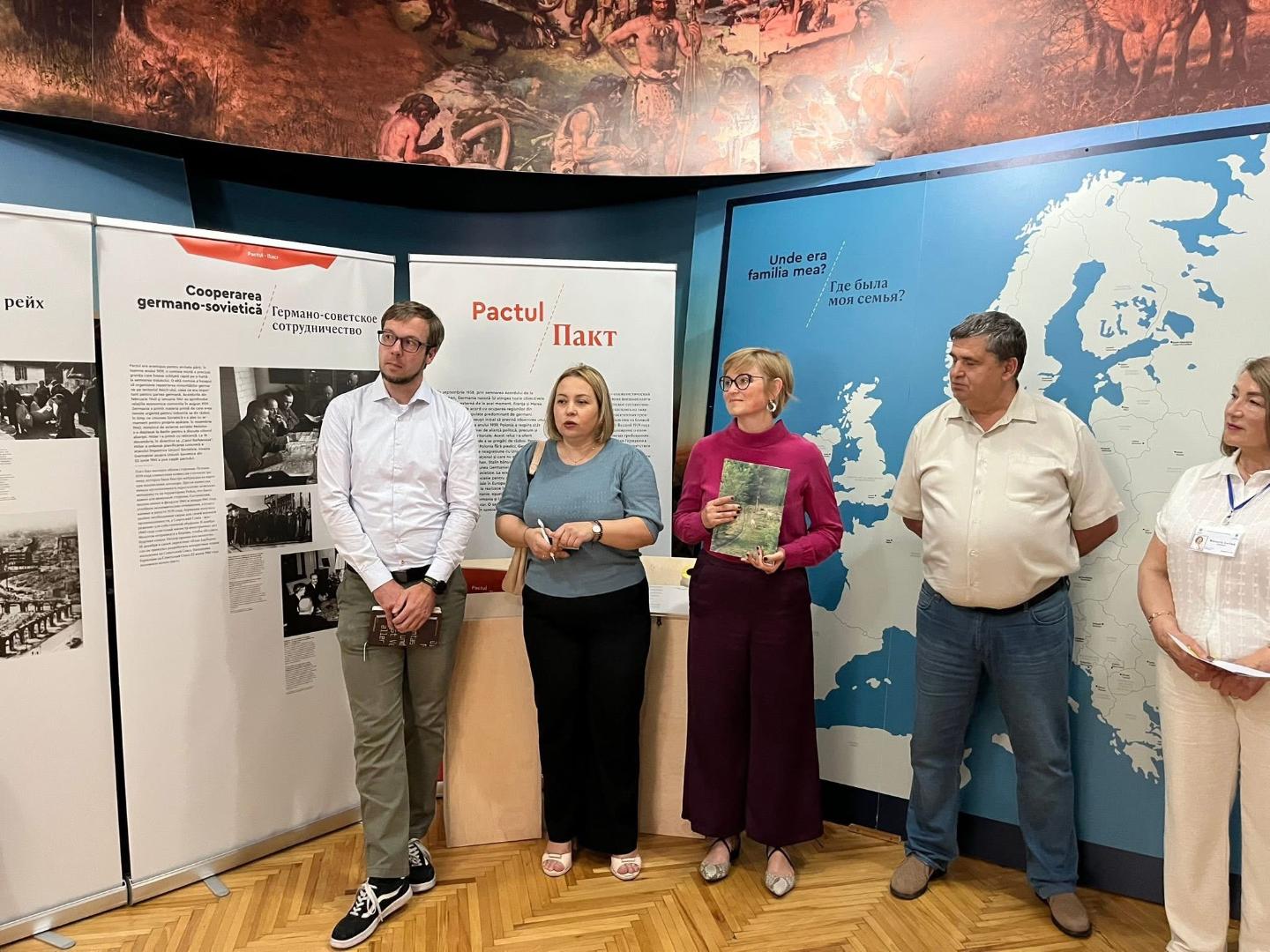
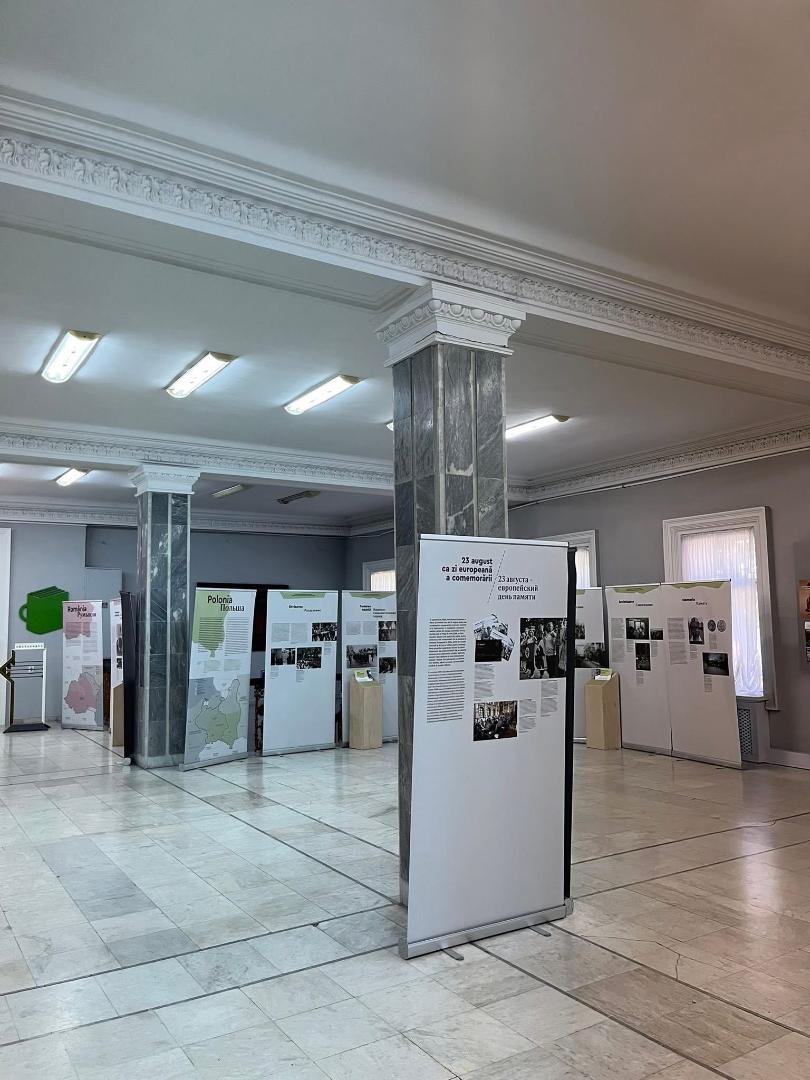
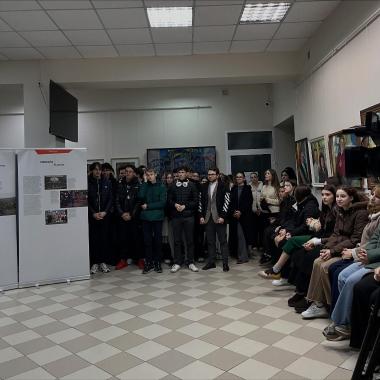
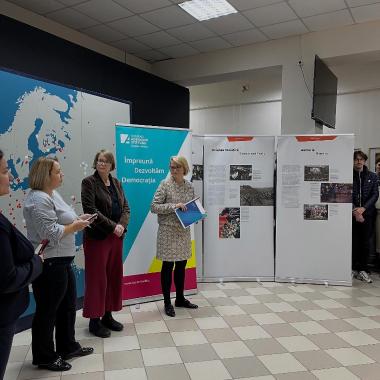
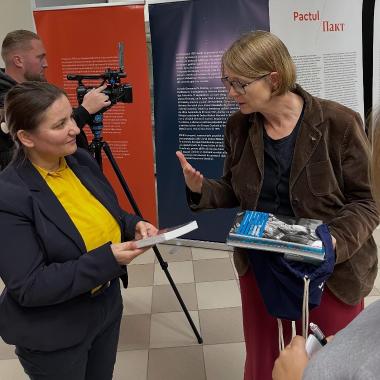

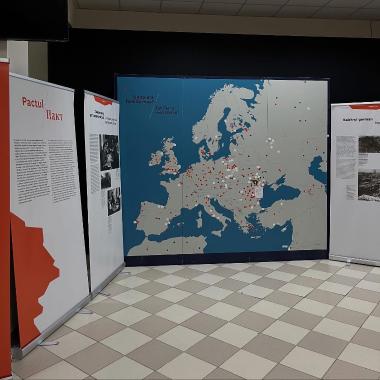
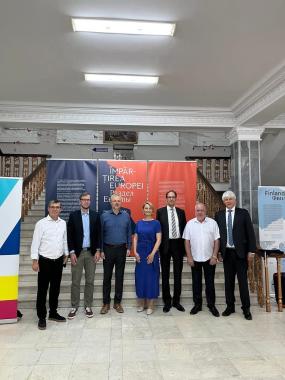
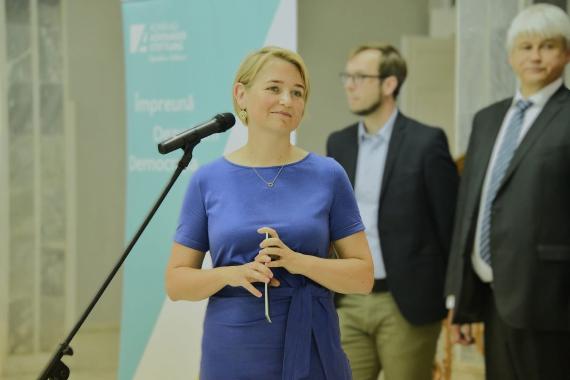
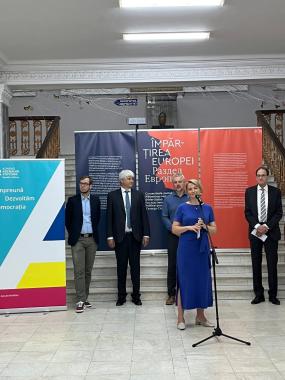
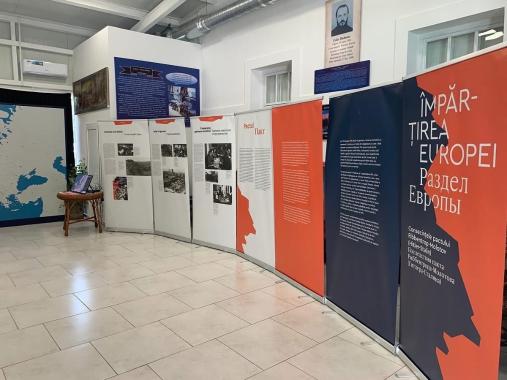
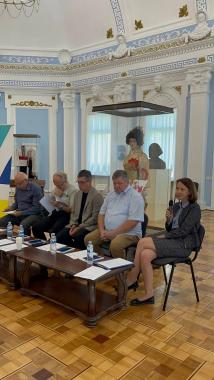
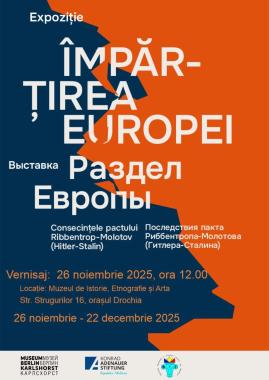
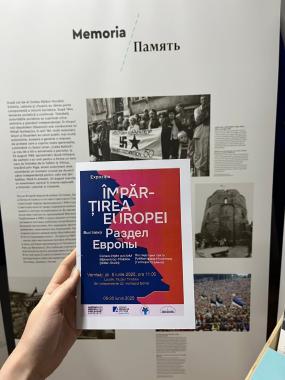
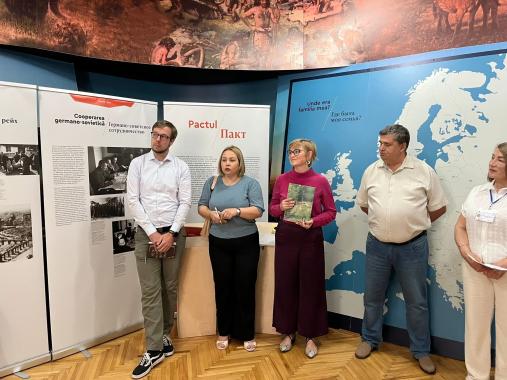
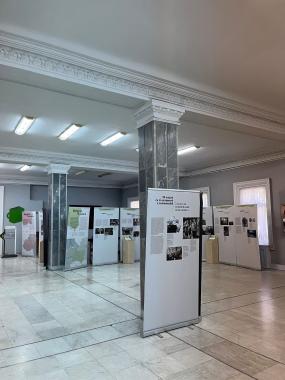
The Konrad Adenauer Foundation, Office in the Republic of Moldova, in partnership with the Museum Berlin-Karlshorst and the National Association of Young Historians of Moldova, organized throughout 2025 a series of exhibitions on the theme “The Division of Europe. The Consequences of the Ribbentrop–Molotov Pact (Hitler–Stalin).” The authors of this travelling exhibition, created to mark 85 years since the signing of the Ribbentrop–Molotov Pact (Hitler–Stalin), are the Museum Berlin-Karlshorst and the Chair of Eastern European History at Heinrich Heine University Düsseldorf.
The exhibitions represented an educational and commemorative initiative that brought to the forefront one of the most dramatic geopolitical agreements of the twentieth century. Signed on 23 August 1939 between Nazi Germany and the Soviet Union, the Ribbentrop–Molotov Pact was more than a non-aggression treaty: it was a secret agreement to divide Central and Eastern Europe into spheres of influence, with devastating consequences for millions of people.
Through archival documents, maps, photographs, and personal testimonies, the exhibitions reconstructed the historical context of the pact, highlighting its impact on Poland, the Baltic states, Romania, and other countries in the region. Deportations, forced occupations, the loss of sovereignty, and human suffering were presented not only as historical facts but also as warnings for the present.
The exhibitions directly reflected the core values of the Konrad Adenauer Foundation: the defense of democracy, the promotion of the rule of law, respect for human rights, and the cultivation of a responsible historical memory. In an era in which historical truth is often contested or relativized, we considered it essential to provide the public with tools for critically understanding the past.
Why are these exhibitions important today? Because democracy is not a given, but a fragile construction that must be constantly defended. Because freedom cannot exist without memory. And because reconciliation between peoples begins with the honest recognition of the sufferings of the past.
The exhibitions are part of the Konrad Adenauer Foundation’s efforts to support civic education and European dialogue. They offer a space for reflection for young people, teachers, historians, and the wider public, inviting us to reflect on the tragedies caused by the pact and on how silence or forgetting can reshape history.
The exhibitions were presented at the Edineț District Museum, the “Nicolae Bulat” Museum of History and Ethnography in Soroca, the Museum of History and Ethnography in Rîșcani, the Museum of History and Ethnography in Bălți, the Ethnographic Museum in Sângerei, the Museum of History, Ethnography and Art in Drochia, the Museum of History and Ethnography in Orhei, as well as the National Museum of History of Moldova in Chișinău.
During 2026, the exhibition “The Division of Europe. The Consequences of the Ribbentrop–Molotov Pact (Hitler–Stalin)” will also be presented in other cities across the Republic of Moldova, in collaboration with local museums. The first exhibition of this year will open on 18 February at the Museum of History, Ethnography and Art in Cimișlia.
For democracy, we need memory. We look forward to welcoming you.