




Asset Publisher

Country Reports

Short political reports of the KAS offices abroad

Asset Publisher

Michael Rimmel

Israel's scars after October 7: The return of the hostages and the national trauma

How the Hamas attack exposes social fault lines and calls old principles into question

On January 26, 2026, the remains of Ran Gvili, the last Israeli hostage in the hands of Palestinian terrorists, returned to Israel. The police officer, who belonged to an elite unit, had been fighting Hamas on October 7, 2023, when he was killed by terrorists and abducted to the Gaza Strip.  With the return of his body, there are no Israeli hostages in the hands of Hamas for the first time since 2014. Now his family and the entire community can say goodbye. Ran Gvili symbolizes the two traumas Israel has suffered since October 7, 2023. The first trauma, the attack on October 7 that left over 1,200 dead, was followed by the second, the taking of 251 hostages, some of whom were held captive by Hamas for two years.  It is clear that October 7 was not the beginning, but rather a dramatic escalation of an already familiar pattern.

IMAGO / Avalon.red

U.S. Perspectives One Year Into Trump’s Second Term

“Move Fast and Break Things”

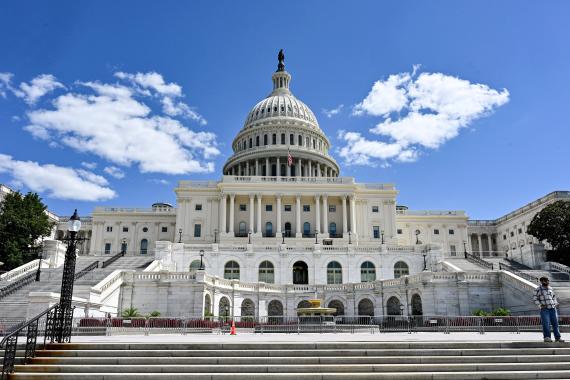
Showing strength, challenging traditions, and putting America’s interests—along with his own—first: the first year of President Trump’s second term has been a whirlwind of national and international change. Nowhere is this more evident than in foreign policy, where he has profoundly reshaped the role of the United States and challenged the existing order.

IMAGO / Xinhua

EU-Jordan Summit

A Symbolic Step for a Strategic Partnership

With the first bilateral summit between the EU and Jordan, both sides sent a signal of their intention to deepen the partnership at a time of heightened regional instability in the Middle East. Through its support for Jordan, the EU aims to strengthen the country in its stabilising role in the region and to contribute to Jordan’s internal stability, particularly by supporting economic resilience and growth. For the EU, the deepening of relations also provides an opportunity to position itself as a reliable partner and actor in the Middle East against the backdrop of an increasingly unpredictable US foreign policy.

IMAGO / ABACAPRESS

France 2026

A challenging year in the shadow of the presidential elections

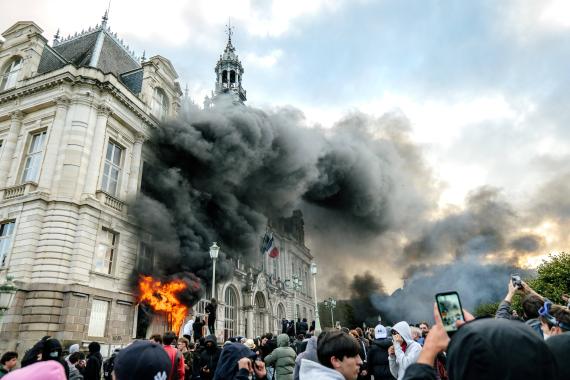
France looks back on a year 2025 that was marked by political instability with a change of government, increasing social polarisation and growing dissatisfaction among the population. The year 2026 also promises to be hardly any more stable. In addition to the difficult budgetary situation, local and senate elections are coming up, and the 2027 presidential election is already casting its shadow. In this environment, the current government of Prime Minister Sébastien Lecornu must navigate wisely, avoid an impending vote of no confidence and initiate crucial reforms for the country. This domestic political instability contrasts with the image that President Macron wants to convey of France on the international stage: a strong France that is committed to Europe and wants to strengthen its role in the world. So where does France really stand at the beginning of 2026, and can those in charge steer the country back into calmer waters?

IMAGO / Matrix Images

Parliamentary elections in Côte d'Ivoire

Consolidation of Alassane Ouattara’s power

The parliamentary elections in Côte d'Ivoire took place on 27 December 2025, shortly after the presidential elections, and were strongly shaped by this dynamic. They followed only a few weeks after the re-election of President Alassane Ouattara (RHDP), who won the presidential election on 25 October 2025 with 89.77 per cent of the vote in the first round, excluding the most promising opposition candidates, and who now governs the country for a fourth consecutive term. Around 8.7 million voters were called upon to elect the 255 members of the National Assembly. The elections also took place in a situation in which key opposition forces are fragmented. Shortly after the presidential election, the opposition party PPA-CI, led by Laurent Gbagbo, called for a boycott of the parliamentary elections.

IMAGO / Xinhua

Return to Constitutional Order? Presidential Election in Guinea

General Mamady Doumbouya remains in power

The presidential election held on 28 December 2025 marks, at least institutionally, a decisive turning point in Guinea’s recent political history. Four years after the military coup of September 2021, in which General Mamady Doumbouya overthrew the elected President Alpha Condé, the ballot was officially intended to complete the transition back to constitutional order. In practice, however, the conduct of the election, the field of candidates and the institutional framework raise doubts about its democratic character. Rather than a contest between political alternatives, the election appears primarily as an instrument to legitimise an already established military power structure.

IMAGO / Anadolu Agency

Football as an instrument of Moroccan politics

Between the pitch and the world stage

When millions of eyes are focused on a football field, a sporting event is transformed into a global presentation area. At the end of 2025, Morocco will become the center of continental attention with the hosting of the Africa Cup of Nations. It is a significant trailblazer for the even bigger stage of the 2030 World Cup. Both tournaments offer the Kingdom the opportunity to present itself not only as a host, but also as an economically dynamic state. The two major events are already providing catalysts for billions of euros in investments in transport infrastructure, tourism and digitalization. Nevertheless, the political instrumentalization of sporting events also brings challenges. The decisive factor will be whether Morocco can use the political results of the Africa Cup of Nations and the World Cup to consolidate confidence in its economic potential in the long term and to resolve social tensions.

IMAGO / ZUMA Press Wire

The new US security strategy and its consequences for Latin America and Europe

‘America for Americans’?

With the National Security Strategy (NSS) of November 2025, the US government is implementing a far-reaching change of course and once again claiming the Western Hemisphere, which encompasses the American double continent, as its exclusive sphere of influence. In doing so, it is following on from the Monroe Doctrine of 1823, which did not tolerate any non-American interference in the affairs of the entire continent. The message is unambiguous: ‘non-hemispheric’ powers – primarily China and Russia – should neither possess strategic installations nor be able to establish military or technological capabilities in the region. At the same time, the hemisphere should be so stable and well governed that there is no mass migration to the US, the fight against drug trafficking and transnational crime is successful, and the region is politically favourable to Washington. These goals are set out in detail in the original text of the NSS, where they are referred to as the ‘Trump Corollary’ to the Monroe Doctrine, supplemented by the operational motto ‘Enlist and Expand’: involve proven partners and expand new cooperation, both economically and in terms of security policy. With its military intervention in Venezuela on 3 January 2026, the Trump administration is showing the world how serious it is about its goals in the Western Hemisphere.

IMAGO / Anadolu Agency

Morocco's Youth Before the 2026 Election

Between Lack of Political Participation and New Forms of Engagement

Elections will be held in Morocco in September 2026. The political activities are gradually geared towards the elections. Protests by young adults a year before the elections have once again increased the nervousness of the established parties. Frustration and a lack of development opportunities are repeatedly mentioned, although the country is facing positive economic development. But success seems to be insufficiently received by the young population. The result seems to be frustration and mistrust of parliamentary structures. By 31 December 2025, first-time voters must have registered on the electoral lists to participate in the elections. The four million first-time voters make up about 15 percent of the population eligible to vote and could thus become an important factor.

KAS

The New U.S. National Security Strategy

Trump’s View of the World

The new National Security Strategy (NSS) puts the America first approach–achieving US economic, military, and technological might through foreign policy means–at its core. In Europe it has set alarm bells particularly over the overarching assumptions about Europe's “civilizational” demise and raised questions about the future of the transatlantic values-based partnership. Meanwhile, Congress adopted notably different priorities for U.S. military engagement in Europe. (Report in German)

Asset Publisher

About this series

The Konrad-Adenauer-Stiftung is a political foundation. Our offices abroad are in charge of over 200 projects in more than 120 countries. The country reports offer current analyses, exclusive evaluations, background information and forecasts - provided by our international staff.

Order details

Editor

Konrad-Adenauer-Stiftung e.V.