





Asset Publisher

Country Reports

Short political reports of the KAS offices abroad

Asset Publisher

IMAGO / imagebroker

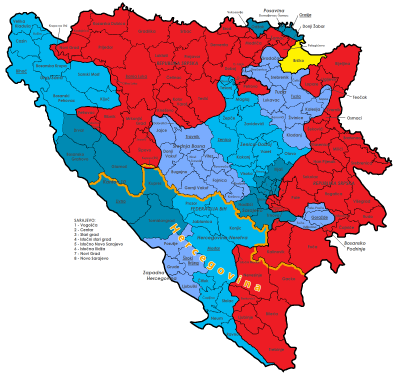
Bosnia and Herzegovina in the election year 2026

Stagnation, regression, or a new beginning?

Elections will be held in Bosnia and Herzegovina (BiH) on October 4, 2026. The elections will determine the presidency, which consists of three people, the parliaments at the national level, in the two entities/partial republics – the Federation of BiH and Republika Srpska (RS) – as well as in the ten cantons of the Federation, and the president of the RS.

IMAGO / NurPhoto

The War in Iran - Consequences for Latin America

Economic consequences and political responses in Latin America

Since February 28, the United States and Israel have been waging an open war against Iran. The escalation in the Middle East is being followed and discussed in Latin America with varying degrees of intensity, but in many countries it has taken a back seat to current domestic political developments. At the same time, the region is experiencing clearly noticeable economic consequences that are directly affecting people’s daily lives. In this report, our resident representatives in selected countries of the region provide an overview of the economic consequences the war with Iran is causing on the ground and how the respective governments are taking a stance on the conflict as well as on the actions of the U.S. and Israel. They also examine the stances taken by political partners and parties affiliated with the Adenauer Foundation, how the general mood in the country is evolving, and which actors could benefit from the current crisis.

Smarterpix / vepar5

2026 Parliamentary Elections in Slovenia - Between Fragmentation and Consolidation

A close election with limited coalition options

The parliamentary elections on March 22, 2026, mark a politically significant moment for Slovenia. For the first time in nearly two decades, a government served its full term and stood for re-election. While the election results confirm a high level of voter turnout, they also reveal the structural limitations of the political camps as well as the growing importance of smaller players in a fragmented party system. While Gibanje Svoboda (GS) under Prime Minister Robert Golob remains the strongest force with a narrow lead, the center-left camp no longer holds a comfortable majority as it did previously. The center-right bloc centered on Janez Janša’s Slovenian Democratic Party (SDS, EPP) achieved a stable but barely expandable result, as key coalition partners continue to keep their distance. At the same time, new or resurgent parties are entering parliament—including Resni.ca and the Democrats—further fragmenting the political landscape. Forming a government is likely to be more challenging than in 2022 due to limited compatibility between parties and mutual exclusions. The coming weeks will therefore be shaped less by the election result itself than by the ability of the parties to negotiate viable coalitions.

IMAGO / Zoonar

Bulgaria on the Eve of the Parliamentary Elections on 19 April

The new alliance “Progressive Bulgaria” of former President Radev shakes up the existing party system

With yet another round of early parliamentary elections on 19 April 2026, Bulgaria is heading into its eighth parliamentary vote since 2021. Following the spectacular resignation of President Rumen Radev, his new alliance, “Progressive Bulgaria”, is shaking up the political landscape. Its declared goal: the complete “dismantling” of the oligarchy. Whether Radev’s alliance can put an end to the persistent political instability—or whether this instability will intensify further—remains unclear.

IMAGO / Lobeca

Parliamentary Elections in Denmark

Setting the Course for the Country’s Future Direction

On March 24, 2026, the Danish people elected their new parliament: Prime Minister Mette Frederiksen’s ruling Social Democrats suffered a historic defeat but remained the largest party, securing just under 22 percent of the votes cast. This means the mandate to form a coalition lies with Frederiksen. Approximately 4.3 million Danes were eligible to vote. According to the Danish Election Authority on Tuesday evening, voter turnout was 84 percent. During the campaign, domestic and social policy issues were the subject of heated debate, while there was broad consensus on topics such as defense and stricter immigration rules.

Smarterpix / FreeProd

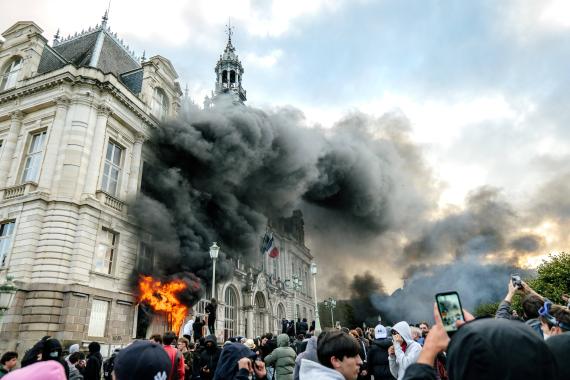
The second round of the 2026 local elections in France

A focus on alliances and tactics

The second round of the 2026 local elections once again highlights the growing disinterest among many citizens in local elections. With an estimated turnout of around 57%[1], significantly lower than in 2014 (62.1%), many view party politics with scepticism or detachment. Furthermore, the political situation since the dissolution of the National Assembly in 2024 has left many with a sense of uncertainty and stagnation. Against this backdrop, it remains to be seen whether the 2027 presidential election will be able to mobilise the electorate more strongly again. For the parties, the same applies once again: after the elections is before the elections. They must carefully analyse the results and voters’ reactions to coalitions and alliances, and take these findings into account when selecting future candidates for the presidential elections – including across party lines.

SmarterPix / SynthEx

The first round of the 2026 local elections in France

Rassemblement National and La France Insoumise on the rise

The first round of the 2026 French local elections took place in around 35,000 French municipalities and reveals a further shift in the country’s political landscape. Particularly striking is the gains made by two forces on the political fringes: the right-wing populist Rassemblement National (RN) and the far-left La France insoumise (LFI). Both parties made considerable gains in numerous towns and cities and appear to be benefiting from growing public dissatisfaction with the traditional parties. This was also reflected in voter turnout: depending on the projection, between 41.5 % and 44 % of voters stayed away from the polling stations – more than ever before outside of times of crisis. Voter abstention was particularly high in small municipalities, which often have only one electoral list, and in socially disadvantaged regions. In cities where the outcome was too close to call, such as Paris or Lyon, turnout rose slightly. Nevertheless, the trend of declining voter turnout over the years is confirmed – despite attempts by the state to mobilise voters. It is worth noting that a mayor of a municipality is actually the most popular political figure in France.

KAS

“The All-New Kazakhstan”: Reforming the Reform

Constitutional and Parliamentary Reforms in Kazakhstan

Kazakhstan is facing its second major reform package of this decade. Reactions have been mixed.

Konrad-Adenauer-Stiftung e. V.

South Africa’s Path to Inclusion: Successes and Limitations

Inclusion worldwide – current status in South Africa

South Africa is at a crucial point in its inclusive development. Despite legal progress and growing political attention, around 5 per cent of the population continues to face barriers to education, employment and participation. At the same time, developments such as the recognition of South African Sign Language and international sporting successes demonstrate the potential that arises when barriers are actively broken down. Dialogue formats and practice-oriented approaches have proven to be effective. However, ensuring the equal participation of people with disabilities requires the continuous commitment of all social actors.

IMAGO / Depositphotos

Spillover into the South Caucasus?

What further escalation in the Iran war could mean for Armenia and Azerbaijan

The US-Israeli attack on Iran also exacerbates (geo-)political risks for the South Caucasus. Azerbaijan has been particularly exposed to drone attacks, and Armenia could face consequences like an influx of refugees, economic uncertainties, and threats to energy infrastructure. Europe must be ready to act, as an escalation would intensify rivalries, threaten partners, and directly affect our energy and security interests.

Asset Publisher

About this series

The Konrad-Adenauer-Stiftung is a political foundation. Our offices abroad are in charge of over 200 projects in more than 120 countries. The country reports offer current analyses, exclusive evaluations, background information and forecasts - provided by our international staff.

Order details

Editor

Konrad-Adenauer-Stiftung e.V.