Publications of the Social Cohesion Department - Analysis and Consulting
Asset Publisher
Publications of the Social Cohesion Department
Asset Publisher
IMAGO / JOKER
„The Threshold for Family Formation Has Risen“
Interview with Professor Anna Rotkirch on declining fertility rates, the role of partnerships, and the conditions needed to help people realize their family intentions
Why are fewer and fewer people having children? Anna Rotkirch, Research Professor and Director at Väestöliitto, the Family Federation of Finland, examines the reasons behind declining birth rates and the growing barriers to family formation in Europe. She recommends looking beyond established family policy measures and paying greater attention to the conditions that shape people’s decisions about having children.
October 15, 2026
Interviews
AlexNosenko, smarterpix
100 Percent schools: How to Ensure Basic Competencies for All Children
A data-driven support framework combining assessment, adaptive support and tutoring to ensure that all children meet the expected standards in reading, writing and mathematics
The latest PISA results highlight the urgent need for action: Too many students fail to meet minimum standards in basic competencies. 100 Percent Schools address this challenge but aim beyond a minimum level of education: All children should meet proficiency standards in reading, writing and mathematics. The model combines data-informed school development, adaptive support, Response to Intervention and tutoring, while systematically involving students, parents, teachers and support staff. A coherent overall architecture rather than a collection of additive individual programmes is key.
Prof. Anne Sliwka, Ekkehard Thümler
September 18, 2026
Facts and Findings
smarterpix / ZOOMYimages
More space for the family
Family-friendly policies: an international comparison
Despite a long-standing, stable desire to have children, Germany’s fertility rate has fallen to a historic low. What obstacles make it difficult for young people to start a family, and what policy frameworks can help ensure that more of these wishes are realized? Recent research and a comparison of family policy approaches in various countries offer insights for the needs-oriented further development of family policy in Germany.
August 7, 2026
Facts and Findings
KAS
Special edition - Country reports with a difference
International comparison of accessibility
This publication provides research, compiled by some of our overseas offices, on the current situation of political participation for people with disabilities, in their respective countries. We hope that their reports will increase awareness of the sadly often persistent inequalities that remain and motivate all of us to pay greater heed to the issue of inclusion.
March 25, 2025
Country reports with a difference
KALUZA + SCHMID Studio GmbH
After the Baby Boomers
How demographic change will unfold beyond 2030
Demographic ageing does not end with the retirement of the baby boomers. In the coming decades, the challenges are likely to shift increasingly from the labour market and pensions towards care, housing and regional services. The analysis shows that ageing does not unfold in the same way everywhere. While many eastern German regions were affected early on, rural areas in western Germany are facing a sharp increase in the oldest age groups. Policymakers and municipalities should therefore start planning early.
Catherina Hinz, Frederick Sixtus
July 29, 2026
Single title
KAS
Building trust, overcoming distance
Outreach civic education in the practice of the Democracy Bus and the Dorfliebe Tour
Outreach civic education starts where people live and spend their everyday lives. The Demokratiegestalter-Tour and Dorfliebe create accessible spaces for dialogue in which citizens can openly articulate their concerns and feel that they are taken seriously. The report shows how personal encounters build trust and encourage people’s willingness to engage in conversation.
Jacques Hermes, Konstantin Gerbrich
July 15, 2026
Single title
KAS/Andreas Jacobs
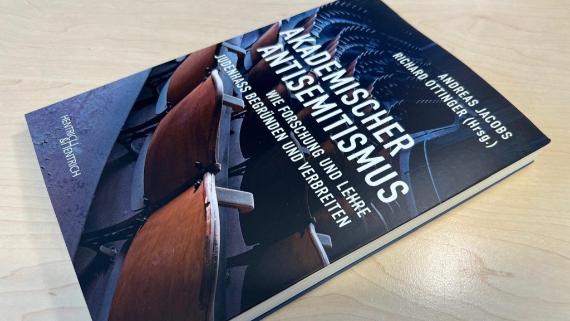
“Academic anti-Semitism manifests itself in very subtle ways”
A new book on the origins and spread of anti-Semitism and hostility towards Israel in academia and education
Dr Andreas Jacobs is the co-editor of a new publication on academic antisemitism. Here, he explains the background of the phenomenon. Together with Dr Richard Ottinger, he edited the anthology Academic Antisemitism, which examines current debates in, among other fields, postcolonial studies, gender studies, Oriental studies, genocide studies, and international law.
Jakob Reinhold
June 16, 2026
Interviews
smarterpix / nhatipoglu
Recent developments in social media regulation: Child Protection “Down Under”
What Can Be Learned from Australia’s Ban on Social Media?
Children in Germany also spend several hours each day on social media platforms such as Instagram or YouTube. While the educational effects of social media are limited, evidence of addiction risks and other problematic consequences of intensive social media use is increasing. Is Australia’s ban on social media an answer to this challenge?
Sophia Brook, Elisabeth Hoffmann
June 4, 2026
kurzum
grafvision, smarterpix
Overtreatment at the end of life
Recommendations for emergency medicine, intensive care and oncology.
This publication examines the challenge of overtreatment at the end of life, against the backdrop of patients’ wishes, an ageing society, expanding medical possibilities and growing resource constraints in the healthcare system, and outlines potential policy responses.
Alexandra Scherg, Martin Neukirchen, Kerstin Kremeike, Bernd Oliver Maier, Bernd Alt-Epping, Heiner Melching, Claudia Bausewein, Boris Zernikow
May 27, 2026
Single title
„Hab Mut, steh auf!“
Gemeinsamer Empfang der Konrad-Adenauer-Stiftung und der Hanns-Seidel-Stiftung auf dem 104. Katholikentag in Würzburg
Anlässlich des Katholikentages hatten die Konrad-Adenauer-Stiftung e.V. und die Hanns-Seidel-Stiftung e.V. Vertreterinnen und Vertreter aus Politik, Kirche, Wissenschaft und Presse zu einem gemeinsamen Empfang in die Residenz in Würzburg eingeladen.