







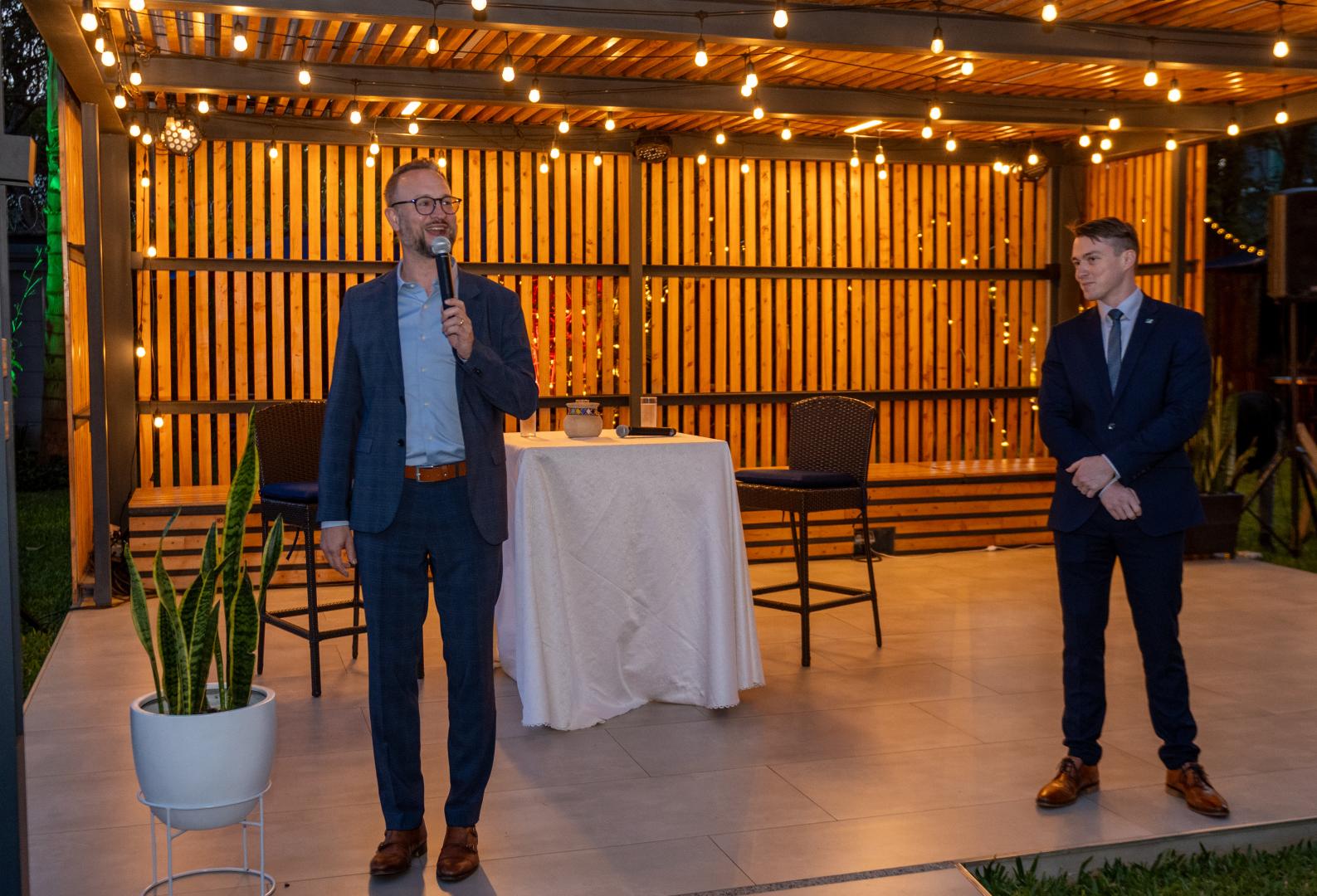
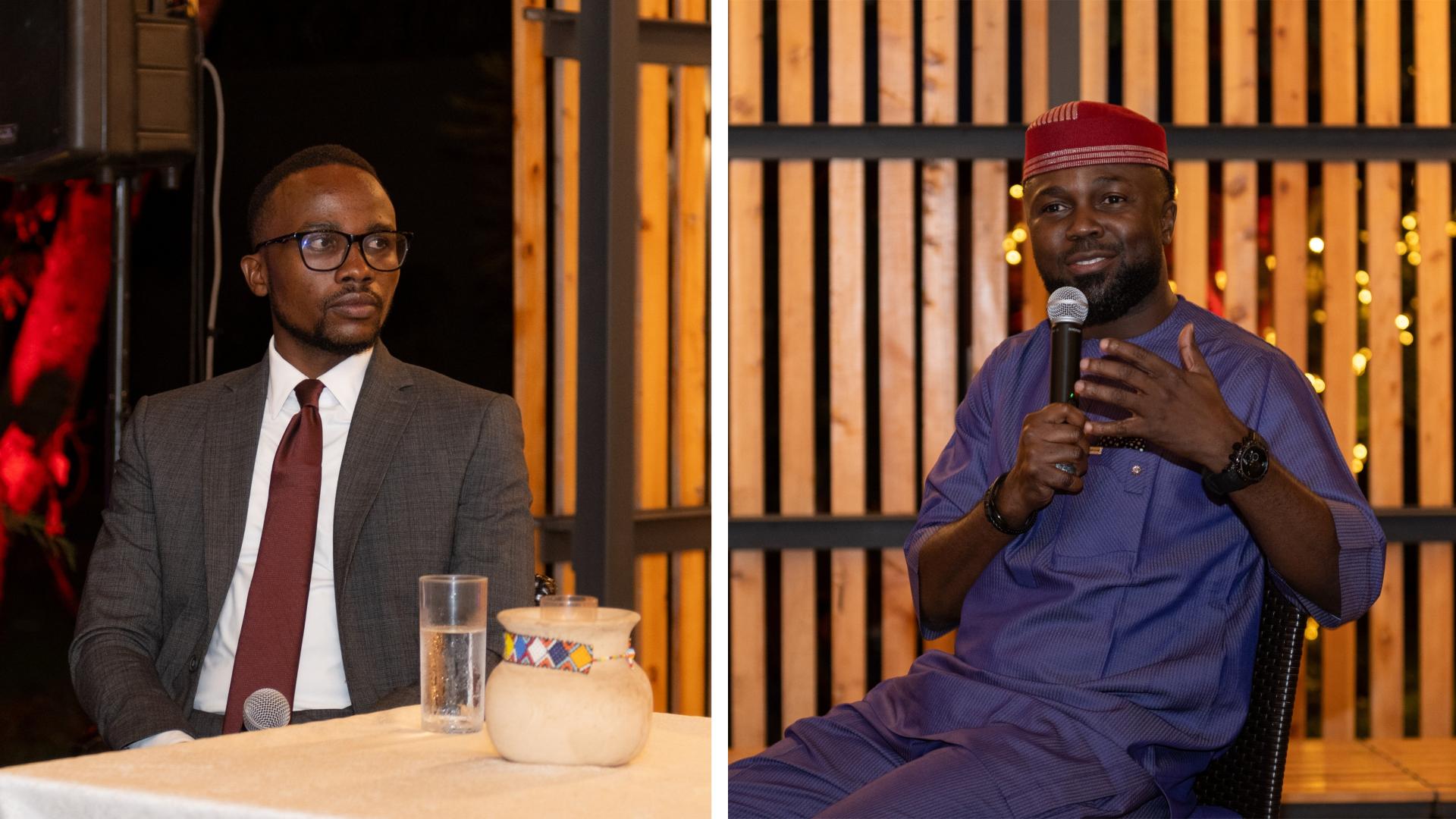
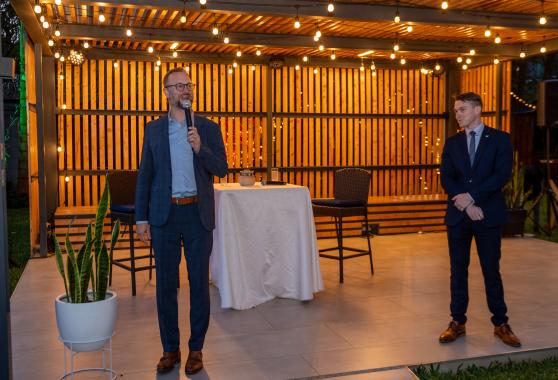
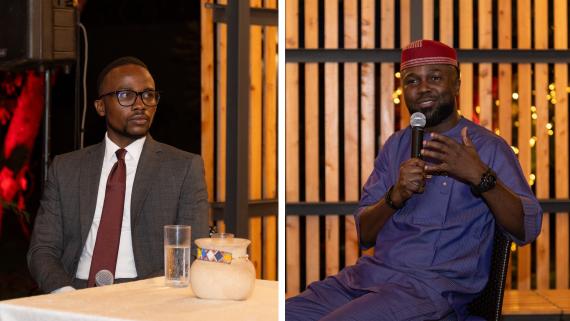
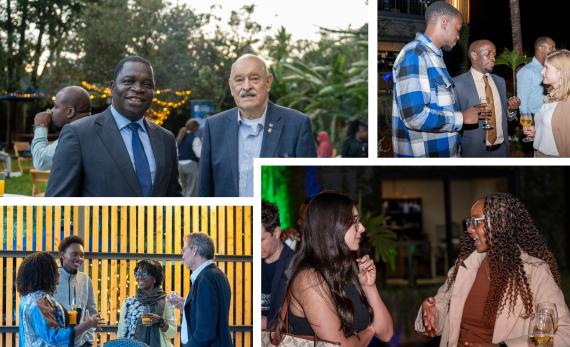
The evening event was opened by welcoming remarks given by Jan-Ole Voß, Director, KAS RP SIPODI East Africa, and Mathias Kamp, Director, KAS Foundation Office Kenya. The following discussion brought together Philip Obaji Jr., a Nigerian investigative journalist and the Kenyan journalist Mwangi Maina. Both explored the challenges of journalism in conflict, with a particular focus on investigative reporting in Africa, the ongoing recruitment of mercenaries by Russia, and the growing influence of propaganda and disinformation across the continent.
Philip Obaji Jr. reflected on his career as an investigative reporter starting out after the abduction of Nigerian school girls by Boko Haram in 2014. His subsequent research has focused on the Wagner Group and its activities in Western Africa, particularly its recruitment and training of African mercenaries. Obaji described the circumstances of his investigations that brought him into contact with Yevgeny Prigozhin, the former head of the Wagner Group, and illustrated the considerable personal risks faced by journalists working on politically sensitive issues where armed groups, state interests and transnational networks intersect. The discussion also addressed practical concerns of conducting journalism across national borders between Nigeria and Cameroon as conflict dynamics rarely respect national boundaries, making cross-border cooperation and reporting essential to understanding the activities of mercenary groups and external actors.
Tracing Wagner's expanding footprint from the Western Sahel towards Central and East Africa, Obaji highlighted the Central African Republic as an important case of Russia's growing influence on the continent. He examined how Wagner has exploited anti-colonial rhetoric and historical grievances against Western powers to position Russia as a partner in African sovereignty and an alternative to Western engagement. At the same time, these narratives serve to obscure the Wagner group's pursuit of strategic, political and economic interests. Obaji pointed to recurring patterns in Russia's engagement across African states and emphasised that the same playbook of influence and strategic communication is being employed in different national contexts.
In light of the recent Russia-Africa Summit, the conversation further examined Russian propaganda and disinformation efforts and the role of Russian media outlets in shaping public perceptions across Africa. The issue of recruiting African citizens for Russia's war against Ukraine further illustrated the consequences of these efforts and the need for greater scrutiny of Russia's military and political engagement on the continent.
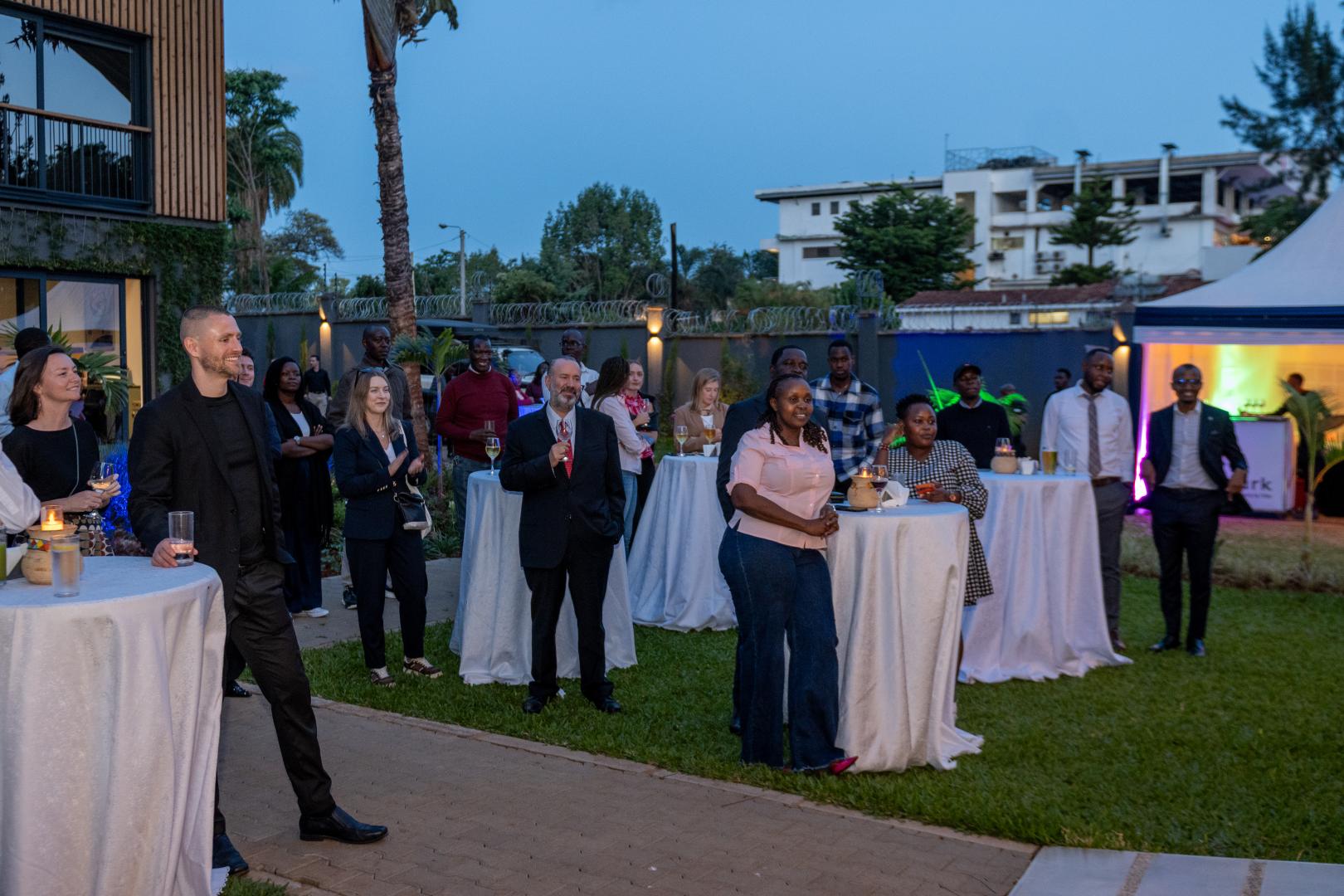
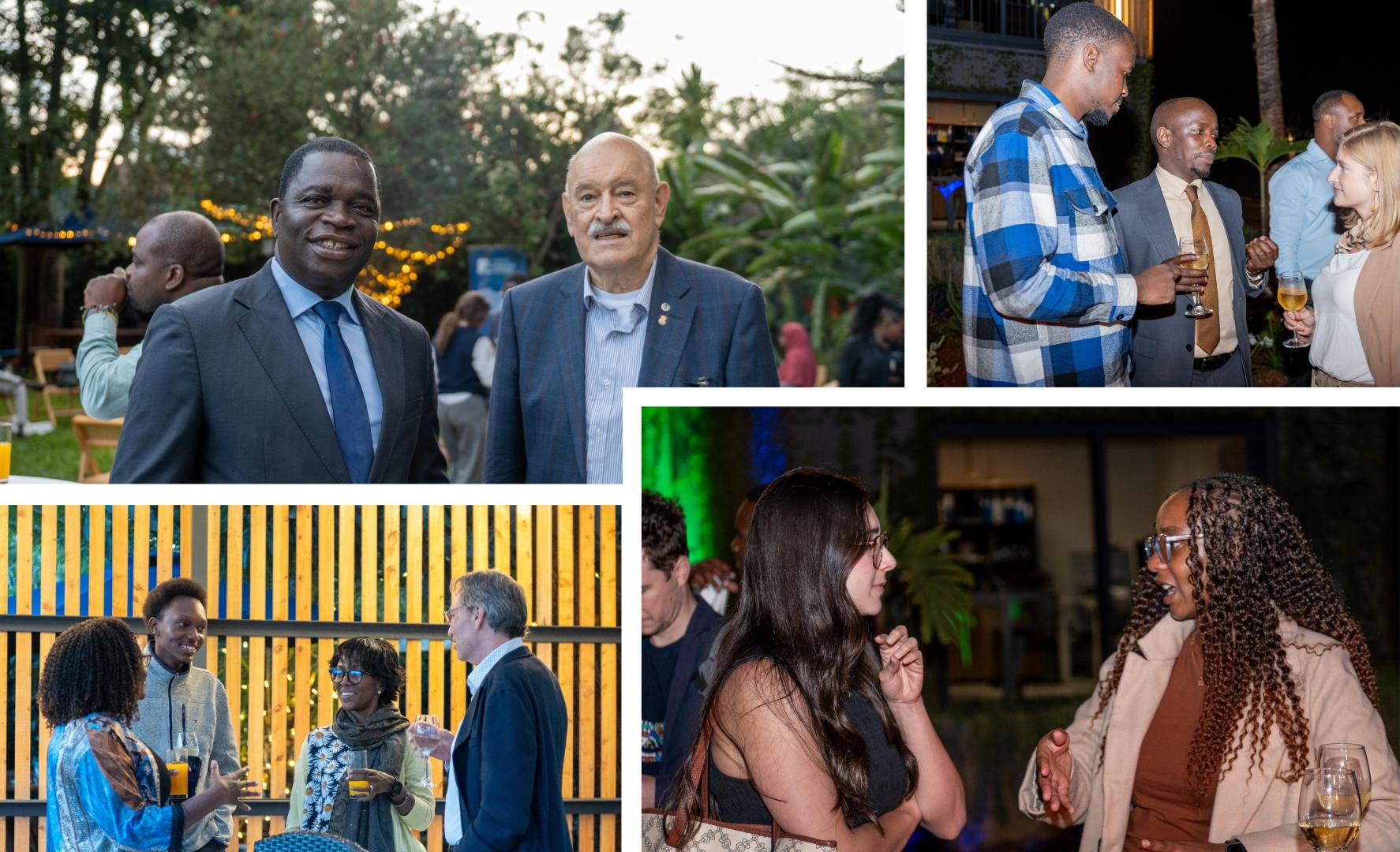
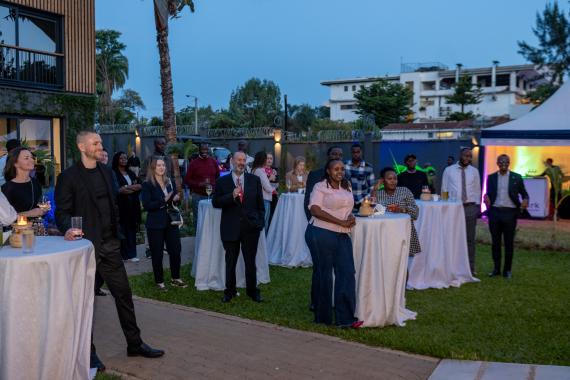
The event concluded with a discussion of how African societies and international partners can respond to Russian propaganda and influence operations. Obaji and Maina emphasised the importance of independent, fact-based journalism in exposing disinformation, investigating foreign influence and providing audiences with reliable information. Following the discussion, Jan-Ole Voß thanked the two panelists for their insightful discussion and the numerous guests for their attention. After the discussion, the guests engaged in discussions and networking.

About this series
The Konrad-Adenauer-Stiftung, its educational institutions, centres and foreign offices, offer several thousand events on various subjects each year. We provide up to date and exclusive reports on selected conferences, events and symposia at www.kas.de. In addition to a summary of the contents, you can also find additional material such as pictures, speeches, videos or audio clips.