







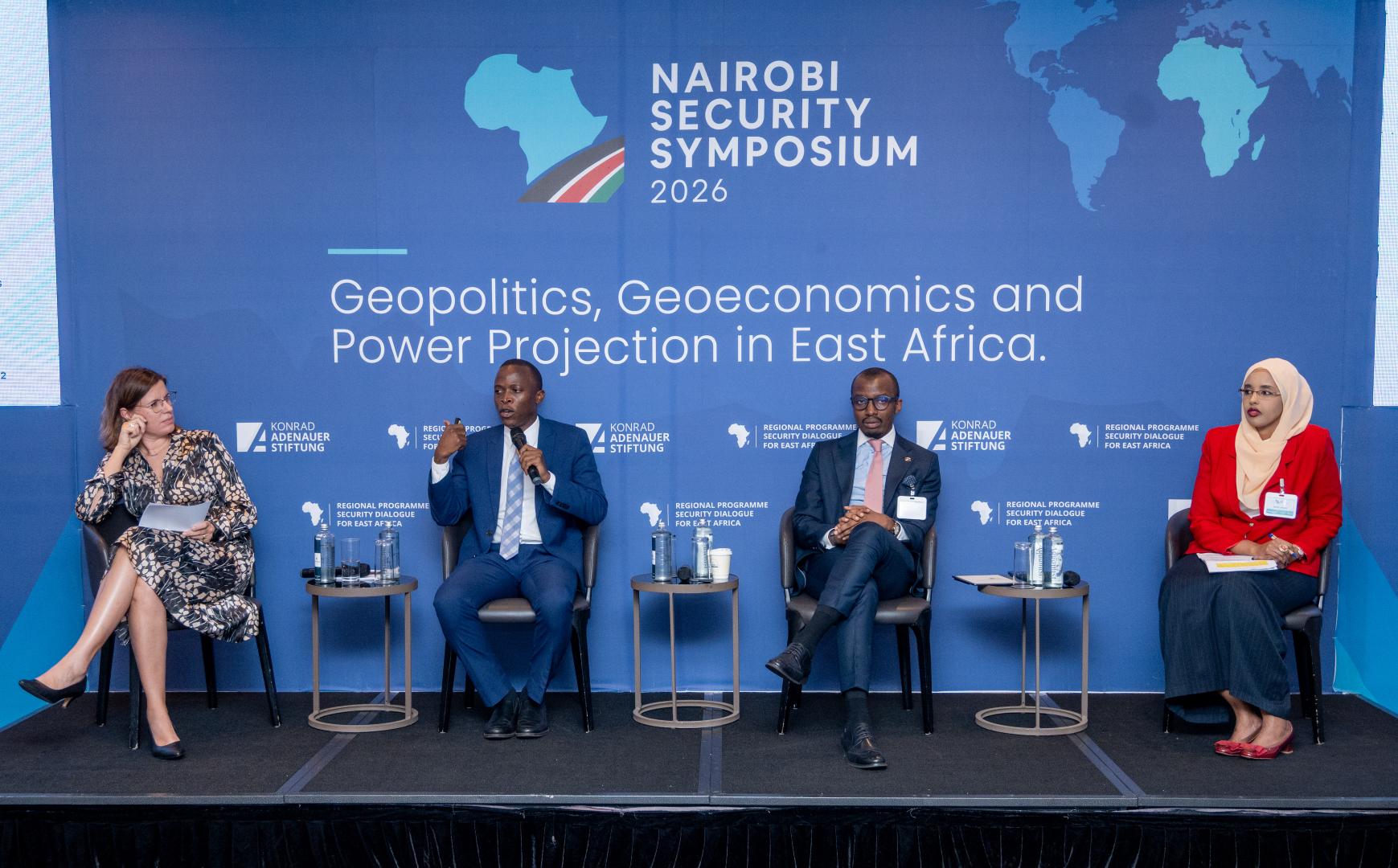
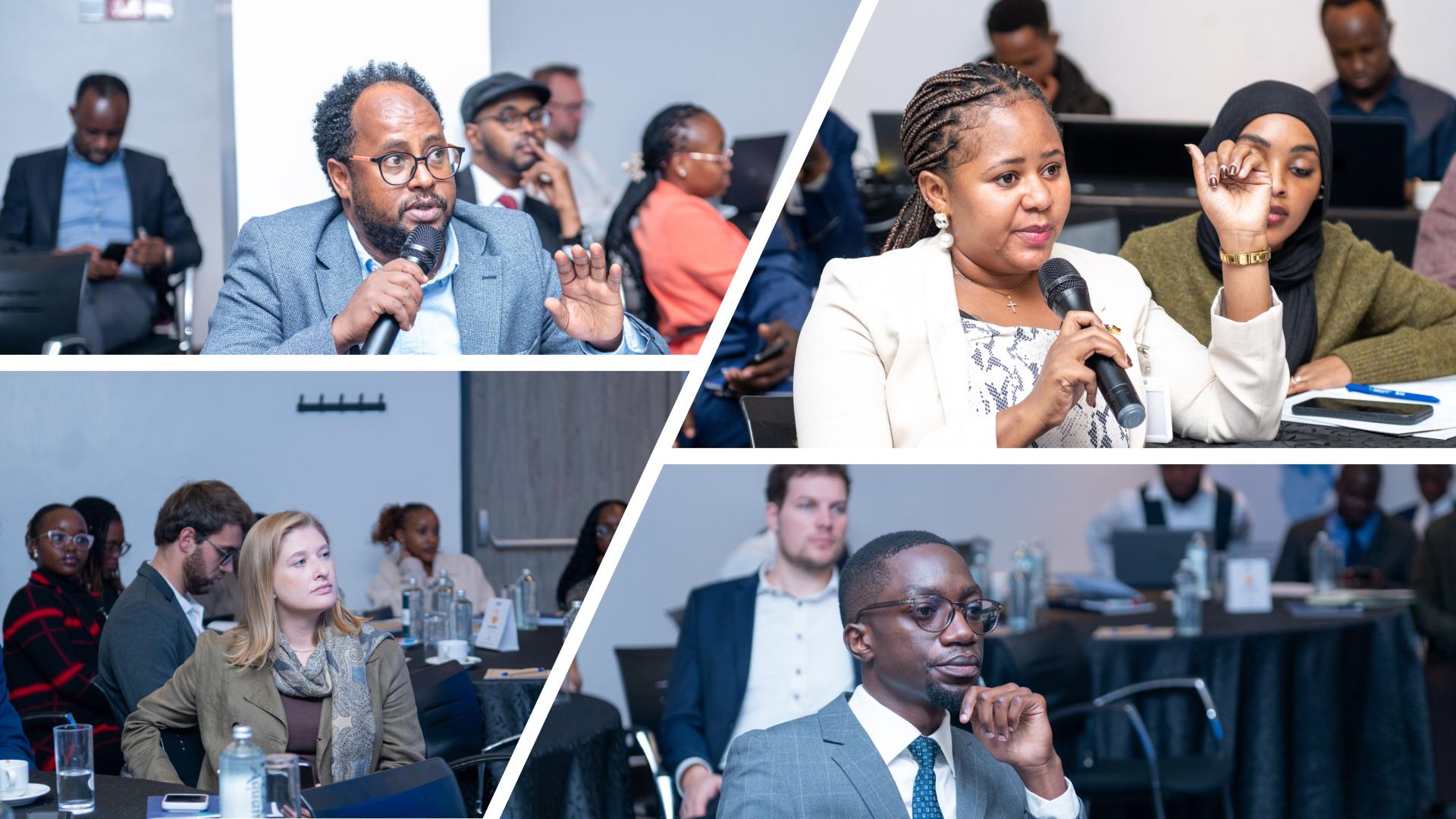
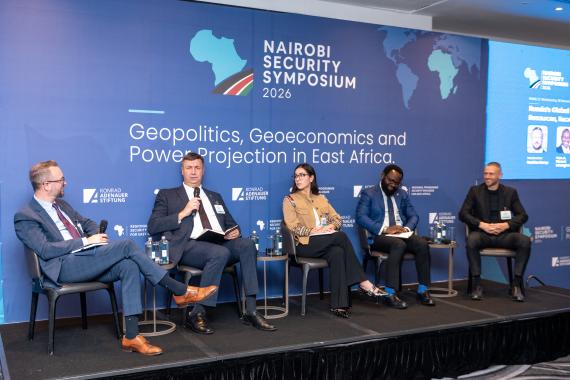
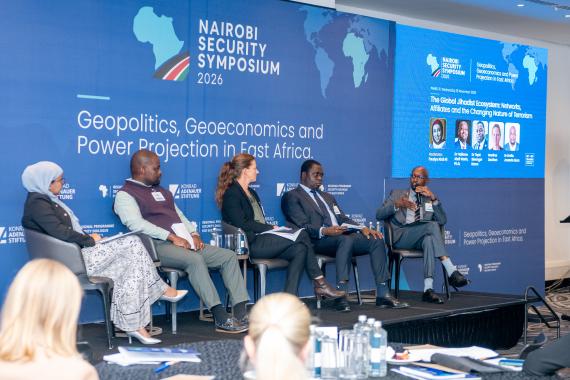
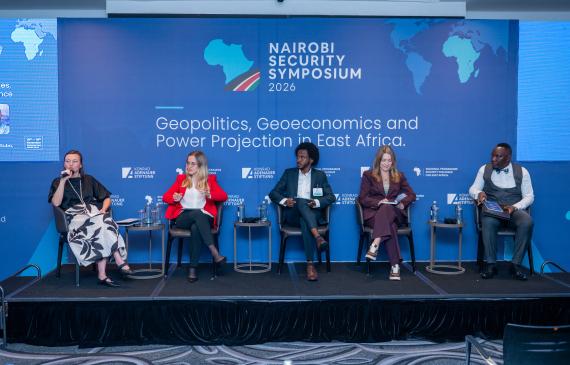
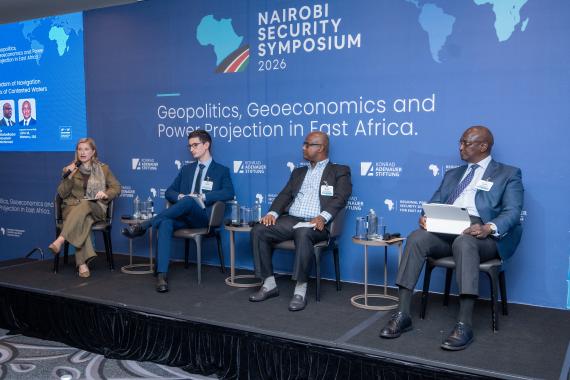
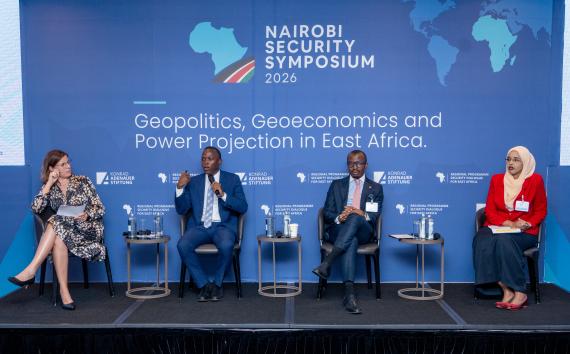
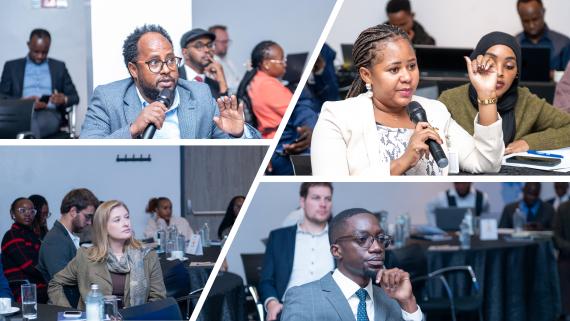
The Symposium themed “Geopolitics, Geoeconomics and Power Projection in East Africa” brought together security experts, diplomats, researchers and practitioners from across the globe to high-level, closed-door discussions focusing on the geopolitical and geoeconomic attributes of East Africa as well as their interlinkages with other regions, such as Europe, the Middle East and Latin America.
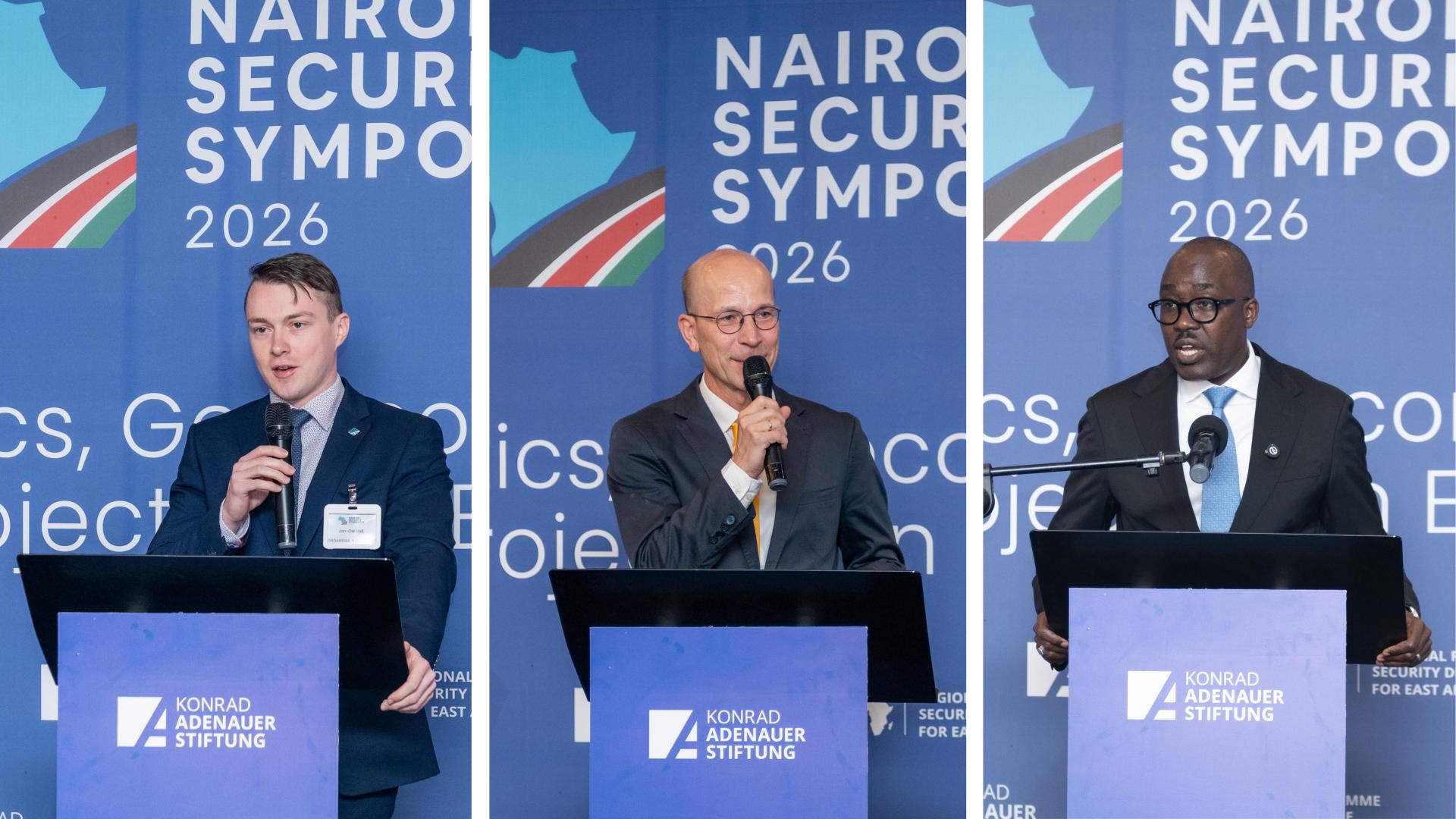
The event was launched by welcoming remarks delivered by Jan-Ole Voß, Director, KAS RP SIPODI East Africa, in which he thanked the guests for their attendance. H.E. Andreas Peschke, Ambassador of the European Union to the Republic of Kenya, then gave opening remarks, highlighting the importance of multilateralism and international law, while emphasising that security and prosperity are inseparable. In his keynote address, Dr. Korir Sing’Oei, Principal Secretary, State Department for Foreign Affairs, Ministry of Foreign and Diaspora Affairs, Republic of Kenya, addressed the key stakes of Africa’s position in the world and its relationships with other countries. In addition, he called for coordinated regional action, respect for sovereignty and African-led solutions.
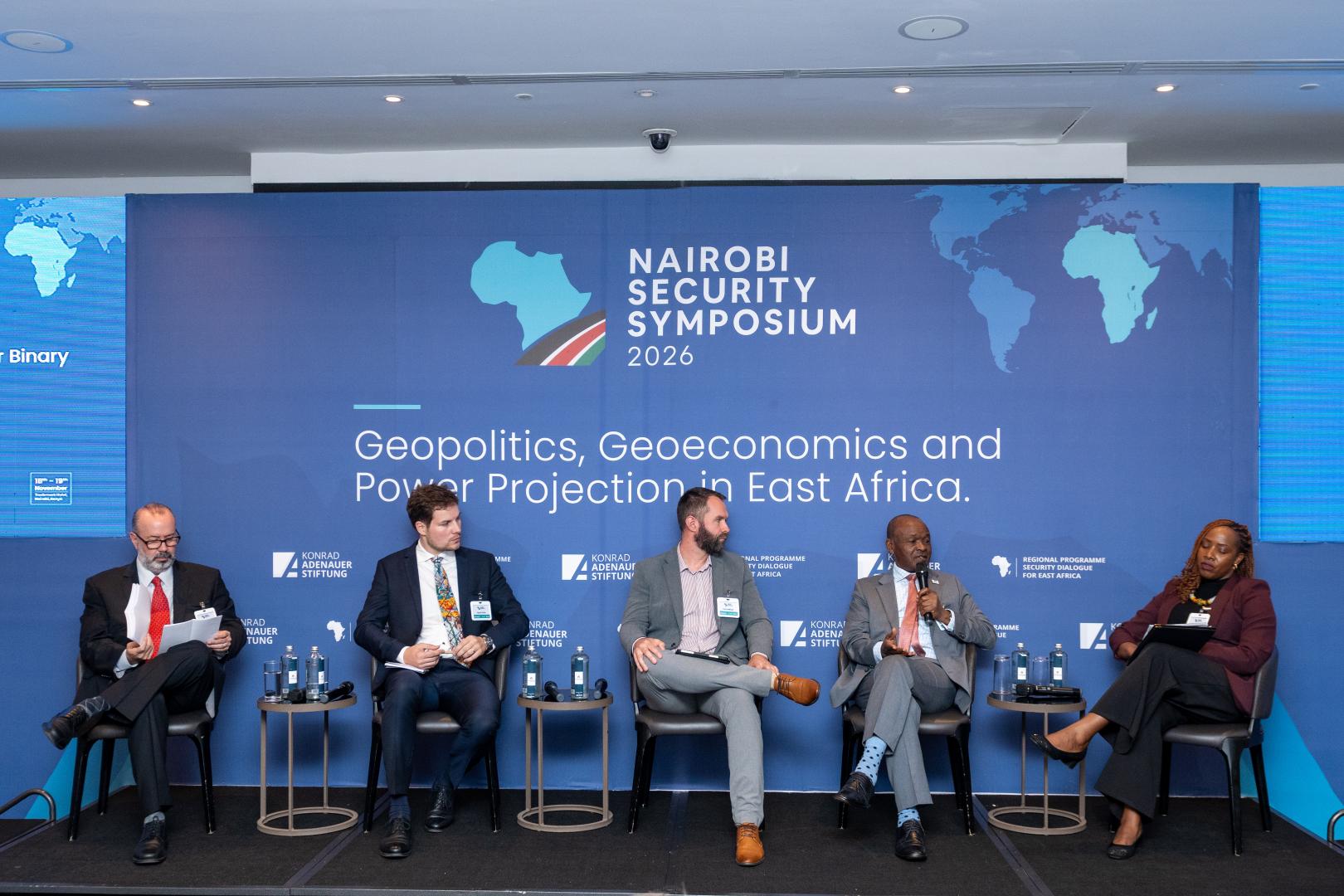
Following the topic of Dr. Sing’Oei’s keynote address, the first panel discussion examined how middle and smaller powers exercise autonomy while navigating geopolitical competition and confronting the structural dependencies that constrain their autonomy. The panel consisted of H.E. Erastus Mwencha, Former Deputy Chairperson of the African Union Commission; Chris Hattingh, Executive Director, Centre for Risk Analysis, South Africa; Sigurd Rothe, Lecturer in Political Science, University of Freiburg / University of Bayreuth / Sciences Po Paris; and Professor Dr Jorge A. Schiavon, Professor of Political Science, Ibero-American University, Mexico. Dr Winnie Rugutt-Chebon, Head of Department of the International Relations and Diplomacy School, Riara University, Kenya, moderated the discussion. The speakers agreed that middle and smaller powers need enough political, economic and military strength to have the possibility to choose their own alliances admits the current great-powers-politics.
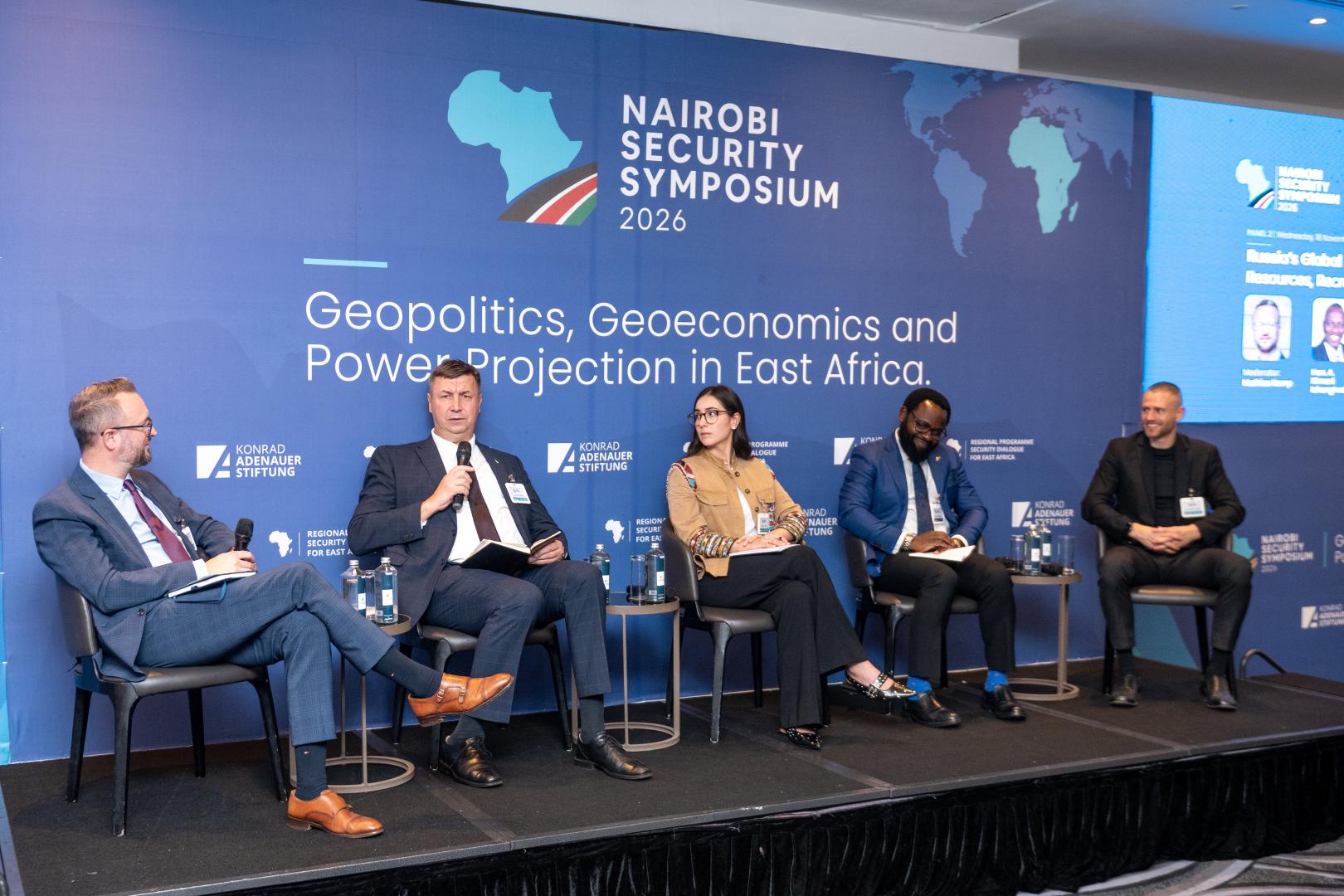
The second panel discussion explored Russia’s pursuit of influence across different regions through security partnerships, resource extraction, recruitment of fighters and political engagement, questioning the coherence and sustainability of its global manoeuvring. The discussion was moderated by Mathias Kamp, Director, KAS Country Office Kenya, and attended by H.E. Yurii Tokar, Ambassador of Ukraine to the Republic of Kenya; George Ngoha, United Democratic Alliance, Kenya; Andrea Calle, Director of Projects, Security and Defense Policy Lab, Institute of Political Science Hernán Echavarría Olózaga, Colombia; and Dr Torsten Konopka, Lecturer, Chair of Military History, University of Potsdam, Germany. A key takeaway of the discussion was that Russia is actively seeking to undermine the influence of Western states in Sub-Saharan Africa, but also in other regions, such as Latin America.
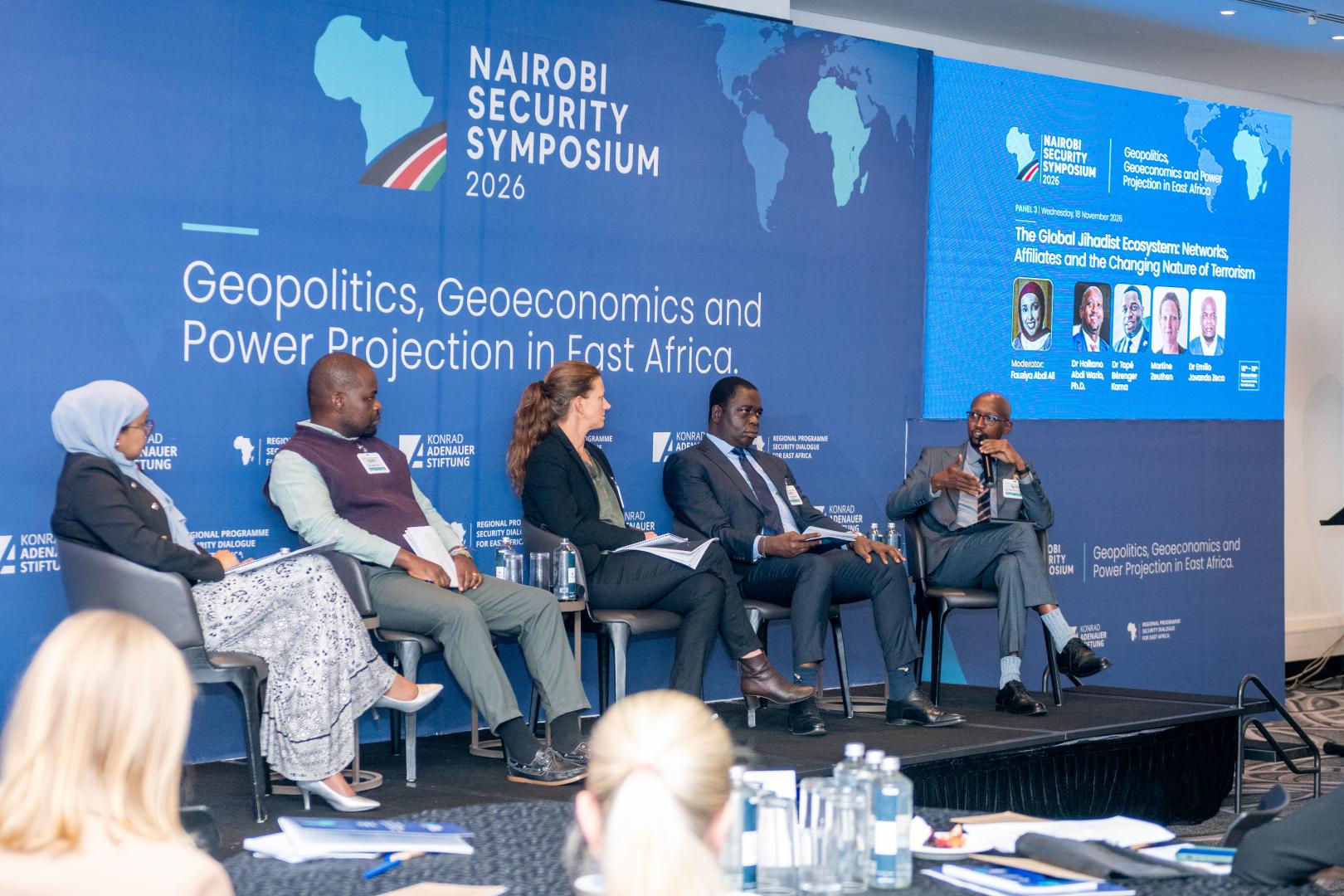
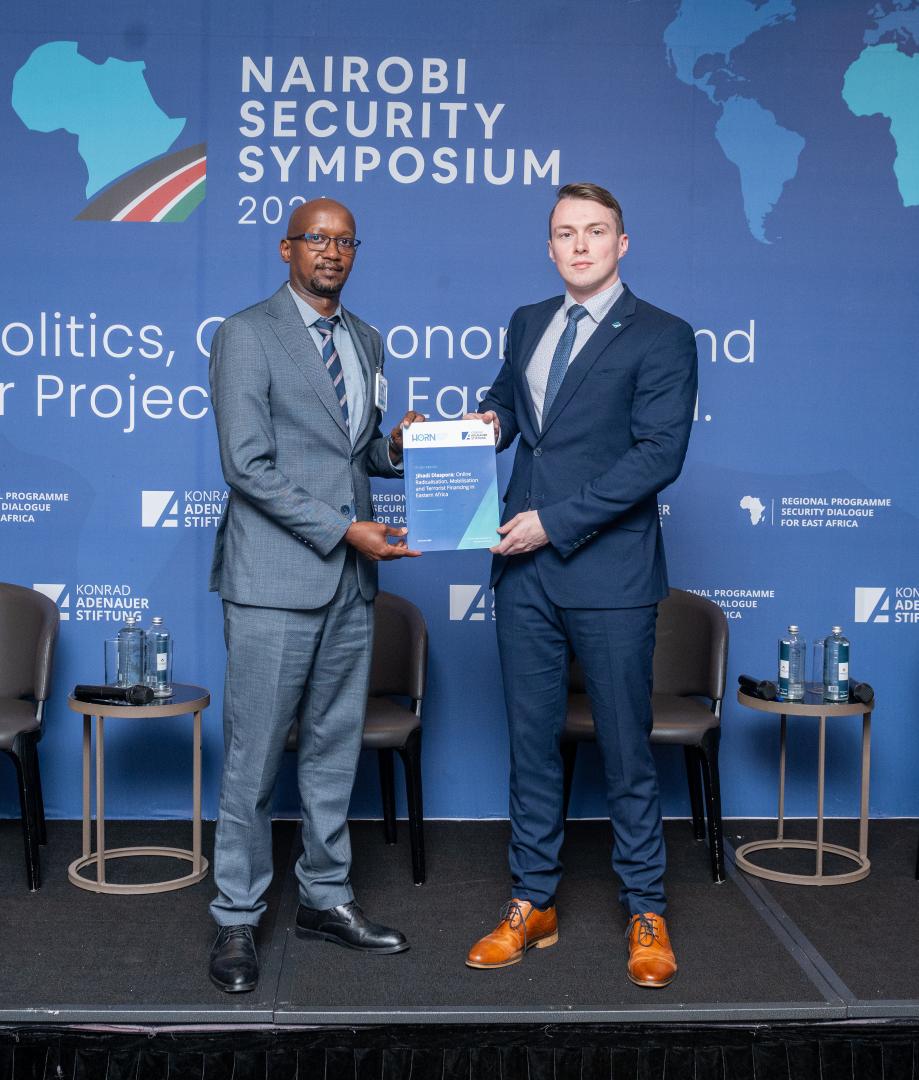
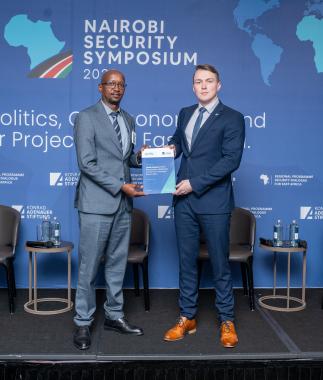
The third panel discussion investigated the global network of jihadism through the analysis of local religious and socio-political conflicts and transnational links between jihadist groups in Sub-Saharan Africa and beyond. Dr Halkano Abdi Wario, Associate Director for the Study of Terrorism and Violent Extremism, HORN International Institute for Strategic Studies; Dr Tapé Bérenger Kama, Strategy and Defense Expert, Côte d’Ivoire; Martine Zeuthen, Associate Fellow, Royal United Services Institute; and Dr Emilio Jovando Zeca, Researcher, Centre for Strategic and International Studies, University of Maputo, took part in the discussion that were moderated by Fauziya Abdi Ali, President, Women in International Security – Horn of Africa. At the end of the panel, a research publication, produced by the HORN International Institute for Strategic Studies in partnership with KAS RP SIPODI East Africa titled "Jihadi Diaspora: Online Radicalisation, Mobilisation and Terrorist Financing in Eastern Africa" was presented. During the discussion, the speakers observed that terrorism grows mostly in spaces that are neglected by the state, thus increasing the socio-political legitimacy of terrorist groups towards the local population.
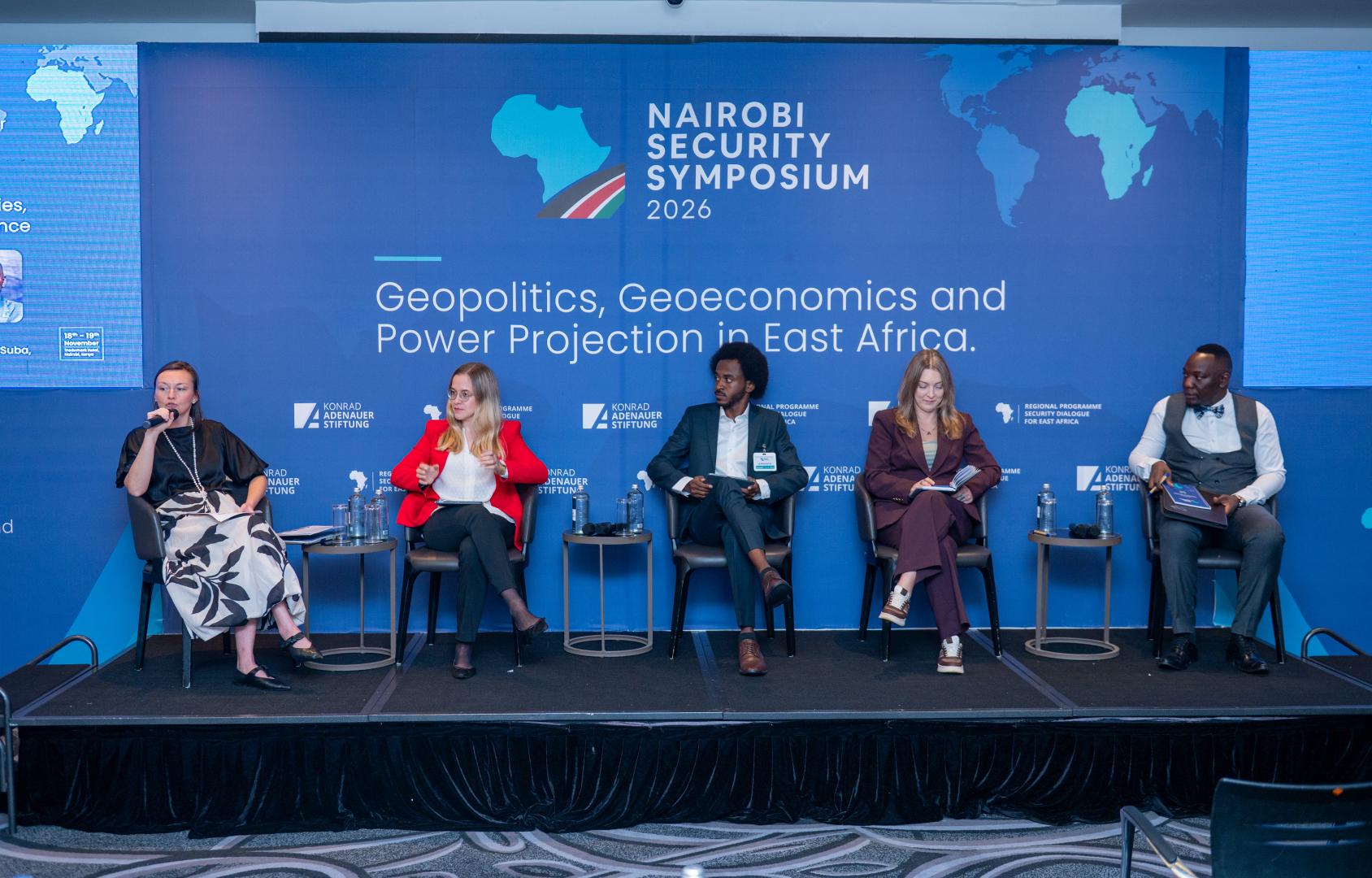
The fourth panel discussion, which opened the second conference day, examined how emerging technologies, such as drones and automated equipment, are changing the economics and accessibility of warfare and military deterrence. The discussion was moderated by Anna Reismann, Director, KAS Office Ethiopia/African Union, and consisted of Vanessa Vohs, Researcher and Doctoral Candidate, University of the Bundeswehr Munich; Ewa Polak, Deputy Director of Foreign Policy and European Integration Programme, Casimir Pulaski Foundation, Poland; Ali Mahmoud Ali, Political Violence Researcher and Sudan Analyst, ACLED; and Major Beautah Mwanza Suba, SS, Retired Major of the Kenya Defence Forces and Associate at the Global Centre for Policy and Strategy. A central message of the discussion was that technological adaptation must be matched by human oversight, integrated defence systems, institutional preparedness and revised military doctrines.
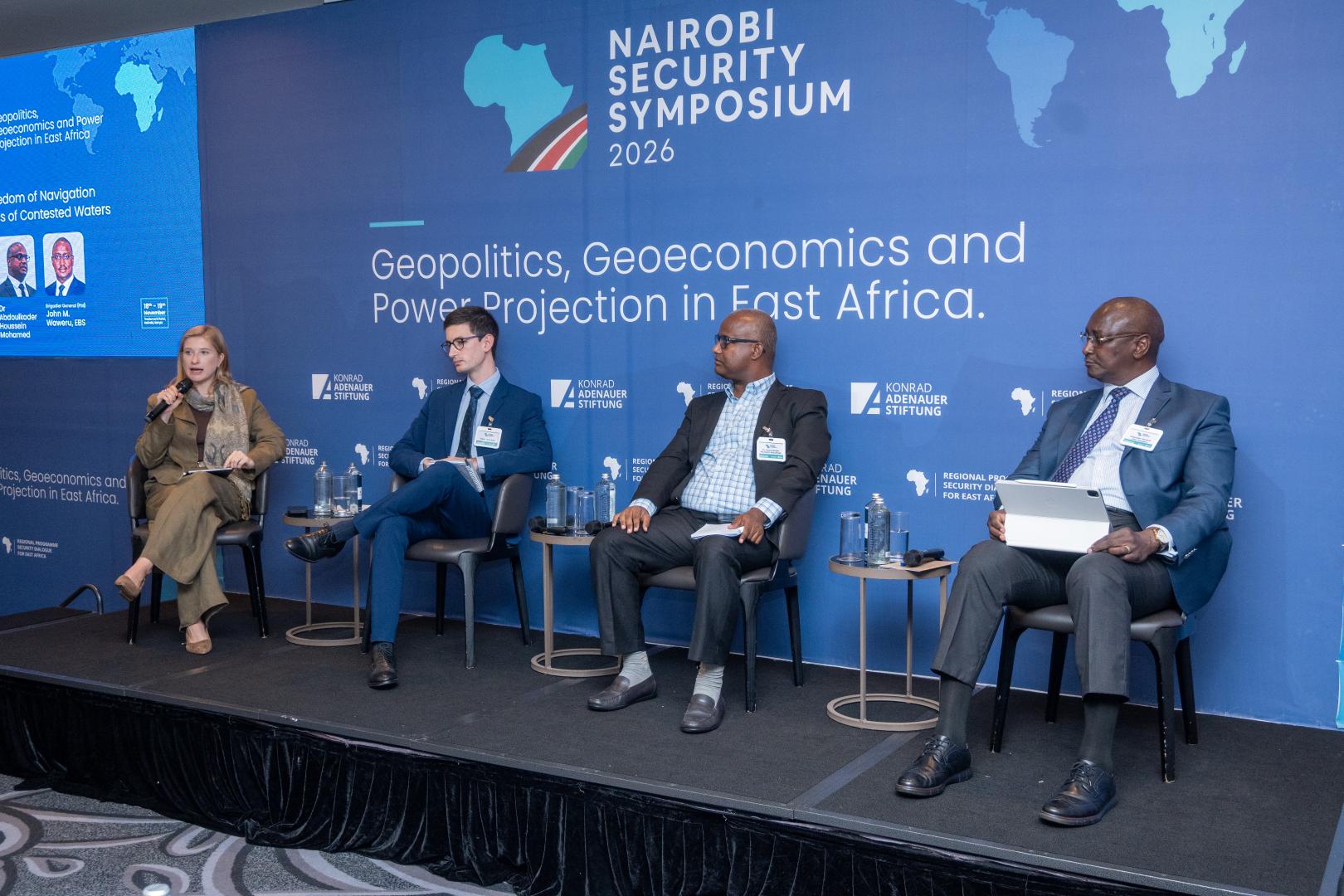
Afterwards, the fifth panel discussion focused on maritime security, analysing how geopolitical competition is increasingly expanding into the maritime space, including maritime chokepoints such as the Bab-al-Mandab and the Strait of Hormuz. Albert Vidal Ribé, Research Associate for Middle East Defence Industry and Procurement, International Institute for Strategic Studies; Dr Abdoulkader Houssein Mohamed, Deputy Director, Institute for Political and Strategic Studies (IEPS), Djibouti; and Brigadier General (Rtd.) John M. Waweru, EBS, Senior Security Consultant and former naval officer of the Kenya Navy, took part in the discussions under the moderation of Carolin Unger, Deputy Director, KAS Country Office Kenya. The speakers argued that the vulnerability of ports, shipping routes and undersea infrastructure reinforces the need for cooperation and the protection of freedom of navigation as essential foundations of international security and global commerce.
The sixth and final panel explored the shifting distribution of global economic power and its deriving challenges for African states and their access to ports, trade corridors and strategic commodities. The discussion, moderated by Anja Beretta, Director, Regional Programme Economy Africa, KAS, comprised Raymond Mujuni, Deputy Director, African Institute for Investigative Journalism, Uganda; Trevor Lwere, Economist at Development Reimagined, Kenya; and Nimo Jirdeh, Director, Horn of Africa and Middle-East Institute. According to the speakers, the imperative of access to ports, trade corridors and strategic commodities for East African states, including the landlocked ones, makes regional cooperation and a more balanced economic interdependence essential to long-term stability and development.
The symposium concluded with closing remarks from Jan-Ole Voß, who thanked the panelists for their insightful remarks, the guests for their attention and contributions, and the KAS staff for its engagement throughout the event.

About this series
The Konrad-Adenauer-Stiftung, its educational institutions, centres and foreign offices, offer several thousand events on various subjects each year. We provide up to date and exclusive reports on selected conferences, events and symposia at www.kas.de. In addition to a summary of the contents, you can also find additional material such as pictures, speeches, videos or audio clips.