






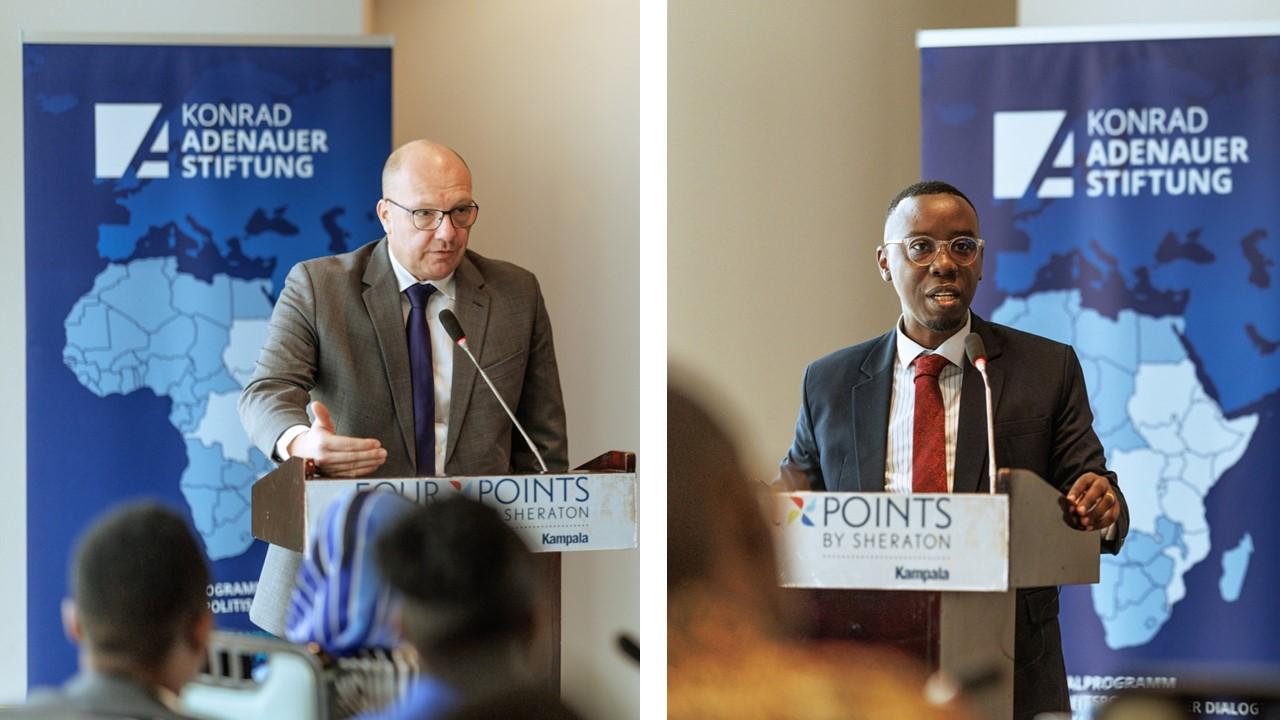
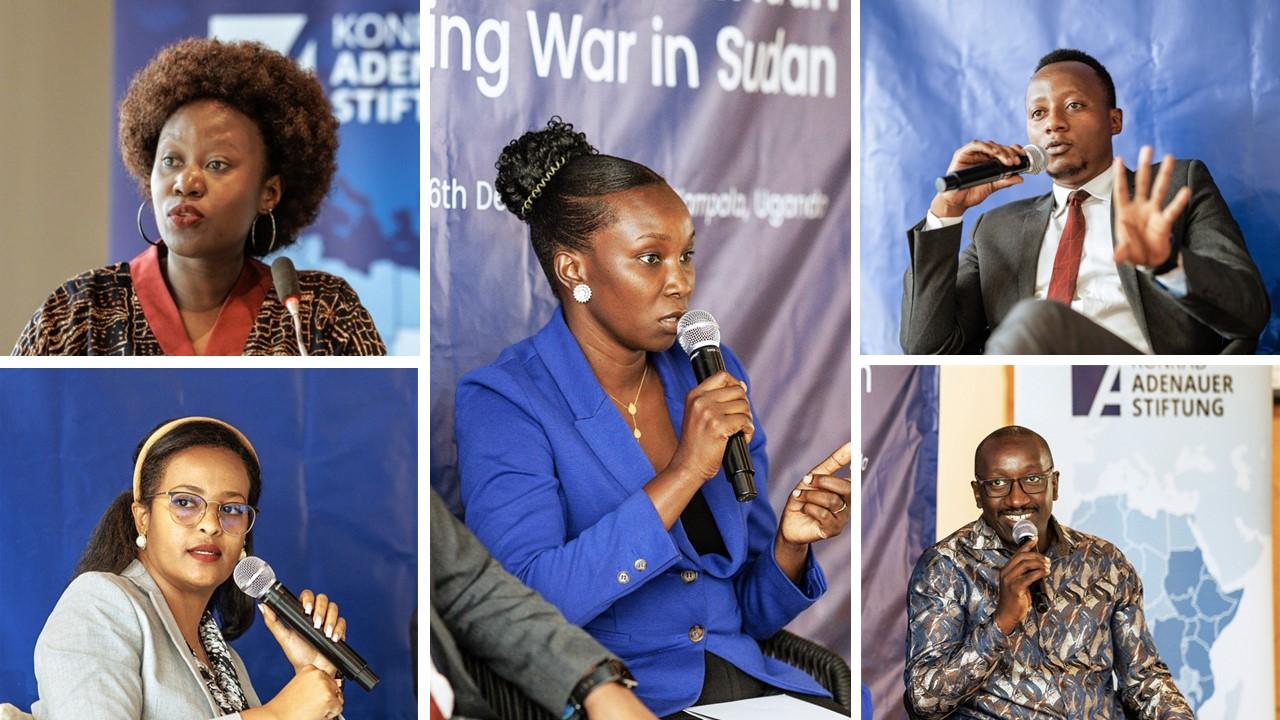
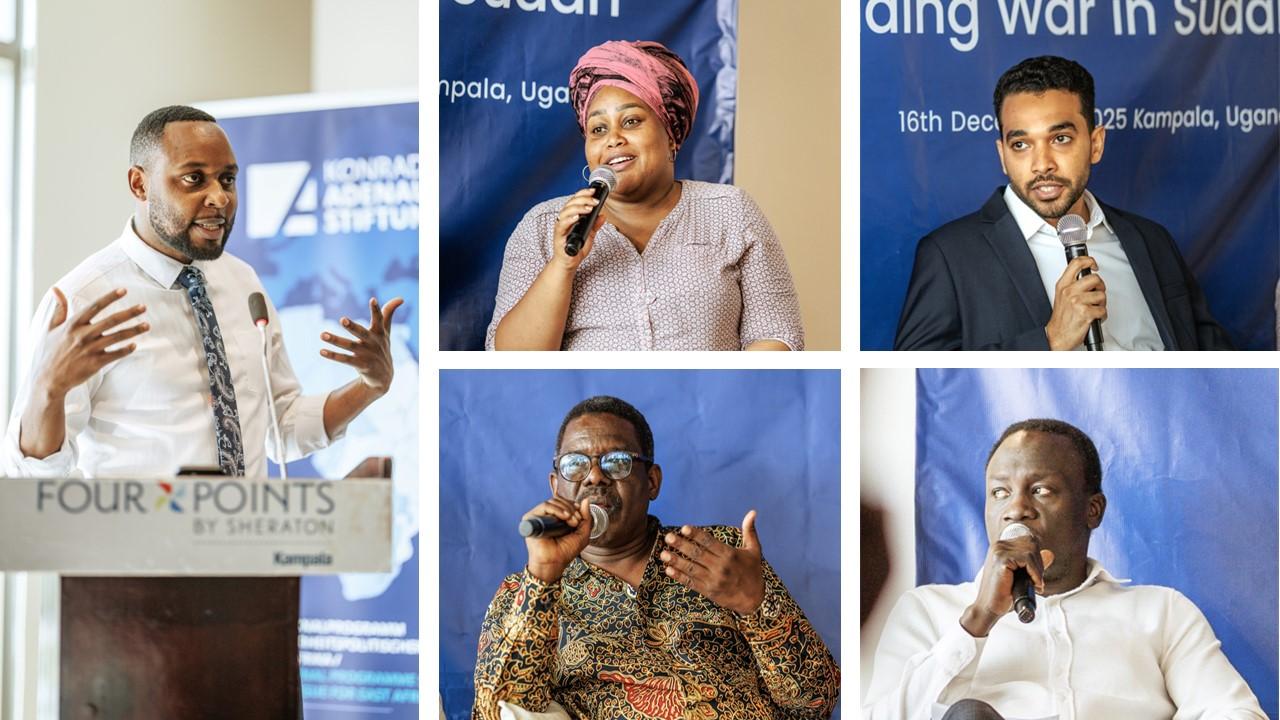
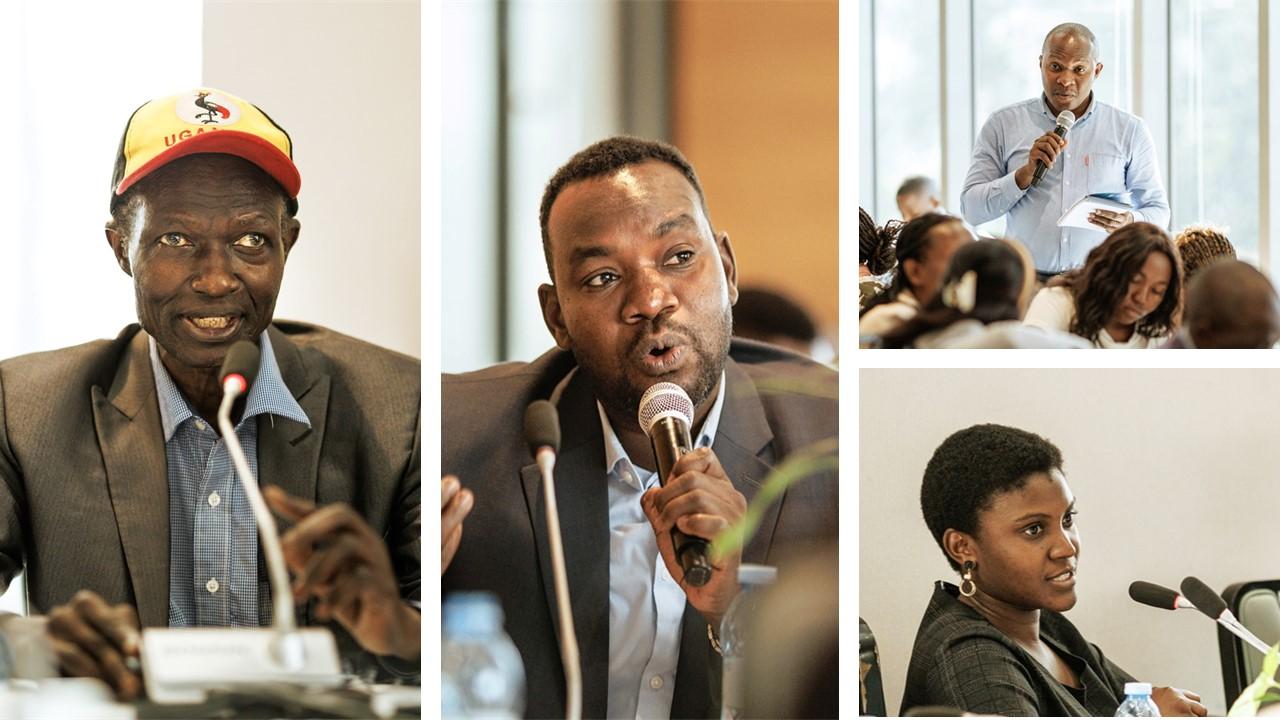
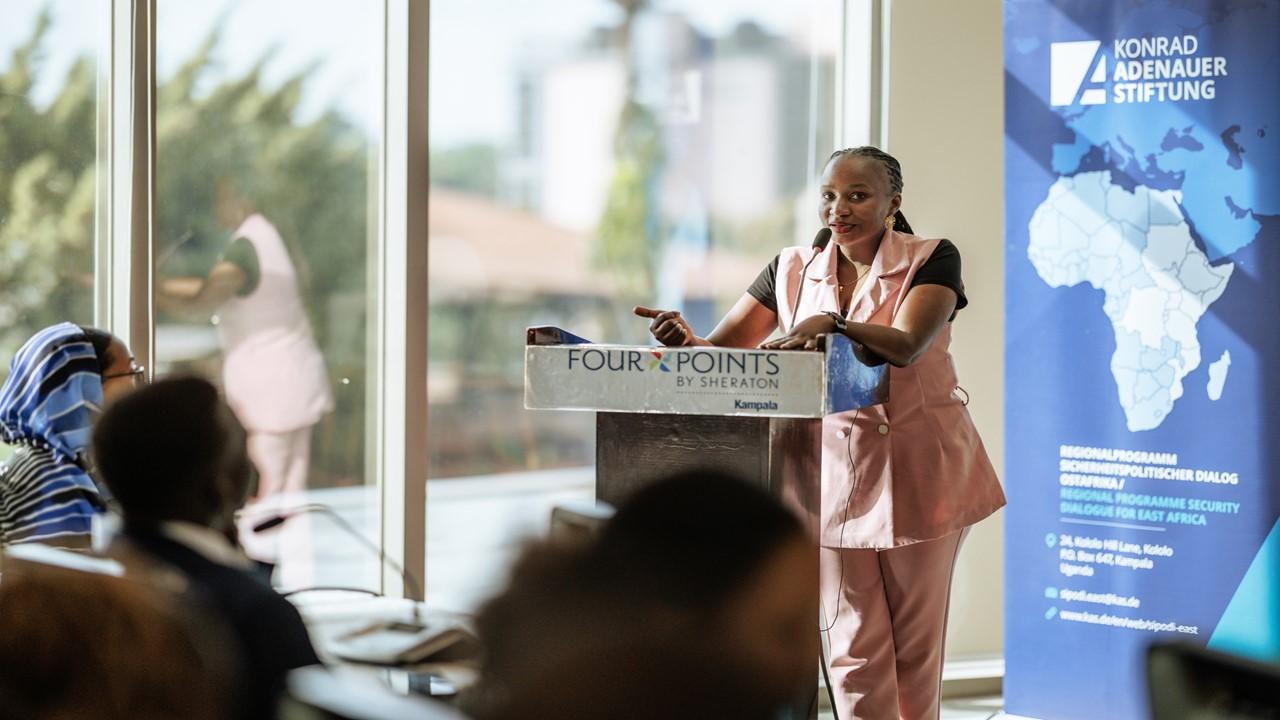
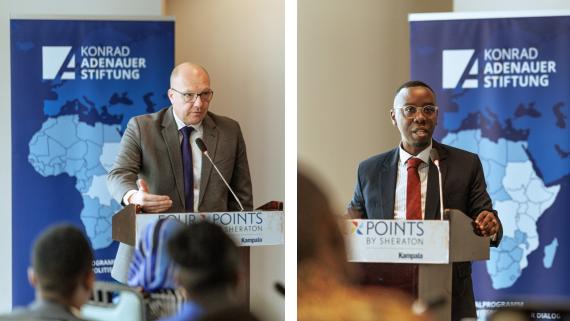
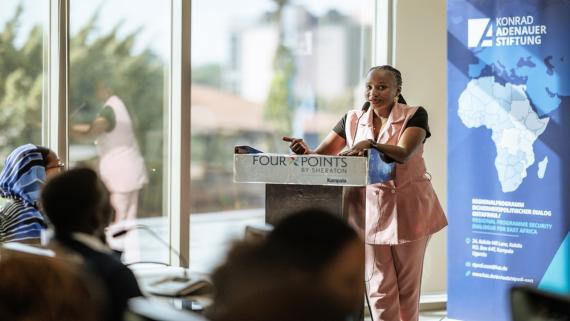
The dialogue was officially opened by Nils Wörmer, Director KAS RP SIPODI East Africa, who noted that the war in Sudan is one of the biggest humanitarian catastrophes in recent times but has been overshadowed by conflicts in Ukraine and Palestine. He further noted that refugees create huge obligations upon host countries, straining their ability to offer the requisite humanitarian support.
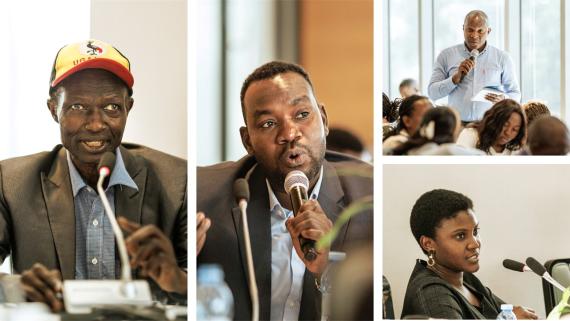
Herman Tuhairwe, PhD student, Refugee Rights Unit, University of Cape Town delivered a keynote address reflecting upon the evolution of Uganda’s asylum system and how the changing humanitarian landscape affects the future of refugee protection. He noted that Uganda’s asylum response, rooted in its legal architecture, is indeed progressive, providing for freedom of movement, access to employment, the right to set up lawful business and most of all, the allocation of land to build a house and engage in subsistence agriculture. He added that the success of this model was mainly because of the generous international support towards refugees, Uganda’s political willingness to allocate land for refugee resettlement especially in the rural peripheries, and that the refugee populations were still manageable. However, with a growing population of refugees and reduced humanitarian support, this model needs rethinking. He recommended that Uganda should invoke Article II (4) of the 1969 OAU Convention, which obliges other Member States, in a spirit of African solidarity and international cooperation, to take appropriate measures to lighten the burden on refugee host states.
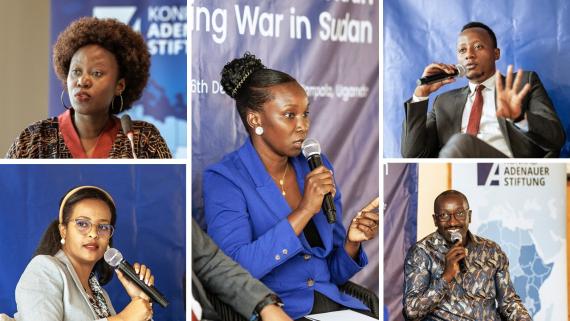
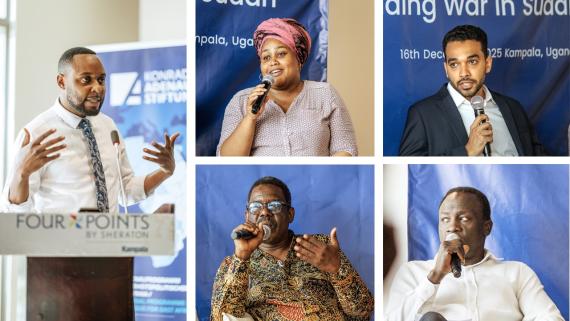
The first panel, moderated by Anisha Alinda, Project Manager KAS Uganda and South Sudan, did a mapping of the realities of urban refugees in Uganda including the legal aspects of asylum, urban housing and security challenges, access to documentation and participation in informal economies. Panellists included Muriel Iyanu, Legal Officer, Law Development Centre, Eynas Latif, Project Manager, Teeba Press, Gerald Mulindwa and Innocent Ndahiriwe, both experts on migration and refugee management. Panellists urged the Uganda government to further ease business registration and access to legal documentation for refugees as a means of enabling self-sustenance, economic participation and integration.
The second panel discussed the role of refugees in shaping solutions for peace in Sudan. The panel was moderated by Edgar Mwine, Project Manager, KAS RP SIPODI East Africa and comprised Mohamed Badawy, Senior Lawyer, Africa Centre for Justice and Peace, Sojoud Elgarrai, Coordinator, Human Rights Defenders in Exile, Aseel Abdalla, independent Sudanese researcher and Khalid Mishin, Spokesperson, Youth Citizens Observers Network (YCON). The panel noted that the war in Sudan has evolved, forming new alliances and new forms of polarisation that are not geographically and ethnically clear thus complicating interventions and resolution efforts. They called for de-escalation and for more international pressure in order to secure a meaningful ceasefire and pave way for a political process to start.
The dialogue concluded with closing remarks by Susan Natumanya, Project Manager, KAS RP SIPODI East Africa who urged for continued mobilisation and engagement amongst the Sudanese community in Uganda and an accountable connection with the realities at home in order to positively influence peace efforts in Sudan.
About this series
The Konrad-Adenauer-Stiftung, its educational institutions, centres and foreign offices, offer several thousand events on various subjects each year. We provide up to date and exclusive reports on selected conferences, events and symposia at www.kas.de. In addition to a summary of the contents, you can also find additional material such as pictures, speeches, videos or audio clips.