





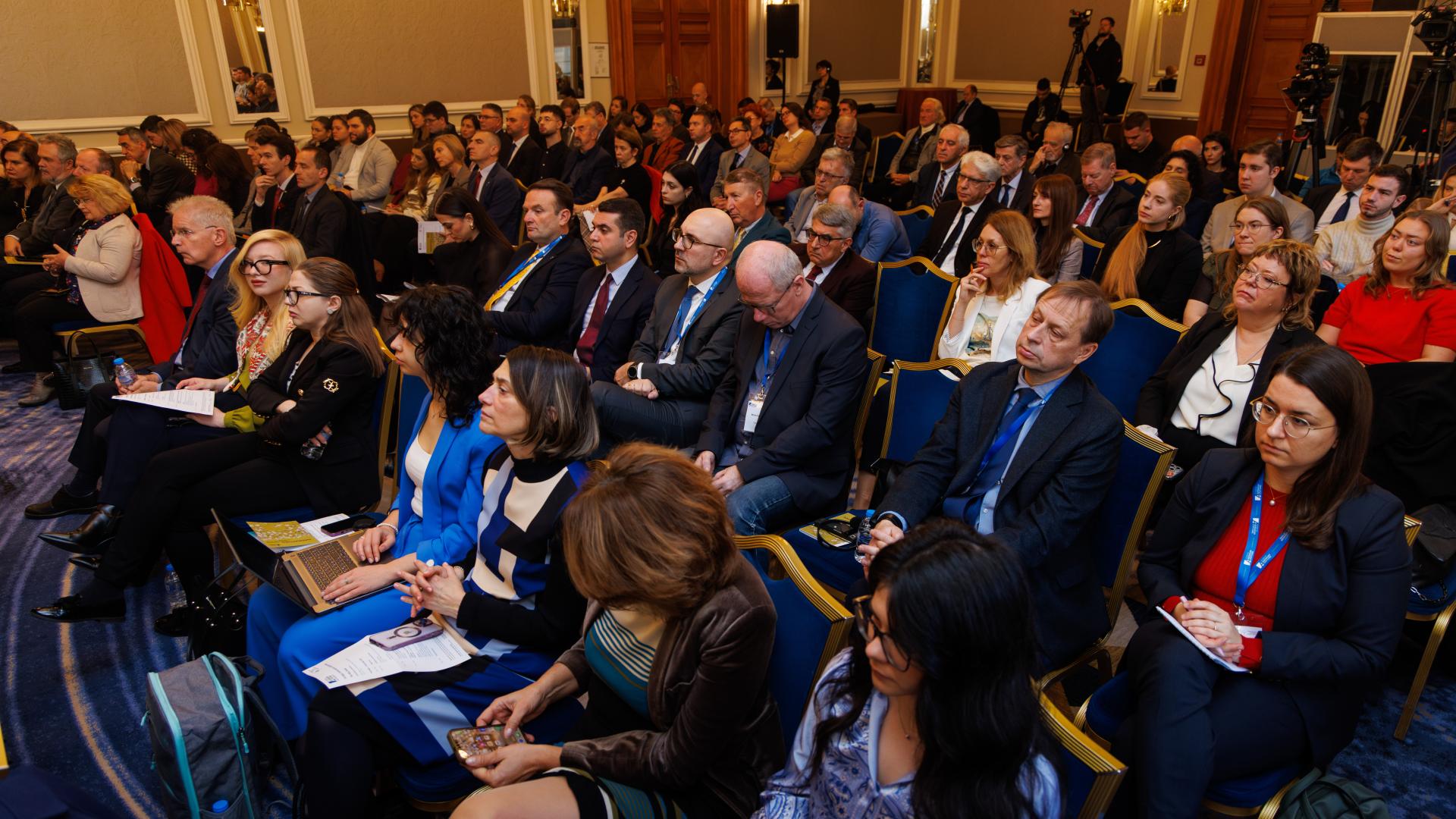
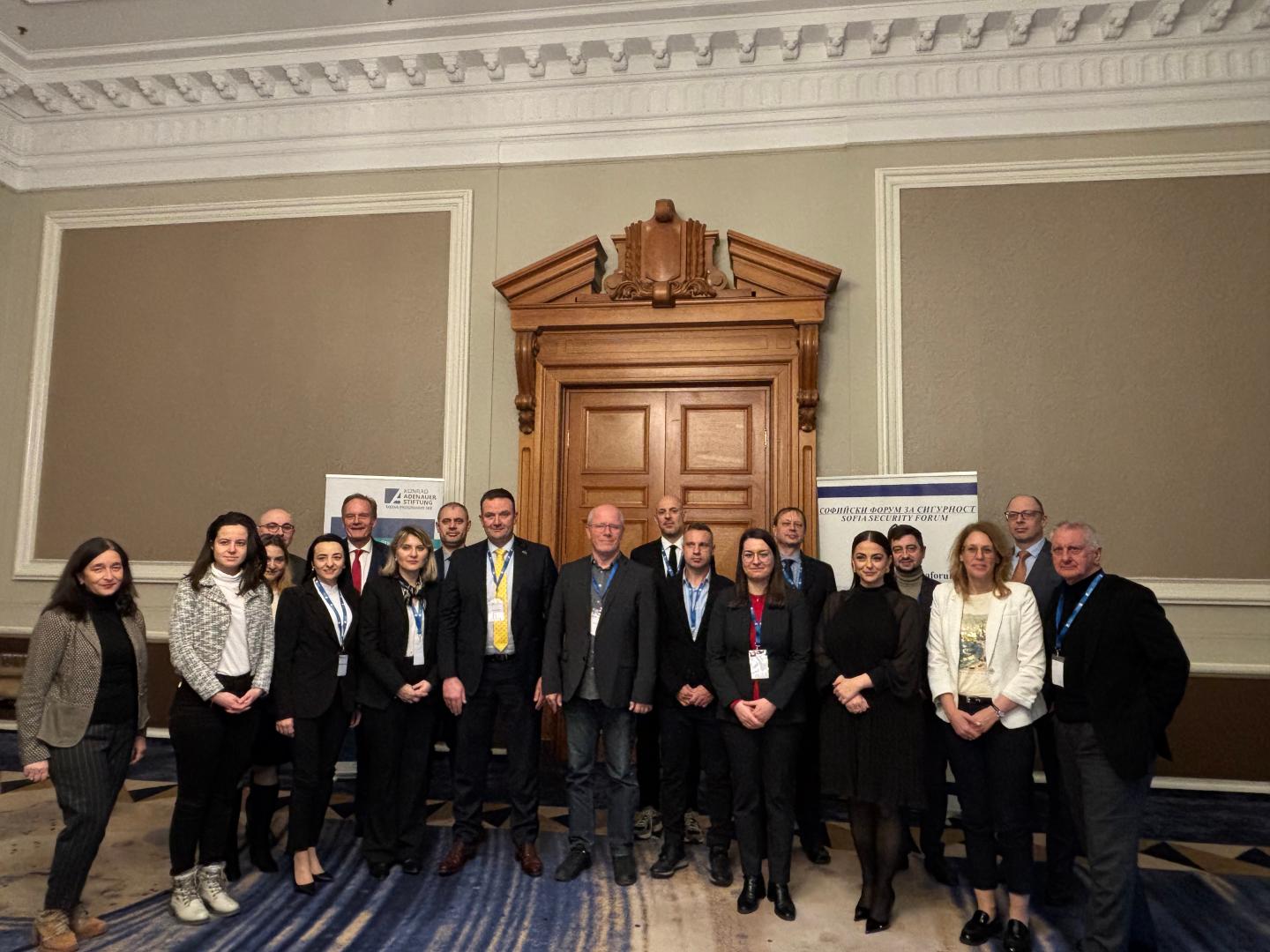
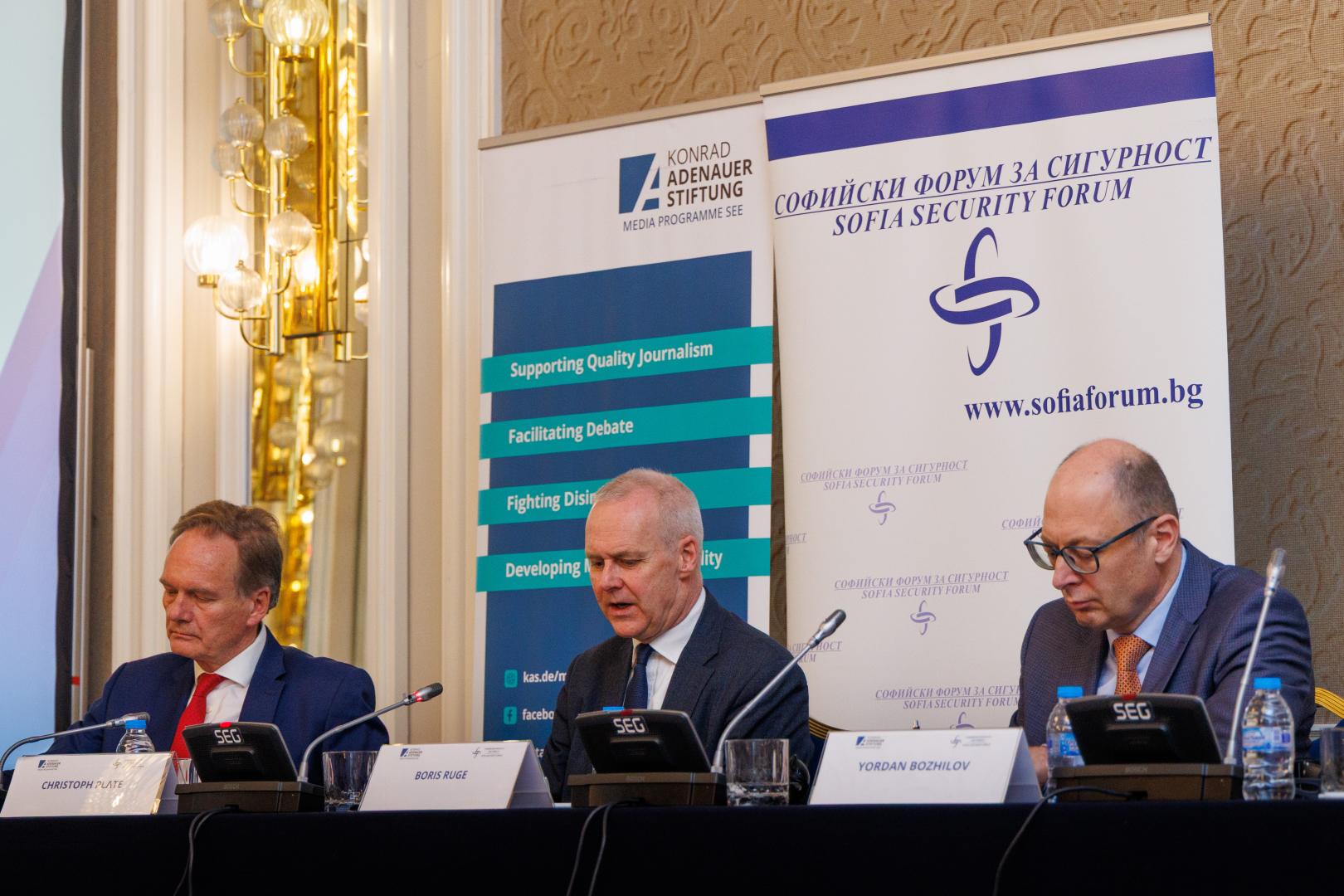
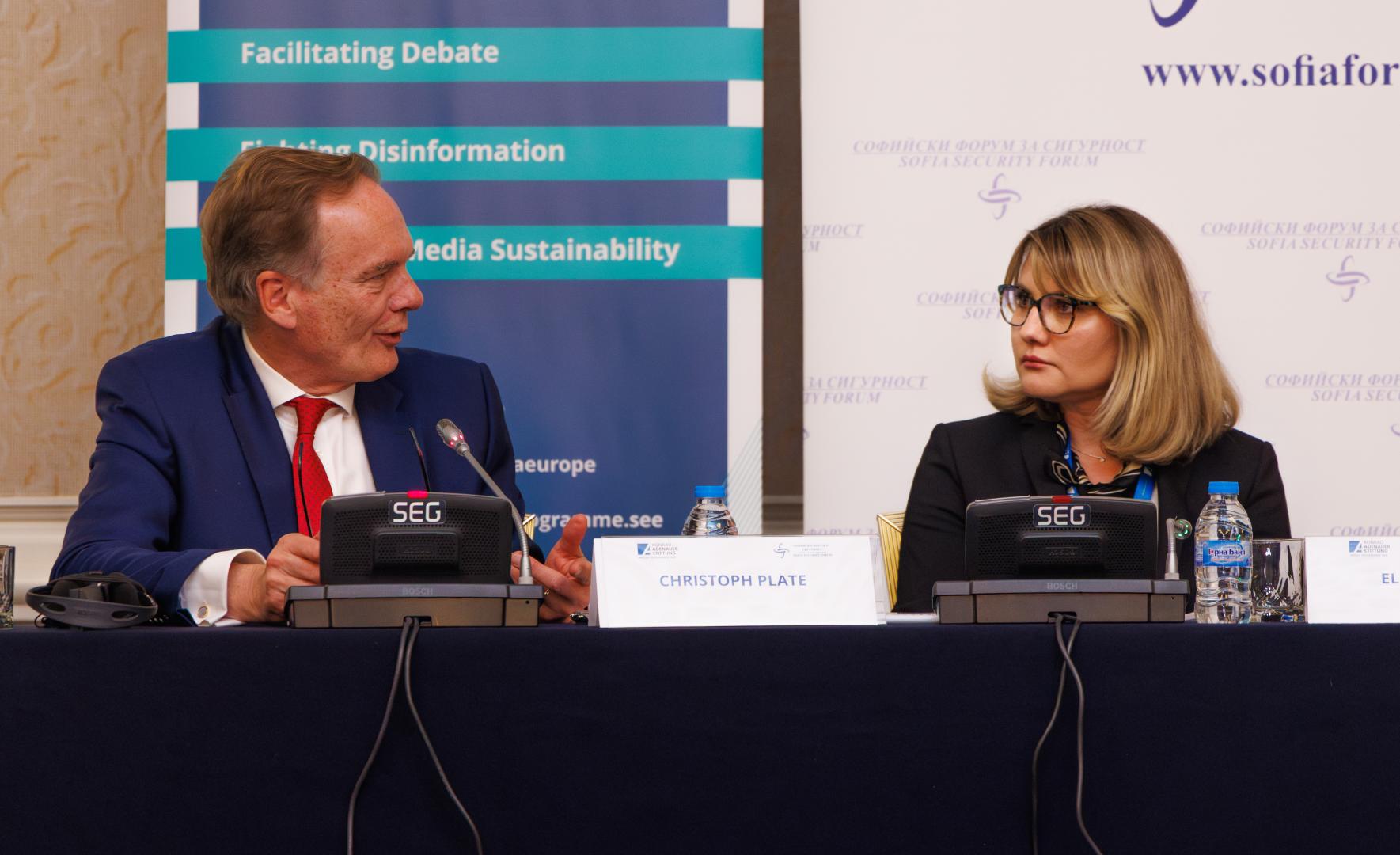
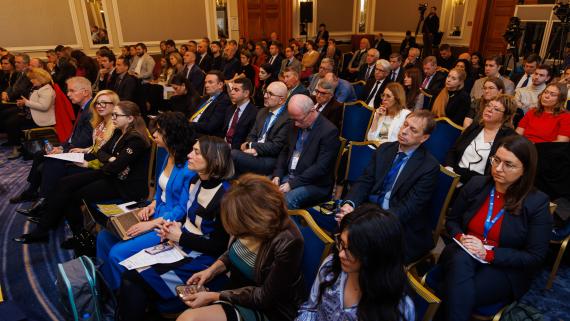
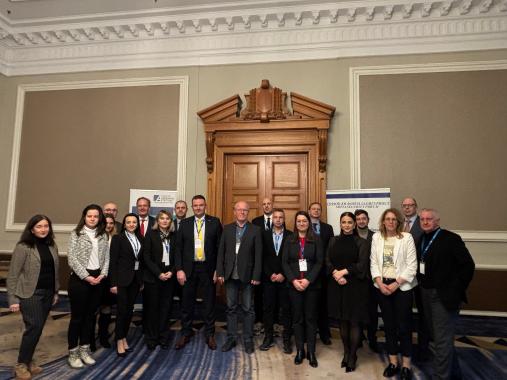
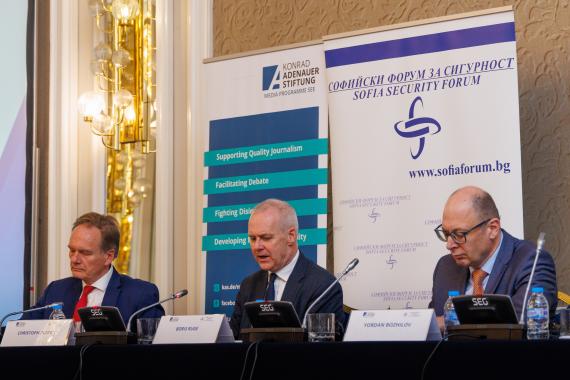
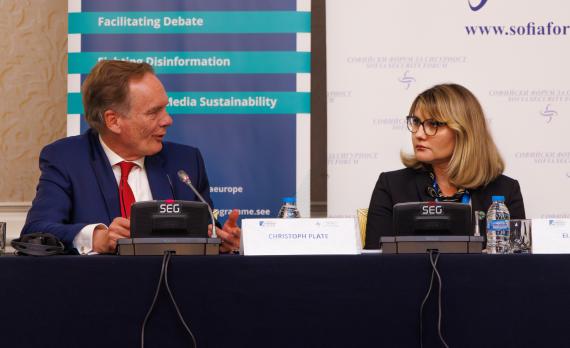
The international conference “Strategic Communications in Southeast Europe: The Way Ahead,” hosted by the Konrad-Adenauer-Stiftung Media Programme Southeast Europe in partnership with the Sofia Security Forum, brought together nearly 100 high-level participants to delve into the topic of Strategic Communication.
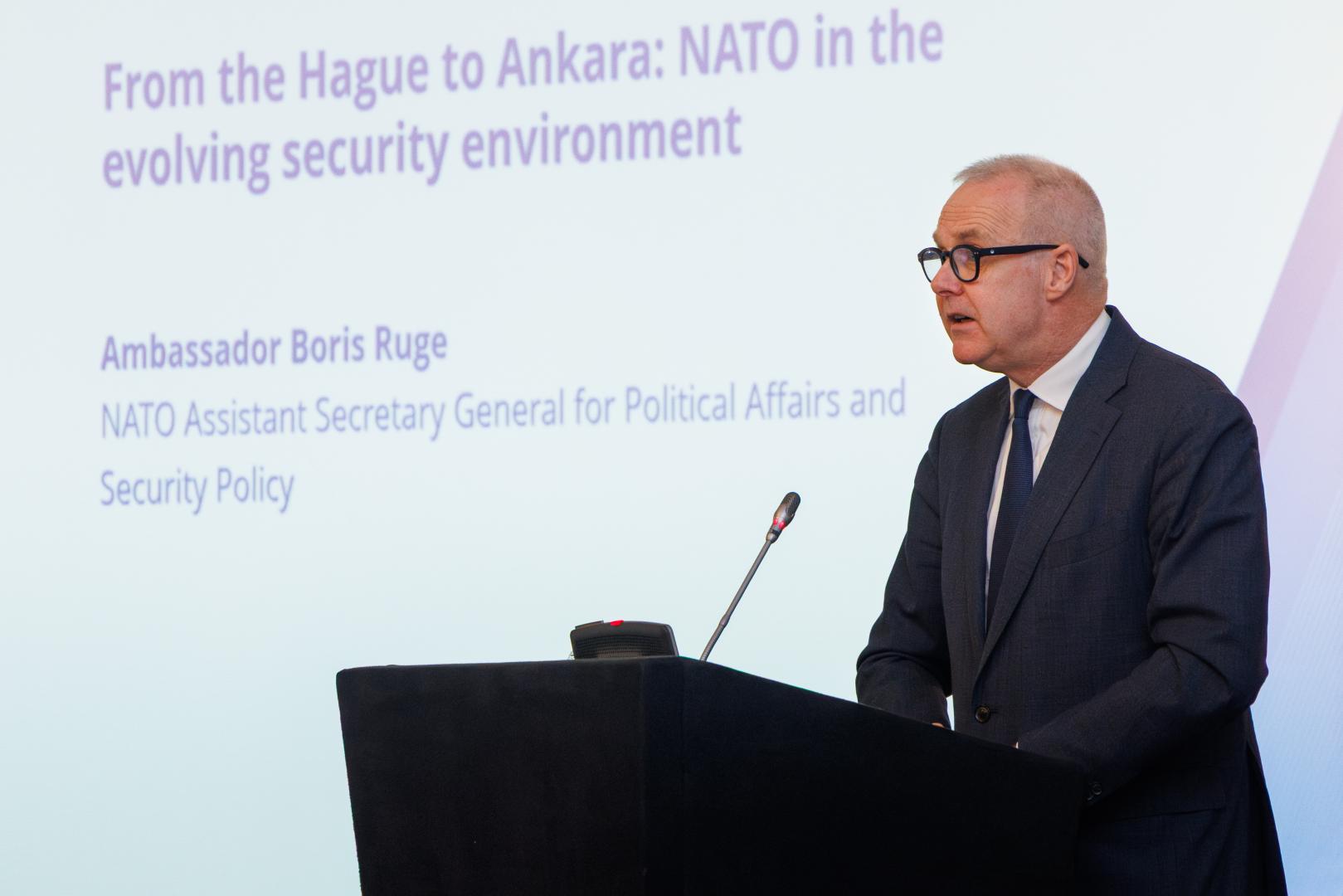
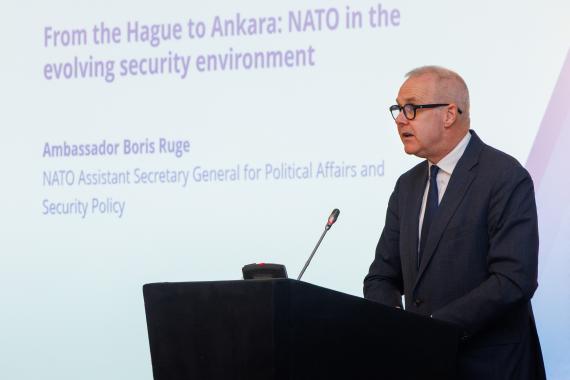
The highlight of the conference was the keynote address by Ambassador Boris Ruge, NATO Assistant Secretary General for Political Affairs and Security Policy. “We must reject the false narrative that NATO is responsible for Russia’s war against Ukraine,” he said, encouraging participants to confront disinformation with facts and strategic clarity. He stressed that effective communication begins with an honest assessment of reality, adding: “We need to acknowledge the strategic realities we face today - and the nature of President Putin’s regime.”
The event continued with a discussion about the challenges in the field of Strategic Communication in Southeast Europe. The perspectives of experts from the region (Moldova, Ukraine), as well as a viewpoint from the United Kingdom were shared during this discussion. The participants agreed that in an era of hybrid threats, Strategic Communication must be proactive and adapted to the specific environment in order to function as a key instrument for crisis management, the achievement of domestic objectives, and handling of emergency situations.
During the later closed doors session on disinformation and public trust, participants emphasized that credibility remains fragile across Southeast Europe. The conversation highlighted that building trust cannot rely on short-term tactics alone but requires a commitment to transparency and authentic communication. A key point raised was the need for Strategic Communication to extend beyond military and security circles to engage with broader society – including political parties, educational institutions, civil society, and influential public figures.
The discussion also touched upon structural challenges in the region. Several countries lack cohesive frameworks for coordinating Strategic Communication efforts, since the responsibilities are scattered across different institutions. Participants debated whether an overarching system could be effective, acknowledging that approaches must be adapted to the different governmental structures, cultures, and political contexts in the region.
The session on developing a regional Strategic Communications agenda explored opportunities for enhanced cooperation across Southeast Europe. Participants worked toward identifying common priorities and practical steps for capacity-building, recognizing that while each country faces unique circumstances, shared challenges require coordinated responses.
The experts were united in their view that resilience should be developed as an organic capacity that stems from the communities themselves, rather than as a rigid regulation imposed from above. The majority of people want to live in democracies with independent judiciaries and free media, and Strategic Communication must reflect this shared goal.Über diese Reihe
Die Konrad-Adenauer-Stiftung, ihre Bildungsforen und Auslandsbüros bieten jährlich mehrere tausend Veranstaltungen zu wechselnden Themen an. Über ausgewählte Konferenzen, Events, Symposien etc. berichten wir aktuell und exklusiv für Sie unter www.kas.de. Hier finden Sie neben einer inhaltlichen Zusammenfassung auch Zusatzmaterialien wie Bilder, Redemanuskripte, Videos oder Audiomitschnitte.