






 Marcus Merk
 Marcus Merk
 Marcus Merk
 Marcus Merk
 Marcus Merk
 Marcus Merk
 Marcus Merk
Marcus Merk
Marcus Merk
Marcus Merk
Marcus Merk
Marcus Merk
Marcus Merk
Marcus Merk
Marcus Merk
Marcus Merk
Marcus Merk
Marcus Merk
Marcus Merk
Marcus Merk
Marcus Merk
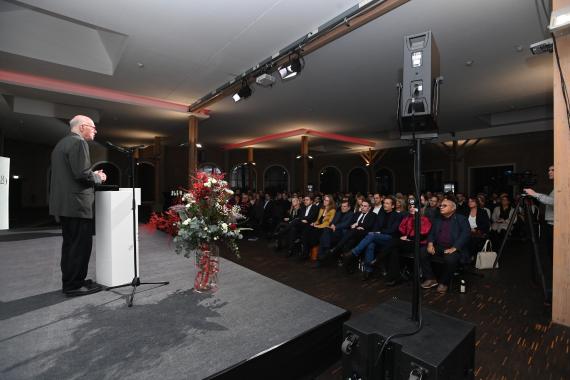
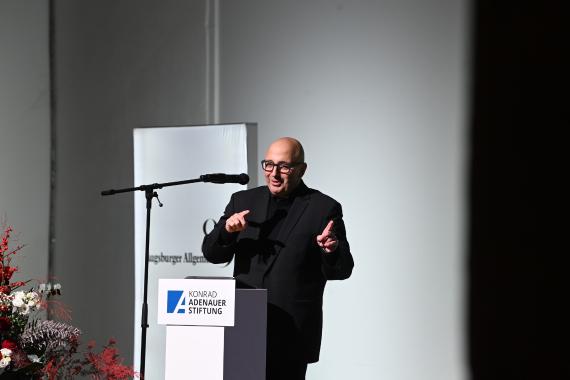
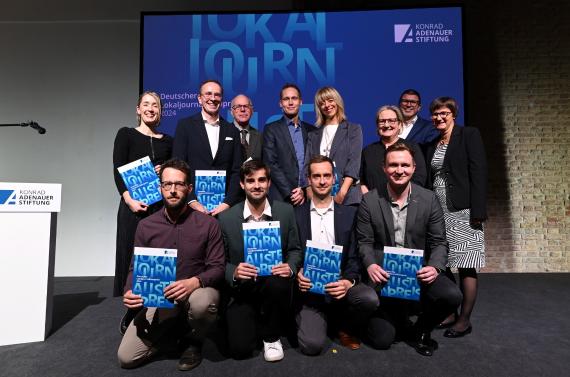

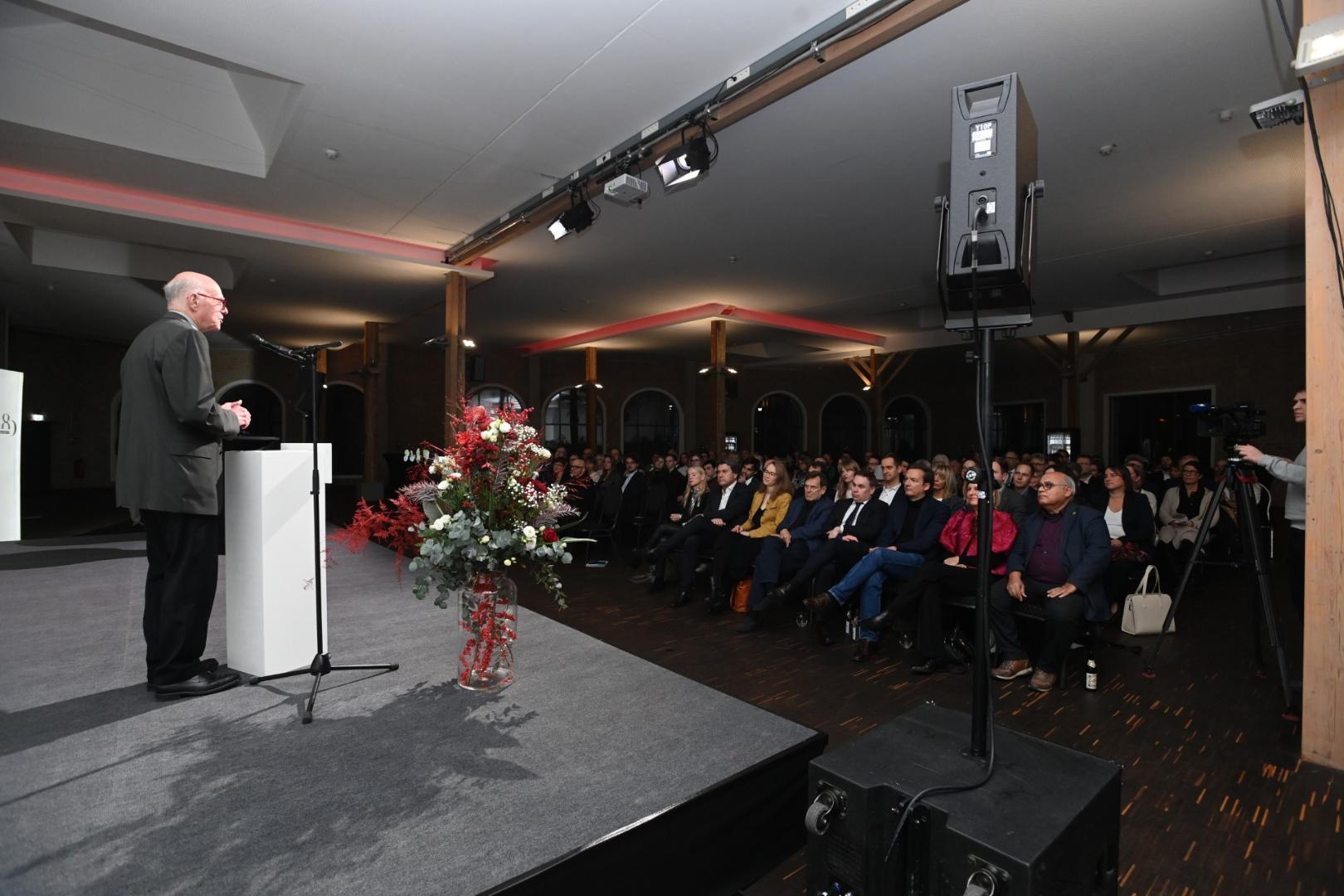
In his welcoming address, Prof. Dr Norbert Lammert, Chairman of the Konrad Adenauer Foundation, explained that since the prize was first awarded in 1980, the world had changed ‘fundamentally – and the media world even more so’. But despite all the changes that have clearly taken place in recent years and decades, one thing remains as important as ever: people. After all, it is publishers and journalists who take on the task of communicating what is happening. ‘And if they don't do it, it simply doesn't happen.’
Lammert particularly emphasised the importance of the local level. He pointed out that the foundation's namesake had been the mayor of a large German city long before he became Federal Chancellor and party leader. ‘The local level is not just one of the levels of politics, but the one closest to the people.’ It is there – among local politicians and local media alike – that an ‘immediate encounter with reality’ takes place: ‘At the local level, lies have short legs,’ said Lammert.
Impact on society's judgement
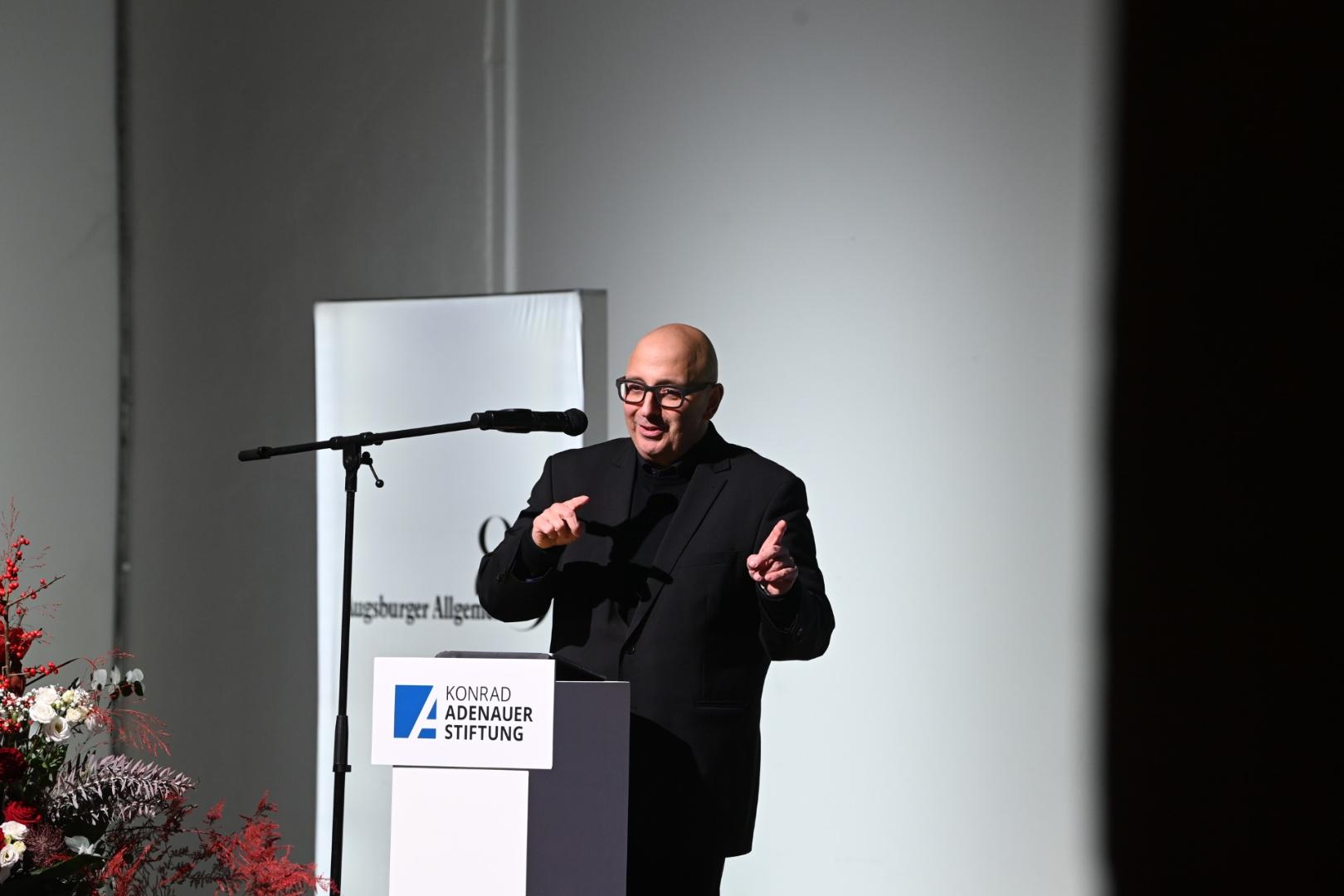
This year's keynote speech was given by Prof. Dr. Armin Nassehi, Vice-President of Ludwig Maximilian University in Munich. The renowned sociologist was the first Fellow of the Konrad Adenauer Foundation in 2021 and is a member of its Board of Trustees. Nassehi also explained how much the world has changed, which is why the media has also changed. This has an impact on society's overall judgement. ‘The media describe the shared world – and in doing so, they create it.’
Local journalism is not just about nice stories that are closer to home – it shows society and its developments on a local basis. However, it is becoming increasingly difficult to ‘create something like a shared image of the world – and to be reassured by this image’. Today, from local to global descriptions of the world, it is noticeable that there is hardly any sense of ‘living in a non-crisis situation’ anymore. Instead, multiple crises dominate, which are visible at the local level and shake confidence. Politics and the media, but also science, are therefore called upon to find narratives that make the world more plausible.
Wide variety of topics in the submissions
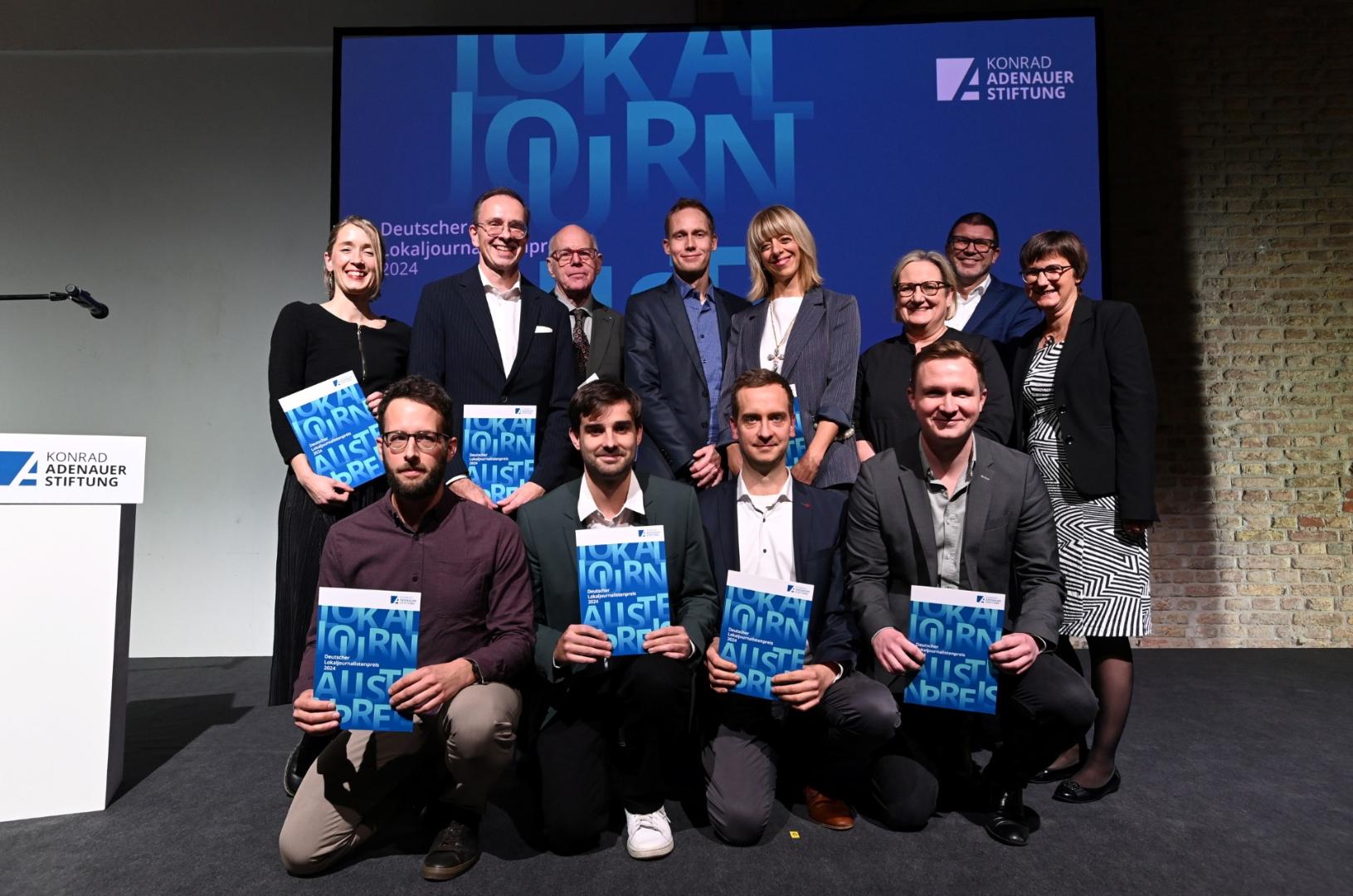
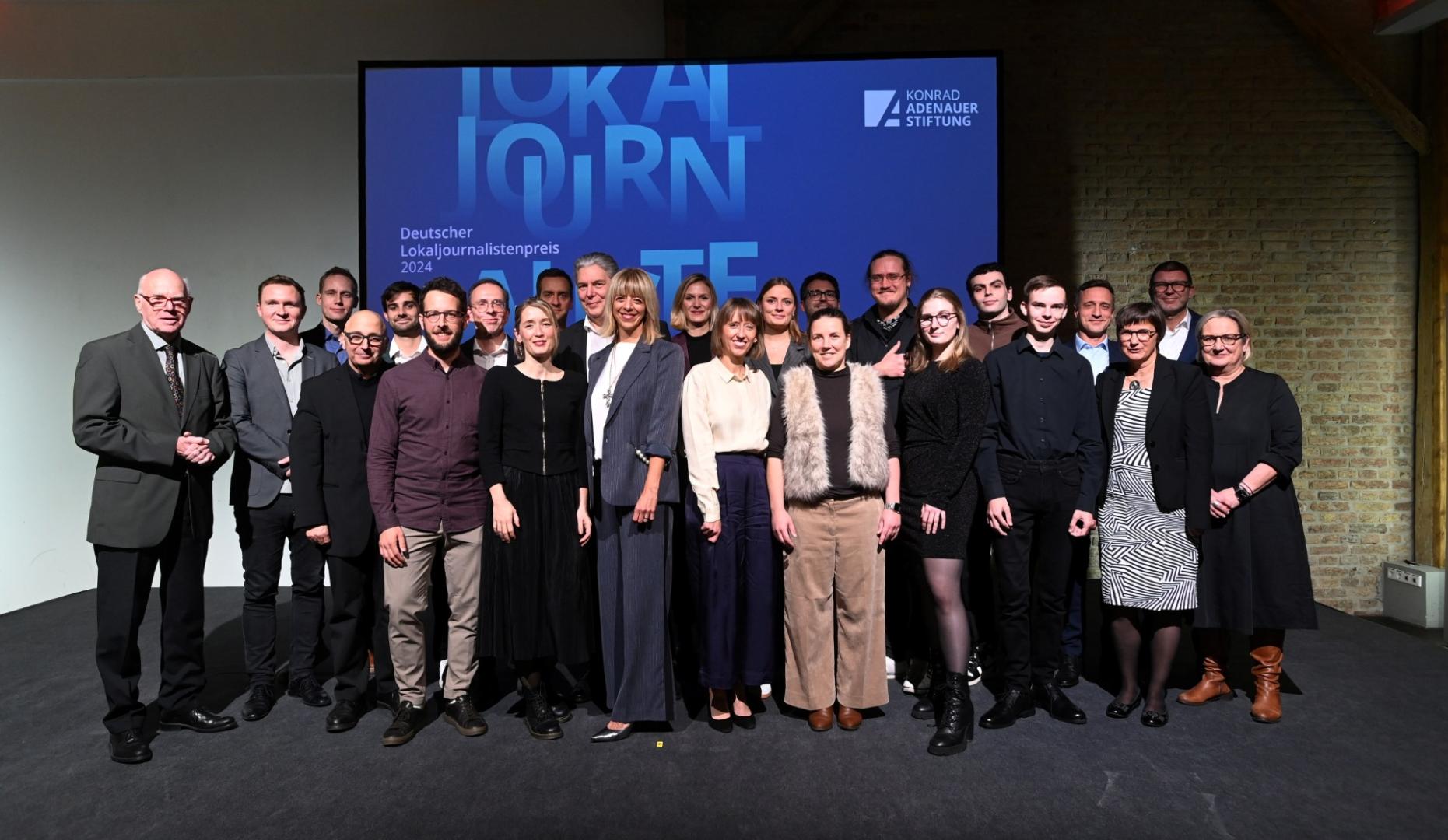
Afterwards, jury spokesperson Jana Klameth honoured the 2024 award winners. There were a total of 274 entries, including 49 for the trainee competition. Klameth made it clear that the number of applicants for the award has been declining for years. There are many reasons for this, which are likely to be related to general developments in the media industry: digitalisation, cost pressure, media concentration, job cuts, competition from social media and a loss of trust.
However, the good news is that, in the jury's opinion, the quality of the entries has not suffered despite the aforementioned adversities. The six jury members had ‘plenty of material for long evenings,’ said Klameth. The variety of topics was as vast as life itself. A large number of entries were investigative reports dealing with ‘the exposure of abuses, shady dealings and corruption.’ ‘This shows that, despite all the problems, regional newspapers are fulfilling their watchdog function,’ Klameth emphasised.
Example of constructive journalism
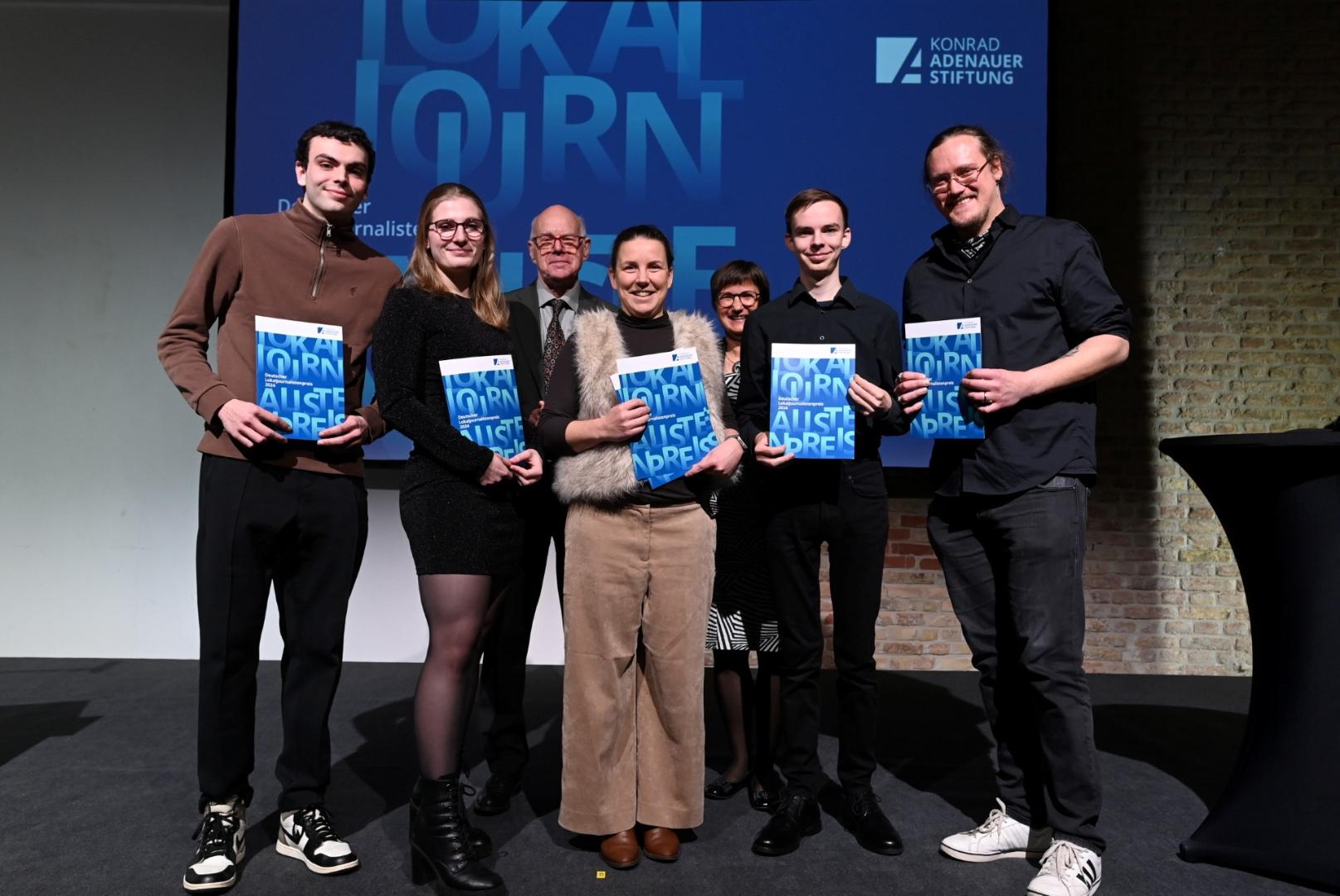
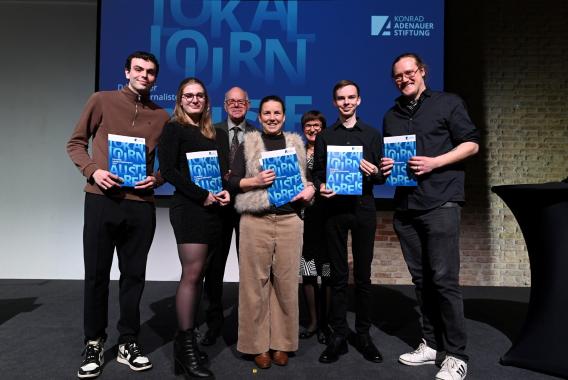
The special prize for trainee projects went to the trainees at Mitteldeutsche Zeitung in Halle. In their project ‘Closing time – is this the future of city centres?’, they addressed a development that affects many cities and communities – and which many editorial offices are concerned with. ‘But the comprehensiveness, originality and multimedia approach with which the trainees at Mitteldeutsche Zeitung tackled the topic is outstanding,’ praised the jury. In addition, they did not just focus on the current situation, ‘but also sought out new ideas and positive developments – that's how constructive journalism works.’
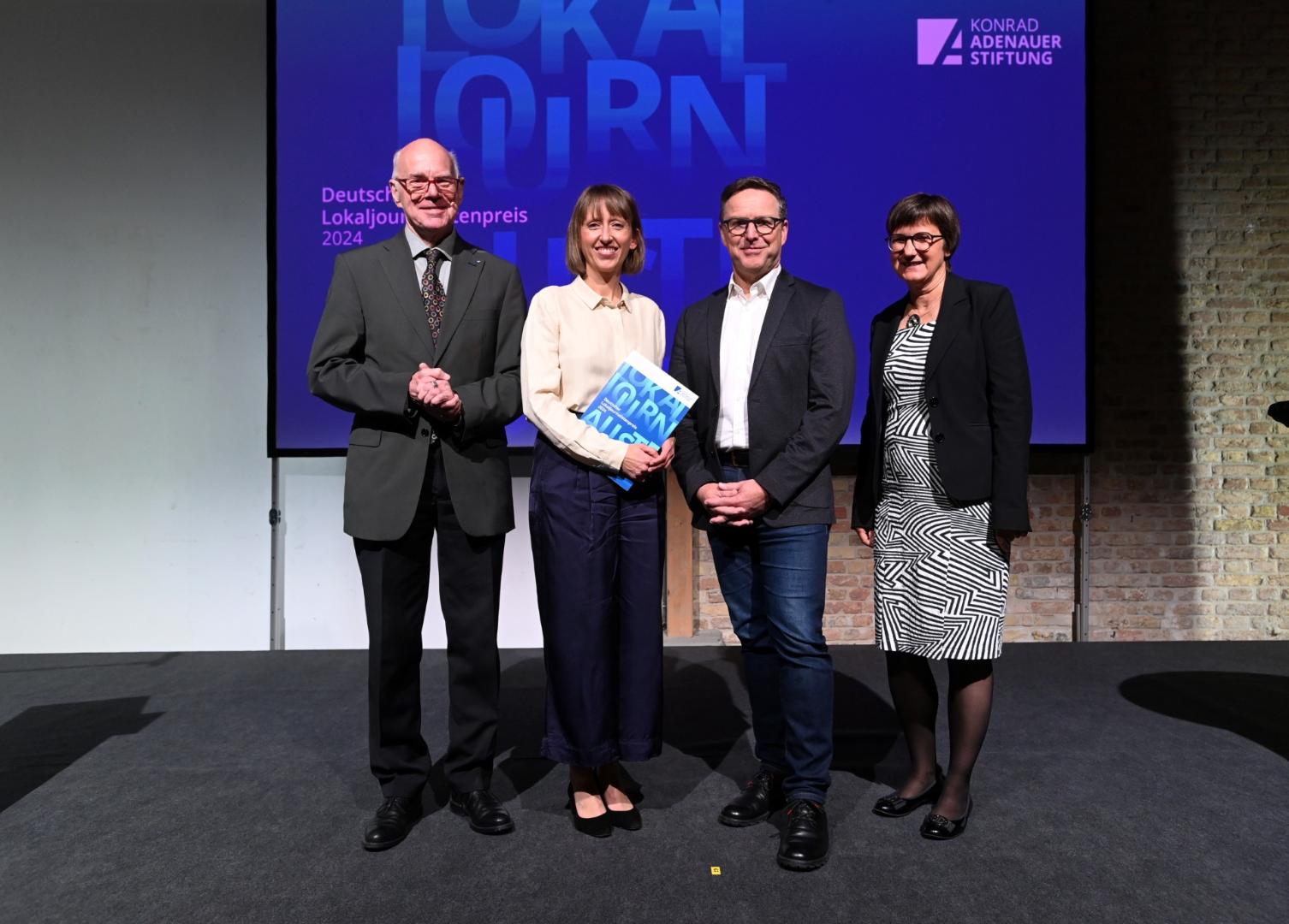
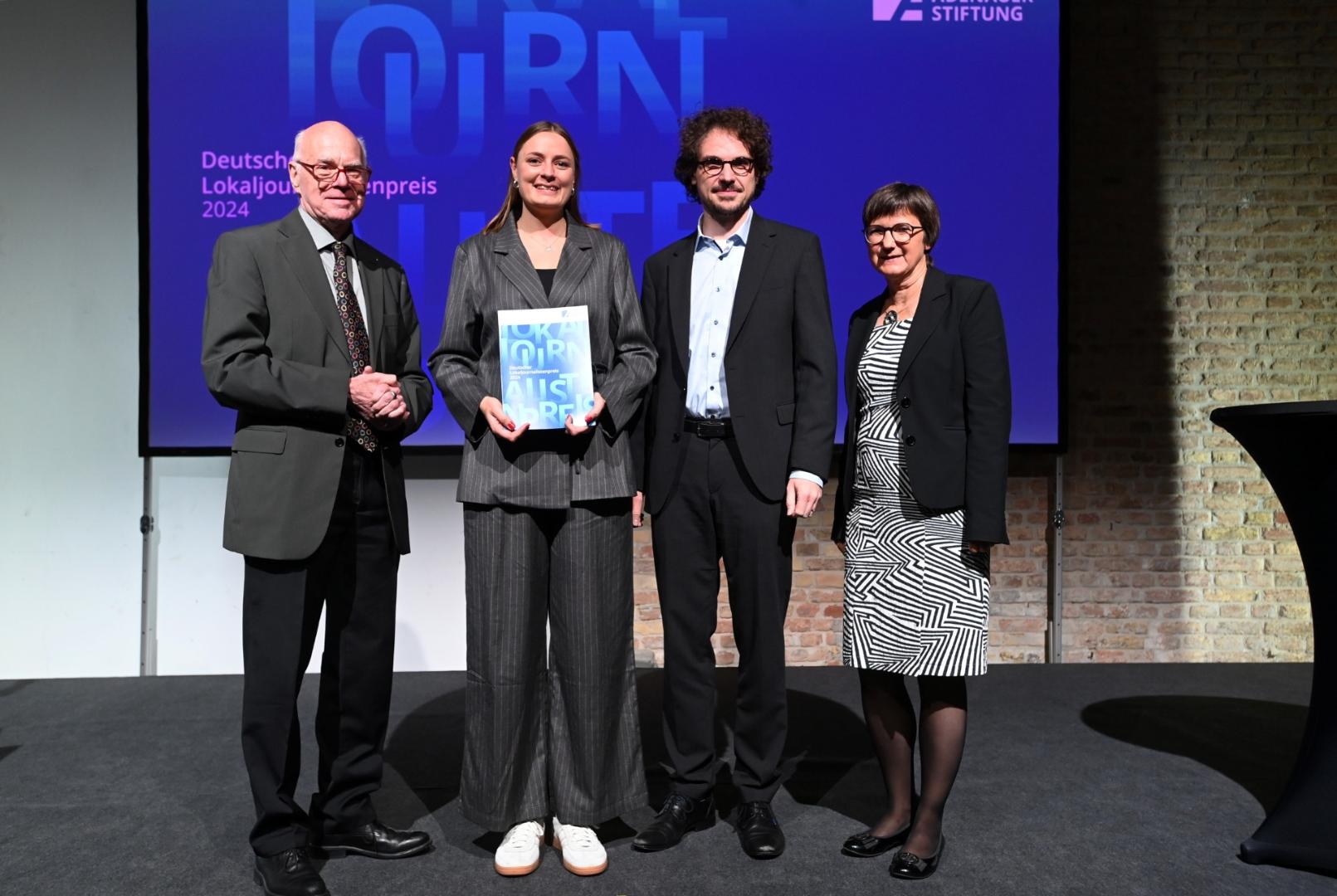
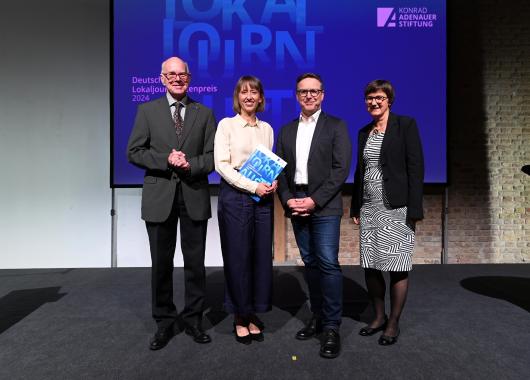
Anne Lena Mösken from Freie Presse Chemnitz was awarded third prize for her report ‘A life for Großschirma – The story behind the death of Mayor Volkmar Schreiter’. In it, the deputy editor-in-chief recounts the suicide of the experienced local politician, in which, according to rumours, the AfD in the city council was not entirely blameless due to its behaviour. The jury praised the report as ‘a lesson in how democracy works and how it doesn't work’ and said it showed ‘where the brutalisation of manners, threats and attrition tactics can lead, especially in local politics’.
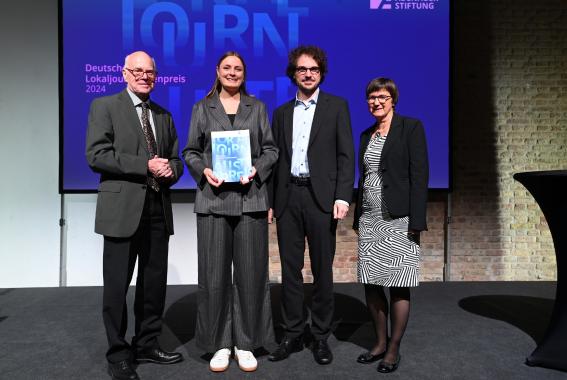
Sophie Sommer from the Westdeutsche Allgemeine Zeitung newspaper received second prize for 2024 for her report ‘I can still feel his hands on me’. The editor began researching child prostitution in Dortmund in the winter of 2023 – with a great deal of courage and tenacity. For eight months, she spoke to social workers and police officers, prosecutors and lawyers; she went to neighbourhoods that homeless people and drug addicts themselves had warned her about; she dug through mountains of files and was finally able to speak to a victim. ‘Thanks to this individual fate, Sophie Sommer was able to tell the story of a problem affecting society as a whole that is shocking and leaves one speechless,’ said the jury about the ‘exemplary report’.
From the local newspaper to the daily news
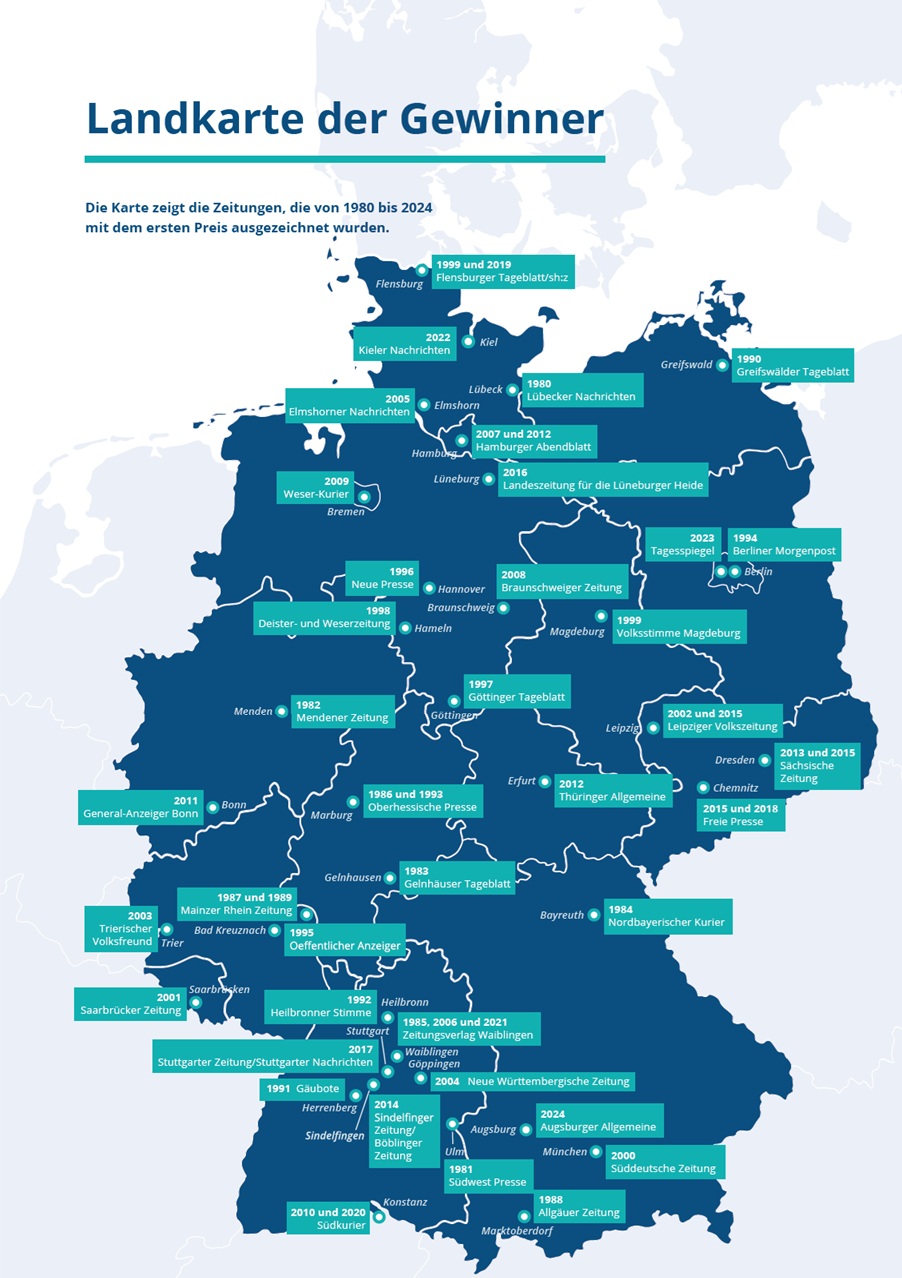
The Augsburger Allgemeine was awarded first prize for its reporting on an alleged torture scandal at the Augsburg-Gablingen prison. Prisoners there were reportedly mistreated and, in some cases, locked up naked and without mattresses in isolated special cells for weeks. The revelations in the Augsburger Allgemeine caused a sensation throughout Germany – they were reported on the daily news as well as in national newspapers and magazines. The jury was impressed by the newspaper's uncovering of the scandal and its consistent follow-up, as well as by the editorial team's efforts to cover the topic across all channels and thus for different target groups – the reporting was described as ‘outstanding’ and ‘exemplary’.
Local journalism is under great pressure, editor-in-chief Peter Müller made clear in conversation with presenter Jan Martensen, who eloquently and charmingly guided the audience through the evening. Freedom is needed to be able to carry out such time-consuming research for weeks on end. However, the conditions are becoming increasingly difficult: ‘We have large digital corporations which, unlike us local newspapers, are not responsible for their content and do not pay taxes in Germany.’ It is the task of politicians to address this unequal competition, according to Müller.
Deutscher Lokaljournalistenpreis 2024 – 1. Preis: Mutmaßlicher Skandal in JVA Augsburg-Gablingen
YouTube
Deutscher Lokaljournalistenpreis 2024 – 2. Preis: Reportage „Ich spüre noch seine Hände auf mir"
YouTube
Deutscher Lokaljournalistenpreis 2024 – 3. Preis: Der Tod des Bürgermeisters Volkmar Schreiter
YouTube
Deutscher Lokaljournalistenpreis 2024 – Sonderpreis für Volontärsprojekte: Ladenschluss
YouTube
About this series
The Konrad-Adenauer-Stiftung, its educational institutions, centres and foreign offices, offer several thousand events on various subjects each year. We provide up to date and exclusive reports on selected conferences, events and symposia at www.kas.de. In addition to a summary of the contents, you can also find additional material such as pictures, speeches, videos or audio clips.