






Table of contents
Fourth edition: Common Ground on Migration? Approaches to Compromise- Oriented Immigration Policy.
Third edition: International Talent for Germany? New Pathways and Policies.
Second edition: A new centrist migration policy? Approaches, limits and opportunities.
First Edition: Migration agreements with third countries — Cornerstone to manage migration?
Introduction
This series examines contested issues in migration policy, each with direct relevance to current debates. Contributions come from scholars, civil society actors, and policymakers. Every edition is organized around a central theme, explored through three expert interviews that provide distinct perspectives. In doing so, the series engages with both domestic and international dimensions, offering in-depth analysis, critical evaluations, and clearly articulated political positions.
Fourth edition: Common Ground on Migration? Approaches to Compromise- Oriented Immigration Policy.
At a glance:
- Attitudes towards migration are more differentiated than often assumed. Most Germans are neither fundamentally in favour nor against immigration. Positions can vary depending on the aspects and forms of migration.
- In recent years, a more restrictive stance towards uncontrolled, irregular immigration has emerged, accompanied by political demands for greater control and limitation.
- Meanwhile, a majority in Germany still adopt a generally positive attitude towards migration – especially if it is associated with clear benefits for the economy and society.
- A look at other European countries and the US illustrates how public sentiment can turn against immigration per se if the impression arises that politicians are no longer able to effectively control migration.
- A modified rhetoric alone will not suffice when it comes to winning the support of the broader public. Rather, centrist parties must take its citizens’ concerns seriously and translate them into specific migration policy measures that demonstrably serve the public interest.
- A migration policy orientated towards finding consensus should combine liberal and more regulatory elements to steer immigration in an orderly way and strengthen immigration channels that are in the public interest.
Compromises as the basis for a sustainable migration policy
In Germany, scarcely any topic is discussed with as much emotion as migration. Public debate often creates the impression that advocates and critics of immigration are irreconcilably opposed to each other. At the same time, the 2025 Bundestag elections have once again demonstrated that a functioning and sustainable migration and integration policy is among the most pressing challenges, and that can only be overcome with compromise. But how can compromises be found in the face of hardened positions – compromises supported by the broad public and endorsed by centrist parties? While a majority agrees that migration must be better managed and organised in the future, it remains unclear which consensus frameworks should shape an appropriate immigration policy.
This issue seeks answers. It turns the spotlight on public attitudes, explores room for consensus, and provides impetus for migration policies based on public interest and common ground.
Interviews from the current issue
“Most people don't consistently favour liberal or restrictive immigration policies” – Prof. Dr. Marc Helbling
Prof Dr Marc Helbling, Professor for Sociology at the University of Mannheim, highlights how attitudes towards migration are more nuanced than commonly assumed and identifies areas where, despite underlying differences, compromise remains possible.
Read the entire interview here.
“Centrist parties must set the right tone and agenda” – Dr. Oliviero Angeli
We speak with Dr Oliviero Angeli, Scientific Coordinator of the Mercator Forum Migration and Democracy at the Technical University of Dresden about public attitudes on migration, shifting political demands, and how to respond to populism.
Read the entire interview here.
“The only way to reduce immigration’s salience as a political problem is to make the system work better” – Prof. Dr. Alexander Kustov
Prof Dr Alexander Kustov, Assistant Professor for Political Science at the University of North Carolina, explains why migration policies are most likely to gain public support when they serve the broad public interest and address citizens’ concerns.
Third edition: International Talent for Germany? New Pathways and Policies
At a glance:
- In Germany, international skilled workers are already contributing to employment growth in many sectors and regions. In view of demographic change, the importance of skilled immigration from non-EU countries will continue to grow.
- In order to strengthen international labour migration to Germany, policymakers should focus more closely on the perspective of businesses. Small and medium-sized enterprises (SMEs) in particular face major challenges in attracting and retaining international skilled workers.
- Many SMEs lack the experience and the human and financial resources to recruit international professionals from outside Europe and to support them and their families with the bureaucratic and organisational steps before and after their arrival.
- Efficient organisational structures are key to keeping up with international competition for talent. Creating a central agency and point of contact that bundles and digitises all administrative processes can make an important contribution to this.
- In addition, targeted support services are needed for employers to facilitate the recruitment and integration process for international skilled workers.
International talent acquisition as a future issue for the German economy
In Germany, the recruitment and sustainable employment of skilled workers is one of the major challenges facing the economy and politics in the future. Reports of staff shortages in key infrastructure areas such as nursing, education and logistics are omnipresent. German SMEs are also affected. In the wake of demographic change and far-reaching transformation processes, small and medium-sized enterprises (SMEs) are facing the challenge of attracting qualified personnel. Unlike larger, globally active companies, however, they lack established strategies and access to the recruitment and retention of international skilled workers.
This issue of Migration Policy Debates is dedicated to the question of how employers in Germany can strengthen their recruitment of skilled workers from outside Europe. What administrative and practical hurdles do small and medium-sized enterprises have to overcome? What support do employers need to attract and retain international talent, and what course can policymakers set?
Interviews from the third edition
"Employment growth was particularly strong due to third country nationals" – Sarah Pierenkemper
Sarah Pierenkemper from the German Economic Institute (IW) in Cologne on the importance of skilled immigration for German SMEs and the challenges faced by small and medium-sized enterprises in recruiting and retaining international skilled workers.
Read the entire interview here.
"Skilled labour immigration is crucial to secure our economic prosperity" – Marc Biadacz, Member of the German Parliament
Marc Biadacz, chairman of the CDU/CSU parliamentary group in the Committee on Labour and Social Affairs, advocates for greater efficiency in administrative processes so that German companies can compete internationally for talent.
"It's not just about attracting, but also about retaining international talents" – Dr Fritz Audebert
Dr Fritz Audebert, CEO and founder of ICUnet.Group, provides practical insights into the various stages that international professionals and their families go through when relocating to Germany and shows how talent can be retained in the long term.
Read the entire interview here.
Second edition: A new centrist migration policy? Approaches, limits and opportunities.
At a glance:
- Debates about new approaches to asylum policy have reached the political centre in Germany. The changed conditions facing asylum migration today – in contrast to 2016 – require new impetus and political solutions.
- The field of asylum policy is strongly influenced by legal frameworks and regulations. Over the past two decades, protection rights have been expanded, particularly by European case law. However, this does not mean that case law is set in stone, nor that asylum migration cannot be shaped or controlled in the future.
- Successful management requires an interlocking system of national, European and international measures that take into account the existing interweaving of national and European law, but which are also practicable and fundamentally consider the role of third countries.
- A look at Scandinavia shows the importance of migration policy for the rise of right-wing populist forces. This is not only a matter of controlling and reducing irregular migration, but also of a lack of integration and the strain on the welfare state.
- For Germany, the question arises as to how centrist parties can gain greater recognition for their competence in the area of migration and integration than populist forces.
Perspectives from law, politics and the Scandinavian neighbourhood
In 2023, debates on immigration became the focus of public and political discourse. Large sections of the population are now calling for a fundamental change in asylum policy. The struggle to find appropriate ways to reduce irregular migration has also reached the political centre. Political decision-makers are faced with the challenge of finding efficient instruments and solutions in the short and long term at national and EU level and reconciling them with our fundamental humanitarian guidelines. In doing so, they find themselves caught between two stools: they must fulfil their political mandate in a field that is highly emotional and where legal requirements are also pronounced.
This issue of Migration Policy Debates looks at legal issues, discusses approaches and possibilities for a change of political course, and ventures beyond Germany's borders to take a look at our Scandinavian neighbours.
Interviews from the second edition
"Asylum law is not set in stone" – Prof. Daniel Thym
Prof. Daniel Thym from the University of Konstanz describes how case law in asylum law in Germany and the EU has developed since the fall of the Berlin Wall and how protection claims have been expanded. He highlights legal scope for action, but warns against rushing into decisions.
"I don't see a policy change at the moment" – Alexander Throm, Member of the German Parliament
Alexander Throm, spokesperson for domestic policy for the CDU/CSU parliamentary group in the Bundestag, advocates a genuine change in migration policy that focuses on greater control over migration, but also assumes responsibility for those entitled to protection.
"It’s about integration in particular“– Gabriele Baumann
Gabriele Baumann, head of the KAS Regional Programme for the Nordic Countries, analyses the reasons for Sweden's new restrictive migration policy and its consolidation. She highlights the role played by right-wing populists in this policy area.
First Edition: Migration agreements with third countries – Cornerstone to manage migration?
At a glance:
- Migration agreements are an important tool for managing migration, but they are not a panacea.
- For migration agreements to be successfully implemented, the interests of the respective third countries must be taken into account. In this context, ‘more money helps more’ does not necessarily apply.
- Instead, relations with the relevant third countries must be viewed in a more holistic manner, thereby also addressing interests in areas such as the economy, trade and economic migration.
- The basic prerequisite for any agreement is the granting of adequate refugee protection and compliance with the principle of non-refoulement in accordance with the Geneva Refugee Convention.
Opportunities and challenges of migration agreements
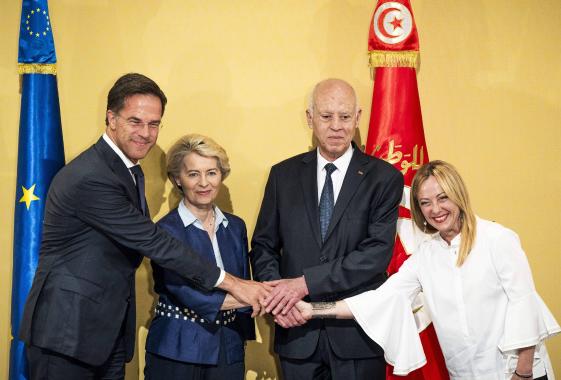
Multilateral and bilateral agreements are increasingly being discussed as a promising migration policy instrument and a prerequisite for effective migration management. At EU level, treaties and informal agreements are to be concluded in particular with countries of origin and transit countries of asylum seekers. For example, Team Europe recently signed a memorandum of understanding with Tunisia on a strategic partnership in the field of migration.
At the same time, Germany is negotiating bilateral agreements and mobility partnerships with a new special representative for migration agreements with a view to securing skilled workers and reducing irregular migration.
What potential do these agreements offer, what challenges arise during negotiations, and what pitfalls can arise with regard to refugee protection? These are the topics covered in the interviews in the first issue.
"We need a chain of responsibility" – Lena Düpont
Lena Düpont, spokesperson for domestic and migration policy for the CDU/CSU parliamentary group, emphasises the urgency of successfully reforming the GEAS. She views cooperation with countries of origin and transit countries as part of a ‘chain of responsibility’.
"Reducing irregular migration can only be achieved through agreements with third countries" – Prof. Ruud Koopmans
Professor Ruud Koopmans (WZB) provides impetus for how the European asylum system can be rethought and what fundamental role agreements with third countries play in his considerations.
Migration agreements put to the test – Dr Malte Gaier
Dr Malte Gaier reports on how the memorandum of understanding signed by the EU and Tunisia in July is being perceived and discussed in Tunisia, where the pitfalls lie and which aspects need to be taken into account for a sustainable agreement.



Publications on this topic
 Anna Logue
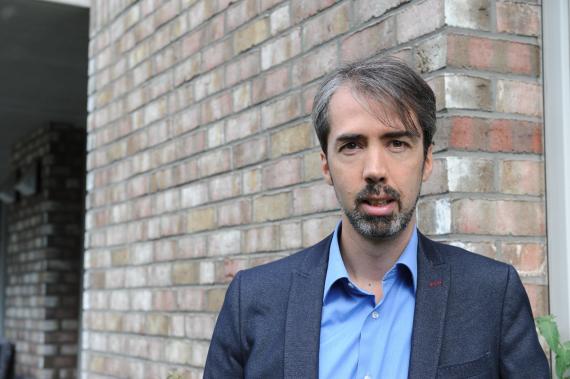
“Most people don't consistently favour liberal or restrictive immigration policies”
Interview with Prof Dr Marc Helbling
 University of North Carolina / UNC Charlotte
“The only way to reduce immigration’s salience as a political problem is to make the system work bett...
Interview with Prof Dr Alexander Kustov

“Employment growth was particularly strong due to third country nationals”
Sarah Pierenkemper on the importance of international skilled workers for the German Mittelstand
“Skilled labour immigration is crucial to secure our economic prosperity”
Marc Biadacz MP on the requirements for skilled labour attraction in a modern immigration country
 ICUnet.AG
“It's not just about attracting, but also about retaining international talents”
Dr. Fritz Audebert on the administrative and intercultural challenges for international professionals coming to Germany
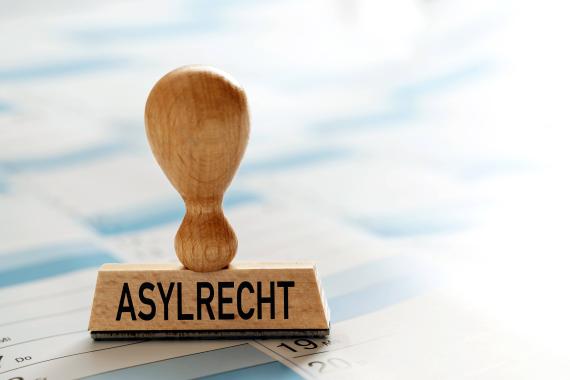
"Asylum law is not set in stone."
Professor Daniel Thym talks about the legal framework, limits and opportunities in migration policy
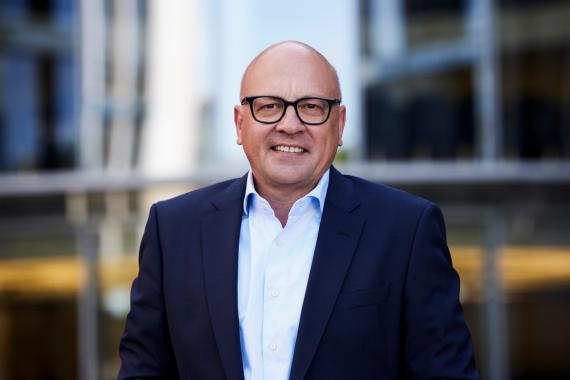
"I don't see a policy change at the moment."
Alexander Throm (MP) talks about Germany's asylum policy

"It’s about integration in particular."
Gabriele Baumann talks about Sweden's change in migration policy

"We need a chain of responsibility"
Lena Düpont (MEP) talks about the CEAS reform and the relevance of agreements with third countries.
Media library
 Pixabay
Episode 4 with Annette Schwarzbauer
In the fourth episode, we talk to Annette Schwarzbauer about South America. She heads the Konrad-Adenauer-Stiftung foreign office in Venezuela (episode in German only).
Read now
Pixabay