






At any given moment, millions of people live and work at sea aboard merchant vessels, fishing boats, and offshore platforms, making the ocean one of the world's most densely populated workplaces. Yet the way global ocean governance is structured often makes international waters under-regulated, and those who sail do not always enjoy the same protections as their counterparts on land. Civilians caught in geopolitical conflict at sea, migrants crossing some of the world's most dangerous routes, seafarers trapped in forced labor or abandoned without pay: the humanitarian side of maritime security is pressing and easy to overlook.
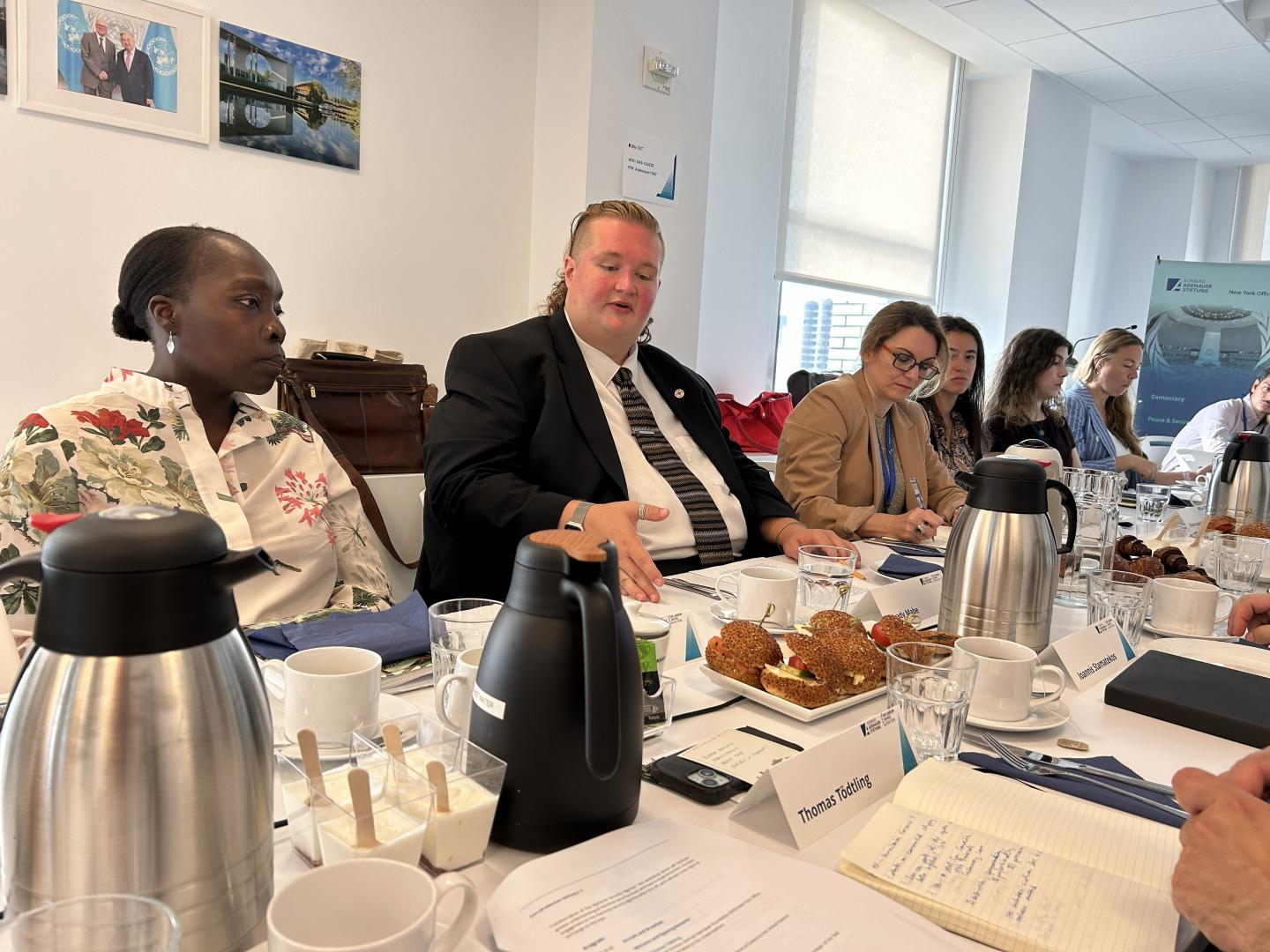
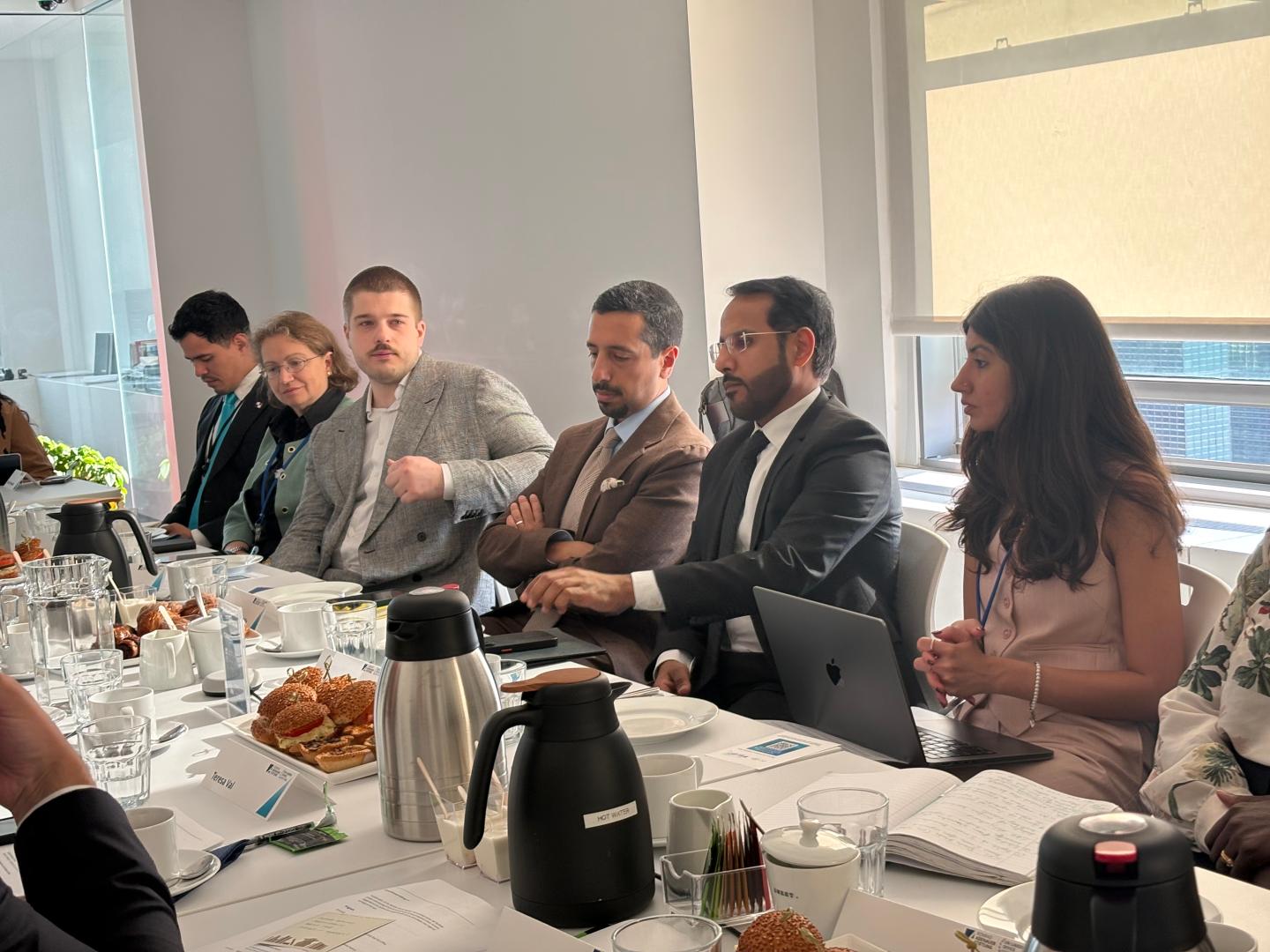
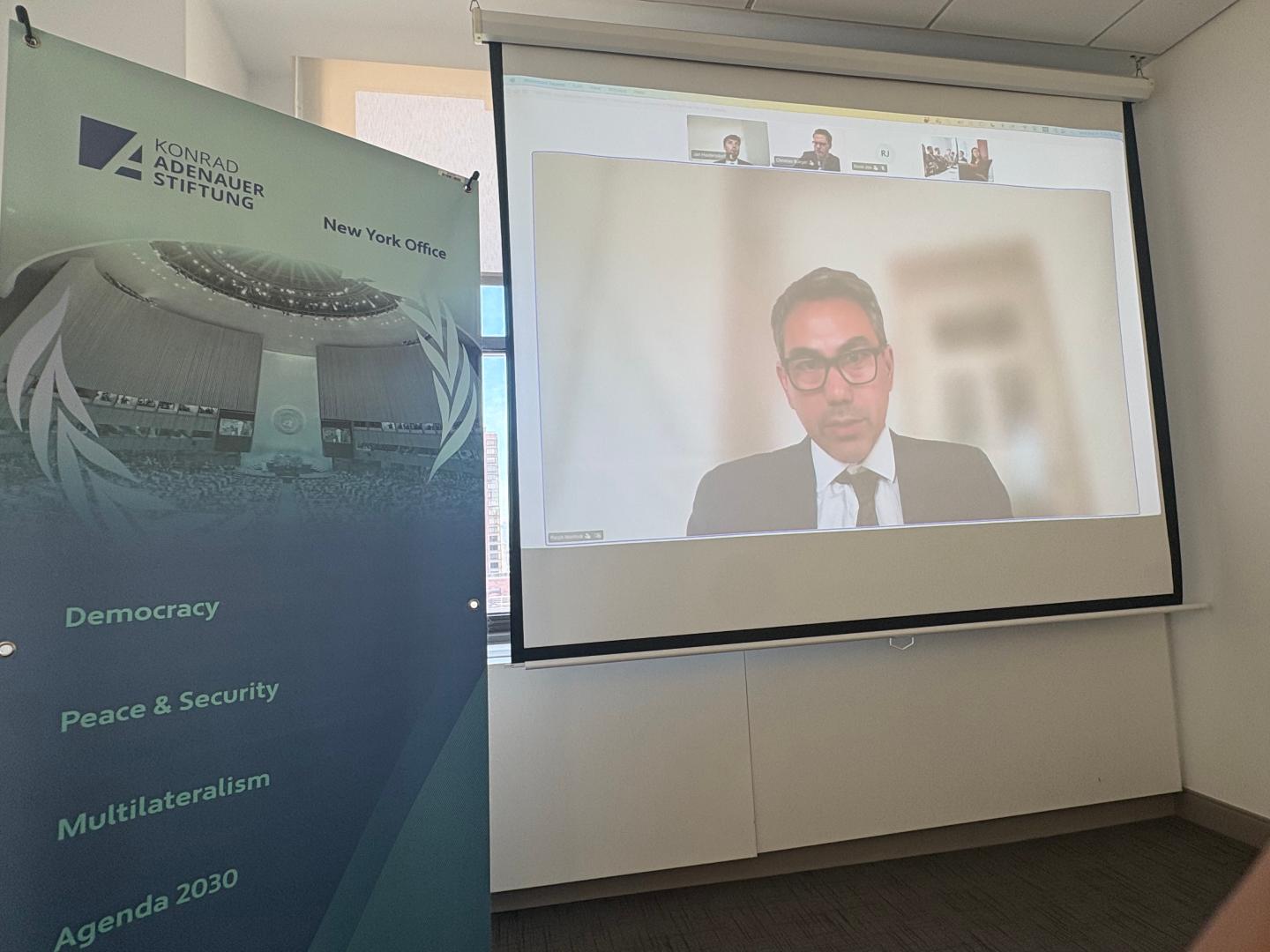
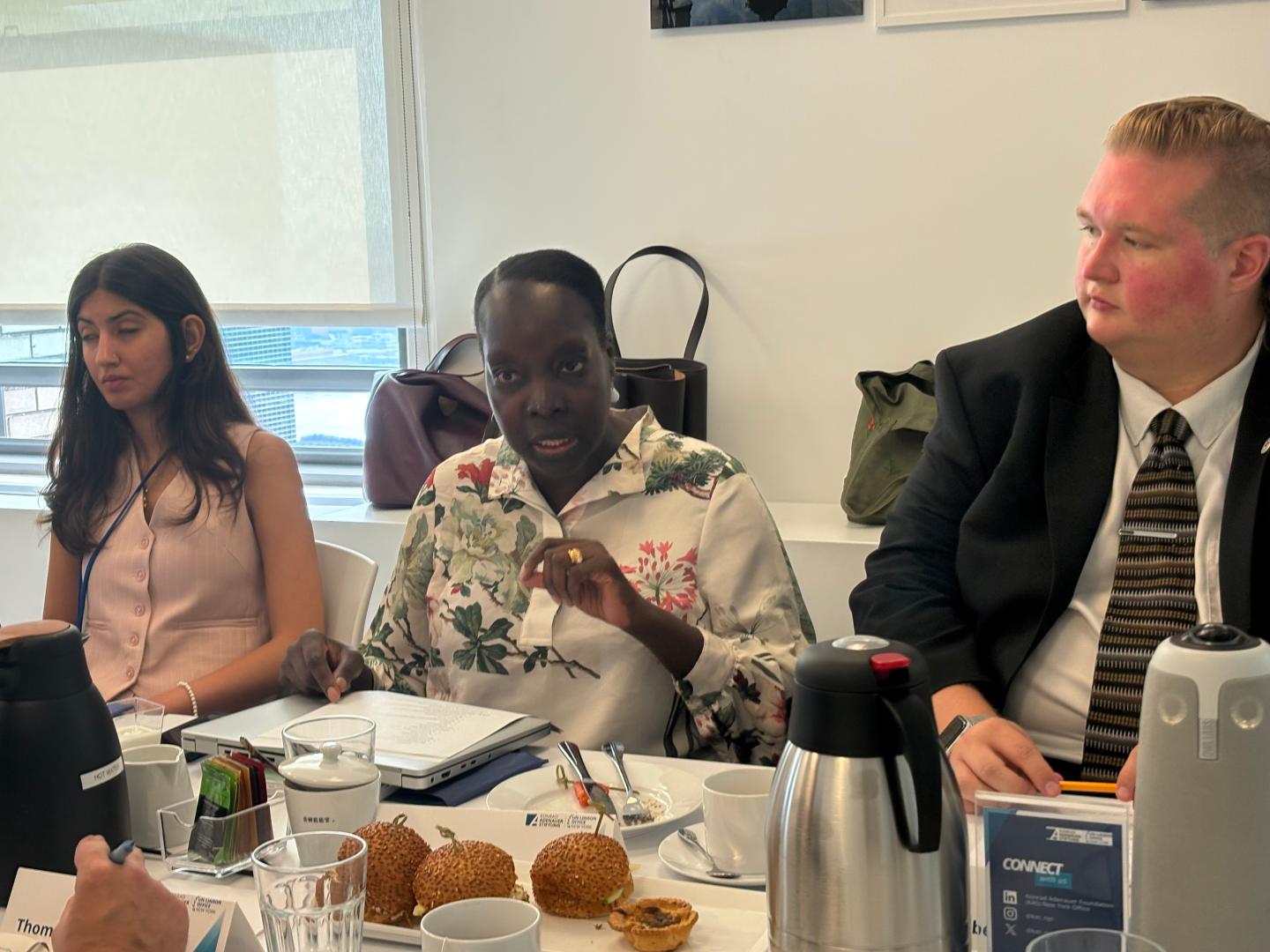
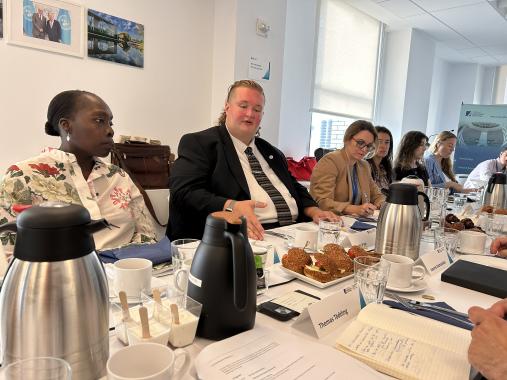
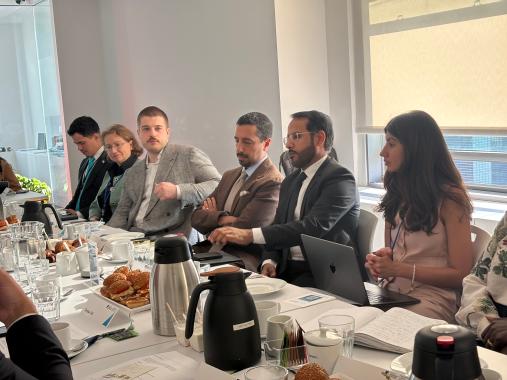
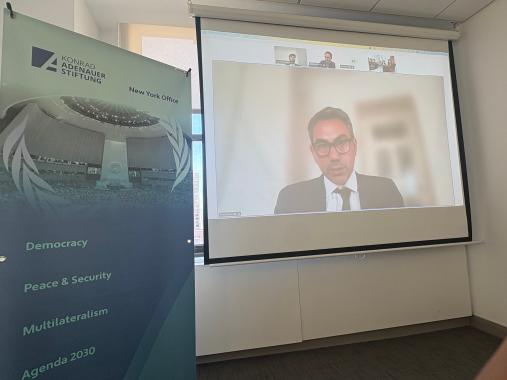
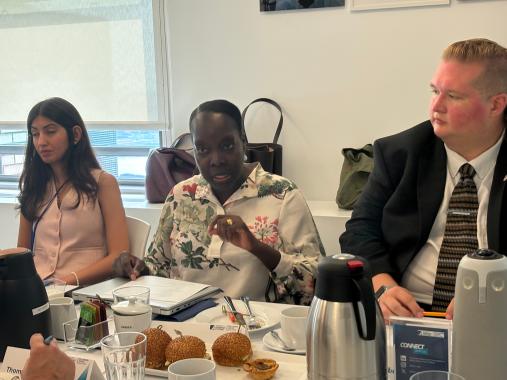
In view of the above, the Konrad Adenauer Foundation (KAS) New York Office, in cooperation with the Permanent Mission of Greece to the United Nations, hosted a workshop for Member States on Humanitarian Concerns of the Maritime Security Agenda on September 9. The workshop featured expert input from Brady Mabe, Legal Adviser at the Delegation of the International Committee of the Red Cross to the United Nations; Ralph Mamiya, Director of Research at the Foundation for Humanitarian Action at Sea; Stella Aber, Head of Programmes at The Seafarers' Charity; and Rocío Joo, Senior Data Scientist at Global Fishing Watch.
The workshop marks the second in a series organized jointly with the Permanent Mission of Greece on Improving the UN's Role in Maritime Security Governance. The series aims to facilitate greater understanding of maritime security issues and how to respond to them, increase engagement on the maritime security agenda within the UN, and cultivate cross-regional exchange on the topic.
Key takeaways from the workshop included:
-
While international law already offers substantial protection for civilians, combatants, and merchant vessels in armed conflict at sea, these rules do not provide sufficient clarity for all circumstances (i.e. civilian infrastructure at sea, environmental impact). Closing those gaps will require clarifying and implementing existing law, rather than writing new law.
-
Maritime search and rescue (SAR) is often weakest at points where it is needed most. The world's busiest trade lanes are frequently the same routes migrants and refugees use, yet SAR capacity is thinnest along least-developed coastlines.
-
Crew abandonment is a growing crisis, with reported cases roughly doubling year-on-year and hundreds of vessels and thousands of seafarers affected. Gaps in coverage, timing, and accountability mean that protections which exist on paper are not always within reach, leaving crews stranded far from home, unpaid, and with little recourse. Unregulated shadow fleets show a strong correlation to cases of crew abandonment and forced labor, underscoring the human cost of this expanding maritime security threat.
-
Forced labor remains widespread and hard to detect, since inspections rarely reach vessels at sea. Newer data-driven tools that use vessel tracking to flag high-risk behavior offer a promising way to make the problem visible and to support due diligence, port inspections, and enforcement.
One theme ran through discussions: there are real people behind every vessel, and closing the gap between protections on paper and in practice depends less on building new structures than on getting existing UN bodies and flag, port, and coastal states to work better together.