






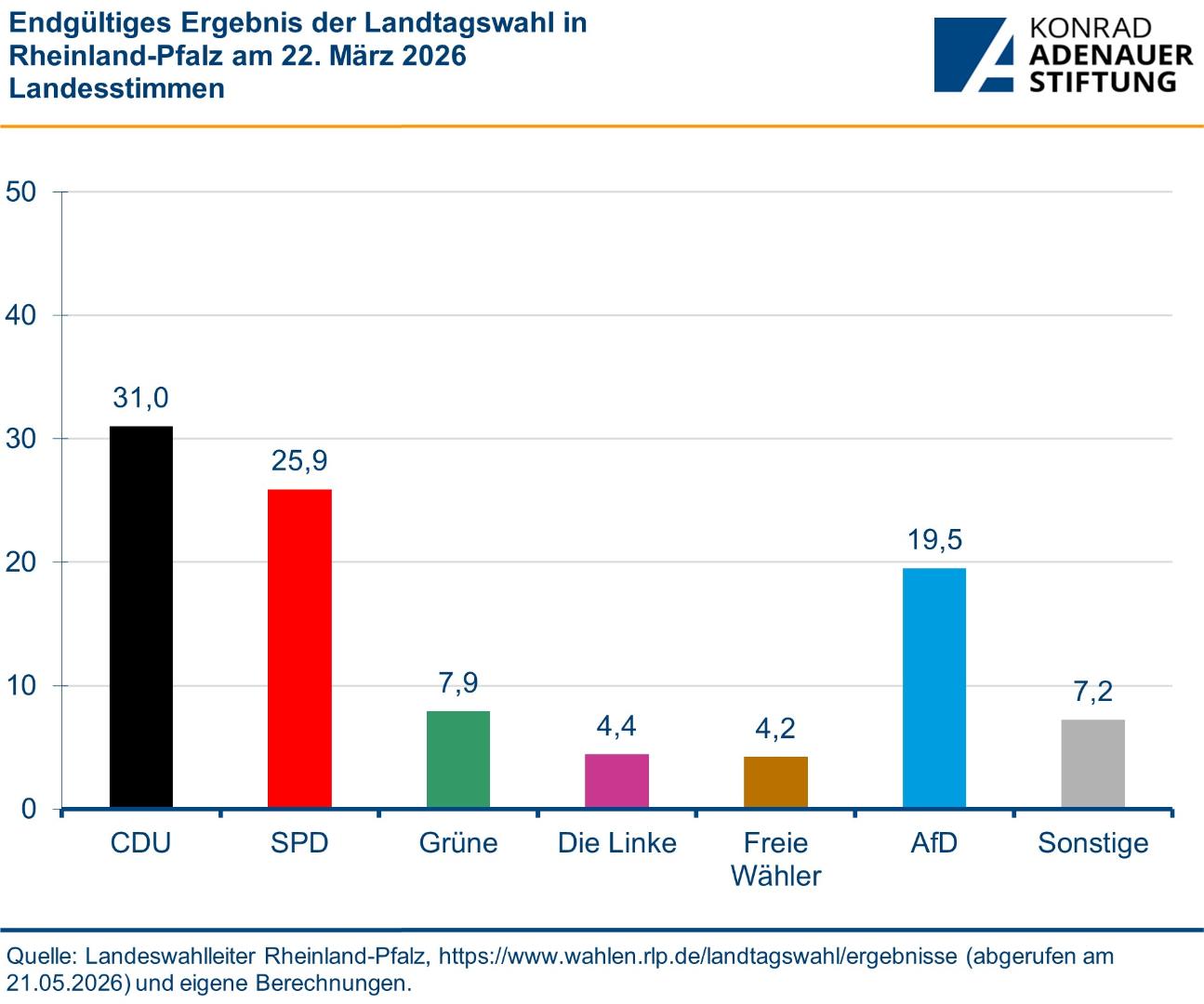
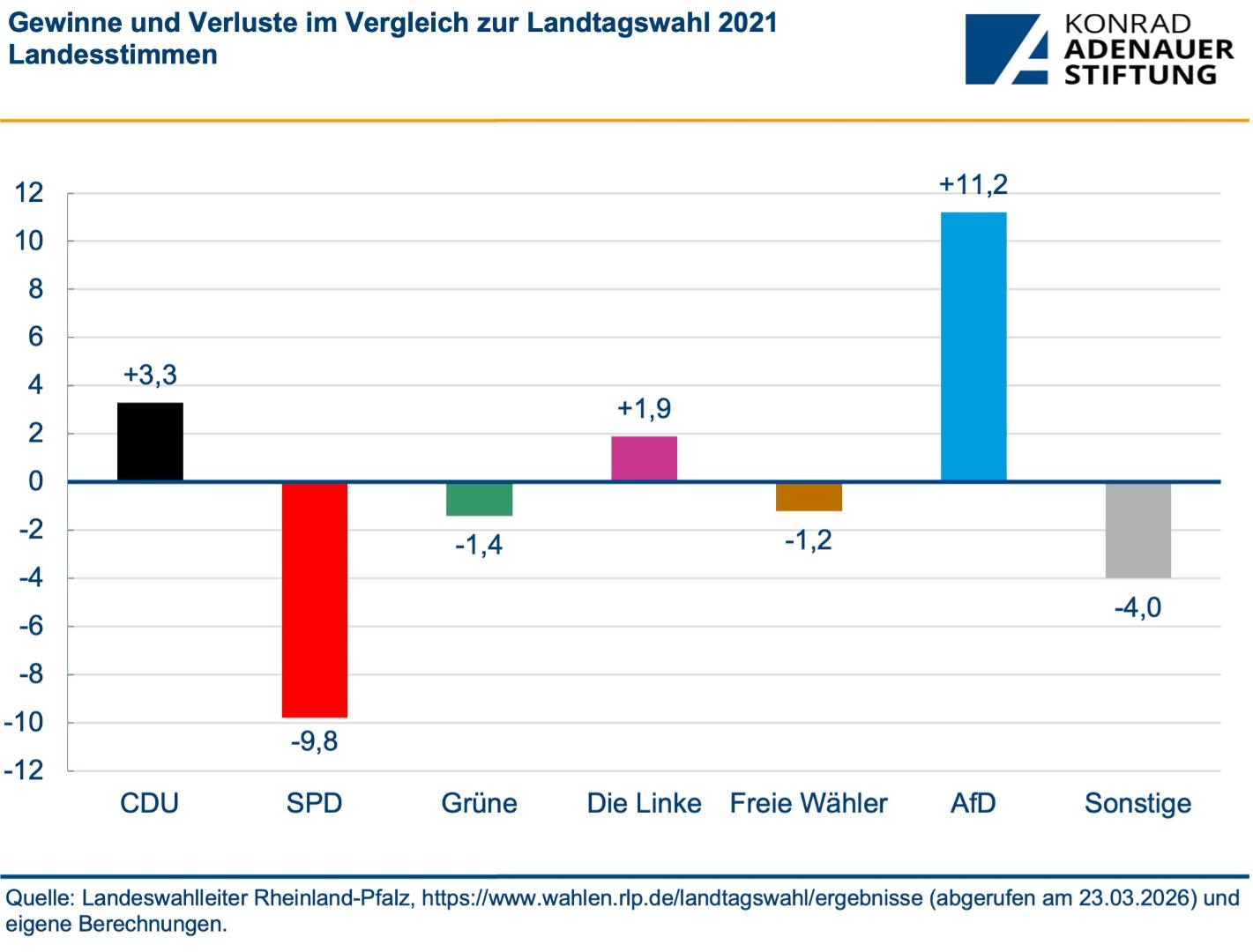
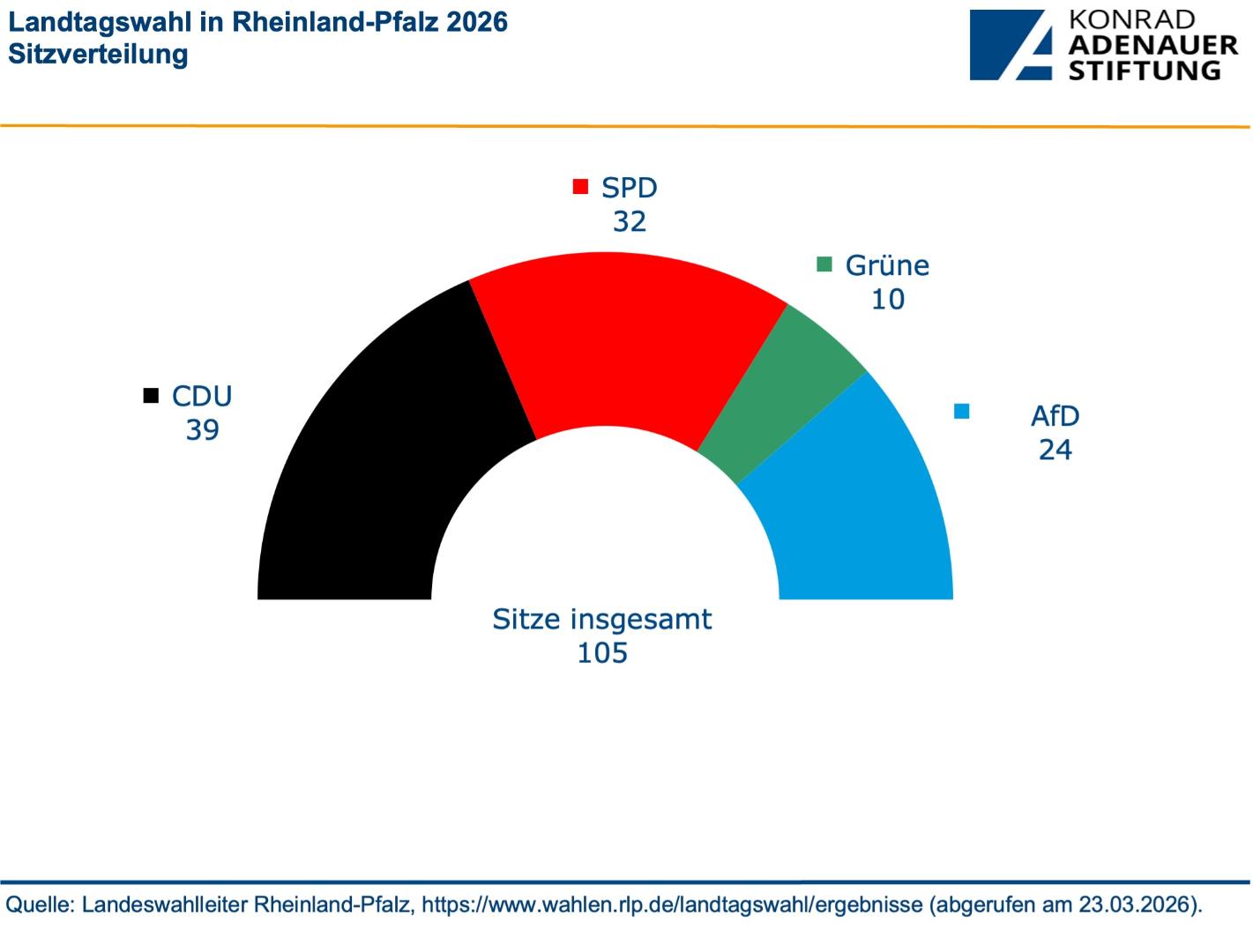
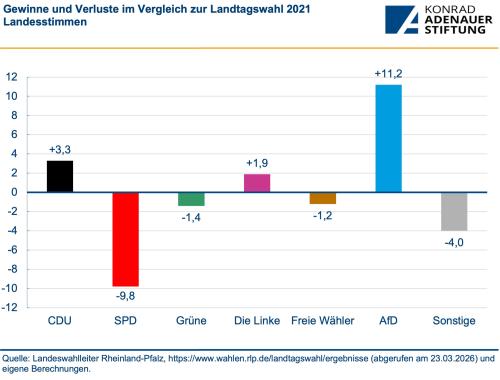
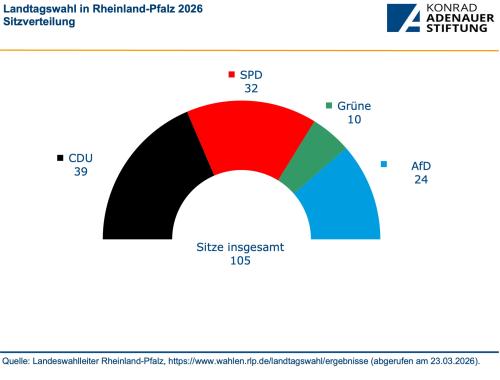
After 35 years in opposition, the CDU wins the election as strongest party in Rhineland-Palatinate with 31.0 percent and Gordon Schnieder will become Minister-President. After significant losses, the SPD achieved 25.9 percent, its worst-ever result in the state. The other parties of the previous traffic-light coalition also lost ground. While the Greens suffered only slight losses and reached 7.9 percent, the FDP, after a loss of 3.4 percentage points, fell well short of entering the state parliament with a result of 2.1 percent. The AfD more than doubled its share of the vote, achieving 19.5 percent – by far its best result in the state. Die Linke and the Freie Wähler failed to pass the five-percent threshold.
The election is shaped by people’s concerns about the future. The CDU is benefiting in particular from being perceived as competent in economic matters. The SPD has lost ground in terms of perceived competence and is unable to capitalize on the incumbency advantage of its Minister-President, Alexander Schweitzer. The AfD is benefiting from the renewed rise in voter turnout and is attracting an above-average number of votes from former non-voters. In the areas of asylum and refugee policy as well as internal security, about a quarter of eligible voters attribute competence to the AfD. For Green voters, the issue of climate and environmental protection is of central importance.

Topics
About this series
Analysis of the state election in Mecklenburg-Western Pomerania on 20 September 2026
Analysis of the election for the Berlin House of Representatives on 20 September 2026
Analysis of the state election in Saxony-Anhalt on 6 September 2026
Voting behaviour by age and gender
Desire to emigrate among the population