Productivity growth is the only way to achieve prosperity.




- Competitiveness is the prerequisite for prosperity and freedom. Germany and the European Union can only achieve their goals in areas such as security, climate protection and human rights if Europe has a strong economic backbone.
- Completing the European Single Market, including a banking and capital markets union, would lead to major efficiency gains and should be a top priority.
- The state is not the better entrepreneur. Rather, it should create attractive framework conditions with a competitive tax system, moderate energy prices and well-trained specialists. In particular, an effective research and innovation landscape is crucial.
- In order to remain globally competitive, Germany and Europe need a strategic foreign trade policy that promotes international economic partnerships.
Inhalt
1. Competitiveness as the basis for prosperity and freedom
2. Comprehensive reforms are urgently needed
3. The key to economic success is innovation
4. Without the right framework conditions, everything is nothing
5. Global competitiveness requires a strategic foreign trade policy
6. Publications, events and media contributions on the topic
Competitiveness as the basis for prosperity and freedom
The competitiveness of the German and European economy forms the basis for prosperity and freedom. It is the guarantor for a Europe that is well listened to in the world and can pursue its goals such as security, human rights and climate protection. If European companies are leaders in certain sectors of the economy, they can set standards in line with European ideas. The areas of platform economy and artificial intelligence in particular show the pressure Europe can face to adapt if it is unable to take on this leading role.
Comprehensive reforms are urgently needed
The reports by Mario Draghi and Enrico Letta have put Europe's competitiveness back at the top of the agenda. In particular, completing the European Single Market with a genuine banking and capital markets union would lead to major efficiency gains. This could reduce the high outflow of capital – especially to the USA – and make more available for investment in the EU. More private capital is essential for the major challenges of strengthening Europe's defense capability and the transformation to climate neutrality. An increase in the already high levels of public debt in some European countries, on the other hand, would jeopardize Europe's debt sustainability.
The key to economic success is innovation
Successful economies are characterized above all by a thriving research and innovation landscape. Countries such as South Korea, Israel and the USA invest more in research and development in relation to their economic output, thereby securing their future competitiveness. China, too, has long since gone from being an imitator to an innovator. Here, the EU and Germany must make forward-looking decisions when prioritizing budgets and give companies further incentives to invest in research and development.
Without the right framework conditions, everything is nothing
The state is not the better entrepreneur. Its task is to create attractive framework conditions so that companies can develop freely and competitively. This includes a competitive tax system, moderate energy prices and well-trained professionals. In view of demographic change, an attractive immigration system for qualified immigrants is essential. This also includes balanced social security contributions so that the cost-benefit calculation of highly qualified immigrants turns out in favor of Germany and Europe. Germany and Europe have it in their own hands to strengthen their competitiveness.
Global competitiveness requires a strategic foreign trade policy
Germany and Europe are more dependent on open trade and close global economic partnerships than almost any other economic area in the world. However, in many regions of the world, Europeans are losing their attractiveness as economic partners and thus their competitiveness. Economic powers such as China, Japan and the Gulf States are offering themselves as new, attractive partners to emerging economies worldwide. For many of these countries, Europe is now just one partner among many and is at risk of losing ground in economic competition in many regions. In order to remain globally competitive, Germany and Europe need a strategic foreign trade policy that promotes international economic partnerships.
The Konrad-Adenauer-Stiftung supports the topic of competitiveness with a large number of publications and events in Germany and abroad.


Publications on this topic
 CIS
CIS
African Vector of Global Politics: Interests of Key Actors and Opportunities for Ukraine
Strengthening Analytical Capacity for Foreign Policy Decision-Making

Interview: „Die deutsche Diskussion kreist zu sehr um den Staat“
Veronika Grimm über die wirtschaftlichen Perspektiven der Deutschen und die Notwendigkeit größerer unternehmerischer Freiheit
 CIS
CIS
South Caucasus in Focus of Global Rivalry: Challenges and Opportunities for Ukraine
Strengthening Analytical Capacity for Foreign Policy Decision-Making
 CIS
CIS
Ukraine’s Minerals in Global Supply Chains: Challenges and Opportunities
Strengthening Analytical Capacity for Foreign Policy Decision-Making
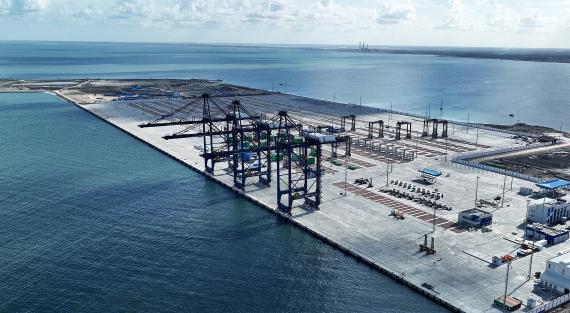 Xinhua, Imago
The Pact for the Mediterranean as a Building Block for Diversifying European Partnerships
More than Just a New Label?
 epd, Imago
The Foreign Policy Dimension of Germany’s New Approach to Migration
Migration Policy is Partnership Policy
 Anadolu Agency, Imago
The EU’s Partnership Policy in Transition
Adapting to a Geopolitically Turbulent World

Prospects for Closer German–Argentine Cooperation in an Era of Global Diversification
Pampas and Partnership
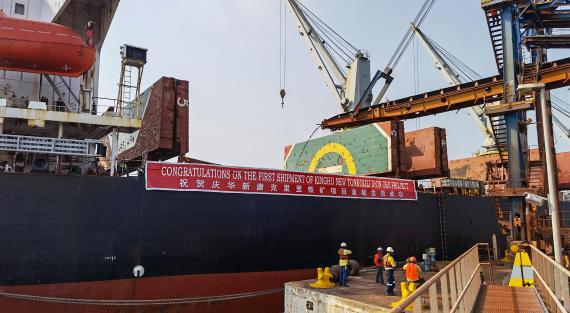
 Anadolu Agency, Imago
Central Asia between Russia, China, and the West
At the Heart of Geopolitical Competition
 yanik88/Smarterpix
Economic expert Christoph M. Schmidt accompanied the KAS for a year
Report on the KAS-Fellowship 2025: Christoph M. Schmidt on innovation, the social market economy, growth potential and Germany’s international competitiveness

 IMAGO / photothek
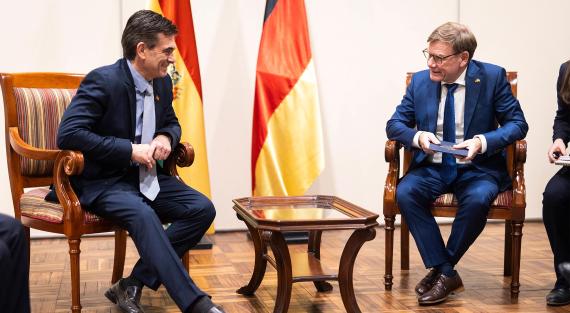
Why a Lithium Partnership with Bolivia Is Strategically Crucial for Germany and Europe
If Not Now, When?
 IMAGO / Christian Ohde
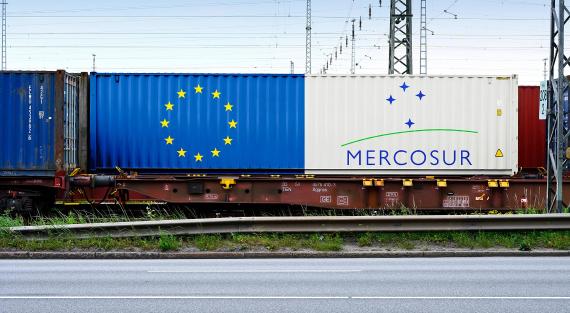
The EU–Mercosur Agreement
Fresh Momentum for European–Latin American Relations
 IMAGO / Agencia Prensa-Independiente
How Spain and Portugal Are Positioning Themselves as Bridges between Europe and Latin America
The Ibero-American Axis
 IMAGO / Xinhua
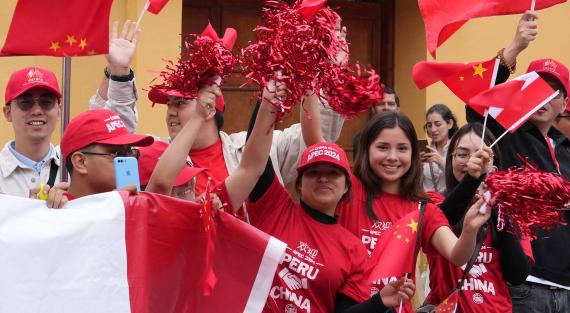
Latin America’s View of Asia Based on the Example of the Pacific Alliance
In Search of New Alliances

Event Reports on the topic
 KAS / Leon Fülber
Studienvorstellung: „Stille Triebkraft wirtschaftlichen Erfolgs“
Wettbewerbspolitik mit Rückgrat und Reformgeist
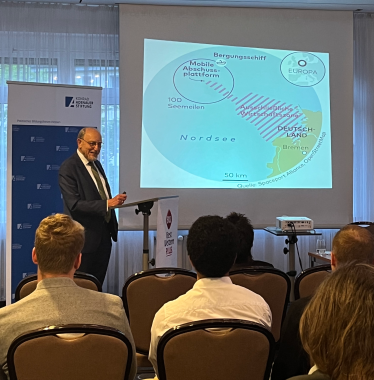
Weltraumsicherheit: Europa muss sich auch im Orbit verteidigen können
Eine Veranstaltung in Kooperation mit der Europa-Union Hessen
 KAS/Lukas Gründel