Details
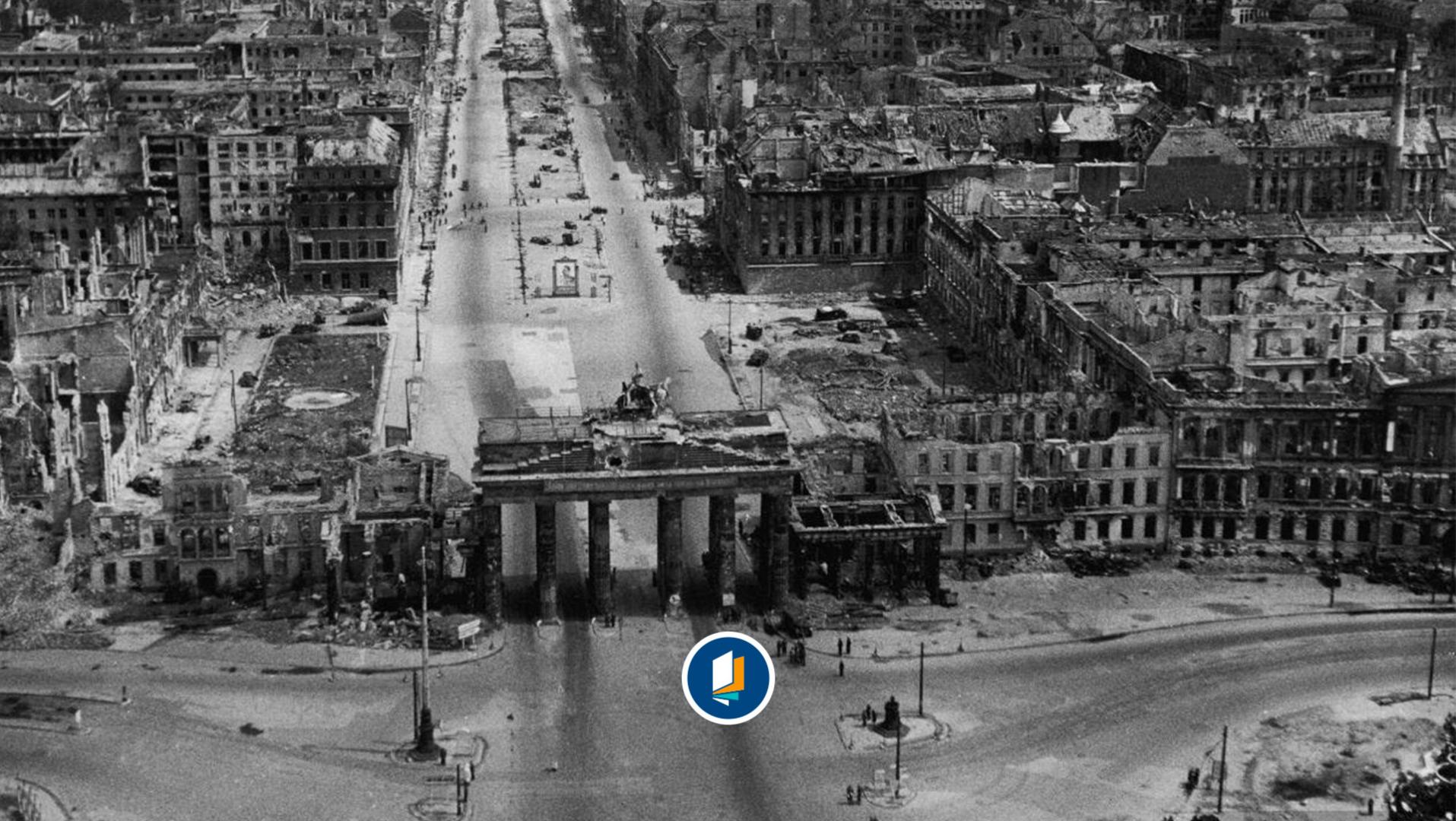 tormentor4555 / Wikimedia / CC BY-SA 3.0 / creativecommons.org/licenses/by-sa/3.0/deed.en
The year 2025 marks the 80th anniversary of the end of the Second World War. The end of the war on May 8 set the stage for a new beginning to reshape the future in a different and better war; a fresh start that was, however, burdened by the consequences of the world war: the knowledge of the National Socialist ideology of extermination and its civilizational rupture of the Holocaust has bestowed upon us Germans, a responsibility that continues to shape our country and our society in a unique manner to this day and beyond. The United Nations Charter and the ambitious endeavor to overcome the failed European nationalism in a union of states stood in contrast to the nuclear confrontation in a bipolar world and the decades-long division of the continent and our country.
The ongoing discussion of the consequences of the war and the post-war period marks the occasion for our academic conference, which we are hosting in cooperation with the European University Viadrina in Frankfurt/Oder, the Université Paris 1 Panthéon Sorbonne and the Columbia University New York. The conference is intended to shed light on the topic both historiographically and with a clear reference to the present. The focus will be on the situation in Germany and Eastern Europe as well as the geopolitical changes in the new world order. In addition, the ramifications of demobilization, the relationship between victors and vanquished as well as questions of the culture of remembrance will be discussed.
Our conference will conclude with an evening event, featuring a keynote speech by historian Jörn Leonhard, followed by a panel discussion on perspectives for future conflict resolution in the global post-war order.
You can register on this page from 25 March.
The conference language is English. The evening event on April 30 will be held in German.
Why NATO was founded - and why Germany became a member
In view of current threats, the North Atlantic defence alliance, NATO, is needed more than ever to ensure stability and security. But why was the defence alliance founded in 1949, who threatened the Western community – and why did the Federal Republic of Germany join NATO in 1955? (VIDEO IN GERMAN)
Agenda
Tuesday, 29. April 2025
Academic Conference
until 9.30 | Registration / Welcome Coffee at the Academy of the KAS
9.30 | Welcome Address
Head of WD/ACDP, Konrad-Adenauer-Stiftung
Prof. Dr. Eduard Mühle
President of the European University Viadrina
9.50 | Introduction
European University Viadrina
Prof. Dr. Carol Gluck
Columbia University
10.30 | Panel 1: Berlin 1945
Dr. Peter Lieb
ZMSBw Potsdam
War, Fleeing and Extreme Violence in the Berlin-Brandenburg Region: The last Months of the Sachsenhausen Concentration Camp Complex in 1945
Janine Fubel
Unicersity of Hagen
Berlin after the War. New Perspectives on a ‘known’ City History
Prof. Dr. Lorenz Lüthi
McGill University, Montreal
Presentor:
Prof. Dr. Claudia Weber
12.30 | Lunchbreak
13.30 | Panel 2: Victors and Vanquished. Geopolitical Aspects
PD Dr. Julia Eichenberg
University of Bayreuth
The 15th of August 1945: Japan's (Un)easy Transition into a Never-Ending Postwar Period
Prof. Dr. Urs Matthias Zachmann
Free University of Berlin
The Establishment of the Liberal World Order by the USA
Prof. Dr. Ulrich Schlie
University of Bonn
“It has to look democratic, but we must keep everything in our hands“ - A Reconsideration of the Communist Takeover
Prof. Dr. Claudia Weber
European University Viadrina
Presentor::
Janine Fubel
15.30 | Coffeebreak
16.00 | Panel 3: Demobilizations - a Return to ‘Normality’?
German Veteran Culture Revisited - Then and Now
Prof. Dr. Jörg Echternkamp
ZMSBw Potsdam / Martin-Luther-University Halle-Wittenberg
German Naval Soldiers in East- and Southeast Asia
PD Dr. Jan Asmussen
University of Kiel
War Returnees in the Border Town of Frankfurt/Oder
Dr. Karl-Konrad Tschäpe
European University Viadrina
Presentor::
Dr. Michael Borchard
18.00 | Get Together
Wednesday, 30. April
from 9.30 | Registration and Coffee
10.00 | Panel 4: Victims and Perpetrators – Justice and Injustice
Prof. Dr. Tatiana Tönsmeyer
University of Wuppertal
Survivors and the promise of justice. Prosecuting Nazi crimes at the sites of atrocities
PD Dr. Sabina Ferhadbegovic
University of Jena
Memoriam Nürnberger Prozesse
Dr. Alexander Korb
Nürnberg
Presentor:
Prof. Dr. Carol Gluck
12.00 | Lunchbreak
13.00 Uhr | Panel 5: Loss, Homeland and New Beginnings?
A new beginning on graves and ashes? Eastern European Jewish life after the Holocaust
Dr. Jakob Stürmann
Leibniz-Institute for Jewish History and Culture– Simon Dubnow
Flight and Expulsion of Germans from the Eastern German Territories at the End and after the Second World War
Prof. Dr. Matthias Stickler
University of Würzburg
From Breslau to Berlin. Women, the Second World War and the Meaning of Home
Prof. Dr. Sonja E. Klocke
University of Wisconsin
Presentor:
Prof. Dr. Fabien Théofilakis
Université Paris 1 Panthéon Sorbonne
15.00 | Coffeebreak
15.30 | Panel 6: 80 Years - Paths to a New Culture of Remembrance
Democracy and international cooperation – the Allied Museum, Berlin
Bernd von Kostka
Berlin
Prof. Dr. Rafael Wnuk
Danzig
Museum Berlin-Karlshorst. Historical site in the field of conflict in the German-Russian relations
Dr. Jörg Morré
Berlin
Holocaust Remembrance
Prof. Dr. Thomas Sandkühler
Humboldt University, Berlin
Presentor:
Prof. Dr. Claudia Weber
17.30 | Break
Evening Event
18.00 | Introduction
Vorsitzender der Konrad-Adenauer-Stiftung
18.15 | Keynote
University of Freiburg
19.00 | Discussion
University of Freiburg
Dr. Jana Puglierin
European Council on Foreign Relations
Dr. Tatiana Timofeeva
European University Viadrina
Presentor:
Dr. Gesine Dornblüth
20.00 | Reception
Hinweise: Please note that participation is only possible after prior registration. The programme is subject to change. The event will be accompanied by multimedia. By registering, participants agree that the Konrad-Adenauer-Stiftung e.V. may use the photo and film material created before, during or after the event for an unlimited period of time in both online and print format for press and public relations purposes.
Abendveranstaltung
Vorsitzender der Konrad-Adenauer-Stiftung
Universität Freiburg
Universität Freiburg
Dr. Jana Puglierin
European Council on Foreign Relations
Dr. Tatiana Timofeeva
Europa Universität Viadrina
Moderation:
Dr. Gesine Dornblüth
Hinweise: Bitte beachten Sie, dass eine Teilnahme nur nach vorheriger Anmeldung möglich ist. Änderungen im Programm bleiben vorbehalten. Die Veranstaltung wird multimedial begleitet. Die Teilnehmenden erklären mit der Anmeldung ihr Einverständnis, dass die Konrad-Adenauer-Stiftung e.V. das vor, während oder nach der Veranstaltung entstandene Foto- und Filmmaterial zeitlich unbegrenzt sowohl im Online- als auch Printformat für Zwecke der Presse und Öffentlichkeitsarbeit verwenden darf.
Topics
Partners